Review · FISH MARKET TOURS
Tsukiji Fish Market: Street Food & Culture Walking Tour
Tsukiji is best understood one bite at a time. This $22 walking tour takes you from the striking Tsukiji Hongwanji Temple into lanes filled with tuna, wagyu, grilled seafood, omelets, dumplings, and other Japanese specialties. I especially like the freshly grated wasabi and the way guides such as Kawa, George, Mao, Tomo, and Chihiro explain what you are eating rather than simply pointing at stalls.
I also like that the tour gives you a practical start in a market that can feel confusing on your own. The main drawback is the calendar: on Wednesdays, Sundays, and national holidays, roughly half the shops may be closed, so your choices and the market atmosphere will be more limited.
Tsukiji at a glance
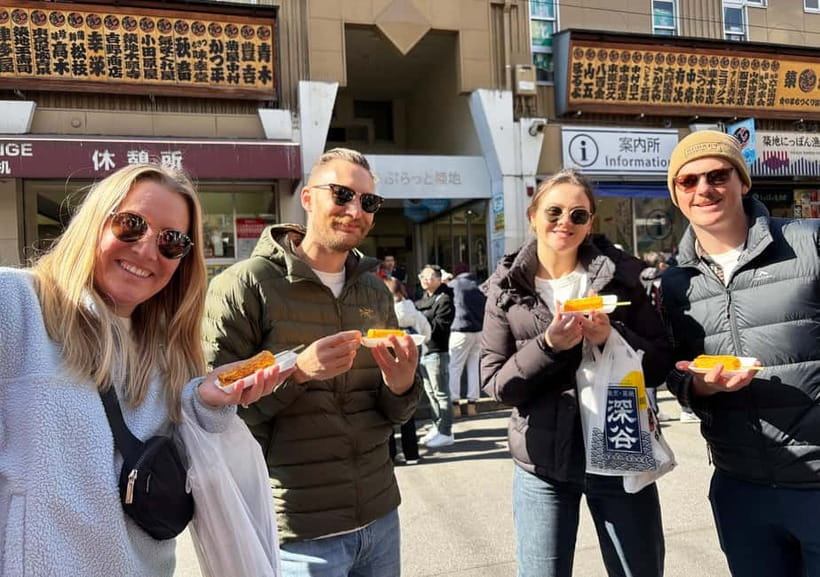
- Fresh wasabi changes the meal: The special wasabi set adds a sharper, more fragrant flavor to seafood and other bites.
- Temple and market in one walk: You begin at Tsukiji Hongwanji Temple, then move into the food stalls for a useful mix of culture and eating.
- You choose your extra bites: The guide leads you to good options, while you can spend as much or as little as you wish at individual stalls.
- Food traditions get explained: You learn how preservation, preparation, and seasoning help build umami in Japanese cooking.
- Small groups can feel personal: Several people had near-private experiences, with guides adjusting food choices and answering plenty of questions.
- Bring cash: It is specifically required, and you will want it for food and shopping in the market.
Why Tsukiji still matters after the wholesale market moved
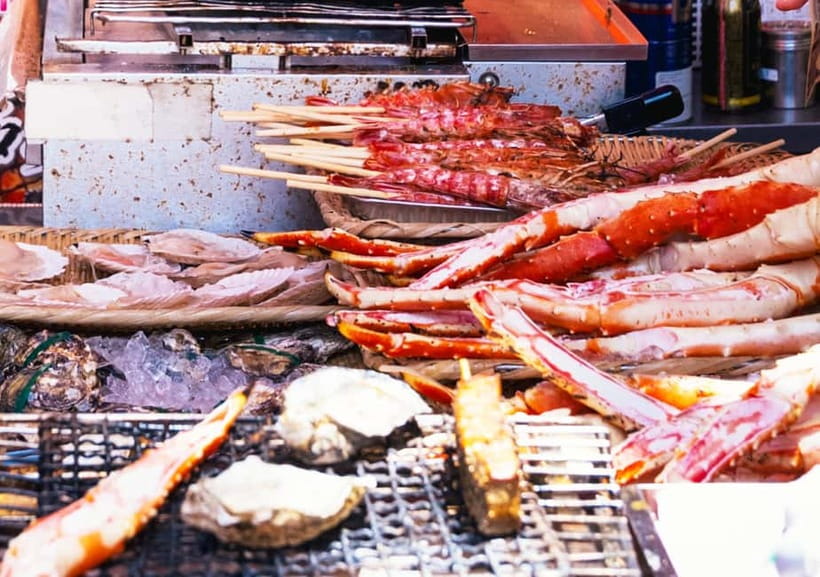
Many people still call Tsukiji the fish market, but the important distinction is the outer market. The wholesale operation moved to Toyosu, while Tsukiji remains a place to shop, eat, and see food traditions practiced in public.
That makes this experience different from a tour of a giant warehouse or an early-morning auction. You are walking through a neighborhood market where shopkeepers sell seafood, spices, cooking ingredients, prepared foods, ceramics, and snacks. The point is not only to see fish. It is to understand how Japanese food reaches the table.
Your guide helps connect the stalls to everyday cooking. You may learn why one fish is preserved in a certain way, how a cooking method changes texture, or how a specialty ingredient is used at home. That explanation is worth paying for because a market full of unfamiliar foods can otherwise become a quick series of photographs and guesses.
The experience has a strong reputation, with a 4.8 rating from 259 bookings. More important than the number is the pattern in the feedback: guides are repeatedly praised for clear English, good food suggestions, local stories, and the ability to make first-time market visitors comfortable.
More Fish Market Tours in Japan
- Tokyo Tsukiji Fish Market Food and Culture Walking Tour
★ 5.0 · 3,184 reviews - Tokyo: Tsukiji Fish Market Food and Walking tour
★ 5.0 · 1,724 reviews - Tokyo: Tsukiji Fish Market Guided Walking Tour
★ 4.9 · 1,397 reviews
Starting with Tsukiji Hongwanji Temple
The tour begins at Tsukiji Hongwanji Temple, also spelled Tsukiji Hongan-ji. The meeting point can vary slightly by booking option, but the listed coordinates are 35.66661467955698, 139.77199430835137.
You spend about 20 minutes here with the guide. That short stop gives the market a cultural frame before the eating begins. The temple is known for its unusual architecture, detailed carvings, and calm interior, which feels very different from the busy streets outside.
You can also expect an explanation of the proper purification procedure before entering religious sites. That is a small detail, but it is useful. Japan has many temples and shrines, and knowing how to approach them respectfully will help throughout the rest of your trip.
I like this opening because it prevents the tour from becoming a simple seafood crawl. The temple shows that Tsukiji is more than a food address. It is part of a neighborhood shaped by religion, commerce, and the daily rituals of eating.
The stop is brief, so you should not expect a full temple visit or an extended architectural lecture. It works as an introduction rather than the main event.
Eighty minutes among Tsukiji’s food stalls
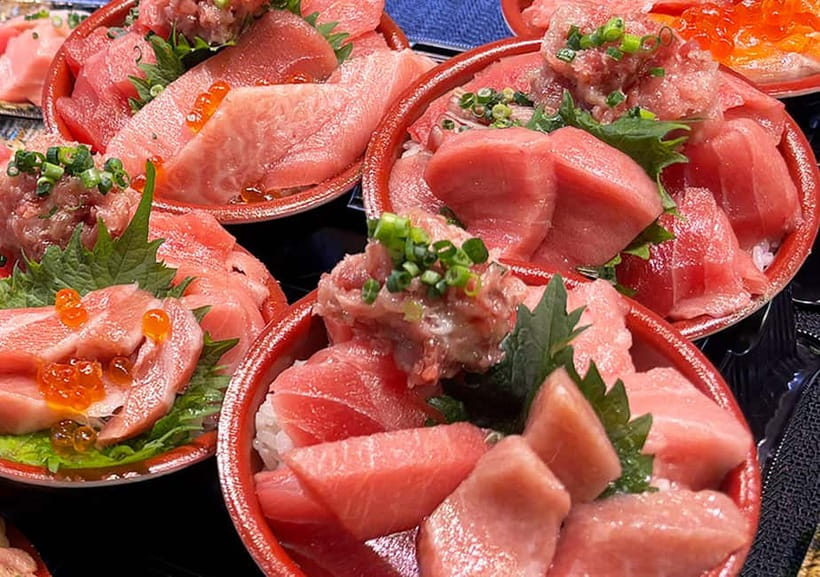
The central section lasts about 80 minutes and combines a guided walk, food tasting, and time in the market. This is where the tour earns its modest price.
Tsukiji Outer Market is packed with choices. You might see fresh seafood, traditional ingredients, specialty spices, grilled items, sweets, kitchen goods, and ceramics within a short walk. Without help, it can be hard to know which stall fits your interests, budget, or comfort level.
A good guide reduces that guesswork. George is praised for steering people toward tasty food at reasonable prices, while Kawa is noted for explaining ingredients and adjusting the route to individual preferences. Tomo, Mao, Chihiro, Daichi, and Kenny are also singled out for friendly guidance and useful recommendations.
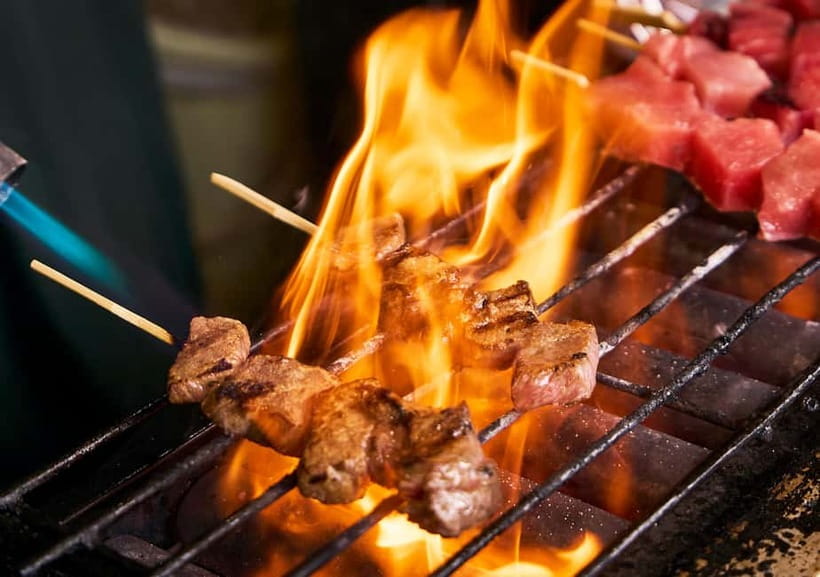
The food itself can range widely. The tasting stops described during the tour include fresh tuna sushi, eel, grilled scallops, wagyu, fish cake, omelet, dumplings, octopus, and other traditional street foods. You might not try every item, and the precise selection can change with the stalls open that day.
That variety is one of the tour’s strengths. You can compare the clean flavor of raw fish with the savory richness of grilled meat, then notice how a preserved ingredient brings a different kind of saltiness and umami. The guide’s explanation turns these into lessons in Japanese cooking rather than random snacks.
One especially memorable detail is the wasabi. The guide may provide a special wasabi set or freshly grated wasabi, which has a fresher aroma and more immediate heat than the common green paste served outside Japan. It is a small extra, but it can change how you taste tuna, sushi, or other seafood.
Several guides also help with lines and ordering. Naoto, for example, was praised for handling queues while the group explored nearby stalls. That matters in a market where standing in line for one item can consume much of your limited time.
Still, you should understand the food arrangement clearly. The experience includes food tasting, but you should bring cash for additional purchases and market treats. You remain free to spend little or more according to your appetite and budget. That flexibility is better than a rigid tasting menu, especially if you have dietary preferences or already ate breakfast.
Learning the craft behind Japanese flavor
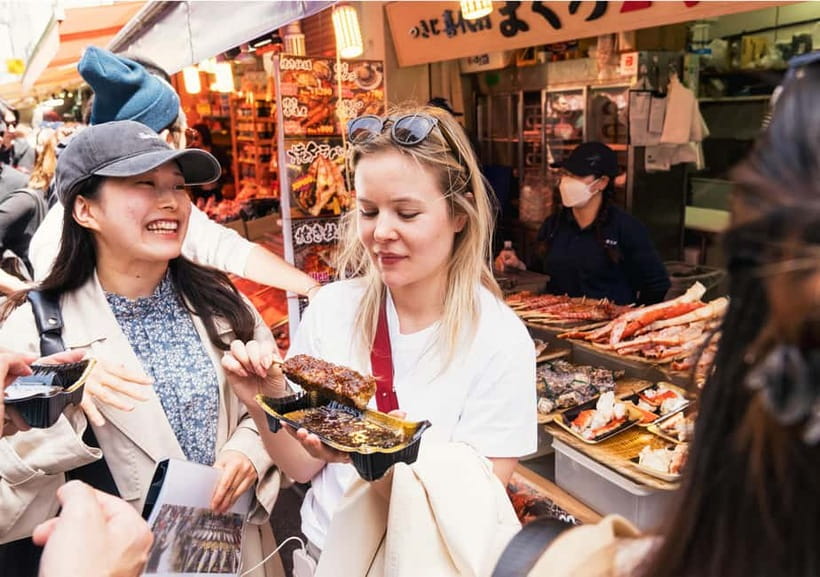
The best part of the tour is not simply finding the freshest fish. It is learning why Japanese ingredients taste the way they do.
Your guide explains preservation methods that help develop umami. Drying, salting, aging, and other techniques can concentrate flavor and change texture. At the market, these methods are not abstract culinary theory. They appear in the foods and ingredients being sold around you.
You also get a closer look at the care involved in Japanese food preparation. A fish-cutting demonstration may be part of the experience when the relevant vendors are open. This shows the precision behind portions that can look simple once they reach your plate.
The market also offers a chance to ask direct questions. You can ask what an ingredient is used for, how it is cooked, or which item makes a sensible purchase for later. One guide was particularly praised for identifying ingredients and explaining cooking methods, which is helpful if you are trying unfamiliar foods for the first time.
This is where the English-speaking guide matters most. A sign or translation app may tell you the name of an item, but it will not always explain how locals eat it or why one version costs more than another. The tour gives you that missing context.
More Fish Market Tours in Tokyo
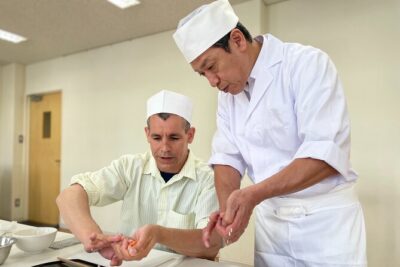
- Tokyo Sushi Making Class in Tsukiji with Professional Chef
★ 5.0 · 1,177 reviews - Tsukiji Fish Market Guided Tour and Sushi Making with Pro Chef
★ 5.0 · 775 reviews - Tokyo: Tsukiji Fish Market Food and Culture Walking Tour
★ 4.7 · 757 reviews - Tsukiji Fish Market: Street Food & Culture Walking Tour
★ 5.0 · 669 reviews
A final twenty minutes to make the market your own
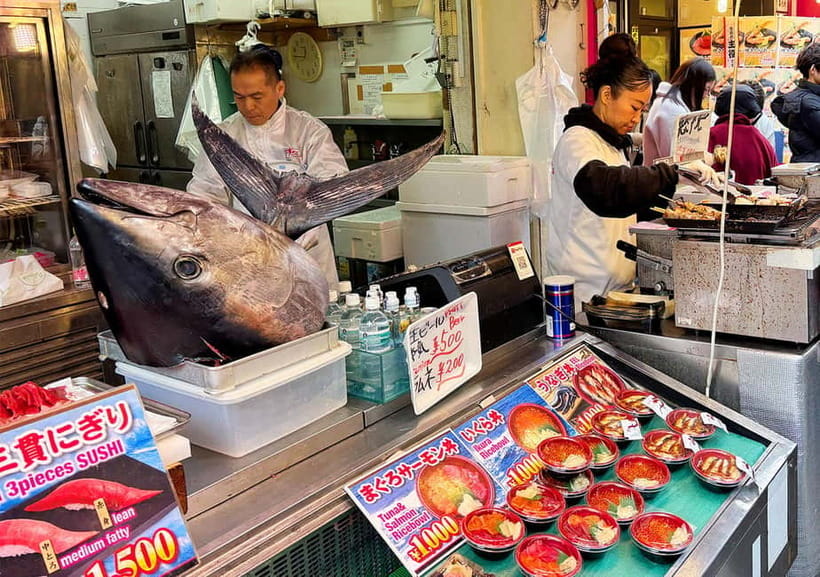
After the main tasting period, the route includes another 20 minutes of guided time in the outer market. Think of this as a chance to follow up on what interested you rather than another formal attraction.
You might return to a stall, ask about an ingredient, look for a souvenir snack, or browse ceramics and other kitchen goods. Several people appreciated receiving suggestions for shopping after the food stops, including rice snacks and tableware.
This final section also helps you find your bearings. If you plan to come back alone, pay attention to the guide’s advice about where to browse and what to avoid. The market can be more useful on a second visit because you will recognize the foods and understand how the lanes fit together.
The tour finishes back at Tsukiji Hongwanji Temple, with the listed drop-off options returning to the same area. That is convenient if you want to continue exploring nearby or arrange your own lunch afterward.
What the $22 price really gets you
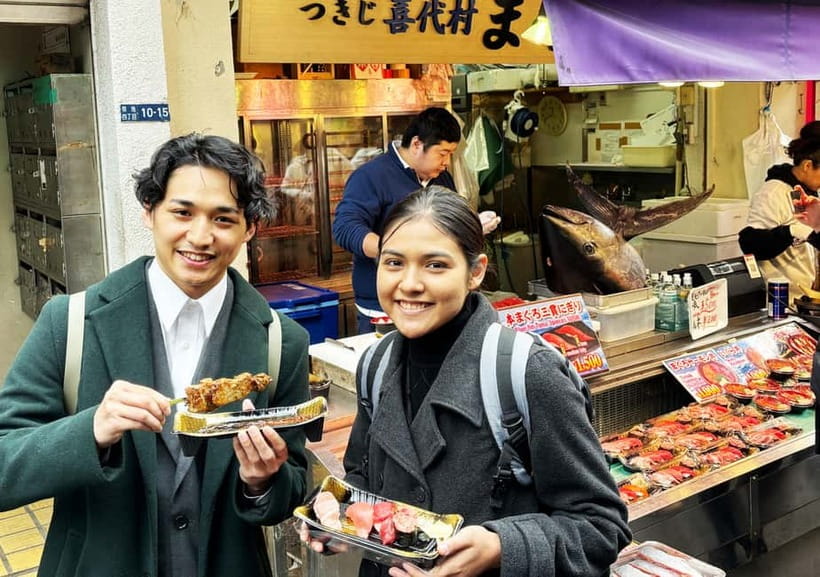
At $22 per person, this is inexpensive for a two-hour guided food walk in central Tokyo. You are paying mainly for orientation, translation, local judgment, and the ability to sample foods with some context.
I would not compare it with a full restaurant meal or a large, fixed tasting menu. Food purchases beyond what is provided for tasting may add to the cost, and your total depends on what you choose. Bring enough cash to avoid limiting yourself once you find something appealing.
The value is strongest if you are new to Tokyo or uneasy about ordering at Japanese food stalls. It is also good for anyone who wants to sample several categories of food without spending time researching every vendor.
The value is weaker if you already know Tsukiji well and feel comfortable choosing stalls alone. One person noted that, with research, the market can be visited independently. That is fair. The tour does not give you access to a secret part of Tsukiji. It gives you a smoother first visit and better explanations.
Choosing the right day and time
The biggest practical issue is the day of your booking. On Wednesdays, Sundays, and national holidays, about half of the outer market shops may be closed. Tours still operate, but you may see fewer stalls, miss some demonstrations, and have fewer tasting choices.
If your schedule allows, choose a day when more shops are open. This is especially important if seeing fish preparation is a priority. A midweek closure can affect the experience more than a change of guide.
Starting times vary, so check availability when booking. Two hours is a manageable length for most people, but you should arrive ready to walk and eat while standing in a crowded market setting.
Wear comfortable shoes and bring cash. The tour is wheelchair accessible, and small groups are available, though the exact group arrangement depends on the booking. Some departures may feel almost private, while others may include several people.
Which guide style suits you best
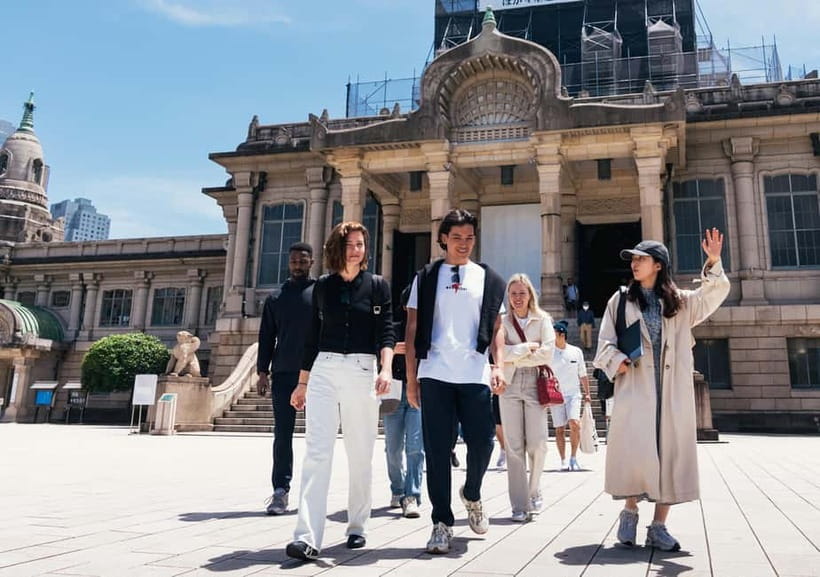
The individual guide can shape the experience. Kawa is a strong choice for travelers who want detailed explanations and careful attention to food preferences. George is repeatedly praised for market knowledge, clear English, and help finding good food at fair prices.
Mao and Tomo are good names to look for if you value a warm, easygoing style. Chihiro is praised for combining temple customs, food guidance, and practical suggestions. Kenny is noted for taking photos and helping people move through popular stops without wasting time in lines.
Those names cannot be guaranteed, so book for the tour itself rather than one specific person. Still, the range of positive comments points to a consistent strength: guides are expected to explain, recommend, and adapt instead of simply leading you from one address to another.
The food also suits adventurous eaters, but you do not need to try everything. A guide can help you understand unfamiliar choices and find a comfortable starting point. If you are cautious with raw seafood, say so early and use the tour to explore cooked options such as wagyu, grilled scallops, fish cake, dumplings, or omelet.
Who should book this Tsukiji walk
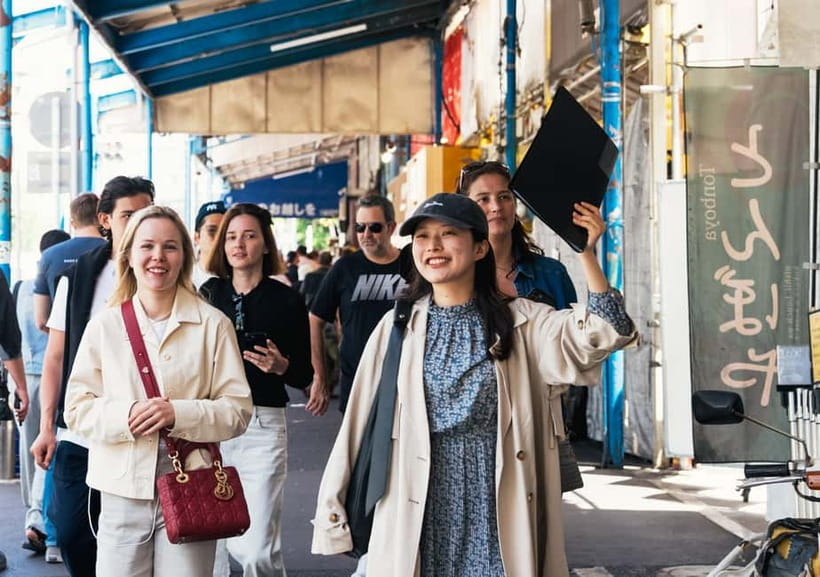
I would recommend it to first-time visitors who want an easy introduction to Japanese food culture. Families, couples, solo visitors, and small groups can all benefit from the short format and flexible spending.
It is especially useful during the first few days in Tokyo. You will learn what to look for, how to approach a food stall, and which ingredients deserve another try later in the trip.
Food-focused travelers will appreciate the range from tuna and eel to wagyu and preserved specialties. Culture-focused visitors will like the temple, purification customs, and explanation of how food fits into Japanese life.
I would think twice if your only goal is a long, quiet temple visit, a wholesale fish auction, or a formal sit-down meal. This is a walking market tour with tastings, conversation, and some crowd noise. It is also not the best choice on a Wednesday, Sunday, or national holiday if you can easily select another date.
Should you book it?
Book this tour if you want a guided first look at Tsukiji without paying for a large food package. The $22 price is sensible for the local direction, tasting opportunities, temple visit, and cooking explanations.
Choose a day when more shops are open, bring cash, and leave room in your appetite for tuna, grilled seafood, wagyu, and perhaps freshly grated wasabi. If you enjoy learning what you are eating and want help making good choices, this is a practical way to begin at Tsukiji.
FAQ
How long does the Tsukiji Fish Market tour last?
The tour lasts two hours. About 20 minutes are spent at Tsukiji Hongwanji Temple, about 80 minutes in the outer market with guided food tasting, and another 20 minutes exploring the market.
What foods can I expect to try?
Food choices can vary, but the experience may include fresh tuna sushi, eel, grilled scallops, wagyu, fish cake, omelet, dumplings, octopus, and other traditional street foods. Fresh wasabi may also be provided.
Is food included in the $22 price?
The activity includes food tasting, but you should bring cash for additional food and shopping purchases. You can generally choose to spend as much or as little as you wish beyond the tasting stops.
Are the shops open every day?
About half of the Tsukiji Outer Market shops may be closed on Wednesdays, Sundays, and national holidays. Tours still operate on those days, but the selection and overall experience may differ.
Is the tour offered in English?
Yes. The tour has a live English-speaking guide.
Is the activity wheelchair accessible?
Yes, the activity is listed as wheelchair accessible. Small-group availability is also offered, depending on the option booked.
More Street Food Market Tours in Japan
- Tokyo Food Tour Taste Fresh Delights at Tsukiji Market
★ 5.0 · 429 reviews - Toyosu Market Morning Tuna Auction and Tsukiji Food Tour with Licensed Guide
★ 4.5 · 146 reviews - Tokyo Tsukiji Fish Market Food Tour: 15 Stops & Walk Local Street
★ 5.0 · 139 reviews - Tsukiji Fish Market Private Food Tour in Tokyo
★ 5.0 · 18 reviews
More Market Walking Tours in Japan
- Tsukiji Fish Market Small-Group Food Walking Tour
★ 5.0 · 621 reviews - Tokyo: Guided Walking Tour of Tsukiji Market with Breakfast
★ 4.4 · 134 reviews - Tokyo: Tsukiji Market Walking Tour & Sushi Cooking Class
★ 4.6 · 122 reviews - Tokyo: Guided Walking Tour of Tsukiji Market with Lunch
★ 4.4 · 24 reviews
Just added around Tokyo
- Tokyo: Tsukiji Market Guided Tour & Sushi-Making Experience★ 4.4 · 11 reviews
- Tokyo: Private Tsukiji Street Food & Sake with Local Guide★ 5.0 · 3 reviews
- Tokyo: Tsukiji Market and Hama-rikyu Gardens Guided Tour★ 4.8 · 73 reviews
- Tokyo: Tsukiji Fish Market Culture Tour with Sashimi Tasting★ 4.6 · 54 reviews
- Tokyo : Tsukiji Fish Market Food Walking & Shrine Visit Tour★ 5.0 · 3 reviews
- Tokyo: Tsukiji Fish Market Foodie and Educational Tour★ 5.0 · 4 reviews
- Tokyo’s Kitchen: Tsukiji Market Food & Culture Walk★ 4.7 · 74 reviews
- Tokyo: Guided Walking Tour of Tsukiji Market with Lunch★ 4.4 · 24 reviews
Fish Market Tours, compared.

Tokyo Tsukiji Fish Market Food and Culture Walking Tour
Read our review →

Tokyo Sushi Making Class in Tsukiji with Professional Chef
Read our review →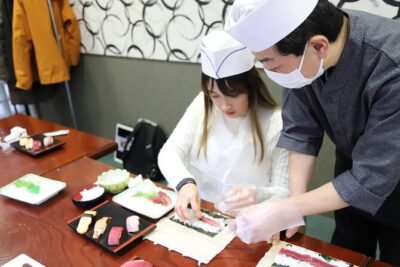
Tsukiji Fish Market Guided Tour and Sushi Making with Pro Chef
Read our review →Tsukiji Fish Market Food and Culture Walking Tour
Read our review →
Tsukiji Fish Market: Street Food & Culture Walking Tour
Read our review →