Review · FISH MARKET TOURS
Tokyo Tsukiji Fish Market Food Tour: 15 Stops & Walk Local Street
Tsukiji is best understood on foot, one small bite and one shop at a time. This tour combines the market’s outer shopping streets with Tsukiji Hongwanji Temple, a fish wholesale area, and Namiyoke Inari Shrine, while a local guide explains food customs and sushi manners. The advertised route takes about two to three hours and caps the group at 15 people.
I like the easy meeting point and the way the walk links food with local culture, rather than treating Tsukiji as a place to grab a quick snack and leave. I also like the practical guidance on what to try, how to eat sushi, and how to behave around food stalls. The main catch is important: the food-included wording is unclear, while the conditions say food is not included.
Key points at a glance
- Four distinct Tsukiji stops: Begin at Tsukiji Hongwanji Temple, walk through Tsukiji Jogai Market, pass the fish wholesale area, and finish at Namiyoke Inari Shrine.
- A food-focused walking lesson: The guide explains Japanese food culture, etiquette, history, and customs as you move between shops.
- Food costs need checking: The tour description refers to tastings, sushi, and oysters, but the exclusions say food is not included.
- A group capped at 15: This is small enough for a more personal walk, though it is not a private tour by default.
- Sakura-san may guide your walk: A recent departure with Sakura-san included sushi-eating advice and food etiquette.
- Photos are sent afterward: Bring a phone with WhatsApp for same-day contact and expect tour photos after the walk.
Why Tsukiji works so well as a food walk
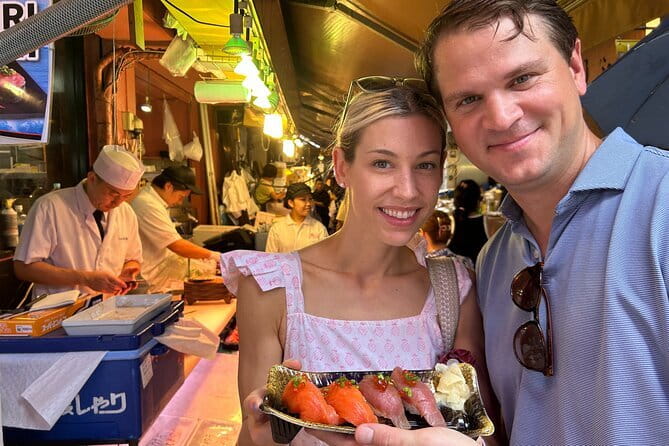
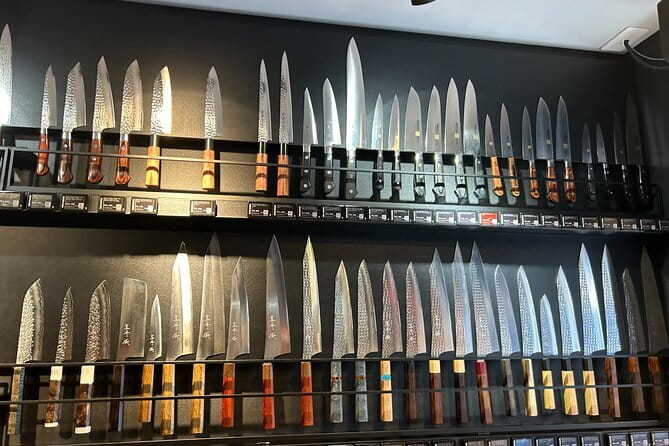
Tsukiji is no longer Tokyo’s main wholesale fish market. The wholesale operation moved to Toyosu, but Tsukiji’s outer market remains a useful place to see food shops, restaurants, knives, dried goods, seafood, and the daily buying habits that support Japanese cooking.
That distinction matters. You are not signing up for an inside look at the former wholesale auction floor. Instead, you are walking through Tsukiji Jogai Market, a shopping area with more than 400 shops, and passing a smaller wholesale market where you can see many kinds of fresh fish.
I like this format for a first visit because the guide gives the streets a purpose. Without help, you might see a row of attractive counters and have no idea what is worth ordering, how much to buy, or what behavior is expected. With a guide, the market becomes a lesson in Japanese food culture, not just a succession of stalls.
The route also includes two religious sites. That gives the walk a welcome change of pace. You get food, local history, etiquette, and a little quiet before returning to the market streets.
More Fish Market Tours in Japan
- Tokyo Tsukiji Fish Market Food and Culture Walking Tour
★ 5.0 · 3,184 reviews - Tokyo: Tsukiji Fish Market Food and Walking tour
★ 5.0 · 1,724 reviews - Tokyo: Tsukiji Fish Market Guided Walking Tour
★ 4.9 · 1,397 reviews
Starting at Tsukiji Hongwanji Temple
The meeting point is in front of Tsukiji Hongwanji Temple at 3-chōme-15-1 Tsukiji. The temple is close to public transportation, and the tour begins with a visit that lasts about 15 minutes.
This is a sensible starting point. You can arrive, find the entrance, and meet the guide before entering the market streets. The temple also gives your guide a chance to explain something about the neighborhood before the food stalls take over your attention.
Your visit here is brief, so think of it as an introduction rather than a full temple tour. The admission is free, and the stop does not add a separate ticket cost. If you want a long, quiet look at the temple, you may need to return on your own after the tour.
The practical advantage is orientation. You start at a fixed landmark instead of trying to locate a shop in a crowded shopping street. I would arrive early enough to find the entrance without rushing, especially if you are unfamiliar with Tokyo’s station exits.
Walking through Tsukiji Jogai Market
The main part of the tour takes about 90 minutes in Tsukiji Jogai Market. This is where the experience earns most of its price, provided the food arrangements are clear before you arrive.
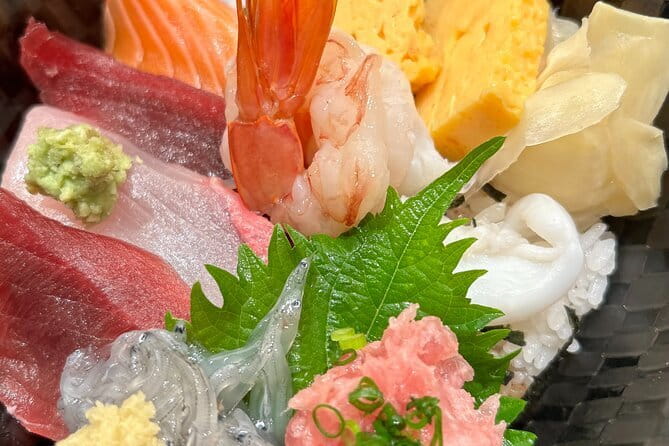
The shopping street has more than 400 shops, so even a careful independent visit can feel scattered. A Japanese guide can point out what you are looking at and explain how food is bought, prepared, and eaten. The walk may include items such as sushi and Japanese oysters, but you should not assume that every tasting is covered by the booking price.
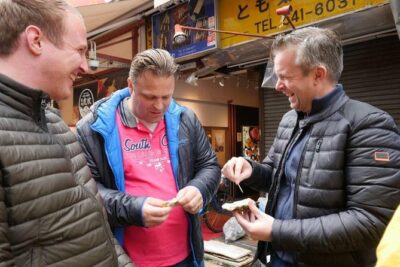
This is also the part of the route where the guide’s advice can save you from ordering blindly. One recent walk with Sakura-san included practical instruction on sushi-eating manners and other Japanese dining etiquette. That kind of help is useful if you want to enjoy the meal without worrying about which hand to use, how to handle condiments, or how to behave at a compact market counter.
The market is a working shopping district, not a staged food hall. Shops may close for holidays, and the available food can change. On one departure, a holiday closure altered the planned visit, but the guide adjusted the walk and helped arrange a good lunch. That is a point in the tour’s favor, though it also shows why you should expect some flexibility rather than a perfectly fixed list of 15 tastings.
The fish market passage
The route includes about 30 minutes around a mini wholesale market. Here you can see hundreds of kinds of fresh fish and get a closer sense of how much variety goes into Japanese cooking.
This stop is likely to interest you most if you enjoy seafood, sushi, or food photography. It also adds context to the shops in the outer market. Instead of seeing only finished dishes, you get a look at the raw ingredients and the range of seafood that supplies Tokyo’s kitchens.
Keep your expectations measured. The description says you pass by the mini wholesale market, not that you enter a restricted auction area or handle the fish. This is a viewing stop with commentary. The guide’s explanation is the main value.
Because the fish market is part of a working commercial area, follow the guide and give shop staff room. A small group helps here. A maximum of 15 people is not intimate in the same way as a private tour, but it is easier to manage than a large bus group.
More Fish Market Tours in Tokyo
- Tokyo Sushi Making Class in Tsukiji with Professional Chef
★ 5.0 · 1,177 reviews - Tsukiji Fish Market Guided Tour and Sushi Making with Pro Chef
★ 5.0 · 775 reviews - Tokyo: Tsukiji Fish Market Food and Culture Walking Tour
★ 4.7 · 757 reviews - Tsukiji Fish Market: Street Food & Culture Walking Tour
★ 5.0 · 669 reviews
A quiet pause at Namiyoke Inari Shrine
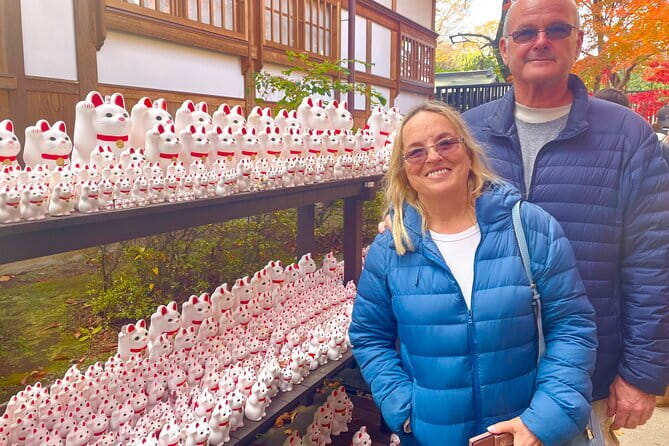
The last listed stop is Namiyoke Inari Shrine, with about 15 minutes set aside for the visit. The shrine is dedicated to Namiyoke Inari, a deity associated with warding off disasters and weathering the waves.
This stop connects naturally with Tsukiji’s seafood identity. The market has long depended on the sea, weather, safe transport, and reliable supplies, so a shrine linked with protection from waves makes sense in this neighborhood.
Again, this is a short visit rather than a full religious tour. Its value is in the setting and the explanation. After the noise and food decisions of the market, the shrine offers a calmer ending before you return to the meeting point.
The tour ends back at the starting point. That makes the walk easy to fit into a larger Tokyo day, and you do not need to work out a new pickup location afterward.
What the 15-stop title really means for you
The experience is marketed around 15 stops, but the detailed route names four main places: Tsukiji Hongwanji Temple, Tsukiji Jogai Market, the fish market, and Namiyoke Inari Shrine.
That does not necessarily mean you will visit only four points. The market section can include multiple shops, food counters, and short explanations. Still, you should not book this expecting 15 major attractions. The useful way to read the title is as a food walk with many small pauses inside the market, not 15 separate sightseeing landmarks.
This matters because some people want depth at a few places, while others want a long checklist. I would choose this tour for the first group. You get time to understand the area and ask questions instead of racing from one photo stop to the next.
The food question you should settle before paying
Food is the biggest uncertainty. The overview promises included food tastings and gives examples such as sushi and Japanese oysters. The highlights also say food tastings are included. Yet the exclusions clearly list food as not included, and one participant booked specifically expecting the tasting cost to be covered.
The safest approach is to contact Fuji Tour before booking or before the cancellation deadline and ask three direct questions:
- Are any tastings included in the $80 price?
- Which food items, if any, require extra payment?
- Does the guide lead you to food, or does the tour price cover the food itself?
Do not rely on the phrase 15 stops to mean 15 free samples. The wording does not support that assumption. At the same time, food clearly plays a central role in the walk, and one departure included a very good lunch after the guide helped choose what to try.
This ambiguity weakens the value calculation. If food is included, $80 can be reasonable for a small-group guided walk with cultural explanations and photos. If you pay $80 for guiding only and then buy lunch and tastings separately, the price is much less attractive compared with a simple market walk.
What you receive for the $80 price
The $80 rate includes a Japanese guide, explanations of food, etiquette, culture, and history, and photos sent after the tour. The walk lasts roughly two to three hours and is limited to 15 people.
I see the value in the guide rather than in transportation or entry tickets. All four listed stops have free admission, and there is no hotel pickup. You must make your own way to Tsukiji Hongwanji Temple, so the cost covers interpretation and organization, not a vehicle or reserved attraction access.
The photos are a pleasant extra, especially if you are busy eating and cannot take many pictures yourself. They are sent after the tour, so make sure the company has a way to contact you. WhatsApp is required for communication on the day, according to the tour details.
The 99 percent recommendation rate and five-star average from 139 ratings suggest strong satisfaction overall, but the food confusion is too specific to ignore. I would treat the tour as a guided cultural food walk, then judge the $80 price only after confirming the tasting policy.
Weather, closures, and the value of a local guide
Tsukiji is mainly an outdoor walking experience. Cold or poor weather can make the two-hour route less comfortable, and one departure took place on a cold, wet day. That does not ruin the tour, but it can change how long you want to linger at each stop.
Market schedules can change too. A holiday closure affected one visit, and the guide adapted the plan. This is where a local guide helps. You may not get every planned shop, but you have someone who can suggest another place and keep the walk useful.
I would avoid scheduling this as the one event you cannot miss if your itinerary is extremely tight. The tour usually lasts two to three hours, and market conditions can require adjustments. On the other hand, the free cancellation policy allows a full refund if you cancel at least 24 hours before the start time, which gives you some planning flexibility.
Who will get the most from this walk
This tour suits a first-time Tokyo visitor who wants an introduction to Tsukiji without spending hours planning a route. It is also a good fit if you want help with sushi etiquette or prefer asking a local guide what to eat.
Families and mixed-interest groups may like the balance of food, a temple, a shrine, and market history. The route does not focus only on seafood, though seafood is central to the area and the fish-market section.
Food-focused visitors should book only after confirming the cost of tastings. If you want an inexpensive self-guided walk, $80 is a lot. You can visit the free temple, shrine, and market area on your own, then pay for only the dishes you choose.
People who prefer private service should also note the group limit. Fifteen is the maximum, not the guaranteed size. A cancellation can leave you with a much smaller group, as happened on a departure that became a one-to-one walk, but you should not count on that.
Should you book the Tsukiji food tour?
Book it if you want a short, organized introduction to Tsukiji and value explanations about Japanese food customs as much as the food itself. The route is well balanced, the meeting point is straightforward, and Sakura-san’s sushi guidance shows the kind of practical help you can receive.
Before booking, settle the food question in writing. If tastings are included, the price is defensible for a two to three hour small-group walk with a Japanese guide, photos, and cultural context. If food is extra, choose it only if personal guidance and convenience are worth paying for.
For an independent-minded visitor on a budget, visit Tsukiji yourself and spend the savings on lunch. For a first-time visitor who wants someone to explain the market and help make food choices, this tour can be a useful and enjoyable start to Tokyo.
FAQ
How long does the Tsukiji food tour last?
The tour lasts approximately two to three hours.
Where does the tour begin?
It begins in front of Tsukiji Hongwanji Temple at 3-chōme-15-1 Tsukiji, Chuo City, Tokyo 104-8435, Japan.
Where does the tour end?
The activity ends back at the meeting point at Tsukiji Hongwanji Temple.
What places are included on the route?
The route includes Tsukiji Hongwanji Temple, Tsukiji Jogai Market, a mini wholesale fish market area, and Namiyoke Inari Shrine.
Is food included in the tour price?
The tour information is inconsistent. It refers to included tastings, sushi, and Japanese oysters, but the exclusions say food is not included. Confirm the policy with Fuji Tour before booking.
How large is the group?
The tour has a maximum of 15 people.
Are photos included?
Yes. Photos are taken during the tour and sent to you afterward.
Do I need WhatsApp?
Yes. The tour information says to download WhatsApp because it is used for communication on the day.
More Street Food Market Tours in Tokyo
- Tsukiji Fish Market Private Food Tour in Tokyo
★ 5.0 · 18 reviews - Tokyo: Tsukiji Fish Market Foodie and Educational Tour
★ 5.0 · 4 reviews - Tokyo: Private Tsukiji Street Food & Sake with Local Guide
★ 5.0 · 3 reviews - Tokyo : Tsukiji Fish Market Food Walking & Shrine Visit Tour
★ 5.0 · 3 reviews
More Street Food Market Tours in Japan
- Tsukiji Fish Market Small-Group Food Walking Tour
★ 5.0 · 621 reviews - Tokyo Food Tour Taste Fresh Delights at Tsukiji Market
★ 5.0 · 429 reviews - Tsukiji Fish Market: Street Food & Culture Walking Tour
★ 4.8 · 259 reviews - Toyosu Market Morning Tuna Auction and Tsukiji Food Tour with Licensed Guide
★ 4.5 · 146 reviews
Just added around Tokyo
- Tokyo: Tsukiji Market Guided Tour & Sushi-Making Experience★ 4.4 · 11 reviews
- Tokyo: Private Tsukiji Street Food & Sake with Local Guide★ 5.0 · 3 reviews
- Tokyo: Tsukiji Market and Hama-rikyu Gardens Guided Tour★ 4.8 · 73 reviews
- Tokyo: Tsukiji Fish Market Culture Tour with Sashimi Tasting★ 4.6 · 54 reviews
- Tokyo : Tsukiji Fish Market Food Walking & Shrine Visit Tour★ 5.0 · 3 reviews
- Tokyo: Tsukiji Fish Market Foodie and Educational Tour★ 5.0 · 4 reviews
- Tokyo’s Kitchen: Tsukiji Market Food & Culture Walk★ 4.7 · 74 reviews
- Tokyo: Guided Walking Tour of Tsukiji Market with Lunch★ 4.4 · 24 reviews
Fish Market Tours, compared.
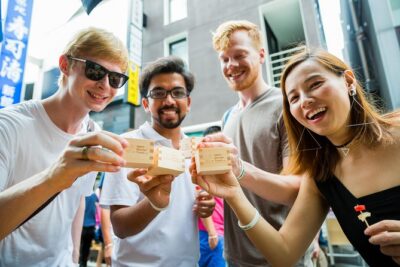
Tokyo Tsukiji Fish Market Food and Culture Walking Tour
Read our review →
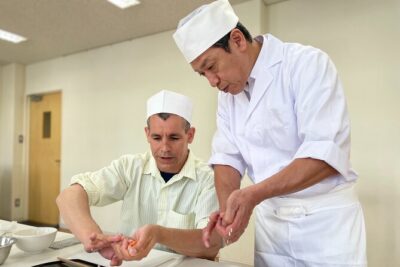
Tokyo Sushi Making Class in Tsukiji with Professional Chef
Read our review →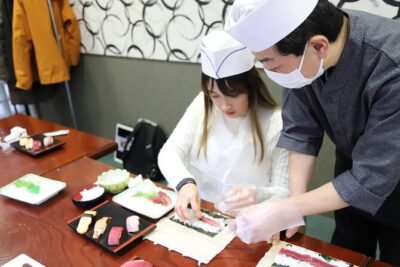
Tsukiji Fish Market Guided Tour and Sushi Making with Pro Chef
Read our review →Tsukiji Fish Market Food and Culture Walking Tour
Read our review →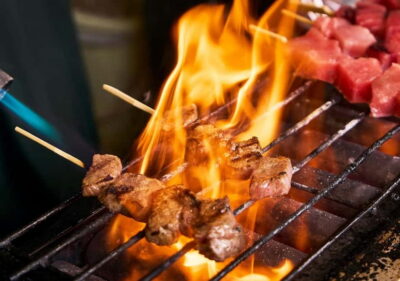
Tsukiji Fish Market: Street Food & Culture Walking Tour
Read our review →