Review · FISH MARKET TOURS
Tokyo Tsukiji Fish Market Food and Culture Walking Tour
Tsukiji is at its best when you can stop guessing what the stalls sell and start tasting your way through them. This three-hour walk takes you through the outer market, where fishmongers, food shops, kitchen stores, and small eateries crowd the lanes. You may see uni, pufferfish, or a tuna being cut, then sample dashi, fish cakes, Wagyu, fruit, and sushi or a seafood bowl.
I like the way a local guide gives this busy district some order, especially at a first visit. I also like the mix of food and culture: the meeting point at Tsukiji Honganji Temple adds a worthwhile cultural stop, while guides such as Kiyo, Naz, Shoko, and Masa have helped visitors understand ingredients, customs, and cooking.
The main caution is that this is the outer market, not a tour of the old wholesale auction floor. Food portions can also feel light to some people, and the tour cannot handle vegetarian, halal, gluten-free, allergy-related, or fish-free diets.
Key points to know before you book
- Sushi or seafood bowl finishes the tour: The final meal depends on the day and may be one or the other.
- The outer market is the focus: You visit Tsukiji Jogai Market and Tsukiji Uogashi, rather than touring the former wholesale auction area.
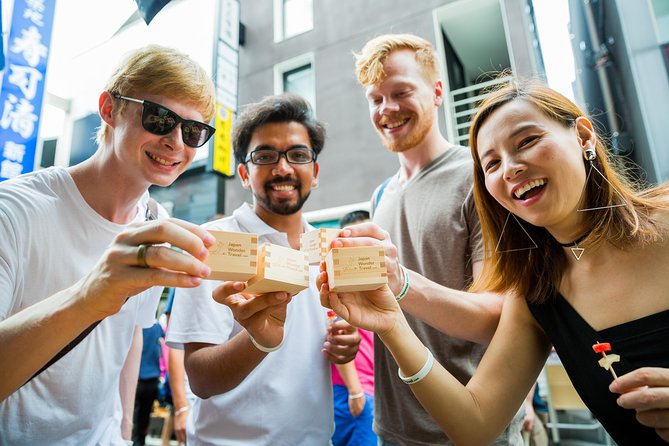
- Tastings cover more than raw fish: Expect possible samples of dashi, green tea, fish cakes, Japanese omelette, Wagyu, seasonal fruit, and seafood.
- Guides make the crowded lanes easier: Past guides have included Kiyo, Naz, Miky, Kayoko, Mieko, Shoko, Nick, and others.
- Market hours affect the route: Tsukiji Uogashi is closed on Wednesdays, Sundays, and other market holidays.
- Arrive early and wear good shoes: The guide leaves on time, and late arrivals cannot extend the tour.
Why Tsukiji still matters after the wholesale market moved
Many people still call Tsukiji the Tokyo fish market, but the name can cause confusion. The famous inner wholesale market moved to Toyosu. Tsukiji’s outer market remains a working food district, with retail stalls, small wholesalers, kitchen shops, restaurants, and vendors selling ingredients to professionals and home cooks.
That distinction matters. If you expect to walk through the old auction site or watch the main tuna auction, this is not the right outing. The tour is about the outer market and its food culture, where you can look closely at products, ask questions, and eat along the way.
I think that is a fair trade for many first-time visitors. The outer market is easier to approach as a food walk, and the guide can explain what you are seeing instead of leaving you to decode hundreds of signs and unfamiliar foods.
The market’s history reaches back about 80 years as a major source of seafood for Tokyo. Michelin-starred chefs may shop here for ingredients, but the setting is not polished or staged. You are moving through working lanes, crowded stalls, and shops that serve people who cook Japanese food every day.
More Fish Market Tours in Japan
- Tokyo: Tsukiji Fish Market Food and Walking tour
★ 5.0 · 1,724 reviews - Tokyo: Tsukiji Fish Market Guided Walking Tour
★ 4.9 · 1,397 reviews - Tokyo Sushi Making Class in Tsukiji with Professional Chef
★ 5.0 · 1,177 reviews
Starting at Tsukiji Honganji Temple
The meeting point is the main gate of Tsukiji Honganji Temple, at 3-chome-15-1 Tsukiji. Make sure you use the front side of the temple. The meeting instructions warn that map apps may guide you to the back, which is an easy way to begin the morning in a hurry.
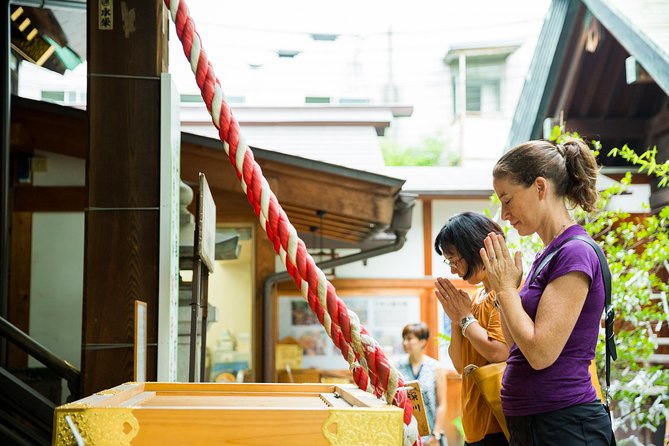
The temple is more than a landmark for finding your guide. The building itself gives the tour a cultural opening before the food begins. One visitor especially enjoyed learning about its design and what inspired the unusual structure. You may not choose to enter the temple on your own, so this brief stop adds something beyond a standard market stroll.
Be on time. The group leaves at the stated start time and cannot wait for late arrivals. There is no extension if you arrive late, and same-day cancellations or late arrivals do not receive a refund. Free cancellation is available if you cancel at least 24 hours before the start time.
Tsukiji Jogai Market: one and a half hours among the stalls
The longest part of the route takes place in Tsukiji Jogai Market. You spend about 90 minutes taking in the sights, smells, and sounds while your guide explains the market’s role in Japanese food culture.
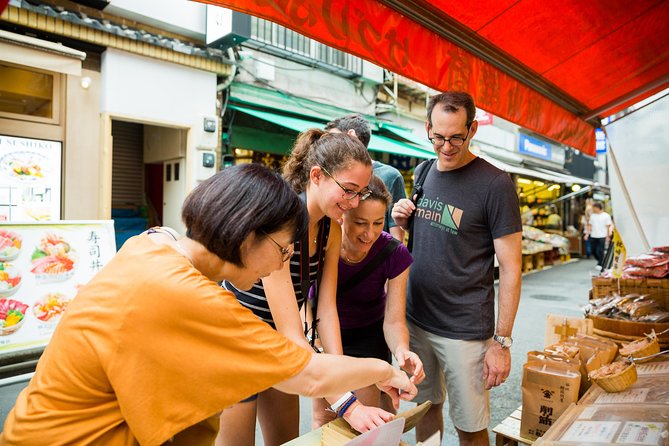
This is where a guide earns the fee. Tsukiji can be hard to read at first. A stall selling dried seafood may sit beside one selling knives, tea, omelette, seaweed, or fresh fish. Without help, you can easily walk past something special because you do not know what it is or how people use it.
The exact tastings can vary, but the tour description lists dashi soup and green tea, along with food such as sea urchin, fish cakes, Japanese omelette, seasonal fruit, tuna, and Wagyu beef skewers. The point is not only to eat. You learn how ingredients fit into Japanese cooking and why freshness matters so much here.
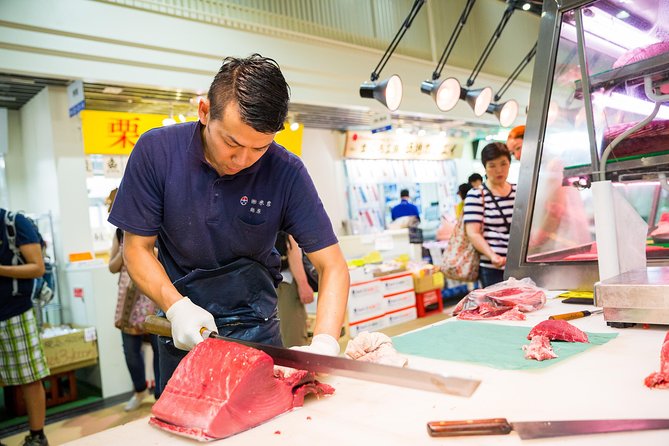
You might see boxes of uni, pufferfish in tanks, or vendors handling large Bluefin tuna. These are the kinds of details that make the market feel like a working food center rather than a row of tourist snack stands.
The guide can also help with shopping. Shoko, for example, was praised for explaining how she uses foods and spices in her own cooking and for helping visitors choose items to take home. Small groups can make this easier, since you have more room to pause and ask about an ingredient without losing the guide in the crowd.
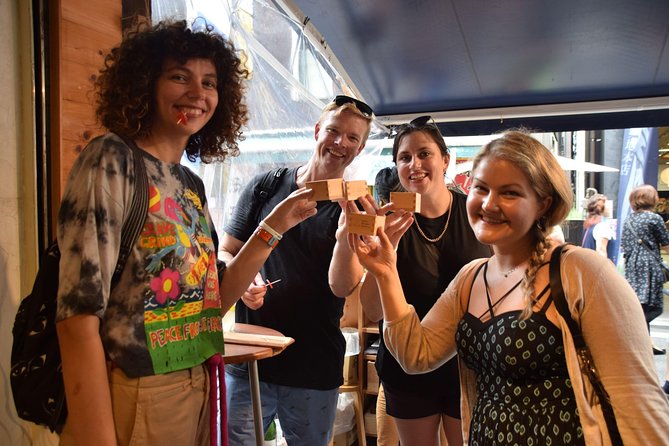
The tour may have up to 20 participants, though some departures are much smaller. A small group is a real advantage here. It is easier to hear explanations, move through narrow lanes, and ask for help choosing a food or kitchen item.
The food stops: enough for lunch, but not an all-you-can-eat tour
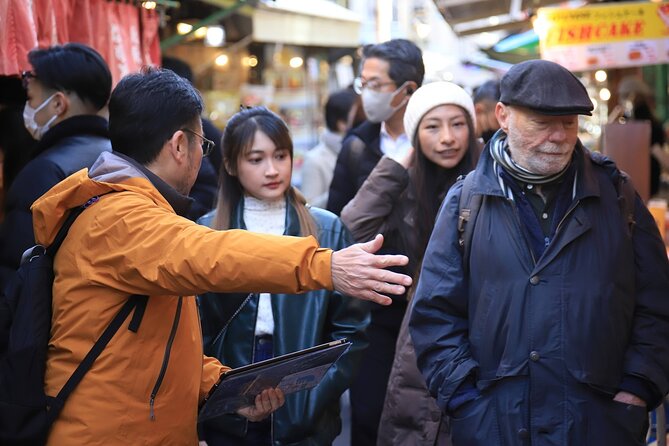
This is a food-focused walking tour, but you should not treat it as a long restaurant crawl. You receive snacks and lunch, with several tastings along the route, yet the portions are not described as a full succession of large meals.
The listed foods include:
- Dashi soup and green tea
- Fish cakes
- Japanese omelette
- Wagyu beef skewers
- Seasonal fruit
- Sushi or a seafood bowl
- Other seafood and market samples
The final serving is either sushi or a seafood bowl, depending on the day and time. Some departures may include a restaurant stop, and one particularly memorable version included a sashimi lunch at Moritaya, with fish preparation in view. Another outing included a sushi-making opportunity after watching fish being prepared.
Those details are appealing, but they are not guaranteed for every departure. The food selection changes with the market, the shops open that day, and the tour schedule. On closed market days, Japanese omelette, fish cake, and fruit cannot be served because those shops are not operating.
If you normally eat a large breakfast, you may find the food sufficient but not lavish. If you arrive hungry, the variety should help, but one portion or another may be small. I would think of the price as covering guided access, explanations, and a planned tasting route, not just the retail value of the food.
More Fish Market Tours in Tokyo
- Tsukiji Fish Market Guided Tour and Sushi Making with Pro Chef
★ 5.0 · 775 reviews - Tokyo: Tsukiji Fish Market Food and Culture Walking Tour
★ 4.7 · 757 reviews - Tsukiji Fish Market: Street Food & Culture Walking Tour
★ 5.0 · 669 reviews - Tsukiji Fish Market Small-Group Food Walking Tour
★ 5.0 · 621 reviews
Tsukiji’s old market area and the kitchen shops
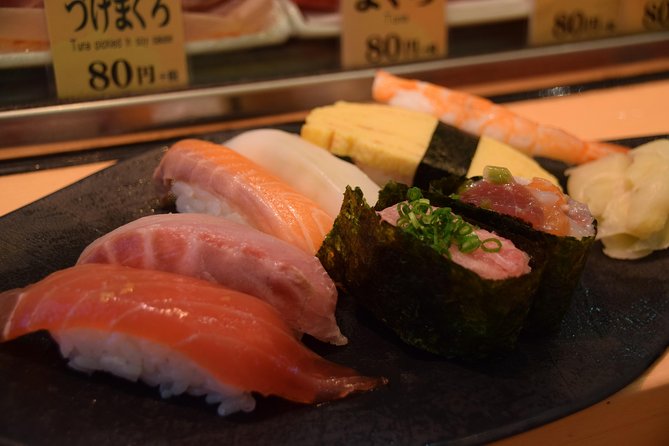
The itinerary includes about 30 minutes in the old Tsukiji market area. This section continues the food walk, with time to look at products and the daily trade around the market.
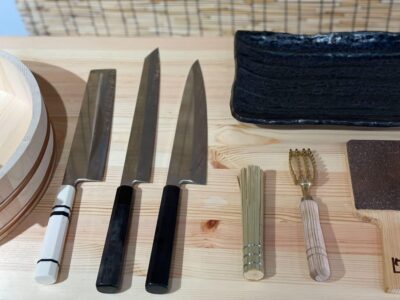
There is also a possible stop for kitchen tools. This is useful if you want Japanese knives, utensils, or other cooking equipment, but it is not a guaranteed shopping trip with a fixed list of stores. Tell your guide early if you have a particular interest. Guides have sometimes adjusted the route for shopping requests, especially when the group was small.
This is one of the tour’s more practical features. You can learn not only what to eat in Japan, but also what people use to prepare food at home. Still, keep your expectations sensible. The supplied information does not promise a dedicated knife demonstration or a set amount of shopping time.
Tsukiji Uogashi: a shorter look at market supply
The route spends about 30 minutes at Tsukiji Uogashi, described as a mini wholesale market with many types of fresh fish. This is the closest part of the walk to the professional supply side of Tsukiji.
The market is closed on Wednesdays, Sundays, and holidays, along with other listed closure days. When it is closed, the route and tastings change. You will not receive the same market view or the omelette, fish cake, and fruit samples associated with shops that are not open.
It is worth checking your date before booking if seeing this section is important to you. Also, keep in mind that this is not a return to the former inner wholesale market. You are seeing the outer market’s working food trade, which is still useful and interesting, but it is not the old auction experience.
The final sushi or seafood bowl
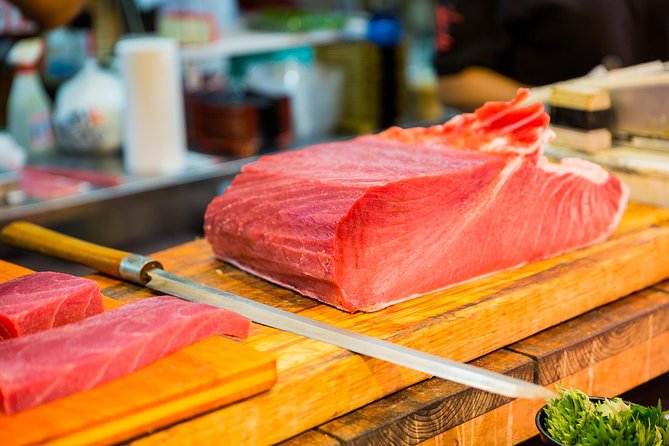
The tour ends with a meal of sushi or a seafood bowl, and the activity returns to the meeting point. This gives the walk a clear finish rather than leaving you to find lunch alone.
The final dish is likely to be the most filling part of the outing. It also lets you compare the market ingredients you have been seeing with a prepared meal. For someone new to sushi, this can be a comfortable way to try it with a guide nearby. One guide helped a hesitant diner discover that eel sushi and squid were enjoyable choices.
The exact meal is not fixed. The supplier may serve sushi on one day and a seafood bowl on another. If a restaurant closes unexpectedly, an alternative is provided. That flexibility is practical, though it means you should not book expecting one specific restaurant or dish.
Some departures have included a cutting demonstration or a chance to watch fish being prepared. These are appealing extras, but they depend on the day and the restaurant. The reliable promise is the final sushi or seafood bowl, not a particular chef, fish, or demonstration.
How much the $99.49 price buys you
At $99.49 per person, this is not the cheapest way to eat at Tsukiji. You can walk through the outer market on your own and buy individual snacks for less.
The value comes from structure and local help. A good guide can show you stalls you might miss, explain ingredients in plain English, handle the route through crowded lanes, and connect the food to Japanese customs and cooking. Several guides, including Kiyo, Naz, Miky, Kayoko, Mieko, Shoko, Nick, and Masa, have been praised for this mix of food knowledge, history, humor, and practical help.
That value depends heavily on the guide. Most guide experiences described for this tour have been warm and informative, but the quality is not perfectly uniform. A few people found the pace slow, the guide inexperienced, or the final restaurant too tourist-oriented. That is the main risk with a group tour: you cannot choose the guide or fully control the rhythm.
The price makes more sense if this is your first visit to Tsukiji, you want lunch included, and you prefer a planned route. It makes less sense if you are comfortable researching stalls yourself, want large portions, or mainly want the old wholesale market.
Who will enjoy this food walk most
I would recommend the tour to first-time Tokyo visitors who want a gentle introduction to Japanese seafood and market manners. It also suits curious eaters who want to try uni, eel, squid, fish cakes, Wagyu, and other foods with some explanation.
It is useful for people who find dense markets tiring. Guides can keep the group moving, point out good stops, and help you avoid spending the whole visit staring at menus you cannot read. Families and older adults may appreciate the steady three-hour format, though you still need a moderate fitness level.
The tour is less suitable for strict dietary needs. The operator does not accommodate vegetarian, halal, gluten-free, or allergy-related requests. If you cannot eat fish, you cannot join this tour. The minimum drinking age is 20, and anyone younger is offered another drink.
Wear comfortable walking shoes. The market involves plenty of standing and walking, and the surface can be crowded. Bring room in your schedule after the tour if you want to shop, but do not assume the guide can extend the official route.
My call: book it for guidance, not just food
I would book this tour if I wanted a clear, food-centered introduction to Tsukiji and did not want to figure out the market alone. The temple, market lanes, kitchen shops, seafood stalls, and final sushi or seafood bowl make a satisfying three-hour outing.
I would not book it for the former wholesale auction, a guaranteed restaurant, or a huge quantity of food. Visit independently if you want to set your own pace and spend less. Choose the tour if you value local explanations, careful navigation, and the chance to taste foods you might otherwise walk past.
Check your date for market closures, arrive at the front gate of Tsukiji Honganji Temple early, and be ready to eat fish. With those expectations in place, the $99.49 price can be fair value for a well-guided morning in one of Tokyo’s most useful food districts.
FAQ
Where does the Tsukiji food tour begin?
Meet your guide at the main gate of Tsukiji Honganji Temple, 3-chome-15-1 Tsukiji, Chuo City, Tokyo. Use the front side of the temple, since map apps may direct you to the back.
How long does the tour last?
The walking tour lasts approximately three hours and ends back at the meeting point.
What food is included?
Lunch and snacks are included. Possible tastings include dashi soup, green tea, fish cakes, Japanese omelette, Wagyu beef, seasonal fruit, sushi, seafood, and a seafood bowl. The final meal is either sushi or a seafood bowl, depending on the day and time.
Can I join if I do not eat fish?
No. The tour does not accommodate people who cannot eat fish.
Can the tour accommodate vegetarian, halal, gluten-free, or allergy-related diets?
No. The operator does not accommodate vegetarian, halal, gluten-free, or allergy-related requests.
Is the wholesale market open every day?
Tsukiji Uogashi is closed on Wednesdays, Sundays, holidays, and other market closure days. On those days, some stops and tastings change, and Japanese omelette, fish cake, and fruit cannot be served because the relevant shops are closed.
What should I wear?
Wear comfortable walking shoes. The tour is mainly on foot, and you should have a moderate level of physical fitness.
What happens if I arrive late or need to cancel?
The group leaves at the scheduled start time, and the tour cannot be extended for late arrivals. You can receive a full refund by cancelling at least 24 hours before the experience begins. Cancellations or changes made less than 24 hours before the start time are not accepted or refunded.
More Market Market Walking Tours in Tokyo
- Bangkok: City Highlights Temple and Market Walking Tour
★ 4.5 · 3,990 reviews - Marrakech: Ben Youssef, Secret Garden, & Souks Walking Tour
★ 4.6 · 2,802 reviews - Marrakech: Colorful Medina Souks Guided Walking Tour
★ 4.7 · 2,470 reviews - Air Raid Shelter + St. Nicholas Market Walking Tour
★ 5.0 · 1,950 reviews
More Market Walking Tours in Japan
- Tsukiji Fish Market: Street Food & Culture Walking Tour
★ 4.8 · 259 reviews - Tokyo: Guided Walking Tour of Tsukiji Market with Breakfast
★ 4.4 · 134 reviews - Tokyo: Tsukiji Market Walking Tour & Sushi Cooking Class
★ 4.6 · 122 reviews - Tokyo: Guided Walking Tour of Tsukiji Market with Lunch
★ 4.4 · 24 reviews
Just added around Tokyo
- Tokyo: Tsukiji Market Guided Tour & Sushi-Making Experience★ 4.4 · 11 reviews
- Tokyo: Private Tsukiji Street Food & Sake with Local Guide★ 5.0 · 3 reviews
- Tokyo: Tsukiji Market and Hama-rikyu Gardens Guided Tour★ 4.8 · 73 reviews
- Tokyo: Tsukiji Fish Market Culture Tour with Sashimi Tasting★ 4.6 · 54 reviews
- Tokyo: Tsukiji Fish Market Foodie and Educational Tour★ 5.0 · 4 reviews
- Tokyo : Tsukiji Fish Market Food Walking & Shrine Visit Tour★ 5.0 · 3 reviews
- Tokyo’s Kitchen: Tsukiji Market Food & Culture Walk★ 4.7 · 74 reviews
- Tokyo: Guided Walking Tour of Tsukiji Market with Lunch★ 4.4 · 24 reviews
Fish Market Tours, compared.
Tokyo Sushi Making Class in Tsukiji with Professional Chef
Read our review →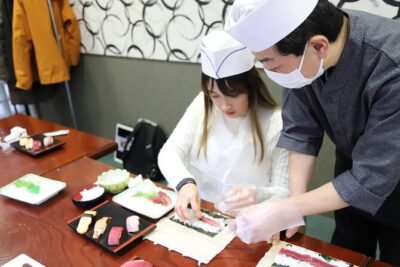
Tsukiji Fish Market Guided Tour and Sushi Making with Pro Chef
Read our review →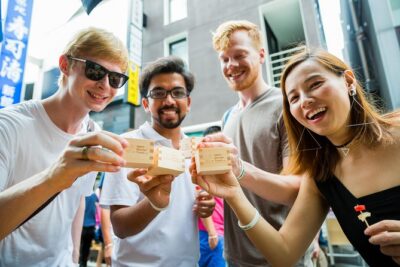
Tsukiji Fish Market Food and Culture Walking Tour
Read our review →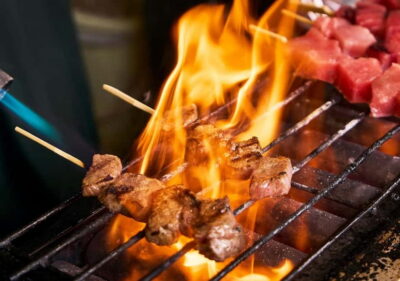
Tsukiji Fish Market: Street Food & Culture Walking Tour
Read our review →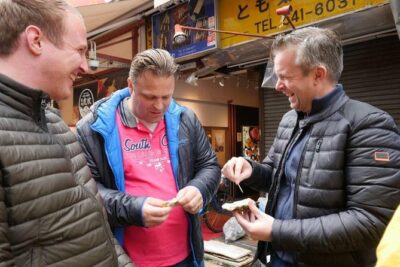
Tsukiji Fish Market Small-Group Food Walking Tour
Read our review →