Review · FISH MARKET TOURS
Tsukiji Fish Market: Street Food & Culture Walking Tour
Tsukiji is at its best when you have a guide to point out what is worth eating and explain the craft behind the seafood. This two-hour walk combines street-food stops with a fish-cutting demonstration, a seafood bowl, the working market, and Tsukiji Hongwanji Temple.
I like the clear mix of food and culture, and I like that the tour includes a look at traditional fish preparation rather than just a series of snacks. The main drawback is that the group can reach 30 people, so this may feel less personal than the phrase small-group suggests, especially when the market is crowded.
Key points to know before you book
- The fish-cutting demonstration is the tour’s most distinctive feature: You watch a skilled chef fillet a whole fish using traditional methods.
- Food purchases are extra: The route includes street-food stops and a seafood bowl experience, but meals are not included in the price.
- The market is active and crowded: You may need to keep close to the guide, and past groups have found the pace or organization uneven.
- Hongwanji Temple adds a cultural pause: The 15-minute visit introduces Buddhist culture and the temple’s place in Tsukiji.
- A maximum of 30 people matters: You get a local escort, but do not assume the intimacy of a private tour.
- The $33.16 price can be good value: It makes sense if you want food guidance and context, less so if you are happy to wander Tsukiji on your own.
Why Tsukiji works best as a guided food walk
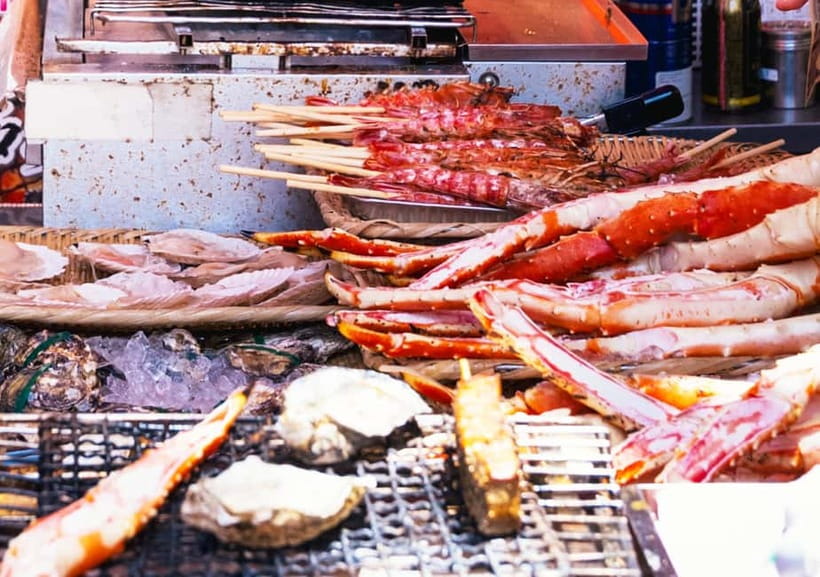
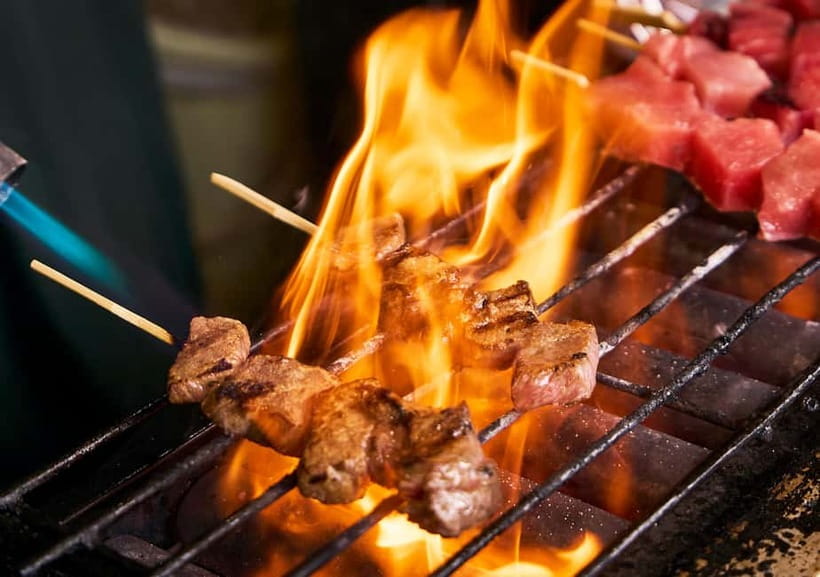
Tsukiji’s outer market, called Tsukiji Jogai Market, is a maze of food shops, stalls, and small eateries. You can walk through it independently, but the hard part is knowing which foods fit your appetite, budget, and comfort level. A guide gives the market some order.
This tour uses food as the main way into Japanese culture. You learn about ingredients and cooking while moving between stalls, then see the skill involved in preparing a whole fish. That makes the experience more useful than a simple tasting walk, although you should not expect a long formal lecture on Tokyo history.
I like this balance. You get the sounds, smells, and close-up food displays of Tsukiji, but you also get explanations about Japanese cooking and traditional technique. The route is short enough to fit into a busy Tokyo morning or afternoon.
The strongest part depends on your guide. Guides named George and Tomo have led versions of this experience, and the quality of the explanation can shape your morning. A clear, engaged guide can help you understand what you are eating and where it fits in Japanese food culture. A quiet or hurried guide can be harder to follow among the crowds.
More Fish Market Tours in Japan
- Tokyo Tsukiji Fish Market Food and Culture Walking Tour
★ 5.0 · 3,184 reviews - Tokyo: Tsukiji Fish Market Food and Walking tour
★ 5.0 · 1,724 reviews - Tokyo: Tsukiji Fish Market Guided Walking Tour
★ 4.9 · 1,397 reviews
Starting at Tsukiji Hongwanji Temple
The meeting point is in front of the main hall of Tsukiji Hongwanji Temple at 3-chōme-15-1 Tsukiji. Beginning here gives the tour a calm opening before you enter the market lanes.
The temple visit lasts about 15 minutes. Your guide introduces the building’s character and explains points about Buddhism, Japanese culture, and the temple’s history. This is not a long religious tour, so think of it as a short cultural orientation rather than the main event.
I find this opening useful because it gives you a little context before the food stops begin. Tsukiji is famous for eating, but the neighborhood is not only a market. The temple helps widen the picture.
The temple stop will not satisfy you if you want a detailed architectural or religious study. One past account found it added limited value, and that reaction is understandable given the short time. Still, for first-time visitors who want a compact introduction, 15 minutes is a reasonable trade.
The meeting point is near public transportation, and the tour returns to the same location at the end. That makes it easier to plan the next stop in Tokyo without arranging a separate pickup.
Eating your way through Tsukiji Jogai Market
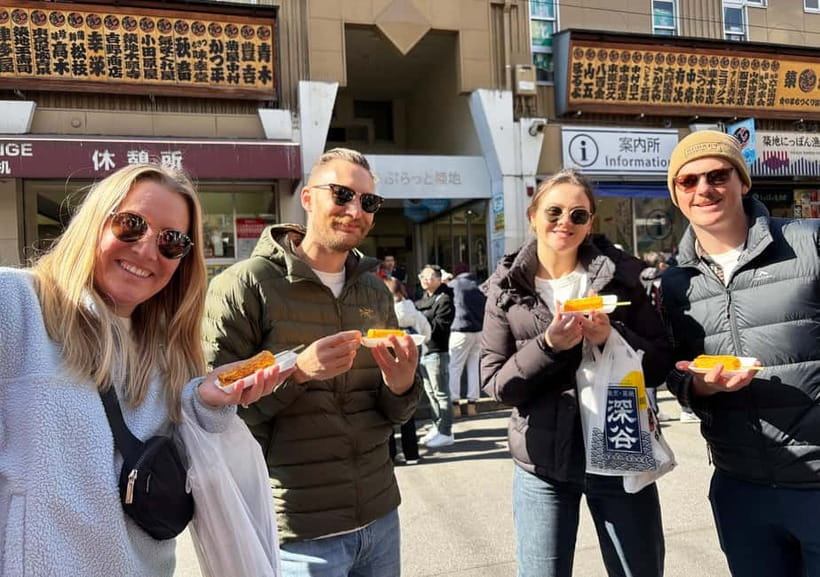
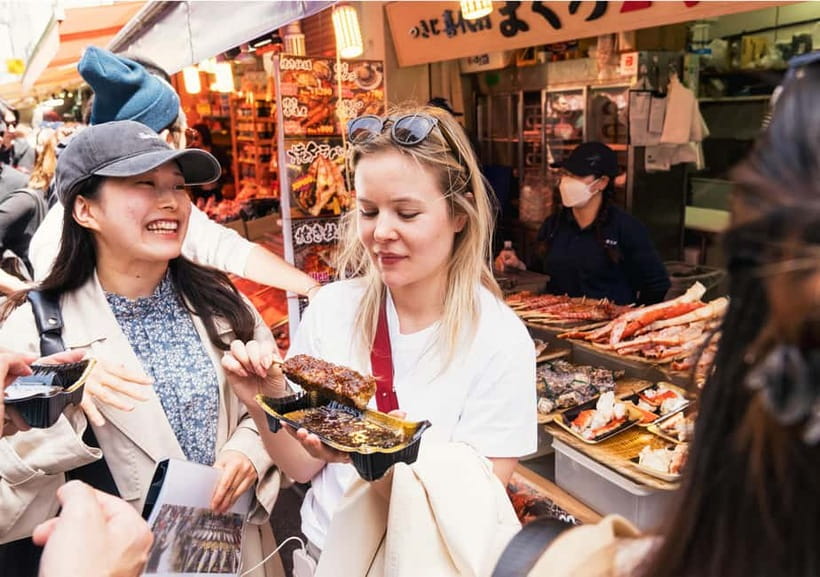
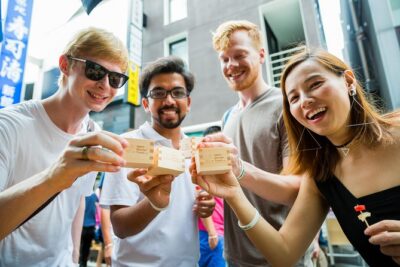
The first market portion lasts about 45 minutes. Here, you walk with the guide through Tsukiji Jogai Market and stop at places chosen for Japanese street food and ingredients.
The value is not simply the number of things you taste. It is the help with choosing. Tsukiji can present too many options at once, and a local guide can explain what a food is, how it is normally prepared, and why it matters in Japanese cooking.
Keep your budget in mind. The tour price is $33.16 per person, but meals are not included. You should expect to pay separately for anything you eat or drink. The experience may include recommendations and a food-focused route, but it is not an all-inclusive tasting package.
That distinction matters when you compare this walk with other market tours. If you want a fixed number of samples covered in advance, this may feel less predictable. If you prefer to choose what appeals to you, paying as you go gives you more control.
The food stops are also where the tour can feel most casual. A positive account praised George for finding good places and helping the group try appealing foods. Another account found the route focused mostly on encouraging people to sample different stalls, with less historical explanation than expected. Both impressions can be true: this is first a food walk, and only second a history tour.
I would book it for someone who wants help ordering or selecting Japanese market food. I would not book it mainly for a detailed account of Tokyo’s past.
Watching a whole fish become a seafood dish
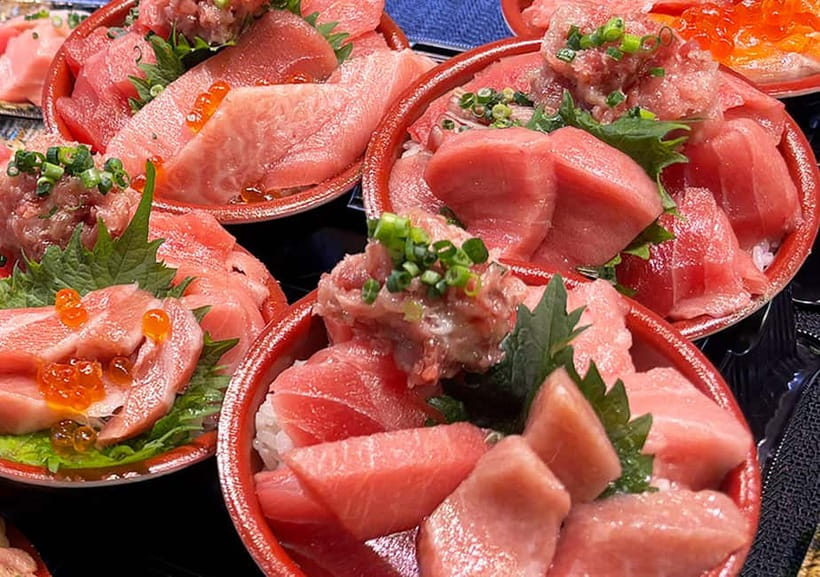
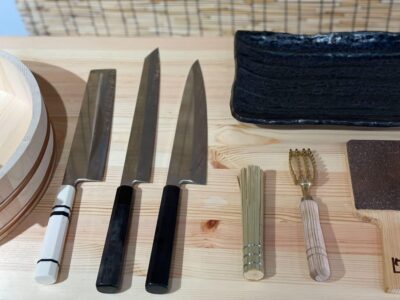
The second Tsukiji Jogai Market stop lasts around 30 minutes and includes the fish-cutting demonstration. A chef fillets a whole fish with traditional techniques, giving you a close look at the precision behind Japanese seafood preparation.
This is the most unusual part of the route. Market food can be sampled on your own, but watching a trained chef handle a whole fish gives you a clearer sense of the work behind the dishes on sale. You see technique, not just the finished product.
A fresh seafood bowl follows the demonstration. The supplied details describe the bowl as part of the stop, but they also make clear that meals are not included. Plan to pay for food yourself rather than assuming the bowl is covered by the booking price.
For anyone interested in Japanese cooking, this stop gives the tour real purpose. The guide can connect the cutting method with the ingredients and food traditions you have just encountered. It also provides a natural point to ask questions.
The demonstration may be less satisfying if you are looking for a long, theatrical show. The scheduled time is about 30 minutes, and the tour has several other stops to cover. I would think of it as a focused craft display, not a full cooking class.
More Fish Market Tours in Tokyo
- Tokyo Sushi Making Class in Tsukiji with Professional Chef
★ 5.0 · 1,177 reviews - Tsukiji Fish Market Guided Tour and Sushi Making with Pro Chef
★ 5.0 · 775 reviews - Tokyo: Tsukiji Fish Market Food and Culture Walking Tour
★ 4.7 · 757 reviews - Tsukiji Fish Market Small-Group Food Walking Tour
★ 5.0 · 621 reviews
Seeing the working side of Tsukiji Fish Market
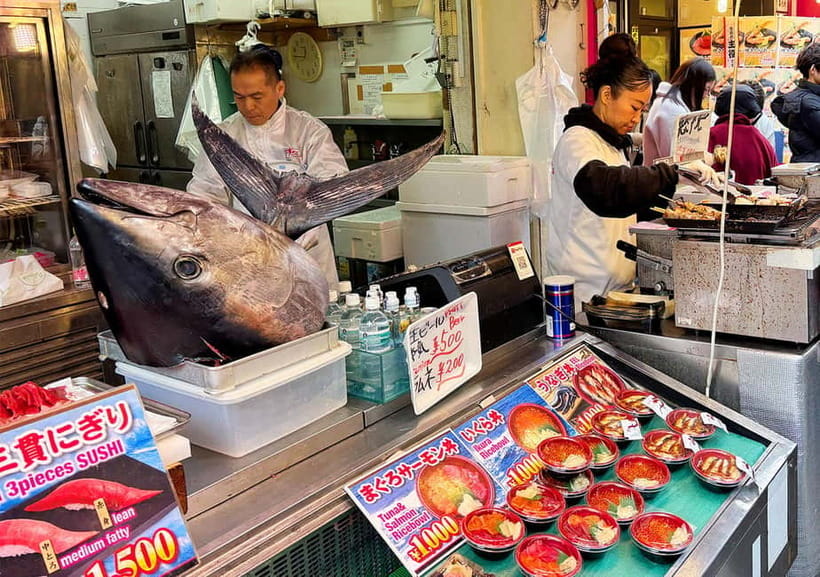
The third stop lasts about 30 minutes and takes you into the atmosphere of a fish market where professional traders operate. This is a different experience from browsing a row of food stalls.
Here, I would pay attention to the rhythm of the place rather than expect a formal attraction. The point is to see the market as a place of business, not only as a sightseeing stop. Your guide can explain what you are seeing and help you avoid treating working areas like a stage set.
Crowds are the main practical issue. One group found the market especially difficult around New Year, and the guide did not always wait for everyone. Another person described the entire outing as hectic and unorganized, including skipped stalls when the market became too busy.
You should stay alert and close to the guide. If the group spreads out, you may miss an explanation or a food stop. Comfortable shoes are sensible because the tour involves walking and standing, although the supplied information does not give a precise walking distance.
The active market also means the experience will not be identical each day. A quiet visit may feel easier to follow. A crowded visit may feel more exciting but less orderly.
What the two-hour format really gives you
The schedule adds up to about two hours:
- About 45 minutes exploring Tsukiji Jogai Market and its food culture
- About 30 minutes for the fish-cutting demonstration and seafood bowl stop
- About 30 minutes seeing the working fish market
- About 15 minutes at Tsukiji Hongwanji Temple
That is a sensible amount of time for a first look. You cover food stalls, preparation, commerce, and religion without giving away half a day.
The tradeoff is pace. Each section is short, so you will not have time for a detailed study of every stop. The guide must keep the group moving, especially when the market is crowded. That can create waiting, regrouping, or quick explanations.
I like the two-hour length for an arrival day or a morning when you have other plans. It also suits you if you want a guided introduction before returning to Tsukiji independently. I would choose a longer experience if your main goal is a slow food crawl or extended photography time.
Group size, accessibility, and the physical side
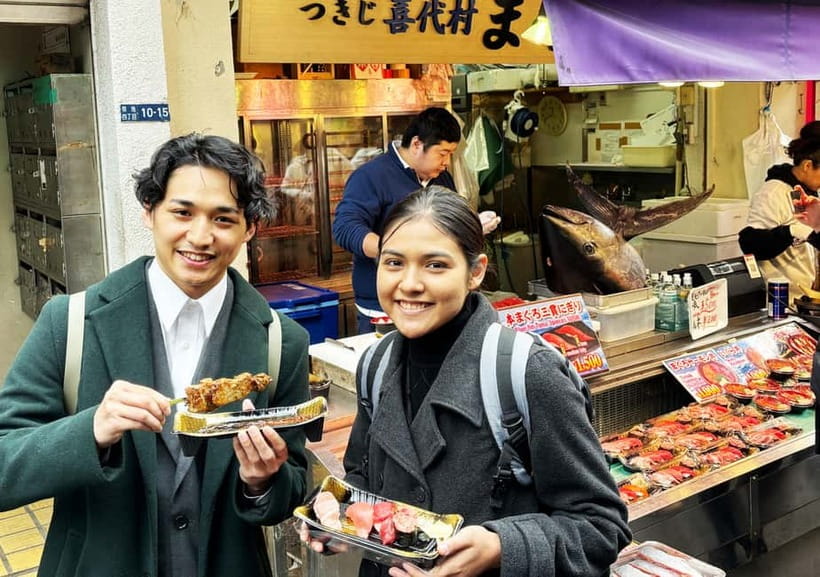
The tour is described as wheelchair and stroller accessible, and most people can participate. That makes it more flexible than many food walks through narrow market areas.
Still, accessibility on paper does not remove every challenge. The route passes through a busy market, and the reviews include concerns about sun exposure and difficulty hearing the guide. If you need shade, frequent pauses, or strong audio projection, contact the operator before booking and explain your needs clearly.
The maximum group size is 30 people. That is large enough to affect how personal the experience feels. A smaller group may gather around the fish-cutting demonstration more easily, while a larger group may need to stand farther back or wait for space.
The tour description presents a small-group format, but I would treat that as a guided group experience rather than an intimate walk. The guide may be able to focus on individuals when the group is manageable, but the 30-person cap is important.
The most useful practical habit is to stay near the guide and speak up early if you cannot hear. One past participant found a guide’s voice too quiet, particularly with the market noise. That is not a minor issue on a food tour, since much of the value comes from explanation.
Is $33.16 a fair price for this Tsukiji tour?
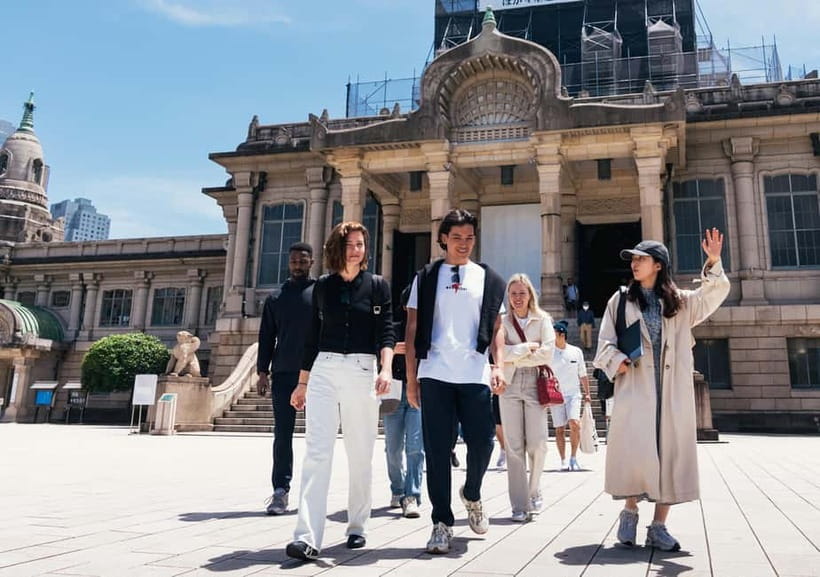
At $33.16 per person, the price is moderate for a two-hour guided Tokyo experience. You are paying for a local guide, the organized route, the fish-cutting demonstration, and cultural explanation. You are not paying for a package of meals.
I see the value in three things. First, a guide can save you time choosing where to stop. Second, the fish-cutting demonstration is difficult to recreate by simply wandering around. Third, the temple and market context give you more than a snack run.
The value drops if you only want to walk through Tsukiji and choose food independently. The market is accessible without this booking, and the tour does not include all meals. If you already know Japanese food well, you may find the guidance less useful.
Your best comparison is not the price of the food. It is the price of structure. You pay for someone to lead you through a busy place, explain ingredients and customs, and connect several different parts of Tsukiji in one morning.
Who will enjoy this most
I would recommend the tour to first-time Tokyo visitors who want a simple introduction to Tsukiji. It is also a good fit for anyone curious about Japanese seafood, market customs, and the connection between food and culture.
Families may appreciate the short duration and stroller accessibility, although parents should be ready for crowds. People using wheelchairs should confirm their specific needs in advance, since the route takes place in an active market and includes standing among other shoppers.
Food-focused visitors should enjoy the chance to sample items of their choice and watch the fish demonstration. You should budget extra for food and arrive ready to make decisions at the stalls.
I would be more cautious if you dislike crowds, need a slow pace, or want a detailed account of Tokyo history. The tour gives some historical and cultural explanation, but its center is food. I would also think twice if you cannot tolerate sun exposure or have trouble hearing in noisy places unless the operator can address those concerns.
Booking, cancellation, and a few practical tips
You can cancel for a full refund up to 24 hours before the local start time. Changes made within 24 hours are not accepted, and late cancellations are not refunded. The experience depends on good weather, so poor conditions can lead to a different date or a full refund.
Bring money for food because meals are not included. Keep your schedule flexible after the tour if you want to return to a favorite stall, since the route itself moves through several short sections.
I would also avoid treating the 99 percent recommendation and five-star score as a guarantee of a perfect morning. The very high overall response suggests the format works well for many people, but the detailed feedback shows clear weak points: crowding, waiting, uneven organization, and guides who may be difficult to hear.
Should you book the Tsukiji Fish Market Street Food and Culture Walking Tour?
Book it if you want a guided first taste of Tsukiji, especially if selecting unfamiliar Japanese foods feels daunting. The fish-cutting demonstration, seafood bowl stop, market walk, and Hongwanji Temple visit make a useful two-hour introduction, and $33.16 is reasonable when you value that structure.
Skip it if you prefer to wander alone, want meals included, or expect a quiet private tour. The 30-person maximum can feel large, and the market’s noise and crowds may reduce the personal attention promised by the small-group format.
My practical call: choose this tour early in your Tokyo stay, then return to Tsukiji later if you find a stall you want to explore more slowly. That way, the guide handles your first orientation, while you keep the freedom to make your own food choices afterward.
FAQ
How long does the Tsukiji Fish Market tour last?
The tour lasts approximately two hours.
Where does the tour start?
It starts at Tsukiji Hongwanji Temple, at 3-chōme-15-1 Tsukiji, Chuo City, Tokyo 104-0045, Japan.
Where does the tour end?
The activity ends back at the meeting point.
Is food included in the tour price?
No. Meals are not included, so you should pay separately for street food and the seafood bowl.
Does the tour include a fish-cutting demonstration?
Yes. You watch a skilled chef fillet a whole fish using traditional techniques.
Is the tour wheelchair and stroller accessible?
Yes. The experience is described as wheelchair and stroller accessible.
How many people can join the tour?
The maximum group size is 30 people.
Is the tour near public transportation?
Yes. The meeting point is near public transportation.
Can I cancel for a full refund?
Yes. You can cancel at least 24 hours before the local start time for a full refund. Cancellations made less than 24 hours before the start time are not refunded.
More Street Food Market Tours in Japan
- Tokyo Food Tour Taste Fresh Delights at Tsukiji Market
★ 5.0 · 429 reviews - Toyosu Market Morning Tuna Auction and Tsukiji Food Tour with Licensed Guide
★ 4.5 · 146 reviews - Tokyo Tsukiji Fish Market Food Tour: 15 Stops & Walk Local Street
★ 5.0 · 139 reviews - Tsukiji Fish Market Private Food Tour in Tokyo
★ 5.0 · 18 reviews
More Market Walking Tours in Japan
- Tsukiji Fish Market: Street Food & Culture Walking Tour
★ 4.8 · 259 reviews - Tokyo: Guided Walking Tour of Tsukiji Market with Breakfast
★ 4.4 · 134 reviews - Tokyo: Tsukiji Market Walking Tour & Sushi Cooking Class
★ 4.6 · 122 reviews - Tokyo: Guided Walking Tour of Tsukiji Market with Lunch
★ 4.4 · 24 reviews
Just added around Tokyo
- Tokyo: Tsukiji Market Guided Tour & Sushi-Making Experience★ 4.4 · 11 reviews
- Tokyo: Private Tsukiji Street Food & Sake with Local Guide★ 5.0 · 3 reviews
- Tokyo: Tsukiji Market and Hama-rikyu Gardens Guided Tour★ 4.8 · 73 reviews
- Tokyo: Tsukiji Fish Market Culture Tour with Sashimi Tasting★ 4.6 · 54 reviews
- Tokyo: Tsukiji Fish Market Foodie and Educational Tour★ 5.0 · 4 reviews
- Tokyo : Tsukiji Fish Market Food Walking & Shrine Visit Tour★ 5.0 · 3 reviews
- Tokyo’s Kitchen: Tsukiji Market Food & Culture Walk★ 4.7 · 74 reviews
- Tokyo: Guided Walking Tour of Tsukiji Market with Lunch★ 4.4 · 24 reviews
Fish Market Tours, compared.
Tokyo Tsukiji Fish Market Food and Culture Walking Tour
Read our review →
Tokyo Sushi Making Class in Tsukiji with Professional Chef
Read our review →
Tsukiji Fish Market Guided Tour and Sushi Making with Pro Chef
Read our review →Tsukiji Fish Market Food and Culture Walking Tour
Read our review →
Tsukiji Fish Market Small-Group Food Walking Tour
Read our review →