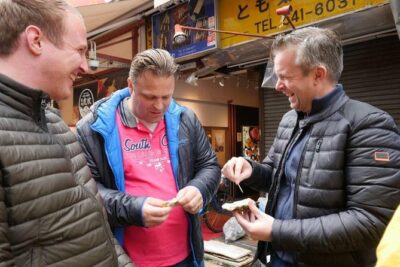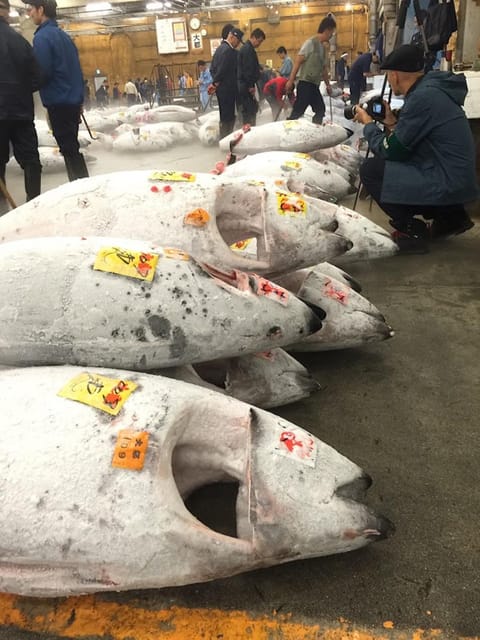
Review · FISH MARKET TOURS
Tokyo: Tsukiji Fish Market Foodie and Educational Tour
Tsukiji is more than a place to buy sushi. This two-hour walk connects its working market culture with a local shrine, a tuna tasting, a small bento, and a stop for Japanese convenience-store snacks. The group is limited to six, so the experience can feel personal rather than like a parade through the alleys.
I like the fresh tuna and wasabi tasting, which gives you a clear lesson in Japanese food without asking you to commit to a large meal. I also like the local focus: Namiyoke Inari Shrine and the advice on what to buy at Lawson add useful context you will not get from simply wandering around.
The main drawback is that the $70 price does not cover extra street food, drinks, market purchases, or Lawson items. Vegetarians should also skip this tour, since tuna and other seafood are central to the experience.
Key points at a glance
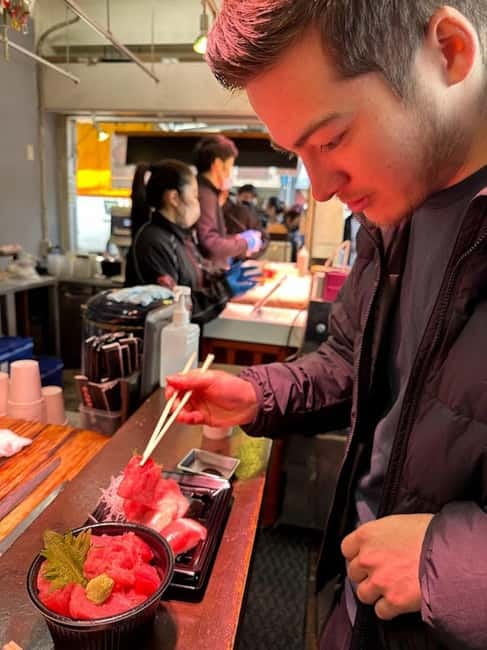
- Fresh tuna, wasabi, and sake are included: You receive a small bento with freshly cut tuna and fresh wasabi, plus a small amount of Japanese sake.
- Namiyoke Inari Shrine adds local context: The guide explains the shrine’s role in protection, prayer, and the history of the Tsukiji area.
- Chinami is a highly praised guide: Her English, local tips, and ability to steer you away from tourist traps have drawn particular praise.
- You explore more than fish stalls: The route includes Uogashi Mall, the Outer Market, cooking tools, ingredients, souvenirs, and alternative food stops.
- Extra tasting costs are separate: Street food, drinks, additional bento items, market goods, and Lawson snacks are paid for by you.
- The small group matters: With no more than six participants, it is easier to ask questions and discuss food preferences.
Why this Tsukiji walk is different
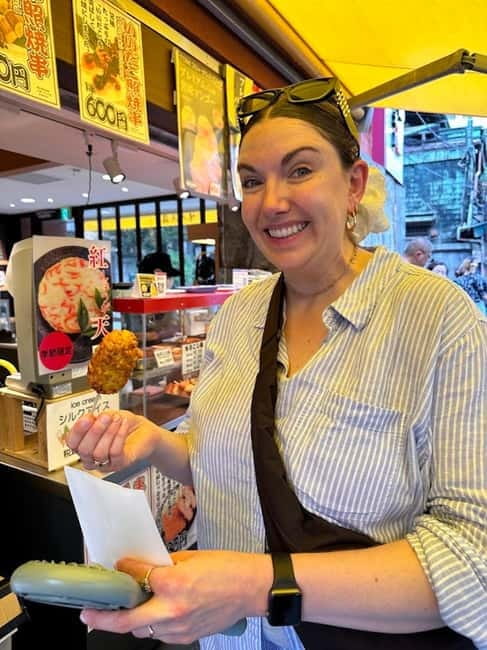
Many people arrive at Tsukiji expecting one big fish market. The reality is more useful and more interesting. The old inner wholesale market moved to Toyosu, but Tsukiji’s Outer Market remains a lively food district filled with shops, small eateries, ingredients, knives, utensils, sweets, and snack stalls.
This tour gives you a way to read the area. You are not simply pointed toward the nearest sushi counter. You learn why the neighborhood matters, how the shrine fits into local life, how tuna is appreciated, and what kinds of Japanese food are easy to find in a convenience store.
That combination suits you if you want more than photographs and quick bites. The tour is educational, but it does not sound like a classroom. You walk, stop, taste, ask questions, and continue.
The experience lasts two hours and starts and ends outside Lawson at the Tsukiji 4 chome intersection. That compact format works well early in a Tokyo visit. You get a practical introduction, then have the rest of the day to return for shopping or explore another part of the city.
More Fish Market Tours in Japan
- Tokyo Tsukiji Fish Market Food and Culture Walking Tour
★ 5.0 · 3,184 reviews - Tokyo: Tsukiji Fish Market Food and Walking tour
★ 5.0 · 1,724 reviews - Tokyo: Tsukiji Fish Market Guided Walking Tour
★ 4.9 · 1,397 reviews
Meeting outside Lawson at Tsukiji 4 chome
The starting point is outside the Lawson convenience store at the Tsukiji 4 chome intersection. Do not gather directly around the entrance, since that can block people going into the shop. Look for the staff member holding a notice board.
This is a sensible meeting place because the tour ends there too. You do not need to remember a second location after two hours of walking and tasting. It also sets up the final snack stop, where the guide explains what to buy inside Lawson.
Arrive ready to walk. The schedule includes about ten minutes on foot to the shrine, five minutes to the market tasting stop, and another ten minutes back to Lawson. The remaining time is spent visiting, tasting, shopping, and listening.
With a maximum of six people, the pace should be easier to manage than on a large group tour. You can ask about ingredients, cooking tools, or Japanese food customs without waiting for a crowd to move along.
Namiyoke Inari Shrine and the meaning of protection
The first major stop is Namiyoke Inari Shrine, reached after a short walk from Lawson. Here, the guide explains why local people worship at the shrine and how to pray for protection from bad luck, misfortune, and turmoil.
This stop gives Tsukiji a human dimension. Markets are places of work, risk, and constant movement. A shrine connected with protection makes sense in that setting, and the guide helps you understand the customs rather than treating the visit as a quick photo stop.
You will learn how to pray properly, which is useful because Japanese shrine etiquette can feel confusing if you have never seen it before. The visit lasts about 15 minutes, so it adds context without taking over the food side of the experience.
One past participant also found the nearby religious sites helpful for understanding the two main Japanese religious traditions, Shinto and Buddhism. The stated route centers on Namiyoke Inari Shrine, so do not expect a full temple tour. Still, this short visit gives you a meaningful cultural pause before the tasting.
The tuna bento, fresh wasabi, and small sake tasting
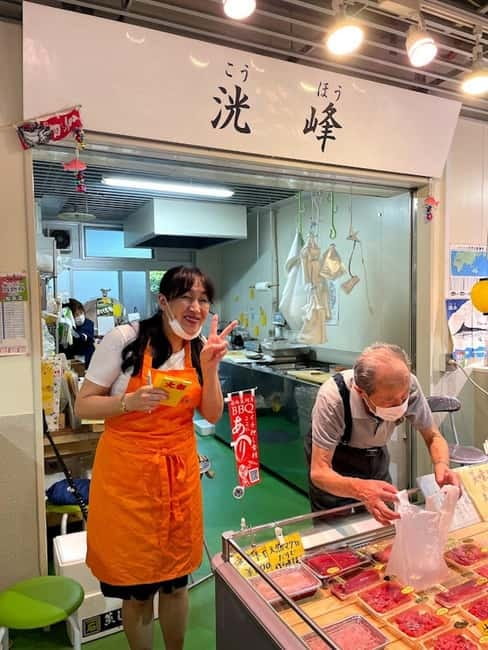
After the shrine, you walk about five minutes to a stop connected with Tsukiji Uogashi Mall. The tasting is hosted through a local wholesaler, Tsukiji KohHoh, which is associated with Toyosu Market. The team specializes in blue marlin and tuna, and the tour includes a small bento with freshly cut tuna and fresh wasabi.
This is the heart of the experience. The portion is described as small, so think of it as a guided tasting rather than lunch for the whole day. You get to focus on texture, freshness, and the way wasabi changes the bite without being overwhelmed by a large platter.
A small amount of Japanese sake is included as well. That pairing helps you understand how a few simple ingredients can form a complete food lesson. The guide can explain the ingredients and the craft behind the meal, giving you more than a quick sample grabbed from a counter.
This portion lasts about 35 minutes and includes food tasting, a short brunch-style stop, local snacks, and market guidance. The exact products may vary, but the included tuna, fresh wasabi, bento, and sake are the key elements.
If you do not eat the bento, contact the provider in advance with children’s ages and food preferences. The tour is not suitable for vegetarians, and seafood is not a minor side feature here. People with strict dietary needs should ask before booking rather than hoping the tasting can be changed on the day.
More Fish Market Tours in Tokyo
- Tokyo Sushi Making Class in Tsukiji with Professional Chef
★ 5.0 · 1,177 reviews - Tsukiji Fish Market Guided Tour and Sushi Making with Pro Chef
★ 5.0 · 775 reviews - Tokyo: Tsukiji Fish Market Food and Culture Walking Tour
★ 4.7 · 757 reviews - Tsukiji Fish Market: Street Food & Culture Walking Tour
★ 5.0 · 669 reviews
What to see at Tsukiji Uogashi Mall
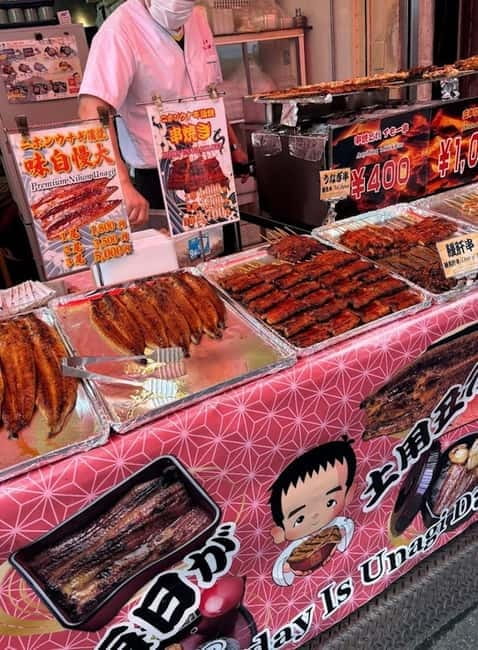
The guide also shows you Tsukiji Uogashi Mall, where you can look at produce, vegetables, fruit, and a food court with restaurants. This part is useful because it widens your view of Tsukiji beyond raw fish.
You might find ingredients that are difficult to identify on your own, particularly if labels are mostly in Japanese. Having an English-speaking guide nearby lets you ask what something is, how it is used, and if it makes sense to buy it as a gift or cooking ingredient.
The mall is also a good place to compare the market’s practical side with its tourist appeal. Some shops cater to local food businesses, while others are accessible to visitors looking for a small purchase. You are free to buy more food, but those purchases are not included in the $70 fee.
Wandering through the Tsukiji Outer Market
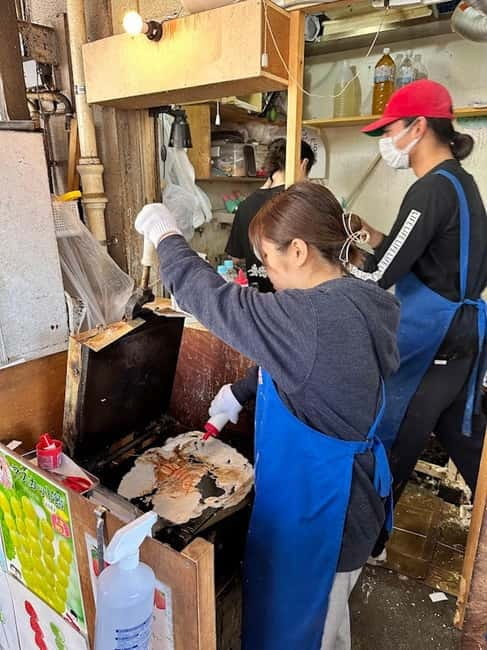
The next major section lasts about 45 minutes in the Tsukiji Outer Market. This is the longest stop, and rightly so. You have time to see food stalls, browse shops, learn the area’s background, and decide if you want to spend extra money on a snack or drink.
The guide can point out options beyond fish. You may find Japanese ingredients, cooking knives, utensils, souvenirs, desserts, and other culinary goods tucked into the market lanes. That variety is a strong reason to take the tour instead of visiting only for sushi.
Street food and drinks are optional and not included. This keeps the base price clear, but you should bring some extra yen if you want to taste as you go. The guide can help you choose, though the cost of each item remains yours.
I would treat this part as a guided orientation rather than a full shopping session. Forty-five minutes goes quickly, especially if you stop to photograph displays or examine knives and kitchen tools. If you already know you want to buy something substantial, return later with more time.
The market can also be crowded, and narrow alleys are not ideal for slow browsing while a group is moving. The small group helps, but you still need to stay alert and avoid blocking shop entrances. Follow the guide’s lead and save detailed shopping for after the tour when possible.
Ending at Lawson and the art of Japanese convenience-store food
The final walk returns to Lawson, where the guide helps you hunt for snacks and drinks. This may sound like a modest ending, but it is one of the most practical parts of the tour.
Japanese convenience stores are useful for breakfast, train food, late-night snacks, and inexpensive drinks. You can ask what is worth trying instead of grabbing familiar-looking packaging at random. The guide also offers advice on what to buy and how to enjoy it.
This stop gives the tour a nice change of scale. You begin with a shrine, taste high-quality tuna from a market specialist, explore Tsukiji’s food shops, then finish with everyday food that many people can actually use during the rest of a Japan trip.
Lawson purchases are not included. Plan to pay separately for anything you take away. The stop is about guidance, not a second included meal.
The guide makes the difference
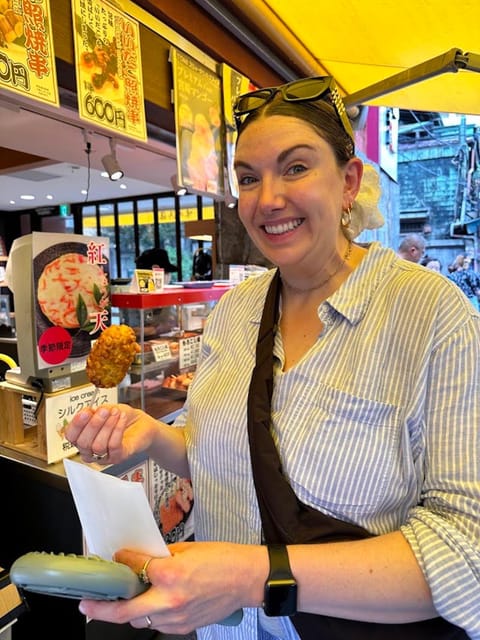
The strongest praise for this experience centers on Chinami. She has been described as an excellent English speaker with strong local knowledge, and her advice helped one participant avoid tourist traps in Tsukiji. She also offered useful tips for the rest of a Tokyo and Kyoto visit.
That matters because Tsukiji can be easy to oversimplify. A guide who knows the area can explain what is worth your time, which products are simply attractive to tourists, and how the market functions beyond its most photographed stalls.
The tour is offered in English, and the small group size gives you a better chance to speak directly with the guide. The provider is Hanamichi. If you are especially interested in food culture, ask questions as you go. The format is built for conversation rather than a long speech delivered from a distance.
Photos taken during the tour are included, along with a bottle of water. Those are small extras, but they are useful during a compact walking tour where your hands may already be occupied with food or shopping bags.
Is $70 a fair price?
At $70 per person, this is not the cheapest way to walk through Tsukiji. You could visit the market on your own and pay only for what you eat. The question is what you want from the visit.
The price includes a live English-speaking guide, a historical and cultural walk, a small bento with freshly cut tuna, fresh wasabi, a small amount of sake, a bottle of water, and photos. It also gives you help choosing food and understanding the market.
That is fair value if you are new to Tokyo, uncertain about Japanese food, or keen to learn rather than simply browse. The included tuna and sake make the cost easier to justify, especially if you value a focused tasting led by someone who can explain what you are eating.
The value is weaker if you mainly want a large meal or a long shopping session. The bento is small, extra food costs more, and two hours is not enough for a slow examination of every market lane. You may want to budget separately for street food, drinks, souvenirs, or kitchenware.
Free cancellation up to 24 hours before the start and the option to reserve without paying immediately make planning less rigid. Starting times vary, so check availability when booking.
Who should book this Tsukiji experience?
I would recommend it to first-time visitors who want a gentle introduction to Tokyo food culture. It also suits curious eaters who appreciate explanation with their meal, couples or friends who prefer a small group, and anyone who wants practical food advice for the rest of a Japan trip.
It is a good fit for people who enjoy local customs as much as tasting. The shrine visit, prayer guidance, market background, tuna lesson, and Lawson stop create a broader picture than a simple food crawl.
I would not choose it if you are vegetarian, avoiding seafood, or looking for a large breakfast. It may also disappoint serious shoppers who want several hours to inspect knives, ingredients, and souvenirs. The tour shows you where to look, but it does not leave much spare time for major purchases.
Should you book it?
Book this tour if you want a compact, guided introduction to Tsukiji with real tasting, cultural context, and practical advice. The combination of fresh tuna, wasabi, sake, Namiyoke Inari Shrine, the Outer Market, and Lawson snacks gives you a useful first look at Tokyo food life.
Skip it if you prefer to explore alone, need a vegetarian menu, or want your $70 to cover every bite and drink. For everyone else, the small group, Chinami’s local guidance, and included tasting make this a sensible way to get your bearings before returning to Tsukiji on your own.
FAQ
How long does the Tsukiji tour last?
The tour lasts two hours, including walking between Lawson, Namiyoke Inari Shrine, the market areas, and the ending point at Lawson.
Where does the tour meet?
You meet outside Lawson at the Tsukiji 4 chome intersection. Do not gather around the entrance, since you may block people entering the store. Staff will hold a notice board.
Is food included in the price?
A small bento with freshly cut tuna and fresh wasabi is included, along with a bottle of water and a small amount of sake. Extra street food, drinks, market purchases, and Lawson items are not included.
Is the tour suitable for vegetarians?
No. The experience is not suitable for vegetarians because tuna and seafood are central to the included tasting.
What language is the tour offered in?
The live tour guide speaks English.
Can children join the tour?
Children may be accommodated, but you should provide their ages and food preferences in advance, especially if they will not eat the included bento.
More Street Food Market Tours in Tokyo
- Tokyo Tsukiji Fish Market Food Tour: 15 Stops & Walk Local Street
★ 5.0 · 139 reviews - Tsukiji Fish Market Private Food Tour in Tokyo
★ 5.0 · 18 reviews - Tokyo: Private Tsukiji Street Food & Sake with Local Guide
★ 5.0 · 3 reviews - Tokyo : Tsukiji Fish Market Food Walking & Shrine Visit Tour
★ 5.0 · 3 reviews
More Street Food Market Tours in Japan
- Tsukiji Fish Market Small-Group Food Walking Tour
★ 5.0 · 621 reviews - Tokyo Food Tour Taste Fresh Delights at Tsukiji Market
★ 5.0 · 429 reviews - Tsukiji Fish Market: Street Food & Culture Walking Tour
★ 4.8 · 259 reviews - Toyosu Market Morning Tuna Auction and Tsukiji Food Tour with Licensed Guide
★ 4.5 · 146 reviews
Just added around Tokyo
- Tokyo: Tsukiji Market Guided Tour & Sushi-Making Experience★ 4.4 · 11 reviews
- Tokyo: Private Tsukiji Street Food & Sake with Local Guide★ 5.0 · 3 reviews
- Tokyo: Tsukiji Market and Hama-rikyu Gardens Guided Tour★ 4.8 · 73 reviews
- Tokyo: Tsukiji Fish Market Culture Tour with Sashimi Tasting★ 4.6 · 54 reviews
- Tokyo : Tsukiji Fish Market Food Walking & Shrine Visit Tour★ 5.0 · 3 reviews
- Tokyo’s Kitchen: Tsukiji Market Food & Culture Walk★ 4.7 · 74 reviews
- Tokyo: Guided Walking Tour of Tsukiji Market with Lunch★ 4.4 · 24 reviews
- Tokyo Morning Tour: Meiji Shrine, Asakusa & Fish Market★ 4.9 · 44 reviews
Fish Market Tours, compared.
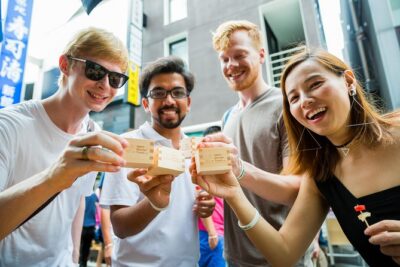
Tokyo Tsukiji Fish Market Food and Culture Walking Tour
Read our review →

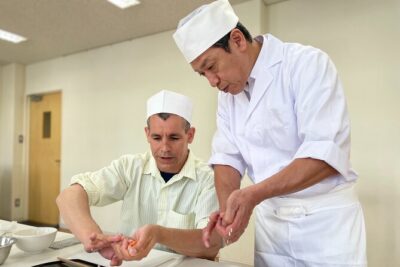
Tokyo Sushi Making Class in Tsukiji with Professional Chef
Read our review →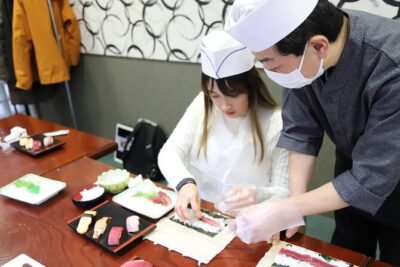
Tsukiji Fish Market Guided Tour and Sushi Making with Pro Chef
Read our review →Tsukiji Fish Market Food and Culture Walking Tour
Read our review →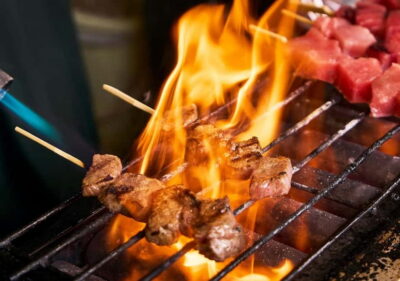
Tsukiji Fish Market: Street Food & Culture Walking Tour
Read our review →