Review · FISH MARKET TOURS
Tokyo: Tsukiji Fish Market Food and Culture Walking Tour
Tsukiji is best understood with your appetite switched on. This three-hour walk takes you through the outer market’s narrow lanes, where you can try Wagyu beef skewers, tamagoyaki, fish cakes, seafood, and seasonal fruit instead of guessing what to order at every stall. I like the mix of eating and explanation, and I like that a small group of two to eight people can move through the market without becoming a tour parade.
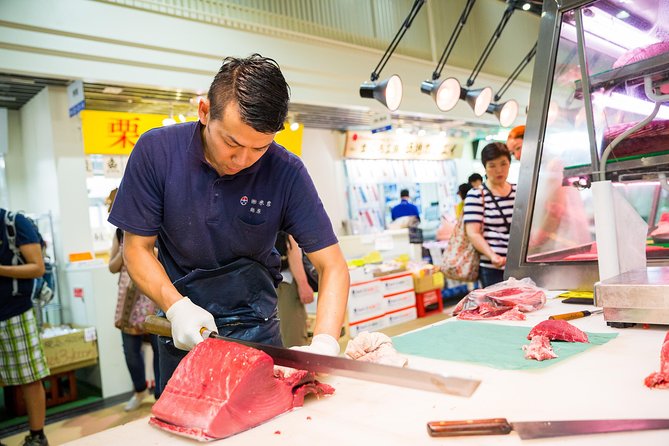
The final meal gives the morning a proper finish: depending on the day, you get sushi or a seafood bowl, sometimes with a fish-cutting demonstration. The main drawback is that this is not a good fit for vegetarians, vegans, people needing halal or gluten-free food, or anyone who finds crowded walking difficult. Market closures also matter, especially on Wednesdays, Sundays, public holidays, and other closed days.
Quick take: what makes this Tsukiji walk useful
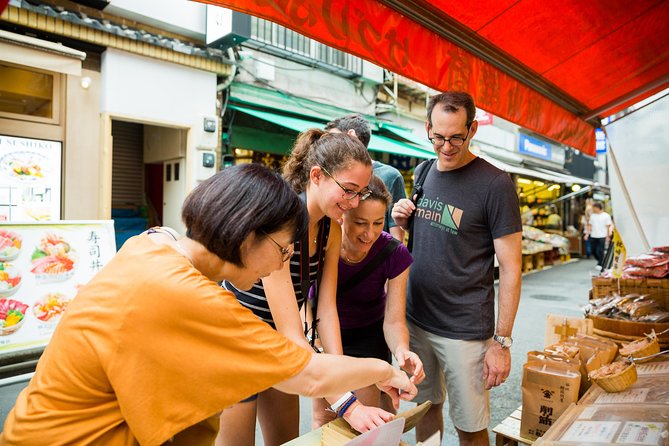
- A food-led route: Expect Wagyu skewers, Japanese omelet, fish cake, fruit, and either sushi or a seafood bowl.
- A small group of two to eight: This makes it easier to ask questions and stay with your guide in crowded lanes.
- A cultural starting point: The meeting point at Tsukiji Honganji Temple adds shrine etiquette and local history before the food begins.
- A practical introduction to Tsukiji: Your guide helps you understand what the stalls sell and how the market connects to Tokyo’s top chefs.
- A filling three hours: The tastings range from quick bites to a sit-down seafood dish at the end.
- A schedule-sensitive experience: Some market shops close on Wednesdays, Sundays, public holidays, and other market holidays.
Starting at Tsukiji Honganji Temple
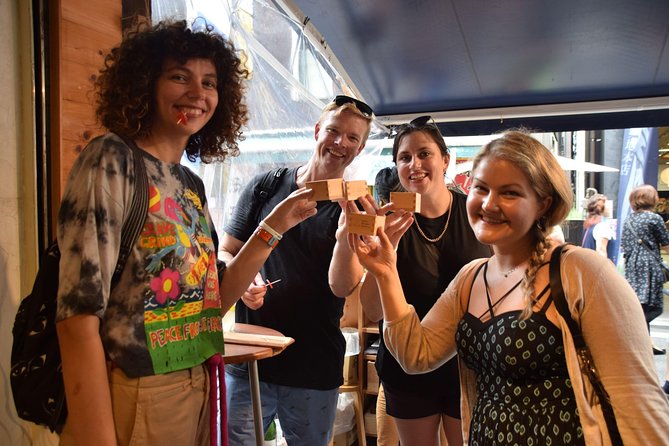
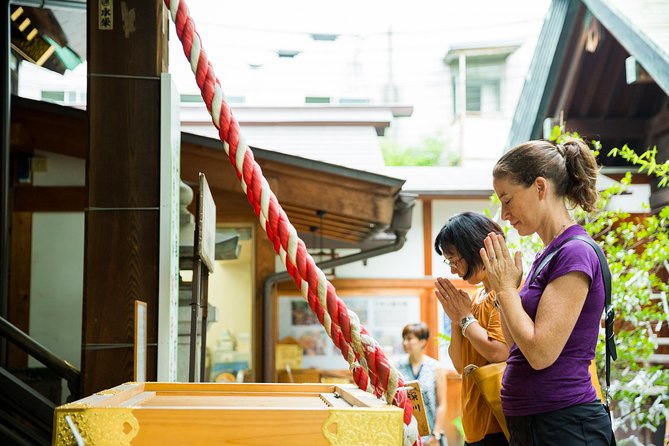
Meet your guide at the main gate of Tsukiji Honganji Temple. This is a useful meeting point, not just a pin on a map. The temple gives you a calm place to find your group before entering the tight, noisy market streets.
Several guides have made a strong impression on this route, including Shun, Miki, Nazu, Robert, Yuki, and Yoshiko. Your guide may explain the temple’s history, the growth of the Tsukiji area, and proper shrine or temple manners. One guide has also been praised for showing visitors the cleansing ritual before the tour, so arrive ready to pay attention before the eating starts.
The temple stop helps place Tsukiji in context. You are not simply being led from snack to snack. You learn why this district became tied so closely to seafood, wholesale buying, restaurants, and Tokyo’s food trade. The amount of historical detail can vary with the guide, but the best guides, including Nazu and Robert, add useful background without turning the morning into a lecture.
More Fish Market Tours in Japan
- Tokyo Tsukiji Fish Market Food and Culture Walking Tour
★ 5.0 · 3,184 reviews - Tokyo: Tsukiji Fish Market Food and Walking tour
★ 5.0 · 1,724 reviews - Tokyo: Tsukiji Fish Market Guided Walking Tour
★ 4.9 · 1,397 reviews
Finding your way through the outer market
Tsukiji’s famous inner wholesale market moved to Toyosu, but the outer market remains a working food district. It is packed with small shops and stalls selling fish, shellfish, prepared food, tea, kitchen goods, omelets, fruit, and other ingredients.
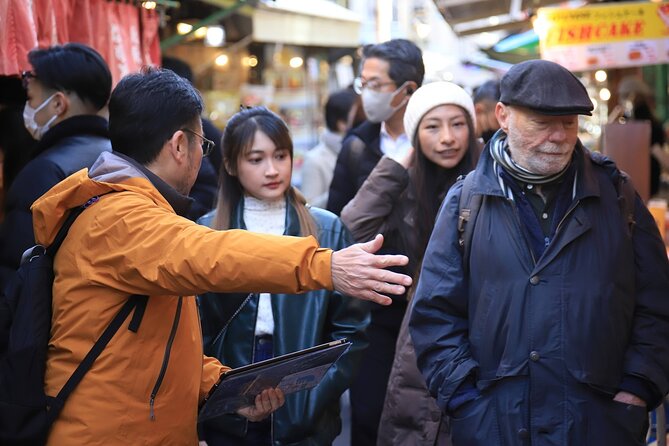
This is where a guide earns the price of admission. On your own, you can walk through the lanes, but it is not always clear which items are meant for a quick bite, which shops sell ingredients to take home, or how to order without slowing a busy counter. A guide can point out what is seasonal, explain unfamiliar foods, and help you avoid spending your morning wandering in circles.
The group size matters here. With only two to eight people, your guide can stop without blocking half the lane. You still need to stay alert, since the market is crowded and shop staff are working, but this is far easier than moving through Tsukiji with a large coach group.
Expect roughly 30 minutes of general market orientation before the tasting portion gathers speed. In practice, the two parts blend together. You look, ask questions, eat something, then move on to another stall.
The food stops, from Wagyu to tamagoyaki
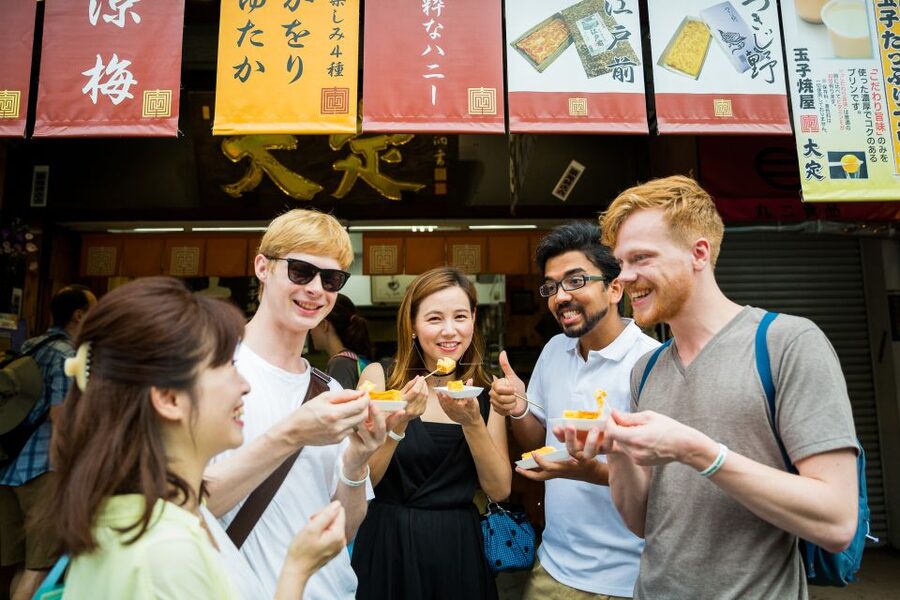
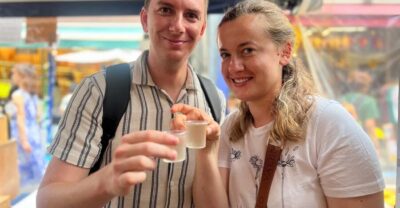
The food is the heart of the tour, and the selection gives you a broad look at Japanese market eating. The exact order can change, but the included menu features high-grade Wagyu beef skewers, a Japanese omelet, fresh fish cake, seasonal fruit, and either sushi or a seafood bowl.
The Wagyu skewer is often the early favorite. It is a small portion, not a full steak, but the richness makes it a memorable market bite. Several guides have also helped people return to the same stall after the tour to buy another skewer. That is a good sign for anyone who wants a taste of luxury without booking a formal beef dinner.
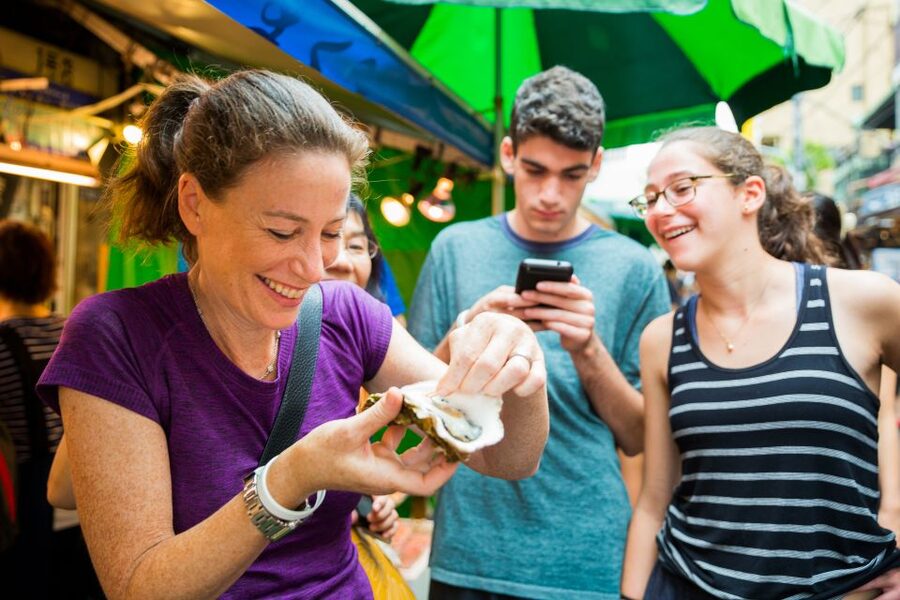
Tamagoyaki, or Japanese rolled omelet, offers a different lesson. It is sweet, soft, and made in a style that may be quite different from the omelet you eat at home. Fish cake gives you another texture and flavor, while seasonal fruit shows why Japanese produce often receives such careful attention. Depending on the season, you might also find additional foods available for purchase, such as oysters, strawberries, squid, sea urchin, matcha ice cream, tea, or other market snacks.
These extra items are not all part of the fixed menu, so budget for optional purchases if something catches your eye. One useful feature of the route is that guides may help you decide what is worth trying and explain how to choose tea or other edible gifts.
The final seafood bowl or sushi stop
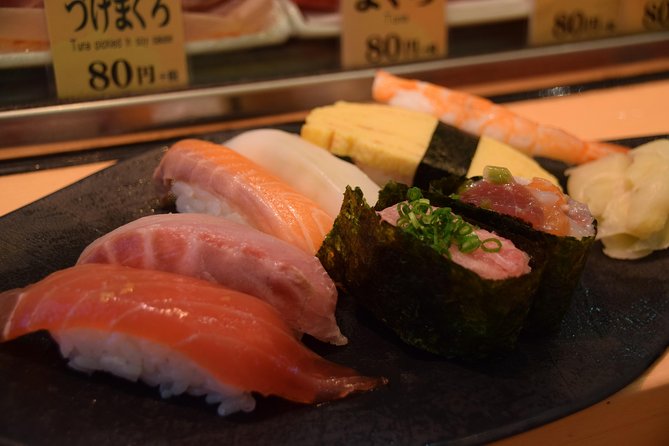
The tour finishes with either sushi or a seafood bowl, depending on the day. This is more than another quick sample. You sit down for a proper seafood serving after working your way through the market.
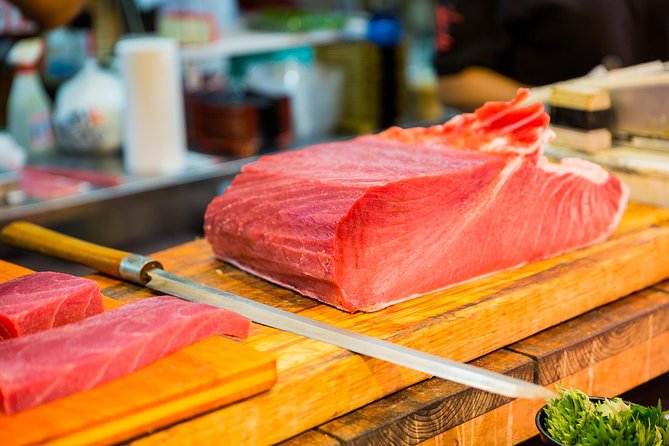
Some groups receive a sashimi bowl, and the fish may be cut and prepared in front of you. A demonstration from the sushi chef can make this final stop especially interesting because you see the handling and presentation before eating. The bowl is fresh, substantial, and usually enough to leave you well fed after the smaller tastings.
There is one practical point here: do not assume the exact final dish until the day of your tour. The schedule says sushi or seafood bowl, and restaurant availability can also change. If the planned restaurant suddenly closes, an alternative meal is provided.
The final stop can feel almost like a show, particularly when the chef demonstrates how to prepare the fish. Some people may find the presentation more interesting than the middle tastings. If you arrive very hungry, you will appreciate the full bowl at the end. If you have already eaten a large breakfast, the steady stream of samples may leave you full before the final course.
More Fish Market Tours in Tokyo
- Tokyo Sushi Making Class in Tsukiji with Professional Chef
★ 5.0 · 1,177 reviews - Tsukiji Fish Market Guided Tour and Sushi Making with Pro Chef
★ 5.0 · 775 reviews - Tsukiji Fish Market: Street Food & Culture Walking Tour
★ 5.0 · 669 reviews - Tsukiji Fish Market Small-Group Food Walking Tour
★ 5.0 · 621 reviews
What the guide adds to the experience
You can visit Tsukiji without a guide, but the food market has a steep learning curve. The best part of this tour is having someone explain the small details you would likely miss.
A good guide will tell you why chefs shop here, how the market relates to restaurant cooking, and what makes one stall or ingredient different from another. Guides such as Shun have been praised for combining food explanations with Japanese culture and history. Miki, Nazu, and Robert have also been singled out for making the route friendly, patient, and easy to follow.
The guide can also smooth out small social moments. Ordering in a crowded food market can feel awkward when you are unsure where to stand or when to pay. Your guide helps the group approach stalls sensibly and can explain proper temple etiquette at the start.
The experience is not identical with every guide. Some guides spend more time on history, while others focus on food, shopping tips, and conversation. If your main interest is the market’s past, say so at the beginning. If you care most about eating, ask which stalls and seasonal foods deserve your attention.
Timing, crowds, and the closed-day problem
The tour lasts three hours and has a moderate amount of walking. Wear comfortable shoes and clothing. The lanes can be crowded, and rain makes the combination of umbrellas, wet pavement, and food stalls harder to manage.
An early start can give you a strong market atmosphere, but Saturday mornings may be especially crowded. One visitor found an 8:30 a.m. Saturday tour busy even in light rain and suggested a midweek visit when possible. That advice comes with an important warning: Wednesday and Sunday are commonly closed market days, and some shops also close on public holidays or other scheduled holidays.
On closed days, the experience changes. The fish wholesaler market is not operating, and the shops serving the Japanese omelet, fish cake, and fruit may be closed. The tour may still run, but you should not expect the full food program.
Check the operating day carefully before you book. A Monday public holiday can create the same problem as a regular market closure. This is the most important planning issue attached to the tour, and it should be treated as part of the decision, not a footnote.
Is $96 a fair price?
At $96 per person, this is not the cheapest way to eat in Tsukiji. You could buy individual snacks on your own for less. The value comes from the small group, the English-speaking guide, the set tastings, the cultural background, and the final sushi or seafood bowl.
I think the price makes sense for a first visit to Tokyo, especially if you want to understand the market rather than simply walk through it. The guide saves you time and helps you try foods you might otherwise skip. The included Wagyu, omelet, fish cake, fruit, and final seafood dish also mean you are paying for several food stops rather than one meal.
The value is weaker if you already know Tsukiji well, speak Japanese comfortably, or prefer to choose every item yourself. It is also less attractive if you are mainly interested in the wholesale market, since the tour focuses on the outer market and the fish wholesaler area may be closed on certain days.
Alcohol is not listed as included. If you order sake or beer during the tour, expect to pay separately. This is worth remembering when comparing the total cost.
Who should book this experience?
I would recommend it to first-time Tokyo visitors who want a guided introduction to Japanese food without committing to a formal cooking class or long restaurant meal. It also suits curious eaters who want to try small portions of several foods in one morning.
Families with older children may enjoy the variety, but infants’ meals are not included. The route is not suitable for wheelchair users or people with mobility impairments, and the moderate walking plus crowded lanes can be tiring for anyone who moves slowly. One guide waited patiently for a mother who could not walk fast, but you should still assess your own comfort before booking.
This is not the right choice for vegans or vegetarians. The tour also cannot accommodate halal or gluten-free requests. If you have a serious allergy or strict dietary rule, choose a different food experience.
Practical tips for getting the most from the morning
Arrive at the main gate of Tsukiji Honganji Temple with enough time to find your guide. The starting point is clear once you are there, but Tokyo’s train connections can take longer than expected. One person missed the official start after a train mistake and was still able to join partway through, but that should not be your plan.
Wear shoes you can walk and stand in for three hours. Bring a camera, but keep it out of the way in narrow lanes. The market is a workplace, so ask before photographing vendors or food preparation.
Eat lightly beforehand. The tour includes several small tastings and ends with sushi or a seafood bowl. Save room for the Wagyu and final seafood stop, and keep some extra money available for tea, fruit, oysters, or another item you discover.
If you can choose your day, avoid Wednesday, Sunday, public holidays, and other market closure dates. A weekday may also be easier than a Saturday morning. Rain does not automatically ruin the experience, but it can make the market harder to hear and navigate.
Should you book the Tsukiji food tour?
Book it if you want a friendly, food-heavy introduction to Tsukiji and prefer a guide to help you make sense of the market. The combination of Wagyu, tamagoyaki, fish cake, fruit, and a final sushi or seafood bowl gives you a satisfying three-hour taste of the district.
Skip it if you need vegetarian, vegan, halal, or gluten-free food, or if you want a quiet, self-directed morning. Also skip it on a closed market day unless you are comfortable with a reduced selection.
For most first-time visitors who enjoy seafood and can manage moderate walking, the $96 price is reasonable for the access, explanations, and meal-sized finish. Book on an operating day, arrive hungry but not ravenous, and leave extra time afterward to return to any stall that deserves a second visit.
FAQ
Where does the Tsukiji food tour begin?
The tour begins at the main gate of Tsukiji Honganji Temple in Tokyo.
How long does the experience last?
The walking and food tour lasts three hours.
What foods are included?
The included menu features high-grade Wagyu beef skewers, fresh fish bowl or sushi depending on the day, Japanese omelet, seasonal fruit, and fried fish cake.
Is the tour suitable for vegetarians or vegans?
No. The tour does not accommodate vegetarians, vegans, halal requests, or gluten-free requests.
Does the tour operate normally on Wednesdays and Sundays?
The fish wholesaler market is closed on Wednesdays, Sundays, and other market closure days. On those dates, Japanese omelet, fish cake, and fruit may not be available.
What language is the tour conducted in?
The tour is conducted in English with a live guide.
More Market Market Walking Tours in Tokyo
- Bangkok: City Highlights Temple and Market Walking Tour
★ 4.5 · 3,990 reviews - Marrakech: Ben Youssef, Secret Garden, & Souks Walking Tour
★ 4.6 · 2,802 reviews - Marrakech: Colorful Medina Souks Guided Walking Tour
★ 4.7 · 2,470 reviews - Air Raid Shelter + St. Nicholas Market Walking Tour
★ 5.0 · 1,950 reviews
More Market Walking Tours in Japan
- Tsukiji Fish Market: Street Food & Culture Walking Tour
★ 4.8 · 259 reviews - Tokyo: Guided Walking Tour of Tsukiji Market with Breakfast
★ 4.4 · 134 reviews - Tokyo: Tsukiji Market Walking Tour & Sushi Cooking Class
★ 4.6 · 122 reviews - Tokyo: Guided Walking Tour of Tsukiji Market with Lunch
★ 4.4 · 24 reviews
Just added around Tokyo
- Tokyo: Tsukiji Market Guided Tour & Sushi-Making Experience★ 4.4 · 11 reviews
- Tokyo: Private Tsukiji Street Food & Sake with Local Guide★ 5.0 · 3 reviews
- Tokyo: Tsukiji Market and Hama-rikyu Gardens Guided Tour★ 4.8 · 73 reviews
- Tokyo: Tsukiji Fish Market Culture Tour with Sashimi Tasting★ 4.6 · 54 reviews
- Tokyo : Tsukiji Fish Market Food Walking & Shrine Visit Tour★ 5.0 · 3 reviews
- Tokyo: Tsukiji Fish Market Foodie and Educational Tour★ 5.0 · 4 reviews
- Tokyo’s Kitchen: Tsukiji Market Food & Culture Walk★ 4.7 · 74 reviews
- Tokyo: Guided Walking Tour of Tsukiji Market with Lunch★ 4.4 · 24 reviews
Fish Market Tours, compared.
Tokyo Tsukiji Fish Market Food and Culture Walking Tour
Read our review →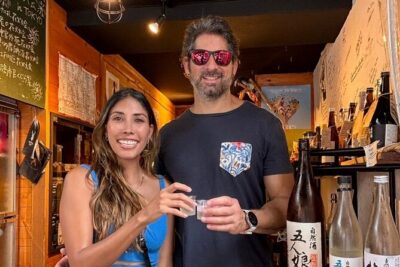
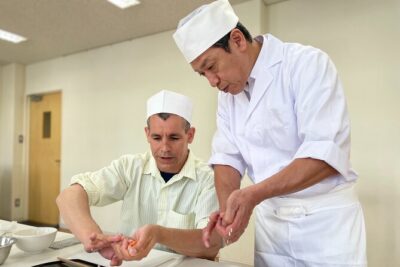
Tokyo Sushi Making Class in Tsukiji with Professional Chef
Read our review →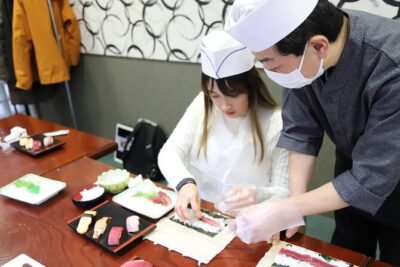
Tsukiji Fish Market Guided Tour and Sushi Making with Pro Chef
Read our review →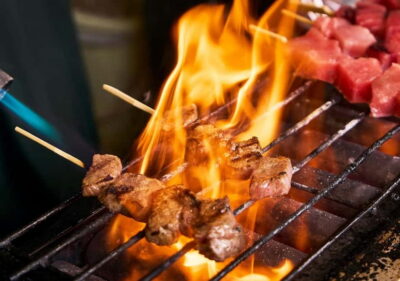
Tsukiji Fish Market: Street Food & Culture Walking Tour
Read our review →
Tsukiji Fish Market Small-Group Food Walking Tour
Read our review →