Review · FISH MARKET TOURS
Tokyo: Private Tsukiji Street Food & Sake with Local Guide
Tsukiji is at its best when you eat your way through it, and this small private experience gets straight to the good stuff. You’ll visit the unusual Tsukiji Hongwanji Temple, then follow a local guide to charcoal grilled wagyu, dashi scented tamagoyaki, old style teas, beans, peanuts, and a guided sake tasting.
I like the included food tastings, since you can sample the main dishes without counting coins at every stall. I also like the calm finish at a traditional specialty shop, followed by four sake samples with baby scallops. The main consideration is pace: two hours passes quickly, and extra snacks or shopping cost more.
Key points at a glance
- A striking temple start: See Tsukiji Hongwanji, a Buddhist temple with Indian inspired stonework, animal carvings, and stained glass.
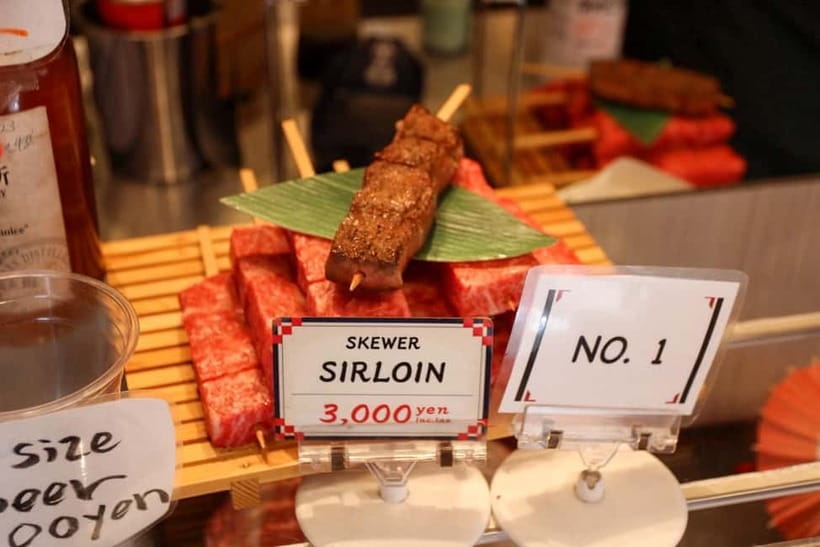
- Two classic market bites included: Your price covers one charcoal grilled wagyu skewer and one portion of dashi flavored tamagoyaki.
- A quieter food stop: Taste chilled Japanese teas, black beans, peanuts, and dashi at a specialty shop with more than a century of tradition.
- A proper sake lesson: Compare three kinds of sake plus a special selection, paired with sake steamed baby scallops.
- Useful local help: Your English and Japanese guide handles the crowds, explains the food, and can offer lunch suggestions.
- Simple planning: The tour lasts about two hours, costs $99 per person, and runs rain or shine with many stops indoors.
Starting with Tsukiji’s unexpected temple
Meet your guide in front of the main gate of Tsukiji Hongwanji Temple. Look for someone holding a smartphone that displays AlvaJapan. This is a clear meeting point, but give yourself enough time to reach it, especially if you are coming from another part of Tokyo.
The temple is a smart opening because it gives you a cultural marker before the food begins. Tsukiji Hongwanji is not the wooden temple image many people associate with Kyoto. Its exterior uses Indian inspired stone architecture, with detailed animal carvings and stained glass that give the building an unusual look in central Tokyo.
Your guide spends about 20 minutes here, explaining the temple’s Buddhist character and its reconstruction after a major fire in the Meiji era. That brief context matters. Without it, the building can seem like an odd architectural outlier. With it, you understand why this place looks so different from the surrounding streets.
I would not book this experience only for a long temple visit. The stop is a guided introduction and photo opportunity, not a full morning of religious sites. Still, it gives the walk a better beginning than simply meeting at a food stall and immediately eating.
More Fish Market Tours in Japan
- Tokyo Tsukiji Fish Market Food and Culture Walking Tour
★ 5.0 · 3,184 reviews - Tokyo: Tsukiji Fish Market Food and Walking tour
★ 5.0 · 1,724 reviews - Tokyo: Tsukiji Fish Market Guided Walking Tour
★ 4.9 · 1,397 reviews
Reading Tsukiji Outer Market through food
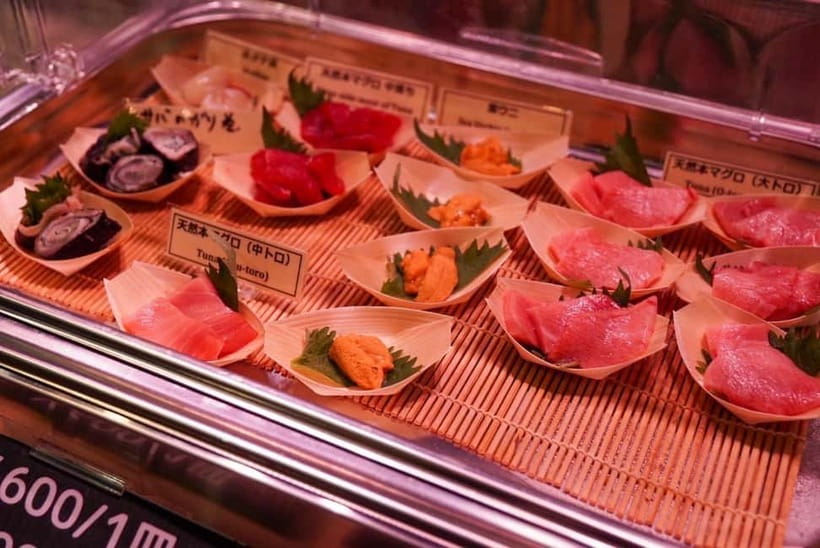
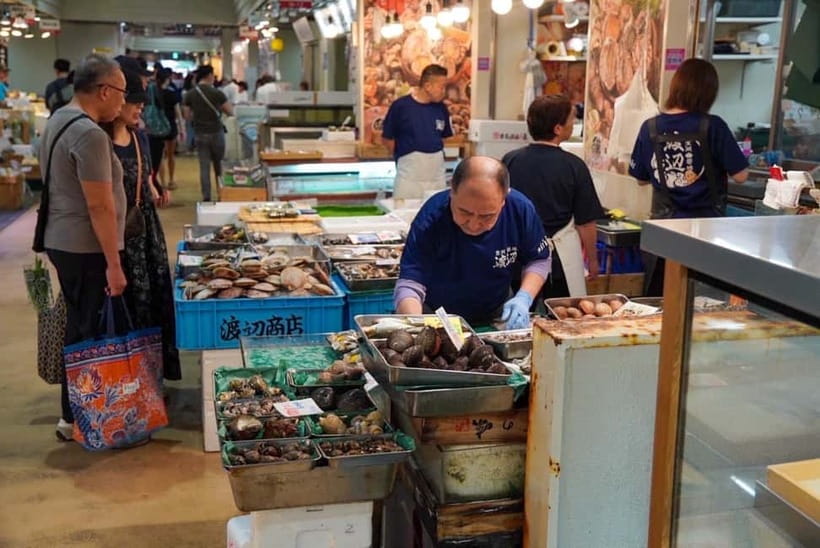
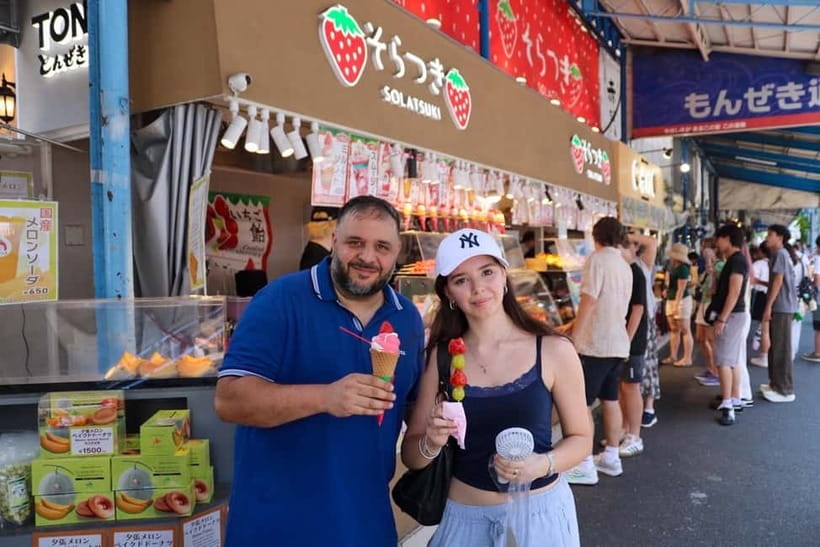
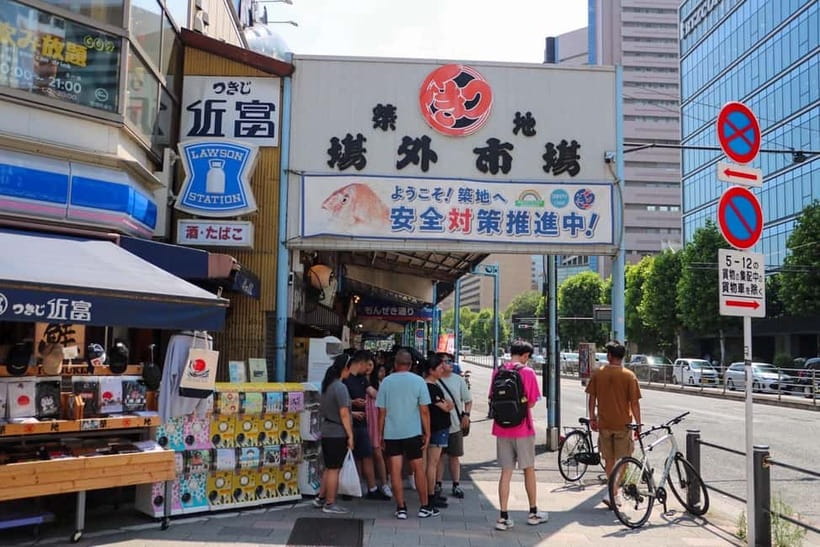
From the temple, the experience moves into Tsukiji Outer Market for about 100 minutes. This is the main portion of the tour, and it combines tasting, walking, explanations, and time to look at the market’s shops.
The market can feel confusing at first. There are many stalls, narrow routes, and plenty of food that looks tempting but is not always easy to order when you do not speak Japanese. A guide helps you avoid wasting time and points out the difference between a worthwhile stop and a purchase made only because it looks good in a photograph.
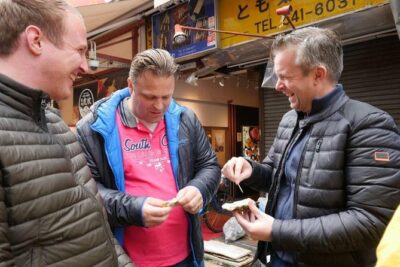
The first main tasting is a charcoal grilled wagyu skewer. The portion is one skewer per person, and it is included in the $99 price. You can watch it being prepared while the guide explains what you are eating. The charcoal adds a clear roasted flavor, but remember that this is a taste, not a full meal.
The second market sample is tamagoyaki, the softly layered Japanese omelet. This version is flavored with dashi, the stock that gives much Japanese cooking its savory backbone. Its gentle sweetness and tender texture make it a useful contrast to the grilled beef.
The guide’s role matters most here. You receive the listed tastings without worrying about small payments at each stop, and you have someone who can explain what is included. One practical point deserves attention: make sure you understand which food is part of the tour and which items require your own payment. Extra market snacks and drinks are not included.
The value of having a guide in the market
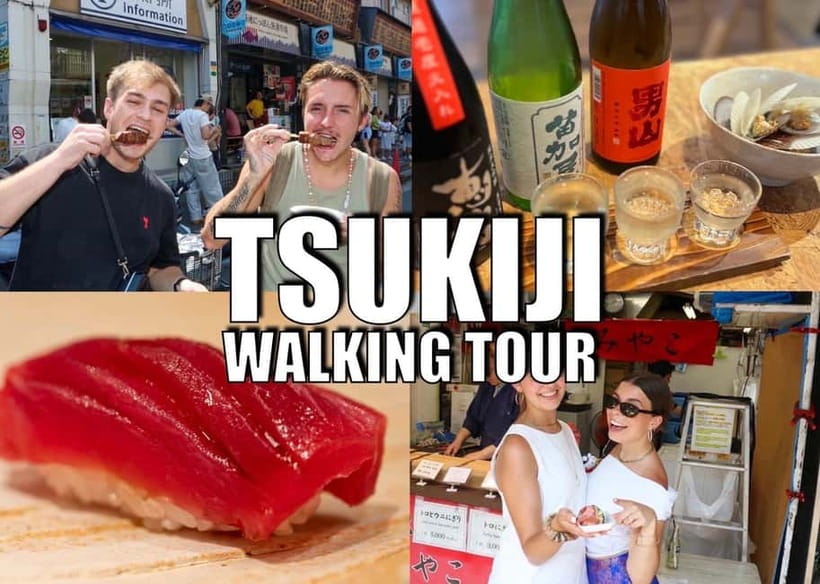
I like this part best for first time visitors to Tsukiji or for anyone who wants food context instead of a random series of purchases. The guide connects the dishes to local eating habits and explains the market’s place in Tokyo’s food culture.
The experience also covers the story of Tsukiji and the move of the wholesale fish market to Toyosu. That distinction is useful. Tsukiji Outer Market remains a place for shops and prepared foods, while the wholesale market moved elsewhere. You get a better sense of what Tsukiji is now rather than arriving with an outdated idea of the old wholesale market.
The market stop is not designed for a full shopping trip. You can buy extra food or souvenirs, but doing so may make the schedule feel tight. Cash is recommended for those purchases. If you want to stop at every appealing stall, a longer market visit would suit you better.
This tour works best when you let the guide set the route and treat the market as a series of selected tastes. You still have a chance to look around, but the experience is not meant to cover every lane.
A quiet pause for tea, beans, and dashi
After the louder food stalls, the tour moves to a traditional specialty shop that has served customers for more than 100 years. The stop lasts about 20 minutes and changes the mood completely.
You taste chilled Japanese teas, black beans, peanuts, and dashi broth. These are modest foods, but they explain a lot about Edo style cooking. Dashi is especially important. It often works in the background, adding savory depth to dishes such as tamagoyaki and many soups without taking over the plate.
The tea tasting gives you a chance to slow down and compare flavors after the grilled food. The beans and peanuts show another side of Japanese snack culture, one based on simple ingredients and careful preparation rather than flashy presentation.
I appreciate the balance here. Tsukiji can push you from one attractive food display to another, but this shop gives you time to listen. It also shows why a good food walk should include everyday staples, not just the most expensive bite available.
There is one limitation. The tasting is not a full sit down meal, and no additional food is promised beyond the stated samples. If you arrive hungry, you may want to plan lunch afterward.
More Fish Market Tours in Tokyo
- Tokyo Sushi Making Class in Tsukiji with Professional Chef
★ 5.0 · 1,177 reviews - Tsukiji Fish Market Guided Tour and Sushi Making with Pro Chef
★ 5.0 · 775 reviews - Tokyo: Tsukiji Fish Market Food and Culture Walking Tour
★ 4.7 · 757 reviews - Tsukiji Fish Market: Street Food & Culture Walking Tour
★ 5.0 · 669 reviews
Finishing with four sakes and baby scallops
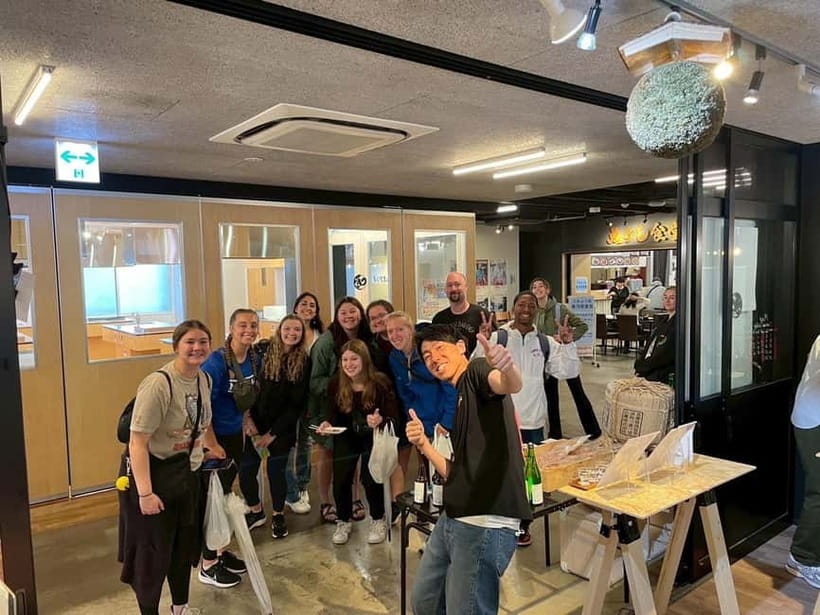
The final 40 minutes are devoted to sake. A certified sake sommelier leads the tasting and compares three types plus one special selection. The goal is not simply to hand you four drinks. You get a guided way to notice differences between them.
For many people, sake is hard to judge because the labels and styles can feel unfamiliar. Tasting several types side by side makes the comparison easier. The sommelier can explain the character of each sample, while you decide which style you prefer.
The pairing is baby scallops steamed with sake. This is a particularly good finish because the scallops give you something savory to eat between samples. It also shows how sake can be part of cooking, not only a drink served in a small cup.
The sake session receives the strongest praise for good reason. It is relaxed, social, and more focused than a quick pour at a restaurant. The guides are described as friendly, attentive, and easy to talk with, which helps if you are new to sake or unsure what questions to ask.
You must bring identification for this portion. Japan’s legal drinking age is 20, and the tasting is not suitable for anyone under that age. If you do not drink alcohol, this part is a major consideration, since the included finish centers on sake.
What the guides add to the experience
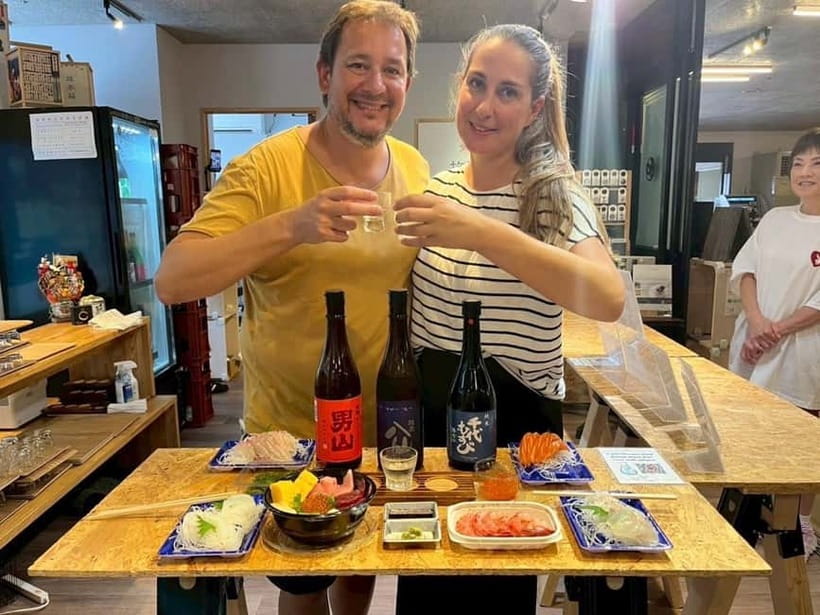
The tour is conducted in English and Japanese, with an English speaking guide available. The guide does more than lead you from one address to another. You receive help with ordering, explanations of ingredients, and a way to ask questions without stopping the group at every stall.
Food restrictions are worth discussing at the start. The guide asks about them and can tailor the experience to what you like when possible. That is useful in a market where dishes may contain broth, seafood, or other ingredients that are not obvious at first glance.
The guiding style appears to be relaxed rather than formal. You can expect a friendly conversation as you walk, not a long lecture at every stop. That suits Tsukiji, where the food is best understood in short explanations followed by a taste.
You also receive lunch suggestions and tips for the rest of your Tokyo visit before parting ways. This is a small but practical benefit. A local recommendation after the official route can save you from choosing lunch based only on the longest queue.
Is $99 a fair price?
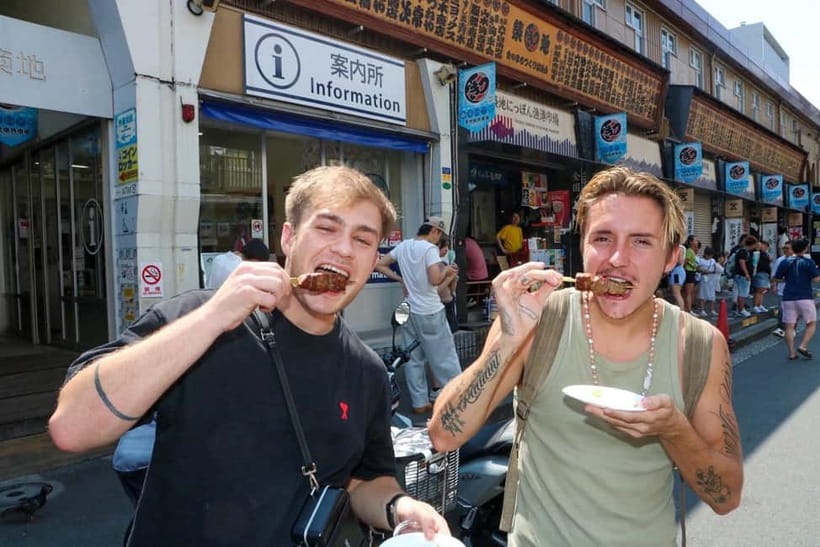
At $99 per person, this is not the cheapest way to eat in Tsukiji. You could buy individual snacks for less if you are comfortable navigating the market alone.
The price makes more sense when you count the included items: wagyu, tamagoyaki, tea, beans, peanuts, dashi, three sake samples, a special sake, and baby scallops. It also covers a private guided route and the explanations that connect the foods.
The sake tasting is the part that gives the package its strongest value. A casual market visit might include one drink, but here you compare four selections with a sommelier and a food pairing. If you are interested in Japanese drinks, that final session helps justify the cost.
The value is weaker if you mainly want a large lunch or extensive shopping time. Extra food and drinks are not included, and the portions are tasting portions. I would view this as a guided introduction to Tsukiji, not an all you can eat outing.
Timing, walking, and practical planning
Plan on about two hours, with roughly 20 minutes at the temple and 100 minutes in the outer market. You will be on your feet, so comfortable shoes are a sensible choice.
The experience runs rain or shine, with most stops covered or indoors. Still, the route includes walking between locations, so light rain can affect your comfort. You do not need to plan transportation during the tour, but getting to and from the temple meeting point is your responsibility.
The start time varies, so check available departures when booking. The tour is best placed early enough that you can use the lunch tips afterward, though the exact start time will shape how you arrange the rest of your day.
The group details are presented as a private experience, and one booking had two guides for one party. I would not assume two guides every time, but the setup can feel personal rather than like a large walking crowd.
Who should choose this Tsukiji experience?
I would recommend it to first time Tokyo visitors who want a clear introduction to Tsukiji without planning each stall themselves. It also suits people who enjoy trying several small portions and learning why ordinary ingredients matter.
Sake fans should give it serious consideration. The guided comparison and scallop pairing offer more substance than a single restaurant pour. The tour also works well for couples or small private groups who want a flexible conversation with the guide.
It is less suitable if you want a long temple visit, a full meal, or hours of independent shopping. It may also be a poor fit for anyone who cannot drink alcohol, since the last part of the tour centers on sake.
Should you book it?
Book this experience if you want structured tasting with local guidance, especially if you are new to Tsukiji or Japanese sake. The combination of the unusual temple, selected market foods, old style tea and dashi samples, and four sake pairings gives you more range than a simple snack walk.
Skip it if your main goal is to browse every market shop at your own pace or eat a large meal. At $99, you are paying for interpretation, convenience, and the sake session as much as for the food itself.
For most people, the best reason to book is the balance. You get the famous market bites, but you also taste quiet, less obvious parts of Japanese food culture. Just wear good shoes, bring identification, and leave room in your schedule for lunch after the tour.
FAQ
Where does the tour start?
It starts at Tsukiji Hongwanji Temple. Meet the guide in front of the main gate, where they will hold a smartphone displaying AlvaJapan.
How long does the experience last?
The experience lasts about two hours. The temple portion takes about 20 minutes, while the Tsukiji Outer Market portion takes about 100 minutes.
What food and drinks are included?
The price includes one wagyu beef skewer, one tamagoyaki portion, chilled tea samples, black beans, peanuts, dashi broth, and a sake tasting of three types plus one special selection with baby scallops.
Is transportation included?
No. Transportation to and from the meeting point is not included.
Is the tour available in English?
Yes. The tour is conducted in English and Japanese, with an English speaking live guide.
Do I need identification for the sake tasting?
Yes. Identification is required for the sake tasting, and the legal drinking age in Japan is 20.
Can I buy more food at Tsukiji Outer Market?
Yes. You may purchase extra food or drinks, but those purchases are not included in the tour price. Cash is recommended for additional market spending.
What happens if it rains?
The tour operates rain or shine, and many stops are covered or indoors. You should still wear comfortable shoes and prepare for walking between stops.
Can I cancel the booking?
You can cancel up to 24 hours in advance for a full refund. A reserve now and pay later option is also available.
More Street Food Market Tours in Japan
- Tsukiji Fish Market Small-Group Food Walking Tour
★ 5.0 · 621 reviews - Tokyo Food Tour Taste Fresh Delights at Tsukiji Market
★ 5.0 · 429 reviews - Tsukiji Fish Market: Street Food & Culture Walking Tour
★ 4.8 · 259 reviews - Toyosu Market Morning Tuna Auction and Tsukiji Food Tour with Licensed Guide
★ 4.5 · 146 reviews
More Private Market Tours in Japan
- Private Toyosu & Tsukiji Market Adventure with Tuna Auction
★ 4.8 · 191 reviews - Tsukiji Fish Market Private Food Tour in Tokyo
★ 5.0 · 18 reviews - Tokyo: Private Tsukiji Fish Market Tour with 3 food stops
★ 4.7 · 15 reviews - Tuna Auction Market Guided Private Tour in Nachi-Katsuura
★ 5.0 · 43 reviews
Just added around Tokyo
- Tokyo: Tsukiji Market Guided Tour & Sushi-Making Experience★ 4.4 · 11 reviews
- Tokyo: Tsukiji Market and Hama-rikyu Gardens Guided Tour★ 4.8 · 73 reviews
- Tokyo: Tsukiji Fish Market Culture Tour with Sashimi Tasting★ 4.6 · 54 reviews
- Tokyo : Tsukiji Fish Market Food Walking & Shrine Visit Tour★ 5.0 · 3 reviews
- Tokyo: Tsukiji Fish Market Foodie and Educational Tour★ 5.0 · 4 reviews
- Tokyo’s Kitchen: Tsukiji Market Food & Culture Walk★ 4.7 · 74 reviews
- Tokyo: Guided Walking Tour of Tsukiji Market with Lunch★ 4.4 · 24 reviews
- Tokyo Morning Tour: Meiji Shrine, Asakusa & Fish Market★ 4.9 · 44 reviews
Fish Market Tours, compared.
Tokyo Tsukiji Fish Market Food and Culture Walking Tour
Read our review →

Tokyo Sushi Making Class in Tsukiji with Professional Chef
Read our review →
Tsukiji Fish Market Guided Tour and Sushi Making with Pro Chef
Read our review →Tsukiji Fish Market Food and Culture Walking Tour
Read our review →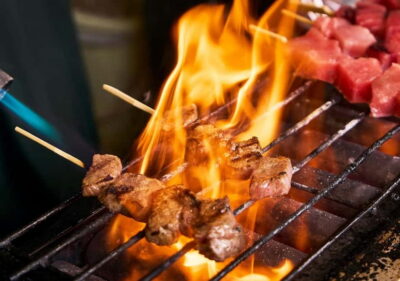
Tsukiji Fish Market: Street Food & Culture Walking Tour
Read our review →