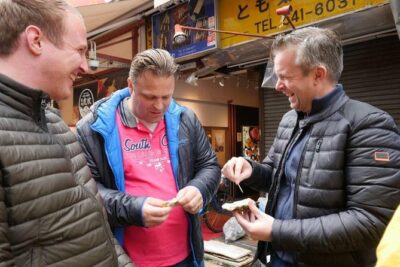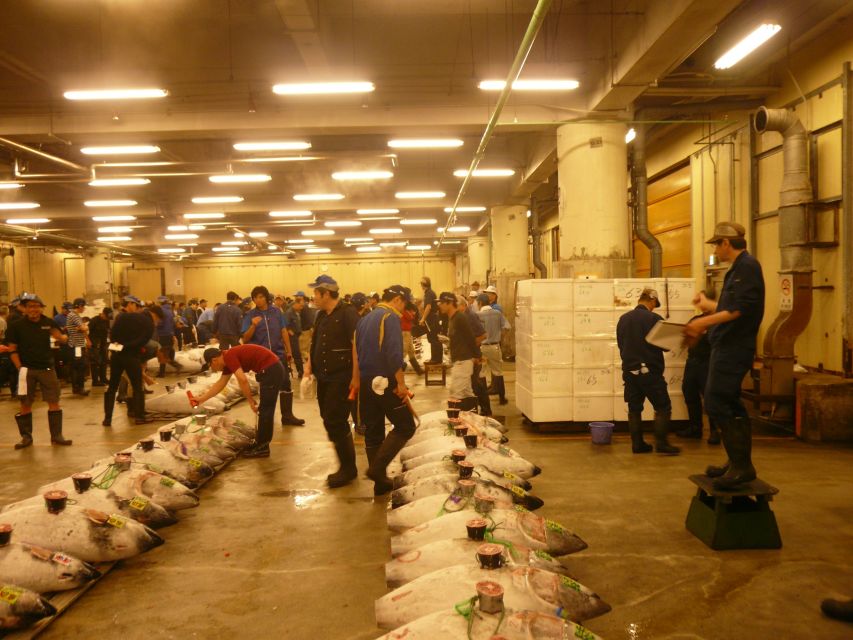
Review · FISH MARKET TOURS
Tokyo: Guided Walking Tour of Tsukiji Market with Lunch
Tsukiji is best understood one bite at a time. This small-group walk takes you from the Indian-inspired exterior of Tsukiji Hongwanji Temple into narrow market lanes where expert wholesalers, cooks, and stallholders handle seafood and prepared foods at close range.
I like the nine planned tastings, which give you a broad sample of Japanese street food, and I like the small group of no more than 10 people. Guides such as Hide, Tomoko, Yumiko, and Sachiko have helped make the walk friendly and easy to follow. The drawback is value: at $113, the food portions and quality may not satisfy anyone expecting a full gourmet meal.
Key points to know before booking
- Nine tastings in 165 minutes: Expect tuna sushi, a Japanese omelette, skewers, rice, dessert, tea, dashi, and a drink.
- A temple-to-market route: Start at Tsukiji Hongwanji Temple, then move into the food stalls and wholesale businesses of Tsukiji Outer Market.
- Small English-speaking group: The group is limited to 10 people, which helps your guide manage queues and explain unfamiliar foods.
- Guides add cultural context: The tour connects food with Japanese religion, customs, and the working life of the market.
- Food quality can vary: Some tastings may feel ordinary or greasy, so book this for guidance and access rather than luxury dining.
- Easy meeting point: Tsukiji Station’s Hibiya Line Exit A1 is about 50 meters from the temple entrance.
Starting at Tsukiji Hongwanji Temple

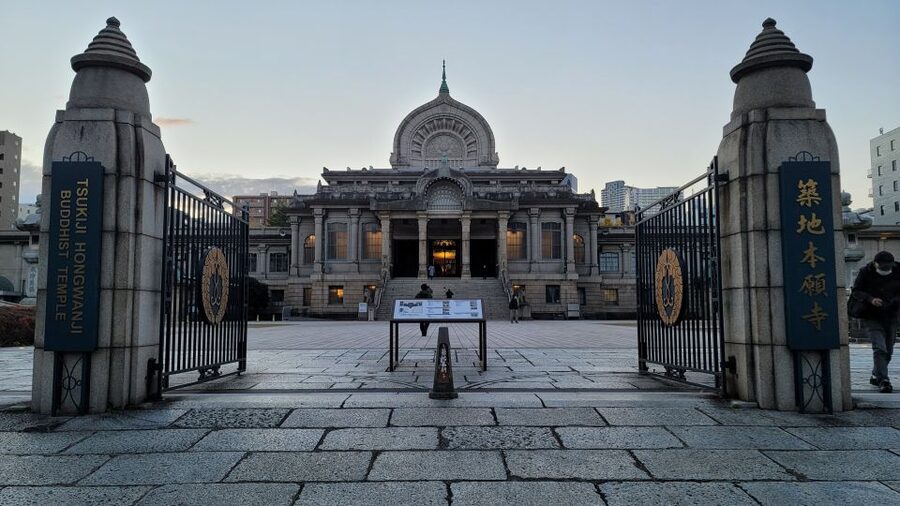
Your meeting point is in front of Tsukiji Hongwanji Temple, a smart choice for getting oriented. From Tsukiji Station on the Hibiya Line, take Exit A1, turn left, and walk about 50 meters to the entrance.
The temple’s exterior gives the tour a strong opening. Its ancient Buddhist-inspired design has an Indian influence, making it look quite different from the more familiar wooden temple styles you may see elsewhere in Tokyo. The visit focuses on the outside, so do not expect an extended temple tour or a formal religious ceremony.
Still, this stop matters. It gives you a cultural frame for the market ahead. Food in Japan is not only about flavor and technique. It can connect with Buddhist practice, seasonal customs, offerings, and ideas about respect for ingredients. Your guide uses the temple and the surrounding district to explain that connection before you begin eating.
I appreciate this start because it prevents the tour from becoming a simple sequence of snacks. You get a little sense of place first, then see how that setting leads into one of Tokyo’s best-known food districts.
More Fish Market Tours in Japan
- Tokyo Tsukiji Fish Market Food and Culture Walking Tour
★ 5.0 · 3,184 reviews - Tokyo: Tsukiji Fish Market Food and Walking tour
★ 5.0 · 1,724 reviews - Tokyo: Tsukiji Fish Market Guided Walking Tour
★ 4.9 · 1,397 reviews
Entering the narrow lanes of Tsukiji Outer Market
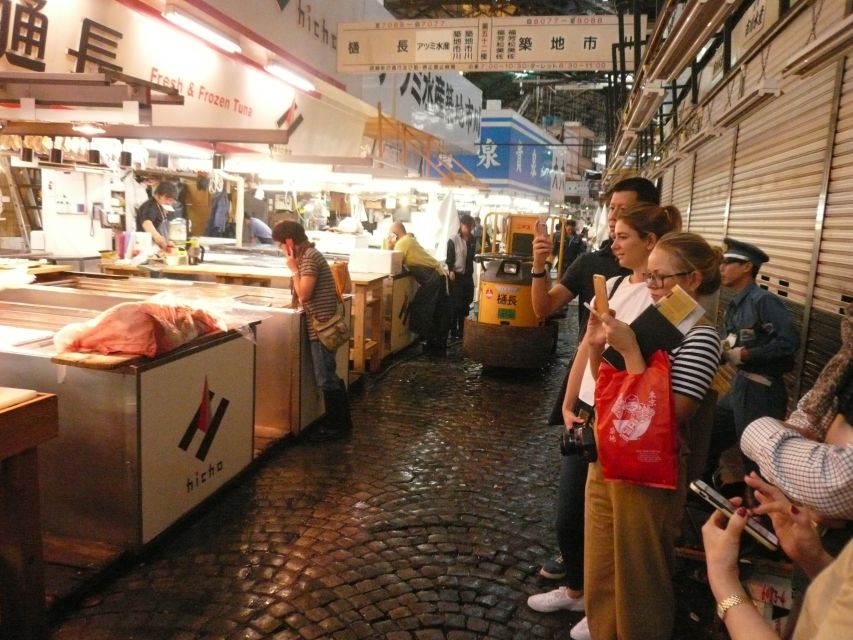
From the temple, you head into Tsukiji Outer Market. This is the part of the tour where a guide earns the fee. The area contains restaurants, food shops, stalls, and wholesale businesses packed close together, with unusual products and plenty of activity in a relatively small area.
You will not be walking through a giant empty warehouse. The experience comes from moving through crowded lanes and watching people at work. Expert wholesalers handle seafood and other goods while cooks and sellers serve food to customers nearby. That working-market atmosphere is more useful than a polished food hall because you can see how commerce, cooking, and daily life overlap.
The route itself covers a fairly small section of Tsukiji. That is worth knowing. Some people appreciate the compact format because you spend less time walking and more time tasting. Others may feel the guide is stretching a limited area across the full 165 minutes.
Stay close to your guide. Market lanes can be tight, and the point of a small group is to move together without losing the explanations. The group limit of 10 is a real advantage here. A large tour would make it harder to hear, gather around a stall, or watch food being prepared.
Nine tastings, from skewers to dashi
The food is presented as nine local specialties. The exact order can vary, and some items may depend on what is available, but the planned range gives you a useful introduction to Japanese market food.
You can expect some combination of the following:
- Grilled seafood or beef skewers, potentially including wagyu beef
- Japanese-style omelette
- Tuna sushi
- Fried fish paste skewers
- Filled rice balls
- Dessert
- A drink
- Japanese tea
- Dashi soup stock
The variety is the main strength. You are not simply eating several versions of sushi. The tasting moves across grilled meat, seafood, egg, rice, soup stock, sweets, and drinks. That makes the tour suitable for someone who wants a quick introduction to Japanese flavors without committing to a long restaurant meal.
The skewers are likely to be among the more memorable stops because they let you eat in the same casual style associated with market streets. Wagyu beef sounds more luxurious, but do not assume every tasting is a large serving. This is a sampling tour, with small portions intended to keep you moving.
The Japanese omelette, often called tamagoyaki, shows a different side of market food. It is simple in appearance but distinct in texture and seasoning. Dashi offers another useful lesson. This soup stock forms the base of many Japanese dishes, and tasting it on its own helps you recognize the savory flavor that may otherwise blend into a meal.
The tuna sushi is a practical test of expectations. One portion of tuna sushi can be fresh and enjoyable, but this experience is not priced like a high-end sushi counter. If your main goal is exceptional raw fish, you may prefer to spend the same money at a dedicated sushi restaurant.
The filled rice ball and fried fish paste skewer make the meal feel more like a market lunch than a formal tasting menu. Dessert and a drink give the tour a sweet finish, while tea rounds out the cultural side of the experience.
What the guides add to the food

The guide is central here. You are not simply handed food and sent to the next stall. The intended experience is to learn what you are eating, how the market works, and why food carries such a strong place in Japanese culture.
Hide has been praised for leading people to suitable foods and helping them navigate the market. Tomoko has guided the route in a relaxed way and, importantly, helped with queues while the group looked around. She also brought food boxes and cleaning wipes, small practical touches that can make a street-food outing much tidier.
Yumiko and Sachiko have also worked together to guide groups through the market and explain the area’s history. An assistant can be especially useful in Tsukiji because one person can hold the group together while another manages food collection or queues.
The English-language explanations are part of what you pay for. You could walk into Tsukiji alone and buy food, but you would need to choose stalls, judge portions, understand unfamiliar products, and keep track of where you are. A guide reduces that friction.
Language remains a consideration. One account of the tour describes some difficulty at the start, and that may affect how quickly you understand the plan. The guides speak English, but the experience is still built around a busy market with noise, movement, and short conversations at food stalls.
More Fish Market Tours in Tokyo
- Tokyo Sushi Making Class in Tsukiji with Professional Chef
★ 5.0 · 1,177 reviews - Tsukiji Fish Market Guided Tour and Sushi Making with Pro Chef
★ 5.0 · 775 reviews - Tokyo: Tsukiji Fish Market Food and Culture Walking Tour
★ 4.7 · 757 reviews - Tsukiji Fish Market: Street Food & Culture Walking Tour
★ 5.0 · 669 reviews
A working market, not a staged food show
The best part of Tsukiji is its sense of work. You see products being sold, prepared, and moved through businesses that serve both local customers and the wider food trade. This gives the tour an edge over a standard restaurant crawl.
You may notice unusual ingredients and products as you pass the shops. The guide can explain what you are seeing and point out the difference between a shop aimed at everyday customers and one serving professional buyers.
That said, the market portion is not a long expedition. The area covered is fairly small, and you should not book this expecting several hours of wandering through every corner of Tsukiji. The tour has a defined route and a set number of tastings.
I would treat the compact size as a benefit if you have limited time in Tokyo or want a gentle introduction. It is less appealing if you have already spent a full morning exploring Tsukiji on your own and want a new route with many different neighborhoods.
Is $113 a fair price?
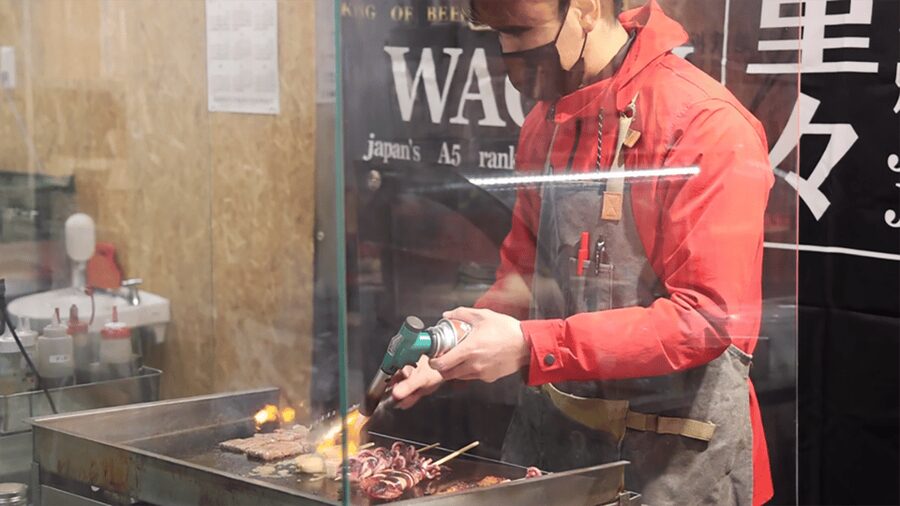
The price is $113 per person. That is a serious charge for nine small tastings, so value depends on what you want from the outing.
If you measure the cost only by the amount of food, the tour can feel expensive. Some tastings may be average rather than outstanding. Grilled fish may seem greasy, tuna sushi may not impress someone with high sushi standards, and the dessert may be modest. The food should be viewed as a series of samples, not a lavish lunch.
The price makes more sense if you value the guide, the cultural explanations, and the ease of moving through Tsukiji. You are paying for help choosing what to eat, managing the route, learning about the market, and making sense of Japanese food customs.
A strong guide can change the experience. Hide, Tomoko, Yumiko, and Sachiko have each brought different strengths, from food suggestions to market history and practical help with queues. But guide quality and food availability can vary, so I would not book this expecting a fixed luxury menu.
For a first visit to Tsukiji, the tour can save you from wandering without a plan. For a confident eater who already knows the market, $113 may be better spent on several independent purchases or a restaurant meal. The tour offers structure and explanation, not the cheapest lunch in Tokyo.
Who will enjoy this tour most?
I would recommend it to first-time visitors who want a friendly introduction to Japanese market food without having to research every stall. It also suits families, as the small group and guided tastings make the setting easier to manage.
The tour can work well for anyone curious about the connection between religion, history, and cuisine. The temple opening and food explanations add more than a simple list of dishes.
You should also consider it if you are nervous about ordering in a crowded market. Having an English-speaking guide point out food and help with queues removes much of the guesswork.
This is less suitable for a serious food expert seeking rare ingredients or refined sushi. It may also disappoint you if you expect a large lunch, a long market walk, or restaurant-level cooking at every stop.
Wear comfortable shoes. The tour lasts 165 minutes and involves walking through busy market streets. Wheelchair access is available, but the market’s tight lanes and active businesses may still make movement a practical concern, so it is sensible to confirm the details when booking.
Timing, group size, and simple planning tips
The tour lasts two hours and 45 minutes. That is long enough to include the temple, explanations, market walking, and nine tastings without taking up an entire day in Tokyo.
Book a morning or midday start if you want to experience the market during active trading hours, but check the available starting times before you commit to a schedule. The exact start time is not fixed in the information provided.
Arrive at the temple rather than at the market stalls. Tsukiji Station is the easiest reference point, with Exit A1 just a short walk from the meeting place.
You should wear shoes suited to walking and standing. Bring an open mind about texture and flavor, but do not arrive with the expectation that every sample will be a premium specialty.
The small group is limited to 10 participants. That is small enough for questions and personal guidance, yet large enough that you may still wait briefly while food is collected. Tomoko’s habit of helping with queues shows why an organized guide matters in this setting.
Free cancellation is available up to 24 hours before the start for a full refund, and you can reserve now and pay later. Those options are useful if your Tokyo plans are still shifting.
My recommendation for Tsukiji food explorers
Book this tour if you want a guided introduction to Tsukiji, enjoy trying several types of Japanese food, and value cultural explanation as much as the meal itself. The temple, the working market, and the guidance from an English-speaking host create a more useful first visit than simply grabbing one snack and leaving.
Skip it if your priority is the best possible sushi for $113, generous portions, or a wide-ranging walk through Tokyo’s food districts. The tour is compact, and some tastings may feel ordinary.
For the right person, the appeal is clear: you arrive at a confusing market, meet a guide, taste nine local specialties, and leave with a better sense of how food fits into Japanese daily life. Just keep your expectations at market tasting level, not luxury dining level.
FAQ
Where does the Tsukiji Market tour meet?
Meet in front of Tsukiji Hongwanji Temple. From Tsukiji Station on the Hibiya Line, take Exit A1, turn left, and walk about 50 meters to the temple entrance.
How long does the tour last?
The tour lasts 165 minutes, or two hours and 45 minutes.
What food is included?
The tour includes nine tastings. These include grilled seafood or beef skewers, a Japanese-style omelette, tuna sushi, fried fish paste skewers, filled rice balls, dessert, a drink, Japanese tea, and dashi soup stock.
Is the tour conducted in English?
Yes. The tour has a live English-speaking guide.
How many people are in the group?
The group is limited to 10 participants.
Is the tour wheelchair accessible?
Yes, the activity is listed as wheelchair accessible.
Can I cancel or pay later?
You can cancel up to 24 hours in advance for a full refund. You can also reserve your place and pay later.
More Market Market Walking Tours in Tokyo
- Bangkok: City Highlights Temple and Market Walking Tour
★ 4.5 · 3,990 reviews - Marrakech: Ben Youssef, Secret Garden, & Souks Walking Tour
★ 4.6 · 2,802 reviews - Marrakech: Colorful Medina Souks Guided Walking Tour
★ 4.7 · 2,470 reviews - Air Raid Shelter + St. Nicholas Market Walking Tour
★ 5.0 · 1,950 reviews
More Market Walking Tours in Japan
- Tsukiji Fish Market Small-Group Food Walking Tour
★ 5.0 · 621 reviews - Tsukiji Fish Market: Street Food & Culture Walking Tour
★ 4.8 · 259 reviews - Tokyo: Guided Walking Tour of Tsukiji Market with Breakfast
★ 4.4 · 134 reviews - Tokyo: Tsukiji Market Walking Tour & Sushi Cooking Class
★ 4.6 · 122 reviews
Just added around Tokyo
- Tokyo: Tsukiji Market Guided Tour & Sushi-Making Experience★ 4.4 · 11 reviews
- Tokyo: Private Tsukiji Street Food & Sake with Local Guide★ 5.0 · 3 reviews
- Tokyo: Tsukiji Market and Hama-rikyu Gardens Guided Tour★ 4.8 · 73 reviews
- Tokyo: Tsukiji Fish Market Culture Tour with Sashimi Tasting★ 4.6 · 54 reviews
- Tokyo : Tsukiji Fish Market Food Walking & Shrine Visit Tour★ 5.0 · 3 reviews
- Tokyo: Tsukiji Fish Market Foodie and Educational Tour★ 5.0 · 4 reviews
- Tokyo’s Kitchen: Tsukiji Market Food & Culture Walk★ 4.7 · 74 reviews
- Tokyo Morning Tour: Meiji Shrine, Asakusa & Fish Market★ 4.9 · 44 reviews
Fish Market Tours, compared.

Tokyo Tsukiji Fish Market Food and Culture Walking Tour
Read our review →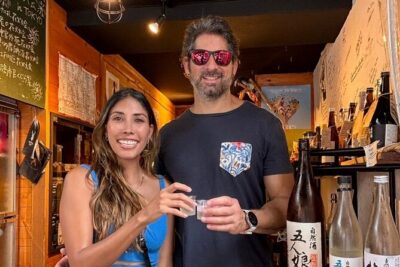

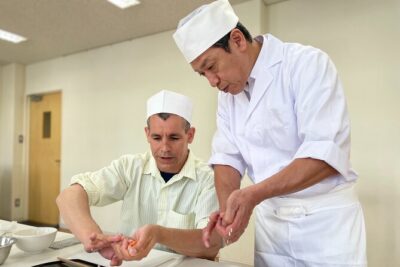
Tokyo Sushi Making Class in Tsukiji with Professional Chef
Read our review →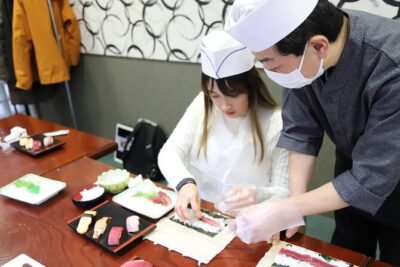
Tsukiji Fish Market Guided Tour and Sushi Making with Pro Chef
Read our review →Tsukiji Fish Market Food and Culture Walking Tour
Read our review →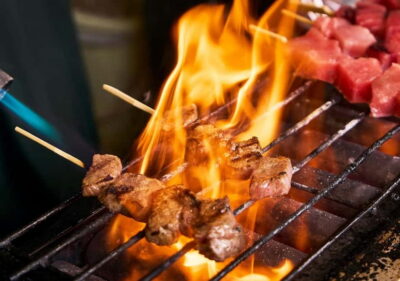
Tsukiji Fish Market: Street Food & Culture Walking Tour
Read our review →