
Review · FISH MARKET TOURS
Private Toyosu & Tsukiji Market Adventure with Tuna Auction
The tuna auction is the hook, but the real pleasure is learning how the market works before following the catch to breakfast and Tsukiji’s food stalls. A guide such as Nobby, Sachiyo, Yumi, Emi, or Mayumi helps turn a quick glimpse into a story you can follow.
I like the private format for up to 10 people, which lets you stop for food, ask questions, and shop without being tied to a large group. I also like the jump from Toyosu’s modern market to Tsukiji’s older outer market, where knives, pottery, grilled eel, mochi, and sushi give you more to do than simply watch an auction.
The main catch is the very early start and uncertain first-floor viewing. You need to arrange and pay for a taxi to Toyosu, and the closest look at the auction depends on winning a market-run lottery. If you lose, you can still watch from the second floor.
Key points to know before booking
- The auction begins before most of Tokyo wakes up: Plan on meeting your guide around 5 a.m., often at your hotel or at Shijō-mae Station.
- The first-floor viewing area is not guaranteed: You must register for the lottery by the fifth day of the previous month.
- Two markets give you two different mornings: Toyosu is the working fish market, while Tsukiji is better for browsing, snacking, and shopping.
- Food is not included in the $153 price: Budget extra for sushi, drinks, snacks, and anything you buy.
- A private English-speaking guide adds real value: Guides use photos, diagrams, and market experience to explain what is happening.
- The tour ends at Tsukiji: You finish near the outer market, with time to continue eating or shopping on your own.
Why the tuna auction is worth the early alarm
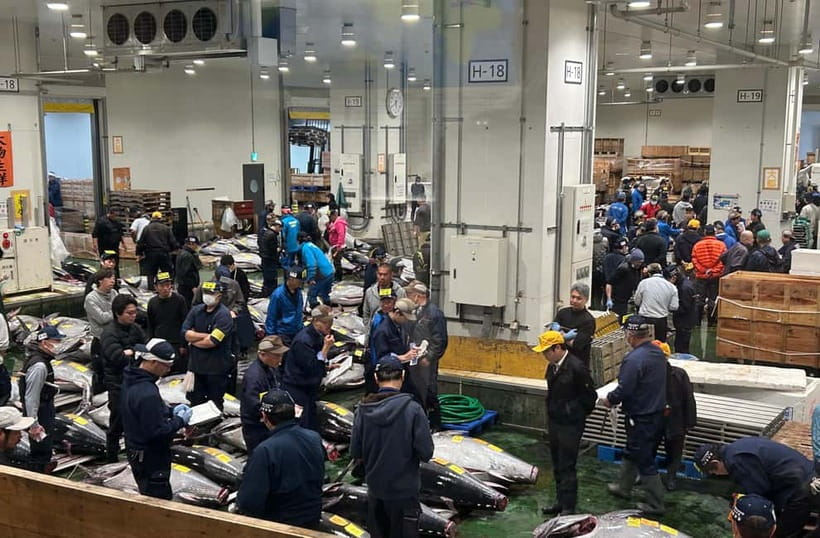
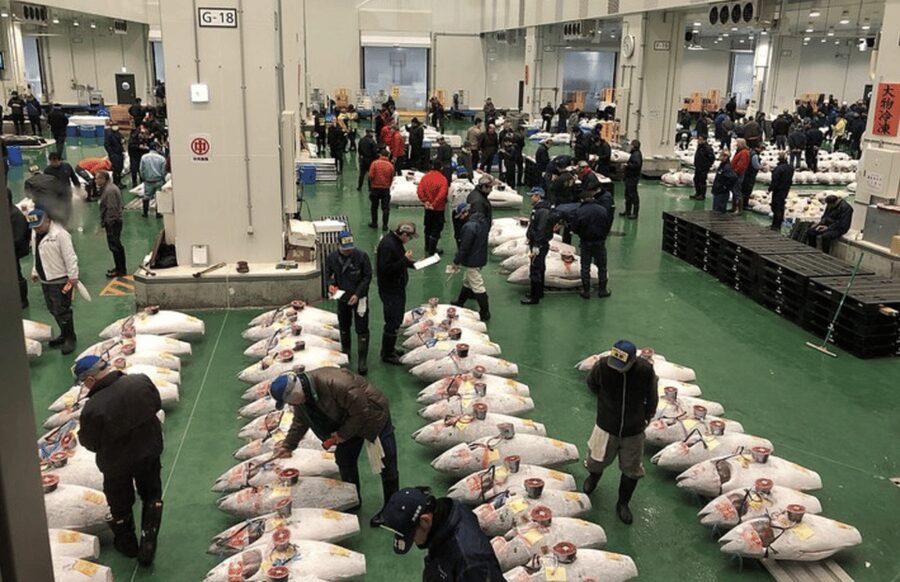
Toyosu Market gives you a rare look at a working part of Tokyo’s food system. The bluefin tuna auction is not staged for tourists. Professional buyers inspect the fish, assess its quality, and bid in a fast ritual that can be hard to understand from a distance.
That is where your guide earns the fee. Without context, you may see workers, hooks, tags, and rows of enormous tuna, then wonder what the hand signals and bids mean. Guides such as Sachiyo have used binders with photographs and diagrams to explain the process, while Emi and Eriko have helped guests connect the auction with fishing, distribution, and Japanese food culture.
The auction itself may be brief or quieter than you expect. One morning can have only a few small auctions, while another may feel more active. The experience depends on the day’s market activity, so I would not book this expecting a dramatic show every time.
Still, the early hour has a benefit. The market is at work before the city fills with shoppers, and guides can position you efficiently instead of leaving you to guess where to stand. Several guides have also helped groups reach good food choices before crowds build.
More Fish Market Tours in Japan
- Tokyo Tsukiji Fish Market Food and Culture Walking Tour
★ 5.0 · 3,184 reviews - Tokyo: Tsukiji Fish Market Food and Walking tour
★ 5.0 · 1,724 reviews - Tokyo: Tsukiji Fish Market Guided Walking Tour
★ 4.9 · 1,397 reviews
First-floor lottery and second-floor backup
The closest public view is from Toyosu’s first-floor observation deck. This is an optional part of the experience, and access depends on a lottery managed by the market authorities.
To enter, book by the fifth day of the previous month and register through the official link supplied through the GetYourGuide app. The tour company sends a reminder and the registration link, but the winning result is not guaranteed.
If you win, bring your passport or another accepted ID card. The first-floor spot can bring you much closer to the auction, but it does not change the basic nature of the event: you are observing a working market, not joining the buyers.
If you do not win, your guide can still show you the auction from the second floor. This is less close, but it may offer a clearer overall view of the room and the movement below. In December, the lottery does not take place at the end of the month, so viewing is from the second floor.
My advice is simple: treat the lottery as a bonus, not the reason to book. The guide’s explanation and the two-market route remain useful even without first-floor access.
Toyosu beyond the tuna
The Toyosu stop lasts about 70 minutes and includes more than the auction. Your guide can take you through the professional market area and point out the network of shops selling Japanese ingredients and tools.
You might see stores offering dried mushrooms, kombu, miso, pickles, sake, matcha, and other pantry goods. This is a good place to ask how a product is used, how it differs from something you know at home, or how to pack it for your trip.
The shopping is practical rather than theatrical. You can look for a Japanese kitchen knife, chopsticks, a matcha whisk, a wasabi grater, or pottery. If you want a serious knife, take your time and ask about care, sharpening, and luggage restrictions before buying.
Toyosu is clean and orderly, with little of the strong fish smell some people expect from a large seafood market. That does not make it a quiet sightseeing attraction. It remains a working place, and the tour is best for people who enjoy seeing how food moves from trade to table.
Breakfast at Toyosu or Tsukiji
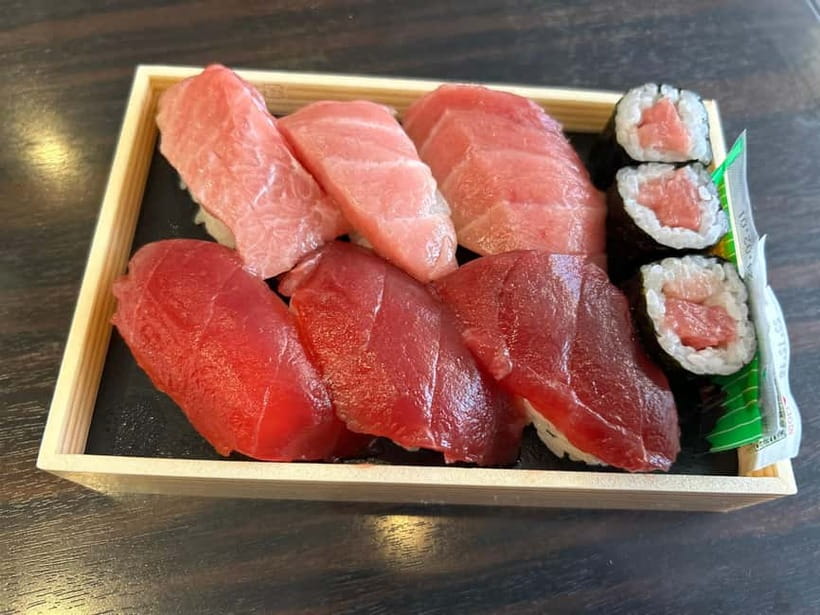
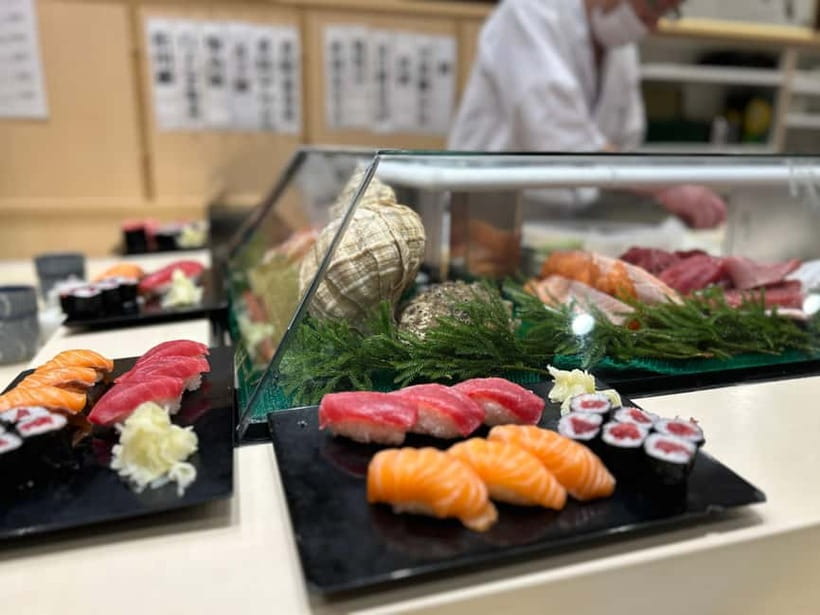
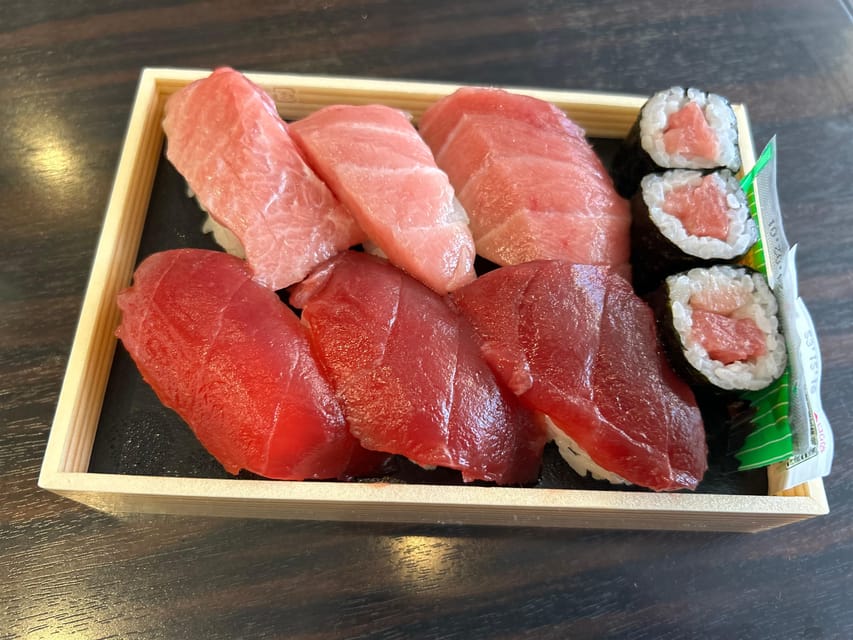
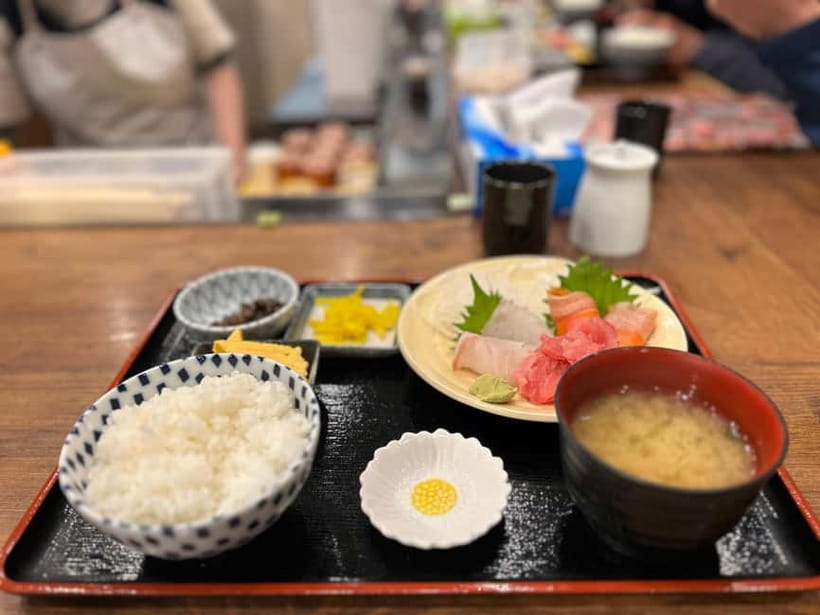
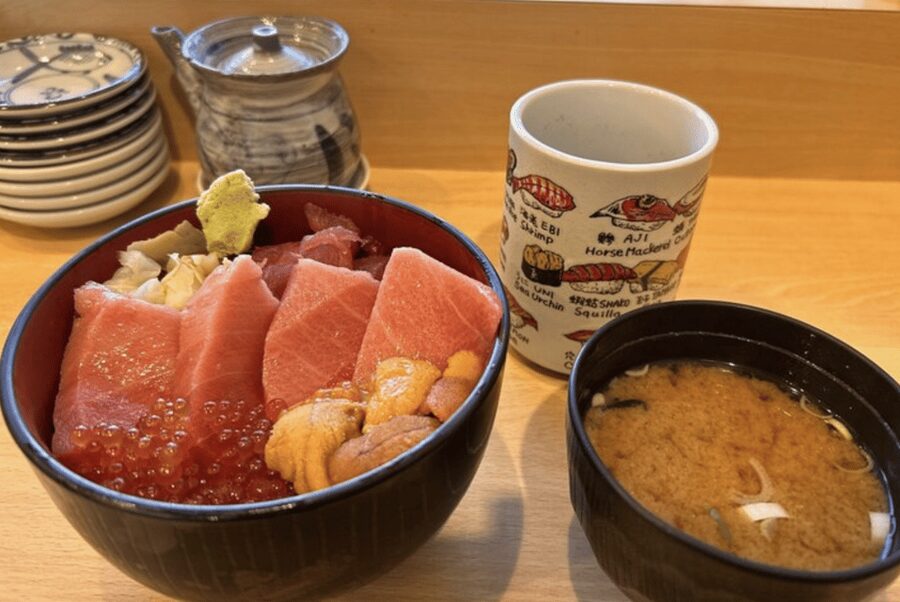
Breakfast is not included, so you pay for your own sushi, seafood, drinks, and snacks. That is useful because you can choose how much you want to eat, but you should include this cost when judging the $153 tour price.
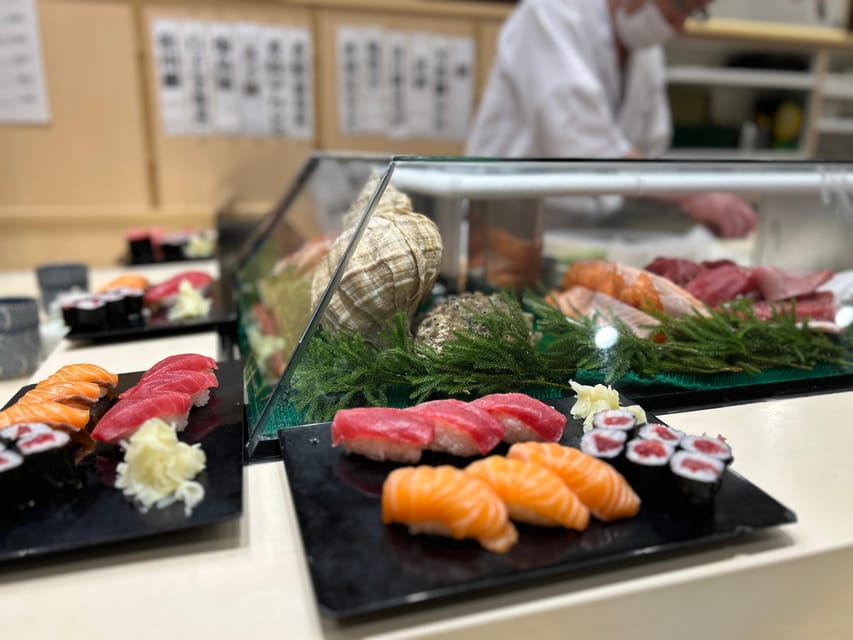
Depending on timing and your guide’s advice, you may eat sushi or seafood at Toyosu or wait until Tsukiji. Fresh sushi early in the morning is one of the experience’s memorable possibilities, and several guides have directed groups to excellent sushi or sashimi spots.
The private format helps here. You can ask for a substantial sit-down meal, a quick bite, or a series of small tastes. You can also ask your guide to help identify vegetarian or vegan ingredients. The activity welcomes vegetarian and vegan participants, but the available choices depend on what is open and in stock that morning.
One practical point: the start is so early that deciding on breakfast while riding in a taxi may feel like work. If you are tired, tell your guide that you would prefer a quiet ride and discuss food once you arrive.
More Fish Market Tours in Tokyo
- Tokyo Sushi Making Class in Tsukiji with Professional Chef
★ 5.0 · 1,177 reviews - Tsukiji Fish Market Guided Tour and Sushi Making with Pro Chef
★ 5.0 · 775 reviews - Tokyo: Tsukiji Fish Market Food and Culture Walking Tour
★ 4.7 · 757 reviews - Tsukiji Fish Market: Street Food & Culture Walking Tour
★ 5.0 · 669 reviews
The bus ride to Tsukiji’s outer market
After Toyosu, the group takes a local bus to Tsukiji. The ride is listed at about 15 minutes, and the bus fare is not included.
The change of scene is the point. Toyosu is the newer, organized wholesale setting. Tsukiji is the old outer market, where small shops and food stalls create a more hands-on morning. You are no longer only watching the seafood trade. You are choosing what to taste, what to buy, and where to pause.
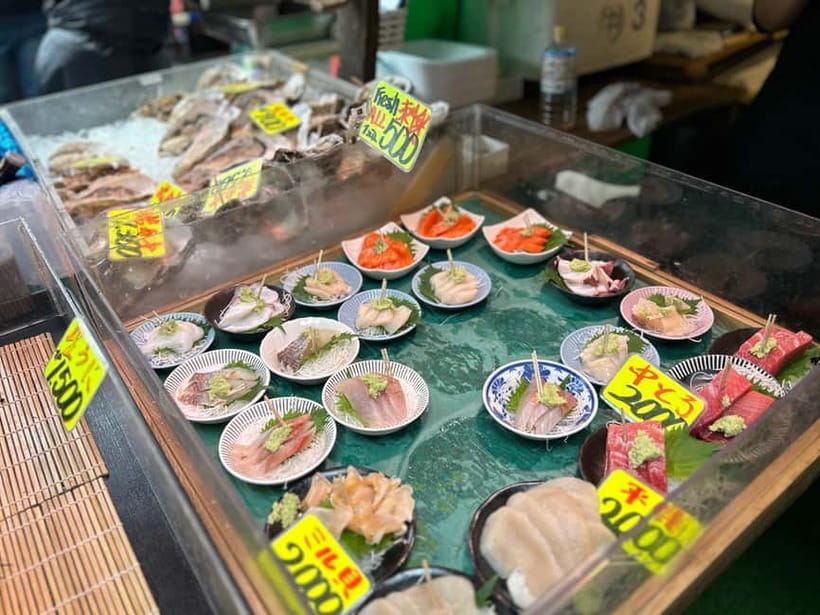
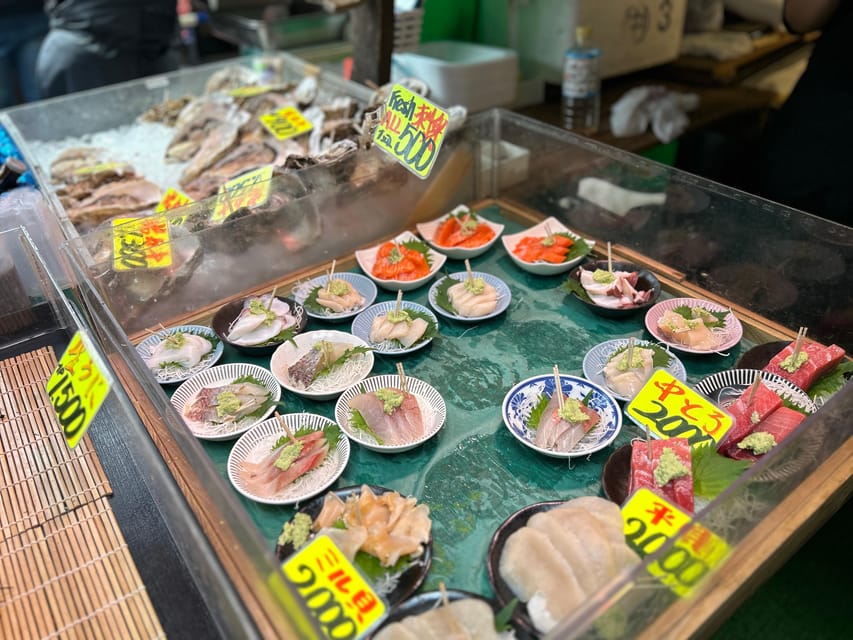
The guide can help you avoid wasting time in a market that offers many choices. Depending on the day, you might stop for sashimi, grilled eel, yakitori, tamago, tuna steak, mochi, fruit, vegetables, or seasonal specialties.
Some people will prefer Tsukiji to the auction. It gives you more freedom to eat and browse, and it is easier to understand at street level. The drawback is that individual shops may have different hours, prices, and levels of crowding, so the exact route cannot be fixed in advance.
Shopping for knives, pottery, and Japanese pantry goods
Tsukiji is a strong part of the tour for anyone who likes cooking or well-made household items. You may visit shops selling knives, pottery, chopsticks, tea tools, and other kitchen goods.
A guide can help with questions that are difficult to handle alone, especially if you do not speak Japanese. You can ask about the purpose of a knife, the difference between types of tea tools, or the best way to carry pottery home.
The shopping can also be personal. You might buy a modest pair of chopsticks, a matcha whisk, or a small grater rather than commit to an expensive knife. The tour does not require you to purchase anything, and I would avoid treating the market as a checklist of souvenirs.
Bring cash. It is specifically recommended for the activity, and it makes small food purchases and market shopping easier. Also remember that food, drinks, taxi fare, and bus fare are separate from the tour price.
A shrine option and a flexible private pace
A local shrine visit is optional. This gives you a chance to add a quieter cultural stop if your group wants one, or stay focused on food and shopping if the markets are the priority.
That flexibility is one of the best reasons to choose a private tour instead of a fixed group walk. A family with children can spend longer at food stalls. A serious cook can ask more questions about knives and ingredients. A vegetarian can work with the guide to find suitable choices.
The group limit is 10 people, but the more people in your booking, the less intimate the private experience may feel. For a couple or small family, the guide can respond closely to your interests. For a full group of 10, agree early on how much time you want for eating, shopping, and the shrine.
Getting there before dawn
The tour begins early because the market does. Subways and buses are not running at the needed hour, so you must take a taxi to Toyosu. The taxi fare is your responsibility, and the price depends on where you stay.
The most practical hotel areas are Toyosu, Tsukiji, and Ginza. If you stay farther away, the ride may add a noticeable cost to an already expensive morning. You can meet your guide at your hotel, at the front of the hotel, or at Shijō-mae Station on the Yurikamome Line, depending on the option you choose.
If you meet at the station, use the stairs or elevator to the second-floor ticket gate. The escalator shutters do not open until 5 a.m. This is a small detail, but it matters when you are standing outside in the dark with a sleepy family.
Your guide contacts you through WhatsApp or the GetYourGuide app. Download WhatsApp, give an accurate phone number, and allow notifications from Japanese numbers. Confirm that the guide is from MACHI TOUR JAPAN, especially if you arrange hotel pickup.
How good is the $153 value?
At $153 per person, this is not a cheap breakfast outing. You still pay for food, drinks, a taxi to the market, and the bus to Tsukiji.
The price makes more sense if you value interpretation and convenience. You are paying for a private English-speaking guide, early-morning coordination, help at two markets, and the ability to shape the food and shopping stops around your group. A guide can also help you find less expensive restaurants, which matters when market food prices vary.
The tour is less good value for someone who only wants to look at the tuna auction and leave. You may have a clearer sense of the market if you book a guide, but the first-floor lottery is uncertain and the auction can be modest on a particular morning.
For a family or small group that would otherwise struggle with a 5 a.m. taxi, an unfamiliar market, and limited English, the price is easier to justify. The guide reduces confusion and turns the morning into a connected experience rather than three separate tasks.
The guides make the difference
The strongest part of this experience is the quality of its individual guides. Nobby is described as warm, punctual, and especially good at explaining Japanese culture and the auction. Sachiyo has used visual aids, helped groups find good market stalls, and stayed patient with detailed questions.
Yumi, Emi, Mayumi, Eriko, Yoko, Tomoko, Naomi, and Hiroshi have also led this route. The exact guide depends on availability, but the recurring pattern is clear: good English, careful timing, market explanations, and practical food advice matter more here than a memorized speech.
A guide can point out a less popular breakfast place, explain a product label, help with ordering, or show you where a tax-free refund building is located. Those small acts are useful in a market where you may otherwise spend half your time trying to work out what you are looking at.
Who should book this early-morning tour?
I would choose this for first-time visitors to Tokyo who want food, working-market culture, and shopping in one compact morning. It also suits families, since children can sample small foods and the private format allows the pace to change.
It is a good match for cooks, sushi fans, photographers who enjoy market activity, and anyone who wants more than a standard sightseeing stop. Wheelchair and stroller users can join, though the very early taxi and market route should still be considered for your group’s comfort.
I would skip it if you dislike early starts, do not want to pay extra for transportation and food, or expect a guaranteed close-up tuna spectacle. The auction is only one part of the morning, and the markets are the stronger choice if you want to eat and shop.
Should you book it?
Book this tour if you want a guided route through both Toyosu and Tsukiji, and if you value clear explanations more than a guaranteed first-floor view. The best plan is to stay near Ginza, Tsukiji, or Toyosu, budget extra for taxi and food, and treat the auction lottery as a welcome extra.
The tour earns its price through the guide’s help. If you end up with someone like Nobby, Sachiyo, Yumi, Emi, or Mayumi, you can expect more than a walk past fish counters. You get a practical introduction to Tokyo’s seafood trade, a very early sushi breakfast, and a useful morning of shopping in one of the city’s best food districts.
FAQ
How long does the tour last?
The tour lasts about three hours. The Toyosu portion is listed at about 70 minutes, the bus ride to Tsukiji about 15 minutes, and the Tsukiji portion about 70 minutes.
What time does the tour start?
The activity begins in the early morning, with hotel pickup listed at 5 a.m. Exact start times depend on availability and the option you select.
Is the tuna auction viewing guaranteed?
No. First-floor viewing requires winning a lottery run by the market authorities. If you do not win, you can still watch the auction from the second floor.
How do I enter the first-floor viewing lottery?
Book by the fifth day of the previous month and register through the official link. The tour team sends a reminder and registration link through the GetYourGuide app.
Is food included in the price?
No. Breakfast, drinks, sushi, seafood, snacks, and other food purchases are paid separately.
Do I need to pay for transportation?
Yes. You pay for the taxi from your hotel to the market and the bus from Toyosu to Tsukiji. Subway and bus services are not running early enough for the initial trip.
Where does the tour finish?
The tour finishes at Tsukiji Outer Market.
Can vegetarian, vegan, wheelchair, and stroller users join?
Yes. Vegetarian and vegan participants are welcome, and the guide can help find suitable ingredients. The activity is also listed as accessible for wheelchair and stroller users.
More Private Market Tours in Tokyo
- Cairo 8 Hour Private Tour of Pyramids, Egyptian Museum and Bazaar
★ 5.0 · 2,931 reviews - Private Excursion to Maeklong Railway and Floating Markets
★ 5.0 · 850 reviews - Floating and Railway Market (Optional Waterfall): Private Tour
★ 5.0 · 827 reviews - Cairo: Private Pyramids, Museum & Bazaar Tour with Lunch
★ 4.6 · 744 reviews
More Private Market Tours in Japan
- Tsukiji Fish Market Private Food Tour in Tokyo
★ 5.0 · 18 reviews - Tokyo: Private Tsukiji Fish Market Tour with 3 food stops
★ 4.7 · 15 reviews - Tokyo: Private Tsukiji Street Food & Sake with Local Guide
★ 5.0 · 3 reviews - Tuna Auction Market Guided Private Tour in Nachi-Katsuura
★ 5.0 · 43 reviews
Just added around Tokyo
- Tokyo: Tsukiji Market Guided Tour & Sushi-Making Experience★ 4.4 · 11 reviews
- Tokyo: Private Tsukiji Street Food & Sake with Local Guide★ 5.0 · 3 reviews
- Tokyo: Tsukiji Market and Hama-rikyu Gardens Guided Tour★ 4.8 · 73 reviews
- Tokyo: Tsukiji Fish Market Culture Tour with Sashimi Tasting★ 4.6 · 54 reviews
- Tokyo : Tsukiji Fish Market Food Walking & Shrine Visit Tour★ 5.0 · 3 reviews
- Tokyo: Tsukiji Fish Market Foodie and Educational Tour★ 5.0 · 4 reviews
- Tokyo’s Kitchen: Tsukiji Market Food & Culture Walk★ 4.7 · 74 reviews
- Tokyo: Guided Walking Tour of Tsukiji Market with Lunch★ 4.4 · 24 reviews
Fish Market Tours, compared.
Tokyo Tsukiji Fish Market Food and Culture Walking Tour
Read our review →
Tokyo Sushi Making Class in Tsukiji with Professional Chef
Read our review →
Tsukiji Fish Market Guided Tour and Sushi Making with Pro Chef
Read our review →Tsukiji Fish Market Food and Culture Walking Tour
Read our review →
Tsukiji Fish Market: Street Food & Culture Walking Tour
Read our review →
Tsukiji Fish Market Small-Group Food Walking Tour
Read our review →Browse the lists this tour appears in