
Review · FISH MARKET TOURS
Tokyo: Tsukiji Fish Market Tour with 6 Stops & Seafood Lunch
Tsukiji is no longer Tokyo’s main wholesale fish market, but its Outer Market still delivers the sights, smells, and quick bites that made this district famous. You’ll visit a temple, sample at least five market foods, eat a seafood donburi bowl, and finish with a high view over Tokyo and the bay.
I like the small group size, limited to seven, and the way guides such as Mai, Kiyo, Ken, and Taka help you choose foods you might not try alone. I also like the mix of food and culture: Tsukiji Hongan-ji and Namiyoke Inari Jinja give the market a useful religious and historical setting. The main drawback is that this is an outer-market tour, not a tour of the wholesale auction facilities, and the crowded lanes can feel rushed.
Key points to know before booking
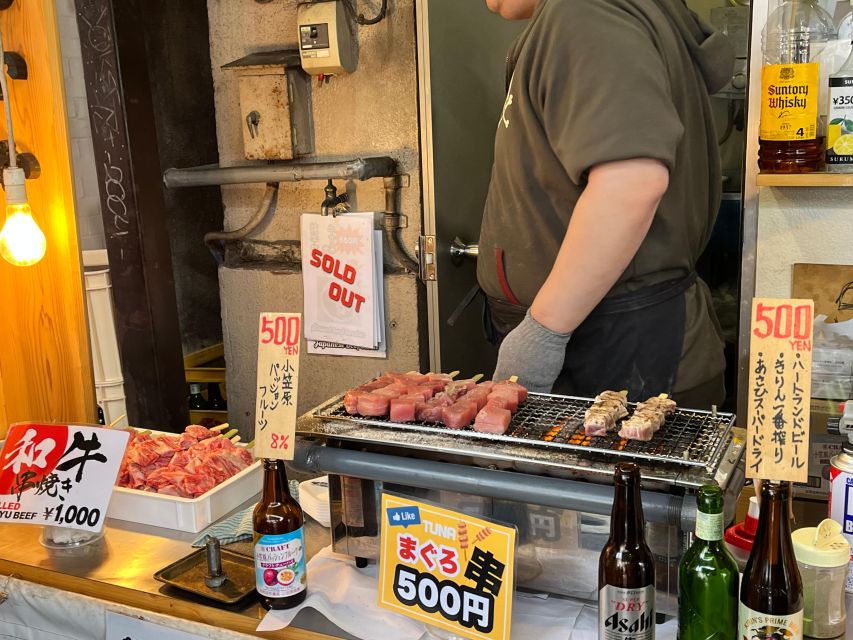
- Five or more tastings: Expect small samples from market stalls, with past stops including tuna sushi, oysters, grilled eel, rolled omelet, yakitori, mochi, and taiyaki.
- A 1,500-yen lunch allowance: Your seafood donburi lunch is included up to this amount, but drinks cost extra.
- Three different views of Tsukiji: See the district from the temple grounds, the market lanes, and Shiodome Media Tower.
- A small English-speaking group: The tour is limited to seven people, which makes food choices and questions easier.
- Cash is useful: Bring money for street food, extra portions, beer, sake, seasonings, or souvenirs.
- Station names matter: Meet at Tsukiji Station, not Tsukijishijo Station.
What this Tsukiji tour really covers
At $94 per person for three hours, this is not simply a walk through food stalls. You are paying for a guide who helps you navigate a crowded market, explains unfamiliar foods, arranges tastings, provides lunch, and adds two nearby cultural stops.
The value depends on how much help you want. If you are comfortable choosing food, reading menus, and finding Tsukiji on your own, you could spend less by visiting independently. If you want a clear introduction on your first day in Tokyo, the price becomes easier to justify. Several guides have also helped people with train directions after the tour, though that should be viewed as a kind extra, not part of the formal service.
The group limit of seven is important. Tsukiji’s lanes can be packed, especially late in the morning and on weekends. A small group is easier to keep together, and your guide can speak to you without shouting across a crowd.
More Fish Market Tours in Japan
- Tokyo Tsukiji Fish Market Food and Culture Walking Tour
★ 5.0 · 3,184 reviews - Tokyo: Tsukiji Fish Market Food and Walking tour
★ 5.0 · 1,724 reviews - Tokyo: Tsukiji Fish Market Guided Walking Tour
★ 4.9 · 1,397 reviews
Starting at Tsukiji Hongan-ji
The meeting point is the front gate of Tsukiji Hongan-ji, near Tsukiji Station. Look for a guide holding a red or orange MagicalTrip sign. Take care with the station name: Tsukiji Station is the correct stop. Tsukijishijo Station is a different station, and going to the wrong one can make you late.
The tour begins with about 20 minutes inside or around Tsukiji Hongan-ji. This large Buddhist temple gives you a calm start before the noise of the market. Your guide explains Japanese worship customs, temple etiquette, and local religious views.
This stop matters because Tsukiji is not only a food district. The market grew beside places of worship, and the temple helps explain how food, community, and religion fit together in Japanese daily life. It is also a useful orientation point. You can ask questions here before entering the crowded streets.
You do not need to be Buddhist to appreciate the visit. The point is cultural context, not religious instruction. Guides such as Hina and Ken have been especially good at explaining etiquette in a clear, approachable way.
Eating your way through Tsukiji Outer Market
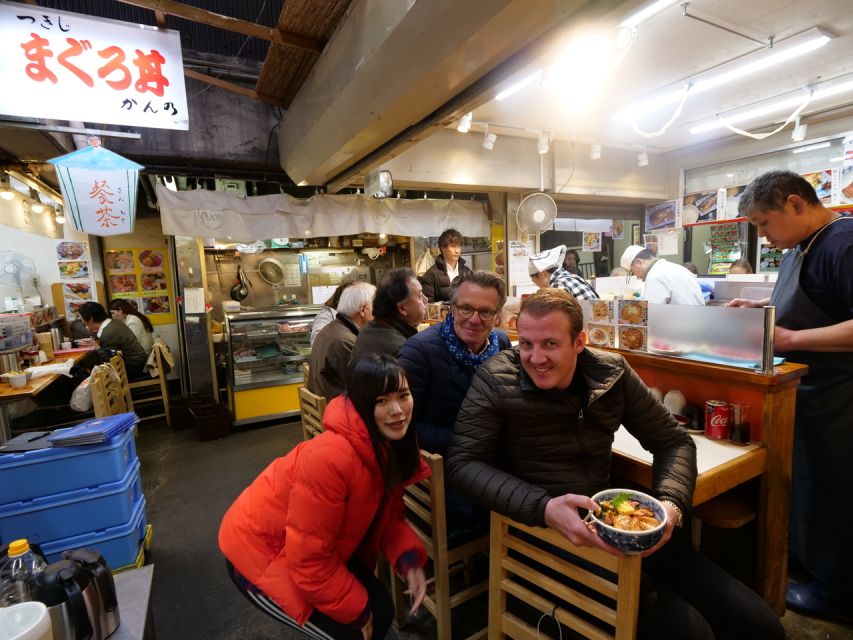
The main part of the tour lasts about an hour in Tsukiji Outer Market. This is the section most people picture when they hear Tsukiji: narrow lanes, food counters, seafood shops, cooking supplies, and vendors serving quick portions.
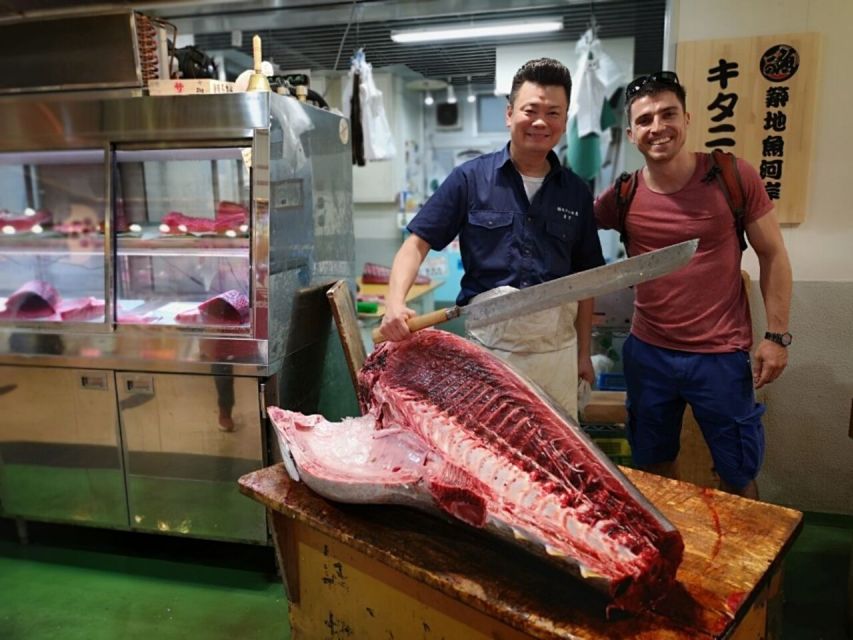
Keep your expectations accurate. The old wholesale fish market moved to Toyosu, so this tour does not take you through the working wholesale auction area. You are visiting the Outer Market, where shops and food stalls remain open to the public. That distinction is important, especially if you expect to see the famous early-morning tuna auction.
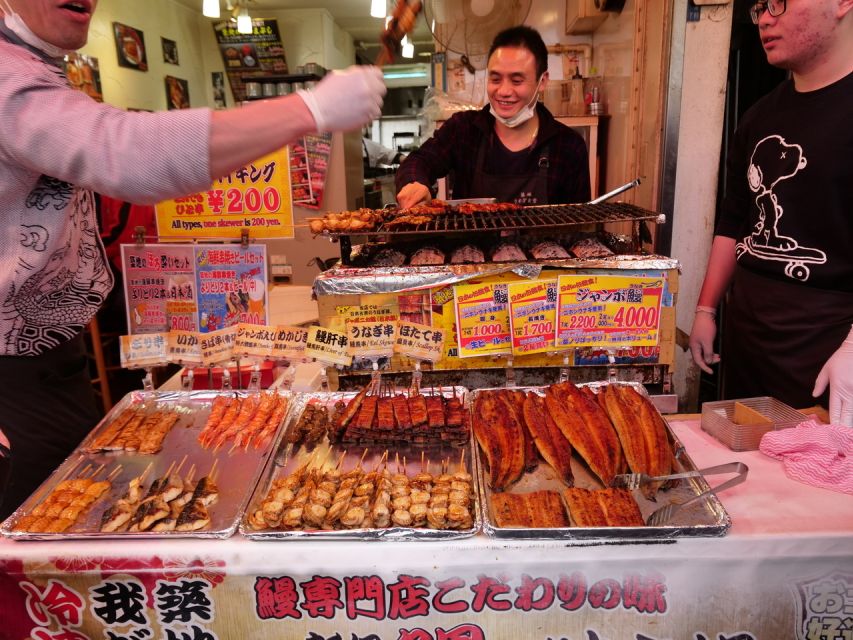
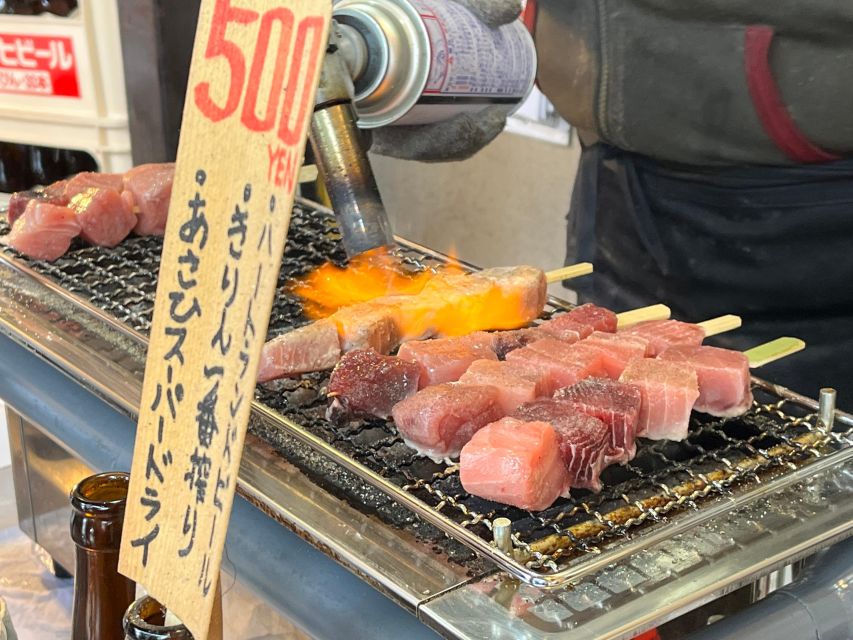
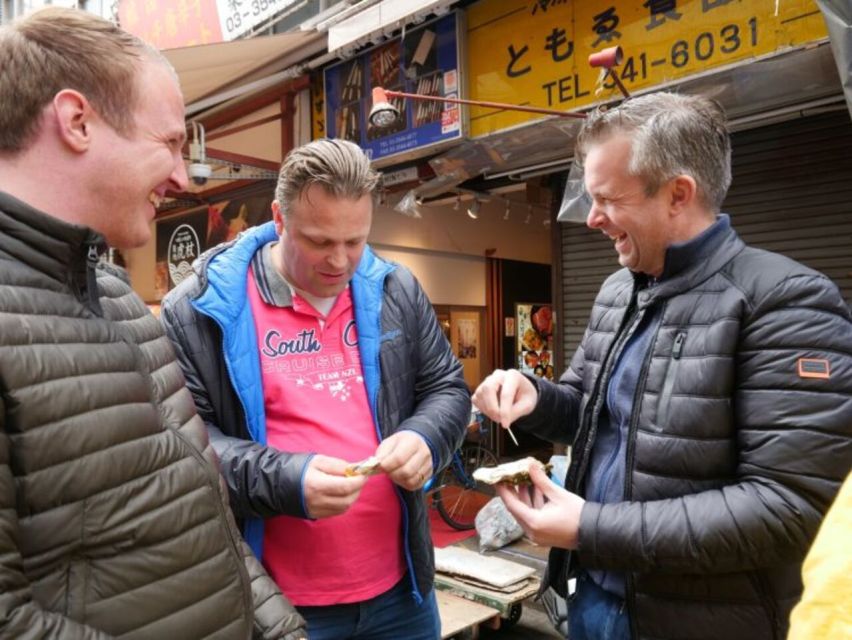
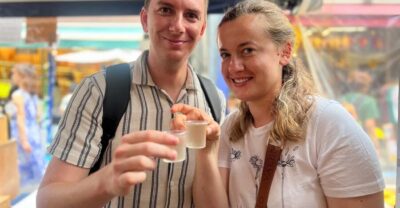
The guide leads you to five or more tastings. The exact foods can change by day and season, but the recorded stops have included tuna sushi, large oysters, grilled eel, yakitori, rolled omelet, sashimi, custard-filled mochi, and tuna-shaped taiyaki. You might also encounter seasonings, flavorings, or other traditional snacks that are easy to overlook when walking alone.
I like this format because you are not committing to a full plate every few minutes. Small samples let you compare textures and flavors without filling up before lunch. If you see something you want to buy, ask your guide. The tour is designed to help with choices, and guides have pointed people toward useful food gifts and cooking ingredients.
The market can be very crowded. One morning group found the lanes slow to cross, while another felt the pace was comfortable. Your experience will depend on the hour, day, and size of the group. Keep your belongings close, stay near the guide, and have your camera ready because there may not be time to stop at every stall.
This is also the part where the tour may feel less interactive than you expect. The guide can recommend foods and explain what you are eating, but the vendors are busy running their shops. You are joining a working market, not a staged demonstration.
Namiyoke Inari Jinja and the market’s spiritual side
The route includes about 20 minutes at Namiyoke Inari Jinja, a Shinto shrine closely connected with the Tsukiji area. The shrine adds another layer to the tour after the Buddhist temple.
Your guide explains basic customs and the difference between the Buddhist and Shinto settings. For someone visiting Japan for the first time, this comparison is useful. You get a simple introduction to worship practices without needing a separate temple-and-shrine tour.
This stop also breaks up the food tasting. Tsukiji can become a blur of seafood, sauces, crowds, and photographs. A short visit to the shrine gives you time to slow down and understand the neighborhood beyond its menu.
The route is not fully suitable for wheelchairs or strollers. If mobility access is important for you, ask before booking rather than assuming every section will be easy.
More Fish Market Tours in Tokyo
- Tokyo Sushi Making Class in Tsukiji with Professional Chef
★ 5.0 · 1,177 reviews - Tsukiji Fish Market Guided Tour and Sushi Making with Pro Chef
★ 5.0 · 775 reviews - Tokyo: Tsukiji Fish Market Food and Culture Walking Tour
★ 4.7 · 757 reviews - Tsukiji Fish Market: Street Food & Culture Walking Tour
★ 5.0 · 669 reviews
Donburi lunch in the Outer Market
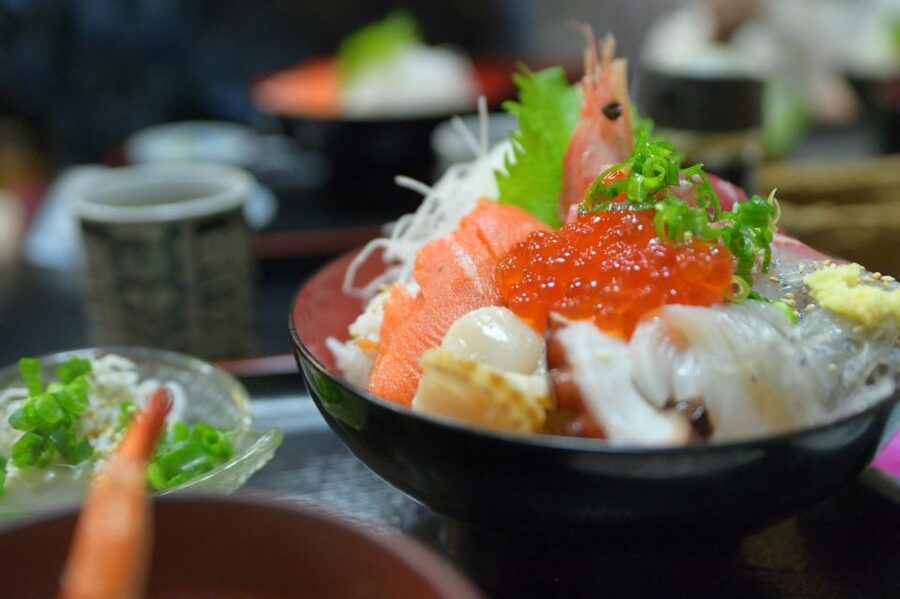
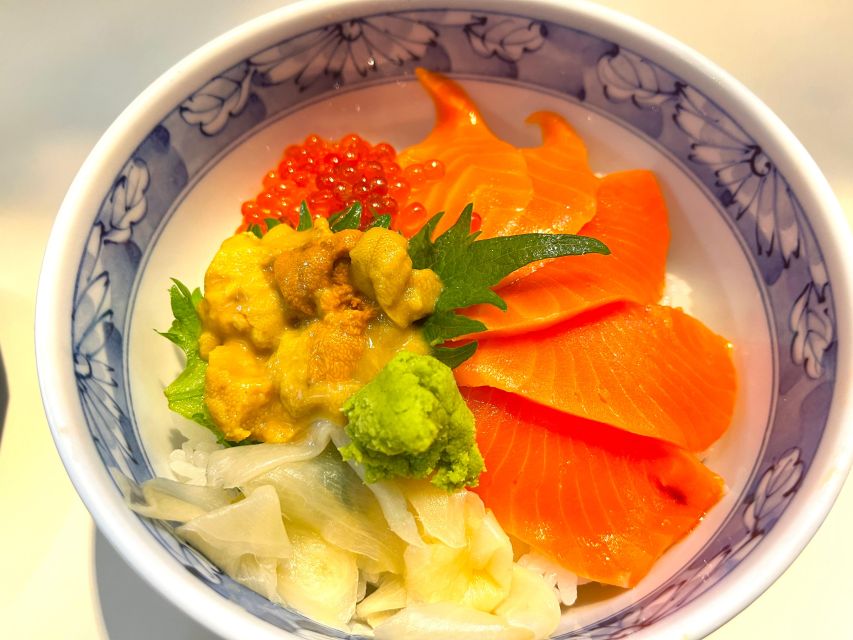
The tour finishes its food portion with a sit-down seafood donburi lunch. A donburi is a bowl served over rice, commonly topped with seafood. The included lunch allowance is up to 1,500 yen.
This meal gives you a welcome chance to sit after moving through crowded lanes. The lunch is also more substantial than the earlier tastings. Past meals have included very fresh raw fish and ikura, and several guides have arranged tables at places popular with local diners.
Drinks are not included. You can buy Japanese beer or sake with your bowl, but budget for it separately. The description of the experience may make the drink pairing sound included, so keep this point clear when planning your spending.
Food restrictions need careful attention. The information for this activity is inconsistent: the main description refers to vegetarian meals, while the important information says vegan and vegetarian options are not available. Allergy-free food cannot be guaranteed, kitchens are operated by separate businesses, and substitutions may not be possible at every stop. Tell the provider about restrictions in advance, but do not book this as a safe choice for a strict vegetarian, vegan, or anyone with a serious allergy.
Shiodome Media Tower and the 46th-floor view
After lunch, the group walks to Shiodome Media Tower for about 20 minutes. The observation area offers a broad view across Tokyo, the market district, and the bay.
This is a smart finish. You have just seen Tsukiji at street level, where the lanes can feel tight and confusing. From above, the neighborhood makes more sense. You can see the city’s scale and understand where the market sits within central Tokyo.
The stop is also a good photo opportunity. Guides have used the view to point out nearby areas and answer questions about the city. It is not a separate full sightseeing visit, but it adds a strong final image to a food-focused morning.
The tour returns to Tsukiji Hongan-ji, although some guides have helped people continue to nearby train stations. If you have a flight, timed ticket, or another reservation, do not rely on extra help after the official ending. The activity starts on time, and late arrivals who miss the group cannot join later or receive a refund.
Food, pacing, and what to bring
Wear comfortable shoes. You will spend most of the three hours walking and standing, often on crowded streets. The market has many tempting stalls, so bring a little cash for extra food and shopping.
You should also arrive hungry, but not empty. The tastings arrive before lunch, and some are filling. The best approach is to sample selectively, ask questions, and save room for the donburi bowl.
The pace is usually steady rather than frantic, but crowded conditions can make it feel slow or rushed at the same time. One person may want more time for photographs, while the group needs to keep moving. If you want to browse every stall at leisure, plan a separate return visit.
The tour is suitable for all ages, and families have enjoyed the food and cultural explanations. Children may especially like the small tastings, but the crowded lanes require close attention. Solo visitors, couples, and families can all fit the format, and a solo booking may occasionally become a very small group if few people reserve that day.
The guides make the difference
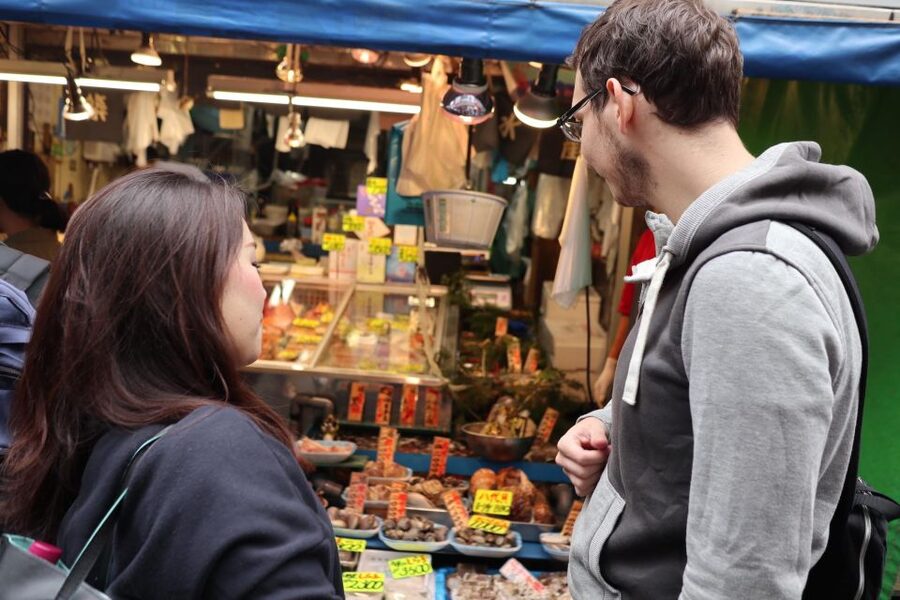
The strongest part of this experience is the guide. Mai has been praised for clear English, food knowledge, and useful restaurant suggestions. Kiyo has helped visitors understand the market, kept a good pace, and even assisted with train tickets afterward. Ken and Taka have been described as friendly, energetic, and helpful with food choices.
Other guides named by participants include Naoki, Max, Momo, Hina, Nao, Maiko, Lily, Yoko, Yoichi, and Tsubasa. The quality of the morning depends partly on who leads your group, but the repeated pattern is clear: the guide is there to translate the market, not just point at it.
Ask questions. Tell the guide what you want to taste or buy. If you have a special interest in cooking, seafood, temples, or Tokyo neighborhoods, say so early. The route has some flexibility, and guides have adjusted recommendations when people wanted particular foods or shopping advice.
Is $94 good value?
I see the $94 price as fair if you want a guided introduction with lunch and several tastings. A seafood bowl alone does not account for the full cost, since the included lunch allowance is capped at 1,500 yen. The value comes from the guide, the food samples, the temple and shrine visits, and the high viewpoint.
The deal is weaker if you mainly want an unrestricted market stroll. You may feel limited by the group pace, especially when you want to stop for photographs or compare several stalls. The tour also does not include drinks, and extra snacks or purchases add to the bill.
Free cancellation up to 24 hours before the start and reserve-now-pay-later booking make it easier to fit into a changing Tokyo schedule. Still, be at the correct meeting point early. This is not a tour where you can casually catch up after the group leaves.
Who should book this Tsukiji experience?
I would choose this tour for a first morning in Tokyo, especially if you want food guidance without spending half a day planning every stop. It suits people who like tasting small portions, asking cultural questions, and moving between food, religion, and city views.
It is also a good fit for solo visitors who want company, families who need a clear route, and anyone nervous about ordering unfamiliar seafood. The small group helps, and the lunch provides a proper break.
I would look elsewhere if you need guaranteed vegetarian, vegan, or allergy-safe food. I would also skip it if your main goal is the wholesale fish auction, since the route focuses on Tsukiji Outer Market.
Should you book it?
Book this three-hour tour if you want an efficient introduction to Tsukiji with real tastings, a seafood donburi lunch, temple and shrine context, and a final city view. Guides such as Mai, Kiyo, and Ken have made the experience especially useful by explaining food and helping with practical Tokyo questions.
Do not book it expecting an empty market, a wholesale auction visit, included alcohol, or unlimited time at every stall. Arrive at Tsukiji Station early, bring cash, keep your expectations focused on the Outer Market, and confirm dietary needs before paying. For the right eater, this is a friendly and practical way to get your bearings in one of Tokyo’s most famous food districts.
FAQ
How long does the Tsukiji market tour last?
The tour lasts three hours.
Where does the tour meet?
The meeting point is at the front gate of Tsukiji Hongan-ji near Tsukiji Station. Do not go to Tsukijishijo Station by mistake.
How large is the tour group?
The tour is limited to seven participants.
Is lunch included?
Yes. Seafood donburi lunch is included up to a maximum value of 1,500 yen.
Are drinks included with lunch?
No. Japanese beer and sake are available at extra cost.
How many food tastings are included?
The tour includes five or more food tastings in Tsukiji Outer Market.
Can people with dietary restrictions join?
You should tell the provider about allergies or dietary restrictions, but allergy-free food cannot be guaranteed. The information states that vegan and vegetarian options are not available, so confirm directly before booking if this applies to you.
More Lunch Trips in Tokyo
- Tokyo: Guided Walking Tour of Tsukiji Market with Lunch
★ 4.4 · 24 reviews - Cooking Class and Lunch at a Tuscan Farmhouse with Local Market Tour from Florence
★ 5.0 · 4,831 reviews - Paris Cooking Class and Lunch with Wine plus Market Visit Option
★ 5.0 · 1,024 reviews - Cairo: Private Pyramids, Museum & Bazaar Tour with Lunch
★ 4.6 · 744 reviews
Just added around Tokyo
- Tokyo: Tsukiji Market Guided Tour & Sushi-Making Experience★ 4.4 · 11 reviews
- Tokyo: Private Tsukiji Street Food & Sake with Local Guide★ 5.0 · 3 reviews
- Tokyo: Tsukiji Market and Hama-rikyu Gardens Guided Tour★ 4.8 · 73 reviews
- Tokyo: Tsukiji Fish Market Culture Tour with Sashimi Tasting★ 4.6 · 54 reviews
- Tokyo: Tsukiji Fish Market Foodie and Educational Tour★ 5.0 · 4 reviews
- Tokyo : Tsukiji Fish Market Food Walking & Shrine Visit Tour★ 5.0 · 3 reviews
- Tokyo’s Kitchen: Tsukiji Market Food & Culture Walk★ 4.7 · 74 reviews
- Tokyo: Guided Walking Tour of Tsukiji Market with Lunch★ 4.4 · 24 reviews
Fish Market Tours, compared.
Tokyo Tsukiji Fish Market Food and Culture Walking Tour
Read our review →
Tokyo Sushi Making Class in Tsukiji with Professional Chef
Read our review →
Tsukiji Fish Market Guided Tour and Sushi Making with Pro Chef
Read our review →Tsukiji Fish Market Food and Culture Walking Tour
Read our review →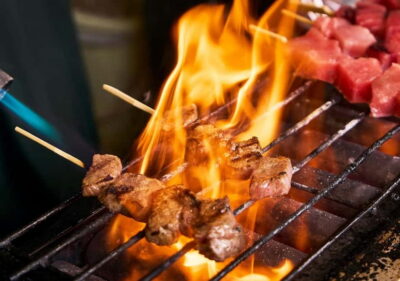
Tsukiji Fish Market: Street Food & Culture Walking Tour
Read our review →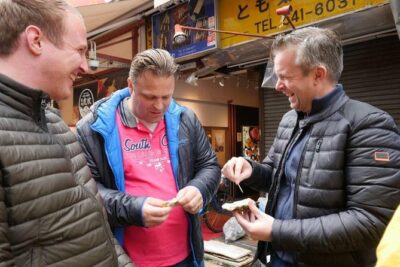
Tsukiji Fish Market Small-Group Food Walking Tour
Read our review →Browse the lists this tour appears in