
Review · FISH MARKET TOURS
Tsukiji Food and Toyosu Market with Government-Licensed Guide
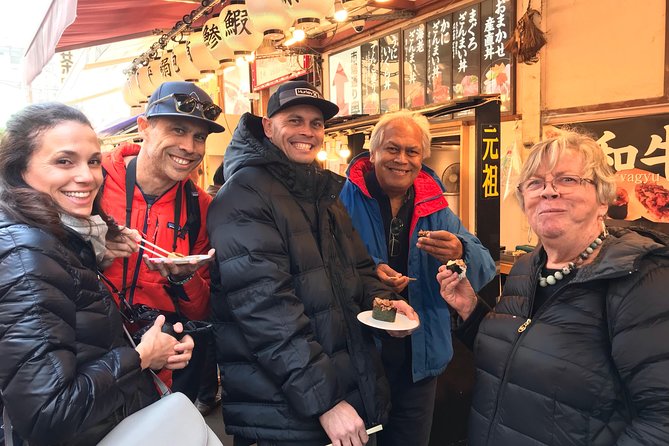
Toyosu is Tokyo’s modern seafood machine. Tsukiji is its noisy, flavorful older sibling. This private tour lets you see both in one morning, with a licensed guide such as Toyo, Suzuki, Show, Mina, or Koji explaining what you are looking at and helping you move through places that can feel confusing on your own. I especially like the two-market comparison and the chance to finish with your own choice of sushi or market food.
I also like the personal guidance. Guides have helped visitors find tuna, crab, eel, sea urchin, wagyu, sushi, and souvenirs, while others adjusted the pace for families or added cultural stops. The main drawback is timing: Toyosu can feel quiet around noon, and the regular tour is not the tuna auction tour. Food, train fares, and other personal costs are extra.
Key details before you book
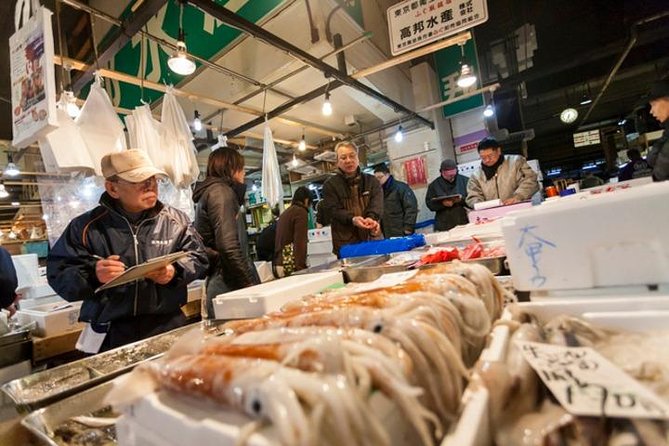
- Two very different markets: Toyosu handles the modern wholesale business, while Tsukiji’s outer market is packed with small food shops and places to eat.
- Private tour format: Only your party participates, so you can ask questions and request help with food choices or shopping.
- About four hours on foot: Expect walking through market buildings, streets, shrine grounds, and a temple.
- Licensed English-speaking guide: Guides including Toyo, Mami, Koji, Mina, Show, and Shuji have helped with market customs, train cards, food choices, and local history.
- Food is not included: Bring cash and budget for sushi, snacks, seafood, or other purchases.
- The tuna auction is separate: This experience does not include the auction. A separate early-morning option is required for that.
Toyosu Market shows Tokyo’s modern seafood trade
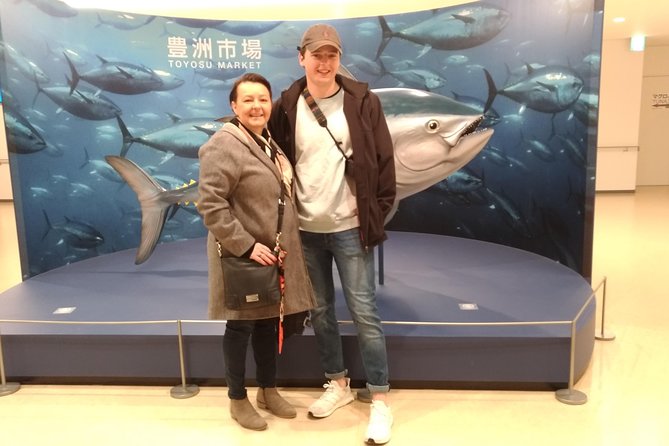
Begin at Toyosu Market on Tokyo Bay, the large market that opened in 2018 after taking over the wholesale role from the old Tsukiji site. The buildings are clean, planned, and built for efficient commercial work. You are not entering a quaint maze here. Toyosu feels more like a carefully managed working facility.
Your guide helps explain the sections and the way the market operates. You may see viewing areas connected with the auction process, along with displays or videos that explain how tuna auctions work. One guide pointed out a replica of a tuna weighing more than 500 pounds, a useful visual reminder of the scale of the business.
Toyosu is valuable because it gives context. At Tsukiji, you see food shops and eatable souvenirs. At Toyosu, you learn where much of that seafood trade begins. Without a guide, the large buildings and restricted areas can be hard to interpret. With one, the quiet corridors become part of the story rather than simply a series of rooms.
The market also has fruit and vegetable areas and places to eat. Depending on the hour, you may find fewer open stalls than at Tsukiji. One important practical point is timing: a visit around noon may be too late for some market businesses, leaving you with less to see. A morning start makes more sense.
Do not confuse this tour with the dedicated tuna auction experience. The standard outing does not include the auction itself. If seeing the auction is your main goal, you need to book the separate Toyosu Market Morning Tuna Auction and Tsukiji Food Tour, which begins very early.
More Fish Market Tours in Japan
- Tokyo Tsukiji Fish Market Food and Culture Walking Tour
★ 5.0 · 3,184 reviews - Tokyo: Tsukiji Fish Market Food and Walking tour
★ 5.0 · 1,724 reviews - Tokyo: Tsukiji Fish Market Guided Walking Tour
★ 4.9 · 1,397 reviews
The monorail ride adds a useful Tokyo view
Travel between Toyosu and Tsukiji is arranged by public transportation with your guide, but the fare is not included. The ride may involve the monorail, trains, or another public transit connection, depending on the plan for your group.
This is more than a transfer. One guide used the journey to point out Tokyo Bay and the changing view toward central Tokyo. For visitors who feel nervous about Tokyo’s train system, this help can be worth a good part of the tour price. Guides have assisted with Suica cards and IC card recharges, and they can take the pressure off reading station signs or choosing the right route.
The route also gives you a pause between two market settings. Toyosu is organized and spacious. Tsukiji is dense, social, and built around browsing. The contrast makes more sense after you have experienced both rather than visiting either one in isolation.
Remember to bring money for transportation. Public transit is not part of the tour price, and the guide does not provide a private vehicle.
Tsukiji’s outer market is where the appetite takes over
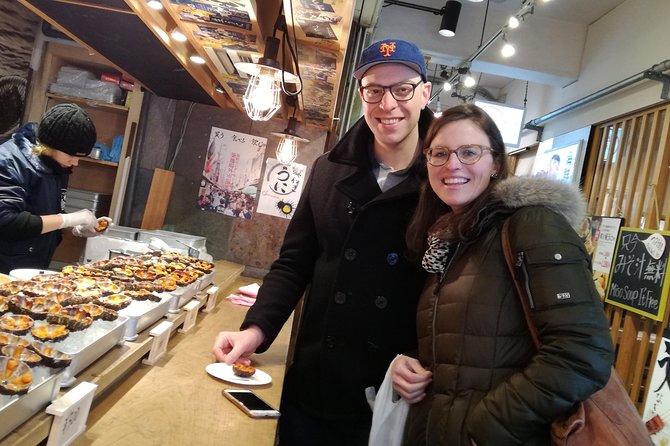
Tsukiji is the livelier half of the experience. The former inner wholesale market moved to Toyosu, but the outer market remains a busy food district with seafood shops, small restaurants, kitchen goods, prepared foods, and snacks.
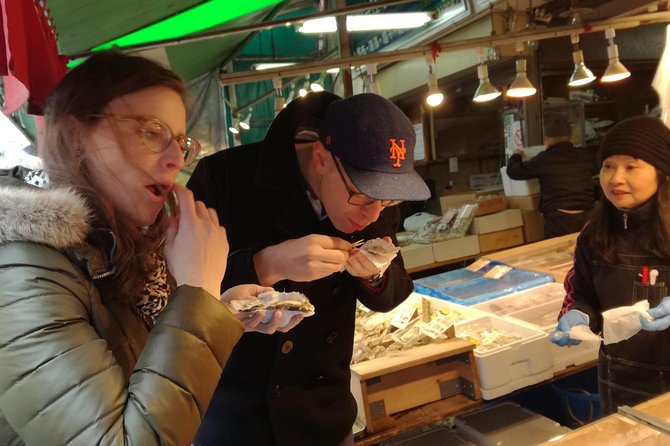
This is where a guide can be especially useful. The lanes can feel crowded, and the range of choices can be overwhelming. Guides have led visitors to sea urchin, barbecue eel, fresh tuna, crab, sushi, wagyu, and other foods. They can also explain what you are buying, point out shops that fit your interests, and help you avoid wasting time walking past one tempting counter after another.
Food purchases are your responsibility, so come ready to pay for what you eat. Cash is a smart choice. One useful tip from the experience is simple: bring both cash and an appetite. Food costs can rise quickly if you try several seafood samples or sit down for sushi.
You should also manage expectations about the meal. This is not a fixed tasting menu, and food is not included. You choose what to buy, if anything, and you pay directly. That gives you freedom, but it also means the final cost depends on your appetite and restaurant choices.
Some guides have ended the tour at a sushi restaurant, while others have helped groups find particular foods or souvenirs. If you have a strong food wish, such as tuna, eel, sushi, or wagyu, tell the guide early. The private format makes that kind of adjustment possible.
Namiyoke Inari Shrine explains Tsukiji’s beginnings
The short visit to Namiyoke Inari Shrine adds a cultural layer to the food stops. The shrine is associated with protection from waves, an especially fitting connection for land reclaimed from the sea.
You will spend about 15 minutes here. That is not long enough for an extended religious tour, but it gives you a useful explanation of how Tsukiji developed and why the waterfront setting matters. It also breaks up the eating and shopping with a quiet place for reflection.
I like this stop because it prevents the tour from becoming just a sequence of seafood purchases. Tokyo’s markets are tied to geography, religion, work, and the history of reclaimed land. A short shrine visit helps connect those pieces.
More Fish Market Tours in Tokyo
- Tokyo Sushi Making Class in Tsukiji with Professional Chef
★ 5.0 · 1,177 reviews - Tsukiji Fish Market Guided Tour and Sushi Making with Pro Chef
★ 5.0 · 775 reviews - Tokyo: Tsukiji Fish Market Food and Culture Walking Tour
★ 4.7 · 757 reviews - Tsukiji Fish Market: Street Food & Culture Walking Tour
★ 5.0 · 669 reviews
Tsukiji Hongwanji Temple adds architecture and calm
The tour also includes Tsukiji Hongwanji Temple, located near the market entrance and used as the meeting point in the stated plan. Allow about 30 minutes for the temple visit.
The building is known for its unusual construction, which makes it easy to recognize and gives your guide something concrete to explain while discussing Japanese Buddhism. Some guides have also included a short meditation here. After the noise and close quarters of the market, the temple offers a welcome change of pace.
The temple visit is not an extra ticketed attraction in the tour plan. It is part of the walking route, and the guide’s explanation is the main benefit. If your group is focused only on food, this may feel like a pause. If you want more than a shopping trip, it gives the morning better balance.
Why a private guide can be worth $109.01
The listed price is $109.01 per person. That is not a bargain if you plan only to stroll through Tsukiji and buy one snack. It becomes easier to justify when you value a private guide, market interpretation, help with transport, and the chance to shape the morning around your group.
You are paying for access to a person who can explain what is happening, not for food or a private car. The guide’s help can matter most in three situations:
- You are visiting Tokyo for the first time and feel unsure about the market layout.
- You want to eat specific foods but do not know where to begin.
- You want cultural context along with the market visit.
The private setup is also useful for families. Guides such as Shuji have adjusted the experience for parents and teenage children, adding cultural stops and helping with souvenirs. Other guides have changed the route when a group wanted more time for sushi or a particular market area.
The value is less clear if you are already comfortable with Tokyo trains, have researched Tsukiji carefully, and prefer to choose every shop yourself. You may spend less independently, though you will also lose the guide’s local explanations and assistance.
Group discounts are available, but the activity does not allow you to combine separate tour groups. Only your own booking party participates.
Timing matters more than most people expect
The tour lasts about four hours, and the order can vary in practice. The published meeting point is Toyosu Market, while several guide arrangements have involved meeting at a hotel lobby or beginning in another Tokyo district. Confirm the exact meeting instructions before the day of the tour.
The official description says pickup and drop-off are on foot within a designated Tokyo area. Some guides have met groups at hotels, but you should not assume hotel pickup unless it is confirmed for your booking.
A morning start is the safer choice. Markets are working places, not museums with all-day hours. Toyosu can have fewer open stalls later in the day, while Tsukiji’s food area is often most useful when shops and restaurants are operating. If you want to eat at the end, an early start may put you at the food court or a sushi restaurant at a better hour.
Wear shoes suitable for several hours of walking. You will move through market lanes, public transport stations, shrine grounds, and temple areas. The activity is open to most people, and service animals are allowed, but the walking and crowds still matter if anyone in your group has limited stamina.
What the guides do best
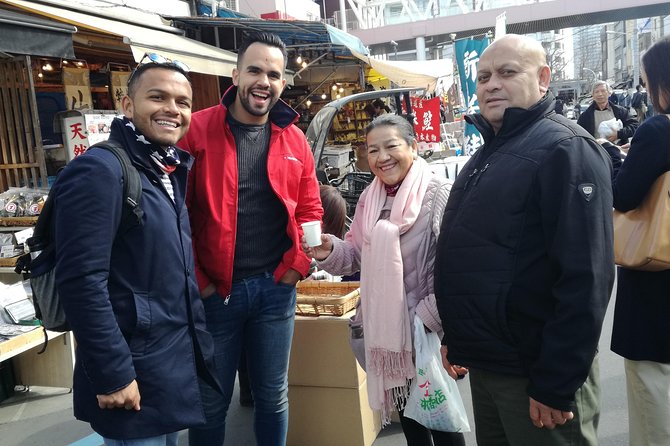
The most praised part of this experience is the guide rather than any single building. That makes sense. Toyosu and Tsukiji are easier to appreciate when someone can explain the difference between wholesale operations, retail stalls, restaurants, and the outer market.
Toyo has helped shape outings around what each person wanted to see. Suzuki has explained the markets while guiding groups toward sea urchin, eel, and sushi. Show has used notes and illustrations to explain food and culture. Mina has combined market information with Japanese history in a relaxed, friendly way.
Koji has contacted groups in advance, helped with IC cards, visited shrines, guided people through the market crowds, and pointed them toward sushi. Mami has taken visitors to less tourist-focused areas for tuna and crab. These examples show the main advantage of booking privately: you can tell the guide what matters to you instead of following a fixed group script.
English ability and guiding style can vary from one guide to another, but the overall experience has a strong record, with a 4.8 rating and 94 percent recommendation rate from 158 reviews. There has also been at least one reported no-show that resulted in a refund, so keep your booking messages and meeting details handy. It is a small but real reminder to confirm the meeting point and contact information before setting out.
Who should book this market tour?
I would recommend it most strongly to first-time Tokyo visitors, food-focused couples, families, and anyone who wants market access without having to decode every sign and station connection.
It also suits people who want a blend of food and culture. The shrine, temple, transport ride, and market history keep the outing from becoming a simple eating crawl.
You may want another option if the tuna auction is your top priority, if you prefer a large group with a lower per-person cost, or if you want every minute devoted to eating. You should also skip it if you plan to arrive at noon and expect Toyosu to be fully active.
Cancellation is free up to 24 hours before the start time. Changes made inside that window are not accepted, and the cutoff follows Tokyo local time.
Final call: book it for guidance, not included food
Book this tour if you want a private introduction to Tokyo’s seafood world and value a guide who can explain, translate, navigate, and make sensible food suggestions. The comparison between modern Toyosu and old Tsukiji is the heart of the experience, while the shrine and temple give the morning some needed cultural balance.
Do not book it expecting a tuna auction, included tastings, or a private vehicle. Bring cash, allow extra money for transit and food, request a morning time, and tell the guide what you want to eat or see. For many visitors, that preparation turns a confusing market morning into one of the more useful food experiences in Tokyo.
FAQ
Does this tour include the tuna auction?
No. The standard experience does not include the tuna auction. A separate Toyosu Market Morning Tuna Auction and Tsukiji Food Tour is available for that purpose.
How long does the tour last?
The tour lasts approximately four hours.
Is food included in the price?
No. Food and drinks are not included. You can stay after the tour to eat breakfast or lunch at your own expense.
Is transportation included?
No. Public transportation between the markets is arranged with the guide, but transportation fees are extra. A private vehicle is not provided.
Is this a private tour?
Yes. Only your booking party participates, and separate tour groups cannot be combined.
Where does the tour begin and end?
The stated starting point is Toyosu Market at 6-chōme-6-1 Toyosu, Koto City. The stated end point is the Tsukiji Outer Market. Pickup and drop-off are on foot within a designated Tokyo area, so confirm any hotel meeting arrangement before the tour.
More Food and Drink Trips in Tokyo
- Tsukiji Fish Market Small-Group Food Walking Tour
★ 5.0 · 621 reviews - Tokyo Food Tour Taste Fresh Delights at Tsukiji Market
★ 5.0 · 429 reviews - Tsukiji Fish Market: Street Food & Culture Walking Tour
★ 4.8 · 259 reviews - Inside Tokyo’s Kitchen: Tsukiji Market, Food & Culture Tour
★ 5.0 · 162 reviews
Just added around Tokyo
- Tokyo: Tsukiji Market Guided Tour & Sushi-Making Experience★ 4.4 · 11 reviews
- Tokyo: Private Tsukiji Street Food & Sake with Local Guide★ 5.0 · 3 reviews
- Tokyo: Tsukiji Market and Hama-rikyu Gardens Guided Tour★ 4.8 · 73 reviews
- Tokyo: Tsukiji Fish Market Culture Tour with Sashimi Tasting★ 4.6 · 54 reviews
- Tokyo : Tsukiji Fish Market Food Walking & Shrine Visit Tour★ 5.0 · 3 reviews
- Tokyo: Tsukiji Fish Market Foodie and Educational Tour★ 5.0 · 4 reviews
- Tokyo’s Kitchen: Tsukiji Market Food & Culture Walk★ 4.7 · 74 reviews
- Tokyo: Guided Walking Tour of Tsukiji Market with Lunch★ 4.4 · 24 reviews
Fish Market Tours, compared.
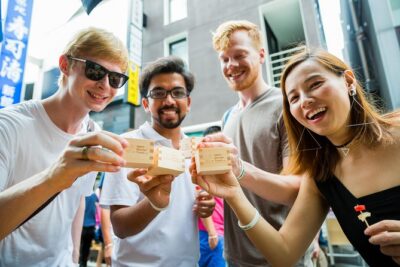
Tokyo Tsukiji Fish Market Food and Culture Walking Tour
Read our review →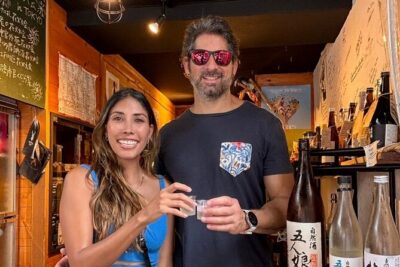
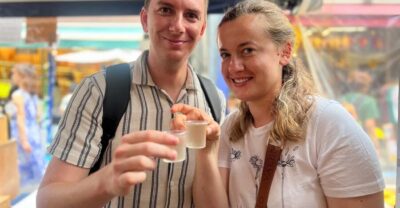
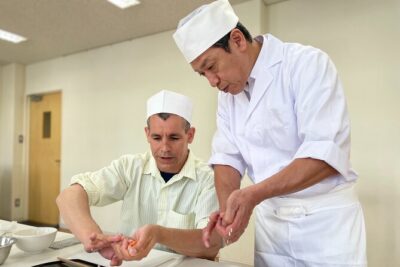
Tokyo Sushi Making Class in Tsukiji with Professional Chef
Read our review →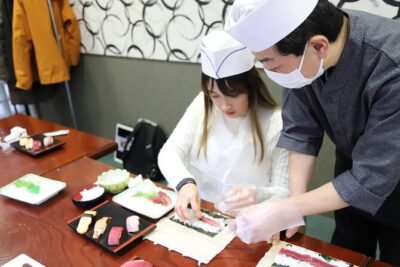
Tsukiji Fish Market Guided Tour and Sushi Making with Pro Chef
Read our review →Tsukiji Fish Market Food and Culture Walking Tour
Read our review →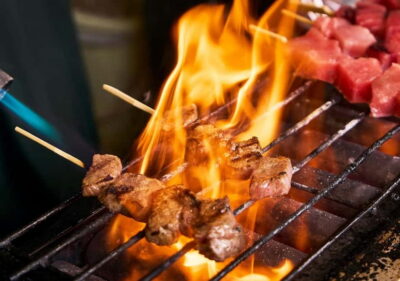
Tsukiji Fish Market: Street Food & Culture Walking Tour
Read our review →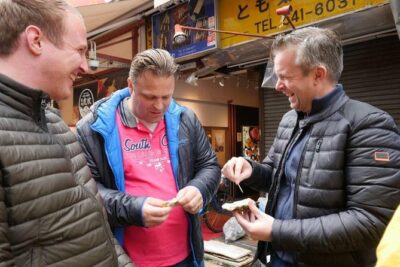
Tsukiji Fish Market Small-Group Food Walking Tour
Read our review →Browse the lists this tour appears in