
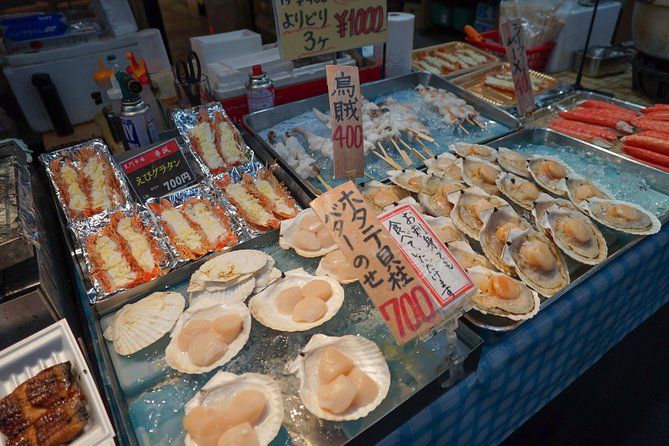
Review · STREET FOOD MARKET TOURS
Kuromon Market Food Walking Tour in Osaka (6 stops, 6 tastes)
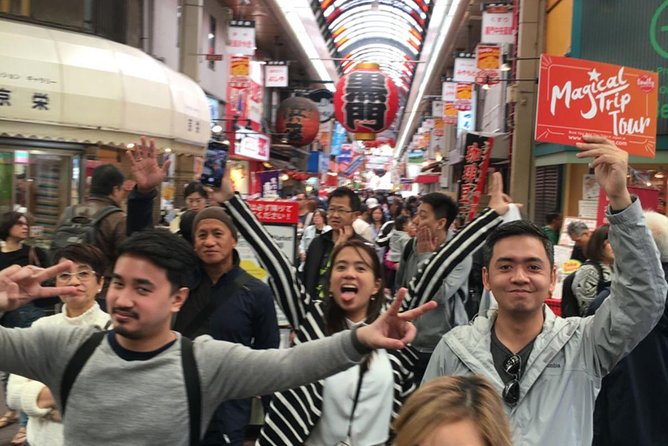
Osaka’s Kuromon Market is best approached with an appetite and a plan. This small-group walk gives you both, pairing six food tastes with local guidance through a market that can feel confusing on your first visit. I like the help with ordering, especially when you want to ask about ingredients, and I like that the group is capped at seven people. The guide can also point out places you may want to return to later.
I also like the mix of food and neighborhood detail. You visit Doguyasuji’s kitchenware shops, pass through Namba, and learn how Osaka’s food culture fits into daily life. The main caution is value: the tour costs $50.41, and a few people found the portions too small or the explanations too light, so this works best as an introduction rather than a full meal.
Key points to know before booking
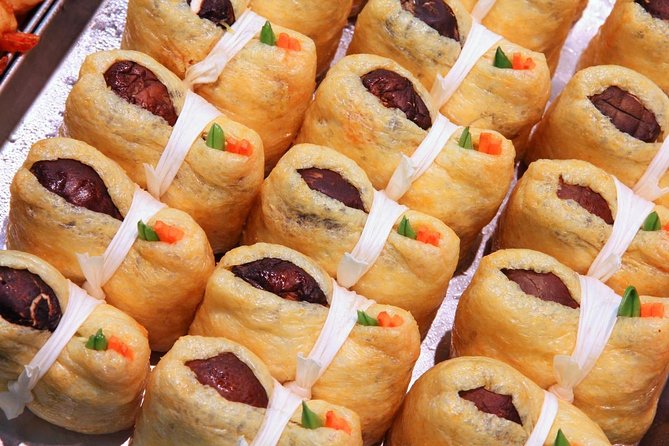
- Six tastes around Kuromon Market: Expect Osaka favorites such as takoyaki, sushi, yakitori, dumplings, sweets, and other market foods, with the exact selection subject to change.
- A small group capped at seven: The size allows the guide to answer questions, adjust the pace, and help with ordering.
- Doguyasuji adds a useful second theme: Browse Japanese knives, tableware, cooking tools, and restaurant supplies after eating.
- Guides can shape the experience: Nina, Yuto, Rie, Niko, Aya, Megumi, Taku, and others have led tours, with strong praise for warmth, English communication, and flexibility.
- Come early and bring extra cash: The walk starts on time, and additional snacks or drinks are not covered.
- Dietary needs require caution: Tell the operator at least one day ahead, but substitutions and allergy-free food cannot be guaranteed.
Kuromon Market gives Osaka food a proper setting
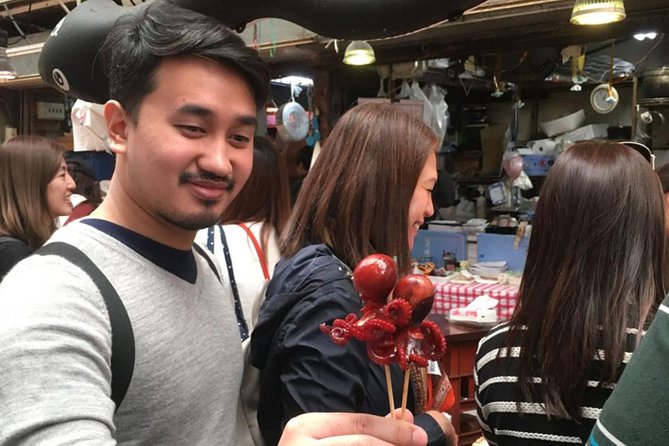
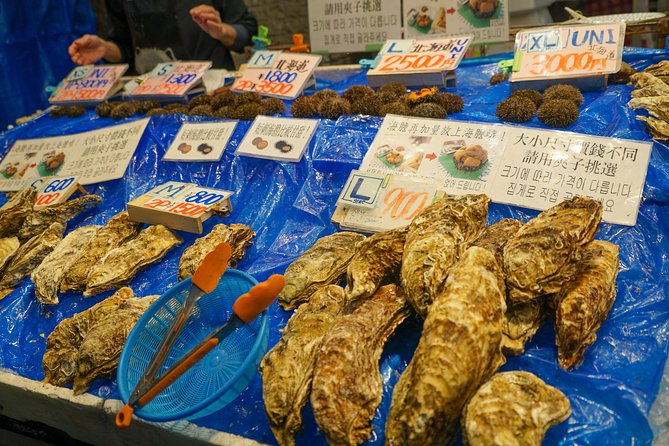
Kuromon Market sits in Minami, central Osaka’s main zone for shopping, food, and nightlife. It is a covered shopping street rather than a single food hall, so you move past seafood counters, prepared foods, sweets, produce, small restaurants, and shops serving local customers and sightseers.
The market’s name comes from the black gate of Enmyoji Temple. That small piece of background matters because it helps you see Kuromon as more than a row of snack stalls. The market has a long connection to Osaka’s food trade, and your guide can explain how certain dishes fit into local eating habits.
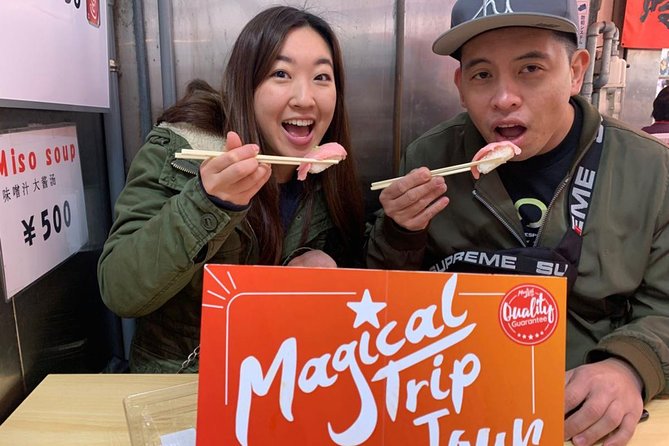
The tour is built around walking and tasting, not sitting down for one large meal. You may try takoyaki, the round batter snacks filled with octopus, along with sushi, yakitori, dumplings, mushrooms, oden, sweets, or other available specialties. The advertised format is six stops and six tastes, but the precise foods can change based on the day, the shops, and the group’s preferences.
That flexibility is useful. One guide may take you toward the best gyoza and oden available that day, while another may focus more on classic Osaka snacks. If you have a particular interest, tell the guide early. A small group makes that request more realistic than it would be on a large coach tour.
More Market Walking Tours in Japan
- Tokyo Tsukiji Fish Market Food and Culture Walking Tour
★ 5.0 · 3,184 reviews - Tokyo: Tsukiji Fish Market Food and Walking tour
★ 5.0 · 1,724 reviews - Tokyo: Tsukiji Fish Market Guided Walking Tour
★ 4.9 · 1,397 reviews
The six tastes: useful introduction, not a full lunch
The food is the heart of this experience, but you should set your expectations correctly. Six tastes can give you a broad sample of Osaka’s food culture, yet tasting portions are not guaranteed to equal a full meal.
This is the main point of tension in the price. At $50.41 per person, you are paying for food, a guide, translation help, neighborhood context, and a planned route. You are not simply buying six inexpensive snacks. Still, one person felt hungry at the end and thought it would have been cheaper to choose food independently in the market.
I would treat the included food as a guided sampler. If you have a large appetite, budget for extra purchases. You are responsible for additional snacks and drinks, and carrying cash is wise. The tour does not require you to pay for the guide’s food or drinks.
Takoyaki is a natural stop because it is closely tied to Osaka’s street-food identity. It is hot, soft, and messy, so take care with the first bite. Other foods reported on the route include fresh sushi, yakitori, dumplings, mushroom skewers, oden, and sweets. Those examples give you a sense of the range, but you should not assume every item will appear on every departure.
One practical advantage is communication. Your guide can help you understand what you are ordering and explain unfamiliar foods. That is especially helpful when a stall has limited English or when you want to ask about an ingredient. Guides have also helped with hand wipes after messier foods, a small detail that matters when you are eating while walking.
Doguyasuji brings knives, bowls, and restaurant culture
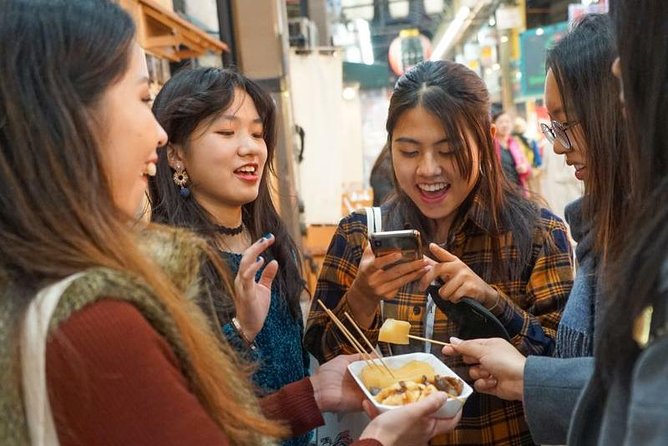
The walk also visits Doguyasuji, a street known for kitchenware, tableware, cooking equipment, and supplies used by restaurants. This gives the tour a welcome change of pace after the food stops.
You might find everything from plates and bowls to cooking tools and other items associated with Japanese kitchens. Even if you are not shopping, the street helps explain how Osaka’s restaurant culture works behind the scenes. It is also a practical place to look for a souvenir that is more useful than a generic magnet.
The kitchenware stop is one of the best reasons to book this tour instead of simply wandering through Kuromon Market alone. The food street is easy enough to enter, but it is harder to know which side streets and specialty shops deserve your time. A guide can give the area more shape.
That said, the value depends on the guide’s approach. Some guides explain the market, local food, and shops in detail. Others may spend more time simply escorting the group from one food purchase to the next. If you care about Doguyasuji, say so at the start and ask for time to browse.
Namba, Dotonbori, and the Osaka scene beyond the market
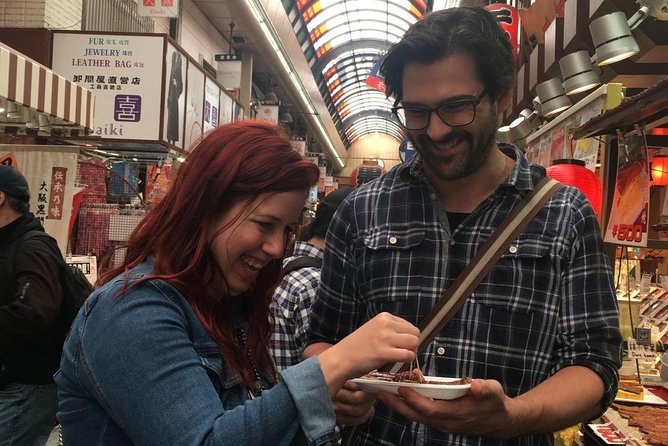
The route passes through Namba and near Namba Grand Kagetsu, a comedy theater operated by Yoshimoto Kogyo. This is a quick look rather than a theater visit, but it adds a bit of Osaka’s comic personality to the walk.
Namba is a major entertainment and shopping district. Namba Parks, with its boutiques and restaurants, is part of the area’s modern side. The market shows you food shopping at street level, while Namba shows the larger commercial district around it.
The route also passes through Dotonbori, Osaka’s famous entertainment area. You may see the huge Glico sign, the Kani Douraku crab sign, and other oversized displays around the canal district. These are familiar sights, but the guide can help connect them to the broader neighborhood rather than leaving you with only a photo stop.
The difference between Kuromon and Dotonbori is worth noting. Dotonbori is louder and more image-driven, with crowds, signs, restaurants, and quick street food. Kuromon feels more like a market route where you can focus on ingredients and individual shops. One useful suggestion is to visit Kuromon briefly before the tour, note what catches your eye, then ask the guide to help you return to the places you care about.
More Street Food Market Tours in Japan
- Tsukiji Fish Market: Street Food & Culture Walking Tour
★ 5.0 · 669 reviews - Tsukiji Fish Market Small-Group Food Walking Tour
★ 5.0 · 621 reviews - Tokyo Food Tour Taste Fresh Delights at Tsukiji Market
★ 5.0 · 429 reviews - Osaka: Kuromon Market Food Walking Tour (6 stops, 6 tastes)
★ 4.6 · 272 reviews
The guides shape the experience more than the route does
The route is fairly compact, but the guide determines how much you learn and how personal the walk feels. The strongest guide experiences described include Nina answering children’s questions with humor, Yuto handling dietary limits with care, Rie showing different parts of Namba, and Niko adjusting the route to suit the group.
Other named guides include Megumi, Aina, Aya, Mari, Mitch, Peco, Taku, Anne, and Yuki. English communication has been praised repeatedly, and guides have helped with photos, local etiquette, ordering, train directions, and shrine customs. A guide named Taku was especially useful for a solo participant who wanted help speaking with shopkeepers and taking photographs.
That range also tells you something important: the tour is not a fixed performance delivered in exactly the same way every time. Some guides may tell more stories about Japanese life and food traditions. Others may focus more on tasting and navigation. Your best move is to ask questions early instead of waiting for information to appear.
The small group helps here. With a maximum of seven people, the guide can learn what you like, slow down for a question, or adjust a choice when possible. Several tours have had only a few participants, which can make the walk feel closer to a private outing.
Still, the small group does not guarantee a perfect guide match. One low-rated experience described a guide who provided little information unless asked. That is a useful warning: take an active role. Ask why a food is local, how it is normally eaten, and what the guide recommends for later in your trip.
Timing, meeting point, and the need to arrive early
The tour lasts about two hours and starts in front of the SMBC ATM at Nippon-bashi 1chome, near Kintetsu Nippon-bashi Station. Use Exit 10 from Kintetsu Nippon-bashi Station and allow extra time to locate the exact meeting point.
The listed address is Japan, 542-0073 Osaka, Chuo Ward, Nipponbashi, 1-chōme 17, Picasso Nippon-ichi Building. The walk ends back at the meeting point, which makes it easier to continue sightseeing from the same area.
Arrive early. The tour starts on time, and late arrivals may not be allowed to join, reschedule, or receive a refund. This rule is especially important in Nipponbashi, where station exits, shopping streets, and busy roads can make a short distance take longer than expected.
Wear comfortable shoes. Two hours of standing and walking through market lanes is not demanding for most people, but the route includes crowded food areas and shops. Summer temperatures in Osaka can reach about 40°C, while winter lows can fall to about -5°C, so dress for the season. Rain does not necessarily end the experience, since much of the route can use covered market areas, but conditions may still affect the pace.
The activity is listed as suitable for all ages. A child-friendly guide can make the walk work well for families, and one family managed the tour with an 18-month-old in a sling. A stroller may be awkward in crowded market lanes, so a sling or compact arrangement may be easier.
Dietary needs and food safety limits
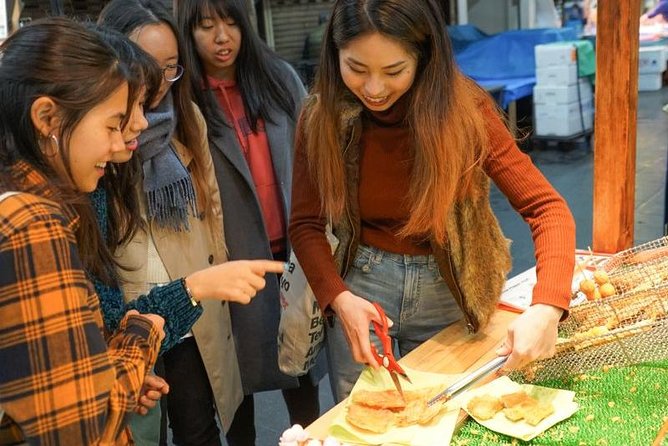
Tell the operator about allergies or dietary needs at least one day before the tour. Same-day requests cannot be accommodated.
The information provided about gluten-free food is not fully consistent. One note says gluten-free requests cannot be accommodated, while another says vegetarian, vegan, and gluten-free requests may be possible but limited. The safe interpretation is this: ask in advance, expect few choices, and do not book this as an allergy-safe food experience.
The operator also states that allergy-free meals, substitutions, and every dietary restriction cannot be guaranteed because the food comes from kitchens the tour company does not operate. If accidental exposure would be dangerous, you should consider exploring independently with your own food plan.
For vegetarians and vegans, the guide may be able to adjust choices, but Japanese restaurants and market stalls may not be prepared for every request. Be clear, specific, and realistic before the walk begins.
Is $50.41 a fair price?
The price makes sense if you value an English-speaking guide, a planned route, help ordering, cultural explanation, and the chance to ask questions in a very busy food district. It is also more appealing if this is your first day or two in Osaka and you want recommendations for the rest of your stay.
The price is harder to justify if you mainly want to eat as much as possible. Kuromon Market is open to independent visitors, and you can buy food directly. You may spend less and choose larger portions on your own.
I see this as a good orientation tour rather than a bargain meal. The best value comes from learning where to return, discovering Doguyasuji, avoiding confusing orders, and getting a local introduction to Namba and Kuromon. A poor guide or limited food choices can reduce that value, so your questions and preferences matter.
The 98 percent recommendation rate and 4.9 rating from 551 ratings suggest a strong overall record, but the lower scores should not be ignored. The main complaints are clear: not enough food, too little explanation, and the feeling that the market was easy to explore independently. Those are legitimate concerns, especially for experienced Osaka visitors.
Who should book this Kuromon Market walk?
I would recommend it to first-time Osaka visitors, families, solo explorers, and anyone nervous about ordering unfamiliar food. It is also useful if you want a short introduction before spending more time around Namba, Dotonbori, and Nipponbashi.
Food-focused visitors who enjoy trying small portions will get the most from it. So will people who want local recommendations rather than a formal lecture. If you are shopping for Japanese kitchenware, Doguyasuji gives the walk another reason to book.
I would be more cautious if you have severe allergies, strict dietary rules, or a very large appetite. I would also skip it if you have already spent time in Kuromon and feel comfortable choosing stalls, asking questions, and navigating the market alone.
Final call: book it for guidance, not just food
Book this tour if you want a friendly local guide to turn Kuromon Market into a planned tasting walk, with extra context in Doguyasuji, Namba, and Dotonbori. The small group, ordering help, and guide flexibility can save time and make the first visit easier.
Skip it if your priority is the biggest possible meal for the lowest price. In that case, explore Kuromon independently and spend your money on the foods you want. For everyone else, arrive early, bring cash, tell the operator about dietary needs the day before, and ask the guide to focus on the foods and shops that interest you most.
FAQ
How long does the Kuromon Market food tour last?
The tour lasts approximately two hours.
Where does the tour start?
It starts in front of the SMBC ATM at Nippon-bashi 1chome, near Kintetsu Nippon-bashi Station. Use Exit 10 from Kintetsu Nippon-bashi Station.
Where does the tour end?
The activity ends back at the meeting point.
How many people can join the tour?
The maximum group size is seven people.
What foods might be included?
Possible foods include takoyaki, fresh sushi, yakitori, dumplings, mushrooms, oden, and sweets. The exact selection can vary.
Is the guide’s food included in the price?
Yes. You do not need to pay for the guide’s food or drinks. Bring cash if you want additional snacks or drinks.
Can vegetarian, vegan, or gluten-free requests be accommodated?
Requests should be provided at least one day before the tour. Options may be limited, and allergy-free meals, substitutions, and every dietary request cannot be guaranteed. The information provided also says gluten-free requests may not be accommodated.
What happens if I arrive late?
The tour starts on time. If you arrive late and miss the group, you may not be able to join, reschedule, or receive a refund.
More Food and Drink Trips in Japan
- Inside Tokyo’s Kitchen: Tsukiji Market, Food & Culture Tour
★ 5.0 · 162 reviews - Tsukiji Food and Toyosu Market with Government-Licensed Guide
★ 5.0 · 158 reviews - Toyosu Market Morning Tuna Auction and Tsukiji Food Tour with Licensed Guide
★ 4.5 · 146 reviews - Tokyo Tsukiji Fish Market Food Tour: 15 Stops & Walk Local Street
★ 5.0 · 139 reviews
More Market Market Walking Tours in Japan
- Nishiki Market Brunch Walking Tour (7 Tastings + Brunch)
★ 5.0 · 1,355 reviews - Tokyo: Tsukiji Fish Market Food and Culture Walking Tour
★ 4.7 · 757 reviews - Kyoto Nishiki Market Food and Culture Walking Tour
★ 5.0 · 412 reviews - Tsukiji Fish Market: Street Food & Culture Walking Tour
★ 4.8 · 259 reviews
Just added around Japan
- Nagoya Super Market Tour & Home Cooking Class with a Local, Akiko★ 5.0 · 10 reviews
- Tokyo: Tsukiji Market Guided Tour & Sushi-Making Experience★ 4.4 · 11 reviews
- Tokyo: Private Tsukiji Street Food & Sake with Local Guide★ 5.0 · 3 reviews
- Tokyo: Tsukiji Market and Hama-rikyu Gardens Guided Tour★ 4.8 · 73 reviews
- Tokyo: Tsukiji Fish Market Culture Tour with Sashimi Tasting★ 4.6 · 54 reviews
- Tokyo: Sushi Making with Pro Chef & Tsukiji Fish Market Tour★ 4.6 · 49 reviews
- Tokyo : Tsukiji Fish Market Food Walking & Shrine Visit Tour★ 5.0 · 3 reviews
- Tokyo: Tsukiji Fish Market Foodie and Educational Tour★ 5.0 · 4 reviews
Street Food Market Tours, compared.
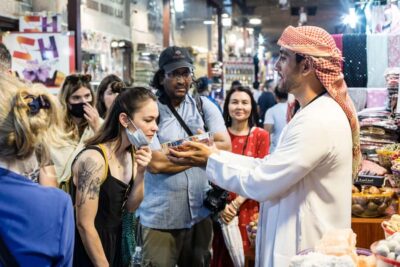
Old Town, Creek, Museums, Souks, & Street Food Tour
Read our review →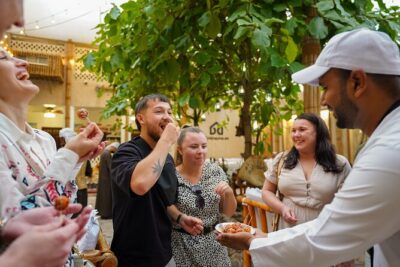
Old Town, Souks, Street Food, Guided Tour & Abra Ride
Read our review →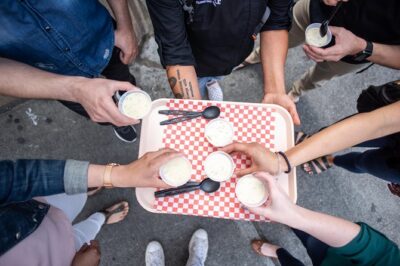
Old Town, Souks, Street Food, Guided Tour & Abra Ride
Read our review →
Small Group Cooking Class & Market Food Tour in Florence
Read our review →
Old Town, Street Food, Creek, Souks, & Emirati House
Read our review →
Browse the lists this tour appears in