
Review · STREET FOOD MARKET TOURS
Osaka: Kuromon Market Food Walking Tour (6 stops, 6 tastes)
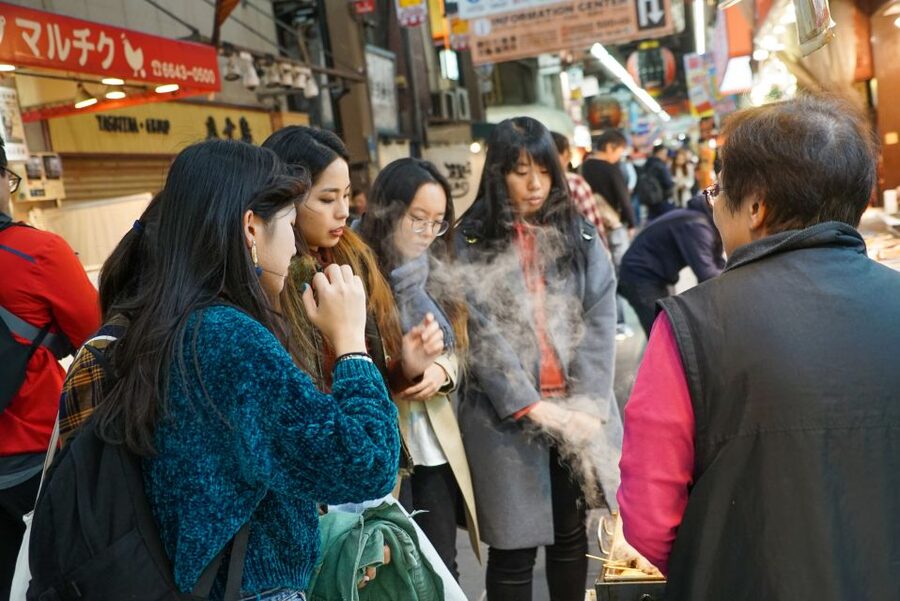
Osaka’s food culture makes the most sense when you eat it on foot. This tour takes you from Kuromon Market, the city’s famous food corridor, to knife shops, a small shrine, Hozenji Yokocho, and Dotonbori. You get five or six tastings, enough to make a proper lunch, while a local guide explains what you are eating and why it matters.
I like the way the tour mixes food with kitchenware shopping and neighborhood history. I also like that guides such as Nina, Niko, Aiko, Noz, and Mari tailor some choices to the group instead of handing everyone the same plate. The main drawback is that Kuromon can be crowded, and the walking route is not suitable for wheelchair users or people who have trouble standing and moving through busy streets.
Key points to know before booking
- Six food-focused stops: Expect five or six included tastings, with options such as takoyaki, grilled scallops, yakitori, sashimi, sweets, and seasonal fruit.
- More than a market visit: The route adds Doguyasuji Kitchen Street, Hozenji Yokocho, a local restaurant, and Dotonbori.
- A useful first-day tour: The two-hour route helps you get your bearings in the Namba and Nipponbashi area and gives you ideas for later meals.
- Kitchenware is part of the appeal: You can browse knives, cookware, and tableware, with guide help if you want a practical souvenir.
- Friendly English-speaking guides: Guides including Nina, Niko, Aiko, Noz, Mari, and Yusuke have been praised for clear English, local tips, and taking photos.
- Plan for the conditions: The tour starts on time, may include other participants, and can be uncomfortable in extreme summer heat or winter cold.
Why Kuromon Market makes a good first taste of Osaka
Kuromon Ichiba Market is known as the Kitchen of the Nation, and that nickname tells you what to expect. This is not a quiet museum of food. It is a working market lined with family-run businesses, seafood counters, produce sellers, snack stalls, and shops that have served local cooks for decades.
The market is especially useful for first-time visitors because you can see many sides of Osaka food in one compact area. One stall may offer grilled seafood, another fresh fruit, another sweets or prepared dishes. The hard part is choosing. A guide helps you avoid wasting time on a random purchase and points you toward foods that fit your taste.
The food is served in small portions, but the combined amount is substantial. You should arrive hungry. Several people found the tastings sufficient for lunch, which makes the $49 price easier to assess. You are not paying only for a walk through the market. You are paying for a food plan, explanations, language help, and a route through several central Osaka neighborhoods.
More Market Walking Tours in Japan
- Tokyo Tsukiji Fish Market Food and Culture Walking Tour
★ 5.0 · 3,184 reviews - Tokyo: Tsukiji Fish Market Food and Walking tour
★ 5.0 · 1,724 reviews - Tokyo: Tsukiji Fish Market Guided Walking Tour
★ 4.9 · 1,397 reviews
Meeting your guide near Nipponbashi Station
The meeting point is in front of the SMBC ATM at Nippon-bashi 1chome, near Kintetsu Nipponbashi Station Exit 10. Look for a guide holding a MagicalTrip board.
This is the one part that deserves extra care. The meeting point can be a little hard to spot, especially if you are unfamiliar with Osaka’s station exits. Give yourself time to find Exit 10 and arrive before the scheduled start. The tour begins on time, and late arrivals cannot join, reschedule, or receive a refund.
The tour is offered as a private or small-group experience. Group size matters here. Kuromon’s lanes can be tight, and a smaller party is easier to move through the market without blocking shoppers or stall workers. One participant noted that the guide sometimes bought food and moved the group to a quieter spot to eat, which is a sensible way to handle a busy market.
Stop one: a short local introduction

The route begins with a 15-minute guided visit at a less obvious local spot before the market portion. The exact food selection can change, but the purpose is clear: your guide starts building the story of the neighborhood rather than rushing straight to the first snack.
This short section gives you context for Osaka’s role as a commercial and food center. It also lets you ask questions early, which can help your guide adjust the tastings to your interests. If you want seafood, sweets, unusual foods, or familiar choices, say so at the start.
The strongest guides make this opening feel personal. Nina has been praised for offering local advice beyond the tour, including suggestions for families and teenagers on very hot days. Yusuke was also noted for helping a family with a baby. These small touches matter more on a walking tour than a memorized speech.
Stop two: Kuromon Ichiba and the six tastes
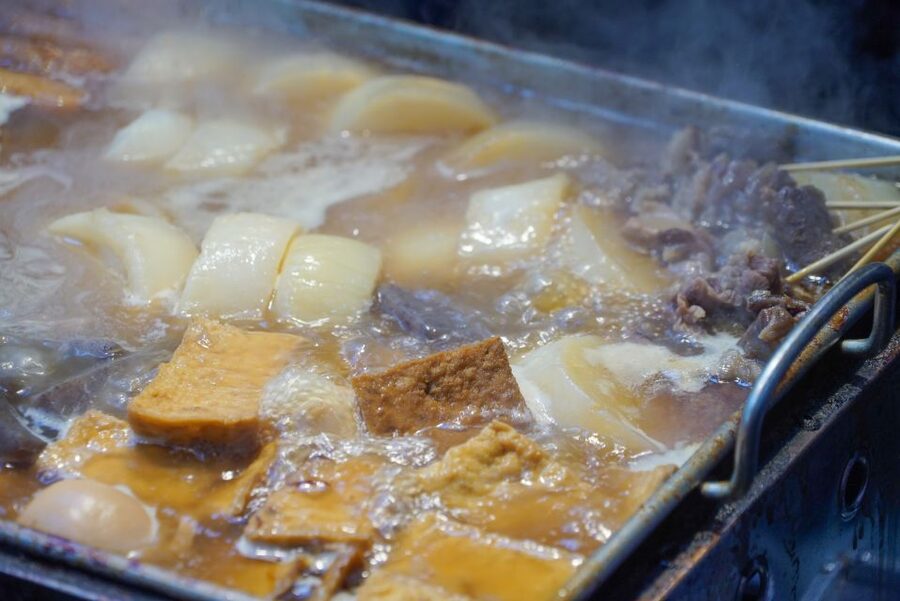
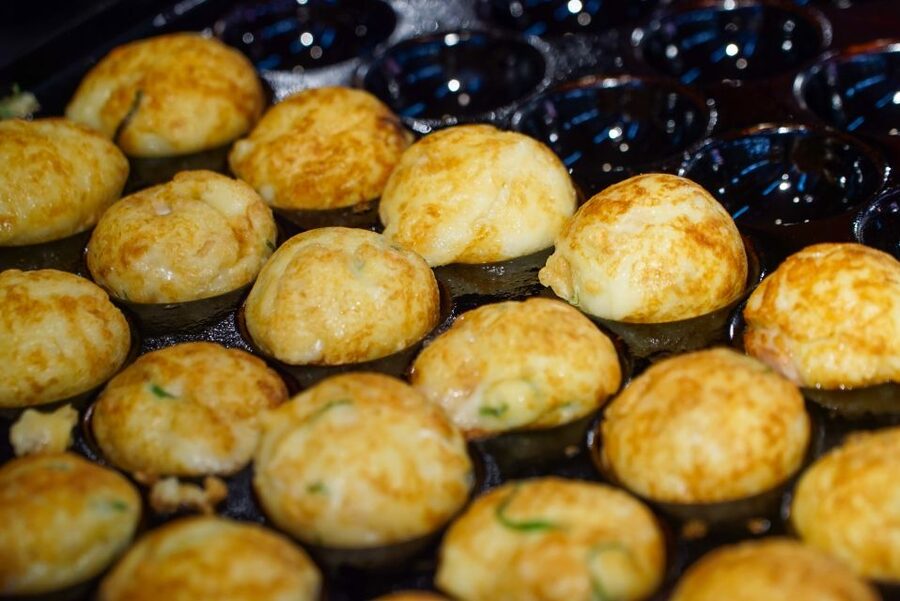
You spend about 30 minutes at Kuromon Ichiba Market, though the food portion can feel like the center of the entire experience. The advertised examples include takoyaki, grilled scallops, and grilled yakitori skewers. Other tastings reported on the route have included tuna belly sashimi, tempura, gyoza, fresh fruit, roast chestnuts, dried fruit, strawberry mochi, sakura mochi, taiyaki, and ice cream sandwiches.
You should not assume every item will appear on every departure. Market stock, season, group preferences, and the guide’s choices affect the menu. That flexibility is a strength. It means the tour can introduce you to foods you might not pick alone, while still leaving room to decline anything that does not appeal.
Takoyaki is a natural Osaka starting point: a hot, savory snack associated with the city. Grilled seafood shows off the market’s fresh-food side, while sweets and fruit break up the heavier items. The variety is more important than any single bite. In a short time, you can compare hot street food, raw seafood, grilled items, and Japanese sweets.
You may also encounter unusual choices. One guide offered puffer fish and whale to a group interested in traditional foods. Those items should be treated as possibilities, not promises. Tell your guide what you are comfortable trying, and never feel pressured. One of the appealing parts of the tour is the chance to make your own choices with local help.
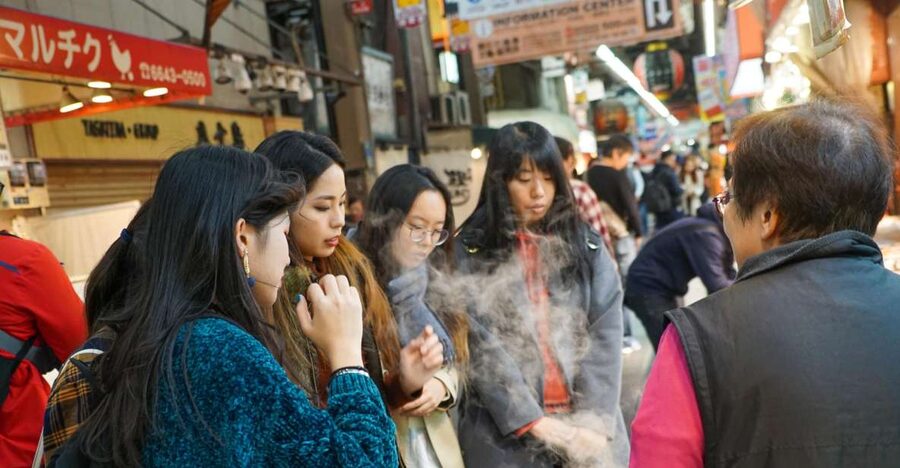
There is one practical catch: Kuromon is popular and can become crowded. You may need to stand while eating, and there may not be a calm place at every stall. Comfortable shoes and a willingness to move with the group will make the market easier.
More Street Food Market Tours in Japan
- Tsukiji Fish Market: Street Food & Culture Walking Tour
★ 5.0 · 669 reviews - Tsukiji Fish Market Small-Group Food Walking Tour
★ 5.0 · 621 reviews - Kuromon Market Food Walking Tour in Osaka (6 stops, 6 tastes)
★ 5.0 · 550 reviews - Tokyo Food Tour Taste Fresh Delights at Tsukiji Market
★ 5.0 · 429 reviews
Stop three: Doguyasuji Kitchen Street and practical souvenirs
The 20-minute visit to Sennichimae Doguyasuji Shotengai adds a welcome change from eating. This covered shopping street is known for Japanese kitchen tools, cookware, restaurant supplies, knives, dishes, and tableware.
For many people, this is the most useful shopping stop. A small food souvenir is easy to buy anywhere, but a Japanese knife, serving bowl, chopstick set, or unusual kitchen tool can remain useful for years. You do not need to buy anything, and the short visit is still worthwhile because it shows how seriously Osaka takes cooking.
Ask your guide for help before buying a knife or fragile item. You may want advice on what is practical to carry home, what needs special care, and which items make sense for your cooking habits. A guide can also help you compare the souvenir shops with the professional-looking displays.
The timing is brief, so do not expect a full shopping expedition. If kitchenware is your main interest, you may want to return later on your own. The tour gives you an introduction and helps you find the area, which can save time on a second visit.
Stop four: a local restaurant and the walking story
The itinerary includes about 10 minutes at a local restaurant. This is a short stop, but it helps show the difference between market snacks and food served in a neighborhood dining setting.
The restaurant tasting may vary, and extra food or drinks are not included. Your guide can explain what is on offer and help with ordering or choosing. Bring cash for anything you buy beyond the included tastings.
The walking between stops is part of the value. You are not simply moved from one food counter to another. You see how the market connects with shopping streets, small restaurants, shrines, and major entertainment areas. That broader view helps Osaka feel like a real city rather than a collection of attractions.
Stop five: Hozenji Yokocho and the quiet pause
The 10-minute visit to Hozenji Yokocho offers a calmer contrast to Kuromon and Dotonbori. This narrow lane is associated with traditional Osaka atmosphere, small restaurants, and Hozenji Temple.
A brief shrine visit gives the tour a cultural pause. You can ask about local customs, the neighborhood, and the role of temples in everyday life. Several guides have made a point of including the shrine even when the group was mainly interested in food, and that is a smart choice. The stop adds meaning to the route without turning the tour into a long history lecture.
Do not expect an extended temple visit. Ten minutes is enough to look around, take photos, and hear the basic story. If you like traditional lanes and small religious sites, you may want to return after the tour and explore at a slower pace.
Stop six: Dotonbori and Osaka’s famous finish
The final 25 minutes take you toward Dotonbori, Osaka’s best-known entertainment and food district. Its bright signs and restaurant fronts create a sharp contrast with Hozenji Yokocho.
This ending is useful because your guide can point out where to return for dinner, snacks, or evening sightseeing. The tour does not try to cover every restaurant in Dotonbori. Instead, it gives you a short orientation and leaves you with practical food ideas.
Dotonbori can be crowded, so the guide’s local direction is more useful than simply walking down the main street alone. You can learn where to look for familiar Osaka dishes and how the area connects with Namba. If you take this tour early in your stay, you can return later with a better plan.
How much food do you really get for $49?
At $49 per person, this is not the cheapest way to buy individual snacks in Osaka. You could spend less if you already know where to go, are comfortable ordering in Japanese, and want only one or two foods.
The value improves if you want a broad introduction. The price includes five or six food samplings, a two-hour guided route, tour photos, and an English-speaking certified local guide. You also get help choosing food and understanding what you are eating. A guide may prevent you from spending money on items you do not want, while directing you to choices you would have missed.
The food amount is often enough to fill you up, but extra food and drinks are not included. Bring cash if you want to add something from the market or stop for another drink. If you are a serious eater, you may still want a separate dinner later, especially if your group shares small portions.
For a solo visitor or a first-time couple, the price is fair when you value guidance and local orientation. For a large family that mainly wants cheap snacks, the cost can add up. Children are welcome, and the tour has worked well for families with teenagers, but make sure everyone can manage two hours of walking and standing.
Guide quality and the personal touch
The guide can make or break a food tour, and this experience has a strong record in that area. Nina, Niko, Aiko, Noz, Mari, Aya, Yusuke, Rhi, Mitch, and others have been singled out for friendly conversation, clear English, food suggestions, and local knowledge.
The most useful guide behavior is not simply naming dishes. It is explaining how to approach the market, answering questions, helping with choices, and adjusting the pace. Niko was praised for not rushing a small group. Noz and Aiko were appreciated for taking photos. Nina was noted for waiting during a delay in one case and arriving with chilled neck rings on a very hot day.
Photos are a nice extra. You can enjoy the food instead of constantly asking someone to take pictures. Do not count on a particular guide by name, since assignments can change, but the tour’s style favors friendly, interactive guides.
Food restrictions, weather, and mobility
Gluten-free requests cannot be accommodated. Vegetarian and vegan diets may be possible if you give notice at least one day ahead, but choices can be limited. Japanese restaurants are not always set up for strict dietary substitutions, and allergy-free meals cannot be guaranteed because food is prepared in outside kitchens.
If you have serious allergies, this may not be the right food tour. Tell the operator about dietary needs in advance, but understand that notification does not guarantee safe meals.
All ages are welcome, but some locations are not wheelchair or stroller accessible. The tour is not recommended for wheelchair users or people with mobility issues. You will move through crowded market lanes and may need to stand while eating.
Osaka’s weather also matters. Summer temperatures can reach around 40°C, while winter lows can fall to about minus 5°C. Wear light clothing and carry water in hot weather. In winter, dress for standing outside and walking between stops.
Who should book this Osaka food walk?
I would choose this tour for a first or second day in Osaka. It covers Kuromon, Doguyasuji, Hozenji Yokocho, and Dotonbori, so you get a useful map of the central food districts in only two hours.
It suits curious eaters who want guidance but still like making their own choices. It is also a good fit for families with older children, couples, solo visitors, and small groups who want photos and practical restaurant suggestions.
I would think twice if you need strict gluten-free or allergy-safe food, dislike crowds, want a long sit-down meal, or have trouble walking and standing. I would also skip it if your main goal is dedicated knife shopping, since the Doguyasuji stop is only about 20 minutes.
FAQ
How long is the Kuromon Market food tour?
The tour lasts two hours and includes visits to Kuromon Ichiba Market, Doguyasuji Kitchen Street, a local restaurant, Hozenji Yokocho, and Dotonbori.
How many food tastings are included?
Five or six food samplings are included. Possible foods include takoyaki, grilled scallops, yakitori, sashimi, tempura, fruit, mochi, taiyaki, and other local or seasonal items.
Is the food enough for lunch?
The included tastings are intended to fill you up, and the amount has been described as enough for a satisfying lunch. Extra food and drinks are available for purchase but are not included.
Is the tour available in English?
Yes. The tour includes a live English-speaking local guide.
Can vegetarians or vegans join?
Vegetarian and vegan requests can be accommodated, but choices may be limited. You must notify the operator at least one day in advance, and same-day requests cannot be accepted.
Can people with gluten allergies join?
Gluten-free requests cannot be accommodated. Allergy-free meals or substitutions are not guaranteed because food is prepared in external kitchens.
Is the tour wheelchair accessible?
No. Some locations are not wheelchair or stroller accessible, and the tour is not recommended for wheelchair users or people with mobility issues.
Where does the tour meet?
Meet in front of the SMBC ATM at Nippon-bashi 1chome near Kintetsu Nippon-bashi Station Exit 10. Your guide will hold a MagicalTrip board.
Should you book it?
Book this tour if you want a friendly, food-first introduction to central Osaka and would rather have a local guide make the first round of choices. The combination of market tastings, kitchenware shops, a shrine lane, and Dotonbori gives you more range than a simple snack crawl.
The strongest reason to book is the balance: enough food to make a meal, plus useful neighborhood guidance and photos. The main reasons to pass are strict dietary needs, limited mobility, or a desire to explore Kuromon at your own slow pace.
For most first-time visitors who eat broadly and can handle a busy two-hour walk, $49 is a reasonable price for a compact introduction to Osaka’s food culture. Take it near the start of your stay, keep notes on the stalls and restaurants you like, and return later for a slower second look.
More Food and Drink Trips in Japan
- Inside Tokyo’s Kitchen: Tsukiji Market, Food & Culture Tour
★ 5.0 · 162 reviews - Tsukiji Food and Toyosu Market with Government-Licensed Guide
★ 5.0 · 158 reviews - Toyosu Market Morning Tuna Auction and Tsukiji Food Tour with Licensed Guide
★ 4.5 · 146 reviews - Tokyo Tsukiji Fish Market Food Tour: 15 Stops & Walk Local Street
★ 5.0 · 139 reviews
More Market Market Walking Tours in Japan
- Nishiki Market Brunch Walking Tour (7 Tastings + Brunch)
★ 5.0 · 1,355 reviews - Tokyo: Tsukiji Fish Market Food and Culture Walking Tour
★ 4.7 · 757 reviews - Kyoto Nishiki Market Food and Culture Walking Tour
★ 5.0 · 412 reviews - Tsukiji Fish Market: Street Food & Culture Walking Tour
★ 4.8 · 259 reviews
Just added around Japan
- Nagoya Super Market Tour & Home Cooking Class with a Local, Akiko★ 5.0 · 10 reviews
- Tokyo: Tsukiji Market Guided Tour & Sushi-Making Experience★ 4.4 · 11 reviews
- Tokyo: Private Tsukiji Street Food & Sake with Local Guide★ 5.0 · 3 reviews
- Tokyo: Tsukiji Market and Hama-rikyu Gardens Guided Tour★ 4.8 · 73 reviews
- Tokyo: Tsukiji Fish Market Culture Tour with Sashimi Tasting★ 4.6 · 54 reviews
- Tokyo : Tsukiji Fish Market Food Walking & Shrine Visit Tour★ 5.0 · 3 reviews
- Tokyo: Tsukiji Fish Market Foodie and Educational Tour★ 5.0 · 4 reviews
- Tokyo: Sushi Making with Pro Chef & Tsukiji Fish Market Tour★ 4.6 · 49 reviews
Street Food Market Tours, compared.
Old Town, Creek, Museums, Souks, & Street Food Tour
Read our review →
Old Town, Souks, Street Food, Guided Tour & Abra Ride
Read our review →
Old Town, Souks, Street Food, Guided Tour & Abra Ride
Read our review →
Small Group Cooking Class & Market Food Tour in Florence
Read our review →
Old Town, Street Food, Creek, Souks, & Emirati House
Read our review →
Browse the lists this tour appears in