
Review · FISH MARKET TOURS
Tokyo: Tsukiji Market Guided Tour & Sushi-Making Experience
Tsukiji’s narrow lanes are the real opening act here. You’ll pass tuna, sashimi, seaweed, produce, and working merchants before heading to a modern kitchen to make three kinds of sushi yourself. The market walk gives your meal useful context, and the small group, capped at 10 people, keeps the class personal.
I like the tidy two-part design: a local food market tour followed by hands-on cooking. I also like that public transport between Tsukiji and the kitchen is included, along with a souvenir kit and a licensed instructor. The main caution is value. At $177 per person, this is not a cheap market stroll or a bargain sushi lunch, and the fish quality may not satisfy serious sushi fans.
Key points to know before booking
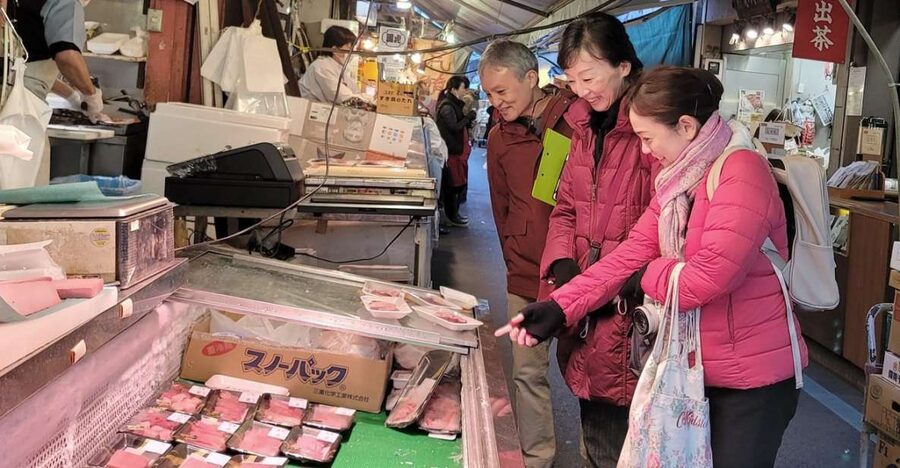
- Tsukiji Outer Market comes first: Walk through seafood stalls, produce shops, and narrow lanes near Tsukiji Hongwanji Temple.
- Three sushi styles are taught: You’ll make nigiri, thin hosomaki rolls, and nori-wrapped gunkanmaki.
- The market visit is mainly a guided walk: Do not assume you will select or purchase tuna for the cooking class.
- The class takes place near Tokyo Tower: Public transport from Tsukiji is included.
- The group is limited to 10: That is a useful size for asking questions and getting help with your sushi.
- Plan for about three hours and 45 minutes: Comfortable shoes matter, and the activity may take longer depending on the group.
Starting at Tsukiji Hongwanji Temple
Your meeting point is the entrance of Tsukiji Hongwanji Temple, only about 30 seconds from Exit 1 of Tsukiji Station on the Hibiya Line. That makes the start fairly simple, though I would still allow a little extra time in Tokyo’s busy rail system.
The temple is a practical landmark rather than an anonymous street corner. Once you meet the English-speaking, nationally licensed guide, the group heads into Tsukiji Outer Market. The market is not the old wholesale fish market that once handled much of Tokyo’s seafood trade. The wholesale operation moved to Toyosu, but Tsukiji Outer Market remains a working food district with shops selling ingredients, kitchen goods, and ready-to-eat food.
Wear shoes you can walk in comfortably. The route goes through narrow market lanes, and the floor may be busy with shoppers, workers, and deliveries. The activity is listed as wheelchair accessible, but it is also not considered suitable for people with mobility impairments, so you should ask for clarification before booking if walking is difficult.
More Fish Market Tours in Japan
- Tokyo Tsukiji Fish Market Food and Culture Walking Tour
★ 5.0 · 3,184 reviews - Tokyo: Tsukiji Fish Market Food and Walking tour
★ 5.0 · 1,724 reviews - Tokyo: Tsukiji Fish Market Guided Walking Tour
★ 4.9 · 1,397 reviews
What you see in Tsukiji’s narrow lanes
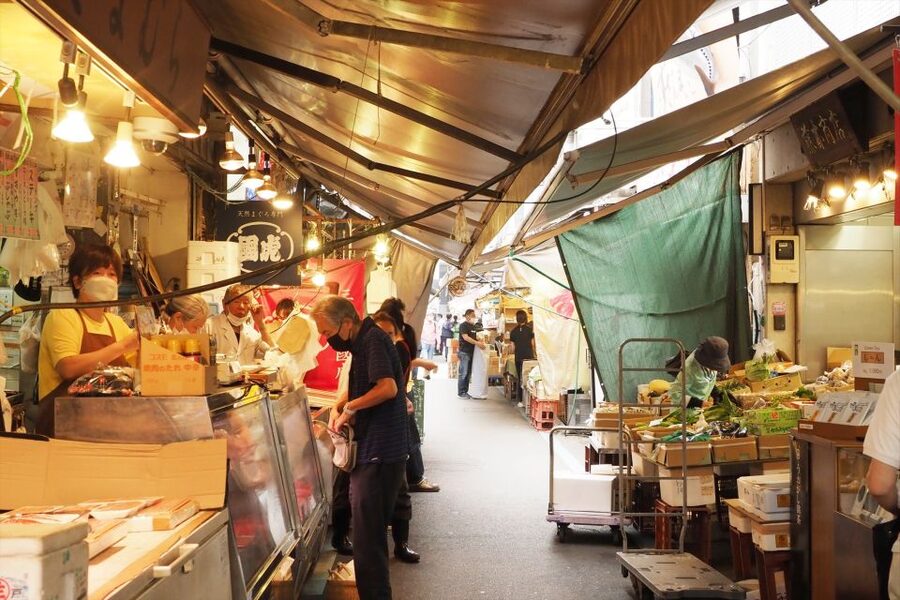
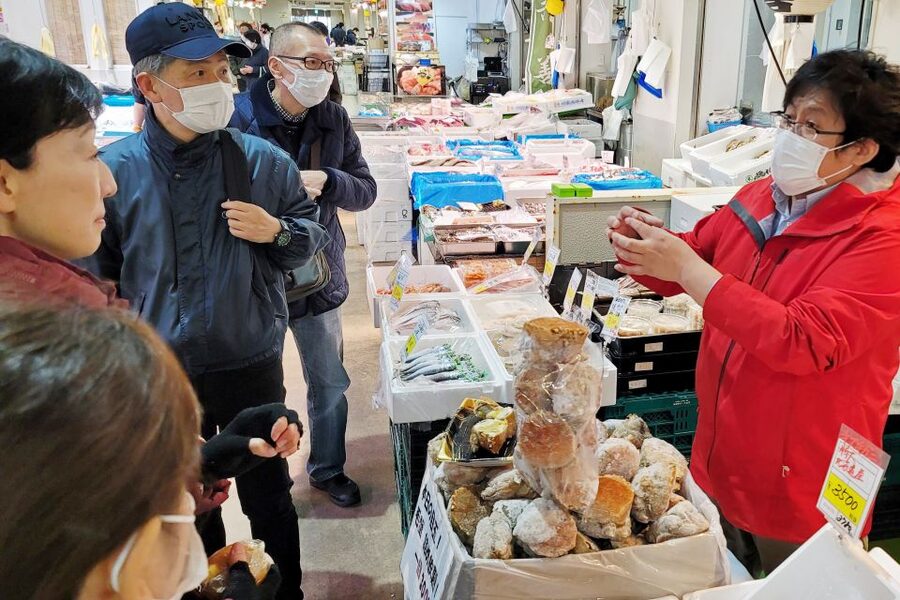
The market portion is designed to show you the food behind Tokyo’s famous restaurants. You may see freshly sliced sashimi, tuna, dried seaweed, fruits, vegetables, and other cooking supplies. Your guide explains the area’s past and points out the shops where high-end chefs buy ingredients.
This is useful context if you plan to eat sushi elsewhere in Japan. You begin to see that sushi is not only about the restaurant counter. It depends on fish handling, rice, seaweed, knives, storage, and the daily work of market merchants.
The walk also gives you a chance to watch the trade at close range. Expert sellers work in compact shops, and the guide helps explain what you are looking at. That can be more useful than wandering alone, especially if you do not read Japanese and are unsure which products are seafood, seasonings, or cooking tools.
Still, keep your expectations precise. The tour description highlights hunting for fresh tuna and says you will learn about choosing fish, but the actual experience may be a walk through the market rather than a fish-buying exercise. One detailed complaint about the tour said the group did not select or purchase tuna for the sushi class. I would book this part as an introduction to Tsukiji, not as a private seafood-shopping lesson.
You also should not expect the market portion to function as a full meal. Food and drinks beyond the included sushi ingredients are not included. If you want to sample something from the market, budget extra and ask the guide how much time the schedule allows.
Traveling from Tsukiji to the sushi kitchen
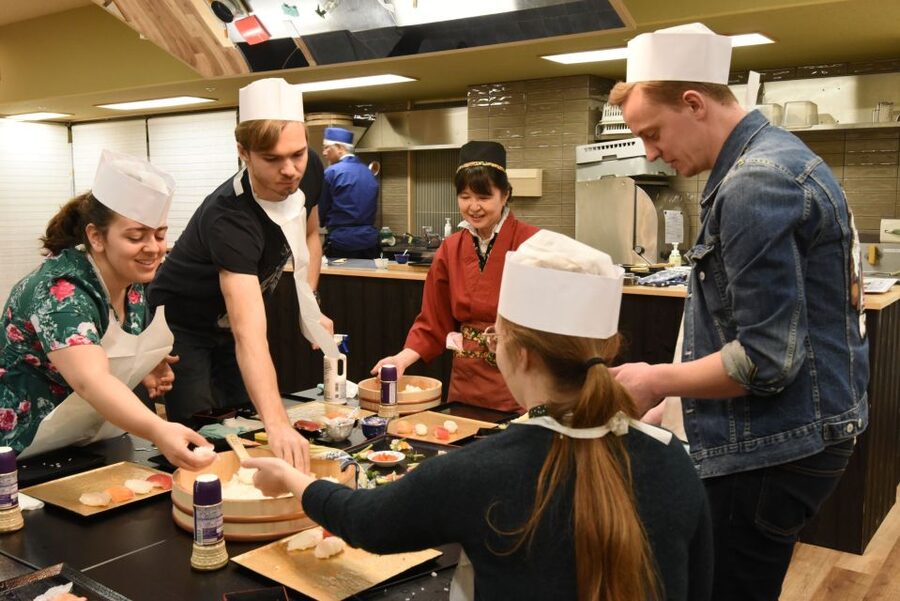
After the market walk, you use public transportation to reach a state-of-the-art kitchen near Tokyo Tower. The transport is included, which removes one small hassle from the day, but it also means the experience is not contained in one location.
The change of setting is part of the appeal. You begin in a working food district, then move into a controlled teaching kitchen where the instructor can focus on technique and hygiene. The modern facility is better suited to food preparation than a crowded market stall.
The total activity lasts about 225 minutes, or three hours and 45 minutes. That is a substantial block in your Tokyo schedule. The exact length can change depending on the number of participants, so avoid placing an important reservation immediately afterward.
The group limit of 10 is a strong practical feature. Sushi-making is much easier when the instructor can watch each person’s rice, fillings, and rolling technique. A very large class would turn the lesson into a demonstration. Here, you have a better chance to get corrections, though the pace can still vary with the group.
Making nigiri, hosomaki, and gunkanmaki
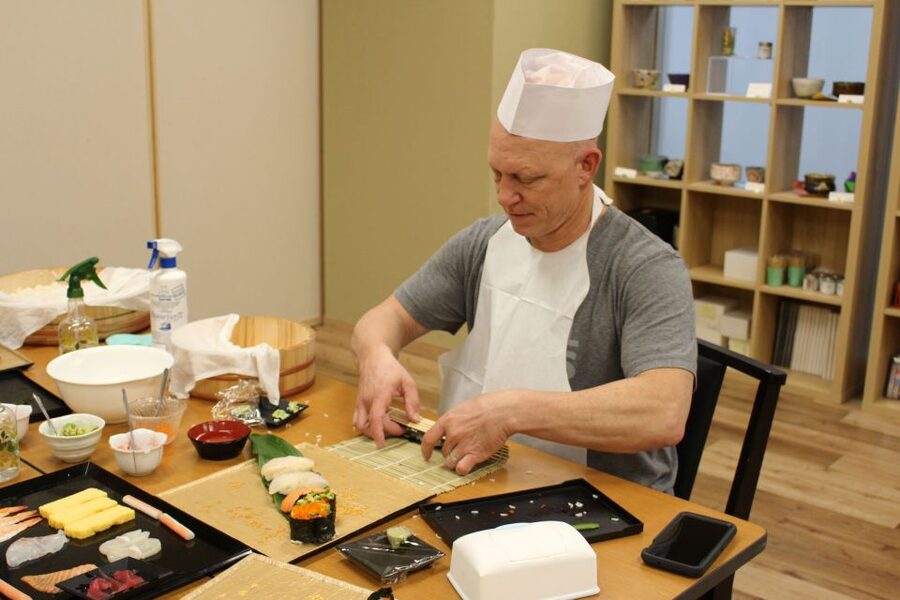
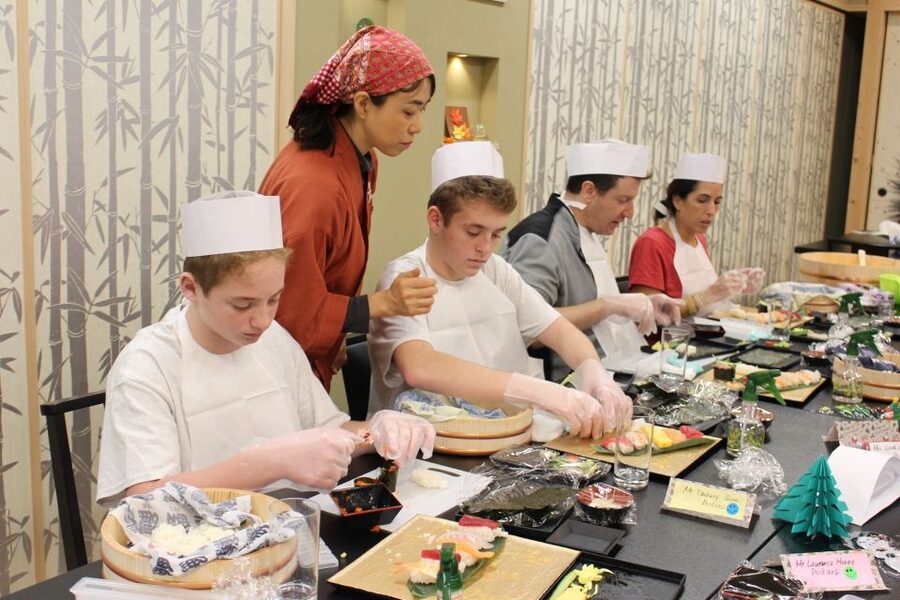
The cooking class covers three distinct sushi forms. First is nigiri sushi, the hand-shaped rice topped with fish or another ingredient. This looks simple, but the balance between rice, topping, and pressure is part of the lesson.
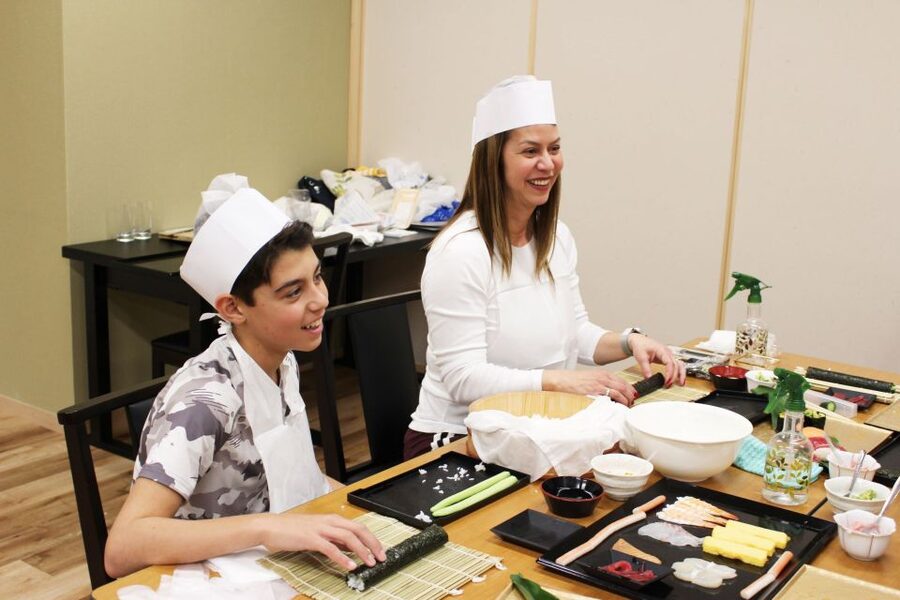
Next comes hosomaki, a thin sushi roll wrapped in nori. You learn how to spread the rice, place the filling, and roll it tightly enough to hold its shape without crushing the ingredients.
The third style is gunkanmaki, sometimes called battleship sushi because the nori forms a raised wall around a soft topping. It is useful to learn because the form handles ingredients that would not sit neatly on ordinary nigiri.
The ingredients are included, and an expert instructor supervises your work. You first receive an explanation of the cuisine’s background and basic hygiene techniques, then move into preparation. At the end, you sit down and eat what you made while learning Japanese dining etiquette.
That order matters. You are not simply handed ingredients and told to copy a recipe. The class connects technique with the way sushi is served and eaten. For a first-time sushi maker, that makes the meal more memorable than a standard restaurant visit.
More Fish Market Tours in Tokyo
- Tokyo Sushi Making Class in Tsukiji with Professional Chef
★ 5.0 · 1,177 reviews - Tsukiji Fish Market Guided Tour and Sushi Making with Pro Chef
★ 5.0 · 775 reviews - Tokyo: Tsukiji Fish Market Food and Culture Walking Tour
★ 4.7 · 757 reviews - Tsukiji Fish Market: Street Food & Culture Walking Tour
★ 5.0 · 669 reviews
The taste question, especially for sushi fans
I would separate the quality of the lesson from the quality of the finished meal. You control much of the shaping, so your sushi may not look like a chef’s work. That is normal and part of the fun.
However, one especially negative experience raised a fair concern about the fish quality. The person described having sushi in Japan at many price levels and found the fish used here disappointing. That criticism matters because the tour costs $177, and experienced sushi diners may compare the meal with a strong restaurant lunch or an omakase experience.
The class is best understood as a food activity, not a premium sushi tasting. You pay for the guide, market interpretation, transport, instruction, kitchen use, ingredients, and the chance to make the food yourself. If your top priority is the finest possible tuna, this is probably not the smartest use of your budget.
If your priority is learning a Japanese food skill in a friendly setting, the calculation is different. You get a structured lesson, three sushi formats, dining etiquette, and a souvenir kit. The food may be secondary to the process.
Is $177 a fair price?
At $177 per person, this sits firmly in the paid experience category. It is not priced like a casual market tour, and you can explore Tsukiji Outer Market on your own without paying for admission.
The price makes more sense if you value several services at once:
- An English-speaking nationally licensed guide
- A small group limited to 10 people
- A guided introduction to Tsukiji’s food trade
- Public transportation to the cooking facility
- A licensed sushi instructor
- All sushi ingredients
- A sit-down meal of what you prepare
- A sushi souvenir kit
The price makes less sense if you mainly want to eat excellent sushi. A strong restaurant meal may give you better fish for the same money, though it will not give you a market walk or cooking lesson.
I would also compare it with your own plans. If you already have a sushi-making class booked, or if you plan to visit Tsukiji independently and eat at a respected sushi counter, this tour may duplicate parts of your day. If you want one organized activity that combines market culture with cooking, the cost is easier to defend.
Dietary needs, timing, and practical limits
Most dietary restrictions and requirements can be accommodated, but you should communicate them before the activity. Do not assume every request can be handled at the last minute, especially in a class built around seafood and prepared ingredients.
The activity is offered in English and includes a live guide. It is listed as wheelchair accessible, but it is not suitable for people with mobility impairments. Babies under one year are also not suitable for this activity.
Bad weather can cause cancellation. The duration is approximate and may shift based on the number of people in the group. Free cancellation is available up to 24 hours before the start time, and you can reserve now and pay later, which helps if your Tokyo schedule is still changing.
Bring comfortable shoes. You do not need to bring sushi equipment or ingredients, since those are supplied. You may want to bring a small bag for the souvenir kit and any market purchases, though the tour information does not specify its size.
Who will enjoy this Tsukiji and sushi combination?
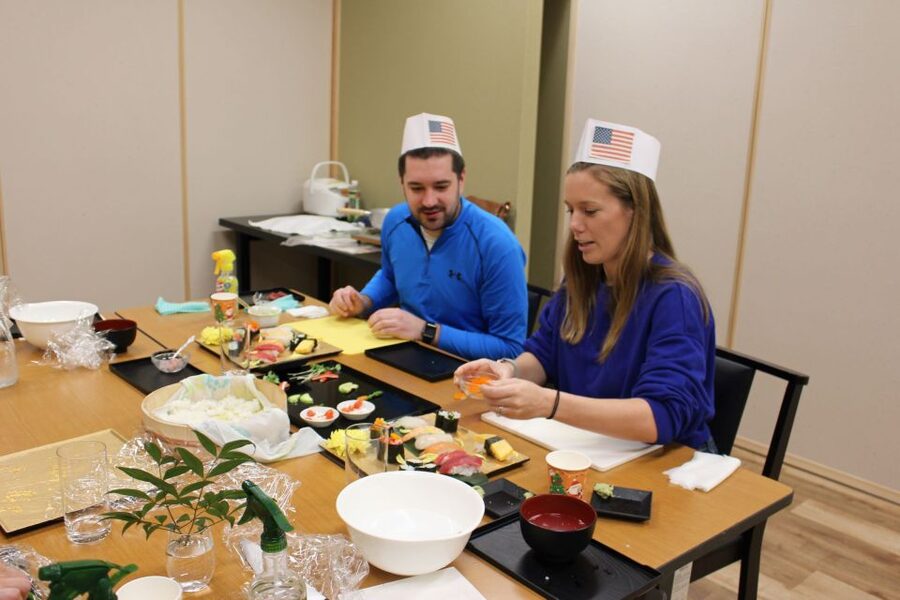
I would recommend this experience to first-time visitors who want structure. The guide helps you make sense of Tsukiji, and the class gives you something active to do afterward. It is also a good fit for couples, families with older children, and small groups of friends who enjoy food activities more than formal sightseeing.
It suits people who want to ask questions. The limited group size and hands-on format offer more contact with the instructor than a large demonstration.
It may also work well early in a Tokyo stay. The market walk introduces ingredients and food customs that can help you understand later meals. The sushi souvenir kit gives you a small reminder of the lesson rather than just another restaurant receipt.
I would be cautious if you are a serious sushi enthusiast, have limited time in Tokyo, or judge an experience mainly by fish quality. The reported complaint about the tuna-selection promise is important. If you specifically want to buy fresh fish with a guide, confirm that this is part of the current schedule before paying.
Should you book it?
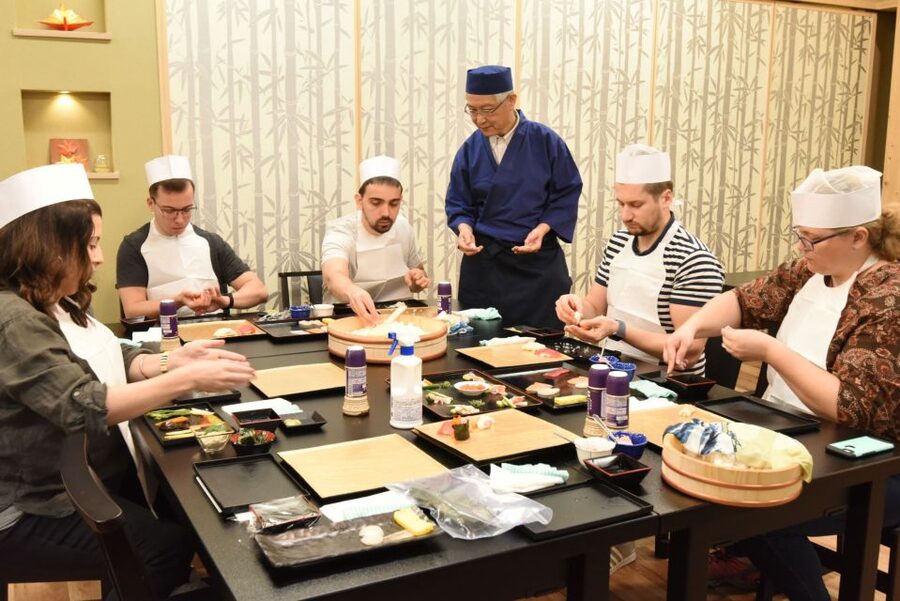
Book this tour if you want a guided Tsukiji introduction plus a hands-on sushi class in one half-day outing. The strongest features are the small group, the three sushi styles, the licensed instruction, and the chance to connect market ingredients with the finished dish.
Skip it if your main goal is the best sushi meal for $177. You can explore the market for free and put more of your budget toward a restaurant. Also skip it if you expect to select tuna in the market, unless the operator confirms that activity directly.
For the right person, this is a practical and sociable food lesson. Just buy it for the experience of learning and making sushi, not for a luxury seafood tasting.
FAQ
Where does the tour begin?
It begins at the entrance of Tsukiji Hongwanji Temple, about a 30-second walk from Exit 1 of Tsukiji Metro Station on the Hibiya Line.
How long does the experience last?
The scheduled duration is 225 minutes, or about three hours and 45 minutes. The timing may change depending on the number of participants.
What types of sushi will I make?
You will learn to make nigiri sushi, hosomaki sushi, and gunkanmaki sushi.
Is transportation between the market and kitchen included?
Yes. Public transportation from Tsukiji to the sushi kitchen near Tokyo Tower is included.
Is the activity conducted in English?
Yes. It includes a live English-speaking guide and an English-speaking licensed instructor.
Are sushi ingredients included?
Yes. Sushi ingredients are included, along with a sushi souvenir kit. Other food and drinks are not included.
Can dietary restrictions be accommodated?
Most dietary restrictions and requirements can be accommodated. You should provide those details before the activity.
Just added around Tokyo
- Tokyo: Private Tsukiji Street Food & Sake with Local Guide★ 5.0 · 3 reviews
- Tokyo: Tsukiji Market and Hama-rikyu Gardens Guided Tour★ 4.8 · 73 reviews
- Tokyo: Tsukiji Fish Market Culture Tour with Sashimi Tasting★ 4.6 · 54 reviews
- Tokyo: Tsukiji Fish Market Foodie and Educational Tour★ 5.0 · 4 reviews
- Tokyo : Tsukiji Fish Market Food Walking & Shrine Visit Tour★ 5.0 · 3 reviews
- Tokyo’s Kitchen: Tsukiji Market Food & Culture Walk★ 4.7 · 74 reviews
- Tokyo: Guided Walking Tour of Tsukiji Market with Lunch★ 4.4 · 24 reviews
- Tokyo Morning Tour: Meiji Shrine, Asakusa & Fish Market★ 4.9 · 44 reviews
Fish Market Tours, compared.

Tokyo Tsukiji Fish Market Food and Culture Walking Tour
Read our review →

Tokyo Sushi Making Class in Tsukiji with Professional Chef
Read our review →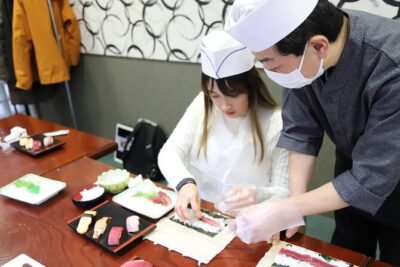
Tsukiji Fish Market Guided Tour and Sushi Making with Pro Chef
Read our review →Tsukiji Fish Market Food and Culture Walking Tour
Read our review →
Tsukiji Fish Market: Street Food & Culture Walking Tour
Read our review →
Tsukiji Fish Market Small-Group Food Walking Tour
Read our review →Browse the lists this tour appears in