
Review · JAPAN MARKET TOURS
Okinawa Explorer: Shrines, Markets & Vibrant Streets
Naha’s best short walking tour links a seaside shrine, a downtown bar district, a famous shopping street, a food market, and an old pottery quarter. The route gives you a quick look at several sides of Okinawa without asking you to spend a full day on one sight. Naminoue Shrine is the strongest opening, with its calm setting and ocean views, while Tsuboya Pottery Street gives the walk a satisfying cultural finish.
I like two things here: the private format lets you ask questions and set the pace, and the route connects places that feel quite different from one another. You also get a local guide rather than a self-guided map. The main concern is value: $458 for up to four people is reasonable for a private group, but less appealing for one or two people, especially since several stops are brief and the guide may need to help with directions.
Key points at a glance
- Naminoue Shrine begins the walk with ocean views and a peaceful change of pace.
- The route moves on foot through several central Naha areas rather than using a bus or taxi.
- HARBOR NAHA is viewed from the outside, so do not expect a long interior visit.
- Makishi Public Market is a short stop, useful for a quick look rather than a full meal.
- Tsuboya Pottery Street is the most distinctive final stop, with Okinawan ceramics at the center.
- The private English-speaking format suits a small group that wants a flexible conversation.
Starting at Naminoue Shrine above the sea
Meet your guide by Naminoue Shrine, one of the most appealing places to begin a Naha walk. The shrine sits above the water and brings a quiet, spiritual note before you enter the city streets. You can expect a short introduction to the site and time to take in the setting.
The shrine matters because it gives you a glimpse of Okinawa that is easy to miss if you spend all your time shopping and eating. The city is close by, yet the shrine feels removed from the noise. The ocean views add a welcome sense of space.
This is also the clearest sightseeing stop on the route. If you want long explanations about Japanese religion, architecture, or local customs, ask your guide early. The available information promises a live English guide, but it does not give a detailed script or a fixed amount of time at the shrine.
I would arrive ready to walk soon after meeting. The tour continues through central Naha, and the experience works best when you treat the shrine as the opening chapter rather than the main event.
A few more market tours around Japan worth a look
- Tokyo Tsukiji Fish Market Food and Culture Walking Tour
★ 5.0 · 3,184 reviews - Tokyo: Tsukiji Fish Market Food and Walking tour
★ 5.0 · 1,724 reviews - Tokyo: Tsukiji Fish Market Guided Walking Tour
★ 4.9 · 1,397 reviews
The 30-minute stop at 3-chōme-1-1 Tsuji
The itinerary includes a 30-minute guided stop at 3-chōme-1-1 Tsuji. This address is part of the route between Naminoue Shrine and the more familiar downtown sights. The supplied details do not explain a named attraction at this point, so you should think of it as a neighborhood and orientation stop rather than a major monument.
That can be useful. A private guide can explain what you are seeing as the city changes around you, point out nearby areas, and help you understand how the shrine connects to central Naha. The walk is not only a parade of famous names. It also gives you a look at ordinary streets and the feel of moving through the city on foot.
Still, this is one place where expectations matter. If you prefer a tour made up only of major sights, 30 minutes at an address without a stated landmark may feel thin. Ask your guide what the stop will cover when you meet. That simple question can help you decide how much time to spend there.
HARBOR NAHA, a quick look at downtown nightlife
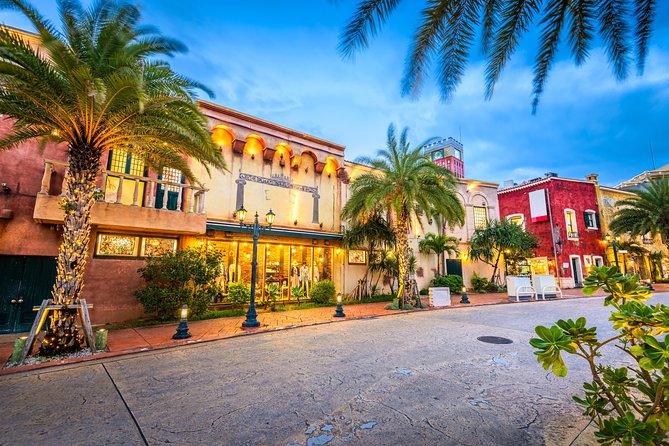
Next comes HARBOR NAHA, also identified as バーハーバー. The tour includes a 30-minute guided visit, with the information specifying that you see the exterior. This is important: you are not signing up for an extended bar visit or a guaranteed drink inside.
HARBOR NAHA adds a modern, social note to the route. After the quiet of Naminoue Shrine, you see a different side of Naha, one tied to evening activity and the city center. Your guide can put the building into context and explain its place among the nearby streets.
The practical value of this stop depends on your interests. If you enjoy seeing how a city changes from religious sites to restaurants and nightlife, it helps round out the route. If you want a long stop at a bar, this tour does not promise that. Treat it as a brief exterior visit and an opportunity to ask your guide about the surrounding area.
Because crowd conditions and opening conditions can vary, the exact feel may change from one starting time to another. The tour information also notes that access and availability can vary with time of day.
Kokusai-dori in a 20-minute slice
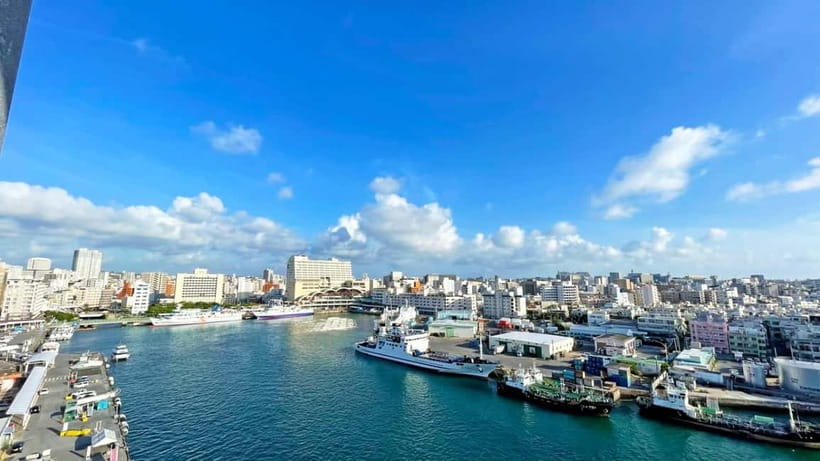
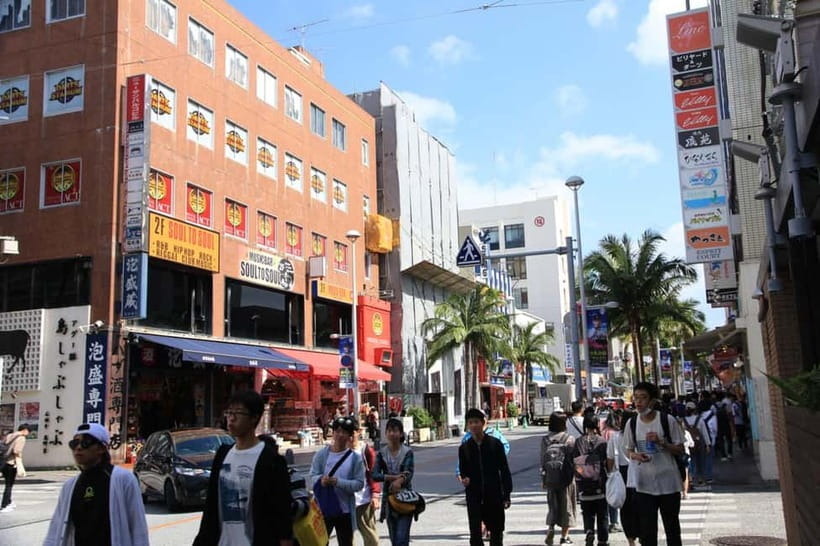
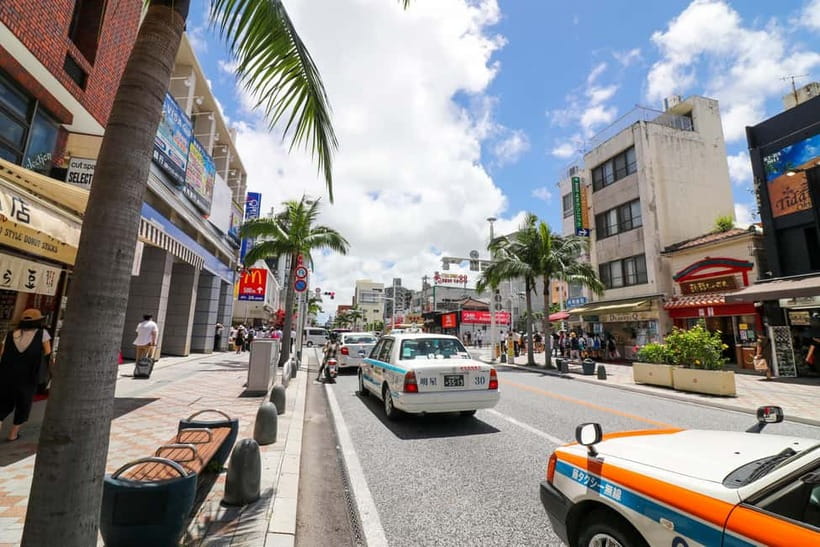
Kokusai-dori is Naha’s best-known central street, lined with shops, places to eat, and the constant movement of the city. You get a 20-minute guided portion here. That is enough to get your bearings and see the street’s character, but not enough for a leisurely shopping session.
I like the idea of using Kokusai-dori as a connecting piece. The street gives you a sense of modern Naha between the shrine, market, and pottery district. It is also the sort of place where a guide can be more useful than a printed description. You can ask what is worth returning to later, where the local food is, and which shops fit your interests.
Do not expect time to browse every storefront. If you see something you want to buy, you may need to note the location and come back after the tour. The short timing keeps the route moving, but it limits spontaneous shopping.
The street is likely to be one of the noisier parts of the walk. That contrast is part of the point. You move from a sacred site to a busy commercial road, then onward to food and craft traditions.
Same place, a different set of stalls:
- Nishiki Market Brunch Walking Tour (7 Tastings + Brunch)
★ 5.0 · 1,355 reviews - Tokyo Sushi Making Class in Tsukiji with Professional Chef
★ 5.0 · 1,177 reviews - Tsukiji Fish Market Guided Tour and Sushi Making with Pro Chef
★ 5.0 · 775 reviews - Tokyo: Tsukiji Fish Market Food and Culture Walking Tour
★ 4.7 · 757 reviews
Makishi Public Market for food and local color
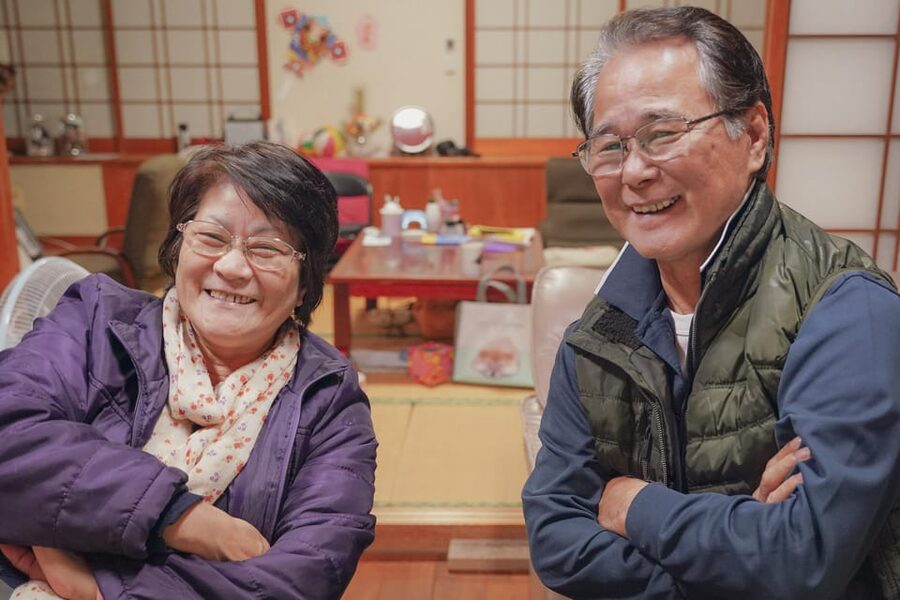
Makishi Public Market receives a 20-minute guided visit. This is a short stop, so think of it as a first look rather than a full market meal. You can expect food displays, local tastes, and the lively energy that makes public markets useful windows into daily life.
The market is a good place to ask your guide about Okinawan ingredients and regional food customs. The tour description specifically presents it as a place to enjoy fresh local tastes, but it does not include a meal or tasting in the price. Bring that distinction into your planning.
Twenty minutes can pass quickly in a market. You may have time to look around and identify foods you want to try later, but you should not count on sitting down for a long meal. One useful approach is to focus on observation during the tour and return on your own if something catches your eye.
There is also a practical warning here. The market may feel less rewarding if you expect a major food experience in a short window. The route gives you a sample of the market atmosphere, not a guided culinary tour. A good guide can make the stop more meaningful by explaining what you are looking at, but the pace remains tight.
Tsuboya Pottery Street finishes with Okinawan craft
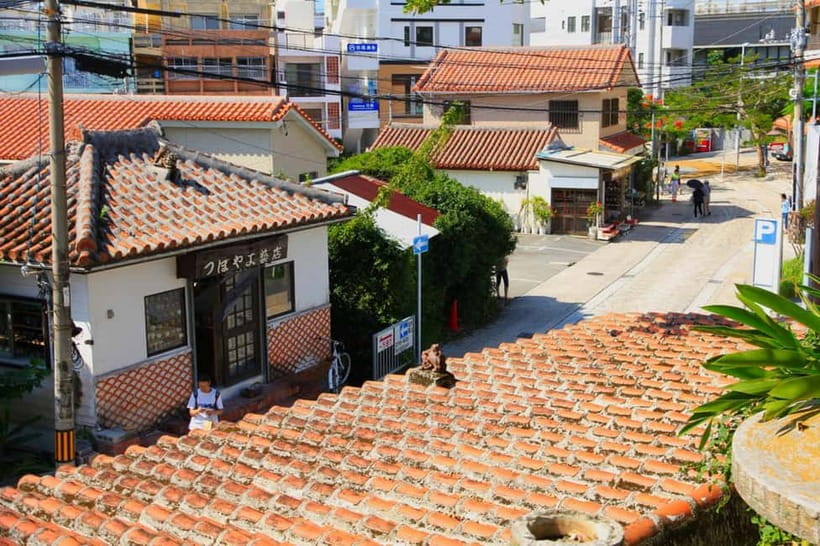
The final stop is Tsuboya Pottery Street, with 20 minutes of guided time. This is the most distinctive ending on the route. Okinawa is well known for its pottery, and this street gives you a direct connection to the island’s craft tradition through workshops, ceramic displays, and pottery-focused storefronts.
The supplied details do not promise a hands-on class or a purchase. You should expect to see the area, learn about its ceramics, and perhaps identify pieces to revisit. If you enjoy design, local crafts, or useful souvenirs, this may be the stop that stays with you after the tour ends.
The timing is again brief. Twenty minutes lets you get a taste of the street, but not slowly compare every piece or make a careful purchase. If you find a bowl, cup, or other item you like, ask your guide how much time remains and whether you can return after the official walk.
The route ends back at the meeting point by Naminoue Shrine, according to the activity details. That return arrangement matters because it makes the experience easier to fit into a larger Naha schedule. You do not need to arrange a separate pickup at the last stop.
What the two-hour format really gives you
Two hours is enough for an introduction to several parts of Naha, not a full tour of each one. The stated guided times total the entire duration, with stops of 30, 30, 20, 20, and 20 minutes. Walking between them is part of the experience.
That structure has a clear benefit. You can sample a shrine, a city neighborhood, a nightlife spot, a commercial street, a market, and a craft district in one compact outing. If you are in Naha for a short stay, this range may be more useful than spending two hours in one museum or shopping area.
The tradeoff is depth. You will need to keep moving, and some stops may feel more like previews. I would choose this tour when I want orientation and variety. I would not choose it if my main goal were a long market lunch, serious pottery shopping, or detailed religious sightseeing.
Start time also matters. The information says to check availability for starting times, and attraction access can change with time of day and crowd conditions. A private guide can adjust the conversation, but cannot make a 20-minute stop into a two-hour visit.
The guide, group size, and walking style
The tour includes a professional local guide who speaks English. It is a private group, limited to your party, with the listed price covering up to four people. That setup is the biggest reason to consider the experience.
A private group gives you room to ask basic questions without holding up a large crowd. You can also tell the guide if you want more time at the shrine, less time at a commercial stop, or extra explanation about pottery. The published plan may not be fully adjustable, but private guiding is still more personal than joining a large group.
You should also be comfortable helping with orientation. One account of the experience described a first-time English-speaking guide and a need to use phones to find the route. That is a useful caution, especially if you expect polished navigation and detailed commentary at every turn.
At the same time, the experience has received strong praise for an informative guide with a good sense of humor, and for the walk from Naminoue-gu to Tsuboya Pottery Street being time well spent. The guide quality may shape your day more than any single stop. Go in ready to ask questions and confirm directions rather than quietly expecting the guide to handle every detail.
Is $458 a fair price for four people?
The price is $458 per group of up to four. That works out to $114.50 per person for a full group, before any extra food or purchases. For four people who value a private English-speaking guide, the cost can make sense, particularly if you want a planned route and a local introduction to several parts of Naha.
For one person, the calculation is much harder. The same price buys only two hours, and the tour does not include meals, drinks, admission fees, or pottery purchases. For two people, you need to decide how much the private format and convenience matter to you.
I see the value in the route itself. It joins places that you might otherwise visit separately, and it returns you to the starting point. The guide also gives you a chance to ask about what to do next in Naha.
I would book it for a small family or group of friends who want a private walk and do not want to plan the route themselves. I would hesitate if I were traveling alone, mainly because the short stops and high fixed price leave less room for value.
Cancellation is flexible: you can cancel up to 24 hours in advance for a full refund. You can also reserve now and pay later, which helps if your schedule is still changing.
Who should choose this Naha walk?
This experience suits you if you want a first look at Naha’s main central areas and prefer walking over a vehicle-based tour. It is also a good fit for people who enjoy variety: a shrine, city streets, a market, and pottery all appear within two hours.
Families and small groups may appreciate the private format. You can keep the conversation focused on your own interests, and the fixed group price becomes easier to justify when divided among four people.
You may want a different plan if you want a long food tour, a pottery workshop, or detailed time inside every attraction. The market and pottery visits are short, and HARBOR NAHA is seen from the outside. This is an overview with local guidance, not a specialist tour.
Should you book Okinawa Explorer?
Book this tour if you want a compact introduction to Naha, value a private English-speaking guide, and like the idea of walking from Naminoue Shrine to Tsuboya Pottery Street. The shrine and pottery district give the route its strongest identity, while Kokusai-dori and Makishi Public Market add the everyday city side.
Think twice if you are paying alone or expect deep commentary and generous time at each stop. The route moves quickly, and guide experience may vary. For a group of four that wants a simple, varied orientation to Naha, it can be a sensible choice. For a serious food, shopping, or craft day, use this as a starting point and leave extra time to return to the places that interest you most.
FAQ
Where does the tour start?
The tour starts by Naminoue Shrine in Naha.
Where does the tour end?
The activity ends back at the meeting point by Naminoue Shrine.
How long does the tour last?
The tour lasts two hours. You need to check availability for the available starting times.
Is the tour private?
Yes. It is a private group experience for up to four people.
What language does the guide speak?
The live tour guide speaks English.
What is included in the price?
A professional local tour guide is included. Food, drinks, admission fees, and purchases are not listed as included.
Can I cancel for a refund?
Yes. You can cancel up to 24 hours in advance for a full refund. You can also reserve now and pay later.
Just added around Japan
- Nagoya Super Market Tour & Home Cooking Class with a Local, Akiko★ 5.0 · 10 reviews
- Tokyo: Tsukiji Market Guided Tour & Sushi-Making Experience★ 4.4 · 11 reviews
- Tokyo: Private Tsukiji Street Food & Sake with Local Guide★ 5.0 · 3 reviews
- Tokyo: Tsukiji Market and Hama-rikyu Gardens Guided Tour★ 4.8 · 73 reviews
- Tokyo: Tsukiji Fish Market Culture Tour with Sashimi Tasting★ 4.6 · 54 reviews
- Tokyo: Sushi Making with Pro Chef & Tsukiji Fish Market Tour★ 4.6 · 49 reviews
- Tokyo : Tsukiji Fish Market Food Walking & Shrine Visit Tour★ 5.0 · 3 reviews
- Tokyo: Tsukiji Fish Market Foodie and Educational Tour★ 5.0 · 4 reviews
Japan Market Tours, compared.

Tokyo Tsukiji Fish Market Food and Culture Walking Tour
Read our review →

Nishiki Market Brunch Walking Tour (7 Tastings + Brunch)
Read our review →
Tokyo Sushi Making Class in Tsukiji with Professional Chef
Read our review →
Tsukiji Fish Market Guided Tour and Sushi Making with Pro Chef
Read our review →Tsukiji Fish Market Food and Culture Walking Tour
Read our review →
Tsukiji Fish Market: Street Food & Culture Walking Tour
Read our review →Browse the lists this tour appears in