
Review · JAPAN MARKET TOURS
Kanazawa: Sushi Making Experience at Oumicho Market
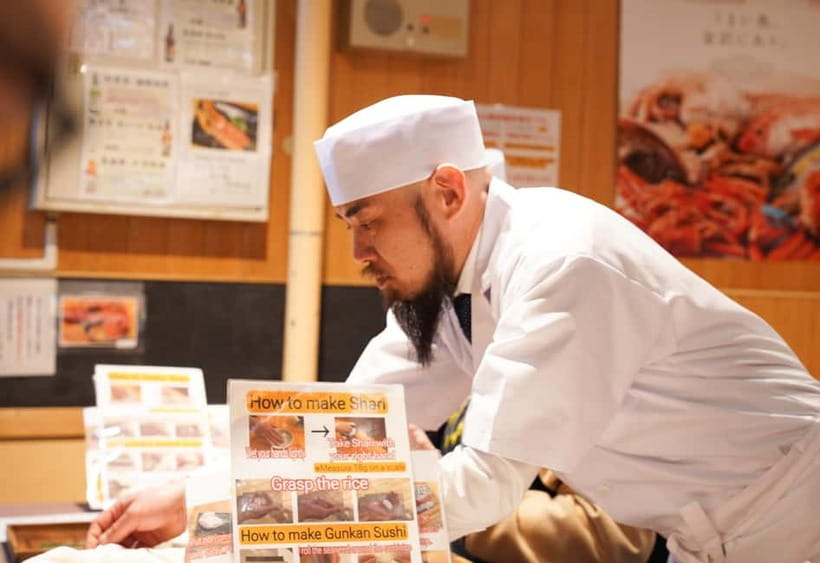
Kanazawa’s Oumicho Market gives this sushi lesson a setting far more interesting than a plain cooking studio. You sit at Sushi Enome, surrounded by the sounds and movement of a market that has served the city for more than 300 years, while a Japanese chef shows you how to turn fresh local seafood and seasoned rice into a proper meal.
I like two things right away: you make eight pieces in three different styles, and you eat the sushi you prepare. I also like the personal scale. This is a private-group lesson, and the patient chefs give you time to handle the knife, shape the rice, and try the rolling technique yourself.
The main drawback is simple: finding Sushi Enome can take a little patience, especially if you arrive late or enter through another part of the market. The instruction is listed in Japanese, though a restaurant staff member helped translate during one French-speaking lesson, so communication support may vary.
Key points to know before booking
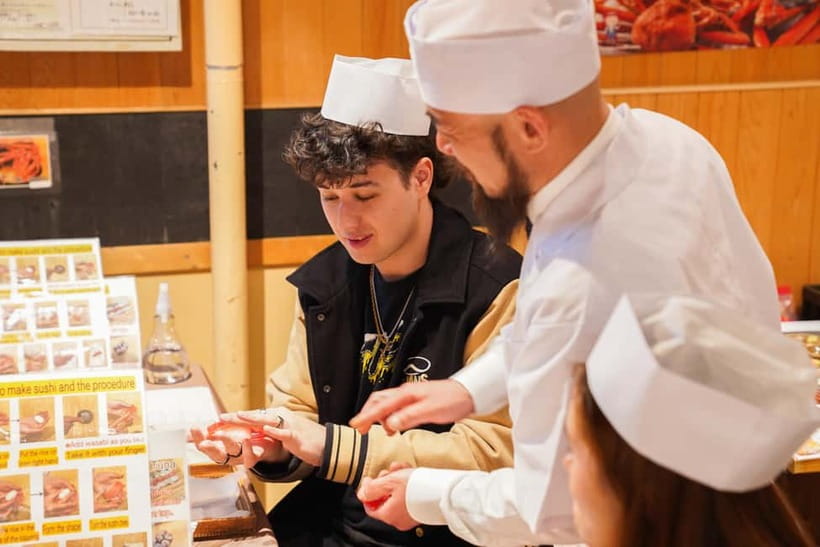
- Eight pieces in three styles: Make five nigiri, two gunkan-maki, and one sushi roll.
- A real market setting: The lesson takes place inside Sushi Enome at Oumicho Market, not in a separate tourist kitchen.
- Fresh Kanazawa seafood: Ingredients come from the local area and form the center of the tasting.
- Patient, friendly instruction: Two chefs have been praised for their humor, kindness, and clear teaching.
- Private two-hour format: The small setting gives you room to practice instead of simply watching.
- Arrive early: Enter through the Emza, also called M’ZA, entrance and allow extra time to find the restaurant.
Why Oumicho Market makes the lesson special
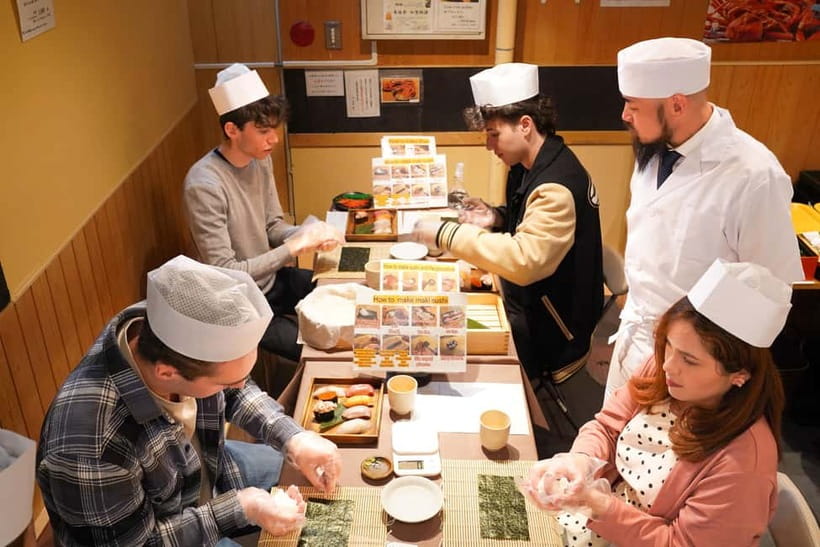
Oumicho Market is one of Kanazawa’s best places to see daily food culture in action. Its history stretches back more than 300 years, and it remains a working market used by both local people and visitors. Fish, produce, and other food stalls give the area a sense of purpose beyond sightseeing.
That setting matters. Sushi can feel abstract when you make it in a classroom with no connection to the food trade. At Oumicho, you are in the middle of a place built around ingredients. You hear the market, see people moving through the aisles, and make your lunch or early dinner just steps from the source of the seafood.
I would plan this activity as part of a morning or midday visit to the market. The lesson lasts two hours, so it is long enough to learn several techniques without taking up your entire day in Kanazawa. You can look around the market before or after, but you should not count on arriving at the last second and finding the restaurant easily.
The meeting point is specific: enter from the Emza, or M’ZA, entrance. Turn right at the first intersection and walk a short distance. Sushi Enome is on the left. Since the market can be confusing at first, I would arrive at least 10 minutes early, as requested, and give yourself a few more minutes if you are unfamiliar with the building.
A few more market tours around Japan worth a look
- Tokyo Tsukiji Fish Market Food and Culture Walking Tour
★ 5.0 · 3,184 reviews - Tokyo: Tsukiji Fish Market Food and Walking tour
★ 5.0 · 1,724 reviews - Tokyo: Tsukiji Fish Market Guided Walking Tour
★ 4.9 · 1,397 reviews
Meeting the chef at Sushi Enome
The lesson takes place at Enome Sushi, written on the sign as Sushi Enome in the meeting instructions. A professional Japanese sushi chef leads the session and explains the basic ideas behind sushi, not just the hand movements.
The teaching style appears warm and practical. Two chefs were described as patient, funny, and helpful, which is exactly what you want when your first rice mound collapses or your roll comes out less tidy than planned. The point is not to produce restaurant-perfect sushi on the first try. The point is to learn what your hands should do and understand why the pieces hold together.
The listed instruction language is Japanese. That is important to know before booking. During one lesson, the chef spoke Japanese while another person from the restaurant provided translation. The available information does not promise an English-language guide or a translator at every session, so you may want to confirm your language needs when reserving.
Still, sushi is a hands-on lesson. Even when a phrase is hard to follow, the chef can demonstrate how to press the rice, place the fish, wrap the seaweed, and shape the pieces. A relaxed attitude will help. This is not a lecture-heavy food course.
The first lesson: sushi culture and knife handling
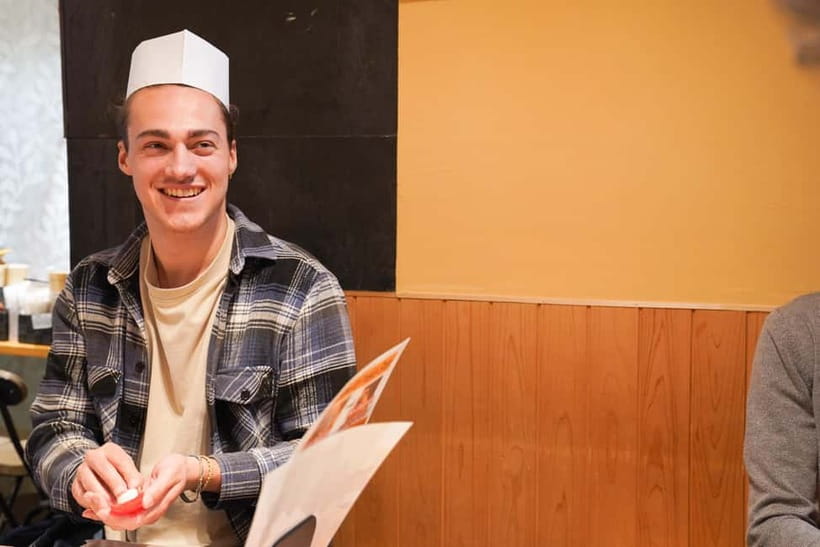
The chef begins by explaining sushi’s history and culture, then moves into the practical work. You learn how to use a knife and how the individual parts of sushi come together.
Knife instruction is one of the more useful parts of the session. Many people know how to eat sushi but have never handled fish or prepared a piece with the care required for clean edges. The lesson gives you a basic look at the precision behind a simple-looking nigiri.
The information does not specify the exact knife cuts or the particular fish served on the day. That is sensible, since seafood depends on what is fresh in Kanazawa. You can expect local seafood to be central, but you should not book this expecting a fixed menu of named fish.
The chef also explains the balance between rice and fish. Good sushi is not just raw seafood placed on rice. Shape, pressure, temperature, and proportion all matter. Even a short explanation can change the way you notice sushi later in Japan.
Wear comfortable clothes suitable for cooking. The activity is not described as messy or strenuous, but you will be working with food and handling ingredients for a full two hours. Smoking, alcohol, and drugs are not allowed.
Making five nigiri pieces by hand
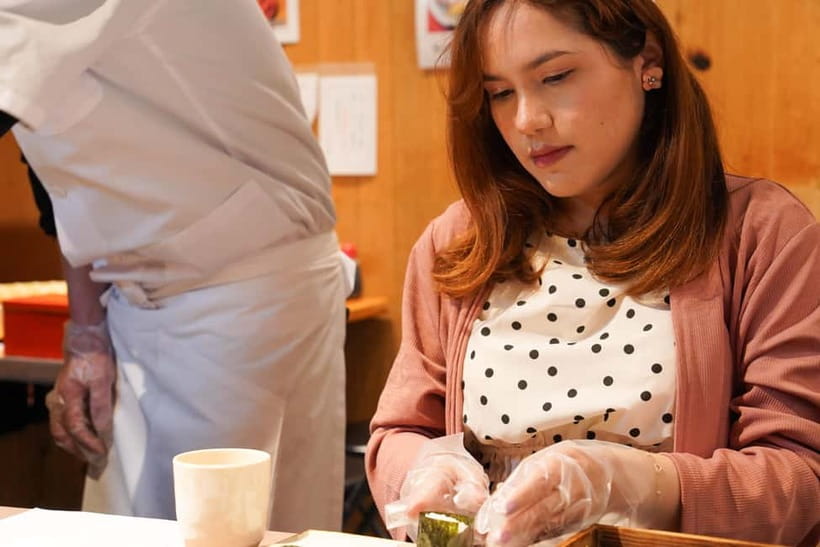
Nigiri is the clearest test of sushi technique. You shape a small portion of rice, add a slice of fish, and form the piece without crushing either component.
Here, you make five pieces. That gives you enough repetition to improve. The first piece may feel awkward, while the fourth or fifth should give you a better sense of how much rice to use and how firmly to press.
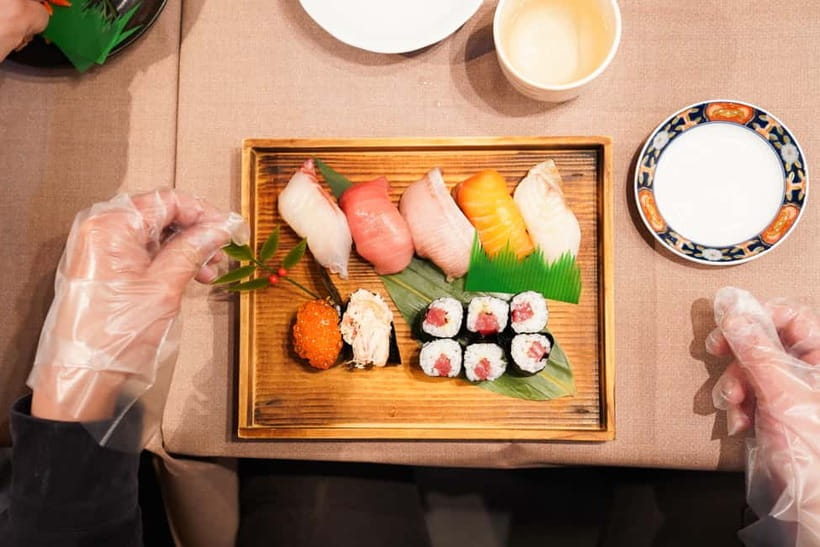
The number is also a good balance. You get real practice without spending the whole class repeating one motion. The fish and rice must work together, so you learn to avoid packing the rice too tightly. The finished pieces should be neat enough to photograph and, more importantly, pleasant to eat.
This is where the freshness of the seafood matters most. Nigiri has few ingredients, so the fish and rice carry the whole experience. The activity uses fresh seafood from Kanazawa, allowing the local ingredients to remain the focus instead of hiding them under sauces or elaborate toppings.
Your result may not resemble a sushi chef’s work. That is normal. You are paying for instruction and a good meal, not for a professional certification. The chefs’ patience is especially valuable here because small adjustments in hand position can make the pieces much easier to shape.
Same place, a different set of stalls:
- Nishiki Market Brunch Walking Tour (7 Tastings + Brunch)
★ 5.0 · 1,355 reviews - Tokyo Sushi Making Class in Tsukiji with Professional Chef
★ 5.0 · 1,177 reviews - Tsukiji Fish Market Guided Tour and Sushi Making with Pro Chef
★ 5.0 · 775 reviews - Tokyo: Tsukiji Fish Market Food and Culture Walking Tour
★ 4.7 · 757 reviews
Wrapping two gunkan-maki pieces
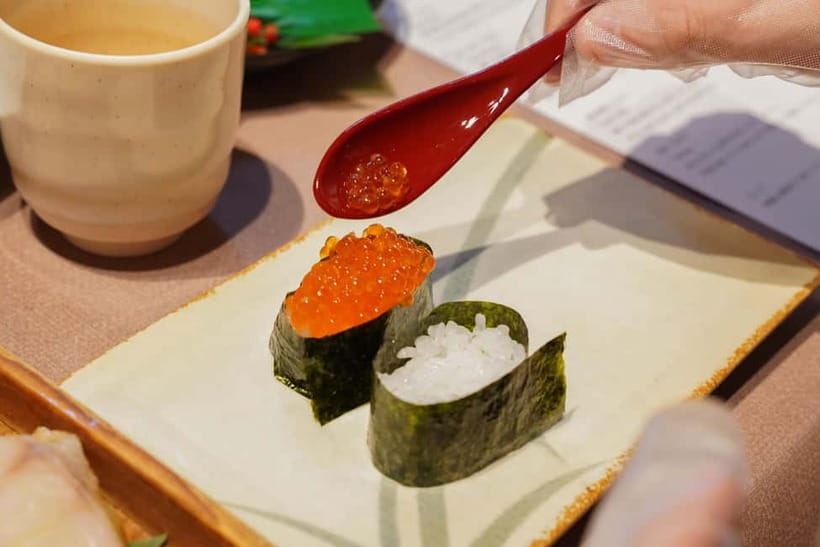
Next, you make two gunkan-maki. This style uses a band of seaweed around rice to create a small cup for a softer topping.
Gunkan-maki adds a different skill from nigiri. Instead of laying fish directly over rice, you need to build a stable seaweed wall and keep the rice compact inside it. The form is visually distinctive, which makes it fun to photograph once finished.
Two pieces are enough to show the contrast with nigiri. You are not simply repeating the same sushi shape eight times. The lesson gives you several ways to work with rice, seaweed, and seafood, making the final tasting more varied.
The ingredients for the gunkan pieces are not specified in advance. That means the exact topping can depend on the day’s supply. I would treat that as part of the market experience, while noting that anyone with strict food restrictions should ask about ingredients before booking.
Rolling one sushi roll
The final format is one sushi roll. Rolling can look easy when someone else does it, but keeping the filling in place and producing an even shape takes practice.
The chef shows you how to arrange the ingredients and use the rolling technique. You then make one roll yourself. Since you only prepare one, listen closely to the demonstration before starting. There is little time for trial and error, but that also keeps the lesson moving.
The roll gives you a useful contrast to both nigiri and gunkan-maki. Nigiri depends on the shape of the rice and fish. Gunkan depends on a seaweed collar. A roll asks you to coordinate several ingredients while applying even pressure across the whole piece.
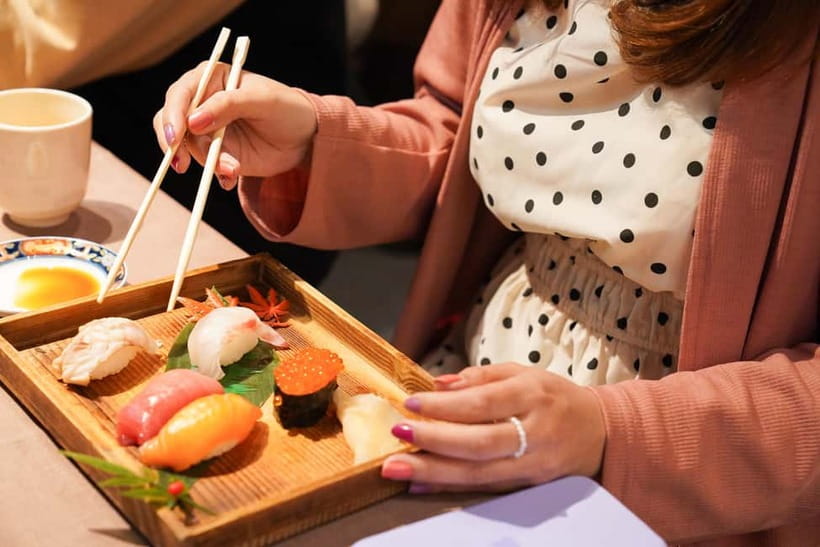
The finished sushi is part of the meal, not just a craft project. You make five nigiri, two gunkan-maki, and one roll, then taste the full set. That is eight pieces in total, enough for a satisfying sample without suggesting that this is a large restaurant lunch.
Eating what you make
The best part of the schedule comes at the end, when you eat your own sushi. You get to compare the different styles and notice how much the rice shape changes the experience.
I like this format because it gives the lesson a clear reward. You are not making food only for a photograph or taking home something that may not keep well. You prepare it, see the finished plate, and eat it while the techniques are still fresh in your mind.
The tasting also lets you judge the balance of fresh fish and rice. With only a few ingredients, mistakes become easy to notice, but so does improvement. A well-shaped piece feels different from one with too much rice or too much pressure.
Drinks are not included. If you want something to accompany the meal, plan to pay separately. The activity includes the ingredients, chef instruction, five nigiri, two gunkan-maki, one roll, and tasting of your own work.
What the $70 price gets you
At $70 per person, this is not the cheapest way to eat sushi in Kanazawa. You are paying more than the cost of buying a prepared meal at a market stall, but the comparison is not quite fair.
The price covers two hours with a professional chef, all ingredients, instruction in three sushi styles, and the food you make. You also get access to an experience tied directly to Oumicho Market rather than a generic cooking class in an unrelated room.
I see the value most clearly for people who want a lasting skill or memory from Kanazawa. If you only want a quick meal, spend the money on sushi and keep moving. If you want to understand how sushi is formed and enjoy a private lesson in a working market, the cost is easier to justify.
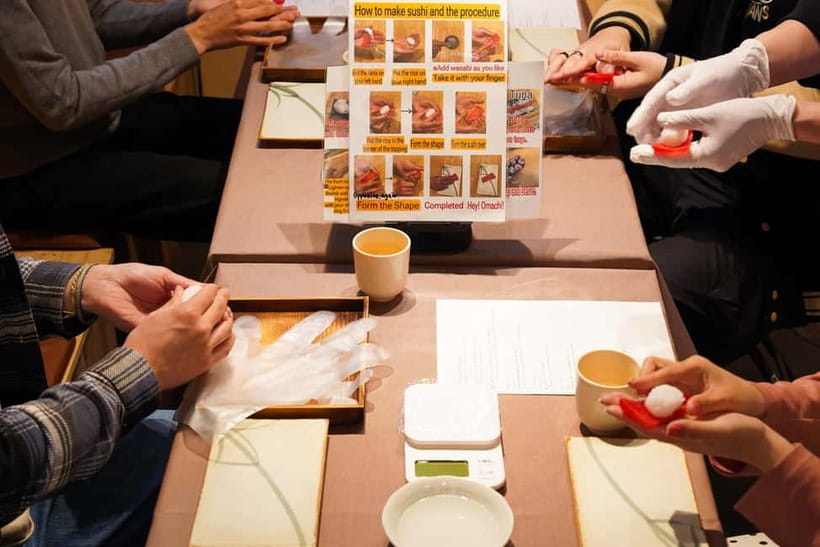
The private-group format helps. You are not described as joining a large public class, so the chef can focus on your technique. That matters when you are learning knife handling and rolling. The available rating is 5 out of 5 from seven reviews, with especially strong praise for the chefs’ patience, humor, kindness, and the quality of the fish. A small sample cannot guarantee that every session will feel identical, but the pattern is encouraging.
Who will enjoy this most
I would recommend this activity to first-time sushi makers, couples, families, and small private groups who want something active during a Kanazawa visit. It suits people who like to understand how food is made rather than simply ordering it.
It is also a good choice if you want a local food experience but do not want a long full-day cooking course. Two hours is enough to feel involved while leaving time for Kenrokuen, Kanazawa Castle, the Higashi Chaya district, or more of Oumicho Market.
Children may enjoy the shaping and rolling, but the supplied information does not give an age range or specific child policy. I would ask before booking if you are traveling with young children.
The lesson is wheelchair accessible. That makes it easier for more people to consider, though the information does not explain the exact route through the market or the seating arrangement. If you use a wheelchair, confirm any access details that matter to you in advance.
People with seafood allergies or strict dietary rules should also ask questions before booking. The activity centers on fresh seafood, and no alternative menu is described.
Small details that make the day easier
Use the exact entrance instructions. Oumicho Market is lively and can be tricky to navigate, so the Emza, or M’ZA, entrance is more useful than simply searching for the restaurant once you are inside.
Arrive 10 minutes early. I would not treat this as optional. One American participant specifically advised getting to the market early because the meeting point can take a little effort to find.
Wear comfortable clothes. You do not need special equipment, and all necessary ingredients are supplied. You should not need to bring a knife, rice, seaweed, or seafood.
The booking terms are flexible. You can cancel up to 24 hours before the activity for a full refund, and you can reserve now and pay later. Starting times depend on availability, so check the date you want rather than assuming the class runs at a fixed hour.
The experience is offered as a private group and lasts two hours. Hotel pickup and drop-off are not included, so you need to make your own way to Oumicho Market.
Should you book this Kanazawa sushi lesson?
I would book it if you want a hands-on food experience with a clear connection to Kanazawa. The combination of a Japanese chef, fresh local seafood, a working market setting, and eight pieces of sushi to make and eat gives the activity real substance.
I would skip it if your main goal is the lowest-cost sushi meal, or if you need guaranteed instruction in a language other than Japanese. I would also ask about translation and ingredients before paying if either point is essential.
For most food-focused visitors, $70 is fair for two hours of private instruction and a full tasting of your own work. Get to Oumicho Market early, follow the Emza entrance directions, and arrive ready to use your hands. That preparation will make the experience much smoother.
FAQ
Where does the sushi-making experience take place?
It takes place at Sushi Enome restaurant inside Oumicho Market in Kanazawa.
How do I find Sushi Enome?
Enter Oumicho Market through the Emza, or M’ZA, entrance. Turn right at the first intersection and walk a short distance. The Sushi Enome sign is on your left.
How long does the activity last?
The sushi-making experience lasts two hours.
How much sushi will I make?
You will make five pieces of nigiri sushi, two pieces of gunkan-maki, and one sushi roll.
Is the sushi included in the price?
Yes. The price includes all necessary ingredients, the sushi you make, and tasting your finished pieces.
What language is the instruction in?
The instructor is Japanese, and the listed language is Japanese. During one session, another restaurant staff member helped translate for participants.
Is the experience wheelchair accessible?
Yes, the activity is listed as wheelchair accessible.
What should I bring and when should I arrive?
Wear comfortable clothing suitable for cooking and arrive 10 minutes before the activity begins. Hotel pickup, drop-off, and drinks are not included.
Just added around Japan
- Nagoya Super Market Tour & Home Cooking Class with a Local, Akiko★ 5.0 · 10 reviews
- Tokyo: Tsukiji Market Guided Tour & Sushi-Making Experience★ 4.4 · 11 reviews
- Tokyo: Private Tsukiji Street Food & Sake with Local Guide★ 5.0 · 3 reviews
- Tokyo: Tsukiji Market and Hama-rikyu Gardens Guided Tour★ 4.8 · 73 reviews
- Tokyo: Tsukiji Fish Market Culture Tour with Sashimi Tasting★ 4.6 · 54 reviews
- Tokyo: Tsukiji Fish Market Foodie and Educational Tour★ 5.0 · 4 reviews
- Tokyo: Sushi Making with Pro Chef & Tsukiji Fish Market Tour★ 4.6 · 49 reviews
- Tokyo : Tsukiji Fish Market Food Walking & Shrine Visit Tour★ 5.0 · 3 reviews
Japan Market Tours, compared.
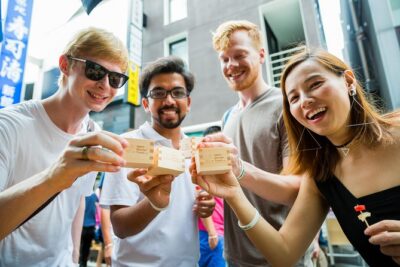
Tokyo Tsukiji Fish Market Food and Culture Walking Tour
Read our review →
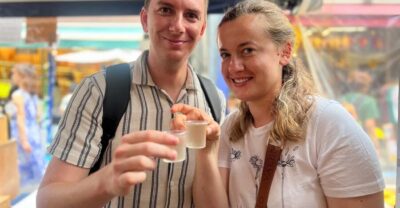
Nishiki Market Brunch Walking Tour (7 Tastings + Brunch)
Read our review →
Tokyo Sushi Making Class in Tsukiji with Professional Chef
Read our review →
Tsukiji Fish Market Guided Tour and Sushi Making with Pro Chef
Read our review →Tsukiji Fish Market Food and Culture Walking Tour
Read our review →
Tsukiji Fish Market: Street Food & Culture Walking Tour
Read our review →Browse the lists this tour appears in