
Review · FISH MARKET TOURS
Osaka: Wakayama Cat Train, Seafood market, Hot Springs Tour
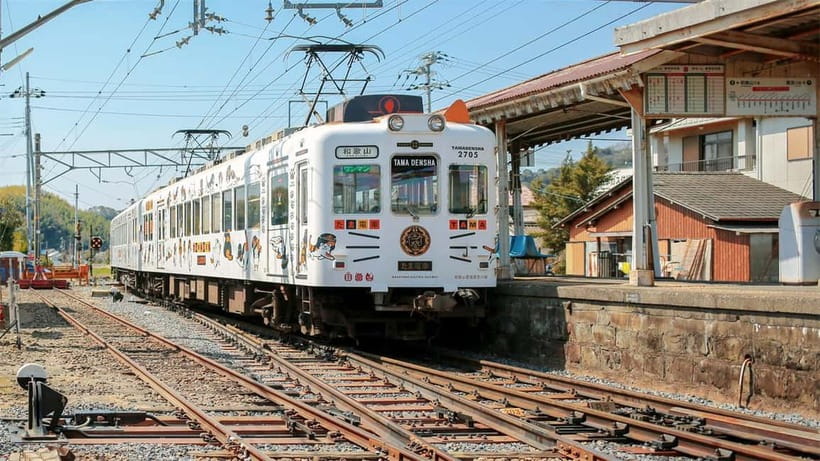
Wakayama’s cat train is the charming hook here, but the day quickly grows into a broad tour of seafood, hot springs, and Pacific coast scenery. At Kishi Station, you’ll meet the story of Tama, the calico cat who became stationmaster and helped save a rural railway from closure. The train ride itself is short, yet the tale gives the stop real heart.
I like the mix of small-town Japan and coastal Wakayama, and I like the chance to watch a tuna being cut apart by an expert before choosing your own lunch. The drawback is the long day on the road: you’ll spend roughly four hours in the coach, and the cat-themed train segment may last only about 15 minutes.
Key points at a glance
- Tama’s station: See Kishi Station, shaped like a cat’s face, and learn how a calico cat became its famous stationmaster.
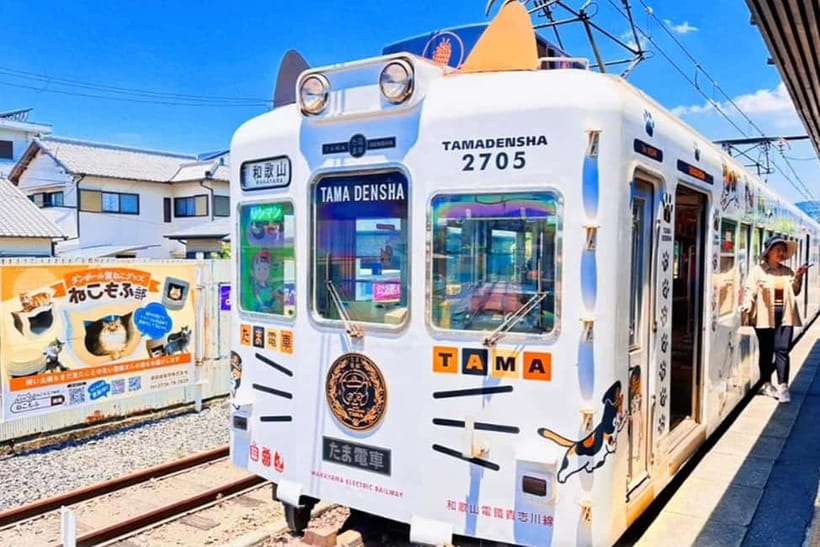
- Three possible train designs: The Tama Train, Strawberry Train, or Toy Train operates according to the day’s schedule.
- Tuna at ToreTore: Watch a live cutting show when the timing works, then buy seafood for lunch at your own cost.
- Shirahama’s old hot springs: Toretore Onsen offers optional bathing in water tied to more than 1,300 years of local tradition.
- Pacific rock cliffs: Walk across Senjojiki’s broad rock shelves and descend to Sandanbeki Cave, with admission extra.
- A guide-led day: English, Japanese, and Chinese service is available, and guide Tiger has been especially praised for clear updates and careful organization.
Why this Wakayama day trip works
This is a good choice if you want to leave Osaka behind for one day without planning several separate train connections. The route brings together three very different sides of Wakayama: a rural railway with a famous cat, a seafood market serving the Nanki Shirahama area, and a rugged shoreline shaped by the Pacific.
You pay $83 per person for about 10 hours. That price covers the air-conditioned vehicle, driver, guide, fuel, tolls, parking, and the cat-themed train ride. Lunch, the hot spring, and Sandanbeki Cave are extra, so your final cost depends on how much you eat and which add-ons you choose.
I see the value in the transport. Wakayama’s sights are spread out, and the coastal stops are not a quick side trip from Osaka. The trade-off is that this is a sightseeing circuit, not a slow local holiday. You’ll see a lot, but you will not have long stretches to linger.
The meeting point is Nipponbashi Station Exit 2, near the Namba and Shinsaibashi area. Be there at least 15 minutes early. The exact guide, driver, vehicle, and final meeting details arrive by email the evening before, and the operator also uses WhatsApp updates in some cases. Late arrival is a serious problem because the group cannot wait.
More Fish Market Tours in Japan
- Tokyo Tsukiji Fish Market Food and Culture Walking Tour
★ 5.0 · 3,184 reviews - Tokyo: Tsukiji Fish Market Food and Walking tour
★ 5.0 · 1,724 reviews - Tokyo: Tsukiji Fish Market Guided Walking Tour
★ 4.9 · 1,397 reviews
Kishi Station and the Tama cat story
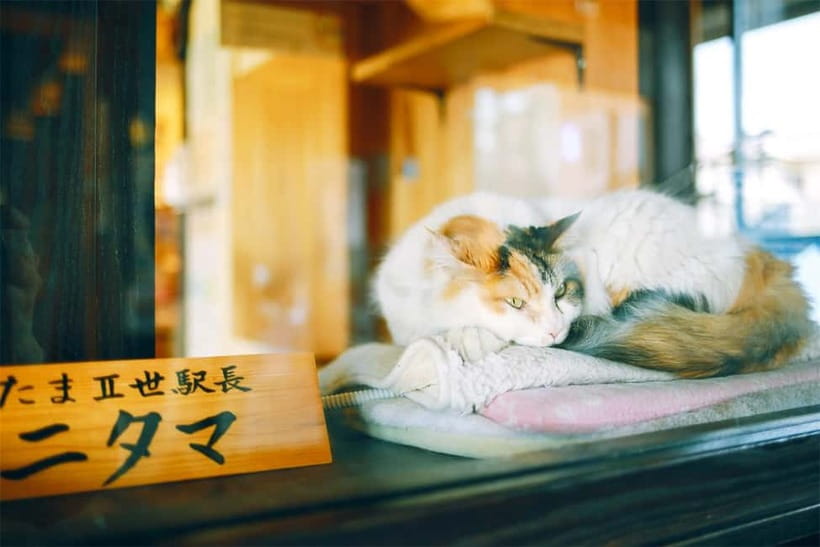
The first major stop is Kishi Station, a small railway station in Wakayama that looks like a cat’s face. It is not a grand transport hub. That is the point. The appeal comes from its local character and the unusual story attached to it.
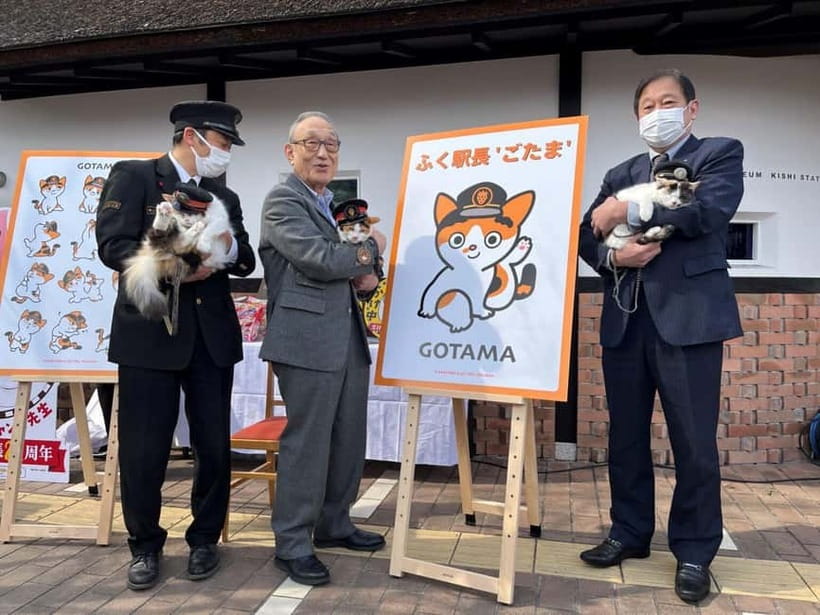
Tama was a calico cat who lived near the station and became famous for greeting passengers. Her presence drew attention to a rural line that had been close to shutting down. Tama was later given the title of stationmaster, turning a simple station visit into a small lesson in how local pride and a good story can help a community.
Today, Nitama, meaning Second Tama, carries on that role. You may see the cat-themed station area, Tama Shop, a café, souvenir displays, and collectible stamps. These details make the stop more than a quick photo break. You get a sense of how carefully the railway has built a playful identity around its feline mascot.
I would keep expectations sensible. Kishi Station is compact, and the cat theme is the attraction rather than a long list of sights. If you love railways, local legends, or Japanese mascot culture, you’ll likely enjoy the stop. If you are expecting a full-scale animal attraction, you may find it brief.
Choosing the right cat train
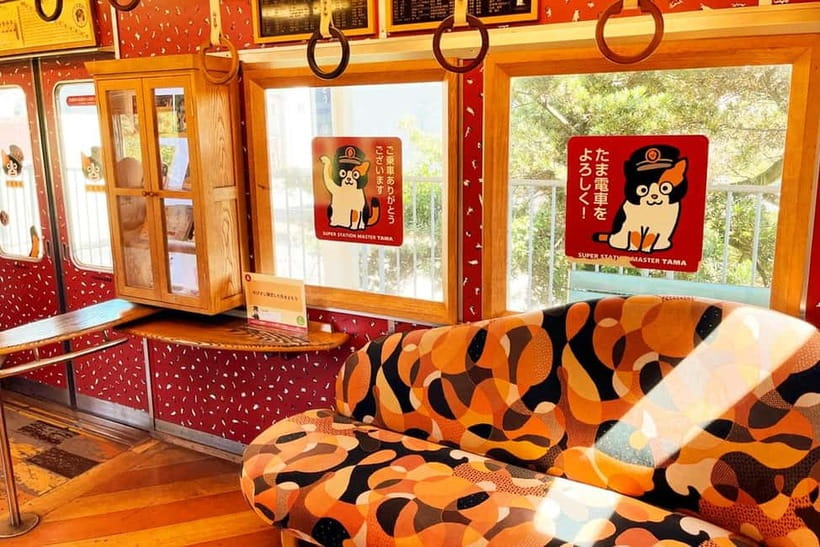
The train design depends on the operating schedule. You may ride the Tama Train, Strawberry Train, or Toy Train. Each has its own decoration and mood, but you cannot select a particular design in advance from the information provided.
The train portion connected with the tour is around 15 minutes, even though the broader railway segment in the schedule is described as a longer panoramic ride. This distinction matters. The cat train is a memorable feature, but it is not a full-day rail journey.
Use the ride for what it is: a cheerful local railway experience that links the station story with the wider Wakayama route. The short duration also helps the tour fit in the market and coast visits later in the day.
I suggest having your camera ready before boarding. The themed interiors and exterior details are made for quick photos, and the train may not pause long enough for a leisurely look. The schedule can change, so the exact design and timing are part of the day’s uncertainty.
ToreTore Market and the tuna cutting show
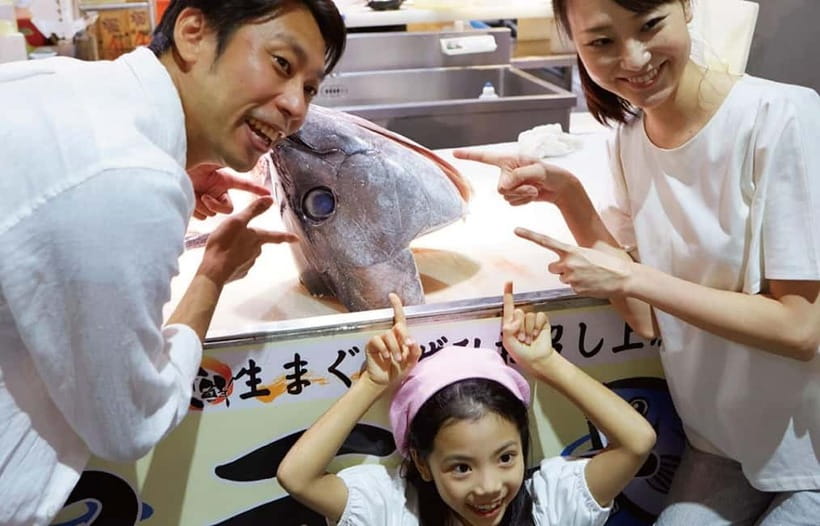
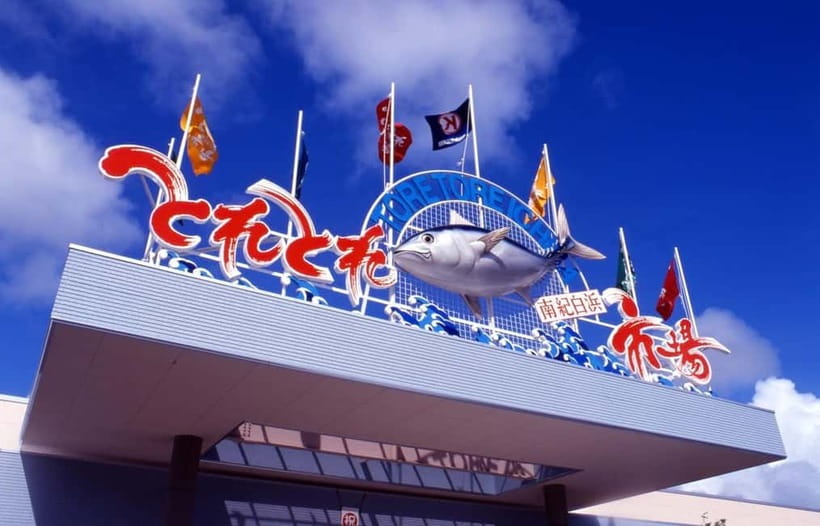
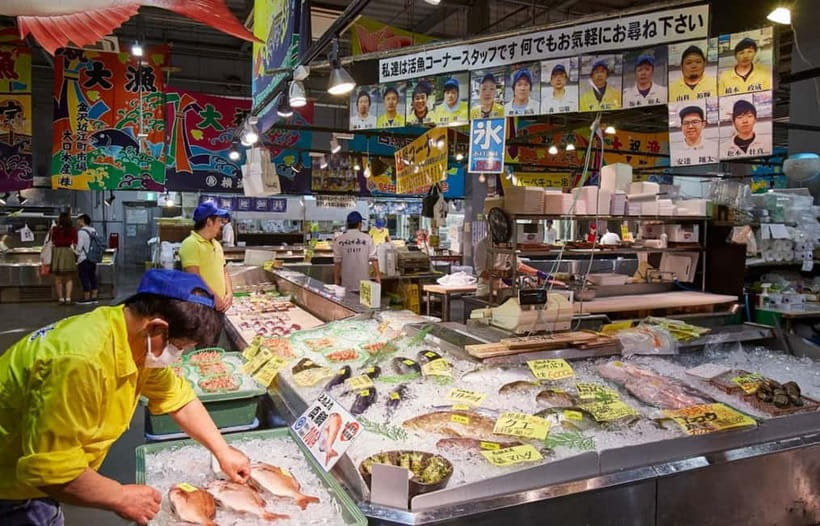
ToreTore Ichiba is the food center of the tour. It is described as the largest seafood market in western Japan, and it gives you a practical way to sample the Nanki Shirahama area without committing to a formal restaurant meal.
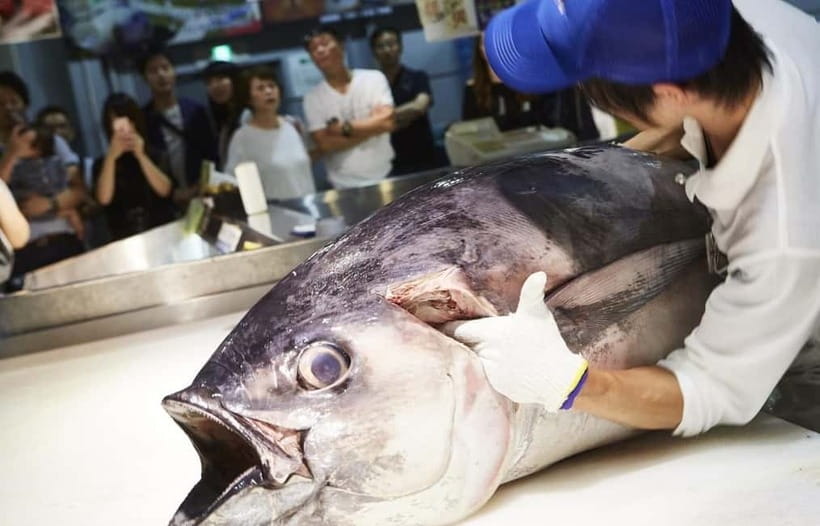
The main event is the live tuna cutting show. A large tuna is broken down in front of the crowd while the presenter explains the fish’s anatomy and the cutting process. The show is both a food demonstration and a quick lesson in how a prized fish is handled before it reaches the table.
Timing is not fixed. The market may hold the show two or three times a day, but the exact cutting time varies. Weather or other unforeseen conditions can also cancel it. Treat it as a strong possibility, not a promise.
You get free time for lunch at your own cost. Options include tuna sashimi bowls, grilled seafood, octopus rice, and other market dishes. Some visitors have also used the market’s barbecue tables to cook purchases themselves. That can be a good way to control your meal and try something beyond the prepared bowls.
The market is also useful for edible gifts. Look for seasoned seafood, packaged delicacies, and local items in the souvenir area. Bring cash, since it is listed among the recommended things to carry. Food cannot be eaten in the tour vehicle, so finish your meal before boarding again.
The two-hour market stop gives you more freedom than a fixed group lunch. You can eat quickly and shop, or spend more time comparing seafood. The downside is that a market can feel busy and spread out, especially when you are also watching the clock for the next departure.
Same place, a different set of stalls:
- Nishiki Market Brunch Walking Tour (7 Tastings + Brunch)
★ 5.0 · 1,355 reviews - Tokyo Sushi Making Class in Tsukiji with Professional Chef
★ 5.0 · 1,177 reviews - Tsukiji Fish Market Guided Tour and Sushi Making with Pro Chef
★ 5.0 · 775 reviews - Tokyo: Tsukiji Fish Market Food and Culture Walking Tour
★ 4.7 · 757 reviews
Toretore Onsen and the practical bathing choice
The hot spring portion is optional, so you can decide if it fits your travel style and the time available. Toretore Onsen in Shirahama is connected with more than 1,300 years of bathing tradition and is described as a place once visited by emperors and recorded in old Japanese texts.
The spring water is sodium bicarbonate based and known for a smooth feel on the skin. The facility also features what is described as Japan’s first salt-stone bedrock bath. Those details give the stop more substance than simply adding a modern spa to the schedule.
If you have spent the morning on the road and walking around the market, a bath could be welcome. But you should think about the logistics. Entry is not included, and you will need to follow the facility’s bathing rules. If you have tattoos, entry may be restricted, so check before counting on this part of the day.
The tour information does not give a fixed bathing duration or admission price. I would carry cash and treat the onsen as an optional bonus, not the main reason to book the excursion.
Senjojiki’s open rock shelves
After the market and possible hot spring stop, the route reaches Senjojiki Rock Plateau. The name refers to the broad layers of rock, often compared to enough floor space for many tatami mats. Here, you stand above the Pacific on huge slabs shaped by wind and waves.
The scheduled visit is about 30 minutes. That is enough for photographs and a short walk across the viewing area, but not enough for a long coastal hike. Wear shoes with a good grip, especially if the rock surface is uneven or damp.
The timing may bring sunset, which can add warm color to the sea and stone. Sunset is not guaranteed, of course, and traffic or schedule changes can affect when you arrive. Still, this is one of the strongest visual stops on the route.
I like the contrast with Kishi Station. The morning is built around a tiny rural railway and a gentle animal story. Senjojiki is wide, exposed, and shaped by the open ocean. You get a real change of pace without needing to plan a separate coastal excursion.
Sandanbeki Cave and the pirate connection
The final major sight is Sandanbeki Cave, reached by an elevator that drops 36 meters below the cliffs. The caves were once associated with Heian-era pirates, and displays inside help explain that story. Natural erosion has also formed the rock shapes around the cave.
Admission is optional and not included in the tour price. The scheduled stop is around 30 minutes, so decide quickly if you want to go down. If you skip the elevator, you can still photograph the cliffs and sea from above.
This stop adds a little more depth to the coast visit. Senjojiki gives you broad rock shelves and open views, while Sandanbeki offers a confined, sea-level setting with historical displays. Together they make the Shirahama portion feel more varied than two ordinary viewpoints.
The short time limit is the main consideration. If you want to read every display or explore at an unhurried pace, 30 minutes may feel tight. If you want a quick look inside before returning to Osaka, it should be manageable.
The coach ride, guide, and pace
The coach ride from Osaka to the Wakayama area takes about 1.5 hours in the morning, followed by roughly 2.5 hours on the return journey. Traffic can be worse on weekends, public holidays, and peak travel dates. The guide may change the order of stops, shorten visits, or remove a stop if road conditions make that necessary.
The vehicle is air-conditioned, and its size depends on the number of people booked. That makes the ride more practical than arranging several local connections yourself, but you should still expect a full day of sitting and moving on a fixed schedule.
Guide Tiger has received especially strong praise for organization, clear explanations, and regular communication in English and Chinese. He has also helped individual passengers understand the market and choose seafood. Guides may vary, but the listed service languages are English, Japanese, and Chinese.
A good guide matters on this route because several stops are short and some parts, such as the tuna show, are time-sensitive. You need someone to tell you where to go next, when to return to the vehicle, and how each stop fits the day.
Who will enjoy this tour most
I would recommend this trip to you if you want a broad taste of Wakayama but do not want to rent a car or piece together rural rail and coastal transport. It suits families, couples, first-time visitors to the region, food lovers, and anyone who likes unusual local stories.
The cat train is particularly good for rail fans and children, though adults who enjoy Japanese design and mascots will find plenty to photograph. The market works well for people who prefer choosing their own lunch rather than eating from a set menu.
The tour is less suited to anyone seeking long walks, quiet time, or a relaxed hot spring retreat. You will cover several places in one day, and the schedule can tighten when traffic builds. It is also not suitable for wheelchair users.
Wear comfortable shoes, bring a camera, and carry cash for food, souvenirs, the onsen, and the cave. Do not bring food to eat in the vehicle. Keep your phone charged if the guide is sending updates by WhatsApp.
Should you book the Wakayama cat train tour?
Book it if you want variety and convenience more than a slow pace. For $83, the included transport, guide, tolls, parking, and cat train make the price reasonable for a long day across scattered Wakayama sights.
I would book with two expectations clearly in mind: the cat train may be short, and the tuna show may not happen. The real strength is the combination of stops. You get Tama’s sweet railway story, a flexible seafood lunch, optional bathing, and two striking ocean sites in one organized outing.
If the thought of four hours in a coach bothers you, choose a slower Shirahama stay instead. If you want an efficient escape from Osaka with plenty of changing scenery, this is a lively and worthwhile choice.
FAQ
Where does the tour leave from?
The meeting point is Nipponbashi Station Exit 2 at 1-chōme-3-6 Nipponbashi, Chuo Ward, Osaka, near the Namba and Shinsaibashi area.
What time should I arrive?
The scheduled departure is 8:30 a.m. Arrive at least 15 minutes early because late arrivals and no-shows are not refunded.
Which cat train will I ride?
The operating train depends on the day’s schedule. It may be the Tama Train, Strawberry Train, or Toy Train.
How long is the cat train ride?
The cat-themed train portion is approximately 15 minutes. The wider railway segment is listed as a longer panoramic ride, so the exact rail timing can vary.
Is lunch included?
No. You choose and pay for lunch at ToreTore Market. Choices include sashimi bowls, grilled seafood, octopus rice, and other market dishes.
Is the tuna cutting show guaranteed?
No. The show usually takes place two or three times daily, but the cutting time is random and the event can be canceled because of weather or other special circumstances.
Are the hot spring and cave included?
No. Toretore Onsen entry and Sandanbeki Cave admission are optional and cost extra.
Is the tour available in English?
Yes. Live guiding is available in English, Japanese, and Chinese.
More Spa and Hot Spring Stops in Japan
- Active Volcano, Rice Field, Hot Spring, Fruit market, Tea Plantation with Lunch
★ 5.0 · 513 reviews - Seoul: Sokcho beach, market, hot spring and Seorak Cable Car
★ 4.8 · 5 reviews
Just added around Japan
- Nagoya Super Market Tour & Home Cooking Class with a Local, Akiko★ 5.0 · 10 reviews
- Tokyo: Tsukiji Market Guided Tour & Sushi-Making Experience★ 4.4 · 11 reviews
- Tokyo: Private Tsukiji Street Food & Sake with Local Guide★ 5.0 · 3 reviews
- Tokyo: Tsukiji Market and Hama-rikyu Gardens Guided Tour★ 4.8 · 73 reviews
- Tokyo: Tsukiji Fish Market Culture Tour with Sashimi Tasting★ 4.6 · 54 reviews
- Tokyo: Tsukiji Fish Market Foodie and Educational Tour★ 5.0 · 4 reviews
- Tokyo: Sushi Making with Pro Chef & Tsukiji Fish Market Tour★ 4.6 · 49 reviews
- Tokyo : Tsukiji Fish Market Food Walking & Shrine Visit Tour★ 5.0 · 3 reviews
Fish Market Tours, compared.

Tokyo Tsukiji Fish Market Food and Culture Walking Tour
Read our review →
Tokyo Sushi Making Class in Tsukiji with Professional Chef
Read our review →
Tsukiji Fish Market Guided Tour and Sushi Making with Pro Chef
Read our review →Tsukiji Fish Market Food and Culture Walking Tour
Read our review →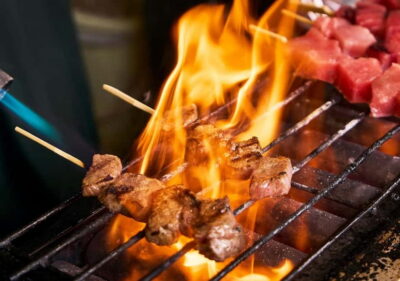
Tsukiji Fish Market: Street Food & Culture Walking Tour
Read our review →
Tsukiji Fish Market Small-Group Food Walking Tour
Read our review →Browse the lists this tour appears in