
Review · STREET FOOD MARKET TOURS
Osaka: Food Tour Kuromon Market & Dotonbori with Guide
Osaka’s best introduction may be a plate of takoyaki eaten near a market stall, followed by okonomiyaki, fried skewers, and a custard tart. This food walk takes you from Kuromon Market to Hozenji and Dotonbori, giving you a taste of Osaka while pointing out some of the city’s most famous sights.
I like the range of food, from creamy takoyaki and chewy dango to savory pancakes and crisp kushikatsu. I also like the simple route: the market gives you local flavor, and Ebisu Bridge gives you the classic photo beneath the Glico sign. The main caution is that this is a guided tasting walk, not a full meal, and one booking had a serious meeting problem when the guide did not arrive.
Key points to know
- Kuromon Market comes first: You sample Osaka food in a lively shopping street filled with fresh ingredients and prepared specialties.
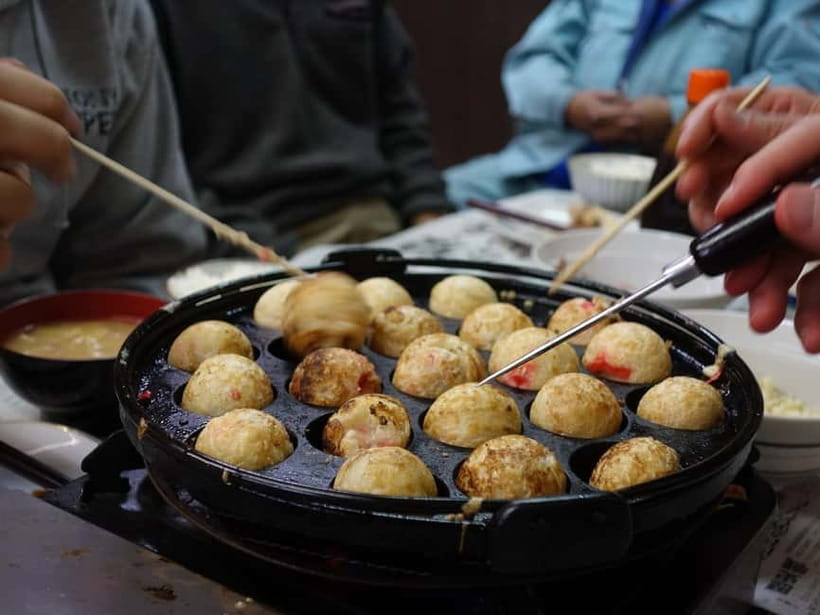
- Takoyaki is a central tasting: At Wanaka, expect the famous octopus dumplings with a crisp outside and soft center.
- The menu covers several Osaka favorites: Tastings include three-colour dango, okonomiyaki, kushikatsu, and a custard tart.
- The walking route links food with city sights: You pass through the Hozenji area before reaching the bright streets of Dotonbori.
- Paula and Angeles have earned praise: Their energy and explanations about nearby attractions add value to the walk.
- The price is $84 per person: That is reasonable if you want several tastings and a guide, but less so if you mainly want a large meal.
Starting outside Hotel Royal Classic Osaka
You meet your guide outside Hotel Royal Classic Osaka. Look for a person holding an Amigo Tours sign, and arrive at least 10 minutes before departure for check-in.
This is a useful meeting point because it gives the group a clear place to gather before entering the busy streets. Still, do not treat the check-in as optional. Dotonbori and the market area can be crowded, and finding a group after the walk begins would be difficult.
The tour returns to the same meeting point at the end. No transport is listed, so you should expect to move between stops on foot. Wear shoes that can handle a good stretch of city walking, and keep your camera ready from the start.
The guides speak English and Spanish. Paula and Angeles are named in positive feedback, with particular praise for their energy and for explaining local sights along the way. The guide’s role matters here because the food stops are specific shops, not simply a general suggestion to explore the market.
One practical note deserves attention. At least one group waited more than 30 minutes after the guide failed to appear. That appears to be an isolated but serious service problem. I would keep the meeting instructions and provider contact details easy to reach on the day.
More Street Food Market Tours in Japan
- Tsukiji Fish Market: Street Food & Culture Walking Tour
★ 5.0 · 669 reviews - Tsukiji Fish Market Small-Group Food Walking Tour
★ 5.0 · 621 reviews - Kuromon Market Food Walking Tour in Osaka (6 stops, 6 tastes)
★ 5.0 · 550 reviews
Kuromon Market and the first taste of Osaka
Kuromon Market is the food center of the experience. The market is known for fresh ingredients and local specialties, so it gives you a look at the raw materials behind Osaka cooking as well as prepared snacks to eat on the spot.
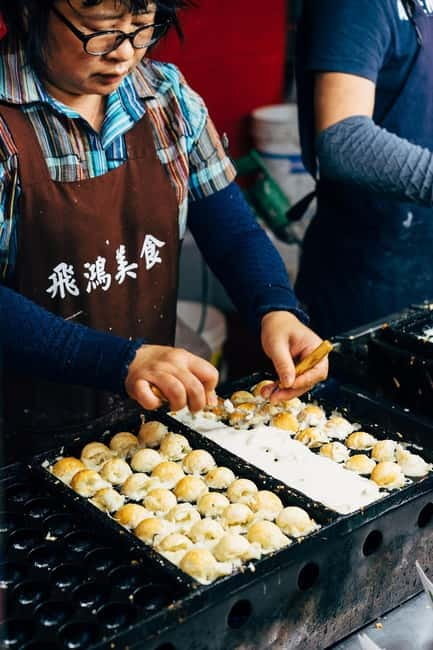
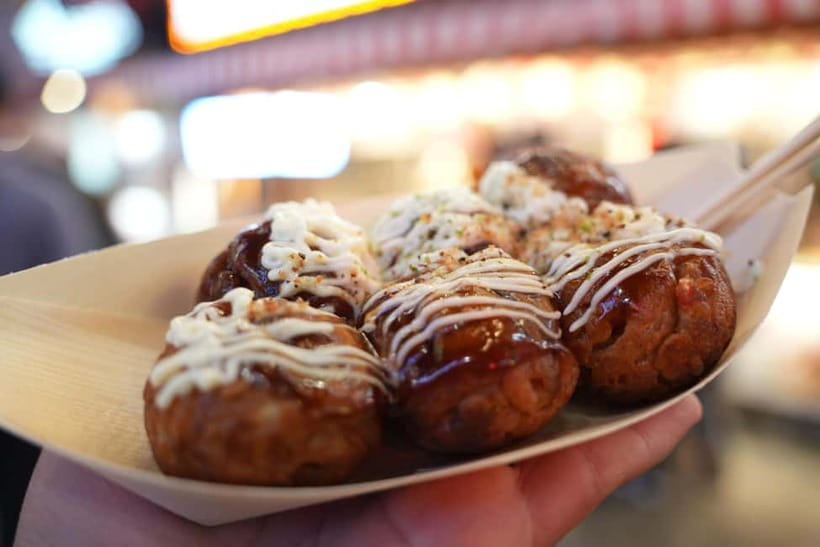
Your first named tasting is takoyaki at Wanaka. These round dumplings are one of Osaka’s signature foods, made with octopus and cooked until the outside is crisp while the center stays soft and creamy. They are served hot, so take a moment before eating rather than rushing the first bite.
Takoyaki is a good food to try with a guide because the texture can surprise first-time visitors. It is not a firm fried ball. The outside gives way to a soft interior, and the appeal comes from that contrast.
This stop also sets the tone for the rest of the walk. You are not sitting down for one formal meal. Instead, you are tasting several well-known foods in small portions while moving through different parts of Osaka.
Kuromon Market can be crowded, so you will need to stay close to the guide and pay attention when crossing or entering a shop. The food is the reason to come, but the market itself is part of the experience. You see a shopping district built around ingredients, prepared food, and quick bites rather than a restaurant dining room.
Three-colour dango at Mitoya
The next stop is Mitoya for three-colour dango. These are chewy rice-flour dumplings served on a skewer, with three different colors arranged together.
Dango is a useful counterpoint to takoyaki. After the hot, savory dumplings, you get something mild, chewy, and sweet. The portion is a tasting rather than a dessert course, but it helps you sample a familiar Japanese treat without committing to a full serving.
The dango also gives the tour a little variety. A food walk can become repetitive when every stop is fried or savory. Here, the menu shifts in texture and flavor before moving on to Osaka’s heavier specialties.
You should keep in mind that food preferences are not described in detail. The included tastings are fixed around emblematic Osaka dishes, and the tour does not promise substitutions. If you have allergies or strict dietary needs, ask the provider before booking rather than assuming the guide can change the menu.
Hozenji, okonomiyaki, and kushikatsu
The route continues into the Hozenji area, a more atmospheric part of the walk with traditional streets and small food businesses. This is where the experience begins to connect Osaka’s eating culture with its older neighborhood character.
At Kushikatsu Yokozuna, located in front of Gigo, you try two major Osaka dishes: okonomiyaki and kushikatsu.
Okonomiyaki is a savory pancake packed with flavor. The name is often explained as cooking what you like, and the dish can include a mix of ingredients within the pancake. Here, it is served as one of the tour’s planned tastings, giving you a chance to try Osaka’s famous comfort food without needing to choose from a long menu.
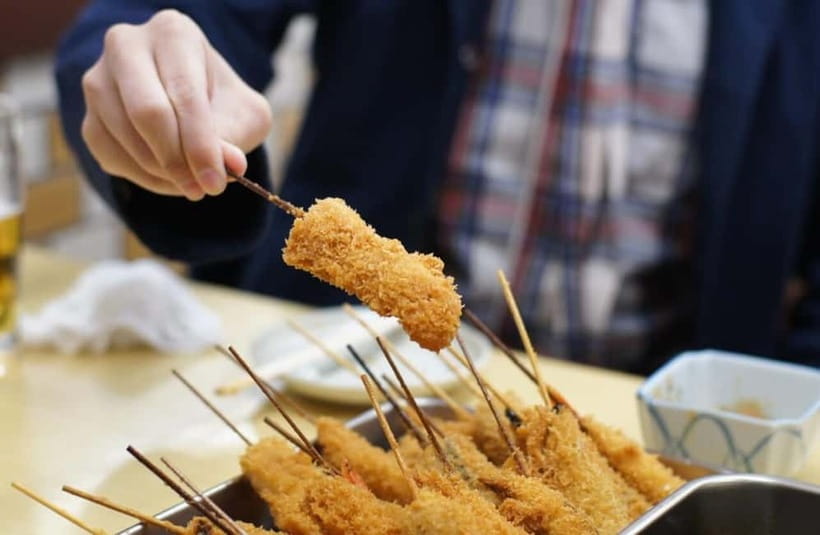
Kushikatsu takes a different approach. Ingredients are placed on skewers, coated, and deep-fried until crisp. The result is easy to eat while walking, although you should watch the hot coating and sauce.
The stop is valuable because these are two dishes strongly associated with Osaka. You get a broad sample of the city’s food culture in one sitting: soft and savory okonomiyaki alongside crunchy fried skewers.
At the same time, do not book this walk expecting light food. Takoyaki, okonomiyaki, and kushikatsu are filling and often rich. If you have a large appetite, the included tastings may feel more like an extended snack route than dinner. If you prefer to sample rather than order several full dishes, the format should suit you better.
Same place, a different set of stalls:
- Tokyo Tsukiji Fish Market Food and Culture Walking Tour
★ 5.0 · 3,184 reviews - Tokyo: Tsukiji Fish Market Food and Walking tour
★ 5.0 · 1,724 reviews - Tokyo: Tsukiji Fish Market Guided Walking Tour
★ 4.9 · 1,397 reviews - Nishiki Market Brunch Walking Tour (7 Tastings + Brunch)
★ 5.0 · 1,355 reviews
A custard tart before the neon streets
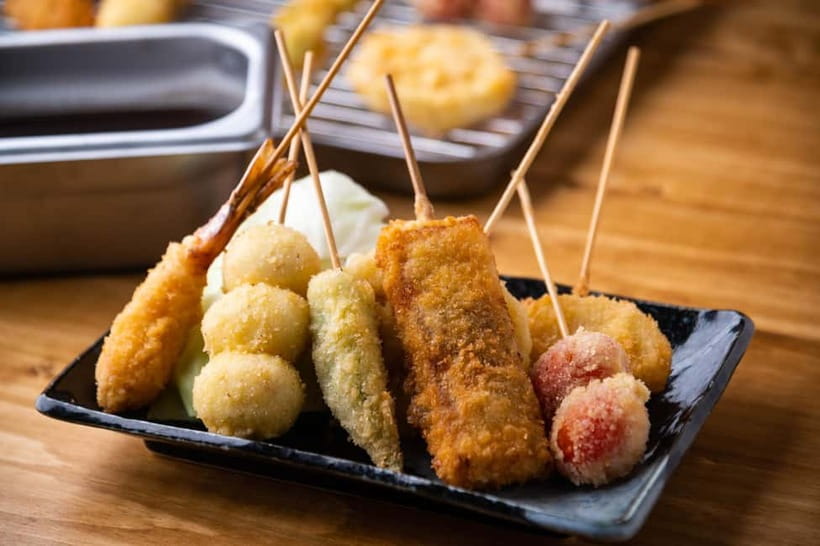
The sweet stop is Egg Tart, a dessert shop known for custard tarts with flaky pastry and a creamy filling. It is a straightforward but welcome finish to the food portion of the route.
The tart gives you a clear change of pace after the fried skewers and savory pancake. The crisp pastry and soft custard also make it an easy final bite before the sightseeing portion begins.
Because the activity includes several different tastings, the value is not tied to one large serving. You are paying for a sequence of selected stops, the guide, and the time spent moving through several central areas. At $84 per person, I would see it as a food-and-orientation experience rather than a bargain dinner.
The price makes more sense if you are new to Osaka and want someone else to choose the first food stops. It makes less sense if you already know Kuromon Market and Dotonbori, speak Japanese comfortably, or plan to eat full portions at each place on your own.
Dotonbori after dark
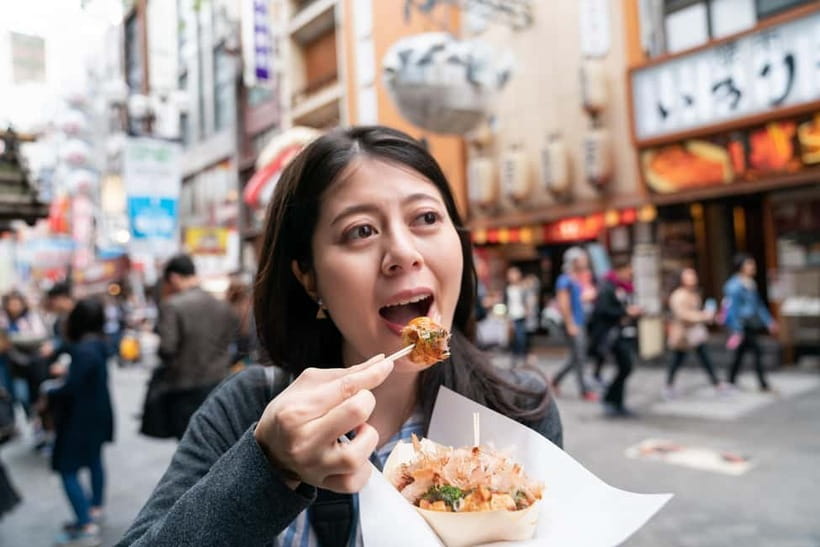
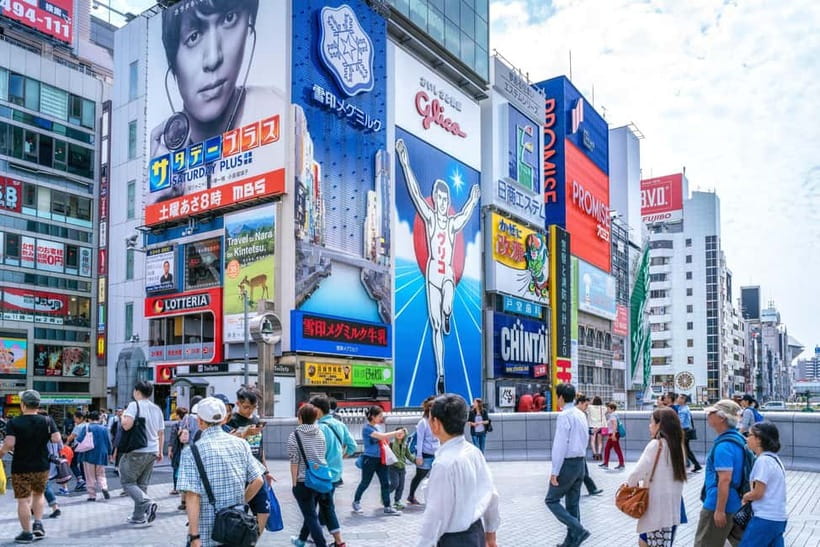
After the food stops, the group heads into Dotonbori. This is Osaka’s famous entertainment district, filled with glowing signs, bright billboards, shops, and late-day street activity.
The neighborhood is at its most recognizable when the signs are lit. You will have time to enjoy the atmosphere rather than only passing through on the way to a restaurant. The guide can also point out attractions as you walk, which is one reason the experience is more useful than simply following a food list.
Dotonbori is also where the route can feel busiest. Keep your belongings secure, stay with the group, and expect plenty of noise and foot traffic. If you prefer quiet lanes and slow meals, this section may feel hectic. If you want the famous Osaka city scene, it gives you exactly that.
The tour is not limited to food. That matters because Dotonbori can be confusing on a first visit, especially when you are trying to match famous signs with the streets around them. Having a guide explain nearby sights adds context without requiring a separate sightseeing tour.
The Glico sign from Ebisu Bridge
The final major stop is Ebisu Bridge, where you can take a photo with the well-known Glico sign. The running figure has become one of Osaka’s most recognizable images, and the bridge is the classic place to frame it.
This is a short stop, but it gives the tour a clear ending. You have moved from market food to neighborhood streets and then into Osaka’s bright entertainment center. The Glico photo is a simple souvenir, yet it is also a useful marker of where you are.
Bring a camera or phone with enough storage and battery. The tour specifically recommends a camera, and this is the moment when you will want it. The guide can help position the group, but the bridge area may be crowded, so be ready to take your picture without a long setup.
After Ebisu Bridge, you return to Hotel Royal Classic Osaka. Since the activity ends where it begins, you do not need to arrange a separate pickup from Dotonbori.
What the guide adds to the $84 cost
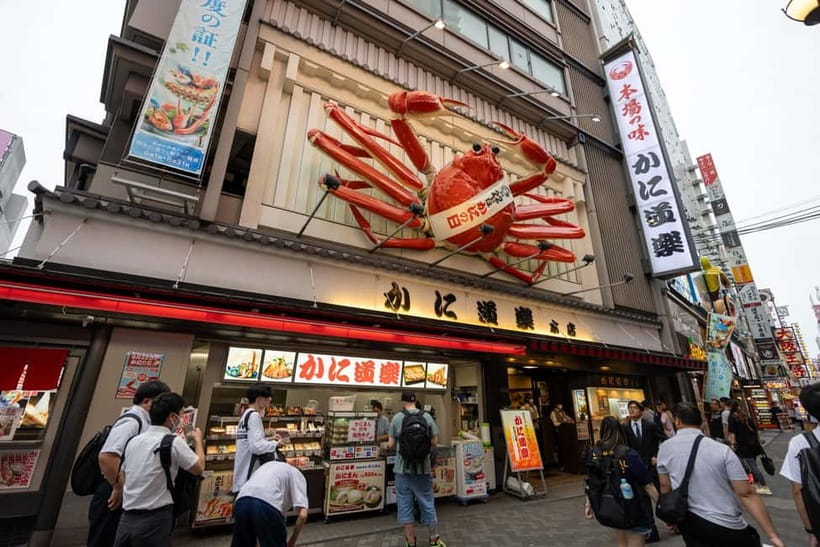
The food itself is only part of the price. You are also paying for a route through several areas, a bilingual guide, and help choosing recognizable local dishes.
That guidance is most useful if this is your first evening in Osaka. You can taste foods that might otherwise require separate research, and you can ask about nearby attractions while walking. Paula and Angeles have been singled out for being energetic and helpful with local points of interest.
There is one fair question about cultural depth. One person felt that a Japanese food tour would feel more authentic with a Japanese guide, even though a guide from Chile could speak English and Spanish well and be friendly. I think that is a valid consideration if your main goal is detailed Japanese culinary knowledge.
The tour is better suited to practical orientation and food sampling than to an expert lesson on regional cooking. You will learn what you are eating and see important districts, but the information may not go deeply into ingredients, cooking methods, or Osaka’s food history.
For an English- or Spanish-speaking visitor who wants a social introduction to Osaka food, $84 can be fair. For an independent eater who wants full meals, the cost may be harder to justify.
Who should book this Osaka food walk
I would recommend it to you if:
- You are visiting Osaka for the first time.
- You want to try several famous foods without planning each stop.
- You enjoy walking through busy city districts.
- You speak English or Spanish and want a bilingual guide.
- You want both food and the main Dotonbori photo stop.
- You prefer tastings of several dishes over one long restaurant meal.
You may want another option if you need wheelchair access, since the activity is not suitable for wheelchair users. It is also not a good fit if you dislike crowds, fried food, or fixed tasting menus.
Wear comfortable shoes and clothing suited to the season. Bring sunglasses and sunscreen in hot weather, and carry an umbrella or raincoat if rain is possible. In cold weather, bring warm layers, spare socks, and another pair of shoes in case snow or wet conditions make your feet uncomfortable.
Pets are not allowed. The tour does not include extra meals or drinks beyond the listed tastings, entrance fees to specific attractions, or personal spending. Plan for those costs separately if you want more food or drinks during the walk.
Should you book it?
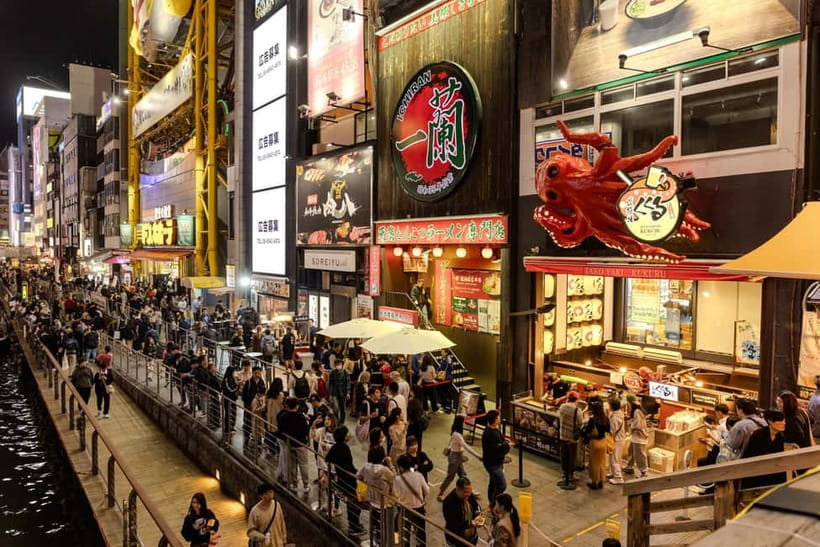
Book this experience if you want a guided first look at Osaka’s food culture, especially if takoyaki, okonomiyaki, kushikatsu, and Dotonbori are all on your list. The combination of Kuromon Market, Hozenji, neon streets, and the Glico sign makes the route easy to understand and easy to remember.
I would choose it for orientation, variety, and convenience rather than for a long sit-down dinner or advanced culinary instruction. The guide quality matters, and the positive experiences with Paula and Angeles are encouraging, but the no-show incident means you should arrive early and keep the provider’s contact information close.
With a 4.5 rating from 15 reviews, the overall picture is favorable but not flawless. If you value a well-planned tasting route and a bilingual guide, $84 is a defensible price. If you already know Osaka or prefer to choose large portions on your own, spend that money directly at the market and restaurants instead.
FAQ
Where does the Osaka food tour start?
The tour starts outside Hotel Royal Classic Osaka. The guide will be holding an Amigo Tours sign.
How early should I arrive?
Arrive at least 10 minutes before the departure time for check-in.
Which languages are available?
The tour is available in English and Spanish.
What foods are included?
The listed tastings include takoyaki at Wanaka, three-colour dango at Mitoya, okonomiyaki, kushikatsu, and a custard tart at Egg Tart.
Does the tour include a visit to the Glico sign?
Yes. The route includes Ebisu Bridge, where you can take a photo with the famous Glico sign.
Where does the activity end?
The tour ends back at the starting point outside Hotel Royal Classic Osaka.
Is the tour suitable for wheelchair users?
No. The activity is listed as not suitable for wheelchair users.
More Food and Drink Trips in Japan
- Tokyo: Tsukiji Fish Market Food and Culture Walking Tour
★ 4.7 · 757 reviews - Tokyo Food Tour Taste Fresh Delights at Tsukiji Market
★ 5.0 · 429 reviews - Kyoto Nishiki Market Food and Culture Walking Tour
★ 5.0 · 412 reviews - Osaka: Kuromon Market Food Walking Tour (6 stops, 6 tastes)
★ 4.6 · 272 reviews
Just added around Japan
- Nagoya Super Market Tour & Home Cooking Class with a Local, Akiko★ 5.0 · 10 reviews
- Tokyo: Tsukiji Market Guided Tour & Sushi-Making Experience★ 4.4 · 11 reviews
- Tokyo: Private Tsukiji Street Food & Sake with Local Guide★ 5.0 · 3 reviews
- Tokyo: Tsukiji Market and Hama-rikyu Gardens Guided Tour★ 4.8 · 73 reviews
- Tokyo: Tsukiji Fish Market Culture Tour with Sashimi Tasting★ 4.6 · 54 reviews
- Tokyo: Sushi Making with Pro Chef & Tsukiji Fish Market Tour★ 4.6 · 49 reviews
- Tokyo : Tsukiji Fish Market Food Walking & Shrine Visit Tour★ 5.0 · 3 reviews
- Tokyo: Tsukiji Fish Market Foodie and Educational Tour★ 5.0 · 4 reviews
Street Food Market Tours, compared.
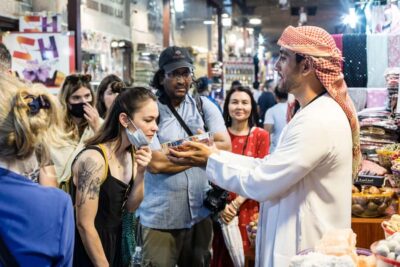
Old Town, Creek, Museums, Souks, & Street Food Tour
Read our review →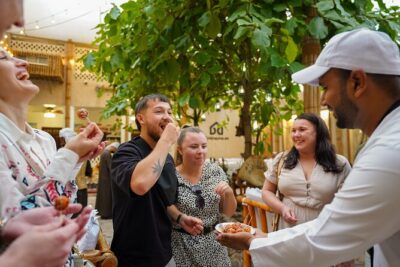
Old Town, Souks, Street Food, Guided Tour & Abra Ride
Read our review →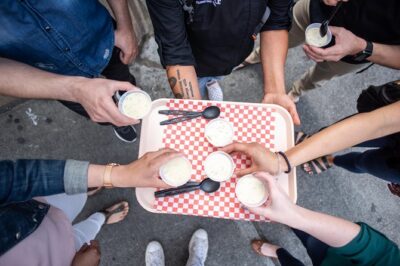
Old Town, Souks, Street Food, Guided Tour & Abra Ride
Read our review →
Small Group Cooking Class & Market Food Tour in Florence
Read our review →
Old Town, Street Food, Creek, Souks, & Emirati House
Read our review →
Browse the lists this tour appears in