
Review · MARKET AND COOKING CLASS TOURS
Osaka: Cooking Class & Sake Tasting with Local Market Visit
Osaka’s food culture makes more sense when you cook it yourself. This four-hour class takes you from a neighborhood supermarket to a small cooking studio, where you prepare niku-sui beef soup, okonomiyaki, and gyoza with an English-speaking local guide. You shop for the ingredients, learn the method, eat what you make, and leave with recipes for home.
I like the small group of no more than seven. It keeps the class personal without making it feel like private instruction. I also like the easygoing drink service: three canned drinks, including alcoholic or nonalcoholic choices, plus tea, turn lunch into a social meal rather than a quick lesson.
The main catch is dietary flexibility. Vegans and vegetarians can join if they give notice at least a day ahead, but gluten-free cooking is not available, and the kitchen cannot promise allergy-free food. The meeting point is simple, but late arrivals cannot join or receive a refund, so plan to arrive early.
Key points to know before booking
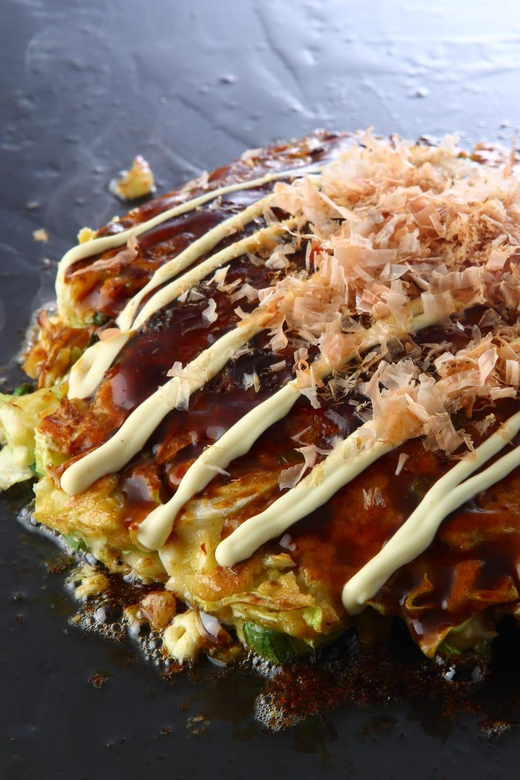
- Three Osaka dishes in one class: Cook niku-sui, okonomiyaki, and gyoza, then eat them as lunch.
- A real supermarket stop: See the ingredients used in ordinary Osaka cooking before heading to the studio.
- Guides shape the experience: Chie, Eri, Emi, Akko, Ayu, and Linda are praised for friendly instruction and useful local conversation.
- Drinks are part of the meal: Three canned alcoholic or nonalcoholic drinks and tea are included.
- Easy recipes for home: Download the recipes afterward and try the dishes at your own dinner table.
- Good value for a hands-on half day: At $90, the price covers four hours, food, ingredients, drinks, photos, and a small group.
Starting near Minami Morimachi Station
The class meets in front of a FamilyMart, a one-minute walk from Exit 4B of Minami Morimachi Station. That is useful in Osaka, where a clear station exit matters more than a broad neighborhood name. Give yourself extra time to find Exit 4B and reach the meeting spot before the scheduled start.
This is a walking-and-cooking activity, not a bus tour. The exact starting time varies, so check availability when booking. The class begins on time, and late arrivals cannot join, reschedule, or receive a refund. I would treat the meeting time as firm and arrive at least 10 minutes early.
The location puts you in a practical part of Osaka rather than at a major sightseeing landmark. That suits the class. You are here to see how food fits into daily life, not to pose beside a famous building before being whisked into a kitchen.
More Market and Cooking Class Tours in Japan
- Tokyo: Tsukiji Market Walking Tour & Sushi Cooking Class
★ 4.6 · 122 reviews - Nishiki Market Food Tour with Cooking Class
★ 4.9 · 42 reviews - Private Market Tour and Cooking Class with Kanae, a Sapporo Local
★ 5.0 · 29 reviews
The supermarket stop shows Osaka’s everyday food
Your guide first takes you to a local supermarket to buy the ingredients needed for lunch. This short stop gives the class a useful sense of place. You see the products on Japanese shelves, learn what goes into the dishes, and watch your guide make choices that might otherwise seem mysterious.
The supermarket is more than a shopping errand. It connects the finished meal with the food people actually buy in Osaka. You can ask questions about products, cooking habits, and regional differences while looking at the ingredients in front of you.
The guides also bring local conversation into this part of the class. Chie has explained Japanese products, history, and regional culture during the activity. Eri has answered questions about Osaka and everyday customs. That makes the supermarket stop a good time to ask about foods you have seen elsewhere in Japan but have not known how to use.
Do not expect a long food-market tour with many tasting stalls. This is a practical supermarket visit tied to the cooking lesson. If you want a specialist tour of Osaka’s street food or a full market crawl, choose a different activity. If you want to understand what goes into a home-style meal, this format works well.
Cooking niku-sui, Osaka’s beef soup
The first dish, niku-sui, is a flavorful beef soup associated with Osaka. It is less internationally famous than okonomiyaki, which is part of its appeal. You get to try a local favorite that many visitors might miss when they stick to the city’s best-known foods.
The guide walks you through the recipe step by step, including the cutting and heating involved. The class is designed for people without cooking experience, so you do not need to arrive with knife skills or a strong background in Japanese food.
Niku-sui also gives the meal a warm, savory center. Alongside the other two dishes, it shows a different side of Osaka cooking. Okonomiyaki is cooked and assembled as a famous specialty, while niku-sui offers a simpler soup that feels closer to the kind of dish you might make at home.
The class does not present the recipe as a precious secret. Instead, the ingredients and method are kept manageable. That matters if you plan to recreate it after returning home. The recipe download gives you a useful reference rather than leaving you with only a memory of what the guide did.
Making okonomiyaki the Osaka way
Okonomiyaki is the class’s most obvious Osaka signature. It is a savory pancake with room for personal variations, and the lesson lets you see how the dish comes together instead of ordering a finished version at a restaurant.
The guide explains each stage clearly, then lets you take part. The hands-on format helps you understand the texture and balance of the ingredients. You also get a chance to ask why certain products are used and how the dish fits into Osaka’s food culture.
I like that okonomiyaki is forgiving for home cooks. It does not require a cupboard full of rare ingredients or highly technical equipment. The class focuses on an authentic approach while keeping the recipe practical enough for a dinner party.
The class is not a restaurant demonstration where you sit back and watch a chef do everything. You will be cutting, mixing, heating, and working through the recipe yourself. For some people, that is the main reason to book. If you prefer a polished meal with no kitchen work, this is not the right activity.
More Farmers Market Tours in Japan:
- Hanoi Cooking Class: Culture, Local Market & Meaning CSR Impact
★ 5.0 · 5,147 reviews - Cooking Class and Lunch at a Tuscan Farmhouse with Local Market Tour from Florence
★ 5.0 · 4,831 reviews - Chef Guided Food Tour of Pike Place Market
★ 5.0 · 3,733 reviews - Cooking Class Hoi An:Local Market, Basket Boat, Fishing & Cooking
★ 5.0 · 3,660 reviews
Folding gyoza turns lunch into a group activity
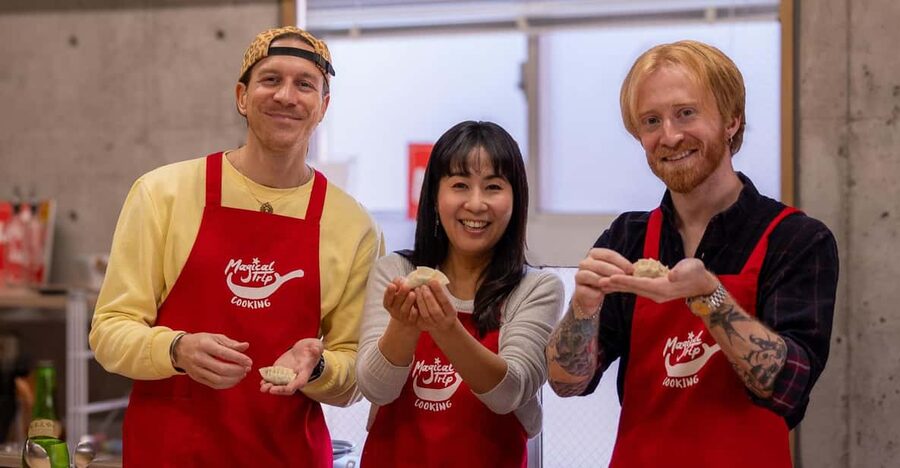
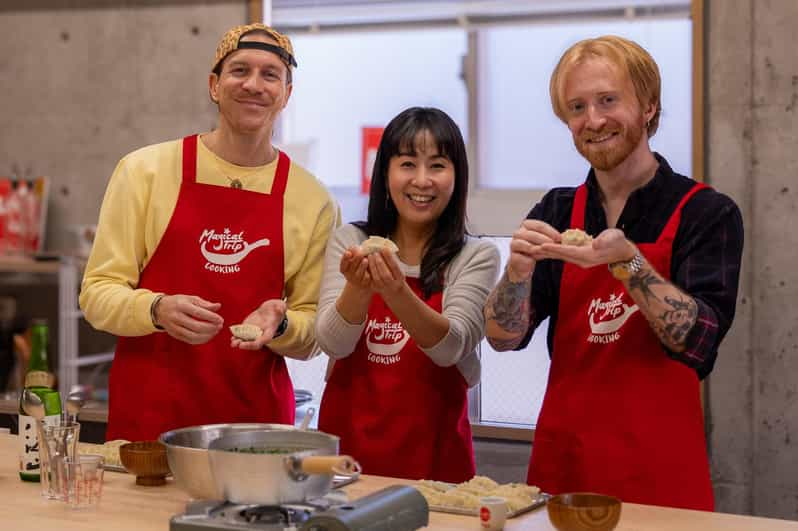
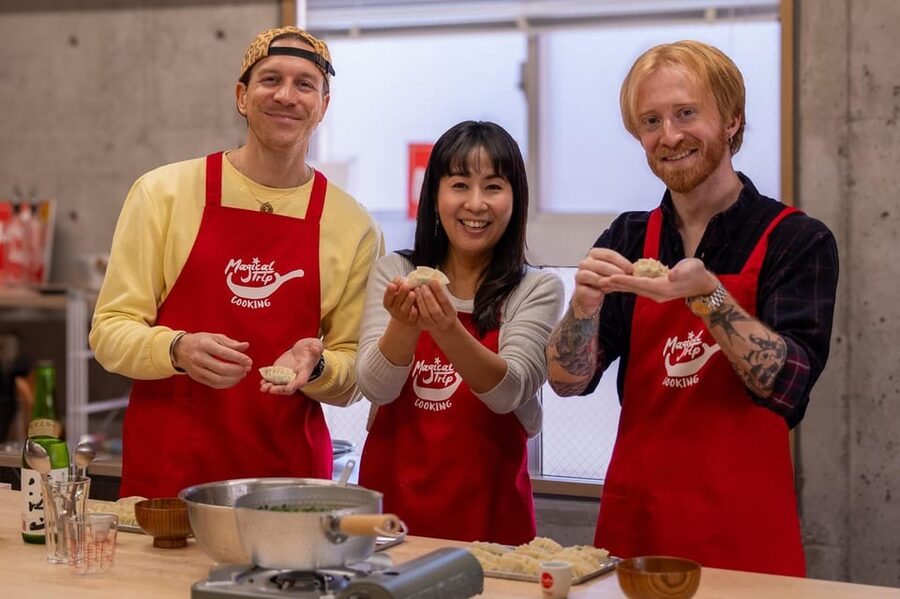
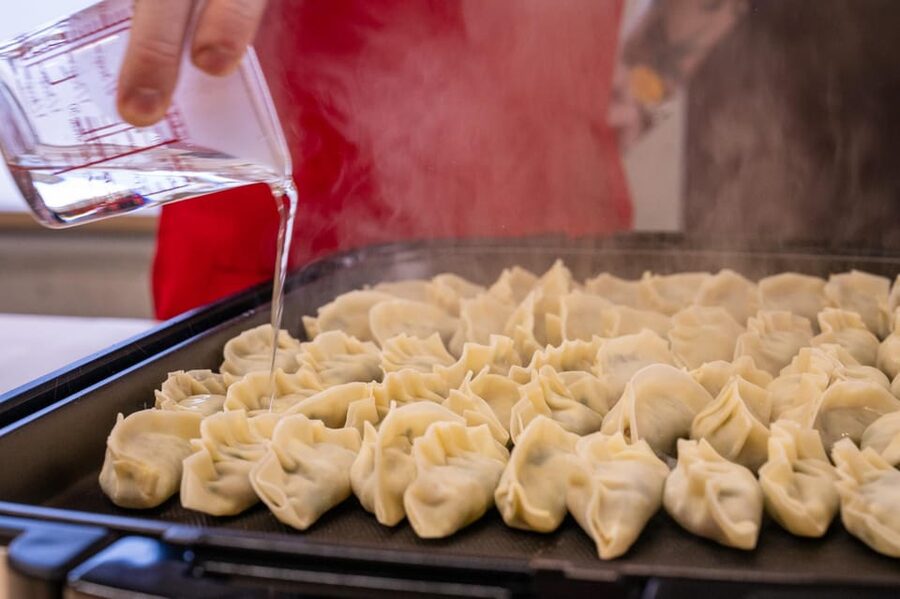
Gyoza brings the most playful part of the class. You fold the dumplings yourself, and the task gives everyone something to do while conversation develops around the table. The shape does not need to be perfect. The point is learning the process and enjoying the shared work.
This is especially useful for mixed groups. A couple, a family with older children, friends, or a solo participant can all take part at the same level. The minimum age is 12 because the class involves cutting and heating, but no previous cooking experience is required.
Gyoza also adds a different skill to the class. Niku-sui teaches you about a soup-based dish, and okonomiyaki shows you a famous Osaka specialty. Folding gyoza brings careful handwork and a bit of friendly competition into the meal.
The result is a lunch with three distinct styles rather than three versions of the same dish. You learn, cook, and eat in one continuous session. That makes the four-hour schedule feel purposeful.
A relaxed studio with drinks and conversation
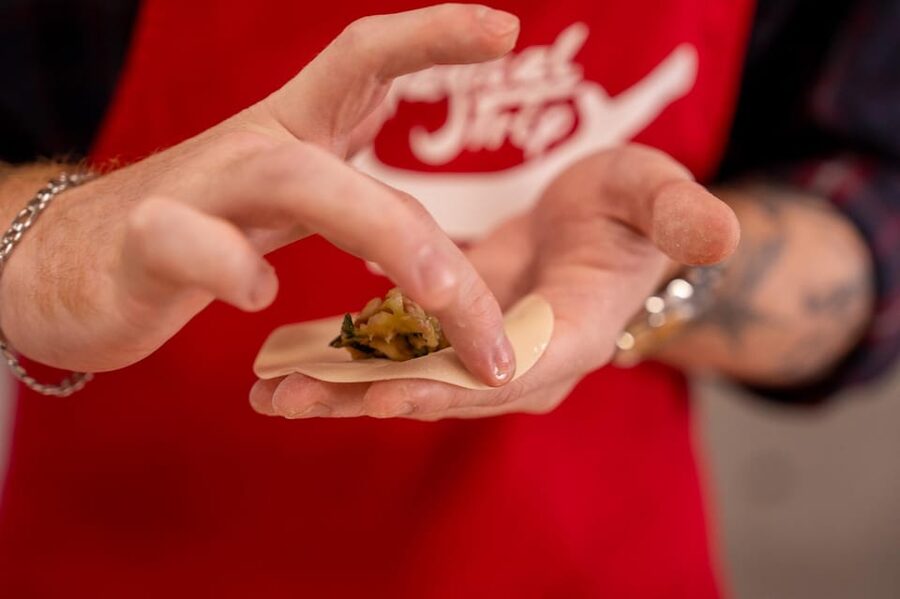
After shopping, you return to MagicalTrip’s Original Cooking Studio. The setting is described as relaxed and welcoming, with the guide leading each recipe while chatting with the group. Some groups have even chosen background music, which gives you a sense of the informal tone.
Three canned drinks are included. You can choose alcoholic or nonalcoholic options, and tea is served during the experience. Sake and beer are part of the drink choices, so this is not simply a cooking lesson with water on the side.
The drinks add cultural context, but keep your expectations in check. This is not a dedicated sake-tasting seminar with a detailed study of breweries, regions, or production methods. You are tasting local drinks while cooking and talking. That is a pleasant fit for a social lunch, but serious sake fans may want a separate tasting.
The guide is a big part of the experience. Chie is praised for making the cooking easy and for explaining Japanese history and products. Eri is described as helpful with questions about Osaka and culture. Emi has been praised for guiding each of the three dishes and keeping the mood fun. Akko and Ayu have also been praised for friendly instruction and conversation. Linda has gone out of her way to make the room feel special, including seasonal decoration, and helped with a sake purchase.
The guide names matter because this is a people-centered class. The recipes are important, but the quality of the four hours depends heavily on how clearly your host explains things and how comfortable the group feels asking questions.
What the $90 price covers
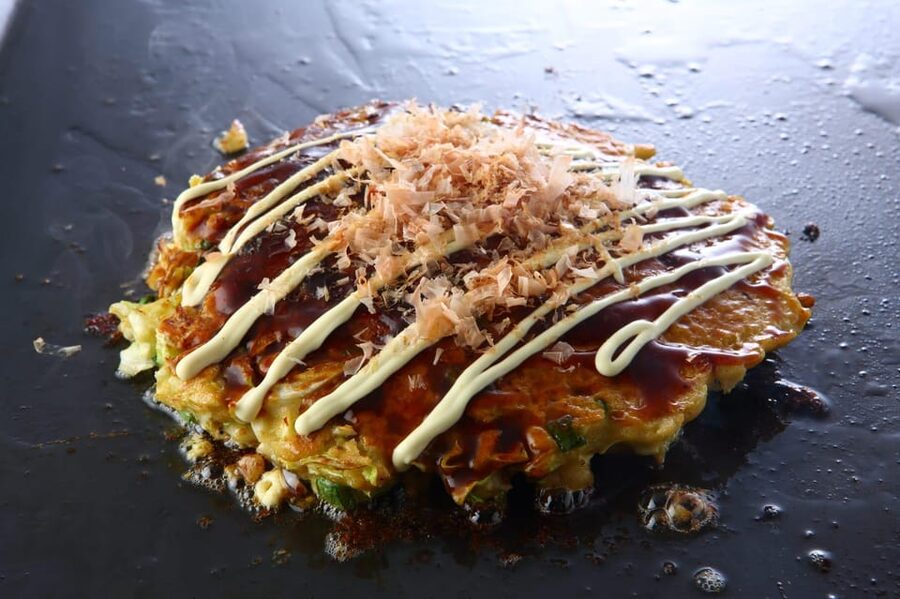
The price is $90 per person. That is not the cheapest way to eat lunch in Osaka, but you are paying for more than a plate of food. The fee includes four hours with an English-speaking guide, the supermarket visit, all ingredients, cooking instruction, lunch, three canned drinks, tea, tour photos, and recipes to use later.
The small group changes the value calculation. With a maximum of seven participants, the guide has room to answer questions and help with folding, cutting, and cooking. You are not paying for a large class where the instructor demonstrates from a distance.
The recipes add value after the trip. A restaurant meal ends when you leave. Here, you take home a way to repeat the dishes, assuming you can find suitable ingredients where you live. The recipes are designed to stay simple, which makes them more useful than a complicated souvenir handout.
The activity is also a practical choice on a rainy or very hot day. Osaka summers can reach 40 degrees Celsius, while winter temperatures can fall to minus 5 degrees Celsius. Much of the cooking happens indoors, but you still walk between the station, meeting point, and supermarket, so dress for the season.
Who will get the most from this class
I would recommend this for anyone who wants more than restaurant meals but does not want an advanced cooking course. Beginners are welcome, and the guide explains each step. You can ask about Japanese food, Osaka, Kobe, regional customs, and products while your hands are busy.
It is a particularly good fit for:
- Couples who want a shared activity with a meal at the end
- Families with participants aged 12 or older
- Friends who enjoy cooking and casual drinks
- Solo visitors who like meeting a small group through an activity
- Food fans who want recipes they can repeat at home
The class may not suit anyone with serious allergies or strict gluten-free needs. Food is prepared in external kitchens, and allergy-free meals cannot be guaranteed. Substitutions may not always be possible, so give the provider your dietary information at least one day ahead.
Vegans and vegetarians are welcome, but you need to report your needs in advance. Gluten-free options are unavailable. The experience may include places that are difficult for wheelchairs or strollers, and it is not recommended for people with mobility problems. A private tour is suggested for anyone who has walking difficulties.
The small details that affect your day
Bring an appetite. The three dishes create a substantial lunch, and you will be cooking before you eat. The activity also involves cutting and heating, so comfortable clothing and sensible footwear are better than dressing for a formal meal.
The guide takes photos during the tour and sends them afterward by email. That is a useful extra, especially for solo participants or groups who want pictures of the cooking process without handing a phone to someone every few minutes.
The class has a 4.8 rating from 31 reviews, with repeated praise for the guides, the clear instructions, the supermarket visit, and the food itself. The most consistent strength is not a fancy studio or a rare ingredient. It is the combination of a friendly host, simple recipes, and enough time to cook and talk.
You also get free cancellation up to 24 hours before the activity and the option to reserve now and pay later. Those policies help if your Osaka schedule is still changing, but they do not soften the late-arrival rule. Once the class starts, your place cannot be held.
Should you book the Osaka cooking class?
Book it if you want a hands-on Osaka food experience that combines a local shopping stop, three home-friendly recipes, lunch, and conversation with an English-speaking guide. The small group and included drinks make $90 reasonable for a four-hour activity, especially if you plan to use the recipes at home.
Skip it if you need gluten-free food, guaranteed allergy control, wheelchair-friendly access, or a formal sake education. Also skip it if you want a short demonstration with no cooking work.
For most food-loving visitors, this is a smart way to spend half a day. You learn why okonomiyaki matters, try the less familiar niku-sui, fold gyoza with your own hands, and leave with more than a full stomach. You leave with a workable taste of Osaka’s home kitchen.
FAQ
Where does the cooking class meet?
Meet in front of FamilyMart, a one-minute walk from Exit 4B of Minami Morimachi Station.
How long does the experience last?
The activity lasts four hours. Starting times vary, so check availability when booking.
What dishes will I cook?
You will prepare niku-sui beef soup, okonomiyaki, and gyoza, then eat the food as lunch.
Are drinks included?
Yes. The experience includes three canned alcoholic or nonalcoholic drinks and tea.
Can vegetarians and vegans join?
Yes, vegans and vegetarians are welcome, but you must provide dietary information or allergy details at least one day in advance. Gluten-free options are unavailable.
Is the class suitable for children?
Participants must be over 12 because the cooking includes cutting and heating. The activity may include locations that are difficult for wheelchairs or strollers and is not recommended for people with mobility issues.
More Food and Drink Trips in Japan
- Tokyo Tsukiji Fish Market Food and Culture Walking Tour
★ 5.0 · 3,184 reviews - Tokyo: Tsukiji Fish Market Food and Walking tour
★ 5.0 · 1,724 reviews - Tokyo: Tsukiji Fish Market Food and Culture Walking Tour
★ 4.7 · 757 reviews - Tsukiji Fish Market: Street Food & Culture Walking Tour
★ 5.0 · 669 reviews
More Drinks Tours in Japan
- Hokkaido Sapporo :Hill of Buddha, Beer Museum & Fish Market
★ 4.6 · 9 reviews - Tokyo: Private Tsukiji Street Food & Sake with Local Guide
★ 5.0 · 3 reviews - Cancun Taco Tour, Local Beer and Night Market with Transportation
★ 5.0 · 816 reviews - Self-Guided Craft Beer Tour (Explore Old Market)
★ 4.5 · 19 reviews
Just added around Japan
- Nagoya Super Market Tour & Home Cooking Class with a Local, Akiko★ 5.0 · 10 reviews
- Tokyo: Private Tsukiji Street Food & Sake with Local Guide★ 5.0 · 3 reviews
- Tokyo: Tsukiji Market Guided Tour & Sushi-Making Experience★ 4.4 · 11 reviews
- Tokyo: Tsukiji Market and Hama-rikyu Gardens Guided Tour★ 4.8 · 73 reviews
- Tokyo: Tsukiji Fish Market Culture Tour with Sashimi Tasting★ 4.6 · 54 reviews
- Tokyo: Sushi Making with Pro Chef & Tsukiji Fish Market Tour★ 4.6 · 49 reviews
- Tokyo : Tsukiji Fish Market Food Walking & Shrine Visit Tour★ 5.0 · 3 reviews
- Tokyo: Tsukiji Fish Market Foodie and Educational Tour★ 5.0 · 4 reviews
Market and Cooking Class Tours, compared.

Hanoi Cooking Class: Culture, Local Market & Meaning CSR Impact
Read our review →
5 Traditional Dishes Hanoi Cooking Class with Market Trip
Read our review →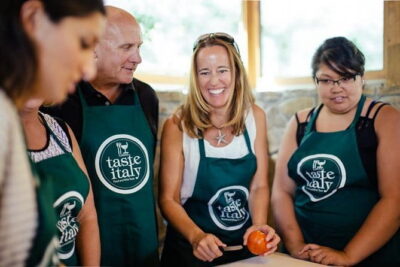
Cooking Class and Lunch at a Tuscan Farmhouse with Local Market Tour from Florence
Read our review →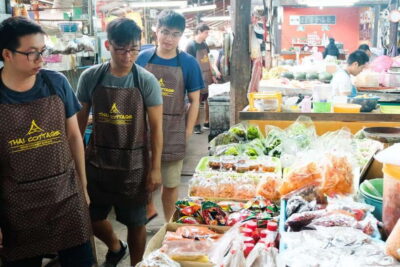
Cooking Class, Market & Thai Herbs Garden Tour
Read our review →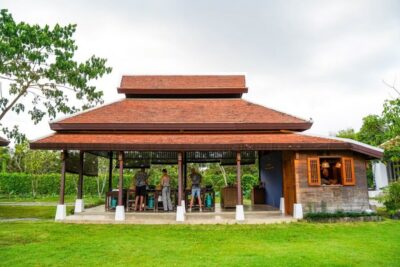
Authentic Cooking Class with Market & Farm Visit
Read our review →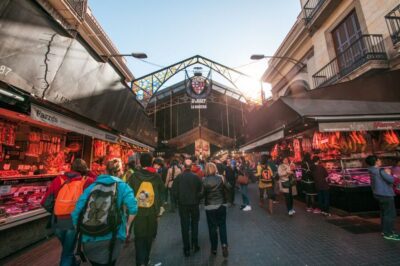
Paella Cooking Experience & Boqueria Market Tour
Read our review →
Cooking Class Hoi An:Local Market, Basket Boat, Fishing & Cooking
Read our review →
Hoi An Cooking Class(Market,BasketBoat Crabfishing&Cooking Class)
Read our review →Browse the lists this tour appears in