
Review · MARKET WALKING TOURS
Dubai: Private Old Town, Heritage & Souks Walking Tour
Dubai’s best history lesson may be found not among skyscrapers, but in Al Fahidi’s narrow lanes and courtyard homes. This private walk links the old Bastakiya district with Dubai Creek, then carries you by traditional abra to the spice and gold markets on the Deira side.
I like two things right away: the tour gives you a clear story of Dubai’s change from desert trading town to global city, and the guides offer practical souk advice, including where to shop and how to bargain. Pri, Ricky, Francesca, and Dana are repeatedly praised for warmth, family-friendly explanations, and an ability to adjust the pace.
The trade-off is the tight two-hour schedule. You see a lot, but visits to the heritage houses and markets are brief. This is a strong introduction, not a leisurely shopping afternoon or a full museum tour.
Key points to know before booking
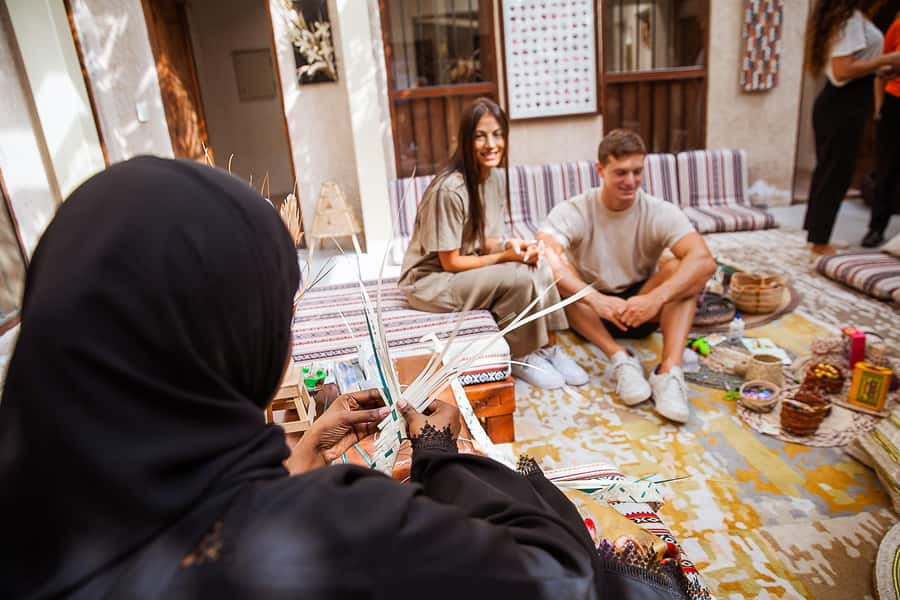
- Old Dubai comes first: Begin at Arabian Tea House and walk through Al Fahidi’s historic courtyards, homes, galleries, and lanes.
- The abra crossing is the scenic link: A traditional boat ride across Dubai Creek adds a simple but memorable view of the water and old trading route.
- The souks are part shopping trip, part cultural lesson: Expect textile stalls, spice tastings, gold displays, and guidance on bargaining.
- Private means personal: Your guide can slow down for children, explain customs in plain English, and focus on your questions.
- The tour finishes near the Gold Souk: You are not returned to your hotel, so plan your next ride from Deira.
- Good shoes matter: This is a walking tour on historic streets, with heat and uneven surfaces to consider.
Why this Old Dubai walk is worth your first afternoon
I would put this tour near the start of a Dubai visit. It gives you the background needed to understand the city’s polished modern side. Before you admire towers, malls, and new districts, you see where commerce, homes, religion, and the creek once shaped daily life.
The route also has a pleasing contrast. Al Fahidi feels low, shaded, and human-scaled. Then the creek opens the view, and Deira brings you into shops filled with spices, fabrics, jewelry, and small souvenirs. You get history, transport, shopping, and local conversation in one compact outing.
The guides are a major part of the experience. Pri is often singled out for connecting with children and explaining Dubai in an engaging way. Ricky is praised for clear explanations of the old town and souk bargaining. Francesca brings cultural context and a warm manner, while Dana is especially useful if you want direct advice on prices and shops.
That personal touch matters in Old Dubai. The markets can feel confusing at first, with sellers calling out and displays spilling into the walkway. A guide gives the place shape without taking away its character.
More Market Walking Tours in the UAE
- Historic Old Dubai & Souk Small Group Walking Tour
★ 5.0 · 156 reviews - Dubai Souks, Food & Culture Walking Tour
★ 5.0 · 132 reviews - Private Old Dubai Walking Tour: Forts, Souks, and Boats
★ 5.0 · 116 reviews
Starting at Arabian Tea House and Al Bastakiya
Meet outside Arabian Tea House in the Al Fahidi Historical Neighborhood. This is a useful meeting point because it places you directly among the old courtyard homes rather than at a large modern attraction.
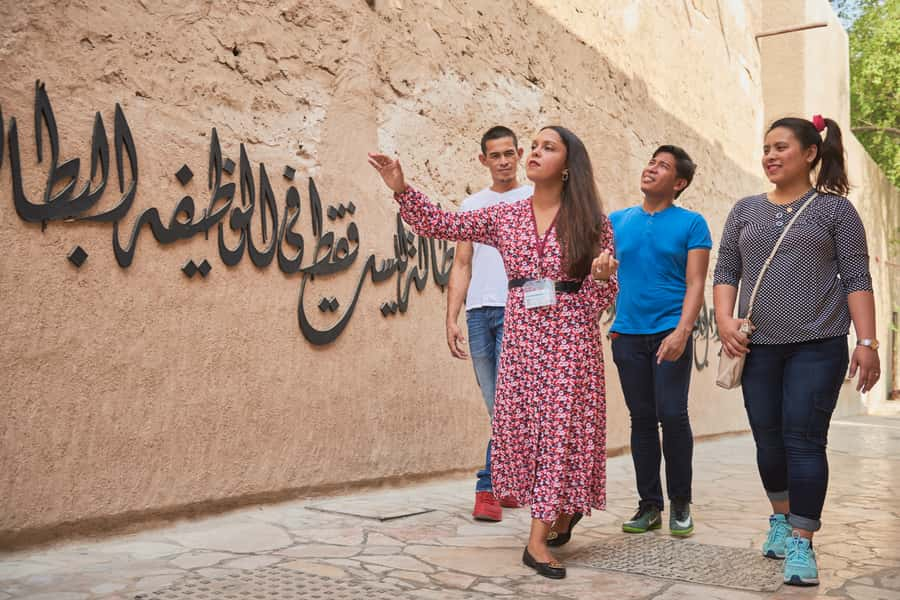
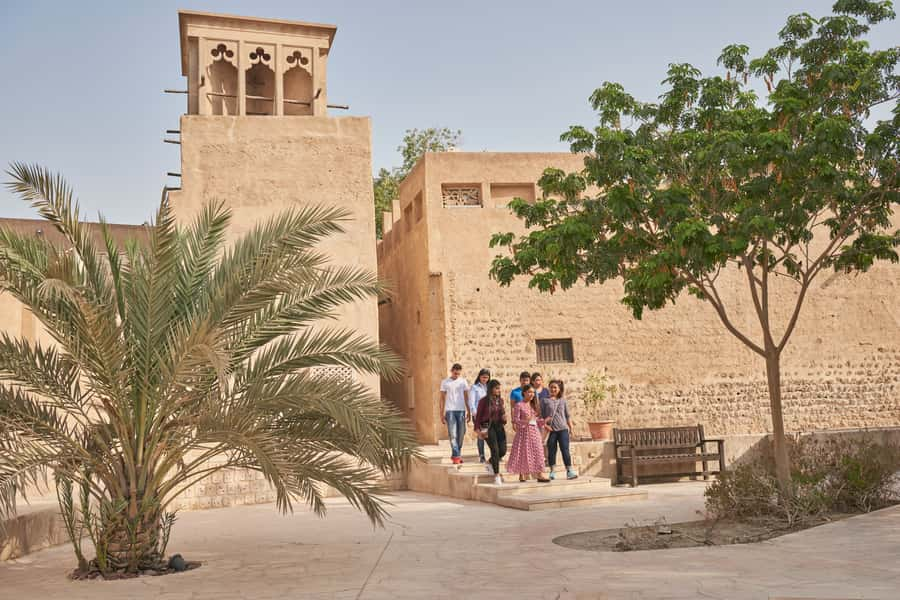
The first section lasts about 40 minutes. You walk through Al Bastakiya, also called the Bastakiya District, passing old courtyard houses and narrow sikkas. The route includes Dar Al Nadwa and XVA House, along with heritage buildings that help explain how early residents lived in a hot desert trading town.
Look for the design details your guide points out. Courtyards offered some privacy and relief from the heat, while the narrow lanes provided shade. The buildings give you a better sense of old Dubai than a quick drive through the city ever could.
This is also where the desert-to-global-city story begins. Dubai did not appear fully formed as a center of towers and luxury shopping. The tour connects early trade, pearl diving, regional customs, and the creek economy with the city you see today.
You should expect conversation rather than a lecture. Guides have been praised for answering questions about customs, culture, art, and modern Dubai, and for adjusting explanations for young children. If your family includes a six-year-old, a tween, or a teenager, tell the guide what keeps them interested.
From the textile market to Dubai Creek
The walk continues toward the old textile market and Dubai Creek. Depending on the exact route and timing, the textile area may come before the creek crossing, but the point is the same: you move from residential history into the trading life that made this part of Dubai important.
The textile stalls offer color and texture, but this is also where the shopping pressure can begin. You might see fabrics, scarves, clothing, and inexpensive gifts. You do not need to buy anything, and you should treat the first price as a starting point rather than a final figure.
The creek stop lasts about 15 minutes. That may sound short, but it gives you time to look at the water, watch the movement of boats, and hear why this waterway mattered to the city’s trade. The view is especially welcome after walking through the lanes.
A separate dhow stop lasts about 10 minutes. The dhow is a traditional wooden vessel associated with Gulf trade and transport. The tour information does not promise a long dhow cruise, so think of this as a brief sightseeing point rather than a full boat excursion.
The abra ride across the creek
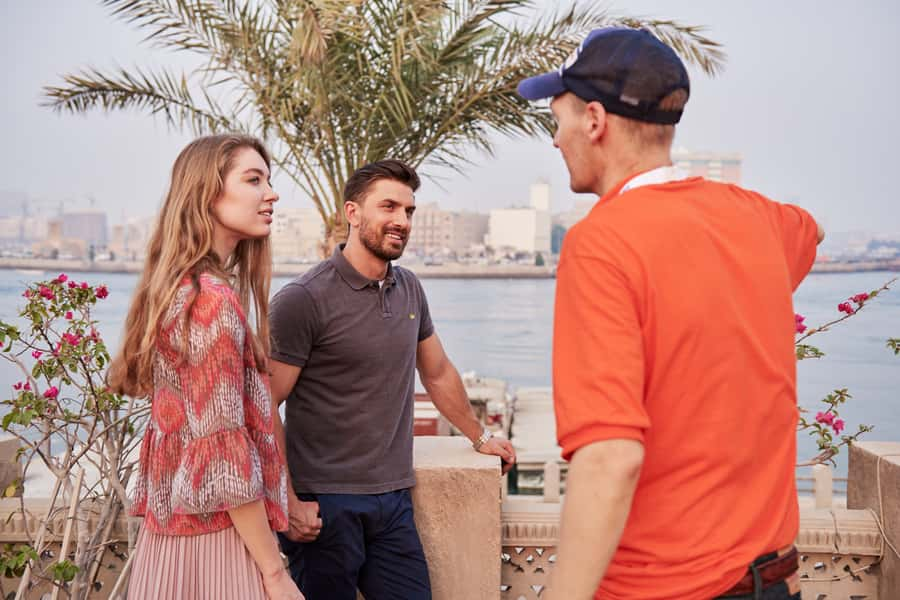
The abra crossing is the simplest part of the tour, and one of the most memorable. You board a traditional boat and cross from the Bur Dubai side to Deira, using the same waterway that helped connect the two parts of old Dubai.
I like this transition because it changes the rhythm of the outing. You stop walking, take in the open view, and see the old districts from the water. Several guides have been praised for making the boat ride a highlight, particularly around sunset.
Do not expect a luxury cruise. The appeal is the ordinary transport itself. You are using a traditional boat to cross the creek, not watching old Dubai from behind the glass of a sightseeing bus.
If you are sensitive to heat, the crossing can be a welcome break, but the tour remains outdoors. Wear comfortable shoes and sunscreen, and carry whatever water you normally need for a two-hour walk.
More Private Market Tours in the UAE
- Dubai Private Tour of Creek, Souks, Frame, and Burj Khalifa Entry
★ 5.0 · 107 reviews - Private Tour Old Dubai Souks Creek and Abra Tour with Tastings
★ 5.0 · 28 reviews - Private Historic Old Dubai and Souks Walking Tour featuring Hidden Gems
★ 5.0 · 27 reviews - Dubai:Private Frame Entry, Mosque, Souks, Tastings& transfer
★ 4.8 · 9 reviews
Spice Souk: smells, samples, and shopping advice
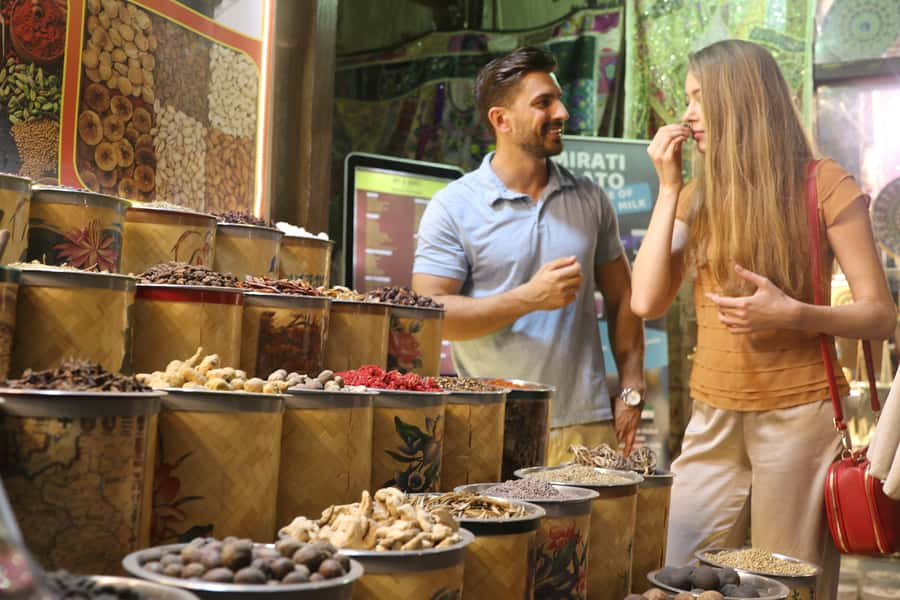
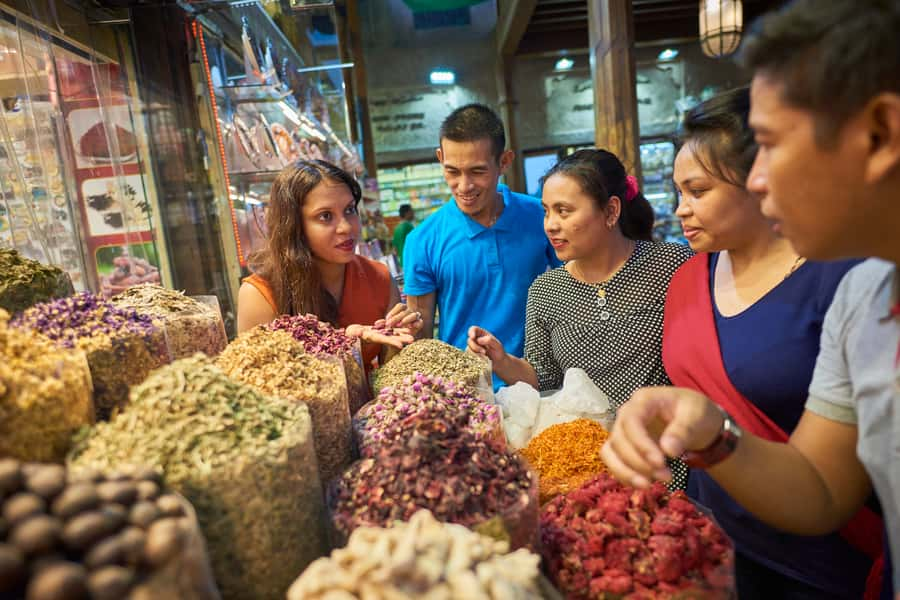
On the Deira side, the tour takes you through the Spice Souk. This section combines a guided visit with shopping and tastings. You may find sacks and displays of spices, herbs, teas, and other small goods, along with inexpensive souvenirs.
The tasting element gives the market more purpose than simply walking past shop fronts. Your guide can explain what you are seeing and help you distinguish between browsing and buying. The tour includes spice tastings, which is a small but useful detail for anyone curious about local flavors.
This is also where the guide’s shopping advice becomes practical. Dana is praised for showing visitors shops with good deals, while Pri has helped families bargain for spices, gold, and souvenirs. That does not mean every purchase will be a bargain, but it gives you a better starting point.
Keep your expectations sensible. A guided stop does not remove the salesmanship of a souk. You may be invited to look at products you did not plan to buy. A polite no is enough, and your guide can help keep the exchange comfortable.
Gold Souk and the end of the route
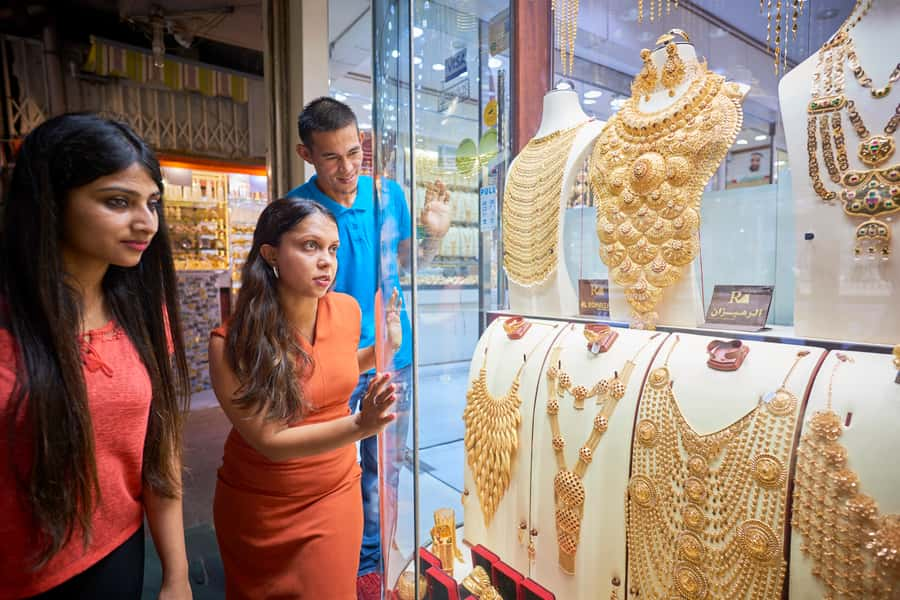
The tour finishes in the Gold Souk neighborhood. Gold displays are the visual finale, with everything from small souvenirs to diamond jewelry. Even if you have no intention of buying, the scale and presentation of the shops make this a worthwhile stop.
This is not the place to rush into a major purchase simply because the market is impressive. If you are considering jewelry, ask questions about the piece, price, and terms, and take your time. The value of having a private guide is that you can ask for help with the basic shopping process without having to figure out the market alone.
The end point is useful for planning. You are close to the Gold Souk, but hotel pickup and drop-off are not included. After the tour, you will need to arrange your own next ride or continue exploring Deira.
What the two-hour schedule really gives you

Two hours is a smart length for a first look at Old Dubai. You cover Al Fahidi, the creek, the abra crossing, the spice market, the textile area, and the Gold Souk without giving up an entire day.
The drawback is limited time at each place. The heritage section takes about 40 minutes, while the creek, dhow, spice souk, and textile market stops are listed at roughly 10 to 15 minutes each. That leaves little room for long shopping sessions or extended museum visits.
I would choose this tour if you want orientation and context. If your main goal is to compare gold jewelry, inspect fabrics, or linger over spice stalls, you will need more time after the guided walk.
The private format helps. You are not tied to a large group’s pace, and guides have adjusted their explanations for families, younger children, and visitors who speak English less confidently. The tour is offered in English and Hindi.
Is $98 per person fair value?
At $98 per person, this is not the cheapest way to walk through Old Dubai. You are paying for a private guide, heritage-house entrances, the abra ride, spice tastings, and a souvenir gift, rather than simply paying for transport or joining a large public walk.
The price makes the most sense for couples, families, or small groups who value personal attention. A good guide can turn a confusing market into an understandable place, help you avoid wasting time, and answer questions you would not get from a self-guided route.
The value is weaker if you are comfortable researching Al Fahidi on your own and only want the boat crossing. The route itself is compact, and the shopping areas remain open to independent visitors.
I would also consider the tour a time-saver. In two hours, you get a structured introduction to several districts and finish at a practical place for continued sightseeing. That can be useful during a short Dubai stay or on a first day when you want to get your bearings fast.
Who will enjoy this tour most?
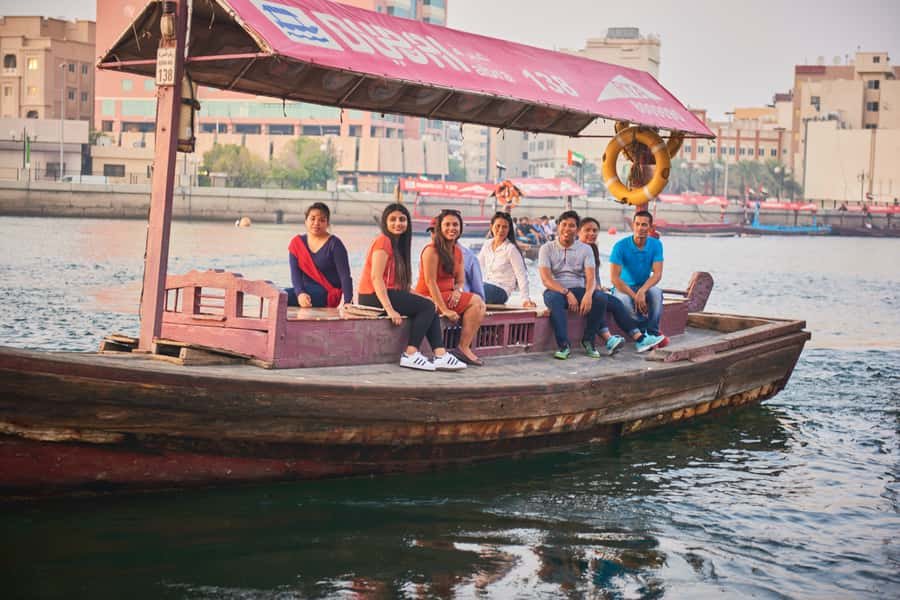
This experience suits first-time visitors who want more than postcard views. It is also a good match for families, since guides such as Pri, Francesca, and Ricky have been praised for keeping children involved rather than speaking only to adults.
It works well for anyone interested in history, architecture, customs, food, or shopping. You do not need to be an expert on Dubai before arriving. The guide supplies the context and connects the old neighborhoods to the present city.
Couples may like the mix of quiet lanes, creek views, and market energy. Solo visitors can also benefit from having someone to explain the souks and help with the social side of bargaining.
The tour is not suitable for wheelchair users. The walking route through historic lanes and markets may also be tiring for anyone who has difficulty walking for two hours. Comfortable shoes and sunscreen are essential.
Small details that improve the experience
Arrive ready to walk, not dressed for a mall visit. The route includes outdoor streets, historic lanes, markets, and the boat crossing, so practical clothing and sun protection will serve you better than formal attire.
Tell your guide if you have children or a particular interest. The private format allows the conversation to shift toward art, local life, trade, food, or shopping rather than following a fixed speech.
If you want to buy something, decide early how much time you can spare. The tour finishes at the Gold Souk, but the scheduled market stops are short. Save serious browsing for after the guided portion.
Finally, keep the end point in mind. Since transportation back to your hotel is not included, arrange your next step from the Gold Souk area. This is easy to manage, but it is worth knowing before you book.
Should you book the Old Dubai walking tour?
Book it if you want a personal introduction to Dubai’s older neighborhoods, prefer a private guide, and like the idea of combining history with real market time. The abra crossing, spice tastings, heritage homes, and final stop at the Gold Souk give the two hours a useful range.
I would especially recommend it for a first Dubai visit, a family with children, or anyone who wants help understanding souk etiquette and bargaining. Pri, Ricky, Francesca, and Dana have each been praised for warmth, clear explanations, and a friendly approach.
Skip it if you want a slow shopping day, a long dhow cruise, or a wheelchair-accessible route. For most other visitors, $98 buys a well-organized starting point for Old Dubai, with enough local context to make the rest of your time in the city more rewarding.
FAQ
How long is the Old Dubai walking tour?
The tour lasts two hours.
Where does the tour start?
It starts outside Arabian Tea House Restaurant and Cafe in the Bastakiya area of the Al Fahidi Historical Neighborhood.
Where does the tour finish?
The tour finishes in the Gold Souk neighborhood.
Is the tour private?
Yes. It is offered as a private group experience.
Which languages are available?
The live tour guide service is available in English and Hindi.
Is the abra ride included?
Yes. The traditional abra ride across Dubai Creek is included in the price.
Are heritage-house entrances included?
Yes. Museum and heritage-house entrances are included.
Are food or spice tastings included?
Spice Souk tastings are included.
Is hotel pickup and drop-off included?
No. Pickup and drop-off are not included.
Is the tour suitable for wheelchair users?
No. The activity is not suitable for wheelchair users.
More History Tours in the UAE
- Abu Dhabi Sightseeing Tour: Sheikh Zayed Mosque, Heritage Village & Dates Market
★ 4.5 · 226 reviews - Dubai Old Town, Culture, History, Street food and Souks Tour
★ 5.0 · 170 reviews - Old Dubai Historic Guided Tour: Creek, Street Food & Souks
★ 4.9 · 156 reviews - Old Dubai Heritage Tour: Souks, Mosques & more hidden gems!
★ 4.3 · 72 reviews
More Market Market Walking Tours in the UAE
- walking tour in old dubai, souks, abra boat, old town
★ 5.0 · 89 reviews - Walking Tour in Dubai. Souks, museums, Local Food Testing
★ 5.0 · 11 reviews - Dubai Old Town Walking Tour with Abra ride, Spice and Gold Souk
★ 5.0 · 11 reviews - Dubai: Guided City Walking Tour to Spice and Gold Souk
★ 5.0 · 3 reviews
Just added around the UAE
- Abu Dhabi City Tour: Grand Mosque, Palace, Souk, Louvre & Ferrari★ 5.0 · 8 reviews
- Walking Tour in Dubai. Souks, museums, Local Food Testing★ 5.0 · 11 reviews
- Old Dubai Heritage Tour: Souks, Mosques & more hidden gems!★ 4.3 · 72 reviews
- Old Dubai Guided Tour With Photographer: Souks & Street Food★ 4.9 · 74 reviews
- Dubai Tour: Haritage Walking Guide, Gold & Spice Souq, Creek★ 4.5 · 11 reviews
- From Abu Dhabi: Dubai City Tour with Creek, Abra & Old Souks★ 4.5 · 49 reviews
- Dubai: Discover Dubai Old Town, Souks, Museum & Street Food★ 4.9 · 25 reviews
- Dubai:Private Frame Entry, Mosque, Souks, Tastings& transfer★ 4.8 · 9 reviews
Market Walking Tours, compared.
Tokyo Tsukiji Fish Market Food and Culture Walking Tour
Read our review →

Nishiki Market Brunch Walking Tour (7 Tastings + Brunch)
Read our review →Tsukiji Fish Market Food and Culture Walking Tour
Read our review →
Tsukiji Fish Market: Street Food & Culture Walking Tour
Read our review →
Tsukiji Fish Market Small-Group Food Walking Tour
Read our review →Browse the lists this tour appears in