
Review · MARKET WALKING TOURS
Chiang Mai: Local Food and Markets Guided Walking Tour
Chiang Mai’s best food lesson may come from a small steamed dumpling, a dinosaur-shaped dough stick, and a bowl of Hakka noodles. This 150-minute walk links local stalls and markets around the Ping River, giving you a practical introduction to food you might not feel ready to order alone. I like the small, local stops and the way guides such as Koi, Nom, Patty, and Banana help you understand what you are eating. I also like the flower market and Warorot Market, which add everyday Chiang Mai life beyond restaurant dining.
The main catch is that food is not included in the $48 price, and the tour covers several stops at a fairly brisk pace. The 2:30 pm departure can also be less useful because some named food shops close early. For the full route, choose a morning start and arrive hungry.
Key points at a glance
- Four useful food stops: Try Khao Kriab Pak Moh dumplings, pa thong ko, mango sticky rice, and Hakka-style noodles.
- A local-market route: Walk through Ton Lamyai Flower Market and Warorot Market rather than staying inside the old city.
- Strong guide element: Guides explain ingredients, customs, buildings, and ordering, with English and Thai available.
- Good first-day activity: The tour helps you get your bearings and gives you ideas for later meals.
- Budget for snacks: Tasting costs are paid separately, so carry Thai baht in cash.
- Best timing: Morning departures offer the best chance of following the listed food route without rushed substitutions.
A food walk across the Ping River area
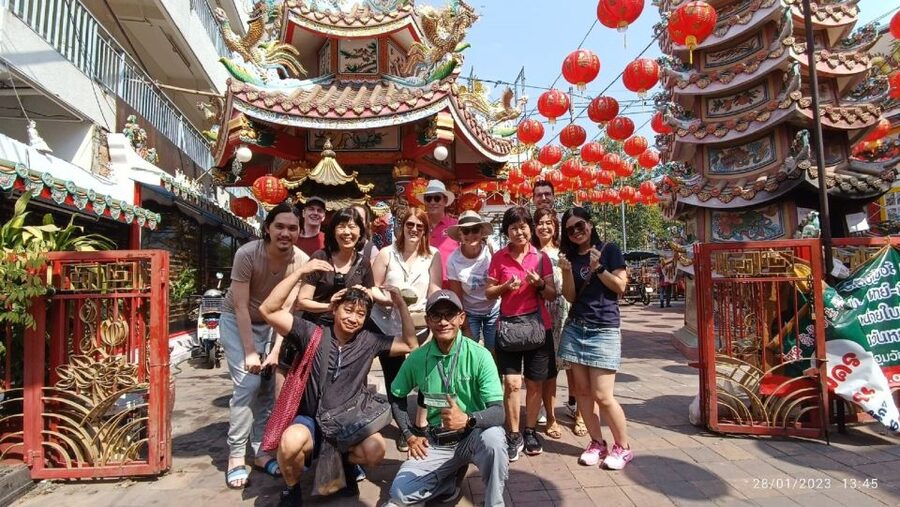
This is not a grand city tour with long historical speeches. It is a short, food-centered walk through one of Chiang Mai’s most useful market districts. You meet at Chansom Memorial Bridge, also called Khua Khaek, opposite Ton Lamyai Flower Market on Praisanee Road.
From there, the route moves through food stalls, market lanes, and small eateries. I like this setup because you are not simply handed a plate in a tourist restaurant. You see where locals shop, what ingredients look like before cooking, and how snacks fit into the daily rhythm of Chiang Mai.
The tour lasts 150 minutes, though the food stops and walking sections can make the time feel quick. One participant covered roughly 2.5 miles, so comfortable shoes matter. This is an active walk, not a seated tasting session.
The route may change. Restaurants can close, stalls can sell out, and weather can affect the order of stops. That flexibility is useful when it keeps the tour moving, but it also means your exact meal list is not guaranteed.
More Market Market Walking Tours in Chiang Mai:
- Bangkok: City Highlights Temple and Market Walking Tour
★ 4.5 · 3,990 reviews - Tokyo Tsukiji Fish Market Food and Culture Walking Tour
★ 5.0 · 3,184 reviews - Marrakech: Ben Youssef, Secret Garden, & Souks Walking Tour
★ 4.6 · 2,802 reviews
Khao Kriab Pak Moh at Lung Khajohn Wat Ket
The first food stop is Lung Khajohn Wat Ket, known for Khao Kriab Pak Moh. These are soft, steamed rice-skin dumplings, usually filled with peanuts. Their delicate texture and sweet filling make them a gentle introduction to the tour.
This stop matters because it shows how Thai snacks can be quite different from the better-known curries, noodle soups, and grilled meats found on standard menus. You get a small taste, then move on, so it is wise not to treat the first dish as breakfast.
Guides often do more here than point at the food. They can explain what you are eating, how it is prepared, and which flavors or condiments belong with it. Koi was praised for describing spices and preparation, while other guides helped with ordering and finding a place to sit.
If you are cautious with unfamiliar food, this is likely the easiest stop. If you want a large portion, it may feel modest. The point is variety rather than one filling dish.
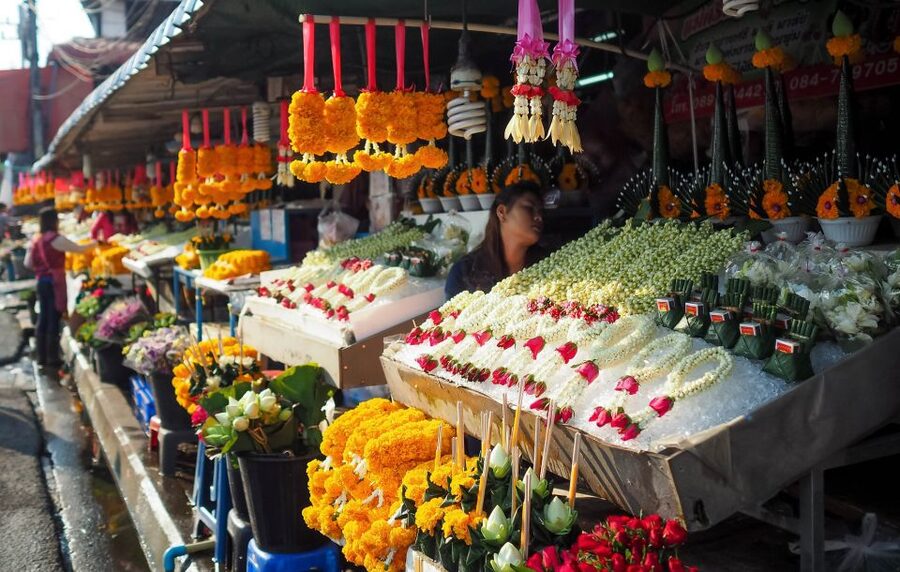
Ton Lamyai Flower Market adds color and breathing room
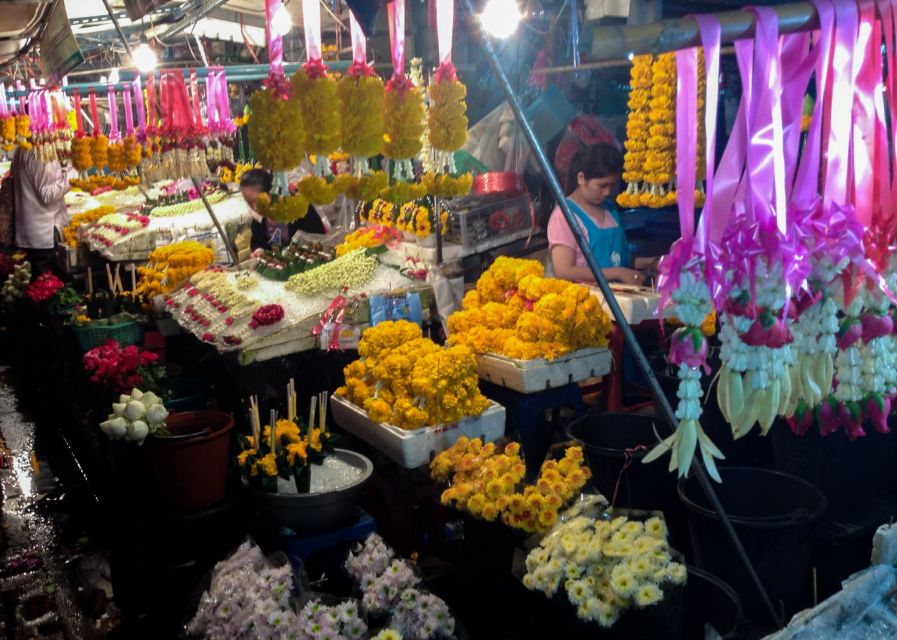
After the dumplings, you pass through Ton Lamyai Flower Market. Fresh flowers and herbs give this part of the walk a different mood from the food stalls. The market is a useful reminder that Chiang Mai’s food culture is tied to produce, herbs, offerings, and everyday shopping.
The tour description says you can brighten your day with fresh flowers, but do not assume a flower purchase is included. The market visit is part of the walking route, while food and tasting expenses remain your responsibility.
This is also a good photo stop. Bring a camera, but remember that market lanes can be tight and people are working. A little patience goes a long way. If you enjoy watching daily commerce as much as eating, this section adds real value to the short tour.
Pa thong ko at Go Neng
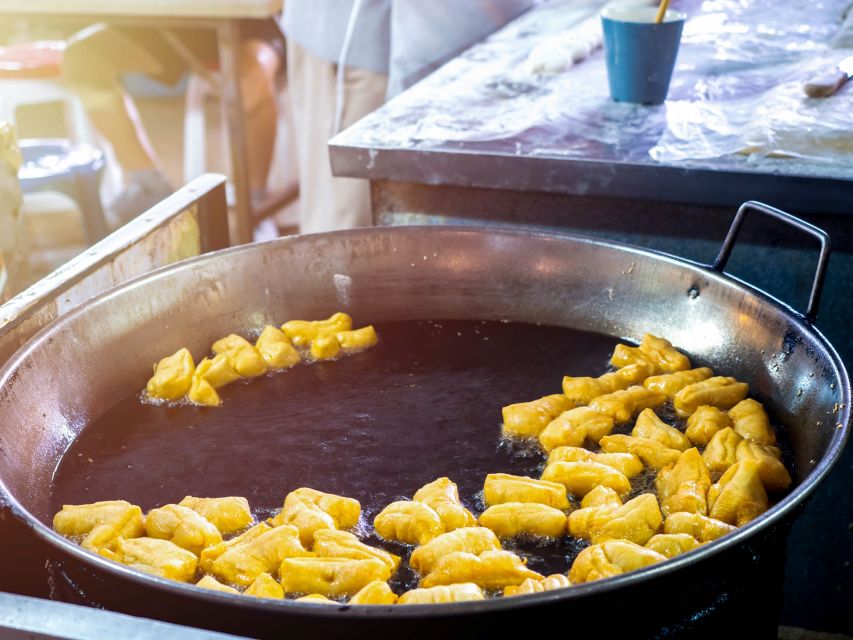
At Go Neng, you try pa thong ko, Chinese-style deep-fried dough. The pieces are shaped in unusual forms, and some resemble small dinosaurs. That odd shape is part of the fun, but the real appeal is the hot, simple contrast of crisp outside and soft dough.
This is one of the stops that gives the tour personality. You are not just ticking off famous Thai dishes. You are trying a local snack with a visual twist, and the guide can explain how it fits into Chiang Mai’s food scene.
The portion may not seem substantial, but it is one of several tastings. You will appreciate that by the end, especially if you follow the advice to skip a large breakfast or lunch.
One practical point: the itinerary can change depending on the time of day. Early departures are the safer choice if Go Neng and the other named stops are important to you.
More Food and Drink Trips in Chiang Mai:
- Chiang Mai: Evening Local Street Food Market Tour
★ 4.8 · 604 reviews - Fresh Local Market Tour – Food tour in Chiang Mai
★ 5.0 · 113 reviews - Dubai: Old Town, Creek, Museums, Souks, & Street Food Tour
★ 4.8 · 10,816 reviews - Dubai: Old Town, Souks, Street Food, Guided Tour & Abra Ride
★ 4.9 · 7,170 reviews
Warorot Market is the main food lesson
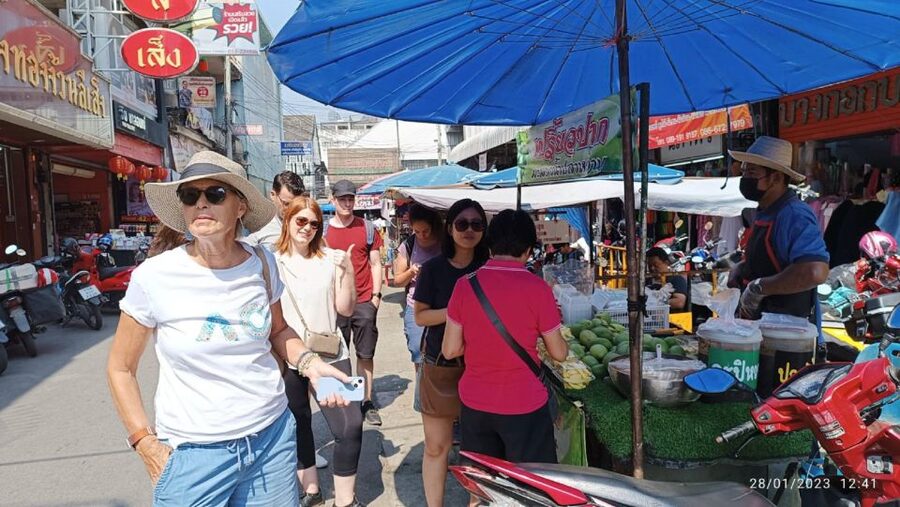
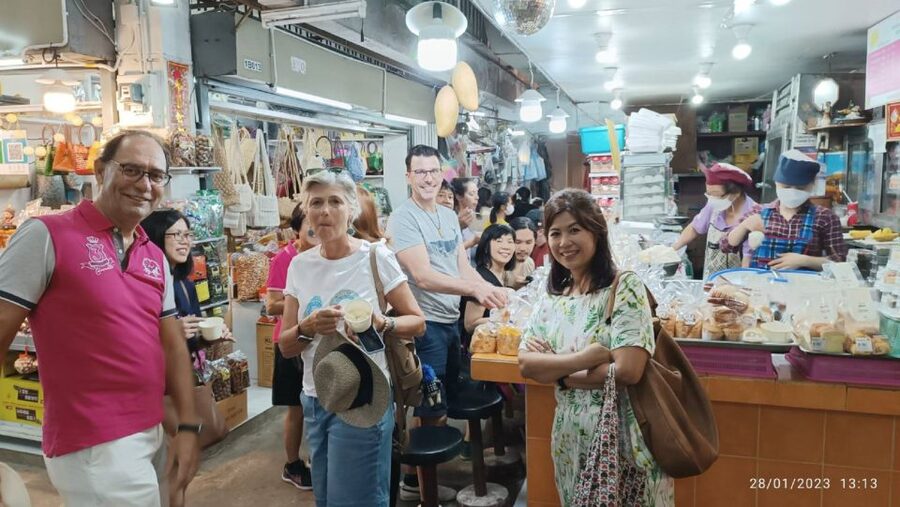
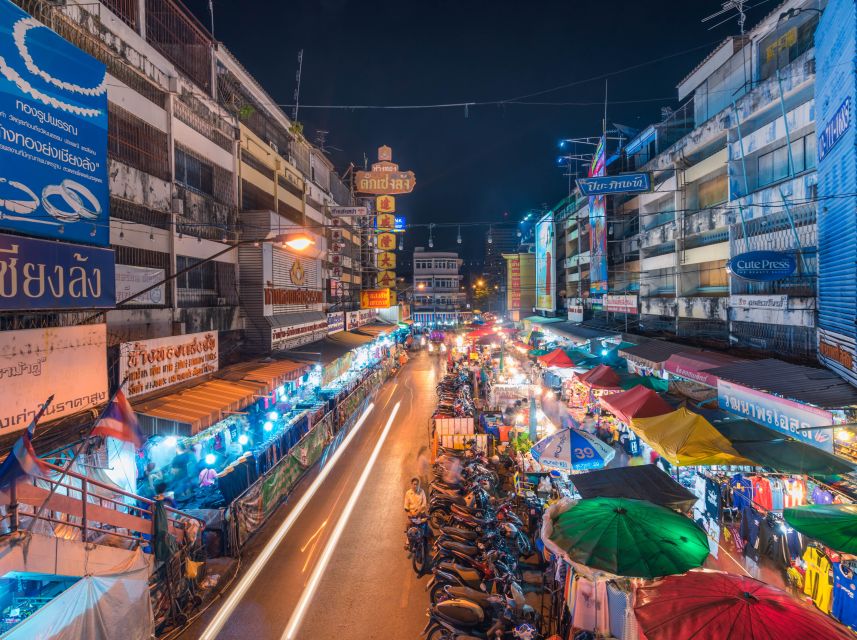
Warorot Market is the largest part of the walk and the place where the tour feels most useful. You can browse snacks, produce, clothing, and other goods while your guide points out ingredients and local specialties.
This is where a good guide makes a major difference. Guides such as Patty, Sunny, Nancy, and Banana have been praised for explaining market foods, local customs, and the buildings along the route. The strongest part of the experience is not simply being led from stall to stall. It is having someone tell you what to buy, how to recognize a dish, and why people in Chiang Mai eat it.
You may also get recommendations for restaurants, night markets, or other food stops for later in your stay. That makes this a smart first-day activity. You gain a short orientation to the city and a list of foods to try after the tour.
Warorot can also be a little overwhelming if you are unfamiliar with Thai markets. There are many smells, products, and unfamiliar signs. Following the guide saves time and reduces the guesswork, but you should still expect a fairly quick pace between stops.
Mango sticky rice brings the sweet course
Inside or around Warorot Market, the guide takes you to a stall selling mango sticky rice. This is the familiar sweet course of the tour, but the market setting gives it more interest than ordering it from a hotel restaurant.
The dish combines ripe mango, sticky rice, and coconut-based sweetness. It is filling, so pace yourself. If you eat every sample quickly, the final noodle stop may be harder to appreciate.
I like the order of the food stops overall. The tour begins with a small sweet dumpling, moves through fried dough and market snacks, then reaches mango sticky rice before finishing with a savory noodle dish. The balance keeps the walk from becoming one long succession of similar bites.
Food quality and availability can vary by day. If the mango stall is unavailable, your guide may make a substitution. That is normal for a market tour and one reason not to book it expecting a fixed restaurant menu.
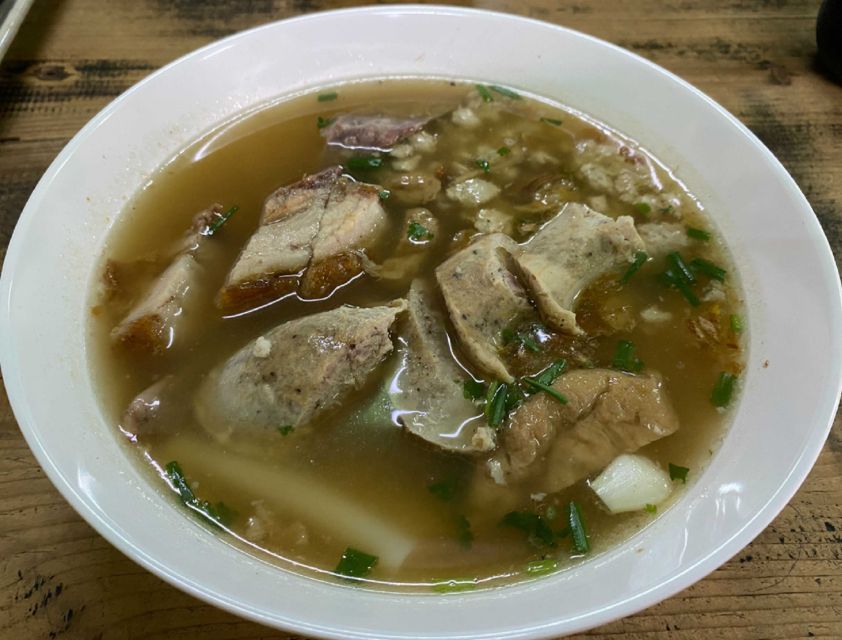
Thana Ocha ends with Hakka noodles
The final stop is Thana Ocha, where the main savory dish is Hakka-style noodles with stuffed tofu, fish sausage, and wontons. This is the most substantial tasting and the one many people will remember as the meal rather than a snack.
The dish reflects Chiang Mai’s Chinese influence, which gives the tour more depth than a simple list of Thai sweets. Your guide can connect the food to the Chinese communities and eating traditions found in the area.
The noodles are also a good reason to save room. Several people found the first dumplings and final noodle soup to be the strongest stops, while one person wanted more food overall. Portions and personal appetite will vary, but you should expect a series of tastings rather than a full restaurant meal at each location.
If you are vegetarian, check carefully before booking. The listed noodle dish includes fish sausage, and there is no vegan option. Vegans are specifically not suited to this tour. The route may also be difficult for people with mobility impairments because of the walking distance and market surfaces.
What the guides add
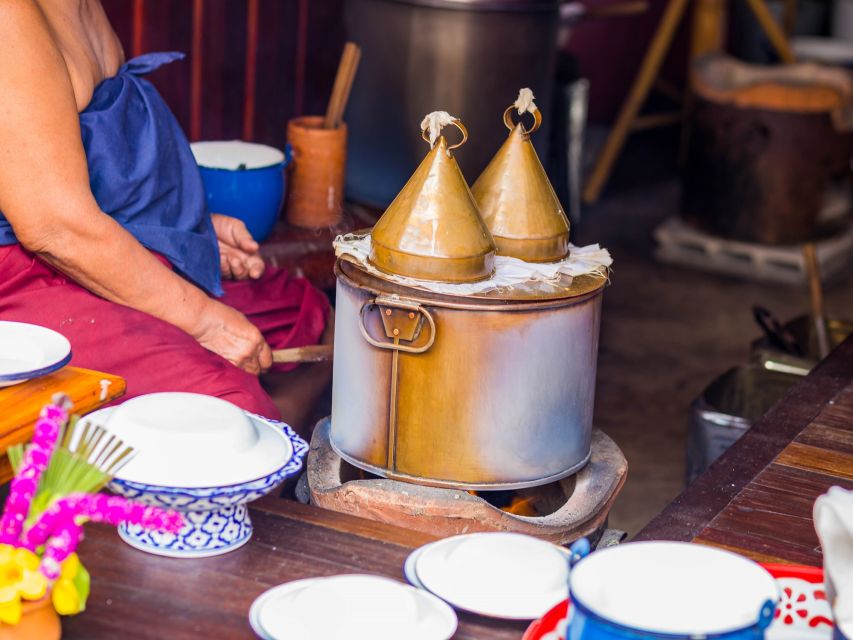
The guide is the key variable in a food walk. A good one turns a snack into a lesson, helps you order, explains unfamiliar ingredients, and adjusts when a place is too busy or closed.
The experience has used guides including Koi, Nom, Patty, Banana, Nancy, Sunny, Nana, Maggie, Nick, Pim, and Watsana Chaiya. English and Thai are available. Specific praise has gone to guides who spoke clear English, pre-ordered at busy stalls, carried shopping bags, helped with photos, and adapted to children or changing restaurant hours.
That does not mean every guide will give the same level of detail. One shortcoming noted about the tour is that it can feel like being moved from stop to stop if the guide does not explain much. If food education is your main reason for booking, ask questions. What is in the dish? Is it normally eaten for breakfast? Which condiment should you use? A willing guide can make the experience much better.
The tour can also work well for a small private group. One-on-one departures have allowed guides to slow down, add market stops, and give more personal attention. Group size is not specified here, so do not assume you will have a private guide.
Timing, walking, and what to bring
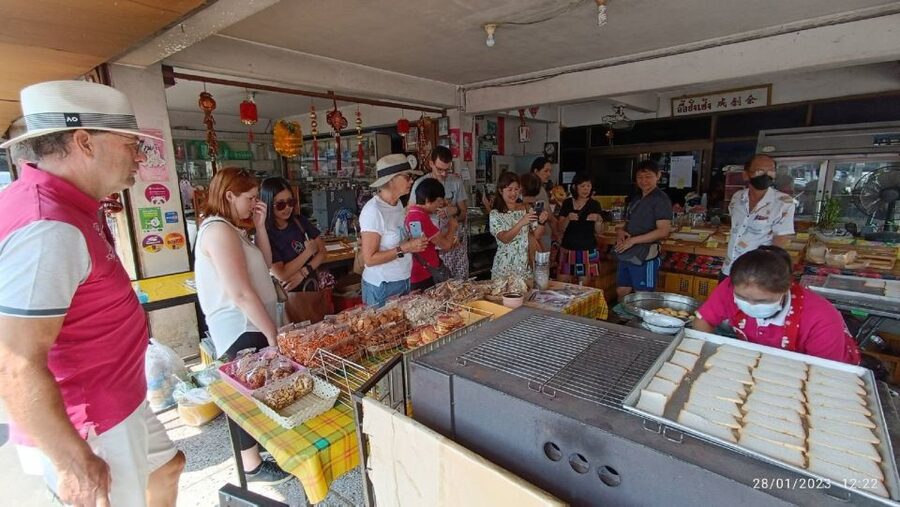
Morning departures are the best choice if you want the listed food stops. Several restaurants and stalls tend to close by early afternoon, and the 2:30 pm option may require alternative street-food stops. Those alternatives can still be worthwhile, but the route may feel rushed.
Arrive at Chansom Memorial Bridge 10 minutes early. Your guide will hold a TripGuru sign, and traffic can make local journeys slower than navigation apps suggest. The guide can wait only 10 minutes after the scheduled meeting time.
Wear comfortable shoes and light clothing suitable for walking. Sunglasses, a hat, sunscreen, insect repellent, and a camera are sensible additions. Most important, carry cash because tasting costs are not included.
The tour is not suitable for pregnant women or people with heart or respiratory problems. Anyone who finds a 2.5-mile walk difficult should choose a less active food experience.
Is $48 good value?
At $48 per person, the tour is not a cheap way to buy lunch. You also pay separately for the food, even though individual snacks are generally inexpensive. That extra cost is worth considering if you are comparing it with simply visiting Warorot Market alone.
The value comes from guidance, access to specific stalls, translation, and the structure of the route. You avoid the uncertainty of choosing unfamiliar dishes and get explanations about local food and customs. Guides may also point out places you would not find easily by yourself.
Some older bookings describe the experience as costing around $20, but the current stated price is $48. Use the current booking price when comparing options, and add a small cash budget for the tastings.
The tour also includes carbon-emissions offset credits and is GSTC-certified. That does not make the walk impact-free, but it gives the activity a clearer low-impact focus than a food tour requiring private transport between restaurants.
Who should book this walk?
I would choose this for a first or second day in Chiang Mai, especially if you want help with ordering and a quick introduction to local snacks. It suits curious eaters who enjoy walking, market browsing, and small portions rather than a long, relaxed restaurant meal.
Families can enjoy the playful pa thong ko, though the pace and food choices may challenge a picky child. One guide adapted well to a five-year-old, but that depends on the guide and the child.
You should look elsewhere if you need vegan food, have serious walking limits, or want a slow tasting menu with food included in the price. You may also prefer a longer tour if four main tasting stops feel too few.
FAQ
How long does the Chiang Mai food tour last?
The tour lasts 150 minutes, or two and a half hours.
Where does the tour meet?
You meet at Chansom Memorial Bridge, also called Khua Khaek, opposite Ton Lamyai Flower Market on Praisanee Road.
Where does the tour finish?
The listed finishing point is Ton Lam Yai Market.
What food can I try?
Possible tastings include Khao Kriab Pak Moh steamed rice-skin dumplings, pa thong ko fried dough, mango sticky rice, and Hakka-style noodles with stuffed tofu, fish sausage, and wontons.
Is food included in the tour price?
No. Food and tasting expenses are not included, so bring cash for purchases at the stalls and restaurants.
Are morning or afternoon departures better?
Morning departures are recommended if you want the named food stops. Some restaurants close by early afternoon, and the 2:30 pm departure may use alternative food stalls.
Is the tour available in English?
Yes. Live guides are available in English and Thai.
Is there a vegan option?
No vegan option is available, and vegans are listed as unsuitable for this activity.
What happens if a restaurant or stall is closed?
The itinerary may change because of weather, availability, or closures. Your guide may take you to another local food stall or restaurant instead.
Should you book it?
Book this tour if you want a guided introduction to Chiang Mai food markets, prefer local stalls to polished restaurants, and do not mind paying for tastings separately. Choose a morning slot, skip the large breakfast, wear good shoes, and carry cash.
The strongest reasons to go are the practical market guidance, the mix of sweet and savory foods, and the chance to try dishes such as Hakka noodles and Khao Kriab Pak Moh with someone who can explain them. The main reasons to pass are the price, brisk walking pace, limited number of main stops, and lack of vegan choices.
For curious eaters, it is a useful first taste of Chiang Mai, with enough market life and local context to guide the rest of your stay.
Just added around Chiang Mai
- Chiang Mai: Half Day Morning Cooking Class with Market Tour★ 4.9 · 10 reviews
- Full Day Thai Cooking Class in Organic Farm and Market★ 5.0 · 3 reviews
- Chiang Mai: Morning Cooking Class with Market Visit★ 4.9 · 81 reviews
- Chiang Mai: Traditional Thai-Akha Cooking Class& Market Tour★ 5.0 · 25 reviews
- Chiang Mai Light: Tuk Tuk Night Tour with Temples & Markets★ 5.0 · 7 reviews
- Chiang Mai: Sticky Waterfall by Local Truck with Market Stop★ 4.8 · 26 reviews
- Chiang Mai: Half Day Evening Cooking Class with Market Tour★ 4.9 · 19 reviews
- Chiang Mai : Cook in Farm, Market tour & Go by a Local Train★ 4.8 · 6 reviews
Market Walking Tours, compared.
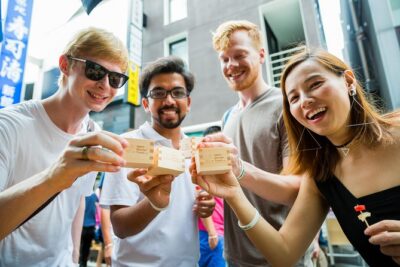
Tokyo Tsukiji Fish Market Food and Culture Walking Tour
Read our review →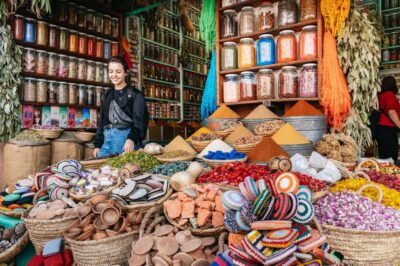
Nishiki Market Brunch Walking Tour (7 Tastings + Brunch)
Read our review →Tsukiji Fish Market Food and Culture Walking Tour
Read our review →
Tsukiji Fish Market: Street Food & Culture Walking Tour
Read our review →
Tsukiji Fish Market Small-Group Food Walking Tour
Read our review →Browse the lists this tour appears in