
Review · MARKET AND COOKING CLASS TOURS
Chiang Mai: Half Day Evening Cooking Class with Market Tour
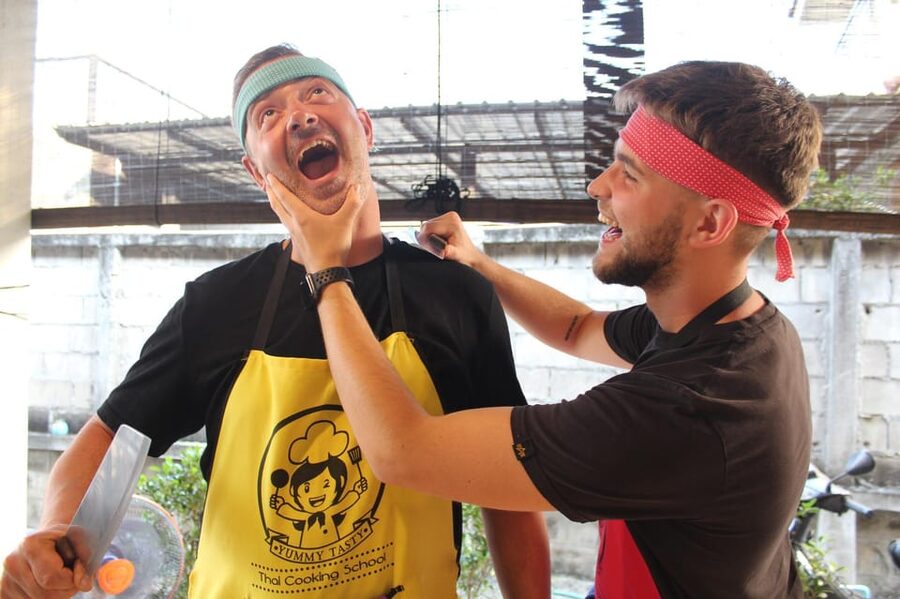
The best part of this Chiang Mai class happens before the cooking begins: at Kad Kom Market, you learn what the herbs, chilies, sauces, and vegetables actually look like before they reach your pan. Then you return to an individual cooking station, make five dishes, and prepare curry paste by hand. I like the market-to-plate format, and I like that you choose your menu instead of cooking a fixed set of dishes.
The class is led by English-speaking instructors such as Sky and Noodle, whose humor and clear demonstrations help beginners keep pace. The main thing to consider is the open-air kitchen. There is no air-conditioning, so the heat from Chiang Mai and the stoves is part of the deal.
Key points at a glance
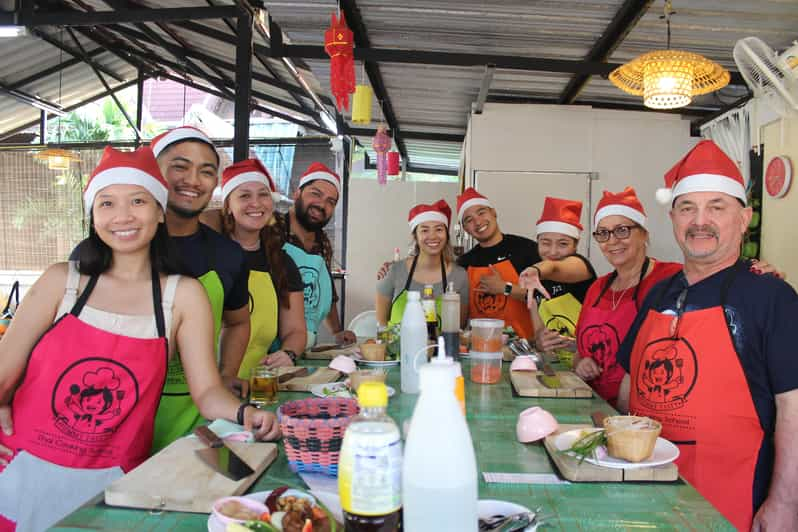
- Kad Kom Market visit: Shop for the fresh ingredients you will use, while learning about Thai herbs, spices, sauces, tofu, and chilies.
- Five dishes per person: Cook a full set of dishes with step-by-step help, then taste what you made.
- Your own station and menu: You do the chopping, pounding, stirring, and seasoning rather than watching a chef do all the work.
- Traditional curry paste: Use the Thai method to pound your own paste, a useful skill you can repeat at home.
- Small evening class: The group is limited to 10 people, with hotel pickup and drop-off available within 3 km of Kad Kom Market.
- Recipe PDF included: Take home instructions, plus practical advice about substitutions for ingredients you may not find at home.
Starting at Kad Kom Market
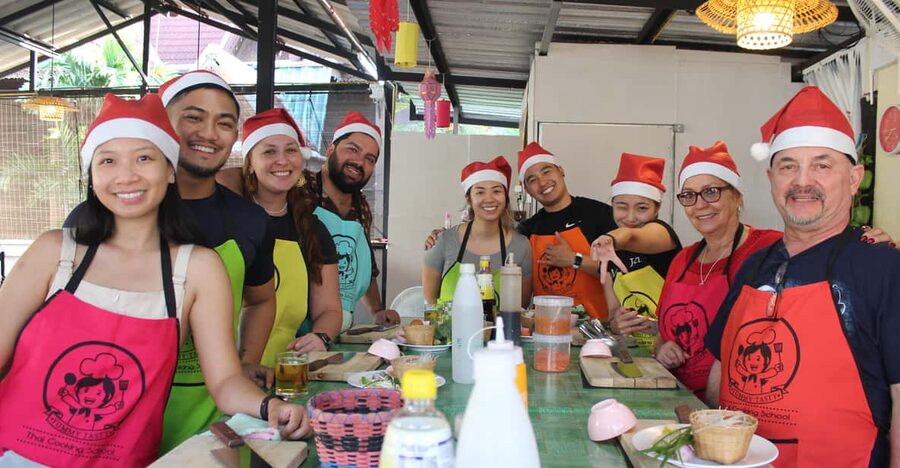
The evening class runs from 3:30 p.m. to 8 p.m., with pickup from hotels within 3 km of Kad Kom Market. That timing works well in Chiang Mai. You get the cooler part of the day for the market visit and cooking, then finish with a substantial meal rather than trying to squeeze in dinner afterward.
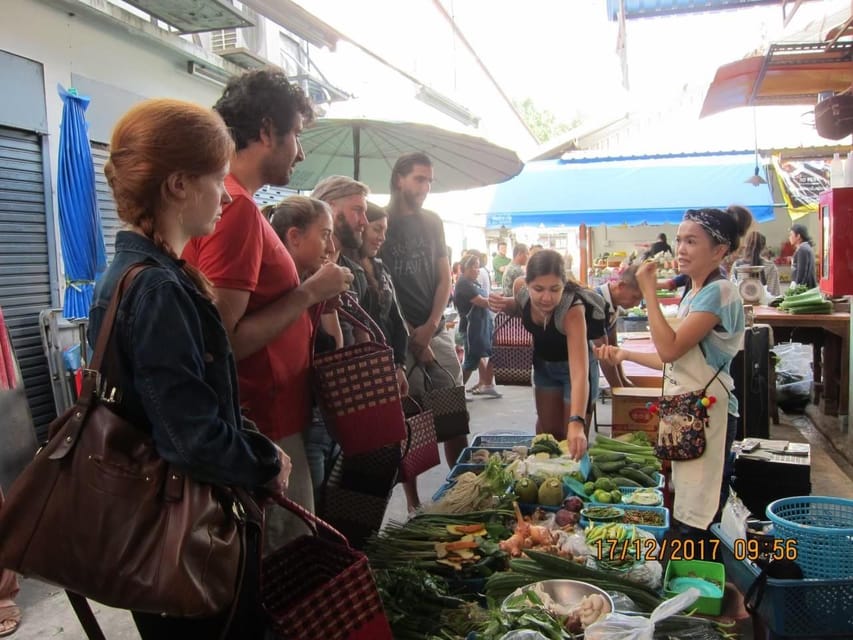
The market visit is not just a quick walk past food stalls. You spend time looking at the ingredients that will go into the class dishes. Your instructor explains Thai seasonings, fresh vegetables, herbs, chilies, and sauces, then helps select what is needed for cooking.
This is valuable because Thai recipes can seem simple on paper but confusing in a local market. A recipe may call for several kinds of chili, a particular herb, or a seasoning that looks unfamiliar. Seeing these ingredients in their everyday setting helps you tell them apart. You also learn what can be substituted when you cook at home.
One useful detail from the class is the attention to small food choices. You may learn how to pick tofu or understand the difference between types of chili. These are modest lessons, but they make the final dishes easier to repeat. Thai cooking depends on balance, and that balance begins with choosing the right ingredients.
The market is also the cultural part of the experience. You are not only collecting supplies. You are seeing how Thai cooking starts with fresh produce, fragrant herbs, sauces, and seasonings bought close to home. For anyone who spends much of a Thailand trip eating prepared food, this short market stop adds context.
More Market and Cooking Class Tours in Chiang Mai
- Chiang Mai: Cooking Class, Market & Thai Herbs Garden Tour
★ 4.9 · 4,824 reviews - Chiang Mai: Authentic Cooking Class with Market & Farm Visit
★ 4.9 · 4,546 reviews - Chiang Mai: Cooking Class with Market and Pickup
★ 4.9 · 1,365 reviews
From shopping bags to the open-air kitchen
After the market, you continue to Yummy Tasty Thai Cooking Class. The school provides welcome snacks, fruit, and drinking water before the cooking begins. You then settle into your own station and receive guidance through the menu.
The setup is practical. You are not standing shoulder to shoulder around one shared stove while an instructor does the difficult work. You get your own place to prepare and cook, which means you can control the seasoning, texture, and pace with help nearby.
The kitchen is outside and has no air-conditioning. This is worth considering before you book. Chiang Mai can be warm, and cooking over a stove adds more heat. Wear light clothing, bring patience, and expect a hands-on kitchen rather than a polished indoor studio.
The open-air setting also suits the food. Thai cooking is about fresh ingredients, quick cooking, and strong aromas. As you chop, pound, and stir, you can follow the food from raw ingredients to finished dish. The tradeoff is comfort. If you have back problems, struggle with heat, or need wheelchair access, this class is not a good match.
Choosing your menu and cooking five dishes
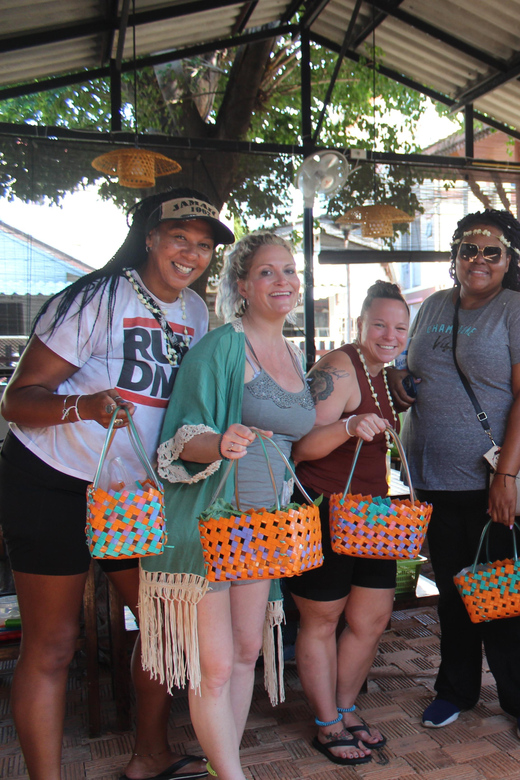
One of the strongest features is the ability to choose your individual menu. You cook five dishes, with the instructor explaining each stage and helping you correct mistakes before they become dinner.
That arrangement gives you more control than a fixed demonstration class. You can focus on foods you already enjoy, try something new, or select dishes you hope to recreate at home. You also get to taste dishes prepared by other people in the small group, which lets you compare how different choices affect the final result.
The teaching style is clear and active. You are shown what to do, then given time to do it yourself. The instructors explain the differences between Thai herbs and seasonings, along with possible substitutions for home kitchens. That matters because ingredients available in Europe, North America, or Australia may not match those in Chiang Mai.
The class is suitable for a beginner because the process is broken into manageable steps. You do not need advanced knife skills or previous Thai cooking experience. The instructions are designed to keep you moving from one dish to the next.
At the same time, this is not a specialist cooking course. One useful caution is that the format is efficient and highly prepared. Ingredients and instructions are organized so you can produce five dishes during four hours. If you want long technical lessons about cooking theory or extended practice with each technique, you may find the pace brisk.
For most people, that structure is an advantage. You learn several dishes in one session without spending the whole evening on one recipe. You leave full, and you have enough variety to make the class useful after your holiday.
The curry paste is the hands-on highlight
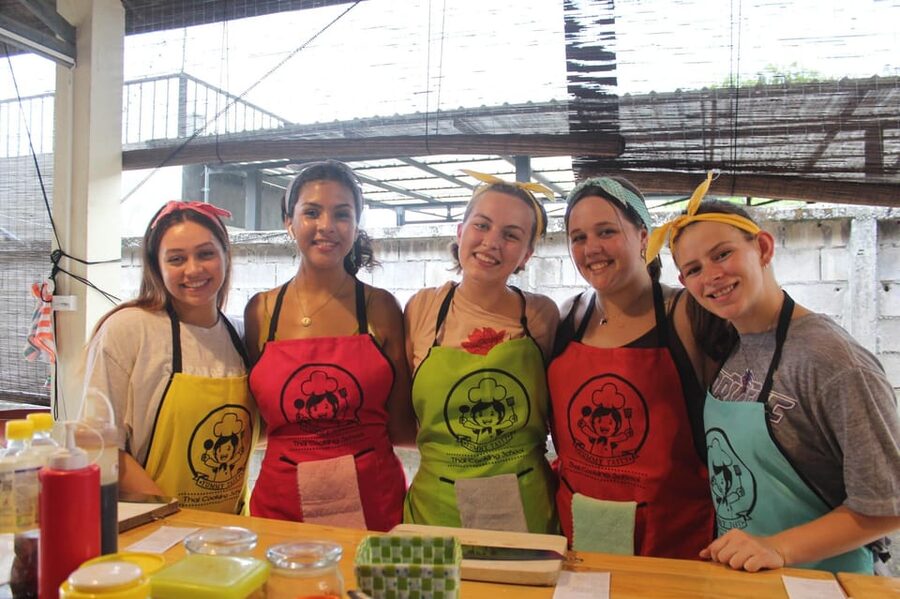
Many Thai cooking classes use a prepared curry paste to save time. Here, you make your own paste in the traditional Thai way. You pound the ingredients by hand, combining them into the base for a curry rather than simply opening a packet.
This is the step that best shows why Thai food tastes so layered. You can see how herbs, chilies, and seasonings build flavor before coconut milk or other ingredients enter the pan. The work is physical, but it gives you a clearer feel for the food than a quick explanation would.
You also learn to balance sweet, salty, sour, and spicy flavors. That lesson is more useful than memorizing one recipe. At home, you can adjust a dish to your own taste while keeping the basic Thai balance intact.
The curry paste also makes a good souvenir in the form of a skill. You may not find every ingredient back home, but the PDF recipe book explains what to use and what can be substituted. The class is at its best when it teaches a method you can adapt, not just a meal you eat once.
More Market and Cooking Class Tours in Thailand
- Chiang Mai: Evening Cooking Class and Local Market Visit
★ 4.9 · 648 reviews - Evening Cooking Class in Organic Farm with Local Market Tour
★ 5.0 · 394 reviews - Cooking Morning Class Chiang Mai Visit Organic Garden and Market
★ 5.0 · 211 reviews - Cooking Evening Class Chiang Mai Visit Organic Garden and Market
★ 5.0 · 187 reviews
What ends up on your plate
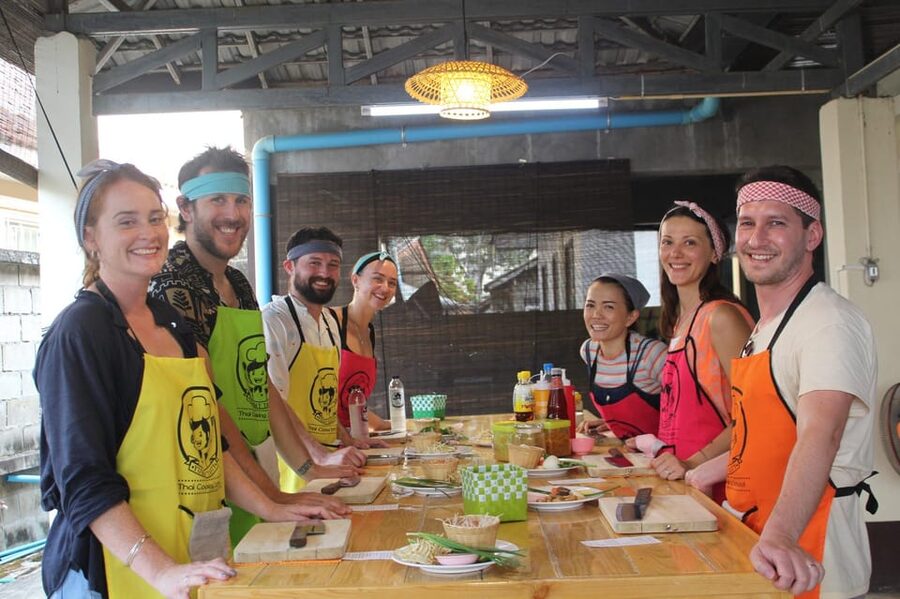
The exact menu is chosen during the booking and class process, but the cooking format allows five dishes per person. Dishes described in the experience include familiar Thai favorites such as Pad Thai, red curry, mango sticky rice, and spring rolls.
That range gives the class a useful rhythm. You may work with noodles, curry, dessert, and folding or wrapping techniques in the same evening. You also get a chance to understand how Thai meals move between textures and flavors, from soft and creamy to crisp, sweet, salty, or spicy.
Mango sticky rice is a good example of why cooking the food yourself helps. It is easy to think of it as a simple dessert, but the balance between sticky rice, mango, and sweet coconut flavors depends on careful preparation. Spring rolls provide a different lesson, since wrapping them neatly takes a little practice.
You eat what you prepare, and anything you cannot finish can be taken home. That is useful because five dishes can be a lot of food, especially after snacks and fruit at the start. It also means you do not have to rush through the meal just to avoid waste.
The food is the main reason to bring an appetite. This is not a tasting menu with tiny portions. It is a practical cooking session that finishes with the dishes you made yourself.
Sky, Noodle, and the teaching style
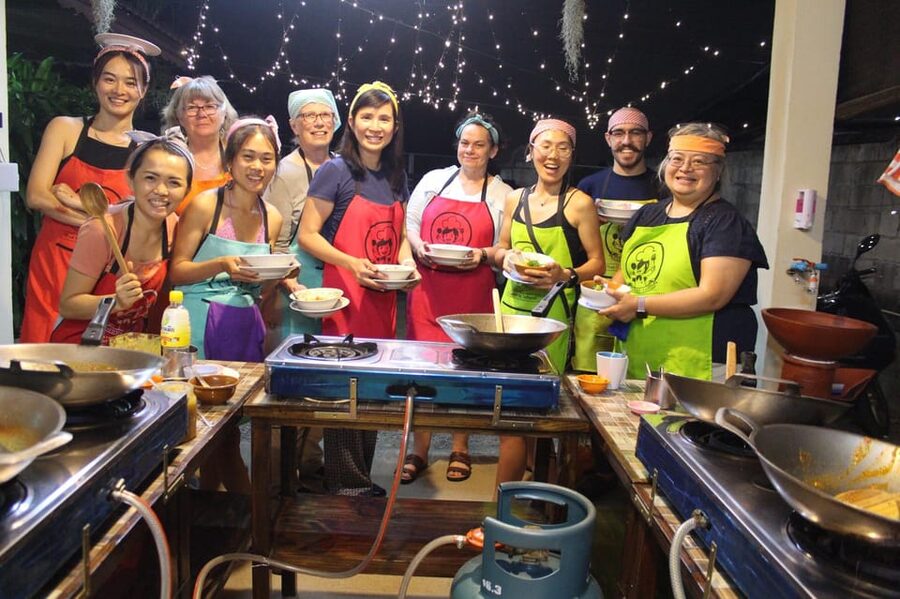
The named instructors associated with this class include Sky and Noodle. Their approach combines demonstrations with humor and direct help at the cooking station.
Sky is described as funny and entertaining, while Noodle is noted for explaining ingredients and each step clearly. That matters in a class where several people may choose different dishes. An instructor who can move between stations, explain substitutions, and keep the pace light makes the four hours easier.
The teaching also reaches beyond recipes. You learn about Thai food culture, the role of seasonings, and why particular herbs or chilies matter. The market visit gives the explanations a practical base because you have already seen the ingredients before using them.
The group is limited to 10 participants. That is small enough for personal guidance, though your experience will depend partly on the final group size. Some sessions may feel especially personal when only a few people attend. Larger sessions still provide an individual station, but you may spend more time waiting for help during busy moments.
The class suits both total beginners and confident home cooks. Beginners get clear steps and supervision. More experienced cooks can pay closer attention to flavor balance, substitutions, and curry paste technique.
Is $35 a fair price?
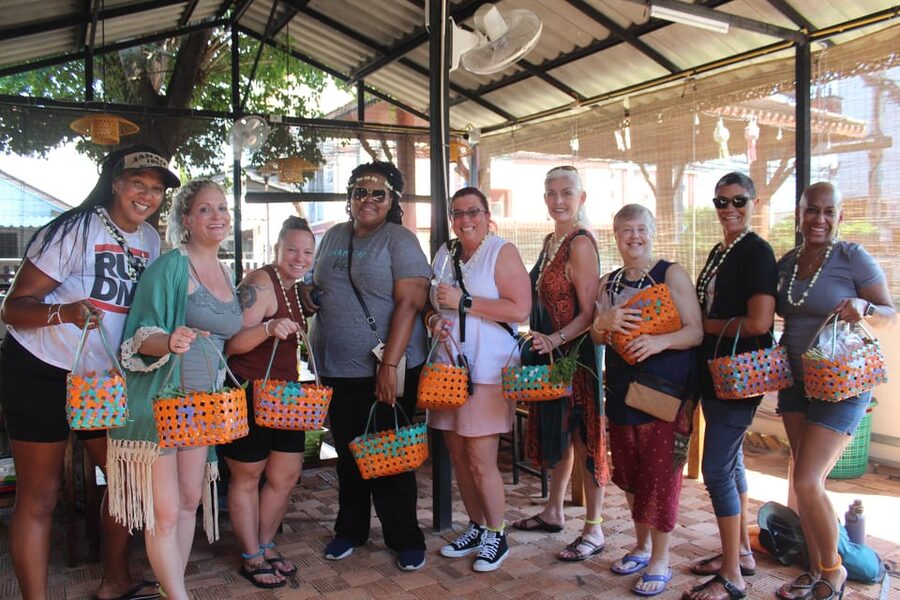
At $35 per person, this class offers solid value for a four-hour experience. The price includes hotel pickup and drop-off within 3 km of Kad Kom Market, the market visit, snacks, fruit, drinking water, five cooked dishes, an individual station, curry paste preparation, and a PDF recipe book.
That is more than a restaurant meal, but it is also more than dinner. You receive food, instruction, transportation within the stated area, and recipes you can use later. The five-dish format is especially good value if you want a substantial evening activity rather than a short demonstration.
The value is lower if you dislike cooking, prefer a comfortable air-conditioned room, or want a quiet dinner with no schedule. This class asks you to participate. You will handle ingredients, work near a hot stove, and eat on the timetable of the group.
Pickup has a clear limit. Hotels within 3 km of Kad Kom Market are covered. If you stay in the Nimman area or farther away, you need to meet the group at Kad Kom Market instead. Check this before booking, since the pickup detail can affect your evening plans.
The morning version runs from 9 a.m. to 1:30 p.m. The evening version runs from 3:30 p.m. to 8 p.m. This review focuses on the evening class, but the same half-day structure applies to both.
Who should book this Chiang Mai class?
I would choose this class if you want to do more than eat Thai food. It is a good fit for couples, friends, solo visitors, and teenagers who enjoy practical activities. You do not need to be an experienced cook, and the individual station means you stay involved.
It is also a smart choice for repeat visitors to Thailand. If you have already seen temples and markets, a cooking class gives you a different way to understand daily life. The market lesson, curry paste, and seasoning work add detail that a standard restaurant meal cannot provide.
Families need to check the age rules carefully. The booking information lists children under 6 as unsuitable, along with babies and very young children. People with back problems, wheelchair users, those with a cold, and anyone over 130 kg are also listed as unsuitable.
You should also think about the kitchen conditions. This is an open-air class without air-conditioning. If heat or standing for a cooking session will make the evening uncomfortable, choose a different activity.
Cancellation is flexible up to 24 hours before the start for a full refund, and you can reserve now and pay later. Those terms help if your Chiang Mai schedule is still changing.
Should you book it?
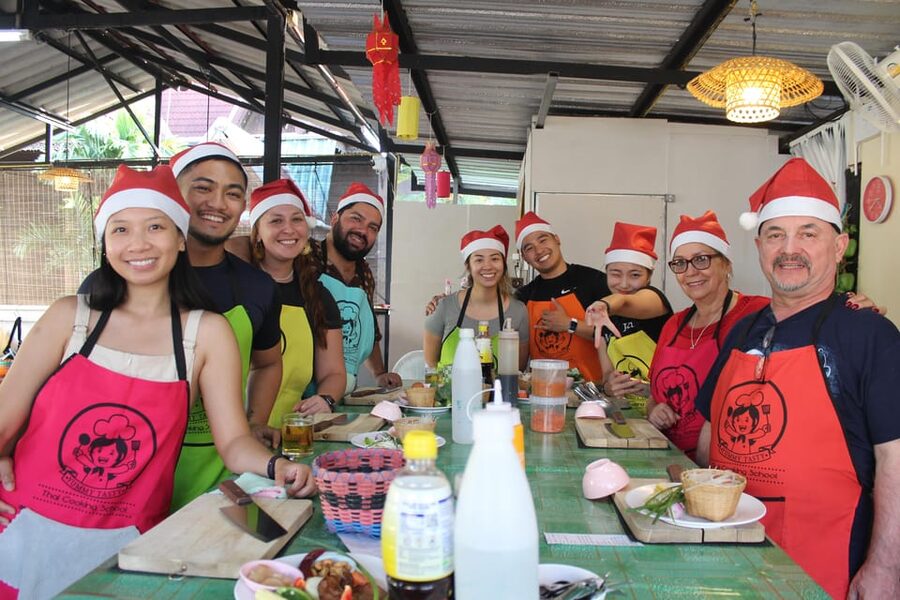
Book this class if you want a hands-on introduction to Thai cooking, a local market visit, and a full meal that you help create. The strongest reasons are the individual station, the choice of five dishes, and the chance to pound traditional curry paste rather than rely on a prepared jar.
I would be less quick to book if you want air-conditioning, a slow chef-led lecture, or a luxury kitchen. The class is practical and efficient, with enough humor and guidance to make beginners comfortable, but it is not designed as a long professional cooking workshop.
For $35, the combination of market shopping, instruction, food, recipes, and local transport is a good deal. Bring an appetite, wear light clothing, and make sure your hotel is inside the pickup area. If those details suit you, this is one of the more useful ways to spend an evening in Chiang Mai.
FAQ
How long does the cooking class last?
The half-day class lasts four hours. The evening session runs from 3:30 p.m. to 8 p.m. The morning session runs from 9 a.m. to 1:30 p.m.
How many dishes will I cook?
You will cook five dishes. The instructor guides you through each dish step by step.
Do I get my own cooking station?
Yes. Each participant has an individual cooking station and can choose an individual menu.
Is hotel pickup included?
Pickup and drop-off are included for hotels within 3 km of Kad Kom Market. If your hotel is in Nimman or farther away, you need to meet the group at Kad Kom Market.
Is the class taught in English?
Yes. The listed instructional language is English.
Is the kitchen air-conditioned?
No. The class takes place in an open-air kitchen outside, without air-conditioning.
What is included in the price?
The $35 price includes hotel transport within the stated area, a local market visit, fresh ingredients for cooking, snacks, fruit, drinking water, an individual station, curry paste preparation, five dishes, and a PDF recipe book.
Just added around Chiang Mai
- Chiang Mai: Half Day Morning Cooking Class with Market Tour★ 4.9 · 10 reviews
- Full Day Thai Cooking Class in Organic Farm and Market★ 5.0 · 3 reviews
- Chiang Mai: Morning Cooking Class with Market Visit★ 4.9 · 81 reviews
- Chiang Mai: Traditional Thai-Akha Cooking Class& Market Tour★ 5.0 · 25 reviews
- Chiang Mai Light: Tuk Tuk Night Tour with Temples & Markets★ 5.0 · 7 reviews
- Chiang Mai: Sticky Waterfall by Local Truck with Market Stop★ 4.8 · 26 reviews
- Chiang Mai : Cook in Farm, Market tour & Go by a Local Train★ 4.8 · 6 reviews
- Chiang Mai: Buddhist Almsgiving and Market Tour with Meal★ 5.0 · 2 reviews
Market and Cooking Class Tours, compared.

Hanoi Cooking Class: Culture, Local Market & Meaning CSR Impact
Read our review →
5 Traditional Dishes Hanoi Cooking Class with Market Trip
Read our review →
Cooking Class and Lunch at a Tuscan Farmhouse with Local Market Tour from Florence
Read our review →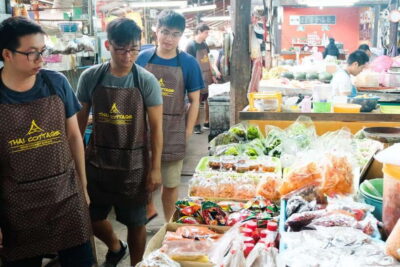
Cooking Class, Market & Thai Herbs Garden Tour
Read our review →
Authentic Cooking Class with Market & Farm Visit
Read our review →
Paella Cooking Experience & Boqueria Market Tour
Read our review →
Cooking Class Hoi An:Local Market, Basket Boat, Fishing & Cooking
Read our review →
Hoi An Cooking Class(Market,BasketBoat Crabfishing&Cooking Class)
Read our review →Browse the lists this tour appears in