

Review · MARKET WALKING TOURS
Rome: Temples, Squares & Markets Guided Walking Tour
Rome reveals itself layer by layer on this private three-hour walk, beginning beneath the painted illusion of Sant’Ignazio and ending among the ancient stones of Tiber Island and the Forum area. You’ll connect grand sights with small details: talking statues, odd street names, Roman food, and the place tied to Julius Caesar’s murder.
I like two things right away. First, the route mixes the must-see Pantheon and Piazza Navona with less obvious corners such as the Jewish Ghetto, Portico d’Ottavia, and Temple of Portunus. Second, your guide can adjust the walk to your interests. Juan has been especially praised for warmth and for adding requested sights, while Daniele is noted for careful timing, strong route planning, and useful restaurant advice.
The main consideration is pace. Three hours covers a lot of ground, and several stops are guided viewpoints rather than long interior visits. Tickets are not included, so confirm exactly which sites you will enter and bring comfortable shoes.
Key points to know before booking
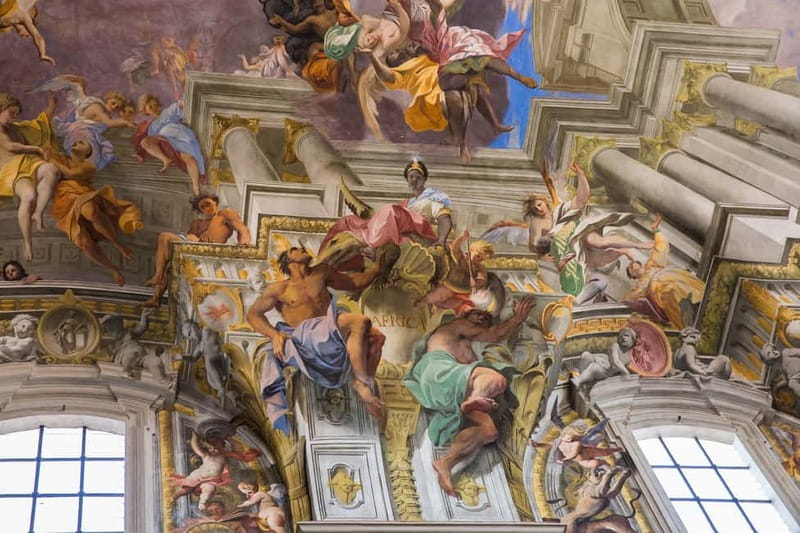
- Start beneath Sant’Ignazio’s painted ceiling: The church gives you an immediate taste of Rome’s theatrical Baroque style.
- One private group, one flexible route: You get the guide’s full attention and can ask for changes to suit your interests.
- A real Roman food stop: One street food tasting is included, with Supplì and Italian food traditions explained along the way.
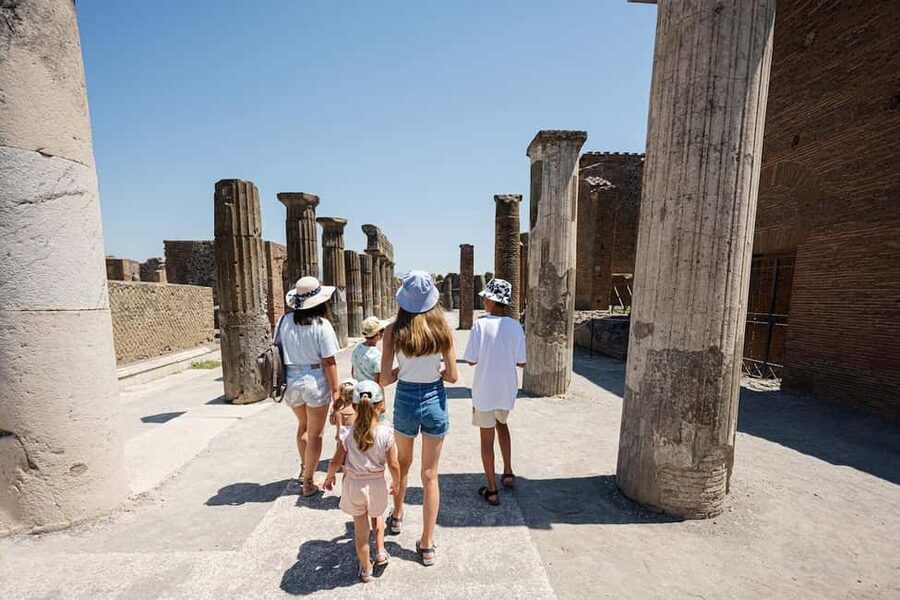
- Ancient Rome beyond the Colosseum: The walk includes the Temple of Portunus, Circus Maximus, Palatine Hill, and Tiber Island.
- A strong mix of famous and overlooked sights: Pantheon, Piazza Navona, Campo de’ Fiori, Largo di Torre Argentina, and the Jewish Ghetto all appear.
- A lot of value in three hours: At $79.30 per person, the price makes most sense for a small private group that wants context and personal recommendations.
Why this route works for a first look at Rome

Rome can feel like a museum without walls. A Baroque church may sit beside a pagan temple, a market may fill a square where political plots once unfolded, and a modern street can conceal ancient foundations.
This walk makes that layering the main subject. Instead of spending three hours on only one famous monument, you move through several districts and time periods. You’ll see how religious buildings, imperial ruins, neighborhood life, and food traditions sit close together.
The private format matters here. You can stop to ask why an obelisk is in a particular square, request more time at an archaeological site, or ask for advice on eating after the tour. The strongest guide feedback centers on personal attention. Juan is described as friendly, warm, and willing to tailor the route. Daniele is noted for confirming the tour in advance, arriving on time, planning for good views, and offering ideas for places to eat and visit elsewhere in Italy.
That does not mean the walk is slow. The itinerary lists roughly 15 minutes at many stops, with 20 minutes at Portico d’Ottavia and additional time around the Palatine Hill. You should expect a moving overview, not a long museum-style lecture at every site.
More Market Walking Tours in Italy
- Palermo: Walking Tour of Historic Markets and Monuments
★ 4.9 · 478 reviews - Palermo: Markets and Monuments City Center Walking Tour
★ 4.9 · 238 reviews - Markets and monuments: walking tour and street food in Palermo
★ 5.0 · 159 reviews
Sant’Ignazio starts the walk with a visual surprise
Meet at the entrance of the Church of Sant’Ignazio of Loyola. The opening guided visit lasts about 15 minutes, but the church makes a quick stop worthwhile.
Its Baroque interior is famous for its painted ceiling, which creates the illusion of architecture rising above you. This is a good first lesson in Roman visual trickery. The city’s churches often use painting, perspective, marble, and light to make a space feel larger and more dramatic than it is.
Starting here also helps spread the route beyond the most crowded central squares. You begin with a church that many first-time visitors might pass by, then walk toward the Pantheon. If church interiors matter to you, ask your guide how much time can be spent looking upward and discussing the artwork.
The Pantheon and Rome’s obelisks
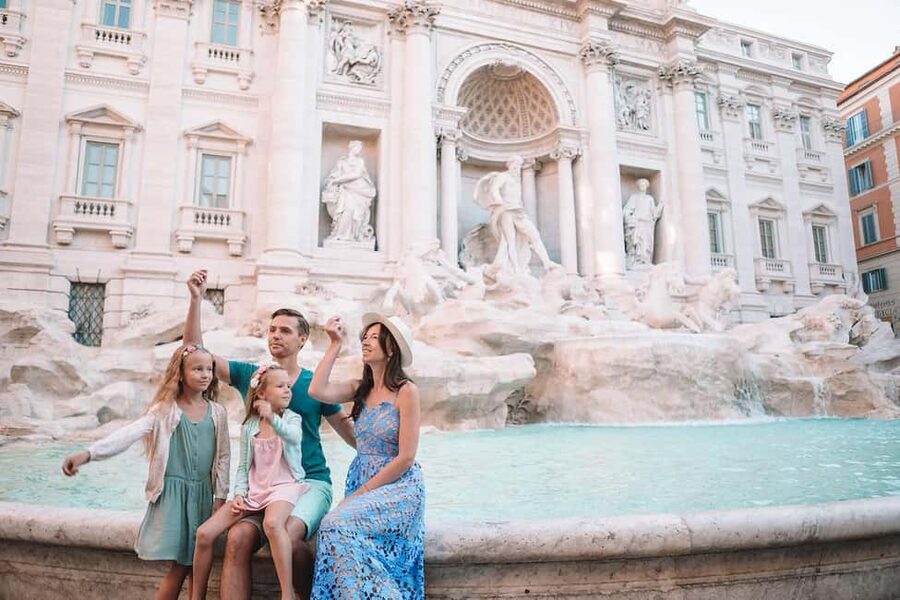
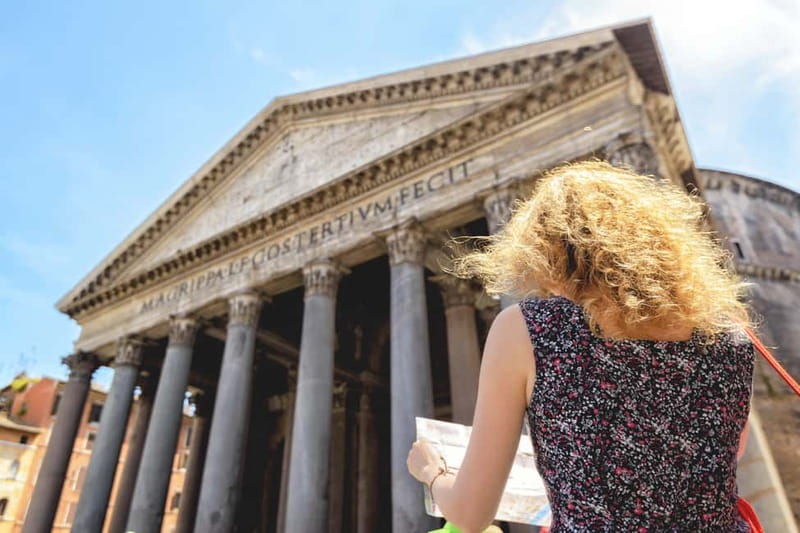
The Pantheon is one of the essential stops. The itinerary allows about 15 minutes of guided attention, so ask whether the tour includes interior entry on your chosen date. Attraction tickets are not included, and the tour description does not promise admission.
Even from outside, the Pantheon gives your guide plenty to explain: its massive columns, unusual round form, and long life as one of Rome’s best-preserved ancient buildings. The focus here also turns to Rome’s obelisks. Some are thousands of years old and were brought from Egypt, then reused as symbols in later Roman squares.
This is exactly the kind of context a walking guide can provide well. You are not just looking at a monument. You are learning how Rome repeatedly borrowed, moved, and reinterpreted older works.
Piazza Navona, talking statues, and Campo de’ Fiori
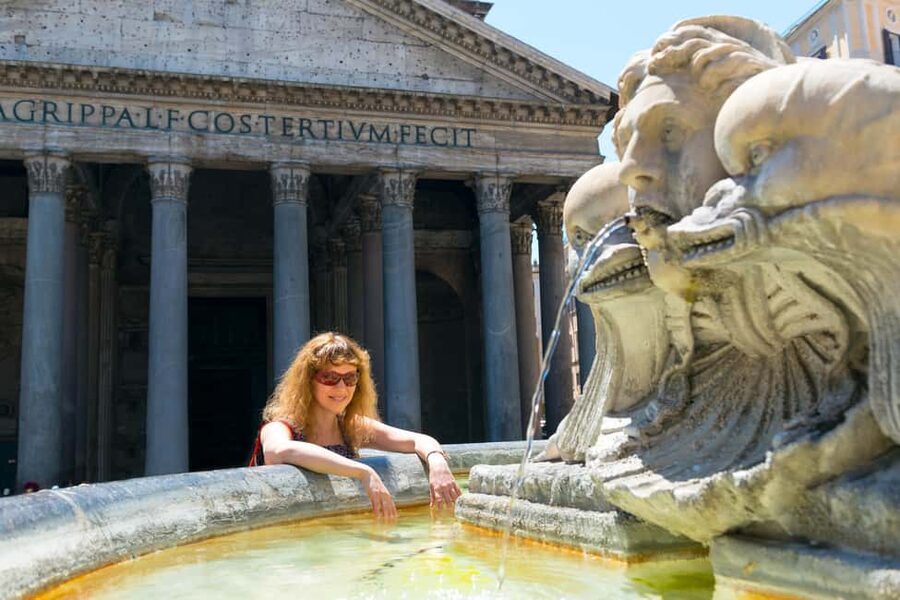
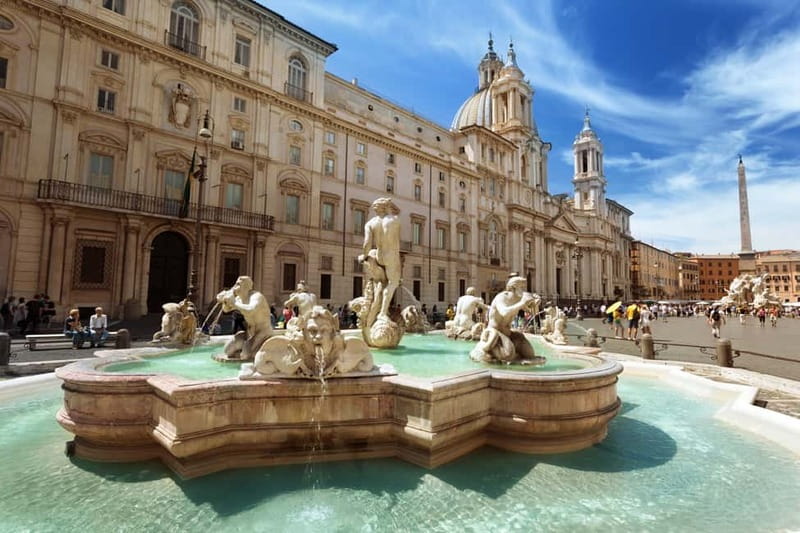
Piazza Navona follows, with another 15-minute guided stop. Its long shape reflects the ancient stadium beneath the square, while the fountains and Baroque buildings show how Rome reshaped older ground for later public life.
Your guide also introduces the city’s talking statues. These were public places where Romans posted anonymous comments and political complaints. It is a small, memorable detail that gives the square a human voice beyond the usual architectural facts.
At Campo de’ Fiori, the focus shifts to food and daily life. The local market is a natural place to discuss Italian ingredients and Roman eating habits. One street food tasting is included, and Supplì is specifically named. This fried Roman specialty, usually made with rice and a savory filling, gives you a direct taste of the city rather than another view from a pavement.
Keep your expectations clear: one tasting is included, not a full market meal. If you want a longer food experience, ask your guide for recommendations before the walk ends. Daniele is specifically noted for offering eating suggestions, and the final part of the tour includes time for local advice.
More Market Market Walking Tours in Rome:
- Bangkok: City Highlights Temple and Market Walking Tour
★ 4.5 · 3,990 reviews - Tokyo Tsukiji Fish Market Food and Culture Walking Tour
★ 5.0 · 3,184 reviews - Marrakech: Ben Youssef, Secret Garden, & Souks Walking Tour
★ 4.6 · 2,802 reviews - Marrakech: Colorful Medina Souks Guided Walking Tour
★ 4.7 · 2,470 reviews
Largo di Torre Argentina and Rome’s layered ground
Largo di Torre Argentina is one of the most useful stops for understanding Rome’s layers. The archaeological ruins here are tied to the place where the Ides of March brought a terrible end to Julius Caesar.
The area is not presented as a long archaeological visit. You’ll receive a guided explanation, listed at about 15 minutes. That makes it a good stop for connecting political history with the city around you.
Rome is often compared with lasagna because one layer sits directly on another. The phrase is especially useful here. Ancient temples, later streets, and modern city life occupy the same space, and the walk keeps returning to that idea.
The Jewish Ghetto and Portico d’Ottavia
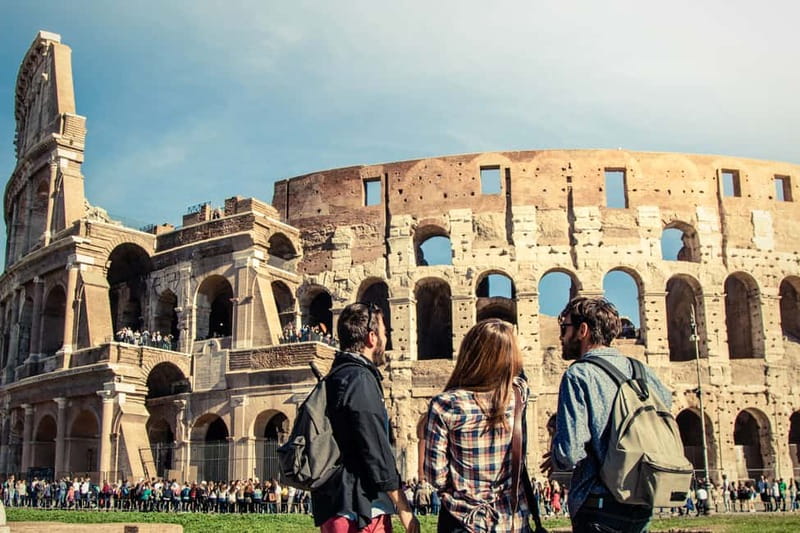
The route then enters the Jewish Ghetto, one of its most distinctive sections. The neighborhood is described as unusually preserved in character, with narrow lanes and a strong sense of continuity.
This is where the walk shifts from grand monuments to a district with its own identity. You’ll hear about unusual street names and see how a small part of Rome can feel separate from the wide avenues and famous piazzas nearby.
Portico d’Ottavia receives about 20 minutes, more than most individual stops. The ancient structure once formed part of a grand portico complex and now sits within the Jewish Ghetto. It is a useful meeting point between Roman ruins and neighborhood life.
The itinerary also includes a fake Colosseum, a charming ancient ruin that resembles the better-known amphitheater. Do not expect a second Colosseum or a major ticketed attraction. Its value is the surprise of seeing how often Rome produces a familiar shape in an unexpected place.
Temples, the Temple of Portunus, and the Mouth of Truth
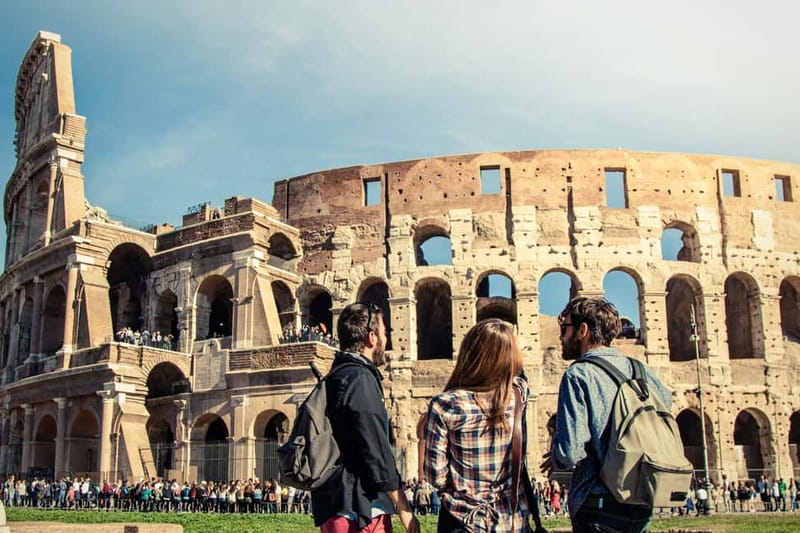
The Temple of Portunus is another important ancient stop. Its preserved form helps you picture the religious buildings that once lined Rome’s riverfront routes. The guide will give the site context, but the visit is listed as a short guided stop rather than an extended archaeological tour.
The Mouth of Truth offers a lighter moment. The carved face became famous through the film Roman Holiday, where Audrey Hepburn helped turn it into one of Rome’s most recognizable photo stops.
It is easy to treat the Mouth of Truth as a simple movie reference, but the tour places it among nearby ancient remains and temples. That gives the stop more substance. You’ll see how cinema, legend, and old stone can combine to create a modern Roman ritual.
The itinerary allows about 15 minutes here. If taking a photo matters to you, mention it to your guide so the stop does not become only a passing glance.
Circus Maximus and Palatine Hill
The walk continues toward Circus Maximus, the enormous ancient racecourse where chariot contests once drew huge crowds. Much of what you see today is open ground and surviving contours rather than a fully reconstructed monument.
That can be a drawback if you expect an intact arena. It can also be one of the best places to grasp Rome’s scale. Your guide helps you imagine the crowds, races, and public events that once filled this long valley.
From there, you’ll view the Palatine Hill, associated with Rome’s rulers and the imperial palace remains. The route does not include a ticket to the Palatine archaeological area, so clarify whether your visit is from an exterior viewpoint or includes paid entry.
The Palatine is valuable even as a panorama. It connects the ancient center to the city’s political power and gives you a sense of where imperial life took place. The itinerary lists guided time here but does not give a fixed number of minutes, so ask if you want more attention on the palace remains.
Crossing to Tiber Island
Tiber Island is the final named stop and a fitting place to finish. The island sits in the Tiber and links the historic center with the Trastevere side of the river.
After temples, markets, churches, and imperial ruins, the river gives the walk a change of mood. It also helps you understand Rome geographically. The city’s development was tied to crossings, river traffic, and access between neighborhoods.
The supplied meeting information says the tour starts at Sant’Ignazio and ends at Tiber Island, while another note says the activity ends back at the meeting point. That is a small but important detail to clarify when booking. Ask your host where the walk will actually finish on your date.
What the $79.30 price gets you
At $79.30 per person, this is not the cheapest way to see Rome’s center. You are paying for a private experience, a live local guide, route flexibility, and one food tasting. You are not paying for attraction tickets.
The value improves when you are traveling as a small private party and want personal advice. A guide who can adjust the route, add a place you missed, or end near your hotel can save time and make the walk feel designed for you. Daniele’s route planning and practical suggestions are especially relevant here, while Juan’s willingness to personalize the walk is useful if your sightseeing list is already partly set.
The price is harder to justify if you want long visits inside major monuments. This is a broad city walk, not a Pantheon or Palatine ticketed tour. For that style of sightseeing, you would need to arrange admission separately and allow more time.
The good news is that cancellation is flexible up to 24 hours before the tour for a full refund, and you can reserve now and pay later. The tour is available in English, Italian, and Spanish, and it is listed as wheelchair accessible.
Who will get the most from this private walk
I would choose this for a first or second day in Rome. You’ll get a useful map of the central districts, then can return later to the sites that deserve more time.
It suits you best if you:
- Want famous sights mixed with less obvious streets and ruins.
- Prefer a private guide rather than a large group.
- Like asking questions and changing the route.
- Want one Roman food sample without booking a full food tour.
- Need restaurant and sightseeing suggestions for the rest of your stay.
- Enjoy history told through streets, buildings, and small local details.
It may not suit you if you want a relaxed pace, extended interior visits, or a full meal. The route covers many stops in three hours, so comfortable footwear is sensible even though the tour is wheelchair accessible.
Should you book the Temples, Squares & Markets walk?
Book it if you want Rome explained as a connected city rather than a checklist of monuments. The mix of Sant’Ignazio, the Pantheon, Campo de’ Fiori, Largo di Torre Argentina, the Jewish Ghetto, ancient temples, Circus Maximus, and Tiber Island gives you a broad and useful first look.
The strongest reason to choose it is the private format. Juan and Daniele are both associated with the kind of personal service that can make a city walk better: route changes, punctual planning, local food advice, and attention to your own interests.
Skip it if your main goal is to spend hours inside the Pantheon or Palatine Hill. In that case, book a site-specific tour and arrange the admission tickets separately. For a flexible overview with a taste of Roman street food, this is a strong three-hour introduction at a fair private-tour price.
FAQ
How long does the Rome walking tour last?
The tour lasts three hours.
What is the tour price?
The listed price is $79.30 per person.
Is this a private tour?
Yes. It is offered for a private group.
Which languages are available?
Live guiding is available in English, Italian, and Spanish.
Where does the tour start?
It starts at the entrance of the Church of Sant’Ignatius of Loyola.
Which places are included on the route?
The route includes Sant’Ignazio, the Pantheon, Piazza Navona, Campo de’ Fiori, Largo di Torre Argentina, Portico d’Ottavia, the Jewish Ghetto, the Temple of Portunus, the Mouth of Truth, Circus Maximus, Palatine Hill, and Tiber Island.
Is food included?
One traditional Roman street food tasting is included. Supplì is specifically mentioned.
Are attraction tickets included?
No. Tickets to attractions are not included.
Is the tour wheelchair accessible?
Yes, the activity is listed as wheelchair accessible.
Can I cancel the tour?
You can cancel up to 24 hours in advance for a full refund. You can also reserve now and pay later.
Just added around Rome
- Testaccio Experience: Street Food, Market and Traditions★ 5.0 · 4 reviews
- Rome: Testaccio Food & Market Tour with Pasta & Wine★ 5.0 · 38 reviews
- Rome: Taste of Testaccio Food & Market Tour★ 4.9 · 38 reviews
- Rome: The Vatican Market Experience Tasting and Class★ 4.7 · 10 reviews
- Rome: Trajan Markets Experience with Multimedia Video★ 4.0 · 66 reviews
- Rome: Prati Food & Wine Market Tour with St. Peter Square★ 5.0 · 7 reviews
- Rome: Trajan’s Markets & Museum of The Imperial Fora Tour★ 4.8 · 4 reviews
- Farmers Market Shopping and Roman Full Course Class – SHARED★ 5.0 · 12 reviews
Market Walking Tours, compared.

Tokyo Tsukiji Fish Market Food and Culture Walking Tour
Read our review →


Nishiki Market Brunch Walking Tour (7 Tastings + Brunch)
Read our review →Tsukiji Fish Market Food and Culture Walking Tour
Read our review →
Tsukiji Fish Market: Street Food & Culture Walking Tour
Read our review →
Tsukiji Fish Market Small-Group Food Walking Tour
Read our review →Browse the lists this tour appears in