
Review · MARKET WALKING TOURS
Historic Amsterdam Walking Tour: Royal Palace & Flea Markets
Amsterdam’s best stories often appear in unexpected places. On this private walk, a former stock exchange, a canal house with a church hidden in its attic, a former city gate, and a royal palace all fit into one compact route. The walk also gives you a useful look at the Dutch Golden Age and the city’s long relationship with trade, religion, and water.
I like the private format, since your group can focus on the subjects that interest you most. I also like the mix of major sights and everyday Amsterdam, especially the stop at Waterlooplein Market and the walk along the Amstel.
The main consideration is price: at $255.66 per person, this is costly for a 2.5-hour walk, particularly since the Royal Palace and Our Lord in the Attic Museum are outside visits. You are paying for a private guide and a focused introduction to central Amsterdam, not a series of included admissions.
Key points to know before booking

- A private 2.5-hour route: Only your group takes part, which allows for a more personal pace and conversation.
- A strong Dutch Golden Age theme: Trade, religion, civic power, and royal history connect the stops.
- Waterlooplein Market adds local texture: You can browse vintage clothing, antiques, and assorted curiosities.
- Several important buildings are outside visits: The Royal Palace and Our Lord in the Attic Museum are admired from the street.
- A useful first-day introduction: The route covers many central sights without requiring public transport between stops.
- Flexible cancellation: You can receive a full refund if you cancel at least 24 hours before the start time.
Why this walk works as an introduction to Amsterdam

This tour is built around a simple idea: Amsterdam makes more sense when you connect its buildings to the forces that shaped the city. Commerce created wealth, religious conflict changed where people worshipped, water supported trade, and civic leaders placed their authority in grand public buildings.
You begin at Beurs van Berlage on Damrak, close to Amsterdam Central Station and the main canal belt. From there, the route moves through old commercial streets toward Nieuwmarkt, Waterlooplein, the Amstel, and finally Dam Square.
That progression matters. You are not simply ticking off famous addresses. You are moving through parts of the old city where business, religion, government, and ordinary street life still sit close together.
The private format is useful here. With only your group taking part, you can ask for more detail about the Dutch Golden Age, art, architecture, or the city’s colonial past. The supplied information does not name the guide, so you cannot choose a particular guide in advance. Still, the experience is designed around personal guiding rather than a large fixed group.
More Market Market Walking Tours in the world:
- Bangkok: City Highlights Temple and Market Walking Tour
★ 4.5 · 3,990 reviews - Tokyo Tsukiji Fish Market Food and Culture Walking Tour
★ 5.0 · 3,184 reviews - Marrakech: Ben Youssef, Secret Garden, & Souks Walking Tour
★ 4.6 · 2,802 reviews
Beurs van Berlage and Amsterdam’s commercial power
The walk opens at Beurs van Berlage, a striking brick building with a major place in Amsterdam’s commercial and architectural story. The former exchange is now used as a cultural venue, but its original purpose helps explain the city’s success as a center of business.
You spend about 25 minutes here, the longest stop at the start of the route. That gives the guide time to explain the building’s design and its connection to Amsterdam’s trading past. Look closely at the structure rather than treating it as a quick photo stop. Its size and formal appearance contrast with the narrow canal houses nearby.
This is a good opening because it gives you a broad frame for the rest of the walk. Amsterdam’s wealth did not come from royal ceremony alone. It grew through shipping, finance, merchants, and international trade.
The admission charge is listed as free, but the stop is an outside visit. If you want to see the interior or attend an event, you would need to arrange that separately. The tour itself keeps moving.
A canal house with a church in the attic
Next comes Our Lord in the Attic Museum, known in Dutch as Ons’ Lieve Heer op Solder. The museum occupies a canal house that conceals a 17th-century church in its upper floors.
You spend about 15 minutes here, and the stop is listed as an outside visit. That means you should not expect a museum admission or a full look inside during this tour. Even from the street, the site introduces one of Amsterdam’s most striking religious stories.
The building reflects a period when Catholic worship faced restrictions, leading people to create private places of worship inside ordinary homes. That contrast is the point: an unassuming canal house could contain a church above the living quarters.
I find this one of the most memorable stops because it shows how Amsterdam’s history survives in practical, physical form. Instead of hearing only about religious policy, you see the kind of building that made private worship possible.
If visiting the museum interior is important to you, check its separate admission arrangements and opening times. This walking tour offers context, not a full museum visit.
The Waag and the old city gate at Nieuwmarkt
The route continues to The Waag, a landmark on Nieuwmarkt square. Its turrets and compact, almost storybook appearance make it one of the easier Amsterdam buildings to recognize.
The Waag began as a city gate and later served other civic purposes. Today, it houses a café and restaurant. The change from defensive structure to public gathering place reflects how old Amsterdam buildings have been reused over time.
The stop lasts about 15 minutes. That is enough for an explanation and photographs, but not a long visit inside. You should think of this part of the tour as an architectural pause rather than a meal stop.
Nieuwmarkt also helps you understand the city’s older street pattern. Amsterdam can feel polished and postcard-ready around the main squares, but places such as this retain a sense of their former civic role. Your guide can connect The Waag to the wider story of city walls, gates, and public control.
More History Tours in the world:
- Private Excursion to Floating Market and Ayutthaya World Heritage
★ 5.0 · 515 reviews - Palermo: Walking Tour of Historic Markets and Monuments
★ 4.9 · 478 reviews - Discover Palermo in 3 hours. Art, history, markets and street food
★ 5.0 · 352 reviews - Private Heritage Walking Tour in Jaisalmer Fort and Old Bazaar
★ 5.0 · 306 reviews
Oostindisch Huis and the difficult side of trade
The Oostindisch Huis was the headquarters of the Dutch East India Company, often known by its Dutch initials, VOC. This stop brings the tour’s trading story into sharper focus.
The building is important not only because it represents Dutch commercial power, but also because that power depended on colonial expansion. A good explanation here should help you see both sides: the company’s role in Amsterdam’s wealth and the wider human costs tied to overseas trade and control.
You spend about 15 minutes at the site. Like several stops on this route, it is primarily an outside viewing point. The value comes from understanding what the building represented, rather than from an elaborate interior visit.
This is one reason the tour can appeal to people interested in more than pretty streets. Amsterdam’s Golden Age is not just a story of art, canals, and prosperous merchants. It is also a story of institutions that shaped events far beyond the Netherlands.
If colonial history is a major interest for you, use this stop as a starting point and ask the guide for further context. The walk gives you a concise introduction, not a full specialist tour.
Waterlooplein Market for a change of pace
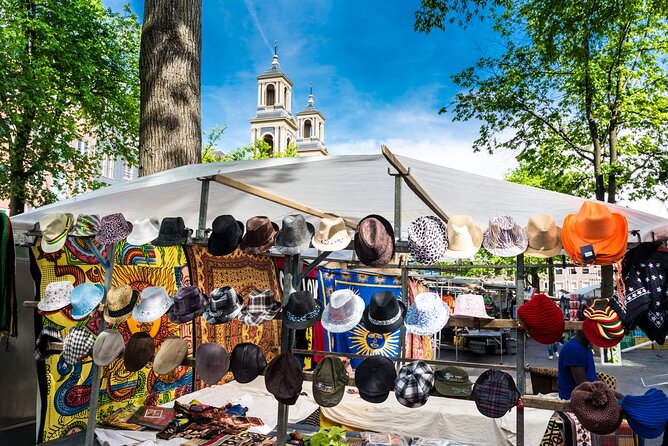
After several historic buildings, Waterlooplein Market brings you into a more casual part of the route. You have about 25 minutes to take in the market’s collection of vintage clothes, antiques, and assorted objects.
This is not a polished monument. That is precisely why it helps balance the tour. You can browse, look for an unusual souvenir, or simply watch daily commerce unfold around the stalls. The selection can change, so you should arrive with curiosity rather than a firm shopping list.
The market is especially useful if you want a break from formal architecture. You can compare Amsterdam’s old trading culture with the smaller, more personal buying and selling that still takes place in an open-air market.
Keep your expectations practical. Twenty-five minutes is enough for a quick look, but not a relaxed shopping session if you inspect every stall. If you find something worth buying, the guide may be able to help you understand the area, but the supplied tour details do not promise bargaining assistance or specific market inventory.
Still, this is one of the route’s strongest choices. It gives the walk a little grit and variety.
Along the Amstel River
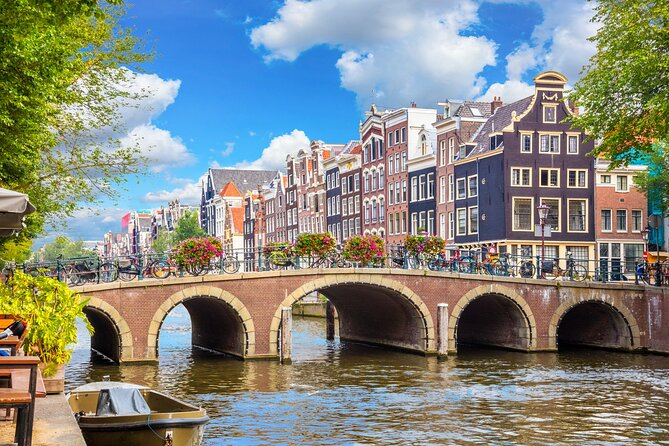
The tour then reaches the Amstel, the river that gave Amsterdam its name. You spend about 20 minutes along the water, either strolling beside it or, according to the tour description, seeing it from a cruise perspective. The experience is presented as a walking tour, so you should confirm the exact arrangement if a boat ride is important to you.
The river offers a calmer stretch after the market. Its banks provide views of Amsterdam’s water-based design and show why canals and river traffic were central to the city’s growth.
This part of the route is also a chance to slow down. You will not be rushing from one building entrance to another. Instead, you can look across the water, watch the city’s movement, and connect the commercial story from Beurs van Berlage and Oostindisch Huis with the waterways that supported it.
The river stop is not described as a formal cruise with an included ticket. Treat it as a waterside walk unless the provider confirms otherwise.
The Royal Palace from Dam Square
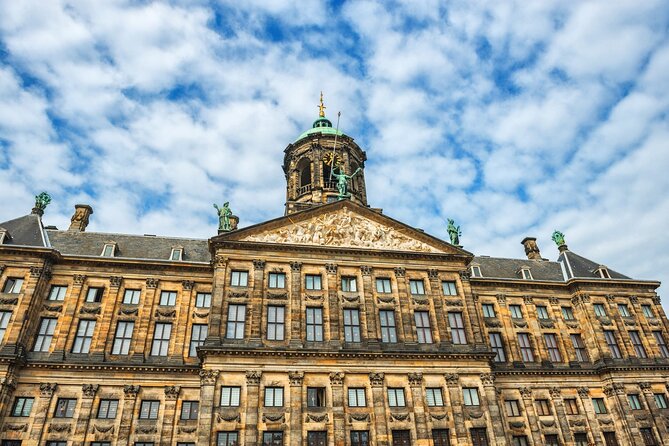
The final major landmark is the Royal Palace Amsterdam, located on Dam Square. Its scale and formal design make it a clear contrast to the narrow canal houses and market stalls earlier in the walk.
You spend about 15 minutes here, viewing the palace from outside. The palace remains one of Amsterdam’s most important symbols of civic and royal authority, but this tour does not include an interior visit.
That distinction matters when judging the cost. If your main goal is to tour grand rooms, see artworks, or spend time inside the palace, you will need a separate ticket and more time. If you want the palace explained as part of the city’s central history, the outside stop works well.
A guide can help you read Dam Square as more than a busy open space. The palace, the National Monument, and the surrounding buildings show how this area became Amsterdam’s symbolic center.
Finishing at Dam Square
The tour ends at Dam Square after about 20 minutes devoted to the square itself. This is a practical finish because you remain in the center of Amsterdam, surrounded by major sights, shops, cafés, and transport connections.
The square can be crowded and noisy, with street performers and many people passing through. That energy is part of the experience, but it can make a detailed conversation harder than at quieter points on the route.
Ending here gives you several easy choices. You can visit the Royal Palace separately, continue toward other central sights, or simply use the square as a reference point for the rest of your day.
The meeting point at Beurs van Berlage is on Damrak 243. The end point is Dam Square. Since the route is near public transportation, it is reasonably easy to reach at the start and continue exploring afterward.
What the $255.66 price really buys
At $255.66 per person, this walk is not a budget introduction to Amsterdam. The price makes more sense for a private group that values a guide’s attention and wants to shape the conversation around its own interests.
For a group of friends or family, the private format may be more appealing than joining a large public tour. Group discounts are available, though the exact discount is not provided. Ask for the final group price before booking.
The cost includes the guided experience, but the listed stops do not include admission tickets. Most are outside visits, and all are shown with free admission. You are paying mainly for interpretation, organization, and the convenience of a private route.
I would consider the price reasonable only if you want a personal orientation and are traveling with enough people to share the cost. For one person or a couple on a tight budget, it is expensive compared with a standard group walk.
The tour is booked, on average, six days ahead. That suggests you should reserve before arrival if your schedule is fixed, especially if you need a particular date.
Who should book this Amsterdam walk?
I would recommend it most strongly to first-time visitors who want to understand the central sights before exploring on their own. The route gives you a clear base in about two and a half hours, with enough variety to keep the walk from feeling like a long lecture.
It also suits history and architecture fans who want to connect the Dutch Golden Age with trade, religion, government, and the river. The stop at Oostindisch Huis is useful for anyone who wants the colonial side of Amsterdam included in the conversation.
Families and small groups may appreciate the private arrangement. You can ask questions without worrying about a large crowd, and most people can participate according to the supplied information.
I would hesitate to book it if you want extensive interior visits, a dedicated museum tour, or a full shopping afternoon at Waterlooplein Market. The route is broad rather than deep. It introduces many places, but it does not spend an hour inside any one of them.
Should you book it?
Book this tour if you want a private overview of central Amsterdam with a clear historical thread. The mix of Beurs van Berlage, the attic church, The Waag, Oostindisch Huis, Waterlooplein Market, the Amstel, and Dam Square gives you more range than a simple monument walk.
Think twice if $255.66 per person feels high for outside views and short stops. In that case, you may prefer a less expensive group walk and separate tickets for the Royal Palace or Our Lord in the Attic Museum.
For a first visit, a small group, and an interest in Amsterdam’s Golden Age, this is a useful and well-shaped introduction. Reserve it when you can use the private guide to ask questions, not just to follow a route from one photo stop to the next.
FAQ
How long does the Historic Amsterdam Walking Tour last?
The tour lasts approximately 2 hours and 30 minutes.
What is the price of the tour?
The listed price is $255.66 per person.
Is this a private tour?
Yes. Only your group participates in the activity.
Where does the tour start?
The meeting point is Beurs van Berlage, Damrak 243, 1012 ZJ Amsterdam, Netherlands.
Where does the tour end?
The tour ends at Dam Square, Dam, 1012 Amsterdam, Netherlands.
Does the tour include entry to the Royal Palace?
No. The Royal Palace is an outside visit on this route, and no admission ticket is included.
Does the tour include entry to Our Lord in the Attic Museum?
No. Our Lord in the Attic Museum is listed as an outside visit, with no admission ticket included.
Is the tour close to public transportation?
Yes. The tour information states that the route is near public transportation.
Can I cancel for a full refund?
Yes, if you cancel at least 24 hours before the experience start time. Cancellations or changes made less than 24 hours in advance are not accepted for a refund.
Just added around the world
- 3-Hour Herbal Wholesale TCM Market and a Local Wet Market Tour★ 5.0 · 4 reviews
- Half-day Dandan Noodles Cooking Class with a Local Market Visit★ 5.0 · 8 reviews
- Chania Old Town, Public Market and Chrisopigi Monastery Tour★ 4.5 · 6 reviews
- Charleston International Sweet Treats & Historic City Market Tour★ 5.0 · 22 reviews
- Chania: Old Town, Public Market, Hill of Prophet Elias, Agia Triada★ 5.0 · 35 reviews
- Food Tasting & Market Shopping: Private Guided Tour in PORT LOUIS★ 4.5 · 9 reviews
- Moroccan Cooking Class with a Local Family & Market Visit★ 5.0 · 16 reviews
- Private Market Tour & Cooking Class in Casablanca with Transfers★ 5.0 · 20 reviews
Market Walking Tours, compared.

Tokyo Tsukiji Fish Market Food and Culture Walking Tour
Read our review →



Nishiki Market Brunch Walking Tour (7 Tastings + Brunch)
Read our review →Tsukiji Fish Market Food and Culture Walking Tour
Read our review →
Tsukiji Fish Market: Street Food & Culture Walking Tour
Read our review →
Tsukiji Fish Market Small-Group Food Walking Tour
Read our review →Browse the lists this tour appears in