
Review · WET & CAMEL MARKET TOURS
3-Hour Herbal Wholesale TCM Market and a Local Wet Market Tour
Chengdu’s most revealing sights may not be its famous landmarks, but the covered wholesale markets where sacks of chili peppers, turmeric, Sichuan peppercorns, and medicinal herbs fill the air with sharp, earthy smells. This three-hour private walking tour takes you into that working world, then continues to a local wet market selling everyday food.
I like two things here. First, the range is remarkable: you can compare more than 10 kinds of chili peppers and see herbs from the long tradition of Chinese medicine. Second, guides Lance and his partner add context about local Chengdu life, not just names and prices. The main drawback is that this is a relaxed, conversational walk, so it may feel too slow if you want a tightly packed sightseeing schedule.
Key points at a glance
- Start at Wenshu Yuan Monastery: The meeting point is 66 Wen Shu Yuan Jie, a useful central Chengdu landmark.
- More than 10 kinds of chili peppers: You can see how Sichuan cooking depends on different forms of heat and aroma.
- A wholesale TCM market: Thousands of herbs and plants make this a sensory experience as much as a lesson.
- Two very different markets: The tour links medicinal and spice commerce with a local food market.
- A private three-hour walk: Only your group participates, giving you room to ask questions.
- A relaxed pace: The tour suits curious visitors who prefer explanation and observation over constant activity.
What the three-hour market walk is really about
This is not a standard Chengdu food tour built around tasting one dish after another. It is a look at the ingredients and materials behind Sichuan cooking and Chinese medicine.
You begin at Wenshu Yuan Monastery, then walk into the market area with Lance and his partner. The precise route through the market is less important than the guide’s interpretation. You will see spices, dried plants, medicinal ingredients, and food products in a setting used for trade rather than arranged for sightseeing.
That distinction matters. A wholesale market can look confusing at first. Labels may not be easy to read, and many herbs will be unfamiliar. With a guide, the piles of roots, leaves, seeds, and dried ingredients become easier to understand.
The tour also gives you a chance to ask questions about how food and medicine connect in Chinese culture. The discussion may cover why TCM has remained important for thousands of years and how ingredients are viewed within that tradition. It is cultural context, not medical advice, so you should not treat the walk as a consultation or rely on it for health decisions.
More Wet and Camel Market Tours in China:
- Beijing: Dumpling-Making Class with wet Market visit
★ 5.0 · 9 reviews - 4-Hr Shanghai Layover Tour: Maglev, Wet Market, Food, Landmarks
★ 5.0 · 8 reviews - Hangzhou Insider Mini-Hike: TCM, Hill Views and Wet Market
★ 5.0 · 3 reviews
Wenshu Yuan Monastery is a practical starting point
The official meeting point is Wenshu Yuan Monastery at 66 Wen Shu Yuan Jie in Qingyang District. The tour ends back at the same meeting point, which makes the outing easy to fit into a Chengdu day.
Starting at a known landmark helps with orientation. Wenshu Yuan Monastery is also a more meaningful place to begin than an anonymous street corner, since the walk connects parts of Chengdu’s cultural life with its commercial life.
Pickup is offered, but the published meeting point remains the monastery. Confirm the pickup arrangement when you book if you want to use that option. The tour is near public transportation, so you do not need to depend on a private vehicle simply to reach the start.
The activity lasts about three hours. That is long enough to examine both market areas without turning the experience into a full-day commitment. You should still wear comfortable shoes. The tour is a walking activity, and market floors and aisles are designed for business, not polished sightseeing.
The wholesale spice market and Sichuan’s many kinds of heat
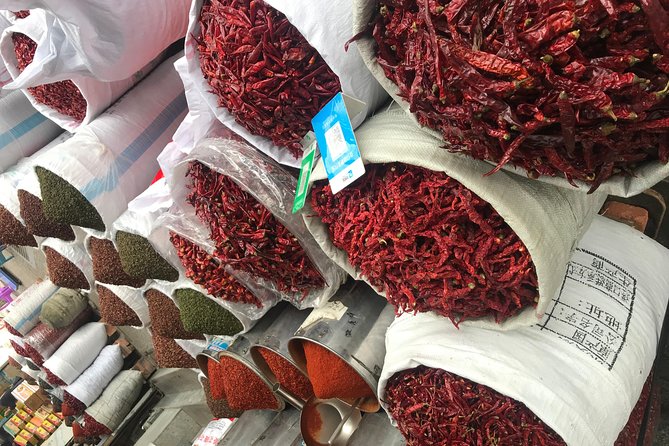
The spice section is one of the clearest reasons to book this outing. Sichuan food is often reduced to the word spicy, but the market shows that heat is only part of the story.
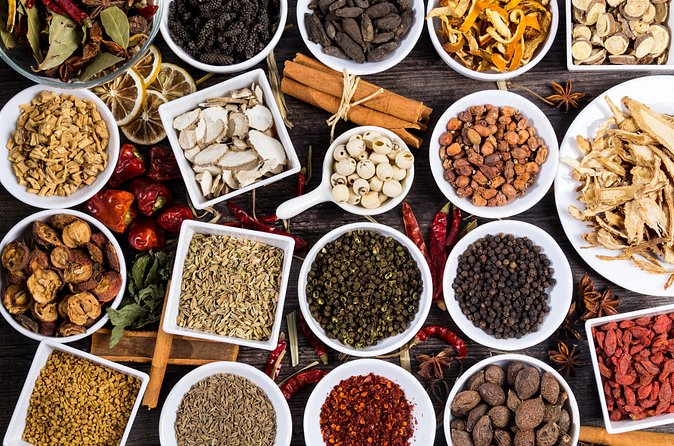
You may see turmeric, several kinds of non-Sichuan pepper, more than 10 kinds of chili peppers, and huajiao, the Sichuan peppercorn that creates a distinctive tingling sensation. Different origins can affect aroma, color, size, and use. A guide can help you see why cooks do not simply buy one generic bag of pepper and call it done.
This is especially useful if you have already eaten Sichuan food and want to understand what shaped its flavor. You might recognize ingredients from dishes you have tried, but the market gives them a physical setting and a wider range.
I like the chance to compare ingredients side by side. In a restaurant, a spice appears as part of a finished plate. Here, you can focus on the raw material itself and ask why one chili is used for heat while another contributes fragrance or color.
The tradeoff is that this is not presented as a cooking class. You should not expect recipes, a kitchen demonstration, or a guaranteed tasting session. The value is in seeing the supply side of local cuisine and learning how ingredients are identified and used.
Thousands of herbs inside the TCM market
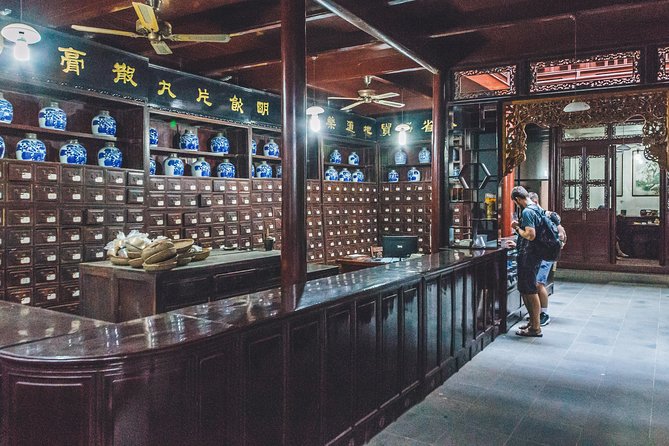
The covered TCM market changes the mood of the walk. Instead of the sharp, familiar smell of peppers and spices, you may notice a denser mix of dried roots, bark, flowers, seeds, and plants.
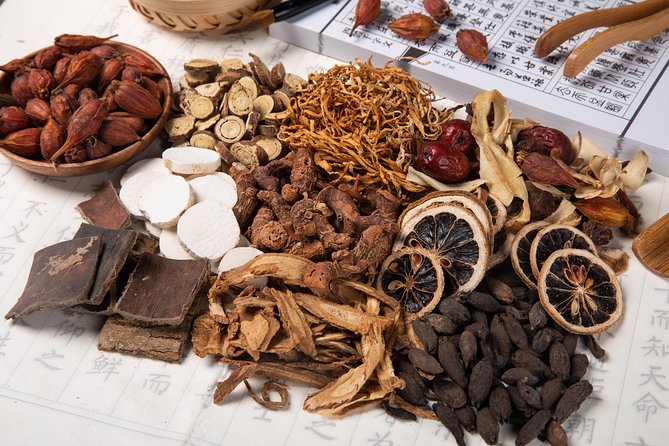
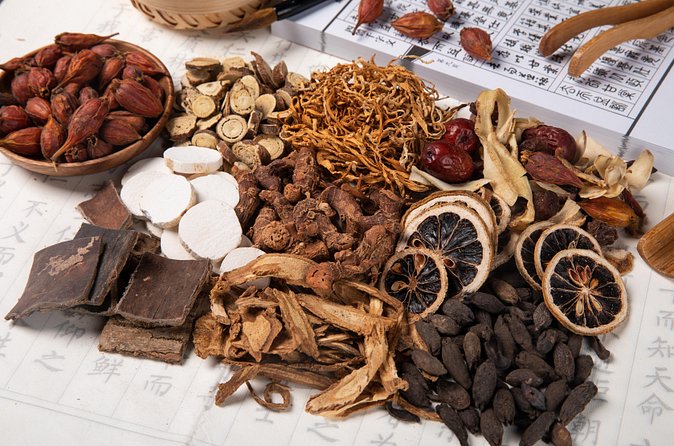
The stated selection includes more than a thousand types of herbs and Chinese medicinal ingredients. That scale can be difficult to appreciate from a written list. In person, the variety becomes clear through the shelves, sacks, drawers, and displays of dried materials.
The smell is a major part of the experience. Some aromas may be pleasant, while others can be strong or unfamiliar. That is part of the point. Chinese medicine is not just an abstract philosophy discussed in books. It is also a working trade with ingredients that are bought, sorted, stored, and prepared.
Lance and his partner are the people to ask when you want to understand what you are seeing. Their role is not simply to lead you from stall to stall. They provide background about TCM’s place in Chinese culture and explain why it has contributed to Chinese life over many centuries.
Keep your expectations sensible. The tour introduces you to the market and its cultural setting, but the supplied details do not promise a diagnosis, a personal herbal prescription, or a formal medical lesson. If you have a health concern, speak with a qualified medical professional rather than buying an herb because it sounds interesting.
More Three-Hour Tours in China:
- 3-Hour Private Shopping Tour at Panjiayuan Market from Beijing
★ 5.0 · 2 reviews - Marrakech Monuments & Souks 3-Hour Tour
★ 3.8 · 1,540 reviews - Discover Palermo in 3 hours. Art, history, markets and street food
★ 5.0 · 352 reviews - 3h Private Walking Tour in Tangier Kasbah Medina & Colorful Souks
★ 5.0 · 148 reviews
The local wet market adds everyday Chengdu
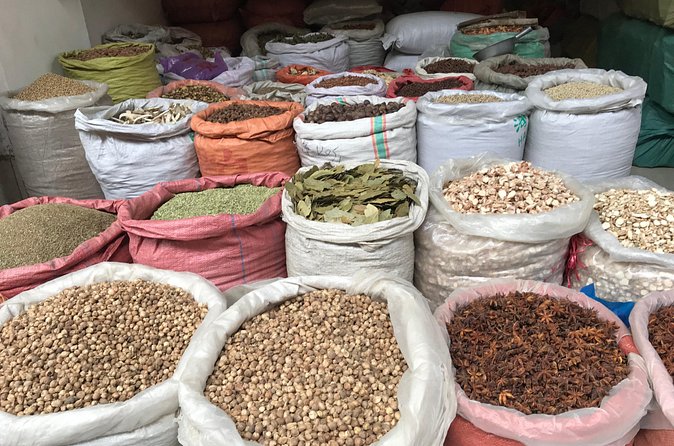
The second market brings the tour back to ordinary food shopping. It is a useful contrast to the specialist TCM market, because you see ingredients in a setting connected with daily meals rather than traditional remedies.
The route includes a local food market, described as a wet market. This gives you a look at another side of Chengdu life and helps connect the spices from the first market with the food culture of the city.
The market is also a good place to ask about routines. The guides can discuss local Chengdu life, which may lead to useful conversations about shopping, cooking, and the ingredients people use at home. The details will depend on your questions and the day’s market activity.
Do not expect this stop to feel like a staged attraction. A local market can be crowded, noisy, or visually intense, and some products may be unfamiliar. That is part of its value, but visitors who prefer carefully arranged displays may find it less comfortable.
This is also a good reason to keep an open mind about photography. Ask before photographing vendors or products at close range. The experience works best when you treat the market as a place where people are working, not as a set built for visitors.
Lance and his partner shape the experience
The guides are named Lance and his partner, and their approach is central to the tour. The feedback describes them as professional, kind, and able to answer questions about local Chengdu routines.
That is important here. A market guide who only points out objects would leave you with a blur of unfamiliar items. The strongest part of this experience is the conversation between the ingredients, the markets, and the people who use them.
The tour is private, so only your group participates. That gives you more freedom to pause, ask about a particular herb, or spend longer with the spice displays. It also avoids the compromise of a large group waiting while one person asks a question.
At the same time, a private tour does not guarantee a fixed script or a certain amount of detail on every subject. Your experience will depend partly on what interests you. If you want a useful discussion, arrive with questions about Sichuan pepper, chili varieties, TCM ingredients, or local shopping habits.
The pace is deliberately easygoing. I see that as a benefit for anyone who wants to look closely and talk. It is less suitable for someone trying to check off as many Chengdu sights as possible before lunch.
Is $46.16 a fair price?
The listed price is $46.16 per person. The admission to the market itself is listed as free, so you are mainly paying for the private guiding, interpretation, and organization rather than entry tickets.
That can be good value if you would otherwise walk into these markets without knowing what you were seeing. The guide helps turn unfamiliar shelves and sacks into a story about Sichuan cuisine, TCM, and local routines. A private format also gives your group direct access to the guides for three hours.
The value is lower if you only want to browse quickly or take photographs. You could potentially see market areas on your own, but the most useful part of the experience is the explanation. This tour makes sense when context matters as much as access.
Group discounts are offered, which may improve the price for larger parties. Since the activity is private, the per-person cost may also feel more reasonable when shared by several people in your group.
The tour is commonly booked about 22 days in advance. That suggests planning ahead is sensible, especially if you need a particular date. Confirmation is received at booking, and mobile tickets are available.
Who should book this Chengdu experience?
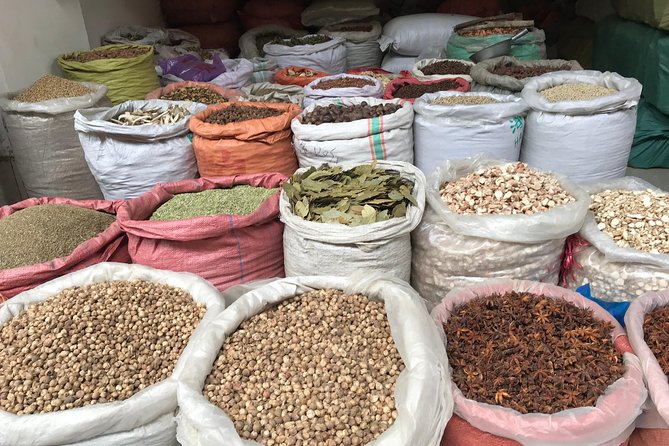
I would recommend it to anyone curious about the ingredients behind Sichuan food. If your interest begins with chili, peppercorns, turmeric, or regional cooking, the spice market gives you a more useful view than a restaurant meal alone.
It also suits people with a serious interest in TCM as a cultural tradition. You will see a large selection of herbs and plants and hear why the system has remained important in China. The tour is better for learning and observation than for personal medical guidance.
This is a good choice for visitors who want a slower morning or afternoon. You can ask questions, take in the smells, and compare two types of markets without rushing from one activity to the next.
I would hesitate to recommend it to someone who dislikes strong odors, crowded market conditions, or unstructured conversation. It may also disappoint you if you expect substantial food tasting, a cooking lesson, or a long list of major landmarks.
The walking format should suit most participants, and the activity notes say most people can take part. Still, you should be prepared to walk for around three hours and check the pickup details if mobility or transport is a concern.
Booking, weather, and cancellation details
Free cancellation is available if you cancel at least 24 hours before the local start time. Cancellations made less than 24 hours before the tour are not refunded, and late changes are not accepted.
The experience requires good weather. If poor weather causes cancellation, you will be offered another date or a full refund. This matters because the activity involves walking between market areas, even though parts of the route are covered.
The meeting point and return point are both Wenshu Yuan Monastery. Pickup is offered, but confirm the exact arrangement before the day of the tour.
Should you book the TCM and wet market tour?
Book it if you want local context rather than a polished attraction. The combination of Sichuan spices, huajiao, chili varieties, thousands of medicinal herbs, and a food market gives you a close look at how Chengdu eats, shops, and thinks about traditional medicine.
The best reason to go is the guiding. Lance and his partner make the market easier to read and leave room for questions about daily life. The private format and three-hour length add comfort without turning the outing into a rushed checklist.
Skip it if you want a tasting-heavy food tour or a packed sightseeing route. But for a calm, curious walk through working markets, $46.16 is a reasonable price for access plus interpretation. It is one of the better choices for seeing a side of Chengdu that a standard city tour can easily miss.
FAQ
How long does the tour last?
The tour lasts approximately three hours.
Where does the tour begin?
It begins at Wenshu Yuan Monastery, 66 Wen Shu Yuan Jie, Qingyang District, Chengdu.
Where does the tour end?
The activity ends back at the meeting point at Wenshu Yuan Monastery.
Is pickup available?
Yes. Pickup is offered, but you should confirm the arrangement when booking.
Is this a private tour?
Yes. Only your group participates in the activity.
What is the price?
The listed price is $46.16 per person.
What can I see at the spice market?
You can see turmeric, different types of peppers, more than 10 kinds of chili peppers, and huajiao, also known as Sichuan peppercorn.
What can I see at the TCM market?
The market includes more than a thousand types of herbs, plants, and Chinese medicinal ingredients.
Can I cancel for a full refund?
Yes, if you cancel at least 24 hours before the experience starts. Poor-weather cancellations by the provider offer either another date or a full refund.
Just added around China
- Half-day Dandan Noodles Cooking Class with a Local Market Visit★ 5.0 · 8 reviews
- Small Group Beijing Temple of heaven and Summer Palace with Pearl market★ 5.0 · 3 reviews
- Private Distinctive Market Tour with Shaomai Lunch and Full Massage in Beijing★ 5.0 · 2 reviews
- Private Tour to Pearl Market Acrobatic Show & Peking Duck Dinner★ 5.0 · 5 reviews
- Half Day Tour:Market Shopping Acrobatic Show & Peking Duck dinner★ 5.0 · 2 reviews
- Beijing Culture Tour to Antique Market and Cloisonné Workshop★ 5.0 · 2 reviews
- Full-Day Private Tour Panjiayuan Antique Market and Beijing Capital Museum★ 5.0 · 3 reviews
- Lama Temple, Hutong and Silk & Pearl Market Private Day Tour★ 5.0 · 5 reviews
Wet & Camel Market Tours, compared.
Singapore Market to Table Culinary Experience (Wet Market Tour included)
Read our review →
Immersive Cooking Class & Wet Market Tour by Local Chef +Cookbook
Read our review →
Chef Samuel’s Private Malaysian Cooking Class with Wet Market Tour
Read our review →
Beijing: Dumpling-Making Class with wet Market visit
Read our review →
Cairo Unusual Day Tour Visit Camel Market in Birqash
Read our review →

4-Hr Shanghai Layover Tour: Maglev, Wet Market, Food, Landmarks
Read our review →
Hangzhou Insider Mini-Hike: TCM, Hill Views and Wet Market
Read our review →Browse the lists this tour appears in