
Review · MARKET WALKING TOURS
Bangalore: Palace, Temples, Fort & Markets Walking Tour
Old Bengaluru comes at you fast on this three-hour walk: carved temples, a wooden palace, an old fort, flower sellers, cows, handcarts, traffic, and shoppers all sharing tight streets. It is less a polished sightseeing route than a close look at how the city works.
I like the mix of major historic sights and ordinary street life, and I like the way the market gives the tour its real pulse. Guides such as Vijay, Vasuki, Raghu, Vanaja, and Ramesh are praised for clear storytelling, careful crowd navigation, and helping with photos or simple shopping. The main catch is that the walk can be crowded and noisy, and temple access may change with opening hours or your own choice.
Key points to know before you go
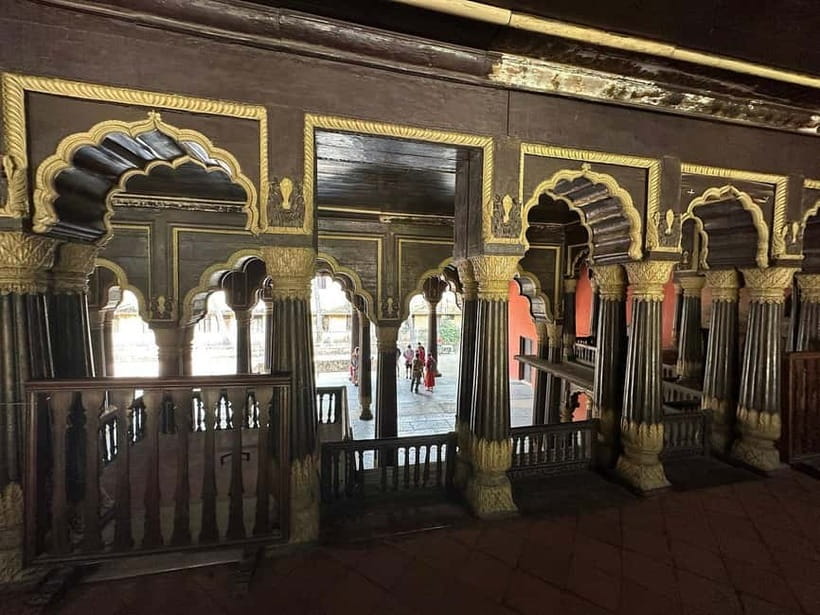
- Tipu Sultan’s Summer Palace begins the walk with 230-year-old teak architecture and a link to Bengaluru’s royal past.
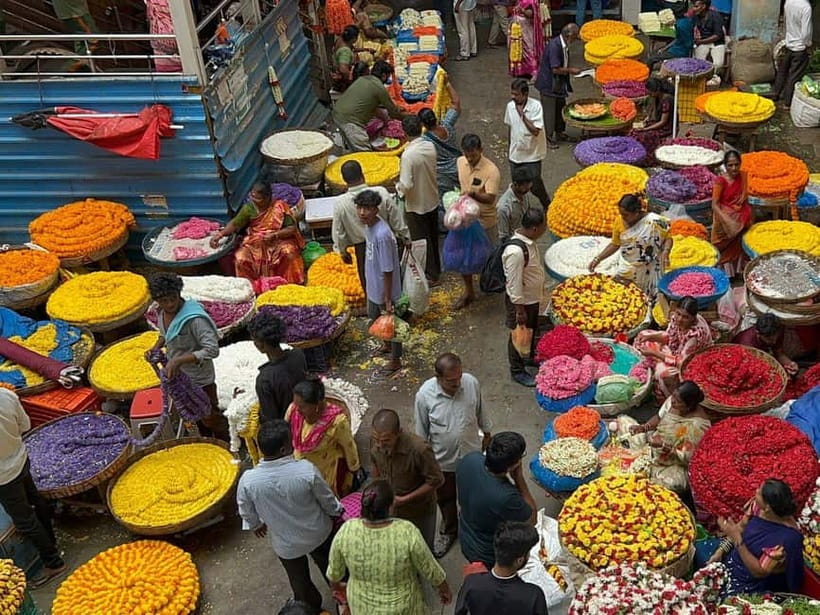
- KR Market is the sensory high point, with fruit, vegetables, flowers, buyers, sellers, workers, vehicles, and cows packed into narrow streets.
- Religious sites require modest dress, including covered shoulders and legs. Carry socks and a headscarf.
- The small group is useful here, since guides can keep people together and answer questions in the crush of the market.
- The route connects several eras, from Kempegowda and Tipu Sultan to British-era development and modern Bengaluru.
- The $32 price is fair if you want context and help navigating, but less appealing if you prefer quiet monuments or independent wandering.
Why this old Bengaluru walk works
Bengaluru is often sold as India’s technology capital, but this tour starts well before software parks and office towers. In the old city, you see the roots of what was once called the City of Boiled Beans, then follow the story toward the Garden City and the modern Silicon Valley of India.
That long view is the tour’s best idea. In a short morning or afternoon, you move through Islamic royal architecture, Hindu worship, Jain devotion, military history, and a working market. The stops are not isolated museum pieces. They sit beside shops, homes, traffic, shrines, and daily business.
I would choose this walk early in a Bengaluru visit. It gives you a useful map of the old center and makes later independent outings easier. The guide also helps explain customs that can be hard to read from the street alone.
The tour is limited to 10 people, though smaller groups can occur. That matters in KR Market, where a large party would be awkward. Several guides, including Vijay and Vanaja, are praised for keeping groups together, making photo stops, and adjusting their pace to suit the people with them.
More Market Walking Tours in India
- Bengaluru Pete City Market Half-Day Walking Tour
★ 5.0 · 163 reviews - Bangalore: Walking Tour of Fort, Palaces, and Market
★ 5.0 · 58 reviews - Bangalore Walking Tour KR Flower Market,Fort,Tippu palace
★ 5.0 · 8 reviews
Starting at Tipu Sultan’s 230-year-old palace
Meet your guide at the gates of Tipu Sultan’s Summer Palace. The palace is built from teak wood and dates from the late 18th century, making it an atmospheric beginning rather than a grand, sprawling complex.
The appeal is in the material and setting. Look for the wooden columns, balconies, arches, and carved details. The palace helps place Tipu Sultan in Bengaluru’s story and gives your guide a natural starting point for explaining the rulers who shaped the city from the 16th through the 18th centuries.
This is also where the tour begins to connect political history with the city you see today. Kempegowda’s foundations, Tipu Sultan’s rule, and later British influence all form part of the account. A good guide does more than list dates. Guides such as Raghu and Varun have been praised for using stories and local context to make those changes easier to follow.
Do not expect hours inside the palace. The full walk has several stops, so the palace works as an introduction. If your interest is mainly royal architecture, you may want more time than this tour allows. If you want one strong historic stop before moving into the streets, it fits well.
Bangalore Fort and the city’s changing rulers
The next major stop is Bangalore Fort, where the tour spends about 30 minutes. The original fort dates to the 16th century and was later renovated, giving the site several layers of military and political history.
The fort is valuable because it shifts the focus from palace life to defense and urban growth. Your guide can explain how the fort fit into the ambitions of local rulers and later conflicts. This is a good place to ask questions about the transition from Kempegowda’s Bengaluru to the city shaped by Tipu Sultan and British power.
The fort may not satisfy visitors expecting a huge, intact European-style stronghold. Its importance is tied to its place in Bengaluru’s story, not just to dramatic walls or sweeping views. I would pay close attention to the guide here, since the context carries as much weight as the surviving structure.
The walk between sights also matters. You are not simply transferred from one monument to another. You pass through streets filled with people going to work, shopping, carrying goods, and moving through the center. That change from formal site to everyday city is one of the strongest parts of the experience.
Entering the 320-year-old Vishnu temple
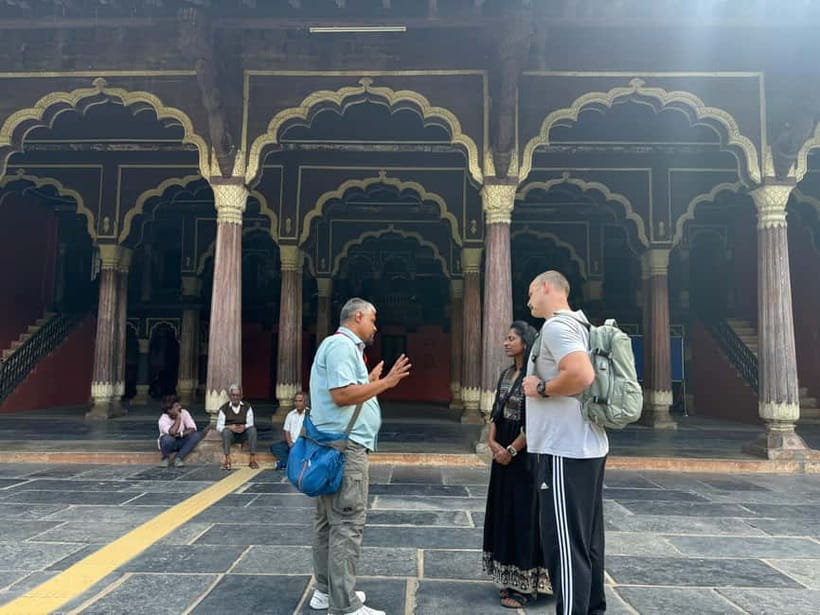
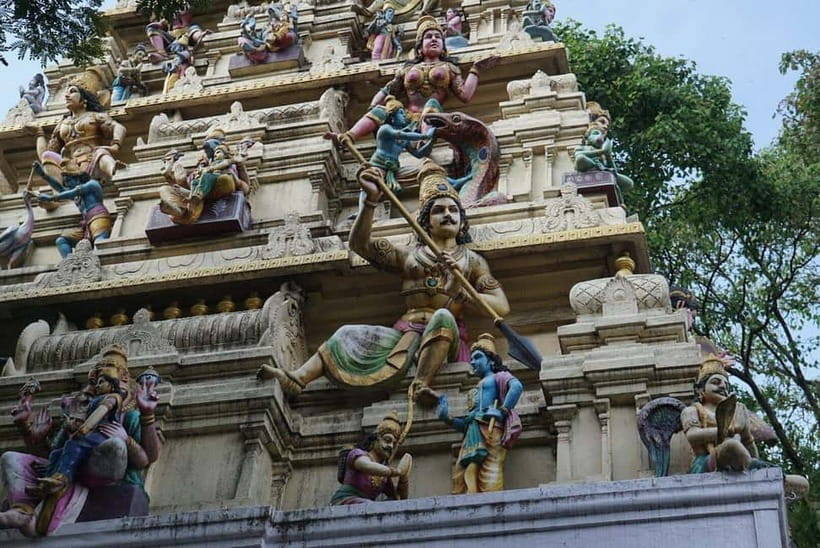
The Hindu temple brings a different mood. It is around 320 years old, and the key experience is seeing devotees offer prayers rather than viewing an empty historic building.
You may watch worshippers come and go, observe the movement of a living religious space, and notice details your guide can explain. The value here is respectful observation. Keep your voice low, follow instructions, and avoid treating prayer as a staged performance.
Temple access and opening hours can vary by season. The experience also depends on your own comfort and on the rules in force that day. One participant chose not to enter the temples, which made the tour shorter than expected. That is worth knowing if temple interiors are central to your plans.
The route includes entry to the Vishnu temple, but no tour can promise the same prayer activity at every hour. Still, even a brief stop adds an important layer to the walk. You see Bengaluru not only as a collection of old buildings, but as a place where faith remains part of daily life.
More Market Market Walking Tours in Bangalore:
- Private Walking Tour into the Oldest Local Market in Bengaluru
★ 5.0 · 5 reviews - Bangkok: City Highlights Temple and Market Walking Tour
★ 4.5 · 3,990 reviews - Tokyo Tsukiji Fish Market Food and Culture Walking Tour
★ 5.0 · 3,184 reviews - Marrakech: Ben Youssef, Secret Garden, & Souks Walking Tour
★ 4.6 · 2,802 reviews
KR Market, where the walk finds its rhythm
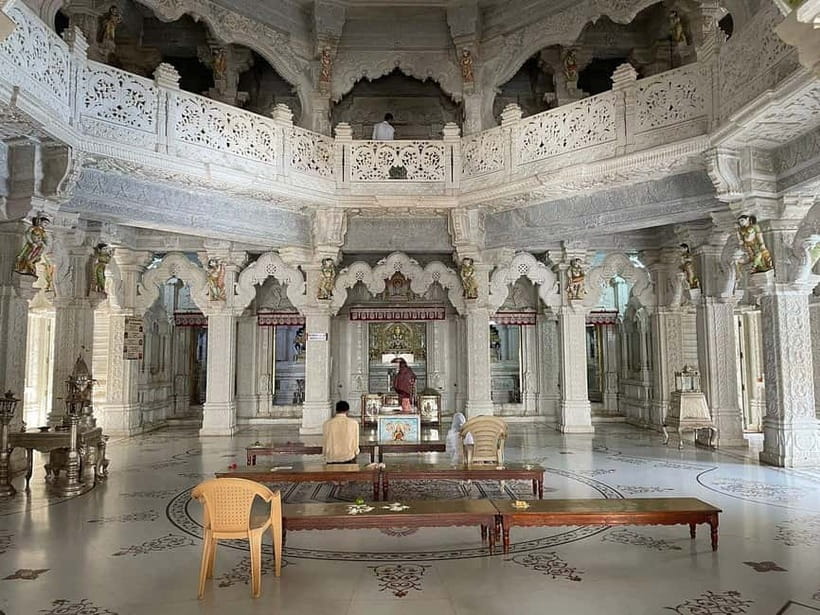
KR Market is the tour’s most vivid section. It is a working fruit, flower, and vegetable market, with the smells, sounds, and movement that make old Bengaluru feel immediate.
Expect narrow lanes and close quarters. Sellers, buyers, vehicles, cows, coolies, workers, walkers, and curious onlookers all share the same space. Your guide will help you move through it, but you still need to watch your footing, keep your belongings close, and stay near the group.
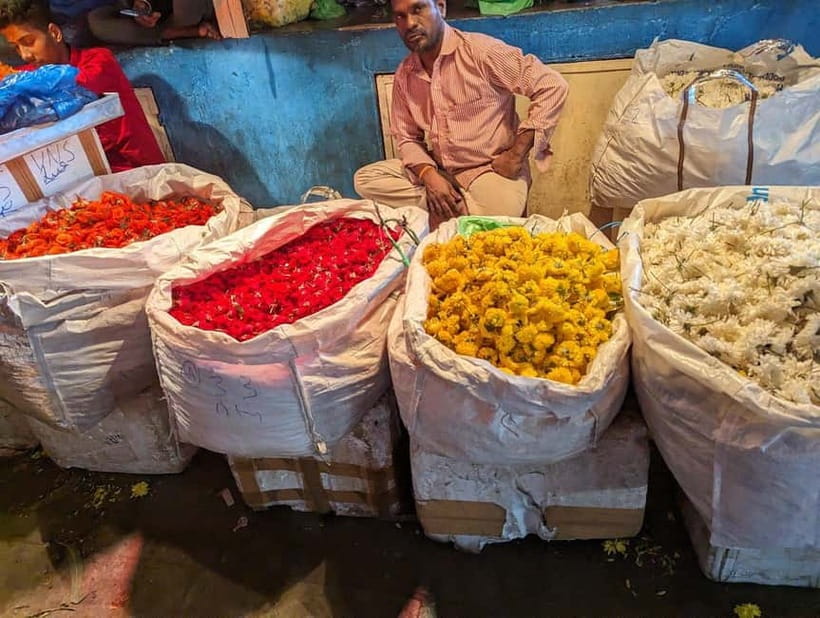
The flower section is especially memorable. Small blossoms are threaded together into large decorations, and the colors change from stall to stall. The market gives you a direct look at goods used in homes, temples, ceremonies, and ordinary meals. It is a better place to understand local commerce than a souvenir shop designed for tourists.
I like that the market is not treated as a quick photo stop. Guides such as Raghu and Vijay have helped people take time with traders, ask questions, and decide what they might want to buy. Vijay has also helped visitors communicate with sellers, while other guides have pointed out coffee, silk, spices, and scarves nearby.
That does not mean you should expect a formal shopping trip. The market is crowded, and bargaining or buying is optional. If you want to purchase something, carry rupees and ask your guide for help. If you prefer simply to watch, you will still get plenty from the visit.
Weekend crowds can be especially heavy. One Sunday visit was described as the most crowded part of the experience, though the guide kept the group safe and together. I would choose practical shoes and avoid bringing anything bulky.
Quiet details at the Jain temple
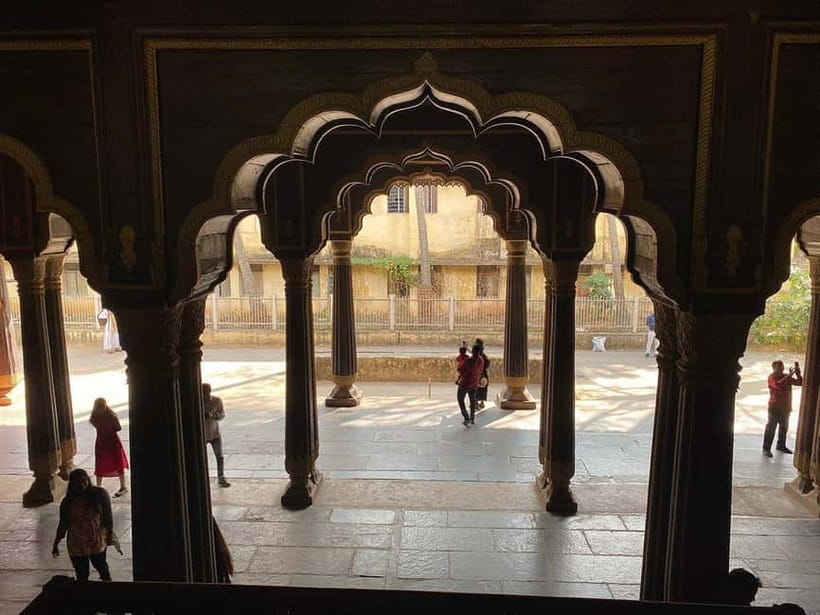
The walk finishes at Shri Adinath Jain Shwetamber Mandir. After the noise of KR Market, the temple offers a calmer final stop, with carvings and inlay work to examine.
This contrast is carefully useful. You move from the loud public market into a place built for quiet attention. The Jain temple also introduces another religious tradition without turning the tour into a lecture on only one faith.
Dress rules are important here. Cover your shoulders and legs, and avoid short skirts, sleeveless shirts, and see-through clothing. Carry spare socks, since footwear rules may apply, and bring a headscarf as requested in the practical information.
The temple is the finish point, so plan your onward journey from there. The tour does not include transport. A hotel pickup and return service can be arranged for an additional fee, but you need to request it in advance.
How much walking and crowding should you expect?
The walk is described as light rather than strenuous, but you should not confuse that with easy strolling on smooth paths. You will walk through uneven streets, narrow lanes, and crowded market areas. Standing, stopping, and adjusting your pace may be as tiring as the distance itself.
Comfortable walking shoes are essential. Modest, breathable clothing is the sensible choice, especially if you are visiting in warm weather. Keep water with you, though food and drinks are not included.
The market can feel intense if you are new to India. Traffic, horns, animals, workers, and shoppers operate close together. That is not a flaw in the tour. It is the point of seeing the working old city. Still, you should be ready for noise, close contact, and a lack of quiet space.
Solo visitors can benefit from the guide’s help. Vijay has assisted people with the metro and with finding a ride after the walk, while other guides have helped with local shops and communication. Those extras are not guaranteed as part of the formal inclusions, but they show why a local guide can be useful in this part of Bengaluru.
The guides make the difference
The tour is sold with an English-speaking guide, but the individual guide shapes the experience. Names associated with the walk include Vijay, Vijay Kumar, Vasuki, Raghu, Vanaja, Ramesh, Varun, Kamakshi, Govinda, and Varun.
The strongest pattern is clear explanation paired with personal attention. Vijay Kumar is praised for answering questions, offering photo spots, handling crowded streets, and explaining religion and local history. Vasuki is described as warm and funny, while Raghu is known for clear explanations, stories, and practical help in the market.
Vanaja has been praised for making sure each person in a group is included. Kamakshi has a style that mixes facts with storytelling and responds well to individual interests. Your exact guide may differ, so expect the quality of the route to depend partly on who leads it that day.
English clarity can vary. One participant found some explanations difficult to understand, though most of the content came through. If you miss a point, ask the guide to repeat it. The small group makes that easier than it would be on a large coach tour.
Is $32 good value?
At $32 per person, the price is reasonable for a three-hour guided walk that includes entry to the palace, Vishnu temple, Bangalore Fort, and Jain temple. You are also paying for local orientation, crowd navigation, historical explanation, and help understanding the market.
The value is strongest if this is your first visit to Bengaluru or if you have only one day. Several hours spent wandering alone could show you the same streets, but you might miss the background, pass by religious details, or struggle to understand what you are seeing.
The price is less compelling if you already know the old city, prefer to move at your own pace, or mainly want extended time at each monument. The route covers a lot in three hours, so each stop is an introduction rather than a long study.
Food, drinks, and transport are extra. A return ride from your hotel can be arranged for an additional fee. Build those costs into your decision if you want a door-to-door outing.
The high 4.9 rating from 97 reviews supports the idea that the tour usually delivers what it promises. More important to me is the repeated praise for guides who are kind, well informed, careful in crowds, and generous with practical help. Those qualities are worth paying for in an unfamiliar city.
Who should book this walk?
I would recommend it to first-time visitors, solo visitors, couples, and anyone with a short stay. It gives you a quick but meaningful introduction to Bengaluru’s older center, with enough variety to keep the route moving.
It also suits people who want more than monuments. The palace and fort provide structure, but the market and temples give the experience its human side. You see worship, trade, traffic, and neighborhood life in the same few hours.
I would hesitate to recommend it to anyone seeking a quiet, slow architectural tour. The route can be loud, crowded, and physically demanding in small ways. It is also not the best choice if you are uncomfortable with uneven streets or close market traffic.
Book with modest clothing, socks, walking shoes, and an open mind. If you want to shop, carry some rupees. If you want strong photos, allow time to stop, but do not let your camera distract you from the people and activity around you.
FAQ
How long is the Bangalore Palace, Temples, Fort & Markets Walking Tour?
The tour lasts three hours. Starting times depend on availability.
Where does the tour begin?
It begins at the gates of Tipu Sultan’s Summer Palace. The guide waits there for the group.
Where does the tour finish?
The walk finishes at Shri Adinath Jain Shwetamber Mandir.
Which places are included?
The route includes Tipu Sultan’s Summer Palace, Bangalore Fort, a 320-year-old Vishnu temple, KR Market, and the Jain temple.
What should I wear?
Cover your shoulders and legs. Short skirts, skirts, sleeveless shirts, and see-through clothing are not allowed. Bring a headscarf and spare socks.
Is transport included?
No. Transport is not included, but hotel transport to the meeting point and back can be arranged for an additional fee.
How large is the group?
The tour is a small-group experience limited to 10 participants. The guide leads the group in English.
Should you book it?
Book this tour if you want Bengaluru explained through both its landmarks and its working streets. The palace, fort, temples, and market create a well-chosen route, and guides such as Vijay, Vasuki, Raghu, and Vanaja add the local detail that makes the stops meaningful.
Skip it if you want a quiet architectural visit or dislike crowded markets. For most first-time visitors, though, $32 buys a useful introduction to old Bengaluru, with the flower market and careful local guidance likely to be the lasting memories.
Just added around Bangalore
- Bangalore: Walk in Historic Ulsoor – Landmarks, Bazaar & Culture★ 5.0 · 9 reviews
- Experience Bangalore Evening City Walk Tour and Market Visit★ 5.0 · 9 reviews
- Shopping and Bazaar Trail in Bangalore★ 4.5 · 5 reviews
- Old Bangalore Historical Walk thro Palace, Temples, Fort & Market★ 5.0 · 60 reviews
- KR Market Photo Walk★ 5.0 · 12 reviews
- Lalbagh+Bull Temple+Tipu Palace+Market+Lunch=Bangalore City Tour★ 5.0 · 9 reviews
- Bangalore Evening Food Street Walk and Market Visit★ 5.0 · 32 reviews
- Private Walking Tour into the Oldest Local Market in Bengaluru★ 5.0 · 5 reviews
Market Walking Tours, compared.
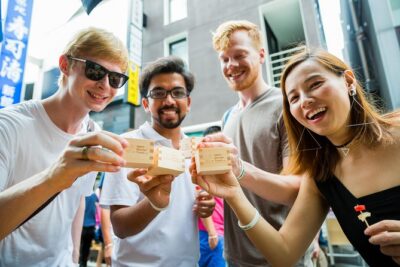
Tokyo Tsukiji Fish Market Food and Culture Walking Tour
Read our review →


Nishiki Market Brunch Walking Tour (7 Tastings + Brunch)
Read our review →Tsukiji Fish Market Food and Culture Walking Tour
Read our review →
Tsukiji Fish Market: Street Food & Culture Walking Tour
Read our review →
Tsukiji Fish Market Small-Group Food Walking Tour
Read our review →Browse the lists this tour appears in