Review · MARKET AND COOKING CLASS TOURS
Half-Day Private Hot-Pot Cooking Class with a Local Market Visit
Sichuan hotpot is the star here, but the best part is that you make two versions: a fiery red pot with chili and Sichuan peppercorns, plus a mild white pot built around broth. The class turns a famous Chengdu meal into something you understand, not just something you order.
I like the local market visit, where you explore spices and taste snacks before cooking. I also like the private format and the calm break with Sichuan tea, followed by clear instruction from guide Lance and a professional chef.
The main consideration is heat. Even with a non-spicy pot available, the red broth may be a serious test if you are not used to Sichuan peppercorns and chili. At about four and a half hours, this is also a full half-day rather than a quick food stop.
Key points to know before booking
- Two hotpots in one class: Prepare both the spicy red pot and the non-spicy white pot, then compare them at the table.
- Market first, cooking second: Visit a spice market, sample local snacks, and see ingredients before using them in class.
- Private experience: Only your own group takes part, with pickup offered and mobile tickets available.
- Hands-on food skills: Learn how to cut ingredients and arrange dishes with decoration under a professional chef’s guidance.
- Tea and a proper meal: Take a break with Sichuan tea, then eat the hotpot you prepared with beer or another beverage.
- Book ahead: This experience is booked about 10 days in advance on average, so last-minute availability may be limited.
Start with Chengdu’s spice market
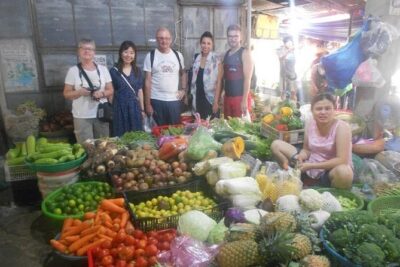
The experience begins with a guide taking you into a local spice market. This is more than a quick shopping stop. It gives you a chance to see the raw materials behind Sichuan cooking before they appear in a simmering pot.
You can explore the spices, look at the foods sold in the market, and try local snacks. That order matters. Instead of meeting Sichuan flavor only as a finished restaurant dish, you get a look at the ingredients and food culture that shape it.
Guide Lance leads this part of the morning or afternoon. The available feedback describes him as engaging, helpful, and willing to answer questions throughout the experience. That matters in a market, where the setting can otherwise feel like a fast walk through unfamiliar stalls.
The market visit is also a useful place to ask about the difference between chili heat and Sichuan peppercorns. Those two sensations are often grouped together by first-time diners, but they are not the same. Chili brings heat, while Sichuan peppercorns create a distinctive numbing, tingling effect.
The exact market route and snack selection are not specified, so you should treat this as an introduction to local ingredients rather than a fixed shopping list. Still, it gives the class a stronger sense of place than going directly to a kitchen.
More Farmers Market Tours in China
- Half-Day Chengdu Cooking Class with a Local Market Visit
★ 5.0 · 465 reviews - Half-Day steamed Buns Cooking Class with a Local Market Visit
★ 5.0 · 26 reviews - Half-Day Professional Mapo Tofu Cooking with a Local Market Visit
★ 5.0 · 19 reviews
Taste snacks before the cooking begins
Sampling local food at the market helps you settle into Chengdu’s flavors at your own pace. You may find that a snack gives you a better warning about the region’s spice levels than a menu description ever could.
This is especially useful if you have limited experience with Sichuan food. You can ask Lance what you are tasting and how it relates to the hotpot you will prepare later.
There is a social side to this stop, too. Food markets are informal places, and the guide’s role helps connect what you see with what you will do in class. The strongest feedback about this experience repeatedly points to the human side of the morning, including clear explanations and a relaxed, personal feel rather than a memorized speech.
That is a good sign for anyone who prefers conversation to a lecture. You are not simply being moved from one food site to another. You have room to ask questions and get context as you go.
Still, keep your appetite in reserve. The market snacks are part of the experience, but the main meal comes later, and hotpot is not a light tasting menu. You will want room for the broths, vegetables, meats, and other ingredients prepared during class.
Pause for Sichuan tea before the lesson
After the market, you go to the cooking-class location. The first step there is a break with local Sichuan tea.
This pause gives the experience a useful rhythm. The market can be visually busy and full of unfamiliar smells. Sitting down for tea creates a clear transition from exploring to cooking.
I like this small detail because it keeps the class from feeling rushed. Four and a half hours is a generous amount of time for a market visit, instruction, cooking, and eating. A tea break helps make that length feel comfortable rather than packed.
It also gives you time to meet the cooking instructor and settle in before handling ingredients. The class is led by a professional chef, while Lance helps guide the wider experience. That combination provides both local connection and practical kitchen instruction.
The tea is not presented as a separate formal tasting, so you should not expect a specialized tea ceremony. Think of it as a pleasant local pause before the hands-on part begins.
Learn the red pot and the white pot
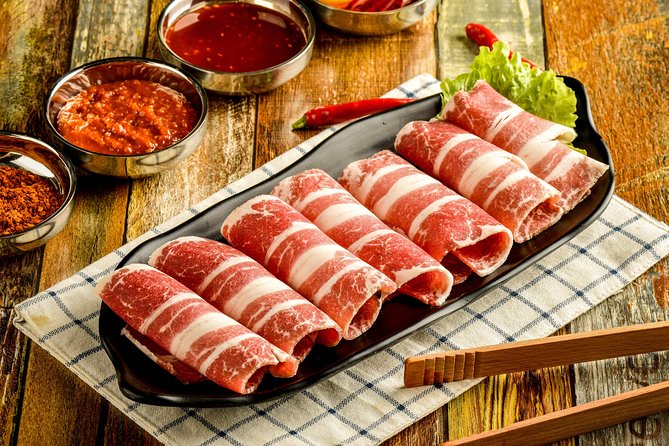
The central lesson covers two classic Sichuan hotpot styles. The red pot uses chili peppers and Sichuan peppercorns for the spicy version. The white pot uses a non-spicy broth.
You will cook both. That is the strongest reason to choose this class instead of simply going to a hotpot restaurant.
In a restaurant, you can order a double pot and enjoy two broths. Here, you get to understand the contrast as you prepare them. The red and white pots are not just different colors. They offer two ways to approach the same meal, one built around spice and peppercorn fragrance, the other focused on a milder broth.
The double-pot idea is also practical for a mixed group. If one person wants serious heat and another prefers a gentler meal, both can eat from the same table. The non-spicy broth gives you a reliable option, though the class still centers on Sichuan cooking.
The experience presents hotpot as a food tradition with at least 1,700 years of history. You do not need to be a food scholar to appreciate that context. The useful point is that hotpot is not a single recipe. It has developed into different styles, including red, white, and double-pot formats.
Expect instruction rather than a passive demonstration. The chef guides you as you prepare the broths and ingredients. The exact recipe, spice quantities, and ingredient list are not provided, so do not book this expecting a printed cooking syllabus or a fixed set of dishes to take home.
More Market and Cooking Class Tours in China
- Half-Day Xi’an Biang Biang Noodles Cooking with a Market Visit
★ 5.0 · 48 reviews - Chengdu: Cooking Class with Fresh Market Half Day Experience
★ 5.0 · 42 reviews - Hong Kong Market Walking Tour & Chinese Cooking Class
★ 5.0 · 24 reviews - Half-day Dandan Noodles Cooking Class with a Local Market Visit
★ 5.0 · 8 reviews
Practice cutting and arranging the ingredients
The class also covers cutting and setting dishes with decoration. This part may sound minor, but it changes the way a hotpot meal feels at the table.
Hotpot ingredients are cooked in the broth, often in small portions and at different speeds. Cutting them properly helps them cook as intended. Arranging them neatly also makes the shared meal easier to manage and more attractive.
The chef guides this work, so you are not left guessing how to prepare or present the food. The feedback describes the instruction as professional and clear, with explanations that feel natural rather than scripted.
I would pay attention here even if you mainly want the meal. These are the skills most likely to carry over after the class. You may not recreate the entire experience at home, but you can use better cutting and presentation techniques whenever you prepare a shared hotpot.
This is also where the class suits curious cooks better than people seeking only a food tour. You will need to participate. If you would rather sit back while somebody else prepares everything, a standard hotpot restaurant may be a better fit.
Eat what you prepared with beer or tea
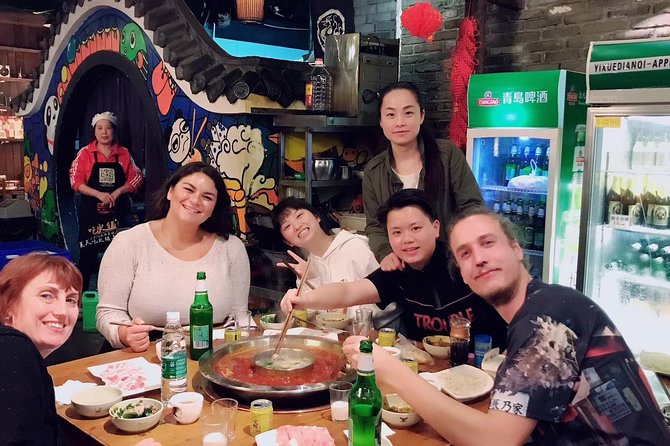
Once the broths and ingredients are ready, you enjoy the hotpot you cooked. Beer or another beverage accompanies the meal, and the earlier Sichuan tea gives the day a local thread from beginning to end.
Eating your own work is the payoff, but it also lets you compare the two broths directly. Try the mild pot first if you want to notice the difference clearly. Then move to the red pot in small amounts, especially if chili and Sichuan peppercorns are new to you.
The meal should feel generous in time, not rushed between activities. You have already seen ingredients at the market, learned about them, prepared them, and now get to eat them. That complete sequence gives the experience more value than a cooking class that begins and ends in one kitchen.
The beverage detail is useful, but the supplied information does not clarify exactly which drinks are included in the price. Plan on having beer or another beverage with the meal, but confirm the inclusions when booking if that affects your budget.
What the $90 price means
At $90 per person, this is not the cheapest way to eat hotpot in Chengdu. You are paying for more than lunch or dinner, though. The price covers a private half-day experience with a market visit, local snacks, guide service, professional cooking instruction, two broths, and the meal you prepare.
The private format makes the price easier to justify for couples, families, or small groups that want direct attention. Only your own group participates, so you are not sharing the lesson with a large class of strangers.
Pickup is offered, which can also add value in Chengdu. The exact pickup area is not stated, so confirm the arrangements before booking. If pickup saves you the trouble of finding an unfamiliar kitchen or market, it may be worth more to you than a lower-priced group class.
Group discounts are available. For a larger private party, ask how the discount applies and compare the final per-person price. The value improves when the group wants the same activity and can share the private format.
I would not choose this experience for a bargain meal alone. I would choose it for the combination of food, market access, instruction, and a private setting. If you already plan to eat hotpot in Chengdu, the class gives you a way to make that meal educational and hands-on rather than simply adding another restaurant visit.
Who will get the most from this class
This experience fits you best if you want to understand Chengdu food through participation. It works well for couples, families, and friends who enjoy cooking together and do not mind spending most of half a day on one theme.
It is also a strong choice for first-time visitors who want a gentle introduction to Sichuan ingredients. Lance can help explain what you see at the market, while the chef handles the technical side of the class.
Food-focused visitors will get the most from the sequence. You see spices, taste snacks, drink tea, cook two broths, prepare ingredients, and eat the result. Each part supports the next.
You should think twice if you dislike spicy food, though the white pot provides a non-spicy option. You should also consider the four-and-a-half-hour duration if your Chengdu schedule is tight.
This is not described as a children’s class, so families should confirm age suitability before booking. The private setup may help families who need flexibility, but the level of hands-on kitchen work could vary by age.
Timing, booking, and cancellation details
The activity lasts approximately four hours and 30 minutes. It is booked about 10 days ahead on average, which suggests that you should reserve before arriving in Chengdu if this is important to your plans.
You receive confirmation at booking, and mobile tickets are available. The experience is near public transportation, and pickup is offered. Since the exact meeting and pickup details are not supplied here, check those points carefully before you finalize your day.
Free cancellation is available if you cancel at least 24 hours before the local start time. Cancellations or changes made within 24 hours are not refunded or accepted.
The experience also requires good weather. If poor weather causes cancellation, you are offered another date or a full refund. That condition is worth noting because much of the activity takes place in a market and kitchen, yet the provider still uses a weather-based cancellation rule.
Should you book this Chengdu hotpot class?
I would book it if you want more than a restaurant meal and have half a day to spare. The market visit, local snacks, tea break, two-broth lesson, chef instruction, and private format create a well-rounded food experience.
The best feature is the chance to prepare both red and white hotpots. You can test the spicy side of Sichuan cooking without giving up a milder option, then sit down to eat what your group made.
I would skip it if your main goal is the lowest-cost hotpot dinner, if you dislike hands-on cooking, or if your schedule cannot spare four and a half hours. But for a private food experience in Chengdu, $90 per person is reasonable when you value the market visit and personal instruction as much as the meal itself.
FAQ
How long does the hotpot cooking experience last?
The experience lasts approximately four hours and 30 minutes.
Is this a private tour?
Yes. Only your group participates in the activity.
Does the experience include a market visit?
Yes. Your guide takes you into a local spice market, where you explore the market and try local snacks before going to the cooking-class location.
Will I cook both spicy and non-spicy hotpot?
Yes. The class includes both the spicy red pot, made with chili peppers and Sichuan peppercorns, and the non-spicy white pot, made with broth.
Is pickup available?
Yes. Pickup is offered, and the experience is also near public transportation.
What is the cancellation policy?
You can cancel at least 24 hours before the local start time for a full refund. Cancellations or changes made less than 24 hours before the start time are not accepted or refunded. If poor weather causes the activity to be canceled, you are offered a different date or a full refund.
More Half-Day Trips in China
- Half-Day Walking Tour with a Vegetarian Lunch at a Nunnery
★ 5.0 · 6 reviews - Half-Day Railway Market and Floating Market Tour in Thailand
★ 4.5 · 3,924 reviews - Dubai: Half-Day City Tour with Blue Mosque, Creek, and Souks
★ 4.8 · 3,059 reviews - Dubai Half-Day City Tour with Visit to Dubai Gold Souk
★ 4.0 · 1,741 reviews
More Private Market Tours in China
- Private Guangzhou Food Tour Michelin Restaurant&Local Food Market
★ 5.0 · 32 reviews - Old Guangzhou Backstreet Alley Local Market Walking Private Tour
★ 5.0 · 18 reviews - Private Beijing Markets Tour with Tea Tasting at Hongqiao Pearl Market
★ 5.0 · 18 reviews - 6-Hour Private Beijing Tour: Flower and Fish Market, Panjiayuan Antique Market and 798 Art Zone
★ 5.0 · 7 reviews
Just added around China
- Half-Day Walking Tour with a Vegetarian Lunch at a Nunnery★ 5.0 · 6 reviews
- Three-Hour Private Chengdu Tea Wholesale Market Tour★ 5.0 · 4 reviews
- 3-Hour Herbal Wholesale TCM Market and a Local Wet Market Tour★ 5.0 · 4 reviews
- Half-day Dandan Noodles Cooking Class with a Local Market Visit★ 5.0 · 8 reviews
- Small Group Beijing Temple of heaven and Summer Palace with Pearl market★ 5.0 · 3 reviews
- Private Distinctive Market Tour with Shaomai Lunch and Full Massage in Beijing★ 5.0 · 2 reviews
- Private Tour to Pearl Market Acrobatic Show & Peking Duck Dinner★ 5.0 · 5 reviews
- Half Day Tour:Market Shopping Acrobatic Show & Peking Duck dinner★ 5.0 · 2 reviews
Market and Cooking Class Tours, compared.

Hanoi Cooking Class: Culture, Local Market & Meaning CSR Impact
Read our review →
5 Traditional Dishes Hanoi Cooking Class with Market Trip
Read our review →
Cooking Class and Lunch at a Tuscan Farmhouse with Local Market Tour from Florence
Read our review →
Cooking Class, Market & Thai Herbs Garden Tour
Read our review →
Authentic Cooking Class with Market & Farm Visit
Read our review →
Paella Cooking Experience & Boqueria Market Tour
Read our review →
Cooking Class Hoi An:Local Market, Basket Boat, Fishing & Cooking
Read our review →