
Review · MARKET AND COOKING CLASS TOURS
Half-Day Professional Mapo Tofu Cooking with a Local Market Visit
Chengdu’s famous mapo tofu is more than a restaurant order here. You start at a local market, study the spices and ingredients, then use them in a professional kitchen with a chef. The market-to-table format gives the dish a useful cultural setting instead of treating cooking as a stand-alone lesson.
I like the small maximum of 10 people, which should make it easier to follow the cooking and ask questions. I also like the practical extras: Sichuan tea, beer or another drink, recipes, a souvenir, and a meal made during class. The main thing to consider is the four to five-hour length, plus market walking, so comfortable shoes and a free half-day matter.
Key points to know before booking
- You visit the market first: The Chilli Cool China stop introduces the spices and ingredients used in Sichuan cooking.
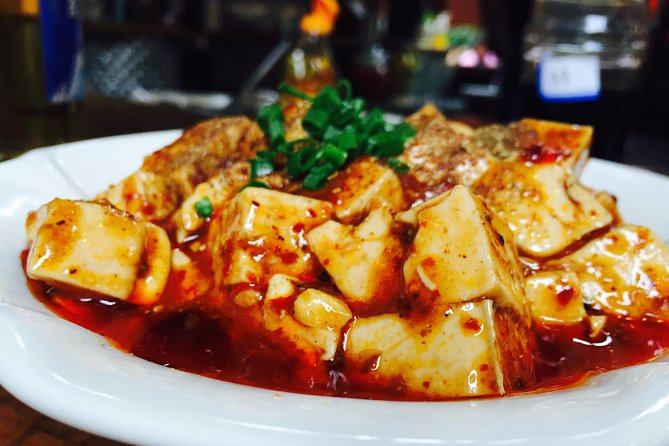
- You cook in a professional school: The lesson moves to Chilli Cool’s Kitchen, where a professional chef guides the mapo tofu preparation.
- The group is capped at 10: This is a more personal setup than a large demonstration class.
- Food and drinks are included: You receive tea, light refreshments, lunch or dinner according to the class time, and beer or another beverage.
- The tour returns to its starting point: Pickup and return transport are provided from select Chengdu locations, with the stated meeting point at Liangjiaxiang in Jinniu District.
- Advance planning helps: The experience is often booked 11 days ahead, and free cancellation is available until 24 hours before the start time.
Why mapo tofu is the right Chengdu cooking lesson
Mapo tofu is one of the best dishes for learning how Sichuan food works. It combines tofu with the seasonings that give the region its recognizable character, and the class lets you see those ingredients before they reach the pan.
The lesson is not only about copying a recipe. You get a look at the raw materials, hear how they fit into Chinese cooking, and then handle the preparation yourself. That connection matters. A dish can taste very different when you know what each spice contributes.
The experience also gives you a break from another restaurant meal. In Chengdu, it is easy to eat extremely well without lifting a knife, but a cooking class gives you a more active way to spend part of the day. You finish with lunch or dinner, so the class is both an activity and a meal.
I would not book this only because you want a fast cooking demonstration. The schedule includes a market visit, tea, instruction, cooking, and time to eat. It suits you best if you want to give a half-day to food culture rather than squeeze in a quick lesson between major sights.
More Farmers Market Tours in China
- Half-Day Chengdu Cooking Class with a Local Market Visit
★ 5.0 · 465 reviews - Half-Day steamed Buns Cooking Class with a Local Market Visit
★ 5.0 · 26 reviews - Old Guangzhou Backstreet Alley Local Market Walking Private Tour
★ 5.0 · 18 reviews
Starting at Liangjiaxiang in Jinniu District
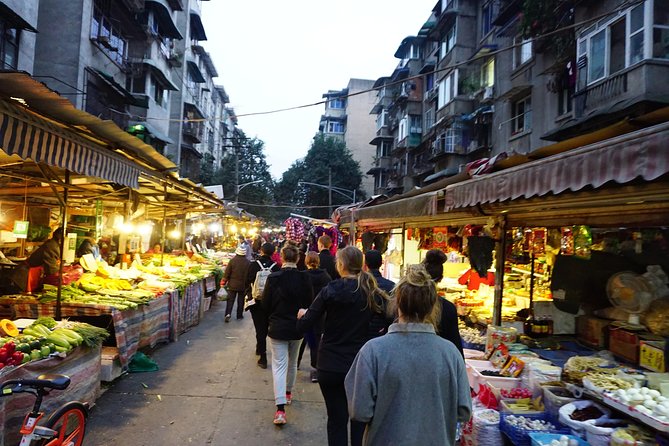
The stated meeting point is 梁家巷, or Liangjiaxiang, in Chengdu’s Jinniu District. The activity ends back at the meeting point, and round-trip transport is provided from select Chengdu locations.
Read the pickup details carefully when booking. The transport is described as hassle-free, but the available pickup points are limited, so you should not assume a hotel door-to-door service unless your location is confirmed.
The tour is near public transportation, which helps if you are making your own way to the start. Confirmation is provided when you book, and the operator requires each participant’s passport name, number, expiry date, and country at that time.
The activity operates in all weather. Chengdu weather can make market walking less pleasant, so bring suitable clothing and wear comfortable walking shoes. The market is part of the point of the experience, not a quick indoor introduction.
At Chilli Cool China, the market comes first
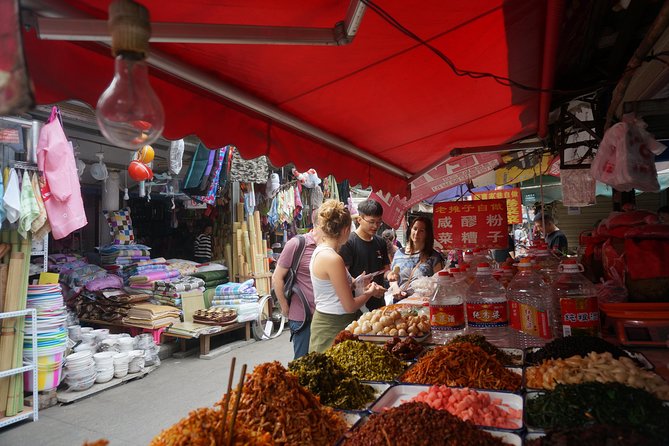
The first stop is Chilli Cool China, where the class begins with a visit to a local market. This is where you see the ingredients used in Chinese cooking and learn about the spices that shape Sichuan food.
The market portion gives the cooking lesson a stronger sense of place. Instead of meeting a chef in a kitchen and receiving a prepared list of ingredients, you first see how food is presented and selected in a local setting. The activity also includes fun challenges to complete, adding a hands-on element before the cooking begins.
Expect this section to be active rather than purely explanatory. You will be walking, looking closely at ingredients, and learning what may go into mapo tofu and other Chinese dishes. If you enjoy food markets, this may be the most memorable part of the morning or afternoon.
It is also the part where comfortable footwear matters most. The tour information does not give a detailed market route or promise specific stalls, so I would treat the market as a guided introduction to Sichuan ingredients rather than a full market-shopping expedition.
A useful extra is that you may have the chance to buy spices to take home. One class participant picked up spices after the market visit, which is a practical reminder that this experience can influence what you cook after returning home.
Jerry is named as a guide who helps with the market and class arrangements. He also contacted a participant before the activity to clarify the available workshops. That sort of advance communication is helpful when you have dietary needs or are unsure which cooking option you have booked.
Moving into Chilli Cool’s Kitchen
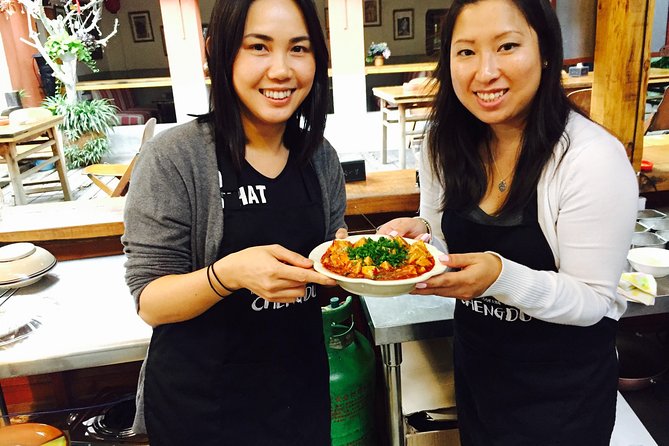
After the market, you continue to Chilli Cool’s Kitchen for the cooking lesson. The kitchen is described as a professional cooking school with a cozy setting, so you get an instructional environment rather than a restaurant kitchen tour.
The session starts with traditional Sichuan tea. Tea is part of the local custom of welcoming friends and visitors, and it gives the class a calm transition from the market to the cooking bench.
A professional chef then guides you through the mapo tofu process. The supplied information does not list every cooking step or specify the exact equipment used, so you should expect guided preparation rather than a technical chef-training course.
That distinction is important. This is designed for visitors who want to understand and make a well-known Chinese dish, not for experienced cooks seeking advanced culinary certification. The limited group size should help you see what is happening and follow along, though the exact amount of individual cooking time can vary.
Vegetarian participation is available, but you must request it when booking. You should also state any other dietary requirements at that time. The menu is centered on mapo tofu, so do not assume that every ingredient can be changed at the last minute.
More Market and Cooking Class Tours in China
- Half-Day Xi’an Biang Biang Noodles Cooking with a Market Visit
★ 5.0 · 48 reviews - Chengdu: Cooking Class with Fresh Market Half Day Experience
★ 5.0 · 42 reviews - Hong Kong Market Walking Tour & Chinese Cooking Class
★ 5.0 · 24 reviews - Half-day Dandan Noodles Cooking Class with a Local Market Visit
★ 5.0 · 8 reviews
Cooking mapo tofu with a group of 10 or fewer
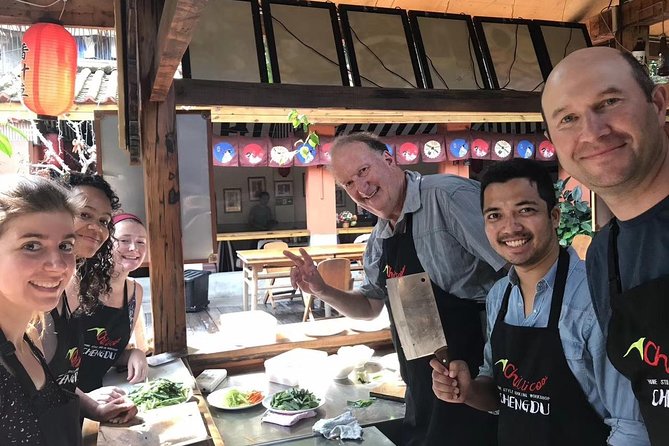
The class size is capped at 10 people. That is a strong point for a hands-on lesson because a small group usually gives you a better chance to hear the chef and keep up with the preparation.
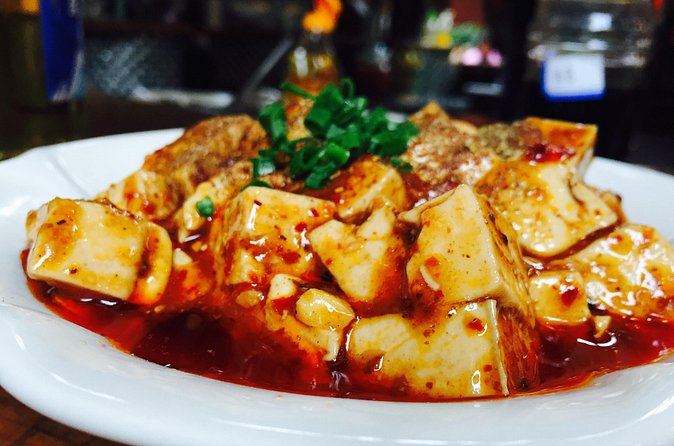
You will make Sichuan-style mapo tofu, one of China’s best-known dishes. The cooking process puts the market visit to work, since the ingredients and spices introduced earlier are connected to the meal you prepare.
I like this structure because it gives you a clear story: see the ingredients, learn their role, cook the dish, then eat it. You are not simply watching someone else prepare food while you sit at a table.
Still, group cooking has limits. The activity does not promise one stove or one chef for each person, and the information does not explain how tasks are divided. If you want a private lesson with complete control over every step, this may feel more shared than personal. If you want a friendly class with room to ask questions, the 10-person limit is a reassuring feature.
The class includes recipes, so you can try to recreate the dish later. Keep those instructions with the spices or pantry items you may buy in Chengdu. The recipe is one of the most useful inclusions because it turns a pleasant afternoon into something you can use at home.
Tea, drinks, and the meal at the end
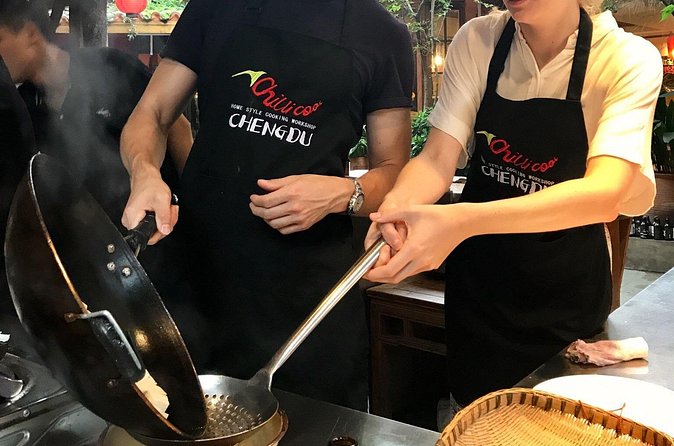
Once the cooking is finished, you sit down to eat the mapo tofu you made. Beer or another beverage is included, as are local tea and light refreshments. Lunch or dinner depends on the class schedule.
This closing meal gives the class a proper finish. You are not sent away immediately after the chef’s demonstration. You have time to enjoy the result, have a drink, and compare the dish with what you may have tasted in Chengdu restaurants.
The meal also helps with the price. At $69.24 per person, you are paying for a market tour, transport from select locations, a professional cooking class, ingredients, refreshments, drinks, a meal, recipes, and a souvenir. That is a reasonable package if you would otherwise pay separately for a food tour and a meal.
The value is less clear if you are only interested in eating mapo tofu. Chengdu restaurants offer plenty of chances to order the dish for less than the full class price. You are paying for instruction and access to the food culture around the dish, not just the food itself.
How the small group affects the experience
A maximum of 10 people gives this activity a more personal feel than a large coach-group demonstration. You should have a better chance to follow the chef, ask about ingredients, and take part in the preparation.
The small group also matters during the market visit. A compact group can move through the market more easily than a large crowd, and the guide can keep the ingredient explanations connected to the cooking lesson.
The trade-off is that the experience may sell out. It is booked, on average, 11 days in advance, so I would reserve it before arriving in Chengdu if the timing matters to you. Advance booking is especially sensible if you need the vegetarian option or have a particular pickup request.
The class is open to children from age 3, but very young children may not take part in every cooking task. The supplied details do not state whether child prices or special equipment are available, so families should confirm those points before booking.
Practical details that affect your half-day
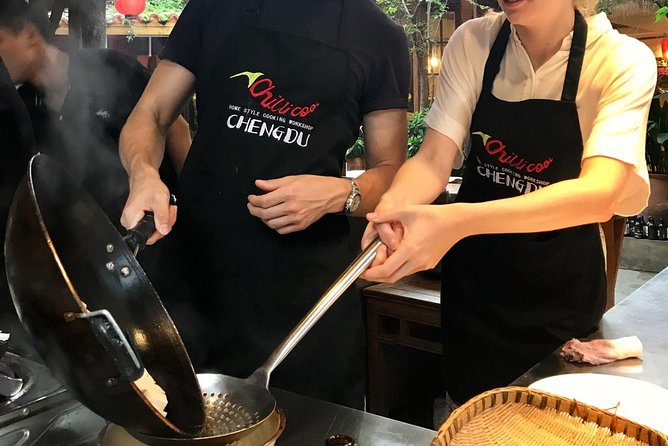
Plan on roughly four hours, with the full workshop described elsewhere as four to five hours. Allow some flexibility around that window rather than scheduling a major attraction immediately afterward.
Wear comfortable walking shoes and dress for the weather. The tour operates in all conditions, and the market visit means you will not spend the entire time indoors.
The activity is offered with a mobile ticket, and confirmation arrives at booking. You need to provide passport details for all participants, including name, number, expiry date, and country.
Free cancellation applies when you cancel at least 24 hours before the local start time. Changes or cancellations inside that period are not accepted for a refund. This gives you some protection while planning, but the 24-hour limit is firm.
Who should book this Chengdu food experience
I would recommend this class to you if you want more than a restaurant meal and enjoy learning by doing. It is a good match for first-time visitors who want a friendly introduction to Sichuan ingredients, couples looking for a shared activity, and families with older children who can manage a market visit and kitchen session.
It also suits anyone who wants a recipe to take home. The included souvenir and recipe booklet make the experience more useful after Chengdu, particularly if you can buy spices during or after the market visit.
You may want to skip it if your schedule is tight, you dislike group activities, or you want a highly advanced culinary lesson. Four hours is a real commitment, and the experience is focused on one signature dish rather than a broad survey of Sichuan cooking.
The strongest features are the market connection, the capped group size, the chef-led preparation, and the meal at the end. Jerry’s pre-tour communication is another helpful touch, especially when you need to clarify workshop choices or food requirements.
Should you book the mapo tofu class?
Book it if you want to understand Chengdu food through its ingredients and make a famous dish yourself. The $69.24 price makes the most sense when you count the market visit, transport, chef instruction, drinks, meal, recipes, and souvenir together.
Skip it if you only want to sample mapo tofu or have little time in Chengdu. For everyone else, this is a focused, practical half-day with a clear beginning, middle, and end: market ingredients, professional cooking, and your own Sichuan meal.
FAQ
How long does the cooking experience last?
The activity lasts approximately four hours, while the workshop details describe a possible duration of four to five hours.
Where does the experience start?
The stated meeting point is Liangjiaxiang in Jinniu District, Chengdu, China, postal code 610051.
Where does the experience end?
The activity ends back at the meeting point.
Is transportation included?
Round-trip transport is provided from select Chengdu locations. Check whether your location is included when booking.
How many people can join the class?
The maximum group size is 10 participants.
What dish will I learn to cook?
You will learn to make Sichuan-style mapo tofu, a popular Chinese dish.
Is a vegetarian option available?
Yes. A vegetarian option is available, but you must request it when booking.
What food and drinks are included?
Ingredients, light refreshments, local tea, beer or another beverage, and lunch or dinner according to the class schedule are included.
Do I receive the recipe after the class?
Yes. Recipes are included, along with a souvenir.
What is the cancellation policy?
You can cancel for a full refund up to 24 hours before the experience start time. Cancellations or changes made less than 24 hours before the start time are not accepted for a refund.
More Half-Day Trips in China
- Half-Day Railway Market and Floating Market Tour in Thailand
★ 4.5 · 3,924 reviews - Dubai: Half-Day City Tour with Blue Mosque, Creek, and Souks
★ 4.8 · 3,059 reviews - Dubai Half-Day City Tour with Visit to Dubai Gold Souk
★ 4.0 · 1,741 reviews - Half-Day Spanish Cooking Class & Boqueria Market Tour
★ 4.9 · 383 reviews
Just added around China
- 3-Hour Herbal Wholesale TCM Market and a Local Wet Market Tour★ 5.0 · 4 reviews
- Half-day Dandan Noodles Cooking Class with a Local Market Visit★ 5.0 · 8 reviews
- Small Group Beijing Temple of heaven and Summer Palace with Pearl market★ 5.0 · 3 reviews
- Private Distinctive Market Tour with Shaomai Lunch and Full Massage in Beijing★ 5.0 · 2 reviews
- Private Tour to Pearl Market Acrobatic Show & Peking Duck Dinner★ 5.0 · 5 reviews
- Half Day Tour:Market Shopping Acrobatic Show & Peking Duck dinner★ 5.0 · 2 reviews
- Beijing Culture Tour to Antique Market and Cloisonné Workshop★ 5.0 · 2 reviews
- Full-Day Private Tour Panjiayuan Antique Market and Beijing Capital Museum★ 5.0 · 3 reviews
Market and Cooking Class Tours, compared.

Hanoi Cooking Class: Culture, Local Market & Meaning CSR Impact
Read our review →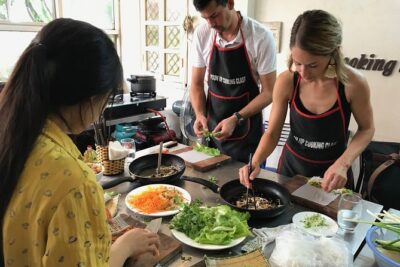
5 Traditional Dishes Hanoi Cooking Class with Market Trip
Read our review →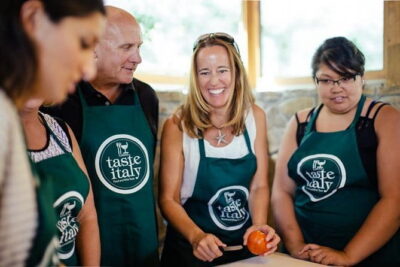
Cooking Class and Lunch at a Tuscan Farmhouse with Local Market Tour from Florence
Read our review →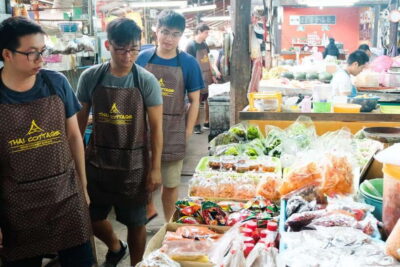
Cooking Class, Market & Thai Herbs Garden Tour
Read our review →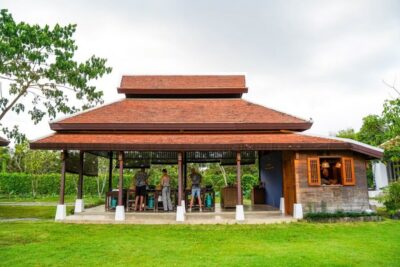
Authentic Cooking Class with Market & Farm Visit
Read our review →
Paella Cooking Experience & Boqueria Market Tour
Read our review →
Cooking Class Hoi An:Local Market, Basket Boat, Fishing & Cooking
Read our review →
Hoi An Cooking Class(Market,BasketBoat Crabfishing&Cooking Class)
Read our review →Browse the lists this tour appears in