
Review · COFFEE & TEA MARKET TOURS
Private Beijing Markets Tour with Tea Tasting at Hongqiao Pearl Market
Beijing’s market life is at its most useful when you have a local guide beside you. This private half-day outing takes you from Panjiayuan Antique Market, with more than 3,000 stalls, to Hongqiao Pearl Market for tea, shopping, and bargaining help. You get a practical look at what people buy, how prices work, and where to focus your limited time.
I like the private format, since your guide can steer you toward antiques, art, pearls, clothing, or souvenirs instead of dragging you through every aisle. I also like the tea stop and the hands-on bargaining help. Guides such as Lily, Lisa, and Lucy have been praised for explaining when to negotiate, when a price is already fair, and how to bargain with little or no shared language.
The main consideration is that this is a shopping tour, not a polished sightseeing circuit. Hongqiao can feel crowded and commercial, lunch and purchases cost extra, and four hours can pass quickly if you become absorbed in the stalls.
Key points to know before booking
- Panjiayuan covers 48,500 square meters: Allow about two hours to browse its thousands of stalls, paintings, antiques, and reproductions.
- Tea is part of the experience: Hongqiao includes a tea ceremony and tasting, not just a quick stop at a shop.
- Your guide helps with bargaining: Lily, Lisa, and Lucy are specifically praised for practical haggling advice and vendor negotiation.
- Hotel transport is included: Pickup and drop-off are provided in a private vehicle, which saves you from arranging taxis between markets.
- Lunch is flexible but extra: You can choose dumplings, noodles, hotpot, Peking Duck, or another available meal at your own expense.
- The $88 price buys convenience: The strongest value comes from private transport, guide time, language help, and shopping support rather than admission tickets.
Starting at Panjiayuan with three thousand stalls
Your English-speaking guide and private car pick you up at your hotel lobby at the departure time you choose, between 8:30 and 10 a.m. The day begins at Panjiayuan Antique Market, with roughly two hours set aside for browsing.
Panjiayuan is less like a single antique shop and more like a huge open market made up of individual sellers. Its 3,000-plus stalls cover about 48,500 square meters, so the scale matters. You will not see everything in one visit, and you should not try.
The useful part of having a private guide is focus. Tell your guide early if you care most about paintings, furniture, jewelry, Cultural Revolution-era objects, Qing Dynasty-style reproductions, or small gifts. Your guide can help you reach the areas that suit you instead of letting the market decide your route.
You may find genuine old pieces, modern reproductions, decorative objects, and items simply styled to look old. That mix is part of the market’s character, but it also calls for care. Do not assume that an object is valuable because a seller gives it an impressive age or story. Ask questions, compare similar items, and treat the guide’s advice as useful context rather than a guarantee of authenticity.
Panjiayuan also suits people who enjoy browsing without a shopping list. You might come across paintings, calligraphy, ceramics, souvenirs, or unusual objects connected with China’s recent past. Some pieces relate to the Cultural Revolution era, while others imitate styles from the late Qing Dynasty.
The market is a better fit for curious shoppers than for anyone seeking a quiet museum visit. Stalls can be packed with goods, and prices are part of the conversation. Wear comfortable shoes, since the tour requires plenty of standing and walking. A moderate level of fitness is expected.
More Private Market Tours in China
Learning what is worth buying
Shopping in Beijing markets can be fun, but it can also become tiring when every item comes with a sales pitch. A guide gives you a second opinion and can help you slow down before buying.
This is especially helpful if you do not speak Mandarin. Guides described as Lily, Lisa, and Lucy have been praised for showing people how to bargain with calculators, facial expressions, and simple signals. That kind of help is often more valuable than a formal explanation of shopping customs because you can use it immediately.
A good bargaining approach is not simply asking for the lowest possible price. First decide if you actually want the item. Then compare a few similar products, ask the price, and make a lower offer without becoming rude or aggressive. Your guide can help you judge when the seller has already offered a reasonable deal.
The private setup makes this less awkward. You are not holding up a large group while you compare two paintings or decide on a set of souvenirs. You can also tell your guide when you want to stop shopping and move on.
Still, keep your expectations sensible. Bargaining help does not turn every purchase into a remarkable bargain. You remain responsible for checking condition, quality, size, and final price. Personal expenses and souvenirs are not included in the tour cost.
Tea tasting at Hongqiao Pearl Market
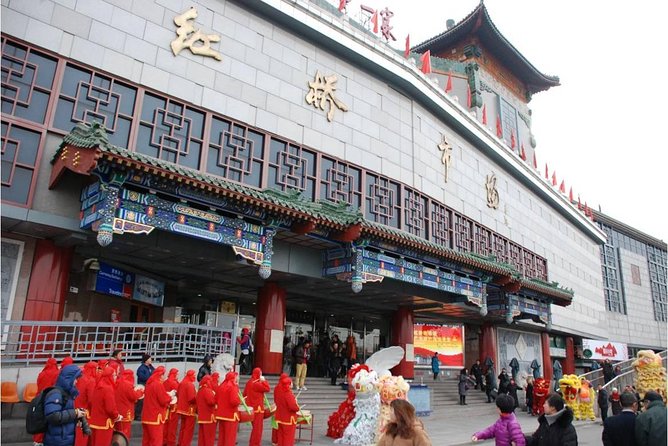
The second major stop is Hongqiao Pearl Market, often called the Pearl Market. This is a large shopping center where you can find jewelry, pearls, clothes, shoes, toys, gifts, food, antiques, and general souvenirs.
The market is not presented as a calm tea house or a refined retail district. It is a practical shopping stop with a lot of choice under one roof. That can be useful if you have several gifts to buy, but it can also feel busy and sales-focused.
The included tea ceremony and tasting give the stop a cultural pause. You can taste tea, learn how the tea is served, and then continue shopping with your guide. The tea portion is one of the more distinctive parts of the outing because it breaks up the buying and bargaining.
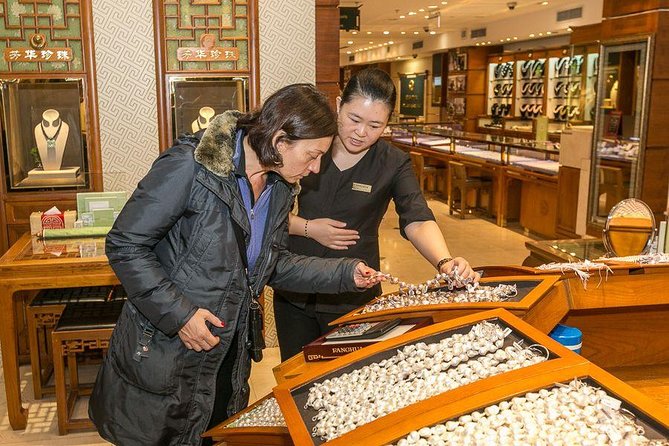
If you are interested in pearls or jewelry, tell your guide before you arrive. The guide can help you find the relevant sellers and explain the bargaining process. One account of the tour specifically highlighted a recommended pearl shop, though you should still compare prices and inspect items before paying.
You might also find clothing, toys, shoes, food, and small gifts here. That broad selection makes Hongqiao useful near the end of a Beijing stay, when you know what you still need. It is less useful if you dislike shopping centers or prefer independent artisan workshops.
Lunch under the market, with your own choice
Lunch is not included, but the tour allows time to eat at or under the market area. You can choose from options such as dumplings, noodles, hotpot, or another available meal. One meal described in the tour experience included Peking Duck, so the guide may help you find a local option that matches your appetite and budget.
The freedom is a plus. You do not have to accept a fixed restaurant menu or eat at a set time. If you are hungry, stop. If you would rather keep shopping, you have more flexibility.
The tradeoff is cost control. Since lunch is paid separately, bring enough money for food as well as purchases. Ask your guide about prices before ordering if you want to keep the meal inexpensive.
More Coffee and Tea Market Tours in Beijing:
- Active Volcano, Rice Field, Hot Spring, Fruit market, Tea Plantation with Lunch
★ 5.0 · 513 reviews - Da Nang Cooking Class with Coffee Tasting and Market Visit
★ 5.0 · 310 reviews - Kyoto: Nishiki Market Tea Ceremony with Koto Performance
★ 4.8 · 294 reviews - Hungry in Vienna? A Food Lover’s Coffee & Market Walk
★ 4.9 · 276 reviews
Why the private car matters in a four-hour tour
Hotel pickup and drop-off are included, along with a private vehicle. That changes the practical value of the tour more than the free market admission does.
Beijing is spread out, and moving between large markets can take planning. With private transport, you do not need to work out a route with shopping bags in hand. Your guide also handles the transition back to your hotel after lunch and the final shopping stop.
You choose a departure between 8:30 and 10 a.m. The pickup happens before that selected start time. A morning departure gives you the rest of the day for other Beijing sights, though the exact amount of remaining time depends on traffic and how long you spend shopping.
The tour lasts about four hours, with roughly two hours listed for each main market. That is enough for a useful introduction, but not enough for slow, detailed shopping at every stall. If you are a serious collector, you may wish you had longer at Panjiayuan. If you only want a few souvenirs and some market atmosphere, the timing should feel manageable.
What the $88 price really covers
At $88 per person, this experience is not mainly selling entrance tickets. Both market stops list free admission. You are paying for the private car, hotel transport, an English-speaking guide, time-saving route help, tea ceremony, tea tasting, and assistance with shopping and bargaining.
That can be good value if you are new to Beijing, short on time, or uneasy about negotiating. A guide may help you avoid buying the wrong item, find a suitable shop, or understand whether a price is reasonable. The private format also gives you control over the pace.
The value is weaker if you are an experienced market shopper who speaks Mandarin, enjoys navigating alone, or plans to spend only a few minutes at each market. In that case, the included transport and guide may not justify the cost as easily.
Group discounts are available, though the exact savings are not provided. Since the tour is private, you can choose your own group size. That makes it a sensible option for couples, families, or friends who want to share the guide and vehicle rather than join strangers.
Who will get the most from this market morning
I would recommend this tour to you if you want shopping help without giving up control. It suits first-time Beijing visitors, people who want gifts, and anyone interested in seeing how bargaining works in a large local market.
It also works well for families, provided children are accompanied by an adult. The guide can keep the day focused, and the private car reduces the effort of getting between stops. Comfortable shoes are important, and you should dress for the weather because the experience operates in all conditions.
Art buyers may find Panjiayuan the more interesting stop. Souvenir shoppers may prefer Hongqiao. Tea fans get something from both places, since the tasting provides a planned cultural activity amid the retail stops.
This is not the right choice if you want a quiet historical tour, a museum-quality assessment of antiques, or a fixed-price shopping experience. It is also not a good match for someone who dislikes bargaining or does not want time set aside for shopping.
Small details that improve the day
Bring a payment method suitable for your purchases, but do not assume every seller accepts the same form of payment. Keep your buying list short enough to manage, since the markets offer more choices than you can reasonably inspect in four hours.
Decide in advance how much you are willing to spend. It is easy to buy several small items because each one seems inexpensive. The total can grow quickly once you add lunch, tea-related purchases, jewelry, clothing, and gifts.
Ask your guide to explain the difference between a decorative reproduction and an older object. At Panjiayuan, the presence of reproductions is part of the shopping reality, not a minor footnote.
If you find a piece you truly want, take a moment to check it carefully before bargaining. Look at the condition, workmanship, measurements, and any defects. A lower price does not make a poor purchase a good one.
Cancellation is free up to 24 hours before the start time. Changes or cancellations inside that window are not accepted for a refund. The experience operates in all weather, so clothing and footwear should match the conditions.
Should you book this private Beijing markets tour?
Book it if you want a practical introduction to Beijing shopping, especially if you value hotel transport and a guide who can help you bargain. The best parts are the private pacing, the huge scale of Panjiayuan, the tea ceremony at Hongqiao, and the chance to get direct shopping advice from guides such as Lily, Lisa, or Lucy.
The $88 price makes the most sense for a small group that will use the car, guide, and market time fully. Go in with a spending limit, comfortable shoes, and realistic expectations about antiques and reproductions.
Skip it if your priority is major monuments, quiet cultural sites, or a fixed-price shopping trip. But if you want to buy gifts, practice bargaining, taste tea, and see two of Beijing’s best-known markets in one morning, this is a focused and useful choice.
FAQ
How long does the private Beijing markets tour last?
The tour lasts approximately four hours, with about two hours planned at Panjiayuan Antique Market and two hours at Hongqiao Pearl Market.
What time can I start the tour?
You can choose a departure time between 8:30 a.m. and 10 a.m. Hotel pickup takes place before your selected departure time.
Is hotel pickup and drop-off included?
Yes. Pickup from your hotel lobby and return transportation to your hotel are included in a private vehicle.
Is the tour private?
Yes. Only your group participates, and you can choose your own private group size.
What is included at Hongqiao Pearl Market?
The tour includes a tea ceremony and tea tasting. You can also shop for pearls, jewelry, clothing, food, gifts, toys, shoes, and souvenirs.
Is lunch included?
No. Lunch is at your own expense. Available choices can include dumplings, noodles, hotpot, or other food at the market.
Do I need to pay for market admission?
The listed admission for both Panjiayuan Antique Market and Hongqiao Pearl Market is free. You pay separately for lunch, souvenirs, and personal expenses.
What happens if I need to cancel?
You receive a full refund if you cancel at least 24 hours before the experience start time. Cancellations or changes made within 24 hours are not refunded or accepted.
More Food and Drink Trips in Beijing
- Dubai: Old Town, Creek, Museums, Souks, & Street Food Tour
★ 4.8 · 10,816 reviews - Dubai: Old Town, Souks, Street Food, Guided Tour & Abra Ride
★ 4.9 · 7,170 reviews - Bangkok by Night: Temples, Markets and Food Tuk-Tuk Tour
★ 5.0 · 3,752 reviews - Chef Guided Food Tour of Pike Place Market
★ 5.0 · 3,733 reviews
More Private Market Tours in Beijing
- Full-Day Private Tour Panjiayuan Antique Market and Beijing Capital Museum
★ 5.0 · 3 reviews - Private Distinctive Market Tour with Shaomai Lunch and Full Massage in Beijing
★ 5.0 · 2 reviews - 3-Hour Private Shopping Tour at Panjiayuan Market from Beijing
★ 5.0 · 2 reviews - Cairo 8 Hour Private Tour of Pyramids, Egyptian Museum and Bazaar
★ 5.0 · 2,931 reviews
Just added around Beijing
- Small Group Beijing Temple of heaven and Summer Palace with Pearl market★ 5.0 · 3 reviews
- Private Distinctive Market Tour with Shaomai Lunch and Full Massage in Beijing★ 5.0 · 2 reviews
- Private Tour to Pearl Market Acrobatic Show & Peking Duck Dinner★ 5.0 · 5 reviews
- Half Day Tour:Market Shopping Acrobatic Show & Peking Duck dinner★ 5.0 · 2 reviews
- Beijing Culture Tour to Antique Market and Cloisonné Workshop★ 5.0 · 2 reviews
- Full-Day Private Tour Panjiayuan Antique Market and Beijing Capital Museum★ 5.0 · 3 reviews
- Lama Temple, Hutong and Silk & Pearl Market Private Day Tour★ 5.0 · 5 reviews
- Dumpling Cooking Class and Local Market Tour★ 5.0 · 3 reviews
Coffee & Tea Market Tours, compared.

Active Volcano, Rice Field, Hot Spring, Fruit market, Tea Plantation with Lunch
Read our review →
Da Nang Cooking Class with Coffee Tasting and Market Visit
Read our review →
Nishiki Market Tea Ceremony with Koto Performance
Read our review →
Hungry in Vienna? A Food Lover’s Coffee & Market Walk
Read our review →
Delicious Doughnuts & Tea: Small-Group Borough Market Experience
Read our review →
From rick’s coffee to local markets authentic casablanca
Read our review →
Vienna Eats: Private Foodie Walk with Coffee & Markets
Read our review →
Ethiopian Culinary Tour – Market, Food, Coffee Ceremony & more
Read our review →Browse the lists this tour appears in