
Review · LOCAL & FARMERS MARKET TOURS
Old Guangzhou Backstreet Alley Local Market Walking Private Tour
Guangzhou reveals itself best away from its grand attractions. This private walk leads you through old residential lanes, local markets, public parks, and shopping streets, where you may see Mahjong games, shuttlecock matches, Cantonese opera singing, and ordinary shopping trips. I like the mix of culture and daily life, and I like that your guide uses buses and the Metro instead of keeping you behind a tour-vehicle window.
The flexible length is another plus: you can spend about three hours on the essentials or stretch the day toward ten hours. Guide Damon is praised for shaping the experience around personal interests. The main drawback is the price, $180 per person, plus food and any admission tickets. That makes the tour a better deal for a small group that wants personal guidance than for a solo visitor watching every dollar.
Key points to know before booking
- Old Guangzhou beyond the postcard stops: Walk through Qilou buildings, wooden doors, markets, parks, and neighborhood lanes.
- A private day shaped around you: The guide can adjust the pace and focus, with Damon specifically praised for tailoring tours.
- Public transport is part of the experience: Metro and bus costs are included, giving you a practical look at how the city moves.
- Six contrasting stops: Combine restored old streets, Cantonese opera, local shopping, Lychee Bay, and the Qingping medicine market.
- Plan for extra costs: Hotel pickup and public transport are included, but food, snacks, and admission tickets are not.
- Best for curious small groups: The $180 per-person rate makes most sense when you value one-on-one attention and local interpretation.
Why this private walk shows Guangzhou well
Many city tours rush from one major sight to another. This one takes a slower, more grounded route through western old Guangzhou. You see the pieces that explain how the city works: homes, food shopping, public leisure, street commerce, historic buildings, and local arts.
The experience is private, so you are not tied to the pace of a large group. If you want more time at the vegetable market, less time shopping, or extra attention to Cantonese opera, your guide can adjust the day. That flexibility matters because the tour can run from roughly three to ten hours.
The guide also escorts you through the city by public transport. Metro and bus fares are included, which keeps the cost clear and gives you a practical sense of Guangzhou beyond the tourist route. You should still expect some walking, time on your feet, and the normal effort of moving through busy city streets and markets.
The tour provider is Guangzhou Local Tours. Damon is the guide named in the available feedback, and his strongest quality is his ability to shape a day around the people he is guiding. He has also worked with larger groups, although this experience itself is private and limited to your party.
More Farmers Market Tours in China
- Half-Day Chengdu Cooking Class with a Local Market Visit
★ 5.0 · 465 reviews - Half-Day steamed Buns Cooking Class with a Local Market Visit
★ 5.0 · 26 reviews - Half-Day Professional Mapo Tofu Cooking with a Local Market Visit
★ 5.0 · 19 reviews
Yong Qing Fang: old streets with a new layer
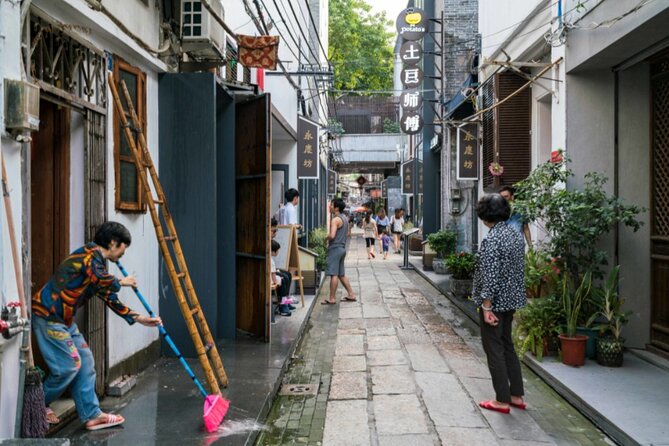
Yong Qing Fang begins the walk with a look at how Guangzhou is updating old neighborhoods without wiping away their character. The area uses what is described as micro modification, adding newer commercial and cultural elements while keeping older buildings and the feel of a traditional residential district.
You can expect about an hour here. That is enough time to look at the street setting, notice the blend of old and new, and ask how Guangzhou handles preservation. This is not simply an old street frozen for photographs. Shops and newer uses have been added, so the area lets you see the push and pull between neighborhood life, heritage, and commerce.
I like this opening because it gives context for the rest of the walk. After seeing a restored district, you can compare it with the less polished lanes and markets later in the day. The tradeoff is that Yong Qing Fang has commercial appeal, so it may feel more prepared for visitors than the residential areas that follow.
Admission is listed as free. Your guide can help you focus on the parts that interest you, especially if your main goal is architecture, urban change, or local street life.
Qilou buildings in Xiguan
At XiGuan MinSuGuan, you enter a neighborhood known for traditional Cantonese architecture. The key feature is the Qilou building, with covered frontage and a street-facing design that links shops, homes, and pedestrian space.
You will also see large wooden sliding doors associated with older homes. These details help you picture how established families once lived in the area. The stop lasts about 30 minutes, so expect a short architectural walk rather than a long museum visit.
This section is most useful if you want to understand Guangzhou through its buildings. Your guide can point out the difference between a restored facade and a lived-in neighborhood, while explaining why the old residential form matters. I would not book this tour expecting a full architectural lecture, but the stop adds substance to what might otherwise look like a simple stroll.
Since the area is part of a local neighborhood, keep your attention respectful. You are seeing a place where people live, not a stage set built only for sightseeing.
Lychee Bay and everyday leisure
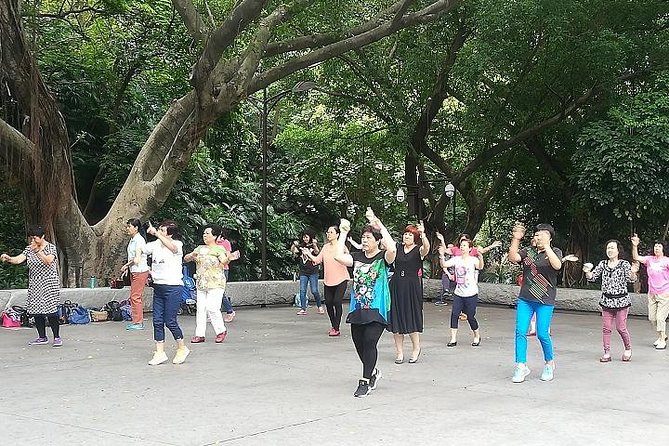
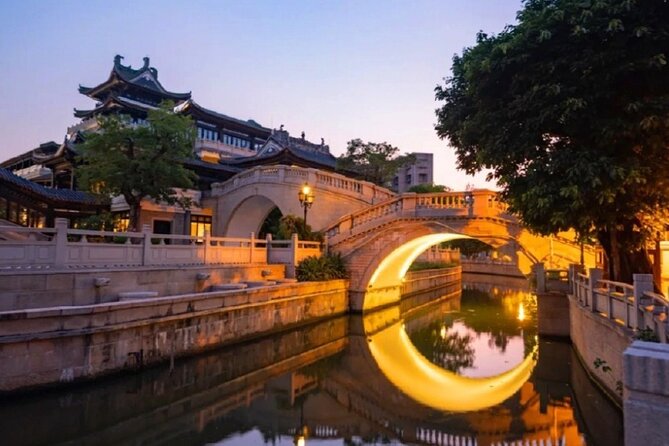
Lychee Bay Scenic Area changes the mood. After the lanes and buildings, you reach a public park where local people spend free time. The setting includes bridges and pavilions, and you may see people playing traditional Chinese instruments, singing Cantonese opera, or taking part in other familiar park activities.
The planned visit lasts around 30 minutes. That is enough for a relaxed walk and a look at how public space is used in old Guangzhou. The value here is not a single must-see object. It is the chance to observe leisure as part of daily life.
If you enjoy people-watching, this may be one of the more rewarding sections. Activities such as playing shuttlecock, practicing music, and singing show a side of the city that a standard monument-focused tour can miss. Your guide can explain what you are seeing and help you understand the role of parks in neighborhood life.
Do not expect a staged performance or a guaranteed show. The appeal comes from what people happen to be doing during your visit. The schedule can also change with the pace of the day, since this is a public park rather than a booked show.
More Private Market Tours in China
- Private Guangzhou Food Tour Michelin Restaurant&Local Food Market
★ 5.0 · 32 reviews - Private Beijing Markets Tour with Tea Tasting at Hongqiao Pearl Market
★ 5.0 · 18 reviews - 6-Hour Private Beijing Tour: Flower and Fish Market, Panjiayuan Antique Market and 798 Art Zone
★ 5.0 · 7 reviews - Private Tour to Pearl Market Acrobatic Show & Peking Duck Dinner
★ 5.0 · 5 reviews
Cantonese Opera Art Museum
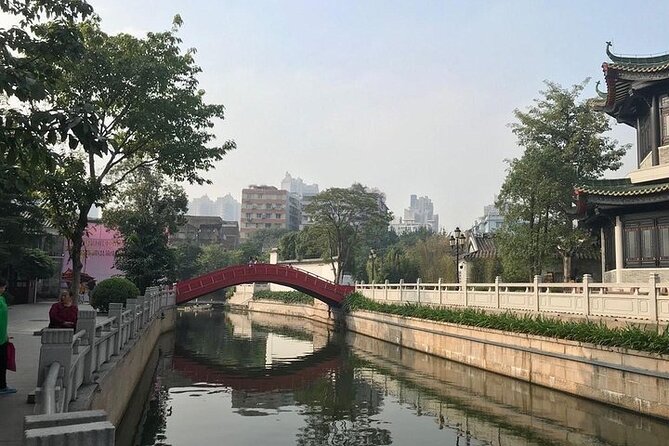
The Cantonese Opera Art Museum gives the walk a more formal cultural stop. In about 30 minutes, you can learn about costumes, facial makeup, instruments, martial arts, and other parts of Cantonese opera.
This is a useful counterpoint to the informal singing you may see in the park. At Lychee Bay, opera is part of public life. At the museum, you can examine the art form through its visual and practical elements. The setting itself is described as attractive, adding a pleasant architectural pause to the route.
Cantonese opera is closely tied to local identity, and the museum helps you understand why the art form includes far more than singing. Costumes, painted faces, movement, music, and combat techniques all carry meaning. If you have little background in Chinese opera, a guide can make the exhibits easier to follow.
Admission tickets are not included if a ticket is required. The same rule applies to your guide, so ask before the visit how any entrance cost will be handled. The museum stop is short, making it a good introduction rather than a detailed study.
Shangxiajiu Pedestrian Street and local shopping
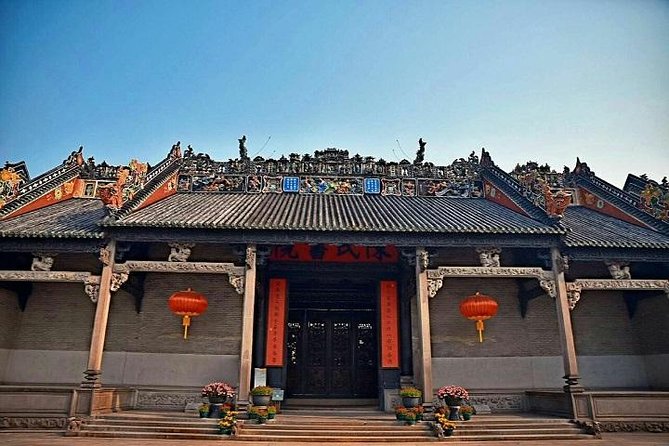
Shangxiajiu Pedestrian Street brings you into a more commercial part of the old city. It is a popular shopping street for local people, with clothing, shoes, jewelry, snacks, vendors, and traditional Chinese decoration along the street.
You get about an hour here. That gives you time to watch the flow of shopping, examine storefronts, and perhaps buy something if you see a useful snack or small item. The point is less about checking off a monument and more about seeing how a local commercial street works.
I like this stop because it connects architecture and daily life. The street is not presented only as a historic backdrop. It remains a place to shop, eat, and move through the city. You can ask your guide about products, food, or the way the street fits into Guangzhou life.
The phrase local shopping street should not lead you to expect a quiet lane. Shops and pedestrian traffic can make this one of the more active sections. If shopping is not your priority, tell the guide early so more time can go to the markets, park, or old neighborhoods.
Qingping Medicine Market and grocery stalls
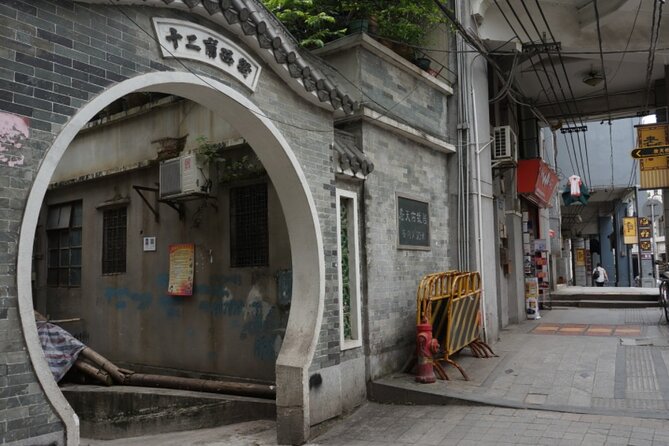
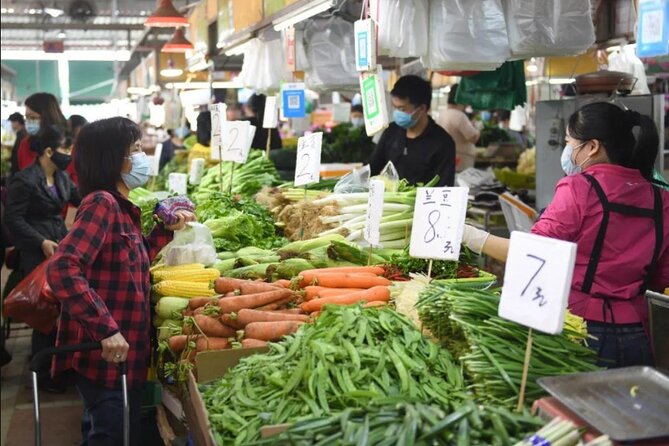
Qingping Medicine Market is one of the most distinctive stops because it shows commerce that is specific to Guangzhou and southern China. The market is associated with herbs and spices, and it sits near grocery and vegetable stalls where you can watch people buying everyday supplies.
This is where the tour most clearly moves beyond sightseeing. You are not just looking at old buildings. You are seeing the products people use, the way markets are arranged, and the variety of goods traded in one of Guangzhou’s wholesale market areas.
The stop lasts about 30 minutes, so the visit is a focused look rather than an extended shopping session. Ask your guide about unfamiliar items, but avoid assuming that every product is intended for visitors. Some goods are part of regular local trade.
Markets can be crowded, visually intense, and less polished than a museum. That is part of the point, but it may not suit someone who wants a quiet, highly organized tour. Keep your belongings secure and stay close to your guide, particularly if your walk takes place during a busy period.
What the $180 price really buys
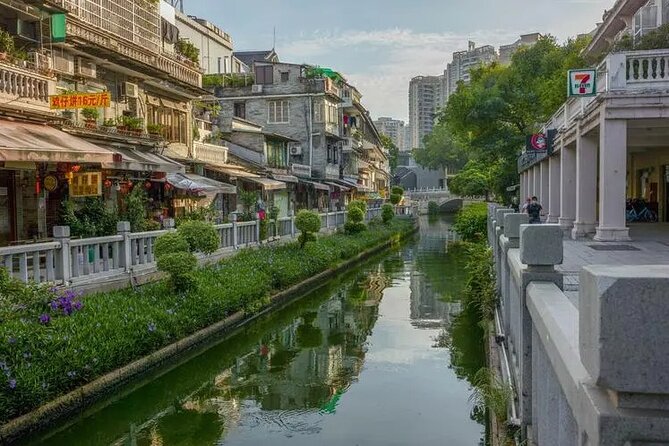
At $180 per person, this is not a bargain sightseeing walk. The price covers a private English-speaking guide, hotel pickup, and public transport costs including Metro and bus tickets. It does not cover hotel drop-off, optional food or snacks, or admission tickets if any are needed.
The value comes from time and attention. You are paying for someone to escort you through several parts of the city, explain what you are seeing, adapt the route, and help you handle local transport. For two people or a small group with specific interests, that can be worthwhile.
For a solo visitor who only wants to see a few free streets, the price may feel high. You could see some of the areas independently. The difference is the local interpretation, the tailored pace, and the help connecting a Qilou home, a public park, an opera museum, and a medicine market into one understandable picture of Guangzhou.
Group discounts are available, but the exact terms are not provided. Ask about the discount before booking if you are traveling with several people. Since the activity is private, you do not share the guide with another party.
Timing, transport, and practical planning
The experience lasts approximately three to ten hours. The wide range suggests that the day can be shaped around your available time and interests. A shorter version can focus on selected old neighborhoods and markets, while a longer day allows more time at the park, opera museum, shopping street, and food stops.
Hotel pickup is included. Hotel drop-off is not, so plan to finish your day independently or ask the guide for help with your onward route. Public transport costs are included, but you should expect to walk between stops and through markets.
Food and snacks are optional and are paid separately for you and the guide if you choose to eat together. This gives you control over spending, but the $180 price is not an all-inclusive food tour.
Confirmation is sent within 48 hours, subject to availability. The tour is commonly booked about 25 days ahead, so I would avoid leaving it until the last minute if your Guangzhou dates are fixed. The experience is listed as suitable for most people and is near public transport, but the information does not provide a detailed mobility assessment.
The cancellation policy is strict. The booking is non-refundable and cannot be changed for any reason, so confirm your dates and group size before paying.
Who will get the most from this experience
I would choose this tour if you have already seen Guangzhou’s major sights or if you prefer ordinary city life to a checklist of famous buildings. It suits people who enjoy markets, neighborhood architecture, parks, local arts, and conversation with a guide.
It is also a good match if you are short on time but want more than a quick city overview. A private guide can help you choose the most useful stops rather than forcing you through every section.
Families and small groups may appreciate the private format, especially when different people want different things. One person can focus on food and markets, another on architecture or opera, and the guide can balance those interests.
I would think twice if you dislike public transport, street markets, or walking through active neighborhoods. The tour is built around those things. It is also less suitable if your top priority is a low-cost independent outing or a long, specialist museum visit.
Should you book the old Guangzhou backstreet walk?
Book it if you want to see how Guangzhou lives between its major attractions. The best parts are the combination of old homes, public leisure, Cantonese opera, local shopping, and the Qingping market. You get a city lesson made from ordinary places, not just famous facades.
The private format and flexible length justify the cost for people who value personal attention. Damon’s ability to adjust the day is a useful sign for anyone with particular interests, though you should confirm your guide when booking rather than assume he will lead your tour.
Skip it if $180 per person feels too steep for a walking day, or if you mainly want grand landmarks and included meals. For the curious visitor who wants Guangzhou explained through its streets, markets, and residents’ routines, this is a thoughtful choice.
FAQ
How long does the tour last?
The tour lasts approximately three to ten hours, depending on how the day is arranged and how much time you spend at each stop.
Is hotel pickup included?
Yes. Hotel pickup is included in the tour price.
Is hotel drop-off included?
No. Hotel drop-off is not included.
Is public transportation included?
Yes. Metro and bus costs are included, and the guide escorts you by public transport during the tour.
Is this a private tour?
Yes. Only your group participates, and you have a private English-speaking guide.
Are admission tickets included?
No. Tourist attraction admission tickets, if needed, are not included for you or the guide.
Are food and snacks included?
No. Local food and snacks are optional and cost extra for you and the guide.
Can I cancel or change the booking?
No. The experience is non-refundable and cannot be changed for any reason.
Just added around China
- 3-Hour Herbal Wholesale TCM Market and a Local Wet Market Tour★ 5.0 · 4 reviews
- Half-day Dandan Noodles Cooking Class with a Local Market Visit★ 5.0 · 8 reviews
- Small Group Beijing Temple of heaven and Summer Palace with Pearl market★ 5.0 · 3 reviews
- Private Distinctive Market Tour with Shaomai Lunch and Full Massage in Beijing★ 5.0 · 2 reviews
- Private Tour to Pearl Market Acrobatic Show & Peking Duck Dinner★ 5.0 · 5 reviews
- Half Day Tour:Market Shopping Acrobatic Show & Peking Duck dinner★ 5.0 · 2 reviews
- Beijing Culture Tour to Antique Market and Cloisonné Workshop★ 5.0 · 2 reviews
- Full-Day Private Tour Panjiayuan Antique Market and Beijing Capital Museum★ 5.0 · 3 reviews
Local & Farmers Market Tours, compared.
Hanoi Cooking Class: Culture, Local Market & Meaning CSR Impact
Read our review →
Cooking Class and Lunch at a Tuscan Farmhouse with Local Market Tour from Florence
Read our review →
Cooking Class Hoi An:Local Market, Basket Boat, Fishing & Cooking
Read our review →
Hoi An Cooking Class(Local market,Basket Boat,Fishing & Cooking)
Read our review →
Paella Cooking Class, Wine Tasting & Central Market in Valencia
Read our review →
Seattle: Pike Place Market Chef-Guided Food Tour
Read our review →Browse the lists this tour appears in