
Review · MARKET AND COOKING CLASS TOURS
Half-Day Xi’an Biang Biang Noodles Cooking with a Market Visit
Xi’an’s famous biang biang noodles are best understood with your hands. This half-day experience takes you from the spice stalls of the Muslim Quarter to a traditional Chinese courtyard, where a chef guides you through the dough, pulling, toppings, and final meal. I like the market stop and the fact that you cook from scratch, not simply watch a demonstration.
I also like the small-group format, with no more than 15 people, and the practical extras: recipes, tea, beer, water, and lunch or dinner are included. The main thing to consider is the format. One past session felt more like a demonstration in an apartment than a full class with individual workstations, so you should book this for cultural context and noodle skills, not a polished cooking-school setup.
Key points to know before booking
- The market comes first: Explore a local spice and food market in Xi’an’s Muslim Quarter and learn which ingredients go into the meal.
- You make the noodles from scratch: The class focuses on the hand-pulling process behind biang biang noodles.
- The setting is personal: Cooking takes place in a traditional Chinese courtyard or chef’s home, rather than a formal culinary school.
- Fiona and Lily are praised for teaching: Fiona’s clear English and Lily’s understanding of Chinese spices have been especially useful in past sessions.
- Your meal is included: Ingredients, tasting, recipes, tea, beer, water, and lunch or dinner are part of the price.
- Allow three and a half hours: Choose a morning or afternoon session, wear comfortable shoes, and expect to walk through the market.
Why biang biang noodles are worth learning in Xi’an
Biang biang noodles are one of Xi’an’s signature foods. They are broad, chewy noodles made by stretching dough by hand, then serving them with flavorful ingredients and seasonings. The unusual name is often treated as part of the dish’s local character, but the key point for you is practical: the noodle is made through touch, timing, and movement.
That makes this a better choice than a class focused only on recipes. You learn how dough should feel, how to pull it, and how to turn it into a meal. Several parts of the process can be hard to reproduce from a cookbook alone, especially if your first attempts at hand-pulled noodles have failed.
The class is also tied to Xi’an itself. You are not simply learning a general Chinese noodle dish in a hotel kitchen. You start with local ingredients, visit a market, and then prepare a food closely associated with the city. I like that connection because it gives the meal a place and a story.
More Market and Cooking Class Tours in China
- Half-Day Chengdu Cooking Class with a Local Market Visit
★ 5.0 · 465 reviews - Chengdu: Cooking Class with Fresh Market Half Day Experience
★ 5.0 · 42 reviews - Half-Day steamed Buns Cooking Class with a Local Market Visit
★ 5.0 · 26 reviews
Meeting at Sa Jin Qiao and entering the Muslim Quarter
The activity begins at Sa Jin Qiao, also written as Sajin Bridge, in Lianhu District. The meeting point is near public transportation, and the activity ends back there. You should arrive ready to walk, since the first part takes place in the local market around the Muslim Quarter.
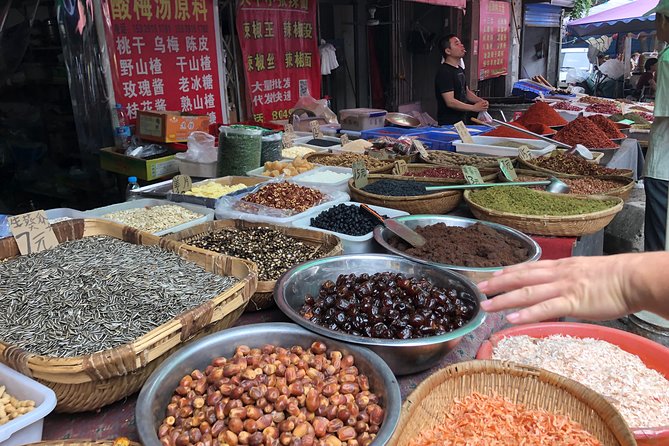
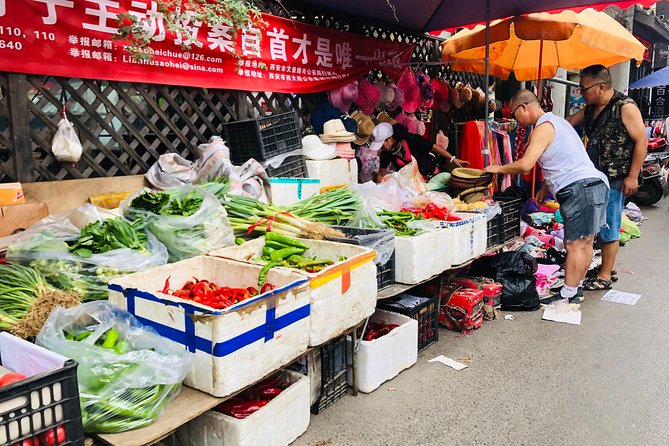
This area is an important food center in Xi’an, and the market visit gives you a look at ingredients before they reach the cooking table. You might see spices, fresh produce, and other items used in Chinese cooking. The goal is not simply to walk through and take photographs. Your guide uses the visit to explain ingredients and help gather what you need for the class.
Some sessions include small challenges while you explore. These give the market visit a little structure and help you pay attention to unfamiliar spices and cooking ingredients. That is useful if you do not already know the difference between the seasonings on display.
The market can also be the least predictable part of the experience. It is a working local market, not a staged food attraction, so conditions may be crowded, noisy, or wet depending on the weather. Wear comfortable walking shoes and dress for the forecast. The activity operates in all weather conditions unless the provider cancels for poor weather.
Learning Chinese spices before cooking
The spice stop is valuable because it gives you a better sense of how the finished noodles get their flavor. Instead of meeting a bowl of noodles with every ingredient already measured, you see and discuss the building blocks first.
Lily has been especially praised for explaining Chinese spices and cuisine, while Fiona has been noted for speaking clear English and making instruction easy to follow. Other sessions have been led by Michael, Bruce, or Dongcheng, so the exact guide may vary. The quality of the experience will depend partly on who leads your group, but the format remains centered on local ingredients and noodle making.
You should ask questions as you go. This is a good place to clarify which ingredients are essential, which can be replaced at home, and how the seasonings affect the final dish. The information is more useful when you are thinking ahead to your own kitchen.
The market visit also helps explain the price. At $75 per person, you are paying for more than a bowl of noodles. The experience includes a guided food walk, ingredients, instruction, beverages, recipes, and a meal. It is not the cheapest way to eat biang biang noodles in Xi’an, but it offers a hands-on activity and a local food setting that a restaurant meal cannot provide.
Tea and a traditional Chinese cooking setting
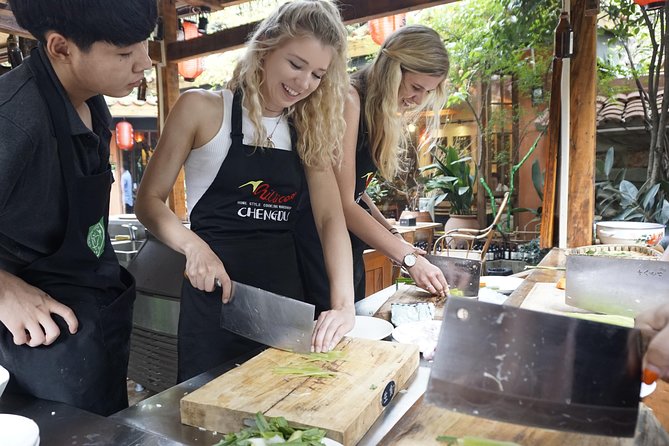
After the market, the group moves to a traditional Chinese courtyard or the chef’s home. The supplied information describes the class as taking place in a traditional Chinese chef’s home, while one past participant found the setting to be an apartment. You should think of this as a home-based cooking experience, not a commercial kitchen with rows of professional stations.
Tea is served as part of the welcome. That small detail matters because it slows the pace and gives you a chance to settle in after the market. Tea is also part of the local custom of welcoming friends and visitors, so it adds a cultural element without turning the class into a formal lecture.
The home setting is one of the experience’s strengths. You get a more personal look at how the meal is prepared in a local environment. It can feel relaxed and social, particularly when the group is small.
There is a tradeoff. If you want your own large workstation, commercial equipment, and complete freedom to alter the recipe, this may feel limited. One three-star experience raised exactly that concern, describing the session as more of a cooking demonstration than a class with individual stations. That is the clearest warning to keep in mind before you book.
Same place, a different set of stalls:
- Mini Group Xian Day Tour to Terracotta Army, City Wall, Pagoda and Muslim Bazaar
★ 5.0 · 1,320 reviews - Shanghai Day Tour to Zhujiajiao Water Town, Yu Garden, Bazaar, Bund
★ 5.0 · 162 reviews - Organic Chinese Dumpling Class with Market Walk
★ 5.0 · 88 reviews - Flavors of Beijing: Eat Like A Real Chinese
★ 5.0 · 78 reviews
Pulling the noodles with a professional chef
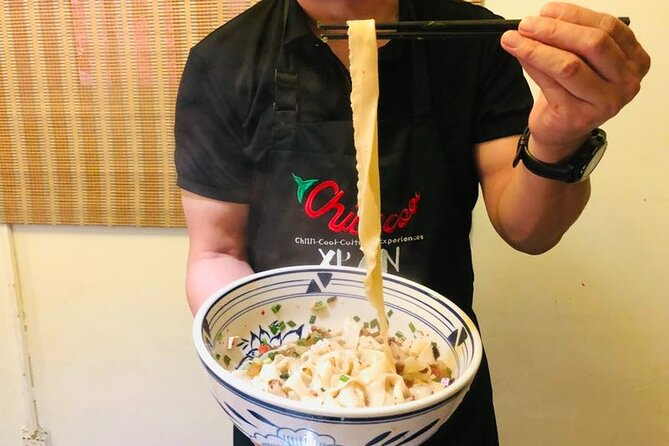
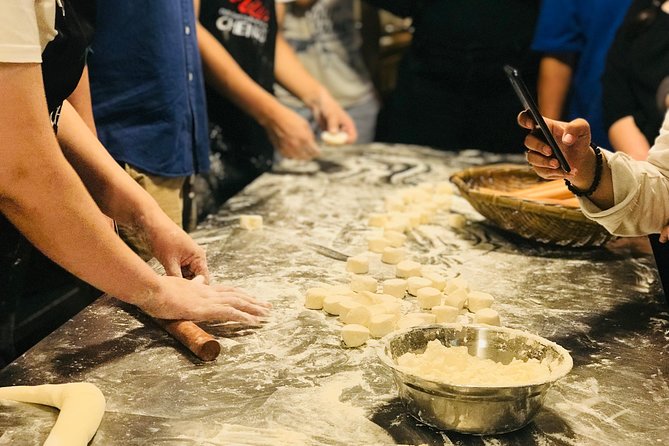
The central lesson is the noodle-making process. A professional chef guides you through preparing the dough and stretching it into the wide, long noodles associated with Xi’an. You will work through the steps rather than simply receive a finished bowl.
The process is fun partly because it is physical. The dough has to be handled with care, and the pulling technique takes practice. You may make more noodles than you expected, which is not a bad problem when the meal is waiting at the end.
The instruction is aimed at helping you repeat the dish at home. Recipes are included, and one past participant specifically valued being able to recreate the noodles after returning home. That is an important point for anyone booking a cooking class: you are not only collecting a memory, you are receiving a reference for another attempt in your own kitchen.
Still, expectations matter. You may not leave with perfect restaurant-style noodles on the first try. Hand-pulled dough has a learning curve, and the amount of individual practice may vary with group size and the way your session is organized. With a maximum of 15 people, this is smaller than a large tour group, but it is not necessarily a one-on-one lesson.
If you are serious about technique, stay near the chef, watch the hand movements closely, and ask for another demonstration when needed. If the group is full, speak up so you can take part rather than only observe.
Eating what you made, with tea, beer, or water
The reward comes at the table. You eat the noodles and other food you prepared, with food tasting included. Beer, tea, and water are provided, giving you a few ways to finish the meal.
This part makes the timing convenient. You do not need to arrange a separate lunch or dinner after the class, because the meal is built into the morning or afternoon schedule. The exact meal depends on the session you choose, so check whether you are booking the lunch or dinner option.
The food is likely to be more satisfying because you have handled each stage yourself. You have seen the ingredients at the market, worked with the dough, and watched the noodles come together. Even a slightly uneven bowl can taste good when you know how much work went into it.
The included beverages also help the value. At $75, I would not book this solely for the amount of food you receive. I would book it for the combined experience: market visit, instruction, ingredients, recipes, tea, drinks, and the chance to eat your own cooking in a local setting.
Group size, timing, and who will enjoy it
The experience lasts about three and a half hours, with morning and afternoon departures. That is enough time for a proper market visit and cooking session without taking up a full day of sightseeing.
A group maximum of 15 is reasonable for a social class, though your access to the chef may depend on the number who actually attend. Couples, families with older children, food-focused visitors, and home cooks should find the format appealing.
I would especially recommend it if you:
- Want to learn a recognizable Xi’an dish rather than simply order one
- Enjoy local markets and asking questions about ingredients
- Like informal, home-based experiences
- Want a recipe and technique you can try again
- Prefer a small group to a large city tour
- Have time for a three-and-a-half-hour activity
I would be more cautious if you need a fully equipped cooking school, a guaranteed personal station, or a tightly controlled lesson with every participant cooking independently. The available information does not promise those things.
Vegetarian options are available, but you must request one when booking. You should also provide any other dietary requirements in advance. Comfortable shoes are important because the activity includes walking through the market.
Is the $75 price good value?
The $75 price sits above the cost of simply eating noodles in Xi’an, but that comparison misses the point. You are paying for a guided market visit, food education, chef instruction, all ingredients, recipes, tasting, tea, beer, water, and the meal.
I see good value here if you take part fully. The market adds context, the cooking provides a practical skill, and the meal completes the activity. The recipe is also useful after the trip, especially if you want to make hand-pulled noodles at home.
The value is weaker if you mainly want a cheap meal or a polished professional cooking studio. In that case, a restaurant would be simpler, and a more formal culinary school might suit you better. This experience earns its price through contact with local food culture and hands-on work, not through luxury facilities.
The high recommendation level and five-star rating fit the strongest parts of the format: the warm teaching style, the local market, and the fun of making biang biang noodles from scratch. Still, the lower-rated experience gives you an important reminder to keep your expectations realistic about personal cooking stations.
Cancellation and booking details to keep in mind
You can cancel for a full refund up to 24 hours before the start time. Changes made within 24 hours are not accepted, and a late cancellation is not refunded.
The activity may also be canceled if poor weather affects the experience or if the minimum number of participants is not reached. In those cases, you are offered another date or experience, or a full refund. Confirmation is provided at booking.
Since the experience is often booked about three weeks ahead, it makes sense to reserve early if the morning or afternoon schedule matters to you. At the same time, keep your plans flexible enough to handle a change caused by weather or minimum group size.
Should you book this Xi’an noodle class?
Book it if you want to connect Xi’an’s food with its markets and learn a skill you can try at home. The combination of spice shopping, tea in a local home, chef instruction, and a meal you prepare yourself gives the afternoon more substance than a standard food tasting.
The best fit is a curious eater who enjoys informal settings and does not need perfect classroom facilities. Guides such as Fiona and Lily have made the English instruction and spice explanations accessible, while Michael, Bruce, and Dongcheng have also led sessions.
Skip it if your main goal is a formal cooking-school setup with an individual workstation for every person. For most visitors who value local contact, practical noodle skills, and a meal included in the price, this is a worthwhile way to spend three and a half hours in Xi’an.
FAQ
How long does the Xi’an biang biang noodle experience last?
The activity lasts approximately three hours and 30 minutes. It includes the market visit, tea, cooking instruction, and the meal you prepare.
Where does the experience begin and end?
You meet at Sa Jin Qiao, also called Sajin Bridge, in Lianhu District, Xi’an. The activity ends back at the meeting point.
Is lunch or dinner included?
Yes. Lunch or dinner is included, depending on whether you choose the morning or afternoon class. Food ingredients and tasting are also included.
Are drinks included?
Yes. Tea, beer, and water are provided as part of the experience.
Is a vegetarian option available?
Yes. A vegetarian option is available, but you must request it when booking. You should also provide any other dietary requirements in advance.
What happens if I need to cancel?
You can receive a full refund if you cancel at least 24 hours before the start time. Cancellations or changes made less than 24 hours before the start are not accepted for a refund.
More Half-Day Trips in China
- Half-Day Professional Mapo Tofu Cooking with a Local Market Visit
★ 5.0 · 19 reviews - Half-day Dandan Noodles Cooking Class with a Local Market Visit
★ 5.0 · 8 reviews - Half-Day Railway Market and Floating Market Tour in Thailand
★ 4.5 · 3,924 reviews - Dubai: Half-Day City Tour with Blue Mosque, Creek, and Souks
★ 4.8 · 3,059 reviews
Just added around China
- 3-Hour Herbal Wholesale TCM Market and a Local Wet Market Tour★ 5.0 · 4 reviews
- Half-day Dandan Noodles Cooking Class with a Local Market Visit★ 5.0 · 8 reviews
- Small Group Beijing Temple of heaven and Summer Palace with Pearl market★ 5.0 · 3 reviews
- Private Distinctive Market Tour with Shaomai Lunch and Full Massage in Beijing★ 5.0 · 2 reviews
- Private Tour to Pearl Market Acrobatic Show & Peking Duck Dinner★ 5.0 · 5 reviews
- Half Day Tour:Market Shopping Acrobatic Show & Peking Duck dinner★ 5.0 · 2 reviews
- Beijing Culture Tour to Antique Market and Cloisonné Workshop★ 5.0 · 2 reviews
- Full-Day Private Tour Panjiayuan Antique Market and Beijing Capital Museum★ 5.0 · 3 reviews
Market and Cooking Class Tours, compared.

Hanoi Cooking Class: Culture, Local Market & Meaning CSR Impact
Read our review →
5 Traditional Dishes Hanoi Cooking Class with Market Trip
Read our review →
Cooking Class and Lunch at a Tuscan Farmhouse with Local Market Tour from Florence
Read our review →
Cooking Class, Market & Thai Herbs Garden Tour
Read our review →
Authentic Cooking Class with Market & Farm Visit
Read our review →
Paella Cooking Experience & Boqueria Market Tour
Read our review →
Cooking Class Hoi An:Local Market, Basket Boat, Fishing & Cooking
Read our review →
Hoi An Cooking Class(Market,BasketBoat Crabfishing&Cooking Class)
Read our review →Browse the lists this tour appears in