
Review · MARKET WALKING TOURS
Palermo: Markets and Monuments City Center Walking Tour
Palermo’s best introduction may be a walk that pairs street-market noise and smells with grand churches and palace squares. This route moves from Teatro Massimo through Capo Market and on to Palermo Cathedral, Pretoria Fountain, the Norman churches around Bellini Square, and Quattro Canti.
I like the way the tour connects everyday Palermo with its major monuments, and I like that Fabrizio Cavallaro explains small details rather than simply naming buildings. The $41 price also includes entry to the cathedral. The main drawback is that this is a fairly full walking route, and food, drinks, and entry fees for other monuments are extra.
Key points at a glance
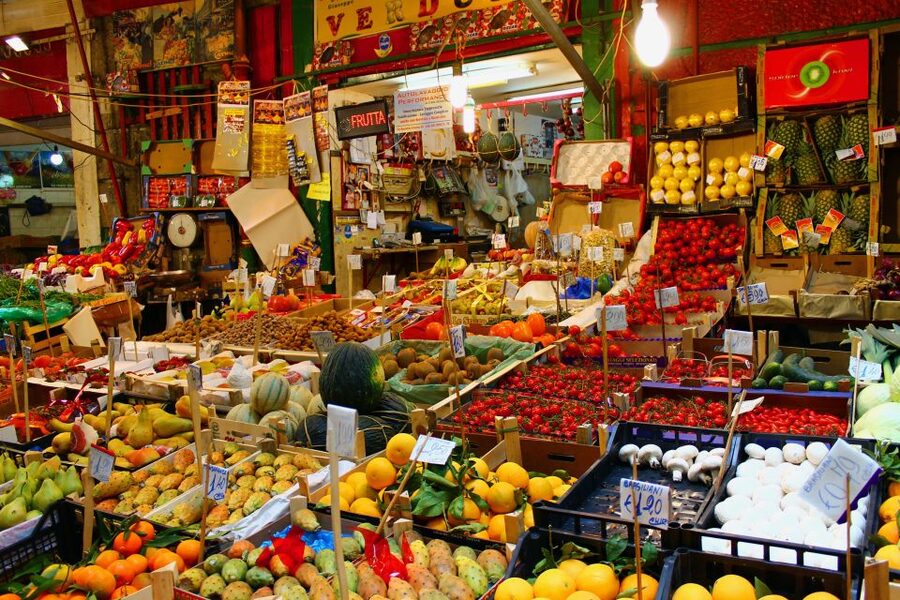
- Capo Market brings Palermo to life: Expect colorful produce, textiles, street food, and the sounds of vendors along the route.
- The Cathedral is the main included interior visit: A guide-led visit and entrance are covered in the price.
- Fabrizio Cavallaro leads the tour: His explanations are available in English or Italian, with time for questions and practical advice.
- The route links major sights efficiently: Teatro Massimo, Norman churches, Baroque interiors, palaces, and famous squares fit into one central walk.
- Street food is available to buy: You can try panelle, crocché, sfincione, and arancina, but food is not included.
- The finish is right at Quattro Canti: You end at the crossroads of Corso Vittorio Emanuele and Via Maqueda, a useful place to continue exploring.
Why this Palermo walk works so well
I see this tour as a compact introduction to central Palermo rather than a slow, detailed study of every church. In two to three hours, you get a useful sense of how the city fits together: grand public buildings sit close to food stalls, Norman churches share space with Baroque decoration, and busy streets open into formal squares.
The route also gives you several kinds of Palermo in one outing. Teatro Massimo represents the city’s grand opera tradition. Capo Market offers a more earthy, local scene. The cathedral and churches show the layers of Norman, medieval, and Baroque Palermo. That mix is the real value.
Your guide is Fabrizio Cavallaro. The available feedback points to his punctuality, clear explanations, preparation, and willingness to answer questions. His style appears to favor useful detail without turning the walk into a long lecture. That matters in Palermo, where a few well-chosen explanations can make an otherwise confusing street or church much easier to understand.
The tour is conducted in Italian or English. It is a walking experience from start to finish, so comfortable shoes are essential. Bring water and a small snack, but leave large luggage behind.
More Market Walking Tours in Italy
- Palermo: Walking Tour of Historic Markets and Monuments
★ 4.9 · 478 reviews - Markets and monuments: walking tour and street food in Palermo
★ 5.0 · 159 reviews - Palermo : Historic Markets & monuments Walking Tour
★ 4.7 · 129 reviews
Starting near Teatro Massimo
The meeting point may vary with the option you book. One stated meeting location is Feltrinelli Librerie on Via Orologio, 11, with a pickup option close to the port for cruise passengers.
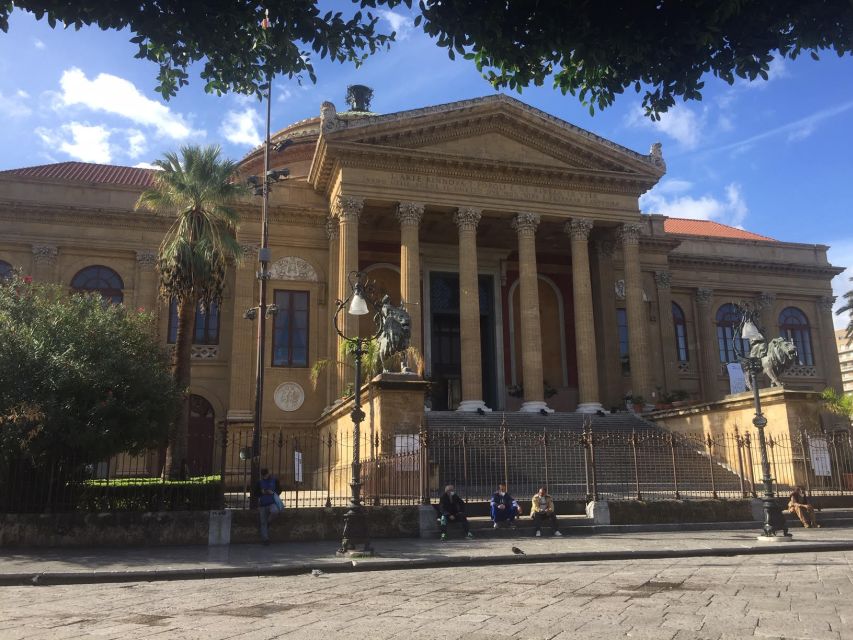
The first major sight is Teatro Massimo. You pass by the opera house and hear about its size and acoustics. It is known as Italy’s largest opera house, so this opening stop gives the walk a grand start without requiring a separate theater ticket.
I like beginning here because Teatro Massimo is easy to recognize and sits close to several old streets leading into the historic center. The route then continues toward Porta Carini, one of the approaches to Capo Market. The walk between stops takes about ten minutes, giving you time to get oriented before the market crowds and stalls begin.
Because the theater is a pass-by stop, you should not expect an interior visit as part of this experience. If you want to see inside, you would need to arrange that separately.
Capo Market: the most sensory part of the route
Capo Market is likely to be the liveliest section of the walk. You move among stalls filled with colorful foods, textiles, and the smells of cooking. This is not a polished food hall. It is an active street market, and the appeal comes from seeing ordinary commerce still woven into the center of the city.
Your guide leads you through the market rather than leaving you to find your own way. That helps because the streets can feel crowded and the many stalls compete for your attention. You can focus on what is being sold, how the market fits into the neighborhood, and which foods are worth trying.
You can buy and taste classic Palermo street foods during the stop:
- Panelle, fried chickpea fritters
- Crocché, potato croquettes
- Sfincione, a thick Sicilian-style pizza
- Arancina, a fried rice ball with filling
Food is not included in the $41 price, so carry a little spending money if you want to sample something. I would treat this as an optional tasting opportunity, not a formal meal. The tour continues afterward, so a small portion is more practical than trying to make lunch out of the market.
Capo Market is also where the tour feels least like a standard monument walk. You are not simply looking at facades. You are seeing food, trade, movement, and daily life at close range. If you prefer quiet galleries and long pauses, this section may feel hectic. If you want a direct look at Palermo’s street culture, it is a strong part of the route.
Palermo Cathedral and its practical dress rules
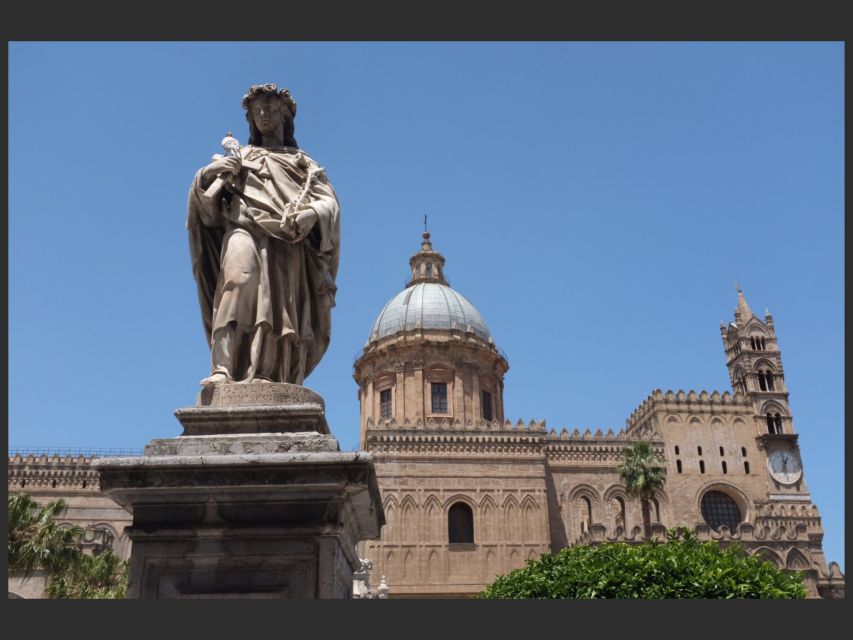
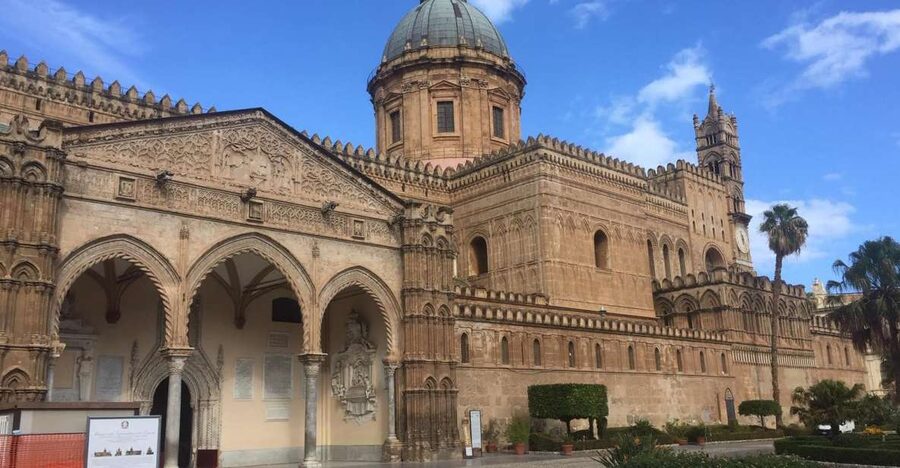
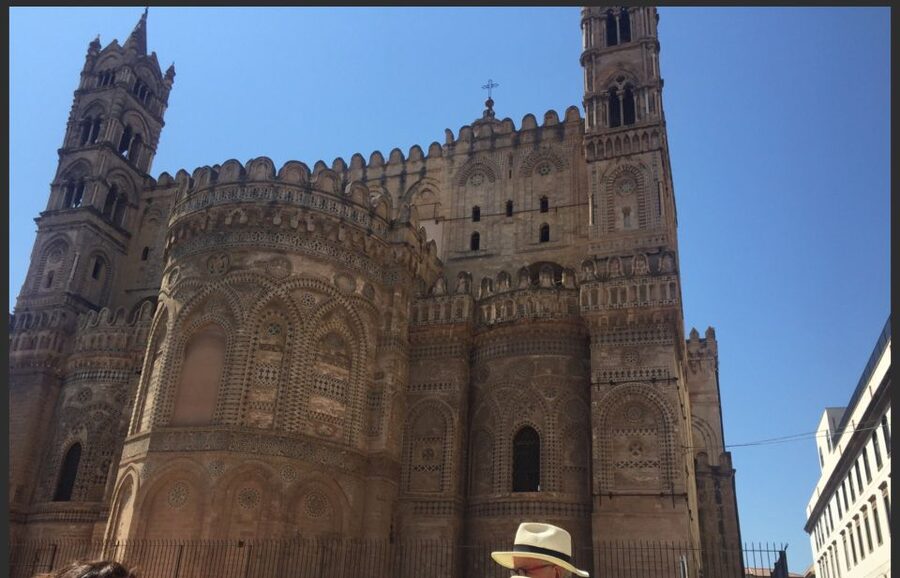
The walk continues to Palermo Cathedral, a 12th-century building and part of the UNESCO-listed Arab-Norman Palermo and the Cathedral Churches of Cefalù and Monreale site. The tour includes entry to the cathedral, making this the clearest included admission of the day.
Allow about twenty minutes for the guided visit as planned. That is enough for an introduction to the building, its history, and its major features, but not enough for an unhurried examination of every chapel and detail. I would see this as a well-focused first visit, not a substitute for returning on your own.
Pay close attention to clothing. Men may not wear shorts or tank tops, though Bermuda shorts and T-shirts are allowed. Women may not wear shorts, miniskirts, or tops, while Bermuda shorts and T-shirts are allowed. If your clothing does not meet the rules, a light jacket can be bought at the entrance for €1 to cover shoulders and legs.
This is one of the most important practical points in the whole experience. You do not want to arrive at the cathedral after a hot walk and discover that your clothing needs covering. Dress modestly from the start, or plan for the €1 cover-up.
More Market Market Walking Tours in Italy:
- Florence Street Food Walking Tour with wine in Duomo Area
★ 5.0 · 68 reviews - Bologna: Small Group Food market Walking Tour with Tasting
★ 4.4 · 59 reviews - Rome: Temples, Squares & Markets Guided Walking Tour
★ 4.8 · 26 reviews - Florence: Local Food, Wine & Market Walking Tour
★ 5.0 · 6 reviews
Cassaro and the crossing at Quattro Canti
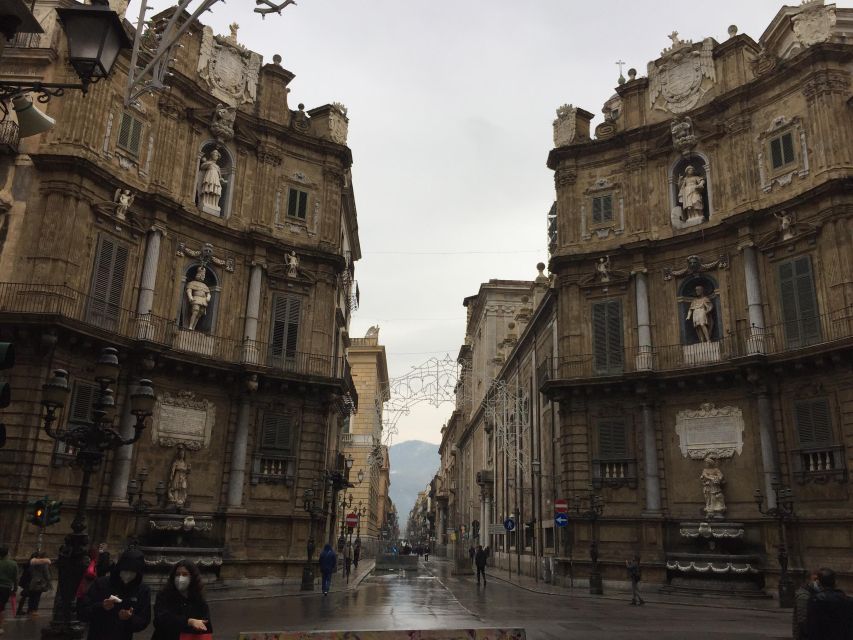
After the cathedral, the route follows Cassaro, one of Palermo’s principal historic streets. The walk then reaches Quattro Canti, officially Villena Square. This Baroque crossroads was built in the early 1600s where Corso Vittorio Emanuele and Via Maqueda meet.
Quattro Canti is one of the easiest places in Palermo to understand the city’s layout. Four curved building fronts frame the intersection, creating a theatrical urban scene. The guide’s explanation helps you read the square as a planned piece of Baroque city design rather than just a place where four busy streets happen to meet.
The route includes a visit and guided explanation here, with about fifteen minutes allowed. Traffic, pedestrians, and the shape of the square can make it hard to stop in one spot for long, so expect a short explanation rather than a silent viewing period.
This is also a useful place to remember for later. Since the tour ends nearby, you can return to Quattro Canti easily or use it as a starting point for exploring Via Maqueda and Corso Vittorio Emanuele.
Pretoria Palace and the Fountain of Shame
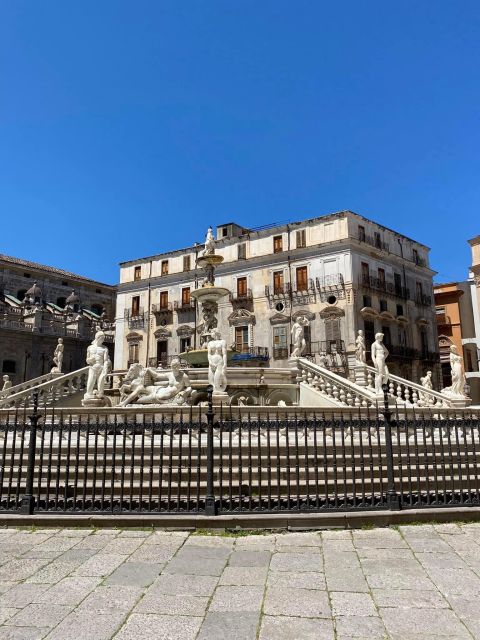
From Quattro Canti, the walk continues to Palazzo Pretorio and Fontana Pretoria. Palazzo Pretorio is a 15th-century palace, while the fountain is one of Palermo’s most memorable public monuments.
Locals call Pretoria Square the Square of Shame because of the nude statues around the fountain. The nickname gives the guide an easy opening to explain local attitudes and the public reaction to the monument. I like this stop because it adds a little local character to what could otherwise be a standard architecture lecture.
The fountain is large and elaborate, and its sculptures create a strong contrast with the surrounding stone buildings. The tour includes a guided visit and about fifteen minutes at this section. As with the other monuments, do not assume a separate museum or palace admission is included. The stated included entry is for Palermo Cathedral, while other monument and museum fees are not included.
Bellini Square and Palermo’s Norman churches
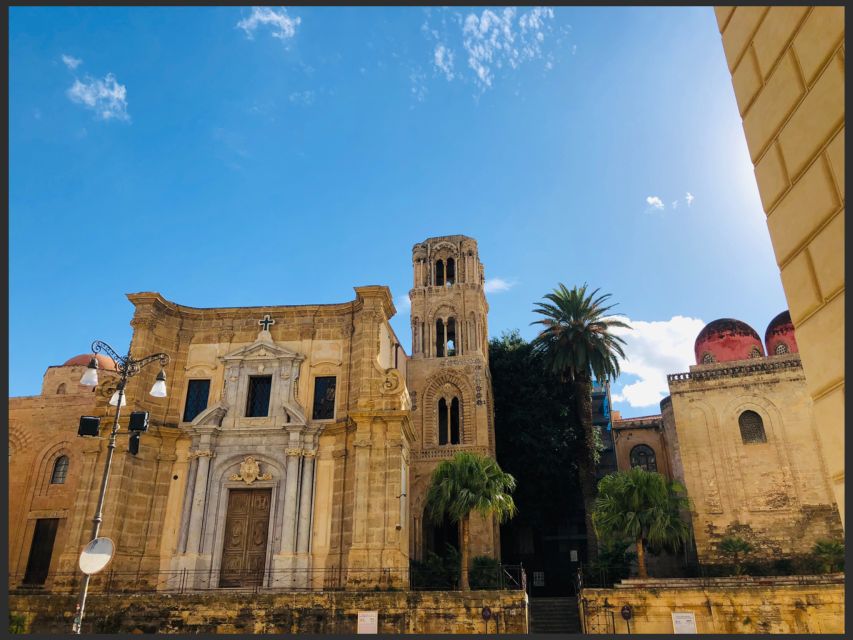
The next group of sights is around Bellini Square. Here you see the Church of San Cataldo and the Martorana Church, both associated with Norman Sicily and included within the UNESCO-listed Arab-Norman heritage area.
San Cataldo is especially recognizable for its red domes and compact form. The Martorana Church is known as Santa Maria dell’Ammiraglio and represents another layer of Palermo’s religious and artistic past. Together, the two churches show how different buildings from the same broad period can look and feel.
The route also includes Chiesa di Santa Caterina, another important church on the walk. These stops help you compare Norman-era architecture with the Baroque style seen at Pretoria Square and the Church of the Gesù.
The supplied timing gives around fifteen minutes for each church or nearby stop. That means you should expect guided introductions and the main points, not an extended art-history session. Other entrance fees are not included, so check the exact access arrangements when booking if entering a particular church is important to you.
The Church of the Gesù and the Baroque side of Palermo
The Church of the Gesù is identified as one of Palermo’s most important Baroque churches. It adds a strong contrast to the Norman buildings on the route.
Where the Norman churches tend toward distinctive forms and restrained geometry, Baroque Palermo is more elaborate and theatrical. The Church of the Gesù gives you a chance to see that change in style within the same central district.
The itinerary describes a guided visit, but the included admission specifically names Palermo Cathedral. I would therefore budget for possible additional entrance costs and confirm what access is covered for the date you choose. The guide can still explain the church and its place in Palermo’s development even if entry conditions change.
What the $41 price really covers
At $41 per person, this tour is priced as a guided orientation walk with one named included admission, not as an all-inclusive sightseeing pass. You are paying for a professional guide, a carefully linked central route, and the cathedral entrance.
I think the price makes sense if you want context and direction during your first hours in Palermo. Without a guide, you can certainly walk past these buildings, but it is harder to understand why the churches look so different or how the markets fit into the old center. Fabrizio’s explanations and practical suggestions add value, especially if you have limited time.
The price is less attractive if you plan to study each church independently or already know Palermo well. You will also need to pay for any food you sample and any monument or museum admission not included in the tour.
The free cancellation deadline is 24 hours before the activity, and you can reserve now and pay later. Those terms are useful when your Palermo schedule depends on a cruise or changing travel plans.
Who should book this walk?
I would recommend it most strongly for a first visit, a short stay, or a cruise day in Palermo. It gives you a clear route through the historic center and brings together sights that might otherwise feel scattered.
It also suits anyone who wants both monuments and street life. The Capo Market stop keeps the experience from becoming a procession of facades, while the churches and palace squares add structure and context.
Families and older visitors should think about the pace and surface conditions of a city walking tour. The distance is not described as extreme, but the route lasts two to three hours and includes market streets and central city walking. Comfortable shoes are not optional.
Food-focused visitors may enjoy the chance to try panelle, crocché, sfincione, or arancina. Just remember that tasting is extra and the market stop is part of a moving tour, not a dedicated food tour.
Final call: a strong first look at central Palermo
Book this tour if you want a well-organized introduction to Palermo that combines Capo Market with major churches and squares. The route is varied, the cathedral admission is included, and Fabrizio Cavallaro’s clear, prepared guiding style is a major advantage.
Skip it if you want long interior visits, a full meal, or a private and unhurried pace. For most first-time visitors, though, $41 is a reasonable price for a compact walk that shows Palermo as both a monumental capital and a working Sicilian city.
FAQ
How long does the Palermo walking tour last?
The tour lasts approximately two to three hours. The detailed route is planned as a three-hour guided walk.
What languages are available?
The tour is available with a live guide in English or Italian.
How much does the tour cost?
The listed price is $41 per person.
Is Palermo Cathedral entry included?
Yes. Entrance to Palermo Cathedral is included in the tour price.
Are food and drinks included?
No. Food and drinks are not included. You can buy street food at Capo Market during the walk.
Which street foods can I try?
You can buy panelle, crocché, sfincione, and arancina at the market.
Where does the tour end?
The tour ends on Via Maqueda, near the historic center and Quattro Canti. Quattro Canti is also known as Villena Square.
Is there a dress code for Palermo Cathedral?
Yes. Men cannot wear shorts or tank tops. Women cannot wear shorts, miniskirts, or tops. Bermuda shorts and T-shirts are allowed.
Can I buy something to cover unsuitable clothing at the cathedral?
Yes. A light jacket can be purchased at the cathedral entrance for €1 to cover shoulders and legs.
Can I bring luggage or a large bag?
No. Luggage and large bags are not allowed. Bring comfortable clothing, comfortable shoes, water, and a snack instead.
Just added around Italy
- Cesarine: Market Tour & Home Cooking Class in Catania★ 4.0 · 6 reviews
- Small Group Market tour and Dining Experience at a Cesarina’s home in Brindisi★ 4.5 · 6 reviews
- Small Group Market tour and Cooking class in Brindisi★ 4.5 · 8 reviews
- One day tour Christmas markets Innsbruck – Bressanone – Vipiteno★ 4.5 · 11 reviews
- Private Market Tour and Cooking Class in Bologna with Giovanna C★ 5.0 · 20 reviews
- Food markets tour with a local!★ 4.5 · 39 reviews
- Cesarine: Market Tour & Cooking Class at Local’s Home in Bologna★ 5.0 · 19 reviews
- Cesarine: Small Group Market tour and Dining in Altamura★ 3.0 · 2 reviews
Market Walking Tours, compared.
Tokyo Tsukiji Fish Market Food and Culture Walking Tour
Read our review →
Nishiki Market Brunch Walking Tour (7 Tastings + Brunch)
Read our review →Tsukiji Fish Market Food and Culture Walking Tour
Read our review →
Tsukiji Fish Market: Street Food & Culture Walking Tour
Read our review →
Tsukiji Fish Market Small-Group Food Walking Tour
Read our review →Browse the lists this tour appears in