
Review · MARKET WALKING TOURS
Bangkok: City Highlights Temple and Market Walking Tour
Bangkok’s royal and religious center is best understood on foot, and this tour puts the Grand Palace and Emerald Buddha Temple at the heart of the morning. You move by local transport, pass the old amulet market, and follow your guide through some of Thailand’s most important sacred sites.
I like two things right away: the small groups, limited to 10 people, and the practical help from guides such as Air, Mina, Kiwi, Johnny, and Pete. I also like that the route can include local ferries or tuk-tuks, depending on the day and transport used. The main drawback is heat: two to four hours of walking through open temple grounds can be tiring, especially when the palace is crowded.
Key points at a glance
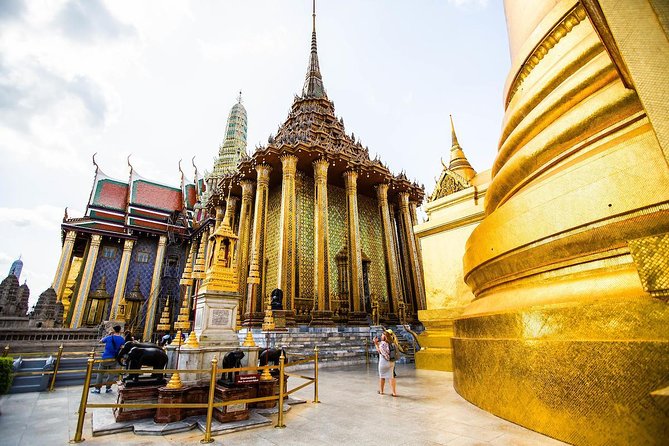
- See Thailand’s most important shrine: Wat Phra Kaew houses the Emerald Buddha and is regarded as the country’s most sacred Buddhist temple.
- Walk through royal Bangkok: The Grand Palace remains a venue for ceremonies and official functions, even though it is no longer a royal home.
- Add Wat Pho and Wat Arun: These temples are available according to the option you select, with separate admission included when chosen.
- Use local transport: The route may include public transport, a river boat, or a tuk-tuk, giving the outing a more grounded feel than a coach tour.
- Keep the group small: A maximum of 10 people makes it easier to hear explanations and get help with temple rules.
- Dress for a shrine: Cover your shoulders and knees, avoid sleeveless shirts and strapless-heel shoes, and remove your shoes inside temple buildings.
Why this Bangkok temple tour works
For a first look at Bangkok, this outing covers the city’s essential sights without making you organize separate tickets, river transport, and directions. At $42 per person, the value depends on which option you choose, but the price includes the Grand Palace and Emerald Buddha Temple, a licensed guide, drinking water, and admission to Wat Pho and Wat Arun when those stops are part of your booking.
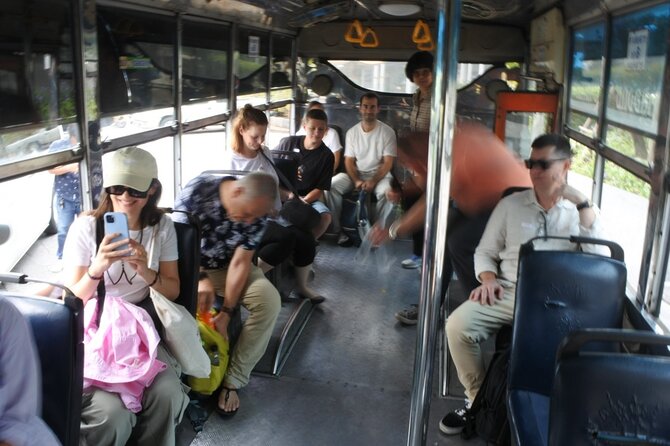
You are not simply being driven from one monument to the next. The tour begins at River City Bangkok, then uses public transport toward Rattanakosin Island, Bangkok’s historic royal district. That matters because the journey gives you a glimpse of the city’s everyday movement, not just its polished monuments.
The group limit is another plus. Ten people is small enough for a guide to answer questions and keep an eye on everyone at crossings, piers, and temple entrances. Several guides, including Mina, Kiwi, Johnny, and Pete, are praised for combining clear explanations with humor and care. Guide assignments can change, so book this for the format and route rather than for one particular person.
More Market Market Walking Tours in Bangkok:
- Bangkok Wat Pho and Flower Market Historical Walking Tour
★ 5.0 · 28 reviews - Bangkok: City Highlights Temple and Market Walking Tour
★ 5.0 · 4 reviews - Tokyo Tsukiji Fish Market Food and Culture Walking Tour
★ 5.0 · 3,184 reviews
Starting at River City Bangkok and reaching the old city
Meet the guide at the Big Country Experience office inside River City Bangkok by 9:00 AM. This riverfront shopping and arts complex is the stated starting point, and the exact meeting instructions matter, so allow time to find the office rather than arriving at the last minute.
From there, the group travels by local transport for about 30 minutes. The transport can make the morning more interesting than a standard road transfer. Several accounts describe taking a river boat, and others mention tuk-tuks, but these should not be treated as guaranteed parts of every departure.
On the way, you pass Bangkok’s amulet market. It is one of the old communities of Rattanakosin Island, where small Buddhist amulets are bought, sold, and examined. You may not have time for a long browse, but this short passage helps explain how religion and daily commerce overlap in the old city.
The transport element also gives your guide a chance to explain what you are seeing between stops. Guides have been praised for sharing stories while the group waits or pauses, rather than saving every fact for a formal speech inside the monuments.
Entering Wat Phra Kaew and seeing the Emerald Buddha
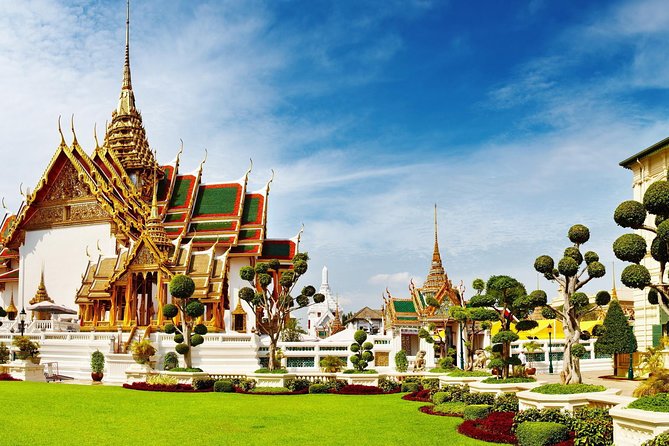
Your first major stop is Wat Phra Kaew, officially Wat Phra Si Rattana Satsadaram and commonly called the Temple of the Emerald Buddha. It sits inside the Grand Palace grounds and is regarded as Thailand’s most sacred Buddhist temple.
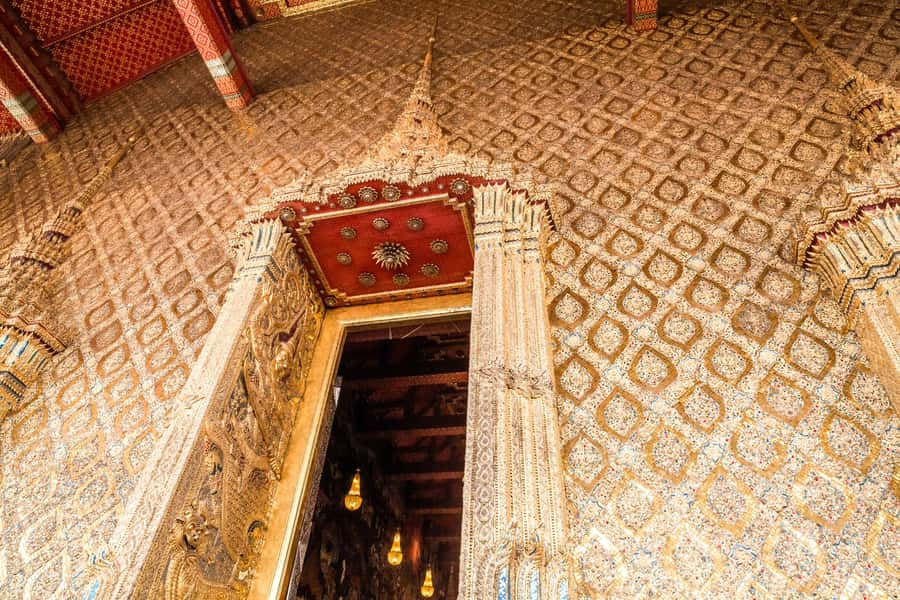
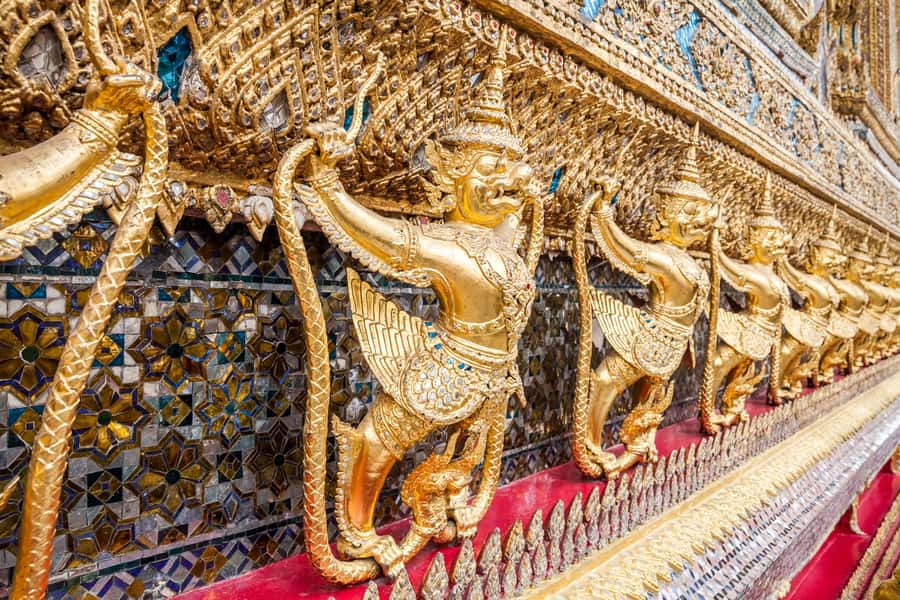
The setting is lavish but not random. You will see brightly painted buildings, gold-covered details, tall spires, and walls covered with glittering mosaics. The Emerald Buddha itself is small compared with the surrounding architecture, which is part of the point: the shrine’s importance comes from its religious and national role, not its size.
You cannot take photographs inside the chapel, although photography is allowed in the Royal Palace grounds and in the wider Emerald Buddha compound. A good guide helps you focus on the parts you can actually see rather than wasting time trying to photograph a forbidden interior.
One useful detail to listen for is the Buddha image’s seasonal clothing. The outfit changes during the year, and a guide may show you photographs because you cannot take your own inside. The statue is also made of jade, despite its familiar English name.
Wat Phra Kaew is a place of worship, not merely a photo stop. Keep your voice low, follow instructions, and remember that the chapel is a national shrine. Shoes must be removed before entering temple buildings, and bare shoulders or knees are not allowed.
The Grand Palace and the story behind the buildings
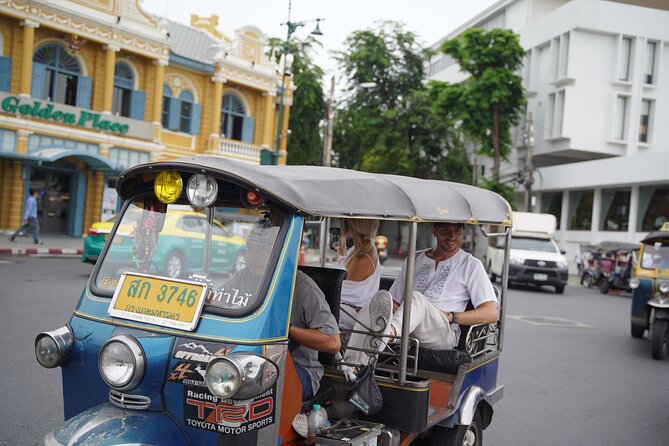
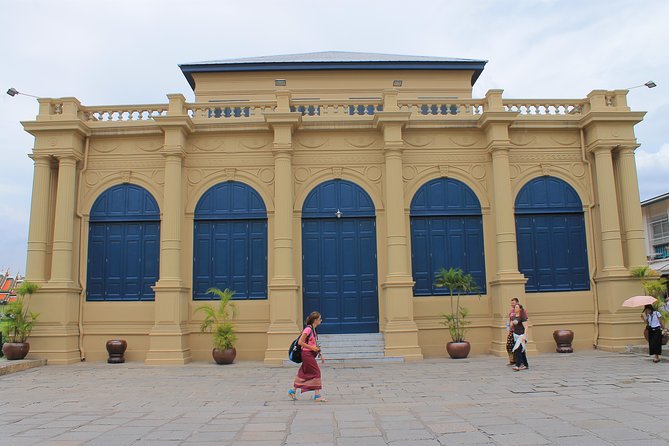
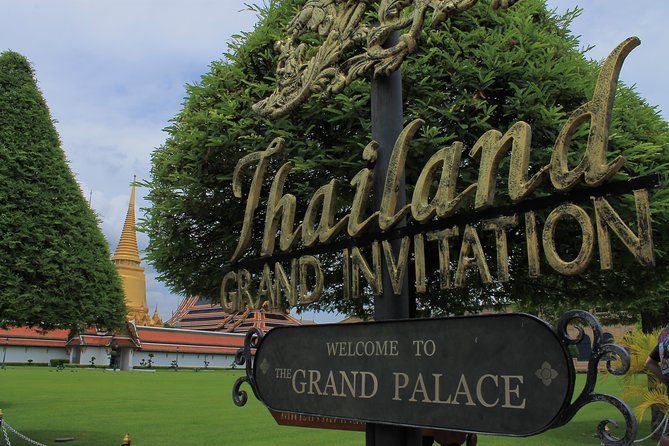
After Wat Phra Kaew, you explore the Grand Palace, which was once the official residence of the Kings of Thailand. Today it is still used for major ceremonies, state functions, and royal events.
The palace grounds bring together royal architecture, religious art, courtyards, ceremonial buildings, and painted scenes from Thai mythology. A guide adds real value here because the buildings can otherwise blur into a mass of gold, red roofs, columns, and figures.
Pete, for example, has been praised for explaining the characters shown in statues and painted scenes, giving the mythology a clear storyline. That kind of context turns decoration into something you can read. You begin to understand why certain figures appear repeatedly and how royal and Buddhist ideas meet within the palace grounds.
Expect about 1.5 hours for the main guided visit, though the full experience varies by option and pace. This is not a quiet palace garden walk. The grounds can be hot and busy, and you will spend much of the visit standing or walking on hard surfaces.
The guides appear especially useful here because the palace can feel overwhelming. Mina, Kiwi, and Johnny are noted for keeping groups engaged while also allowing time to look around. Water and shade breaks matter, particularly in warm weather. The tour provides drinking water, but you should still dress lightly within the modesty rules.
A few more market tours around Bangkok worth a look
- Bangkok: Damnoen Saduak Market and Maeklong Railway Market
★ 4.5 · 26,723 reviews - The Old Siam: Damnoen Saduak and Maeklong Railway Market
★ 4.5 · 10,992 reviews - Bangkok: Train Market & Floating Market with Boat Ride
★ 4.7 · 9,547 reviews - Half-Day Railway Market and Floating Market Tour in Thailand
★ 4.5 · 3,924 reviews
Wat Pho, the Reclining Buddha, and Thai massage
If you select the Wat Pho option, the route continues to the Temple of the Reclining Buddha. On the way, you pass Tha Thien Market, a food market known for dried and salted seafood and wholesale products.
Wat Pho is one of Bangkok’s largest and oldest temple complexes. It is also classified among Thailand’s six highest-grade first-class royal temples, so the site carries religious and royal importance beyond the famous reclining statue.
The Reclining Buddha is the visual centerpiece, but it is only one part of the complex. Your guide can explain how King Rama I rebuilt Wat Pho on the site of an earlier temple and made it his main temple, with some of his ashes enshrined there.
Wat Pho also has an unusual educational role. Marble illustrations and inscriptions were placed around the grounds to share public instruction about medicine. The site has been recognized through UNESCO’s Memory of the World Programme, and it is widely regarded as the birthplace of traditional Thai massage. Massage is still taught and practiced at the temple.
That combination makes Wat Pho especially worthwhile if you want more than grand architecture. You see religious art, royal history, public education, and living tradition in one compound. The extra admission is included when you choose the Wat Pho option, so compare the shorter and longer versions carefully before booking.
Wat Arun beside the Chao Phraya River
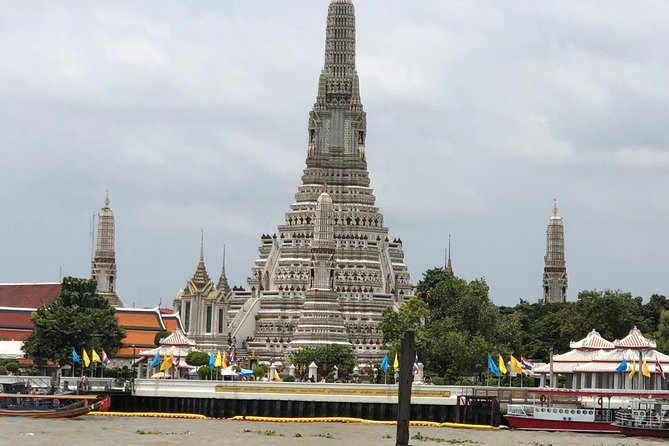
The final major temple option is Wat Arun, or the Temple of Dawn. It is one of Bangkok’s best-known landmarks, set beside the Chao Phraya River and recognized by its tall central tower.
The main pagoda rises about 70 meters and is decorated with tiny pieces of colored glass and Chinese porcelain. From close up, the decoration rewards patient looking. The tower is not just a distant skyline shape. Its surface is made of countless small pieces that catch the light as you move around it.
Wat Arun also has a different mood from the Grand Palace. The river setting opens the view, while the steep architectural forms draw your eyes upward. Giant statues, a bell tower, porcelain surfaces, and the central prang give the stop a strong visual finish.
Admission to Wat Arun is included if you select that option. Because the tour is listed as lasting from two to four hours, the exact combination of stops matters. A route including Wat Pho and Wat Arun will naturally require more time than a shorter Grand Palace visit.
Local markets make the temples feel connected
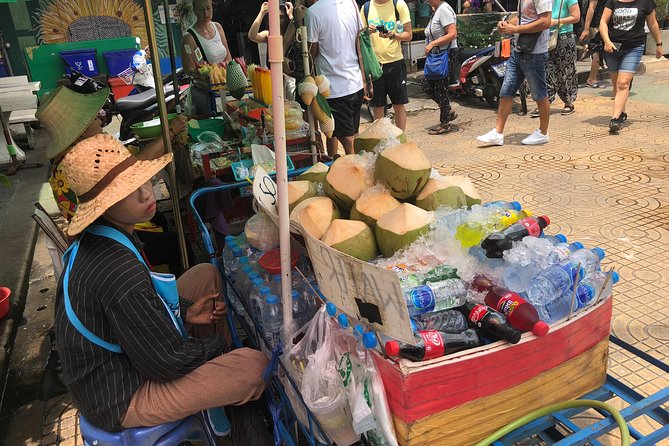
The amulet market and Tha Thien Market are brief parts of the route, but they help place the temples in ordinary Bangkok. The amulet market reflects the continuing role of Buddhist objects in local life. Tha Thien, with its dried seafood and wholesale goods, shows that the old temple district is also a working market neighborhood.
You should not expect a long, guided food tour at either market. These are passages along the route, not full market tastings. Still, they offer useful contrasts with the formal palace grounds and help you see that the old city is not a museum frozen in time.
The group’s movement through these areas is also practical. Your guide handles directions and transport while you concentrate on the surroundings. Several guides have helped people find onward boats, taxis, or other destinations after the tour, which is useful if you want to continue exploring rather than return straight to your hotel.
What the guide adds
A good guide is the main reason to choose this experience instead of visiting the same sites alone. The monuments are easy to admire, but their symbols and ceremonies are harder to decode without help.
The strongest guide feedback centers on clear history, friendly interaction, and practical care. Air is described as well prepared and generous with time. Mina is praised for energy and for answering questions. Kiwi is noted for explaining Buddhist customs, arranging food suggestions, and helping people board the correct boat afterward.
Johnny and Johny Tool are remembered for warmth, humor, and useful explanations. Pete is praised for bringing palace mythology to life and for watching the group’s comfort during a long outing. Names and assignments may vary, but these examples show the kind of guiding this tour aims to provide.
You may also get a guide speaking English or German. If you need a particular language, check availability before booking.
Price, pace, and who should book
At $42, this is a fair price if you want the major admissions and a guide in a small group. The value improves when your option includes Wat Pho and Wat Arun, since the tour handles several entrance fees and the route between them.
The tour is best for a first visit to Bangkok, especially if you want the major temples explained rather than simply photographed. It also suits solo visitors who prefer some company, families with older children who can manage walking, and anyone who wants help using local transport.
You should think twice if you dislike heat, crowds, standing, or strict dress rules. The schedule is active, and even the shorter version requires walking around large religious compounds. This is not the right choice for a slow, quiet morning or a tour centered on food.
Wear clothing that covers your shoulders and knees. Sleeveless shirts, bare shoulders, strapless-heel shoes, and exposed knees are not allowed at the shrine. Choose shoes that are easy to remove, since you will take them off before entering temple buildings.
Free cancellation is available up to 24 hours before the activity for a full refund, and you can reserve now and pay later. The stated drop-off is Tha Tien near the Grand Palace, although the activity information also says the tour ends back at the meeting point. Confirm the final drop-off when you book, especially if you have a river connection or timed appointment afterward.
Should you book this Bangkok temple tour?
Book it if you want Bangkok’s headline sights arranged into one practical morning, with a small group, local transport, admission tickets, and a guide who can explain what you are seeing. The strongest reason to choose it is the combination of Wat Phra Kaew, the Grand Palace, and the optional Wat Pho and Wat Arun additions.
I would choose the longer option if this is your first time in Bangkok and you have the energy for a full temple circuit. Choose the shorter version if you want the palace and Emerald Buddha Temple without spending most of the morning on foot.
The route is hot and sometimes crowded, but it gives you much more than a checklist of monuments. You see royal ceremony, Buddhist practice, local markets, river transport, traditional medicine, and working city life in one compact outing.
FAQ
Where does the Bangkok temple tour start?
Meet your guide at the Big Country Experience office at River City Bangkok. The stated meeting time is by 9:00 AM.
How long does the tour last?
The activity lasts between two and four hours. Starting times and the exact duration depend on availability and the option selected.
Which temples are included?
The Grand Palace and Emerald Buddha Temple are included. Wat Pho and Wat Arun are included when you select the options that contain those visits.
Is transport included?
The group travels by local transport. The route information specifies public transport, and the experience may include a river boat or tuk-tuk depending on the departure.
What is included in the price?
The price includes admission to the Grand Palace and Emerald Buddha Temple, a professional licensed guide, and drinking water. Wat Pho and Wat Arun admission is included when those options are selected.
What should I wear?
Wear clothing that covers your shoulders and knees. Sleeveless shirts, bare shoulders, and strapless-heel shoes are not allowed at the national shrine.
Can I take photographs inside the temples?
Photography is allowed in the Royal Palace grounds and the compounds of the Emerald Buddha Temple. Photography is not allowed inside the buildings.
What languages are available?
The live tour guide is available in English or German. The group is limited to 10 participants.
Just added around Bangkok
- Morning Buddhist Almsgiving, Grand Palace and Flower Market Tour in Bangkok★ 3.5 · 9 reviews
- Bangkok Udomsuk Thai Cooking Class with local market tour★ 5.0 · 5 reviews
- Floating & Railway Markets and Erawan Waterfall [Optional Luxury]★ 5.0 · 43 reviews
- Floating Market & Railway Market near Bangkok★ 4.0 · 5 reviews
- Private 4 days : Bangkok, Floating market and Ayutthaya★ 5.0 · 2 reviews
- Ayutthaya Floating Market Admission Ticket with Transfer★ 5.0 · 2 reviews
- Train & Floating Market Food Adventure + Scenic train ride★ 5.0 · 102 reviews
- Silom Thai Cooking School with Fresh Market Tour★ 5.0 · 73 reviews
Market Walking Tours, compared.
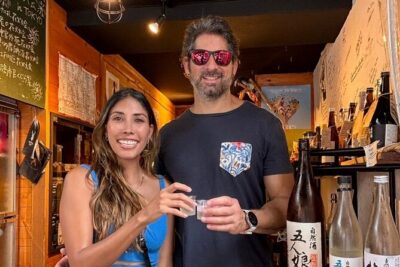
Tokyo Tsukiji Fish Market Food and Culture Walking Tour
Read our review →
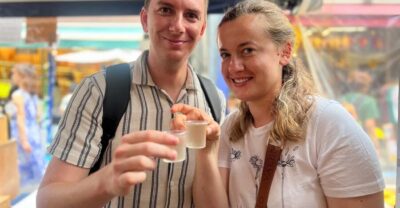
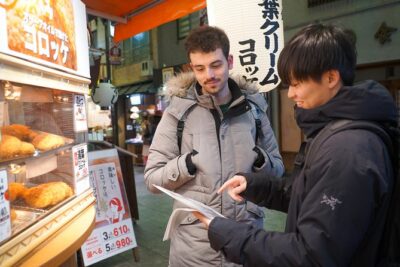
Nishiki Market Brunch Walking Tour (7 Tastings + Brunch)
Read our review →Tsukiji Fish Market Food and Culture Walking Tour
Read our review →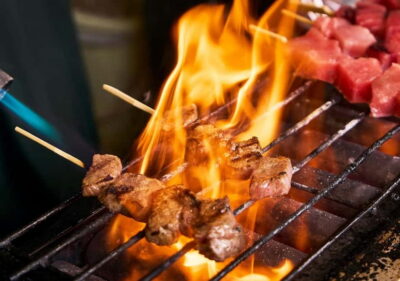
Tsukiji Fish Market: Street Food & Culture Walking Tour
Read our review →
Tsukiji Fish Market Small-Group Food Walking Tour
Read our review →Browse the lists this tour appears in