
Review · MARKET WALKING TOURS
Old Bazaar-Cfake-Dunavat-Ali Pasha Bridge Walking Tour
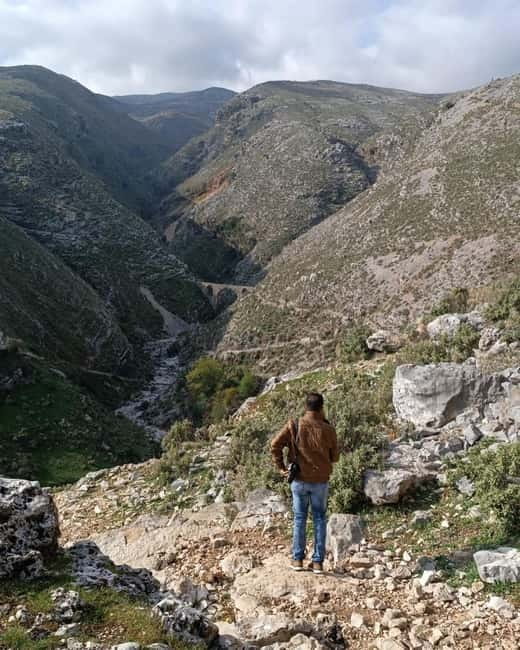
Gjirokastër’s most rewarding walk may be the one that leaves its famous castle streets behind. This three-hour route heads through the old Bazaar, Cfaka, and Dunavat before reaching Ali Pasha Bridge, a lonely stone remnant of the aqueduct built more than 200 years ago.
I like the way this tour shows you the town’s ordinary, lived-in side, including old houses, a rebuilt mosque, and a Bektashi tekke. I also like its modest price of $17, which buys a full walking route rather than a quick look around the center. The catch is simple: the ground is uneven and sometimes uncomfortable, so this is not a polished stroll for dress shoes.
Key points to know
- Ali Pasha Bridge is the goal: See the surviving section of an aqueduct that once carried water toward Gjirokastër Castle.
- The route leaves the tourist center: Walk through Cfaka and Dunavat, two older neighborhoods that receive far less attention.
- The Old Bazaar is historic, not a working market: Expect cobblestones, old houses, and an Orthodox church rather than rows of market stalls.
- A Bektashi tekke adds cultural variety: Dunavat brings a religious site and a quieter rural feel to the walk.
- English guidance is included: Guides explain the town along the route, with Besi praised for family stories, courtesy, and personal attention.
- Bring proper shoes: The three-hour outing crosses terrain described as less than comfortable.
Starting behind Cerciz Topulli Square
The meeting point is the Experience Gjirokastra office at the main square, behind the statue of Cerciz Topulli. That is a useful place to begin because you are already in the center of town, close to the familiar visitor route.
From there, the walk heads toward the Old Bazaar and then continues away from the castle area. You should allow the full three hours, even though one part of the route is listed as a 30-minute walk to a viewpoint. This is not a short photo stop. It is a neighborhood walk with several sections and a return to the starting point.
The guide speaks English. Besi is one guide associated with the experience, and his approach includes local family stories and memories alongside the town’s past. That detail matters. Gjirokastër is easier to understand when you hear about houses and neighborhoods as places connected to real families, not only as old stones.
More Market Market Walking Tours in Albania:
- Gjirokaster: Old Bazaar and Castle Private Walking Tour
★ 5.0 · 6 reviews - Bangkok: City Highlights Temple and Market Walking Tour
★ 4.5 · 3,990 reviews - Tokyo Tsukiji Fish Market Food and Culture Walking Tour
★ 5.0 · 3,184 reviews
The Old Bazaar beneath the castle walls
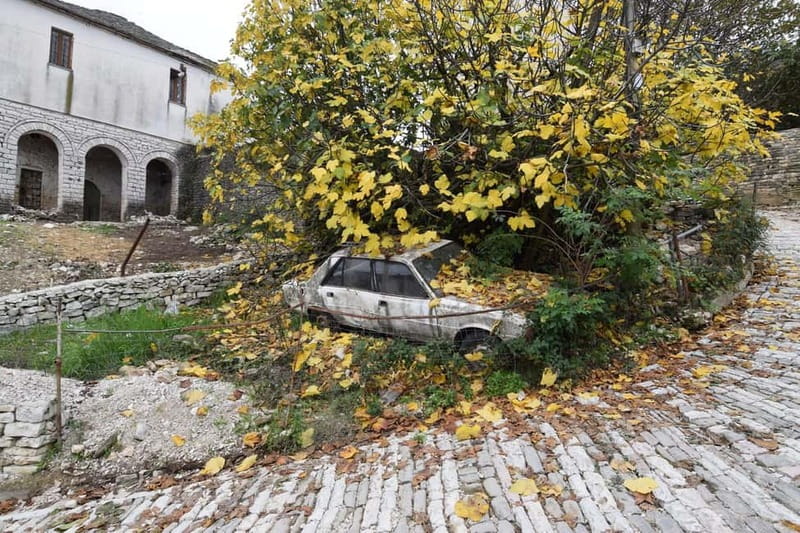
The first section leads into the Old Bazaar, described as the first neighborhood outside the castle walls. The name can set the wrong expectation. This is no longer a functioning bazaar filled with stalls and shoppers. Think of it as an old quarter with cobblestone streets, historic homes, and traces of earlier town life.
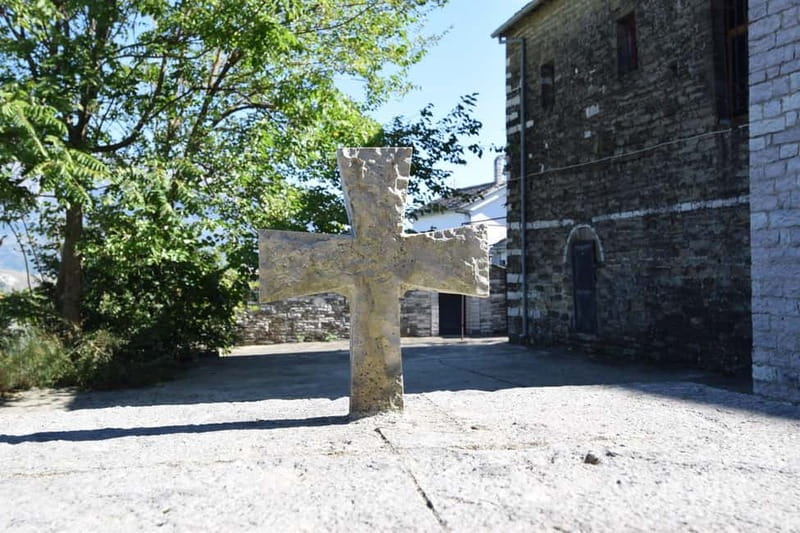
The setting beneath the castle walls gives this part of the walk a strong sense of place. The old houses and stone paving help you see how Gjirokastër grew outward from its fortified center. An Orthodox church adds another layer to the neighborhood, showing that the town’s story is not limited to the castle itself.
I like this early section because it gives you context without placing you behind a museum rope. You are walking through a real neighborhood, where the appeal comes from the street plan, the buildings, and the way the castle watches over everything from above.
Still, you should expect some worn paving and slopes. Gjirokastër is famous for stone, and stone is hard underfoot. The route may feel less comfortable than the smooth central streets around the square.
Crossing the Nanxa stream into Cfaka
After the Old Bazaar, the route passes the Nanxa stream and reaches Cfaka, another old part of Gjirokastër. This is where the tour begins to feel more removed from the standard town circuit.
Cfaka is known for old houses placed in the highest protected category for monuments. You do not need to be an architecture specialist to appreciate them. Their age, stone construction, and position along the route make them useful examples of the town’s older residential character.
The route also passes a rebuilt mosque. That stop gives the walk a wider cultural frame. Gjirokastër has Orthodox, Muslim, and Bektashi connections, and this tour places several of those traditions within one continuous walk.
The word rebuilt is important. You are not seeing an untouched medieval structure. Instead, the mosque is part of the neighborhood’s continuing story, where religious buildings and old homes have been repaired, changed, and kept in use or memory.
Cfaka is a good reason to choose this experience over a standard center-only walk. You get to see the kind of streets many people miss when they stay near the castle and main square. The tradeoff is that the route does not promise a long list of formal interiors. Much of the interest comes from what you see outside, while walking between sites.
Dunavat and its Bektashi tekke
The walk continues into Dunavat, the final neighborhood before the bridge. Here the town begins to meet open countryside. The description of sheep on the hills is not a decorative detail. It points to the change in mood: old houses remain, but the route feels less urban and more rural.
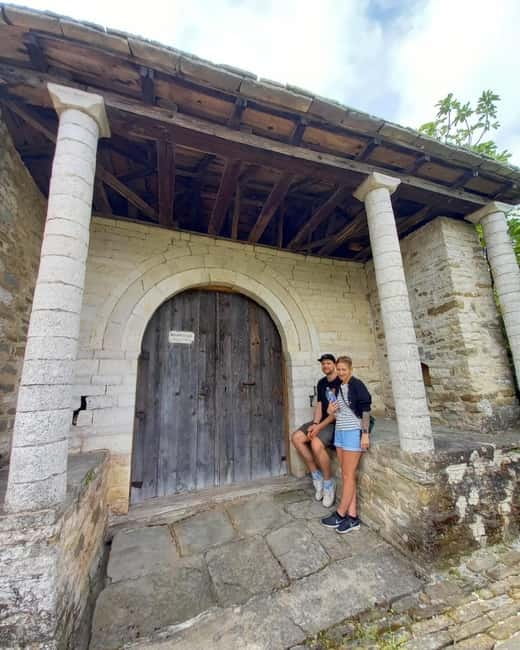
Dunavat is also home to a tekke belonging to the Bektashi Order. This is one of the tour’s most distinctive stops because it adds a religious tradition that many visitors may not encounter on a basic Gjirokastër visit.
The Bektashi tradition has an important place in Albanian religious culture, and seeing a tekke in its neighborhood setting helps make that tradition less abstract. The stop is valuable even if you know little about it, since the guide can place it within the town’s wider story.
You should not expect a large attraction with a long visitor program. The appeal is the combination of the religious site, old homes, hills, and quieter surroundings. The route is at its best here when you pay attention to the transition from built-up streets to open ground.
One practical warning: the walk can feel brisk. A Dutch participant found the guide pleasant but sometimes too fast. That is worth keeping in mind if you need a slower pace, want time for many photographs, or find uneven climbs tiring. You can ask the guide to pause, but the route still has a planned rhythm.
A few more market tours around Albania worth a look
- From Tirana: Kruja Castle, Old Bazaar & Sari Salltik View
★ 4.8 · 2,171 reviews - From Durres/Golem: Kruja Castle & Old Bazaar Day Tour
★ 4.9 · 1,317 reviews - Durres/Golem: Kruja Castle & Bazaar with Traditional Lunch
★ 5.0 · 632 reviews - Kruja castle, the old Bazaar & Sarisalltik- Departure from Tirana
★ 5.0 · 592 reviews
Reaching Ali Pasha Bridge
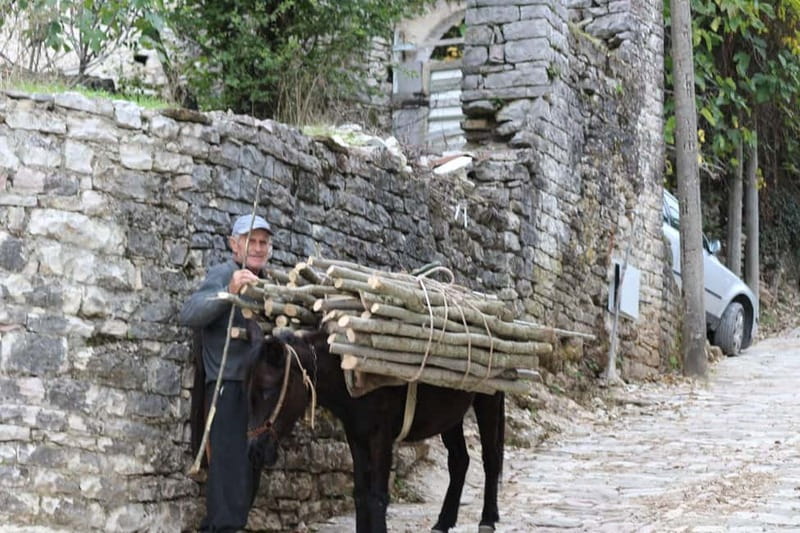
Ali Pasha Bridge is the payoff. It is a surviving part of the aqueduct built by Ali Pasha Tepelena more than 200 years ago to bring water toward the castle.
The bridge is not simply another old structure to photograph. It explains a practical problem behind the city’s grand appearance. A castle and hillside town need water, and the aqueduct was part of the system that supplied it. What remains today is a fragment, but the setting gives the structure its force.
The bridge is also the point where the tour’s themes come together. You have passed through old residential quarters, religious sites, cobbled streets, and open hills. The final structure connects those places to the engineering needs of the historic town.
Do not expect a grand, fully restored monument. The attraction is the remaining stonework and the route needed to reach it. That makes the walk feel more like an outing through the town’s edges than a standard landmark visit.
The viewpoint section is listed as a 30-minute walk, but the full activity lasts about three hours. Wear sneakers or other sturdy shoes, and avoid bringing anything that makes walking difficult. The uneven terrain is not a minor footnote. It shapes the whole experience.
What $17 gets you
At $17 per person, this tour offers solid value if you want more than the central sights. You get about three hours with an English-speaking guide, a route through several neighborhoods, and a destination that would be easy to miss without local direction.
The value is not based on a long list of entry tickets. The experience appears to focus on outdoor walking and explanation. You are paying for the route, local context, and the practical benefit of knowing how to reach Ali Pasha Bridge.
I would compare it with the cost of spending a morning or afternoon wandering without a plan. You could explore some of these streets independently, but you might not connect the Old Bazaar, Cfaka, Dunavat, the tekke, and the aqueduct into one story. The guide provides that structure.
The price also makes the tour a reasonable choice for visitors who have already seen the castle and want a different side of Gjirokastër. If you only want the most famous sights, the value may feel less clear. If you want the overlooked streets and local setting, the price is easier to justify.
The rating is 4.6 from five recorded bookings, a small sample but a positive one. The strongest points are the guides, the views, and the information about the town. Besi is specifically praised for being welcoming, courteous, attentive to everyone, and generous with family stories and memories.
How demanding is the three-hour route?
You do not need technical hiking equipment, but you do need comfortable footwear. The route includes cobblestones, slopes, and terrain that is described as not especially comfortable.
I would plan on a proper walking pace rather than a relaxed coffee break with a few sightseeing stops. The route covers several neighborhoods and reaches a bridge beyond the main center. If you have knee, balance, or mobility concerns, the uneven ground deserves serious consideration.
Bring only what you need. A small bag is easier than luggage, and sturdy sneakers are more useful than fashionable sandals. The information provided does not specify accessibility arrangements, so you should contact Experience Gjirokastra directly if you need a route adapted to your needs.
The tour returns to Experience Gjirokastra in the center. That makes it easy to continue sightseeing, find a meal, or return to your accommodation after the walk.
The guide can shape the experience
The guide is central to the value here. The route includes old houses and religious sites that may not explain themselves. A good guide helps you notice why they matter and how the neighborhoods fit together.
The available feedback points to several strengths. Guides are described as nice, informative, and welcoming. Besi is praised for sharing history along with family stories and memories, showing interest in each person, and offering help when needed.
That personal approach suits this route. You are not moving through a large museum with labels on every wall. Much of what you see is part of a neighborhood, so spoken context makes the difference.
At the same time, the pace may vary by guide and group. One person found the walk occasionally too fast. If you want time to take photographs or ask detailed questions, say so early. The route will be more enjoyable if the guide knows what pace works for you.
Who should book this walk?
I would choose this tour if you have already seen Gjirokastër’s castle area and want a less familiar route. It is also a good fit if you like old neighborhoods, religious history, rural edges, and a clear destination at the end.
It suits independent-minded visitors who want local orientation without committing to a full-day excursion. Three hours is long enough to reach the bridge and see several districts, but short enough to leave the rest of your day open.
Families with older children may enjoy the variety of the route, though the uneven ground and three-hour duration could be tiring for younger children. Anyone who dislikes hills, rough paving, or outdoor walking should think twice.
This is not the best choice if you want a polished attraction, extensive indoor sightseeing, or a slow, flat stroll. It is also not ideal for dressy footwear. The route asks you to accept a little discomfort in exchange for a more grounded view of the town.
Booking details worth knowing
The tour costs $17 per person and lasts approximately three hours. It is led in English, and starting times depend on availability.
You can cancel up to 24 hours in advance for a full refund. The reserve-now, pay-later option lets you hold a place without paying immediately, which is useful when your schedule in Gjirokastër is still taking shape.
Meet at the Experience Gjirokastra office on the main square, behind the statue of Cerciz Topulli. Arrive ready to walk. The most important preparation is not a special camera or guidebook. It is a pair of shoes you trust on stone.
Should you book the Old Bazaar to Ali Pasha Bridge walk?
Book it if you want to see Gjirokastër beyond its central postcard views. The strongest reasons are the route through Cfaka and Dunavat, the Bektashi tekke, and the chance to reach Ali Pasha Bridge with an English-speaking guide who can add local stories.
Skip it if uneven terrain is a serious problem or if your time is so short that you only want the castle and main square. For everyone else, $17 is a fair price for a three-hour look at the town’s quieter, more authentic side. Wear sturdy shoes, keep your pace in mind, and let the old neighborhoods do the talking.
FAQ
Where does the tour start?
It starts at the Experience Gjirokastra office on the main square, behind the statue of Cerciz Topulli.
How long does the tour last?
The walking tour takes approximately three hours.
What language is the tour offered in?
The tour is offered in English with a live guide.
What places does the route visit?
The route includes the Old Bazaar, Cfaka, Dunavat, a Bektashi tekke, and Ali Pasha Bridge. It also passes an Orthodox church, old historic houses, a rebuilt mosque, and the Nanxa stream.
What is special about Ali Pasha Bridge?
It is a surviving part of an aqueduct built by Ali Pasha Tepelena more than 200 years ago to bring water to Gjirokastër Castle.
What should I wear?
Wear sneakers or other comfortable, sturdy shoes. The route includes uneven and uncomfortable terrain.
Can I cancel the booking?
You can cancel up to 24 hours in advance for a full refund. The reserve-now, pay-later option allows you to book without paying immediately.
Just added around Albania
- Kruja by Night: Castle & Bazaar Tour from Tirana★ 5.0 · 5 reviews
- Gjirokaster Walk Tour: Old Bazaar, Cfake, Dunavat, AliPasha!★ 4.2 · 9 reviews
- Gjirokaster: Old Bazaar and Castle Private Walking Tour★ 5.0 · 6 reviews
- From Tirana/Shkoder: Kruja Castle, Old Bazaar, Sari Salltik★ 4.9 · 6 reviews
- From Tirana/Durres/Golem: Kruja Castle & Old Bazaar Tour.★ 4.7 · 15 reviews
- From Tirana/Durres: Kruja, Old Bazaar, Sari Salltik Day Tour★ 3.9 · 5 reviews
- From Durres & Golem: Kruja Castle, Old Bazaar★ 4.8 · 34 reviews
- From Durrës: Kruja Half-Day Tour, Old Bazaar & Holy Mountain★ 5.0 · 2 reviews
Market Walking Tours, compared.
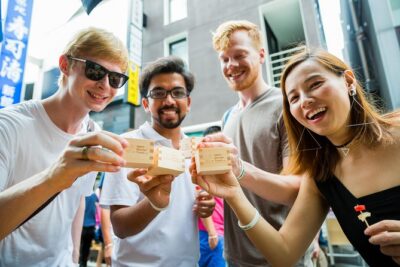
Tokyo Tsukiji Fish Market Food and Culture Walking Tour
Read our review →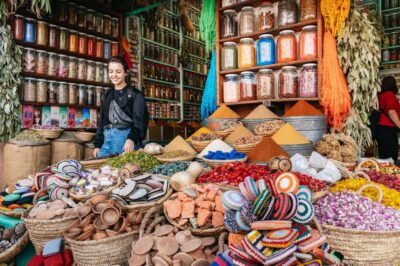

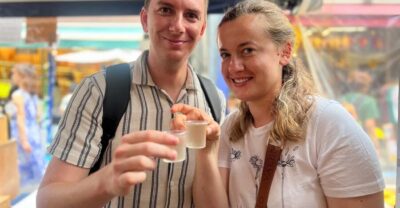
Nishiki Market Brunch Walking Tour (7 Tastings + Brunch)
Read our review →Tsukiji Fish Market Food and Culture Walking Tour
Read our review →
Tsukiji Fish Market: Street Food & Culture Walking Tour
Read our review →
Tsukiji Fish Market Small-Group Food Walking Tour
Read our review →Browse the lists this tour appears in