
Review · ROME MARKET TOURS
Taste of Testaccio: Special 15 Year Anniversary Edition
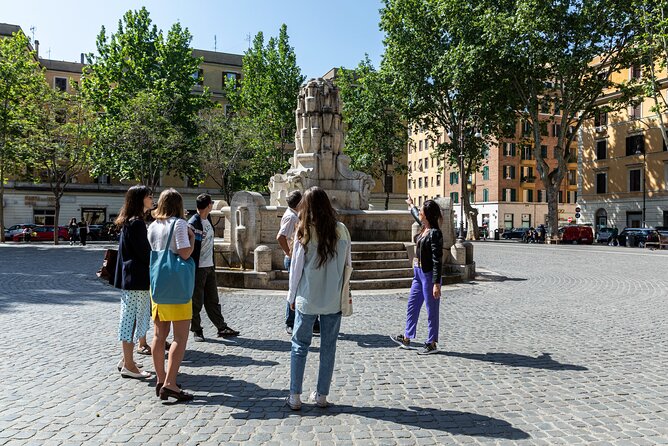
Testaccio’s best sights are not only ancient monuments. They are the market stalls, family food shops, and modest restaurants where Rome’s cooking still feels like everyday life. This small-group walk connects those places with the Pyramid of Cestius, the Protestant Cemetery, and the old slaughterhouse district.
I like the chance to make your own bruschetta from market ingredients, and I like that the meal builds toward three classic pastas rather than stopping at a few token samples. The guides, including Luca, Katherine, Francesca, and Giuseppe, are praised for making the walk friendly and easygoing.
The main drawback is the price, $131.81 per person, which is a serious bill for a three-and-a-half-hour food walk. Tastings and stops can change by season, too, so you should book this for the overall experience, not for one promised dish alone.
Key points to know before booking
- Three Roman pastas in one sitting: Try carbonara, amatriciana, and cacio e pepe with local wine at Flavio al Velavevodetto.
- A real neighborhood food market: Make bruschetta with fresh tomatoes, taste buffalo mozzarella, and sample other market foods.
- Ancient sights between meals: See the Pyramid of Cestius, the Protestant Cemetery, the former slaughterhouse, and Monte Testaccio.
- A small group of no more than 12: This gives you a better chance to hear the guide and ask questions.
- Come hungry: The menu includes charcuterie, cheese, pastries, bruschetta, supplì, trapizzino, pasta, wine, beer, espresso, and gelato.
- Book ahead: The experience is often reserved about 62 days in advance, so popular dates may disappear early.
Why Testaccio makes a better food walk than central Rome
Testaccio sits south of the most crowded sights, and that is part of its appeal. You are not walking from fountain to fountain with a camera in one hand and a map in the other. You are moving through a neighborhood shaped by food, work, trade, and Roman daily life.
The area grew around the former city slaughterhouse. That past helps explain quinto quarto, the Roman tradition of cooking the less celebrated cuts of meat. Testaccio’s food culture is not only about elegant ingredients. It also comes from practical cooking, strong flavors, market shopping, and recipes made to use what was available.
That gives the tour a useful balance. You get familiar Roman dishes, but you also learn why those dishes belong here. Between tastings, your guide points out local history and lesser-known corners that many people would miss while heading toward the Colosseum or the Forum.
The group is capped at 12 people, which matters on a food walk. A large crowd can turn a market visit into a shuffle behind the guide. Here, you should have a better chance to hear explanations, watch food being prepared, and speak with the guide. The experience is offered in English and lasts about three hours and 30 minutes.
Other market tours people book around Rome:
- Rome: Colosseum, Roman Forum & Trajan’s Market Exterior Tour
★ 4.3 · 2,038 reviews - Roman Food Tour with Visit to the Trionfale Food Market
★ 5.0 · 471 reviews - Authentic Roman Cooking Class & Market Experience
★ 5.0 · 363 reviews
Starting with cheese, cured meats, and a Prosecco toast
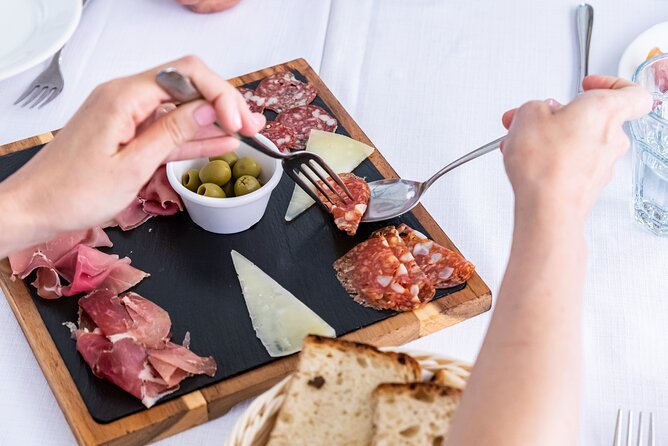
The walk begins at Piazza Testaccio, at number 39, with a visit to Salumeria Volpetti. This is a serious opening course, not a quick nibble. You receive Italian cured meats and artisanal cheeses, along with olive oil and balsamic vinegar for tasting.
Volpetti is known for its wide selection, with about 150 cheeses available. That makes this stop useful for anyone who wants help telling the difference between an ordinary supermarket product and a carefully made Italian one. You also begin with a glass of crisp Prosecco, which gives the first stop a festive feel.
This is one of the places where the guide’s relationship with local businesses can add something. Francesca, for example, has been praised for her friendly manner with vendors, and several guides are described as making the group feel at home quickly. The exact guide is not guaranteed, but the experience depends heavily on that person’s ability to explain food without turning the stop into a lecture.
If you have already eaten breakfast, take small portions at first. The food keeps coming later, and this opening course is more generous than the word tasting might suggest.
The Pyramid of Cestius and Rome’s quieter side
After the first food stop, the group walks to the Pyramid of Cestius. This white, Egyptian-style pyramid is roughly 2,000 years old and is one of Rome’s most unexpected sights. It was built as a tomb, a reminder that ancient Rome absorbed outside styles and turned them into something distinctly Roman.
You do not need a separate ticket for this part of the walk. The stop is brief, about 15 minutes, so think of it as an outdoor introduction rather than a full archaeological visit. Your guide supplies the context while you see the monument from the outside.
Nearby is the Protestant Cemetery, where the poet John Keats is buried. The itinerary also includes Monte Testaccio, an artificial hill made from the broken remains of millions of ancient olive-oil jars. These sights help explain how food and empire connect in Rome. Olive oil arrived, was stored and used, and left behind a physical record of the city’s appetite.
The walk between stops is not strenuous by the information provided, but you should still wear comfortable shoes. On very hot days, the exposed sections can be uncomfortable. One account describes a tour held in temperatures around 100 degrees Fahrenheit, so bring water and take the weather seriously.
Making bruschetta at Testaccio Market
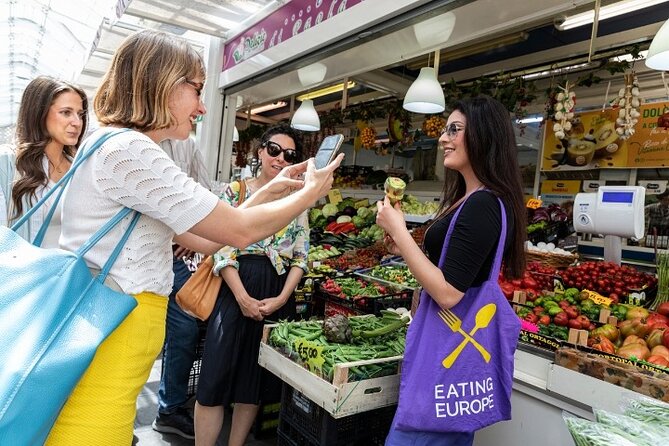
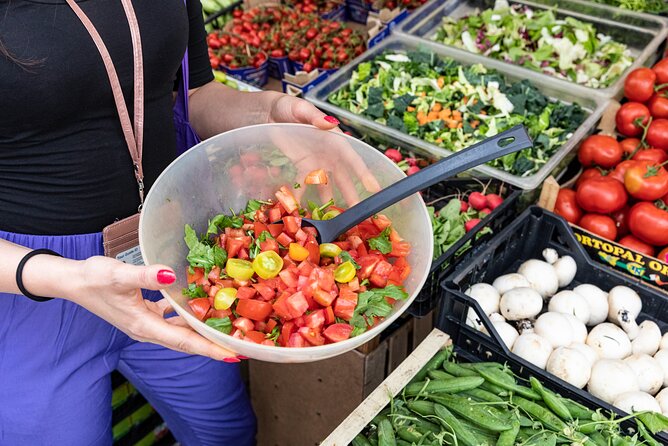
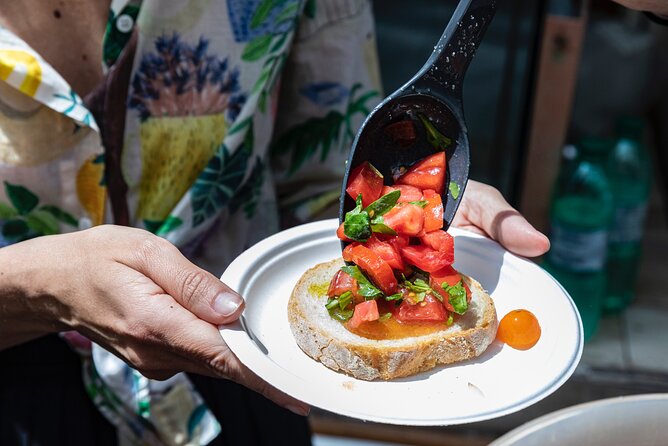
Testaccio Market is the heart of the food portion. Here you get a look at produce and local vendors, then use fresh ingredients to make your own bruschetta. The activity is simple, but it works because it puts you close to the ingredients instead of presenting finished food on a plate.
Expect tomatoes, bread, garlic, cheese, and olive oil to play a part. One guide was praised for gathering fresh bread, tomatoes, garlic, and cheese from different vendors before having the bruschetta assembled. The result is a good lesson in how much flavor can come from basic ingredients when they are fresh and properly handled.
The market also includes buffalo mozzarella and caprese salad. A caprese salad can look plain, but good mozzarella and ripe tomatoes make the point better than a long explanation. You will also sample fried street food, including supplì, Rome’s version of a rice croquette with a crisp outside and a soft center.
This is a particularly good stop for people who enjoy seeing how a neighborhood shops. You are not simply being handed a plate. You are seeing where food comes from and meeting the people who sell it. The trade-off is that markets can be active and noisy, and not every tasting will happen at the same pace.
Same place, a different set of stalls:
- Trevi Fountain, Pantheon, and Campo Dei Fiori Market Food and Wine Tour
★ 5.0 · 320 reviews - Rome: Pasta Cooking Class with Market Visit and Wine
★ 4.9 · 277 reviews - Rome: Food Tour with Market Visit
★ 4.9 · 200 reviews - Devour Rome Testaccio Market Food Tour
★ 5.0 · 180 reviews
Trapizzino and Roman street food
Another stop is Trappizino, associated with trapizzino. This Roman street food combines the convenience of a sandwich with a pocket of pizza-like dough filled with savory food. The sample listed for this tour is hunter-style chicken.
Trapizzino is a useful contrast to the sit-down pasta course. It is informal, portable, and built for a quick meal. Along with supplì and a local beer, it gives you a taste of the food many people in Rome eat outside a formal restaurant.
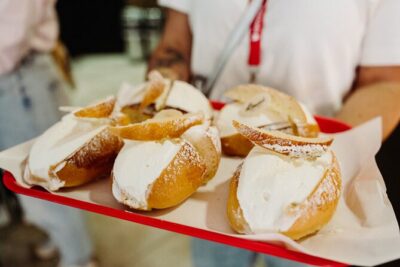
The menu also includes a typical Italian pastry and espresso. These may appear at different points depending on the day, since the selection can change with the season and local availability. You should expect the same general style of food, but not assume every item will appear in exactly the same form.
This is why I would not book the tour solely for trapizzino, a particular pastry, or a specific vendor. Book it for the range: market food, Roman street food, a restaurant meal, and gelato in one well-paced walk.
Three famous pastas at Flavio al Velavevodetto
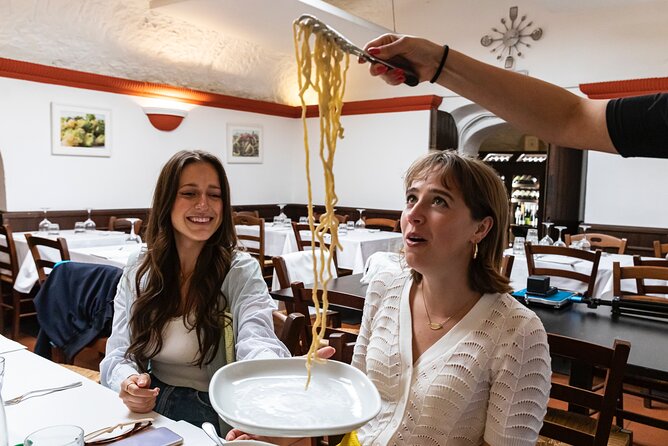
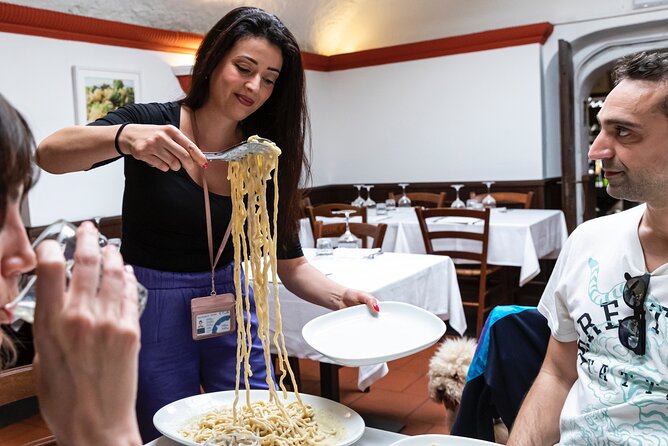
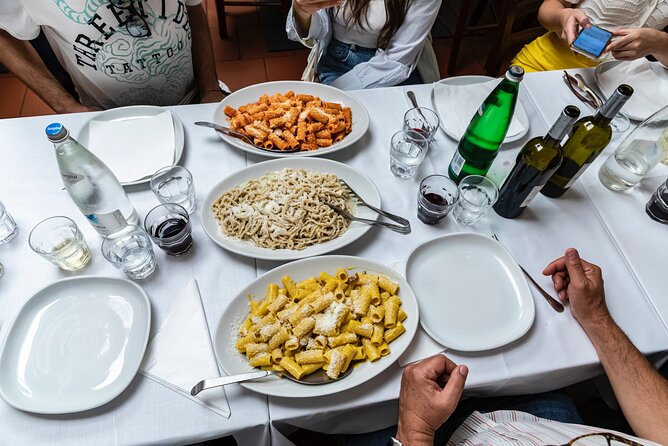
The most substantial meal comes at Flavio al Velavevodetto. Here you taste three Roman pasta dishes: carbonara, amatriciana, and cacio e pepe. Each relies on a small number of ingredients, but each has a different character.
Carbonara is creamy in texture, though traditionally its body comes from eggs, cheese, and cured pork rather than cream. Amatriciana brings tomato and a savory pork flavor. Cacio e pepe is the simplest of the three, built around cheese and black pepper. Tasting them together lets you compare Roman cooking rather than treating pasta as one generic category.
The dishes are paired with local wine. This stop gives the tour more value than a route made only of small samples, because you are getting a proper restaurant course. It also gives you a chance to sit down in a cool room after walking through the market and streets.
The restaurant is connected to Testaccio’s food identity and to the old slaughterhouse area nearby. Your guide explains the local tradition of quinto quarto, which adds context to the cooking. If you are a picky eater or have a serious allergy, contact the provider before booking. Vegetarian and gluten-free requests may be accommodated when possible, but the company says the tour is not suitable for severe or life-threatening allergies to ingredients found on the tour.
Finishing with old-fashioned gelato
The last food stop is Giolitti Caffe and Gelateria, a historic gelateria that has been making artisan gelato for more than a century. It is a fitting finish because gelato gives you one final chance to learn something practical, not just eat dessert.
Your guide explains how to spot real gelato and how to avoid displays that rely on artificial colors or piles of product standing high in the case. Look for restrained colors and a texture that is dense rather than inflated. The exact lesson may vary with the guide, but learning how to choose gelato on your own is a useful souvenir.
Several guides specifically remind people to save room for this stop. That is good advice. The tour includes enough food that it is easy to treat dessert as an afterthought, but the gelato is meant to be part of the finish, not an optional extra.
The tour ends on Via Amerigo Vespucci, only a couple of blocks from the starting point. That makes the route easy to understand and avoids leaving you far from where you began.
What the $131.81 price really buys you
At $131.81 per person, this is not a cheap lunch. You could spend less by visiting a market on your own and ordering one pasta dish. The value comes from the combination of food, access to local vendors, historical explanation, and the amount you eat in a single outing.
The menu covers a full range:
- Italian charcuterie and cheese
- Olive oil and balsamic vinegar
- Prosecco
- Bruschetta made with market ingredients
- Buffalo mozzarella and caprese salad
- Supplì
- Trapizzino with hunter-style chicken
- Carbonara, amatriciana, and cacio e pepe
- Local wine and beer
- Pastry and espresso
- Artisan gelato
That is enough food to replace a meal, and possibly more than one meal for smaller appetites. The tour also saves you from guessing which market stall or restaurant to choose. If you value context and want a guide to manage the sequence, the price is easier to justify.
If you are mainly looking for the lowest-cost way to eat Roman food, this is not the right purchase. You are paying for a guided experience and a broad tasting menu, not just calories.
Group size, guides, and the pace of the walk
The maximum group size is 12, and the activity requires at least two people to operate. A small group can make a big difference at the market and during the restaurant portion. You will have more room to ask about ingredients, Roman customs, and the neighborhood.
Guide quality is important here. Luca has been praised for combining food information with history and a relaxed manner. Katherine is described as friendly and engaging, while Giuseppe has been praised for making a small group feel like friends sharing food rather than sitting through a formal class. Francesca is especially noted for her warmth and easy dealings with vendors.
Those names do not guarantee who will lead your tour. They do show what to look for: a guide who can connect the food to Testaccio and keep the walk conversational. On one occasion, a very small group turned the outing into a relaxed, personal discussion. That may happen, but it depends on the day’s bookings.
The tour is offered in English. Most people can participate, and service animals are allowed. It is near public transportation, but hotel pickup and drop-off are not included, so you need to reach Piazza Testaccio on your own.
Who should book this Testaccio food walk
I would recommend it to first-time visitors who want food and history together, especially if central Rome feels too crowded. It also suits repeat visitors who have already seen the headline monuments and want a neighborhood with a more local rhythm.
Food lovers will appreciate the range. You are not tasting only pizza and gelato. You are trying market produce, cured meats, cheese, fried rice, trapizzino, three pasta styles, wine, beer, coffee, pastry, and gelato.
Families can bring children. Children under four do not need a ticket, but food is not included for children age three and under. Paid tickets with food are available from age four.
I would be more cautious if you have a severe food allergy, dislike eating large amounts, or want a tightly fixed itinerary. Stops and tastings can vary by day or season, and the tour is built around sampling many foods.
Practical details and cancellation terms
The meeting point is Piazza Testaccio, 39, and the finish is Via Amerigo Vespucci, 35. Plan to arrive ready to walk and eat, with comfortable shoes and water, especially during Rome’s hotter months.
You can cancel for a full refund up to 24 hours before the start time. Changes or cancellations inside that 24-hour window are not accepted for a refund. If the minimum number of participants is not reached, the provider will offer another date or experience, or provide a full refund.
The tour is often booked well ahead, about 62 days in advance. If your schedule is fixed, reserve early rather than hoping to find an open place at the last minute.
Should you book Taste of Testaccio?
Book it if you want a full meal with a neighborhood story, not just a list of snack stops. The market, the three pastas, the ancient pyramid, and the gelato lesson create a well-rounded introduction to Testaccio.
The price is high, but the quantity of food and the small group soften that concern. I would choose this tour early in a Rome visit, then return to Testaccio later using the market and restaurant tips you pick up along the way. Skip it only if you prefer independent eating, have serious dietary restrictions, or would rather spend $131.81 on several self-guided meals.
FAQ
How long does the Taste of Testaccio tour last?
The tour lasts approximately three hours and 30 minutes.
Where does the tour begin and end?
It begins at Piazza Testaccio, 39, 00153 Rome, and ends at Via Amerigo Vespucci, 35, 00153 Rome. The ending point is a couple of blocks from the start.
What food is included?
The tastings can include Italian charcuterie, artisanal cheese, olive oil, balsamic vinegar, Prosecco, bruschetta, buffalo mozzarella, caprese salad, supplì, trapizzino, three Roman pastas, wine, beer, pastry, espresso, and gelato. The exact selection can vary by day or season.
Is the tour suitable for children?
Children under four can join without a ticket, but food is not included for children age three and under. Paid tickets with food are available for children age four and older.
Can dietary requirements be accommodated?
Vegetarian, gluten-free, and other dietary requests may be accommodated when possible if you contact the provider or add a note when booking. The tour is not suitable for people with severe or life-threatening allergies to ingredients found on the experience.
What is the cancellation policy?
You can cancel at least 24 hours before the start time for a full refund. Cancellations or changes made less than 24 hours before the start time are not refunded.
Just added around Rome
- Testaccio Experience: Street Food, Market and Traditions★ 5.0 · 4 reviews
- Rome: Testaccio Food & Market Tour with Pasta & Wine★ 5.0 · 38 reviews
- Rome: Temples, Squares & Markets Guided Walking Tour★ 4.8 · 26 reviews
- Rome: Taste of Testaccio Food & Market Tour★ 4.9 · 38 reviews
- Rome: The Vatican Market Experience Tasting and Class★ 4.7 · 10 reviews
- Rome: Trajan Markets Experience with Multimedia Video★ 4.0 · 66 reviews
- Rome: Prati Food & Wine Market Tour with St. Peter Square★ 5.0 · 7 reviews
- Rome: Trajan’s Markets & Museum of The Imperial Fora Tour★ 4.8 · 4 reviews
Rome Market Tours, compared.
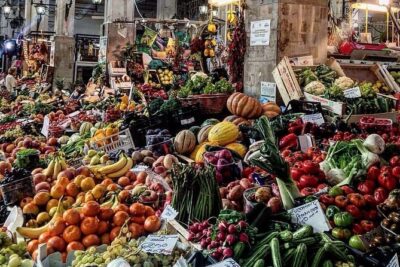
Roman Food Tour with Visit to the Trionfale Food Market
Read our review →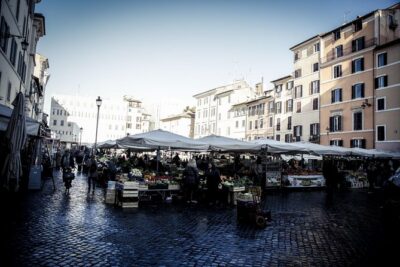
Authentic Roman Cooking Class & Market Experience
Read our review →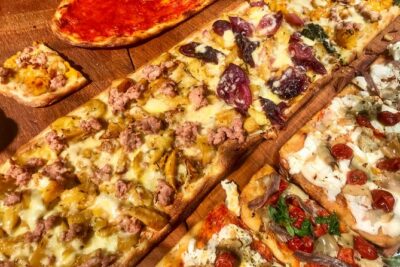
Trevi Fountain, Pantheon, and Campo Dei Fiori Market Food and Wine Tour
Read our review →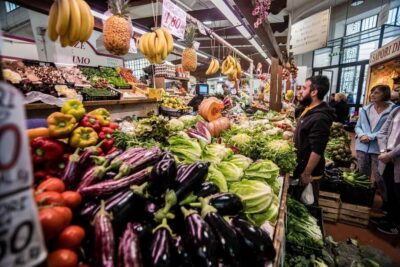
Pasta Cooking Class with Market Visit and Wine
Read our review →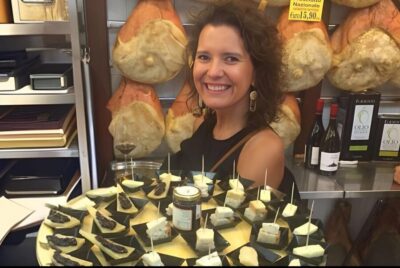
Kitchen of Mamma: Pasta Cooking Class with market visit in Rome
Read our review →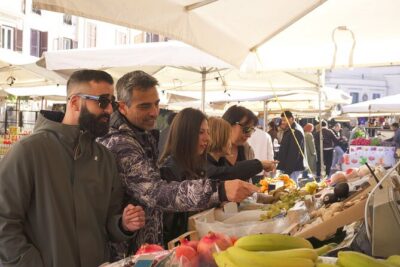
Farmers’ Market Shopping with Cooking Class and Pasta Making
Read our review →Browse the lists this tour appears in