
Review · NAIROBI MARKET TOURS
Memorable Daily KIBERA Slums/Toi Market Tour with Locals (2 hours)
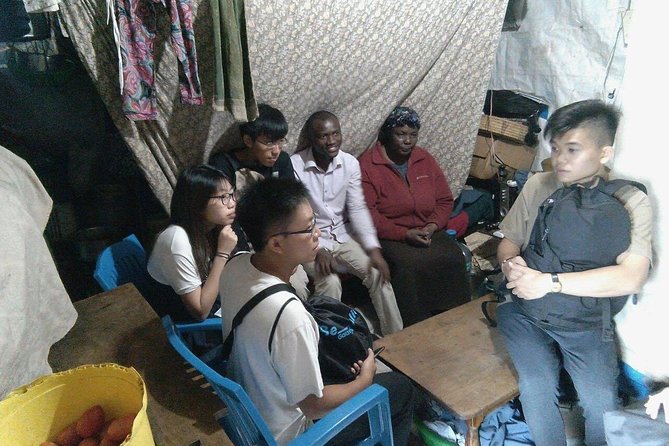
Kibera is not a museum or a staged attraction. It is home to a huge Nairobi community, and this walking tour asks you to meet it through local eyes. Guides such as Bramwel and Frederick explain daily life, housing, schools, work, and community projects while leading you through streets they know well.
I like the tour for two clear reasons: it puts local youth to work, and it gives you a fuller view of Nairobi than the usual wildlife and city-center stops. I also like that the route ends at Olympic Primary School, a place tied to education and upward mobility in Kibera. The main drawback is that this can be a confronting experience, and a group of up to 50 people may feel large in narrow residential areas.
Key points before you book

- Local guides with personal ties: Bramwel and Frederick are among the guides praised for knowing Kibera well and introducing visitors to people in the community.
- Olympic Primary School visit: The tour ends at one of Kenya’s largest public primary schools, with a long record of helping local families.
- A look at community projects: You learn about work connected to housing, education, health, and support for residents.
- A walking tour, not a photo stop: Sturdy shoes and respectful behavior matter, especially in wet or muddy conditions.
- Good value at $25: The price covers fees and the arranged local transfer, making it a modest-cost way to explore a major part of Nairobi.
- A serious, human experience: You will see hardship, but also work, trade, friendship, and community pride.
Why Kibera changes your view of Nairobi
Many first visits to Nairobi focus on national parks, museums, restaurants, and the city center. Kibera adds a harder but important piece to the picture. It shows how many people build ordinary lives in a place where housing, sanitation, employment, and public services are under strain.
The settlement is described as covering about 2.5 square kilometers and housing an estimated one million people, although population figures are difficult to verify. The point is clear enough: this is a very dense community with residents from across East Africa.
You are not simply looking at poor housing from a vehicle window. You are walking with someone who understands the area and can explain what you are seeing. The guide may discuss how homes are built, how small businesses operate, and how families manage school, work, and daily expenses.
That local connection matters. One guide, Bramwel, grew up in Kibera, still lives nearby, and plays for the Kibera football team. He has personal links across the area. Frederick is also praised for making the experience personal and for supporting children’s education. These details give the tour a human scale that a standard sightseeing route cannot provide.
More Two-Hour Tours in Kenya:
- 2 Hour Historic Market Food Tour and Hands-On Biscuit Class
★ 5.0 · 251 reviews - 2-Hour Food, History and Street Art Tour of Ponce City Market
★ 5.0 · 159 reviews - Palermo in 2 hours Main monuments and historic markets
★ 5.0 · 136 reviews
Starting at Olympic Primary School
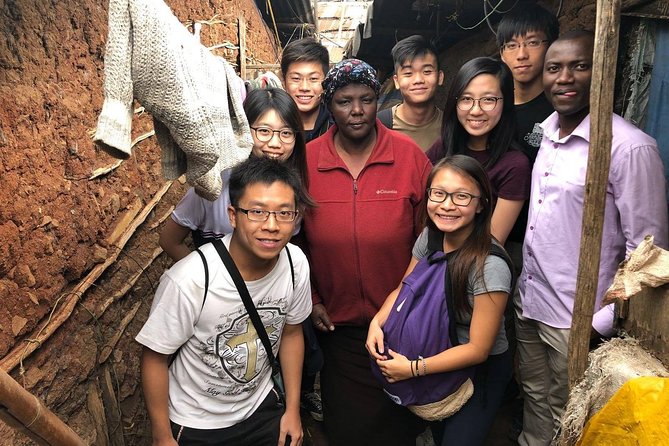
The meeting point is Olympic Primary School, listed at MQQH+3FJ in Nairobi. The tour also ends there, which keeps the arrangement simple. Round-trip transfers from the designated meeting point are included, and the activity normally lasts about two hours, though you should allow up to three hours.
The school is more than a convenient place to meet. It is part of the story. Olympic Primary is described as Kenya’s largest public primary school and was once known for strong academic performance. Its role in helping families move out of poverty gives you a useful way to understand why education matters so much in Kibera.
Do not expect a long formal school lecture. The value is in seeing a public institution connected to local hopes and practical opportunity. The school helps explain why NGO work, charitable giving, and community projects often focus so heavily on children.
Because the tour meets and ends at the same location, you can plan the rest of your day more easily. Still, allow some flexibility. The experience is a walking tour, and the timing may stretch beyond the advertised two hours.
Walking through homes, shops, and daily work
The heart of the experience is the walk through Kibera itself. Your guide explains the informal economy, the network of small businesses and personal services that keeps the community moving. The tour is intended to show more than deprivation. You may see people working, trading, running shops, attending school, and finding practical ways to support their families.
Some guides have invited visitors into a home or introduced them to a friend who was willing to explain family life. That can be one of the most meaningful parts of the experience, but it depends on personal consent and the circumstances of the day. It should never be treated as a guaranteed performance.
The best approach is to listen first. Ask questions about work, education, housing, and community life rather than treating the area as a backdrop. The most useful information comes from ordinary details: how people earn money, how buildings are used, what local services are available, and which projects have made a real difference.
You should also put your camera away unless you have clear permission. One of the strongest lessons from this kind of tour is simple: Kibera is a neighborhood, not a human exhibit. A respectful visitor walks carefully, avoids photographing people without consent, and follows the guide’s advice.
What you learn about NGO projects
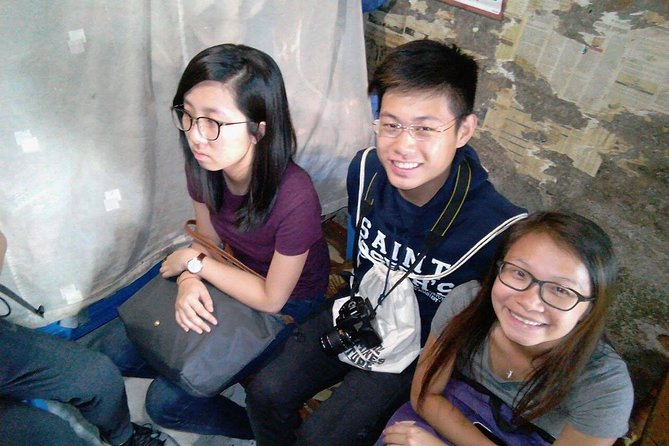
A central part of the tour is the discussion of NGO projects linked to housing, education, and health. You will hear about efforts intended to improve life for residents and about the challenges that can limit their success.
This is useful because charitable projects are not automatically effective. The tour addresses both progress and failure, including the effect of corruption and weak administration. That gives you a more honest picture than a polished charity presentation.
The local operator also supports its own charitable work. Part of the proceeds helps fund MAKLWETA, an organization connected with rural girls’ education. The company says it also uses the tour to employ local young people in a country facing very high youth unemployment.
At $25 per person, that community connection adds value. You are not paying for an expensive attraction with elaborate facilities. You are paying for a local guide, an organized introduction to a complex neighborhood, included fees, and a service that says it directs some income toward local employment and education.
You should still keep your expectations sensible. A two-hour tour cannot explain every part of Kibera or prove the long-term effect of each project. It offers an informed starting point, not a complete answer to Nairobi’s housing and poverty challenges.
A few more market tours around Kenya worth a look
- Traditional Kenyan Cooking Class & Local Market Tour
★ 5.0 · 129 reviews - Mombasa City Tour,Fortjesus,Oldtown,Tusks and Spice Market.
★ 4.8 · 19 reviews - Half-Day Nairobi National Park and Maasai Market with Pick up
★ 5.0 · 16 reviews - Authentic Kenyan Cooking Class & Market Tour in Nairobi
★ 5.0 · 12 reviews
Meeting Bramwel or Frederick

The guide can shape the experience more than the route. Bramwel is repeatedly praised for being friendly, relaxed, and closely connected to Kibera. His personal background helps him explain the area without sounding like he is reading a script.
Frederick is also described as warm, helpful, and attentive to comfort and safety. He is praised for answering questions and for explaining the reality of Kibera directly. Communication for one same-day booking was reported as good, with the meeting point arranged clearly.
Names can vary by date, so do not assume a particular guide is guaranteed. The important point is that the company uses local youth guides rather than sending you through with someone who has no connection to the area.
The tour’s maximum group size is 50. That is worth noting. A small group should make it easier to ask questions and move respectfully through residential spaces. A larger group may feel less personal and can make narrow paths more awkward. If group size matters to you, ask the operator before booking.
Clothing, safety, and good manners
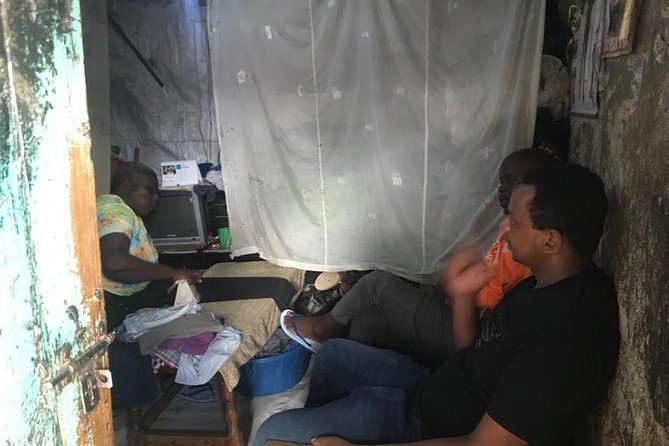
Wear sturdy shoes that can handle wet or muddy ground. This is practical advice, not fashion advice. Kibera is a walking environment, and clean city shoes may not survive the route well.
Dress modestly and comfortably. You are entering people’s homes and neighborhoods, not attending a staged show. Avoid flashy behavior, keep valuables discreet, and stay close to the guide.
The experience is generally presented as a safe way to visit Kibera with local supervision. That does not mean you should ignore normal city precautions. Listen to your guide, do not wander off, and ask before taking photographs or entering any building.
Service animals are allowed, and the meeting point is near public transportation. Most people can participate, though the tour involves walking on uneven or muddy ground. The provided information does not specify a detailed accessibility plan, so anyone with mobility concerns should contact the operator before reserving.
Is Toi Market part of the experience?

The tour is marketed around Kibera and Toi Market, but the detailed route information focuses mainly on Kibera, community projects, and Olympic Primary School. Do not assume you will receive a long market visit unless the operator confirms it.
That is not necessarily a problem. The strongest part of the activity appears to be the local walking tour and the conversations around daily life, not a shopping stop. If Toi Market is especially important to you, clarify the exact route and timing before you pay.
The value of a $25 Kibera tour

At $25, this is a reasonably priced Nairobi activity. The fee includes all taxes and charges, and arranged transfers from the designated meeting point are included. Lunch and drinks are not included, but the operator says local restaurants can be visited if you request them.
The value comes from access and context. You could walk near Kibera on your own, but without local contacts you would miss much of what gives the area meaning. You might also struggle to judge where it is appropriate to go, what can be photographed, or how to ask questions politely.
This tour gives you a local introduction in a short block of time. It fits well into a Nairobi itinerary alongside a museum, a food experience, or a wildlife outing. Just remember that the price does not buy comfort or entertainment in the usual tourist sense. It buys a serious look at a real community.
The operator has a simple cancellation rule: cancel at least 24 hours before the start for a full refund. Cancellations or changes made within 24 hours are not refunded.
Who should book this experience?
I would recommend it to you if you want to understand Nairobi beyond its postcard attractions. It suits people who are willing to listen, ask respectful questions, and accept that the experience may feel uncomfortable at times.
It is especially useful if you care about local enterprise, education, youth employment, or community development. The tour also works well for first-time visitors who want a guide to explain the social and economic side of the city.
I would think twice if you want a light, polished sightseeing outing. Kibera’s poverty is real, and the visit may leave you feeling sad, unsettled, or unsure how to respond. That discomfort is not a reason to avoid the tour, but you should be ready for it.
You should also reconsider if photography is your main goal. This is a place for human contact and careful observation, not a collection of dramatic images.
Should you book the Kibera tour?
Book it if you want a short, locally led experience that puts Nairobi’s daily life at the center. The strongest reasons are the local guides, the chance to learn about community projects, the visit to Olympic Primary School, and the fact that your booking supports local employment and education work.
The main cautions are the possible group size, muddy walking conditions, uncertain inclusion of Toi Market, and the serious nature of the subject. Ask about the guide, route, group size, and market stop if those details matter to you.
For $25, this is a useful and unusually direct way to see another side of Nairobi. Go with respect, leave the camera down unless invited, and give yourself enough time to listen.
FAQ
How long does the Kibera tour last?
The walking experience is described as lasting about two hours, with the full activity taking approximately two to three hours.
Where does the tour start and finish?
It starts and ends at Olympic Primary School, MQQH+3FJ, Nairobi, Kenya.
What is included in the $25 price?
All fees and taxes are included. Round-trip transfers from the designated meeting point are also provided.
Are lunch and drinks included?
No. Lunch and drinks are optional and are not included in the price. Local restaurants can be visited at your request.
Can I cancel for a full refund?
Yes. You must cancel at least 24 hours before the local start time to receive a full refund. Cancellations made within 24 hours are not refunded.
Is the tour suitable for most people?
Most people can participate, and service animals are allowed. The experience involves walking and may include wet or muddy conditions, so sturdy shoes are advised.
Just added around Kenya
- Nairobi: Maasai Market and Nairobi City Tour★ 5.0 · 4 reviews
- Nairobi Traditional Cooking Classes and Local Market Visit★ 5.0 · 2 reviews
- Nairobi: Hop on Hop off and Maasai market Collections Visit★ 3.5 · 10 reviews
- Nairobi: Explore Maasai Market for Unique Souvenirs★ 5.0 · 5 reviews
- Market Tour and Traditional Kenyan Cooking Class in Nairobi★ 4.8 · 6 reviews
- Maasai Market Souvenir Shopping★ 5.0 · 2 reviews
- Local Market Tour and Traditional Meal Cooking Class★ 5.0 · 4 reviews
- Diani: Market and Street Food Walking Tour★ 4.2 · 6 reviews
Nairobi Market Tours, compared.

Traditional Kenyan Cooking Class & Local Market Tour
Read our review →
Half-Day Nairobi National Park and Maasai Market with Pick up
Read our review →
Authentic Kenyan Cooking Class & Market Tour in Nairobi
Read our review →
Nairobi: Hop on Hop off and Maasai market Collections Visit
Read our review →
Market Tour and Traditional Kenyan Cooking Class in Nairobi
Read our review →
Nairobi: Explore Maasai Market for Unique Souvenirs
Read our review →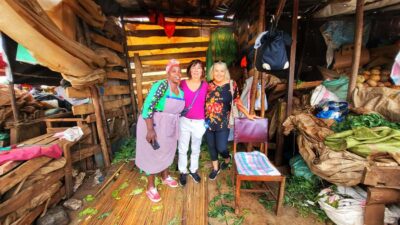
Local Market Tour and Traditional Meal Cooking Class
Read our review →
Browse the lists this tour appears in