
Review · COFFEE & TEA MARKET TOURS
Marrakech: Medina, Souks, Artisans Guided Tour with Mint Tea
Marrakech’s souks make more sense once someone shows you how the maze works. This walking tour takes you from Jemaa el-Fna through leather, dye, metal, textile, and spice quarters, with stops to watch artisans at work rather than simply passing rows of shops.
I like the small-group or private format, which gives you room to ask questions, and I like the practical shopping advice. A guide can explain the difference between handmade and factory-made goods, help you judge argan oil, and show you how to bargain without turning every purchase into a wrestling match. The main caution is the walking: good shoes matter, and the route is not suited to anyone with serious mobility limits.
Key points at a glance
- Jemaa el-Fna starting point: Meet in front of Café de France, then move from the square into the quieter maze of the medina.
- Working artisan quarters: See leather goods, dyed wool, metalwork, textiles, spices, and traditional Moroccan crafts being made.
- Useful shopping guidance: Learn bargaining habits, how to assess argan oil, and where local herbs and spices fit into Moroccan life.
- Mint tea pause: Stop at an authentic medina spot for a traditional tea break and a look at Moroccan hospitality.
- Flexible format: Choose a private tour or a small-group walk lasting about three to four hours.
- A proper walking tour: Wear sturdy shoes, carry water and cash, and expect uneven streets and plenty of time on your feet.
Starting at Jemaa el-Fna, Marrakech’s great meeting place
The tour begins at Jemaa el-Fna, the square that serves as Marrakech’s social center. Your meeting point is in front of Café de France, a useful landmark because the square itself can feel confusing when you first arrive.
The opening stop is fairly short, about 15 minutes, so think of it as an orientation rather than a full tour of the square. Your guide can help you understand how the square connects to the surrounding medina before leading you into the narrow streets.
This is a good place to ask your first questions. If you want to buy leather, spices, textiles, or metalwork later, tell your guide early. The shopping advice becomes more useful when the guide knows what interests you.
If you are staying in a riad inside the medina and choose the private option, pickup can take place at your riad reception. Otherwise, meet at Café de France. Transportation is not included, so you’ll need to make your own way to the meeting point unless the private medina pickup applies.
More Coffee and Tea Market Tours in Marrakesh:
- Marrakech: Private Souks Tour with Tea and Traditional Snack
★ 4.6 · 33 reviews - Active Volcano, Rice Field, Hot Spring, Fruit market, Tea Plantation with Lunch
★ 5.0 · 513 reviews - Da Nang Cooking Class with Coffee Tasting and Market Visit
★ 5.0 · 310 reviews
Reading the medina instead of getting lost in it
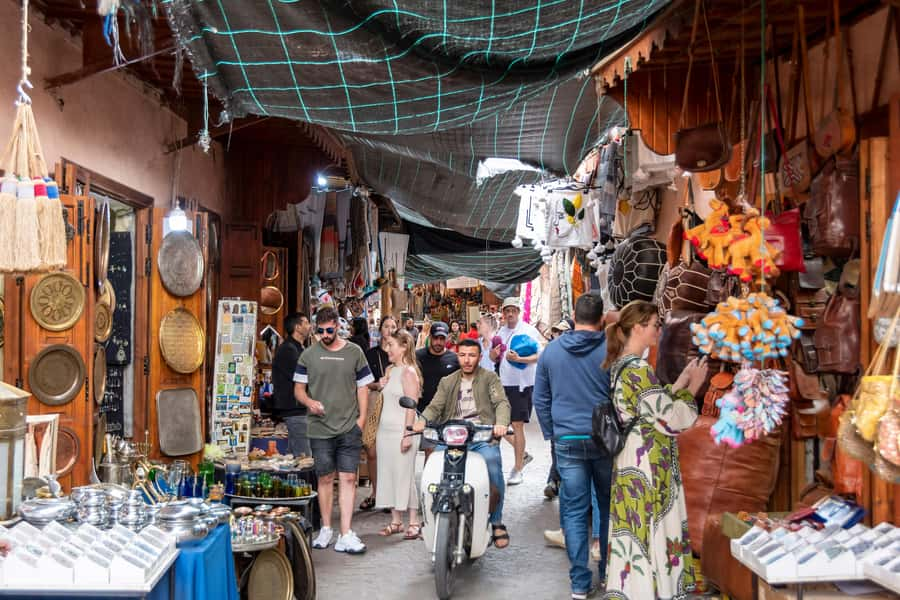
The medina is not a tidy open-air market arranged for easy browsing. Its lanes twist between shops, workshops, homes, mosques, food stalls, and small squares. You can certainly walk through it alone, but it is easy to lose your bearings or miss the working quarters behind the main shopping lanes.
The guided route gives you a basic map in your head. You move from the main square into the wider medina, then along several souk districts with different trades. That structure matters. You are not just being led from one shop to the next. You are seeing how the old market areas are organized by craft.
The first general medina walk lasts about 30 minutes. Expect a close look at the streets rather than a long list of dates. The value here is practical context: what different lanes sell, how the workshops fit into daily life, and how to move through the souks without stopping in the middle of the foot traffic.
Bring sunglasses, sunscreen, water, and cash. The streets may be shaded in places, but you should still prepare for sun and heat. Comfortable shoes are not optional for most people. One strong piece of advice from the experience feedback was to wear good walking shoes because the route feels long by the end.
Souk Semmarine and the craft of buying leather
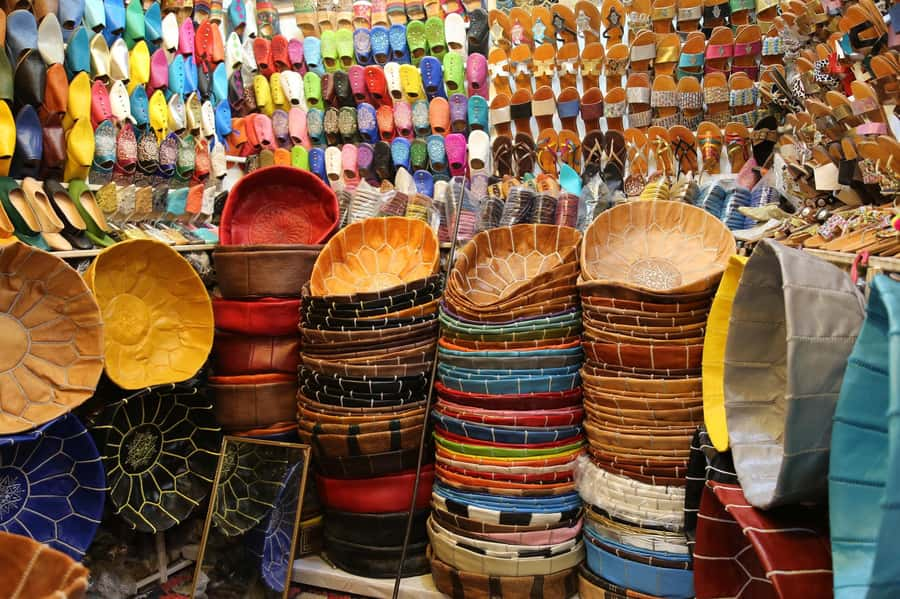
Souk Semmarine is one of the main market streets in the medina. It is a natural place to begin learning how shopping in Marrakech works because you’ll find leather goods, textiles, slippers, bags, belts, and other traditional crafts close together.
The guide’s role is especially useful here. Instead of seeing a leather bag as simply a souvenir, you can ask how it was made, what type of leather it uses, and whether the finish suggests handwork or mass production. You can also learn how to approach prices without feeling pressured to buy.
The stop lasts about 30 minutes and includes shopping. That does not mean you must purchase anything. A good guide should help you browse with a clearer idea of what you want, and the tour includes personalized shopping suggestions.
I would save serious shopping decisions until you have seen more of the medina. Prices and quality vary, and the free time at the end gives you a chance to return to a shop or compare items. If you buy early, keep track of where you made the purchase. The lanes can look remarkably similar once you leave the main street.
Souk El Attarine and the smaller shopping lanes
The route continues through Souk El Attarine for around 20 minutes. This section adds another layer to the market walk, with more time for browsing and explanations of traditional goods.
The value of a stop like this is not a single famous sight. It is the chance to notice the difference between a market lane designed for visitors and a working quarter where local craft remains part of everyday business. Your guide can point out details that are easy to miss, from the way goods are displayed to the difference between decorative items and useful household pieces.
This is also where bargaining advice becomes more practical. You can ask how to make a reasonable offer, when to walk away, and how to keep the exchange friendly. Bargaining is part of the shopping culture, but it works best when you have a genuine interest in the item and a clear price in mind.
The tour is not a promise of rock-bottom prices. Its value is helping you shop with better judgment. You are paying $18 for the walk, the guide, the craft explanations, and the time saved from wandering without a plan. Your purchases cost extra.
More Guided Market Trips in Marrakesh:
- Marrakech: Colorful Medina Souks Guided Walking Tour
★ 4.7 · 2,470 reviews - Marrakech: Monuments, Souks and Medina Guided Walking Tour
★ 4.8 · 208 reviews - Marrakech Guided Souks Tour with a Local Insider
★ 4.6 · 109 reviews - Marrakech: Hidden Souks Shopping Tour with Private Guide
★ 4.1 · 53 reviews
Souk des Teinturiers and wool hanging overhead
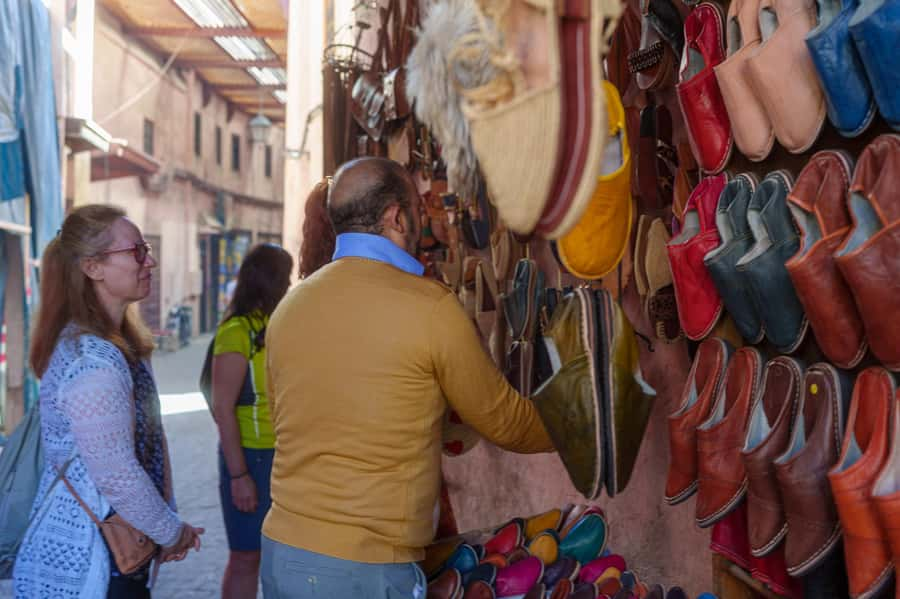
Souk des Teinturiers, also called Souk Sebbaghine, is one of the more visually memorable parts of the route. Colored wool hangs above the lane, and the setting gives you a direct look at Morocco’s textile traditions.
The stop lasts about 20 minutes and includes time to look, take photographs, and watch demonstrations of traditional dyeing methods. This is more interesting than simply seeing finished scarves or blankets in a shop. You get a sense of the work behind the color.
A guide can also help you connect what you see here with the textiles sold elsewhere in the souks. If you are considering a scarf, rug, or other woven item, ask about the materials and how much of the work is done by hand. The tour does not guarantee that every shop item is handmade, so keep your questions specific.
The dye quarter is a good example of why a local guide adds value. Without explanation, the colored wool may look like attractive decoration. With context, it becomes evidence of a working trade and an old production method still visible in the medina.
Mint tea on a quiet terrace
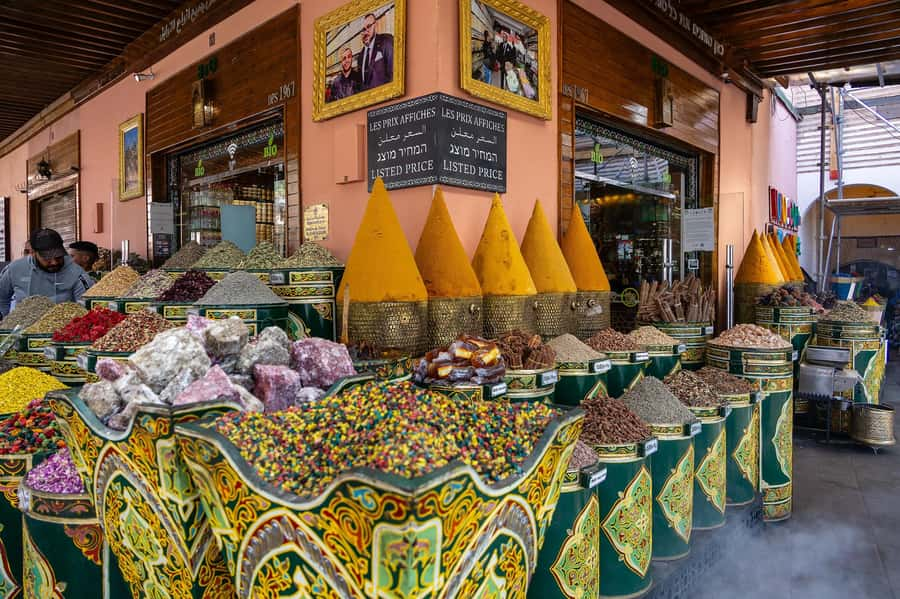
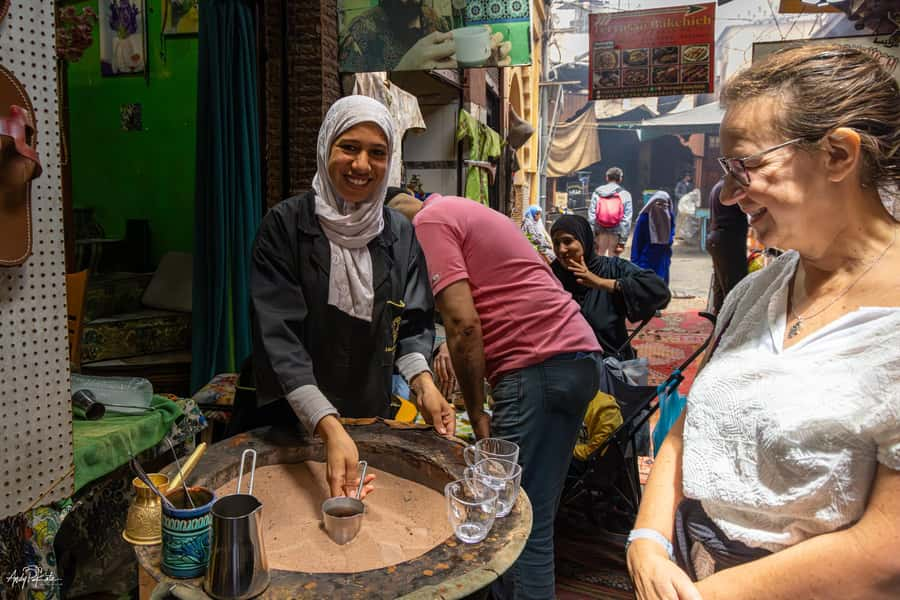
After the souk lanes, you stop for Moroccan mint tea at an authentic spot in the medina. The tea break is included, and it gives your feet a welcome rest.
Mint tea is not just a drink served to fill a pause. It is tied to Moroccan hospitality and social life. The break lets you see how conversation and welcome are built into daily routines, even during a busy day of shopping.
The terrace is described as quiet, which makes this a useful change of pace. The medina can be noisy and crowded, and a short pause helps you reset before the route continues.
Do not expect a long meal or a full café visit. This is a refreshment stop within a walking tour. If you need lunch, plan that separately.
Souk Haddadine and the sound of metalwork
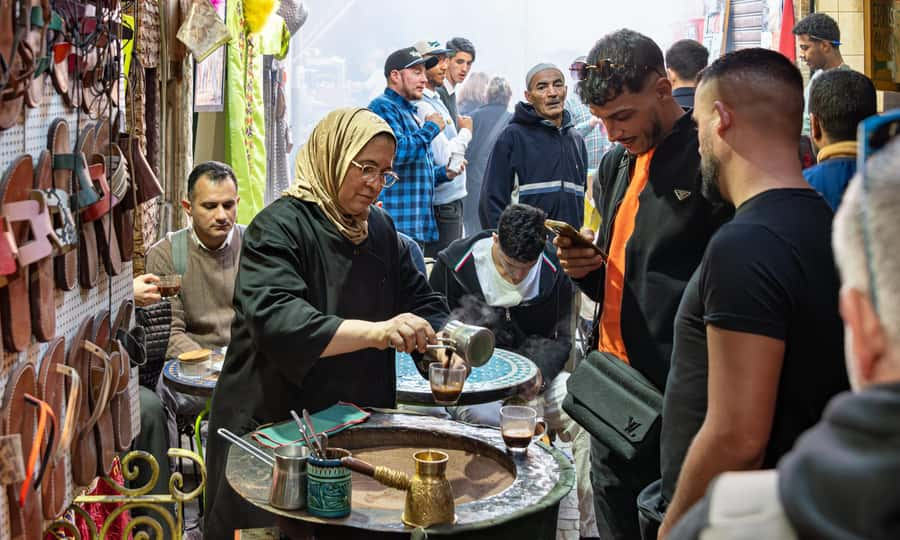
The next craft quarter is Souk Haddadine, the blacksmiths’ area. Here you can watch metalworkers shape tools and decorative objects using traditional methods.
The appeal is in the work itself: heat, force, repetition, and skilled hand movements. You are seeing a trade rather than a staged museum demonstration. The guide can explain what the objects are used for and how metalwork fits into the daily life of the medina.
This stop is another reason to avoid rushing through Marrakech’s shopping streets alone. Shop displays show you the finished product. A workshop shows you the process, and the process helps you judge the labor behind the price.
As always, take care with photographs and follow your guide’s lead around active work areas. The tour gives you access to local artisan workshops, but that does not mean every workshop will be open or working at exactly the same pace each day.
Rahba Lakdima and the practical side of spice shopping
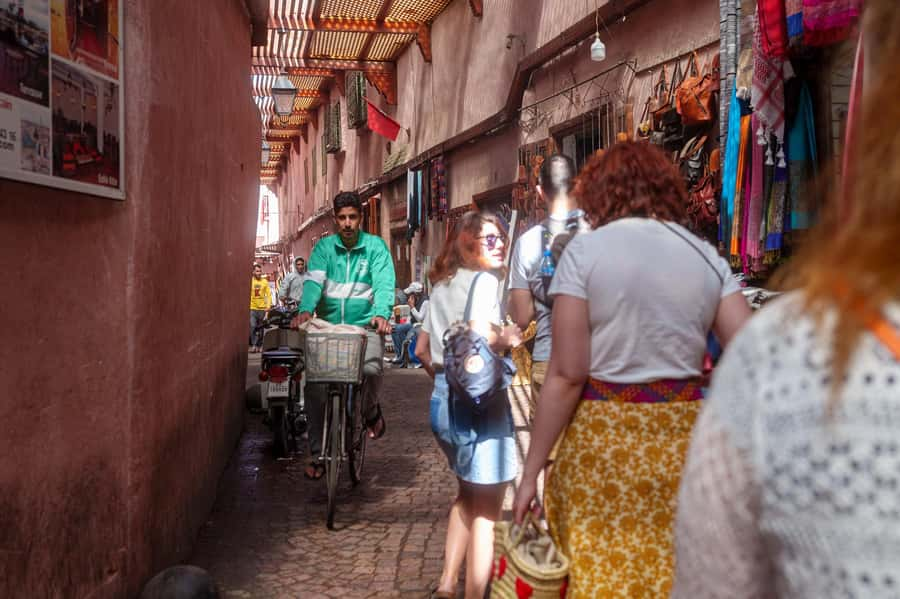
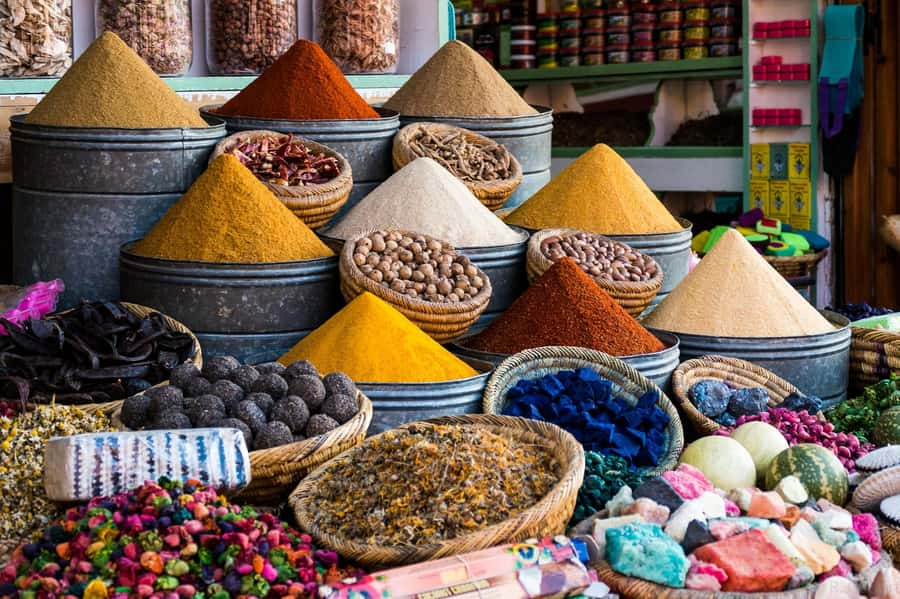
The guided walk finishes at Rahba Lakdima, also known as Spice Square. Stalls here carry spices, herbs, and natural products, making it a useful final stop for anyone planning to take home food items or cosmetics.
You’ll learn about the role of Moroccan spices in cooking and daily life. The guide can also explain how to recognize authentic argan oil and discuss local herbs. That advice is valuable because products sold under the same name can differ in quality and price.
Be careful with broad claims from shopkeepers. Ask what an oil is intended for, how it is labeled, and whether it is culinary or cosmetic. The guide can help you ask better questions, but you should still make your own choice.
Spice Square works well as the end of the guided portion because you then have free time to revisit places you liked. You can return to leather goods, compare textiles, or browse spices without needing to follow the group.
Ben Youssef Madrasa and route variations
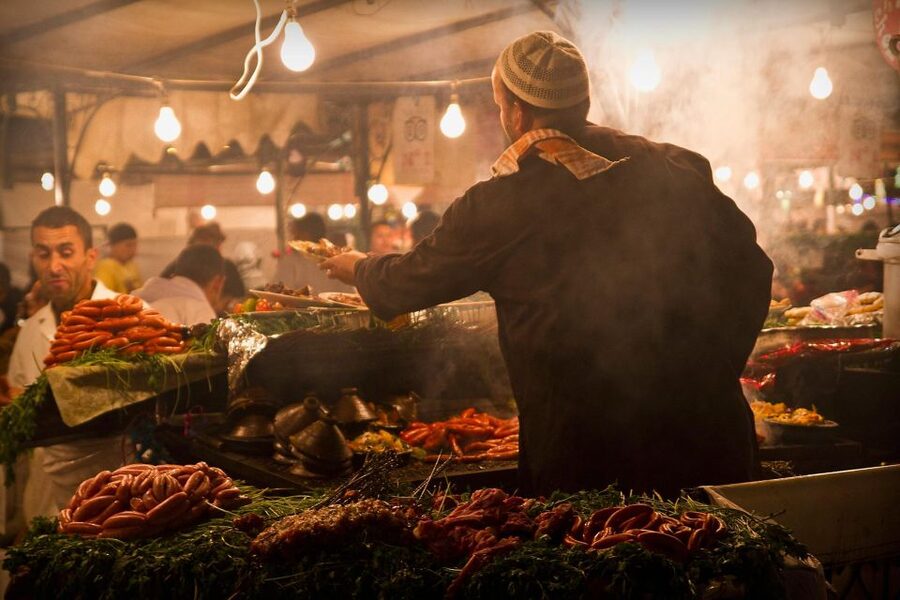
The scheduled route includes around 40 minutes at Ben Youssef Madrasa, with time for photographs, sightseeing, and free exploration. This is the longest individual stop listed, so it can provide a welcome pause from the narrow shopping lanes.
The supplied route information does not describe the madrasa in detail, so you should confirm with the provider whether your selected departure includes entry and exactly how this stop is handled. The route descriptions also include a visit to the Secret Garden in some tour experiences, while another experience did not include it. That suggests the precise path can vary, and you should not book this walk solely for a guaranteed Secret Garden visit.
The final return passes back toward Jemaa el-Fna and ends with drop-off options at Café de France or in the medina. Since the tour is on foot, you remain close to the historic center rather than being taken across the wider city.
What the $18 price really buys you
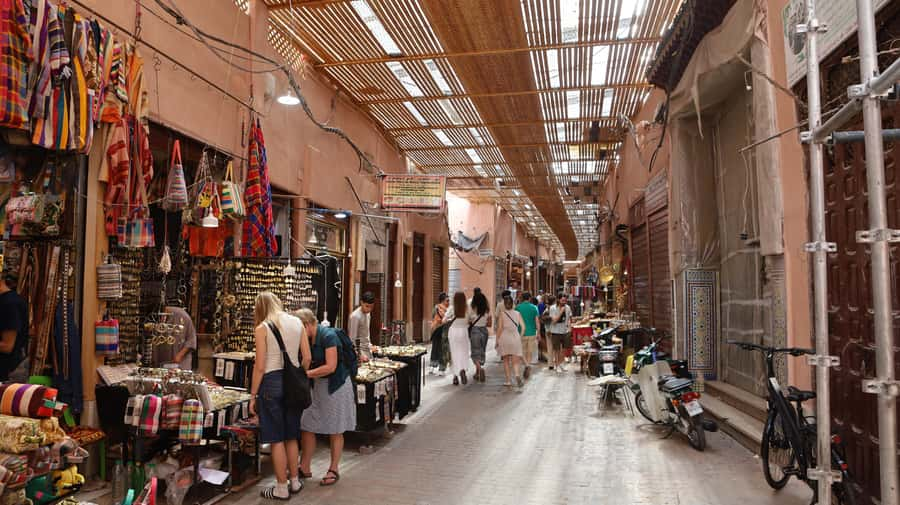
At $18 per person, this is inexpensive for a three to four-hour guided walk. You are getting a licensed local guide, a tea break, shopping advice, access to artisan workshops, and a route that covers several distinct craft quarters.
The strongest value is not the number of stops. It is the interpretation. A guide can help you tell the difference between simply seeing a product and understanding how it was made, what it is used for, and what questions to ask before paying.
The private option should appeal to couples, families, and anyone with a particular shopping list. A small group costs less per person and can be more social, though you may have less control over the pace. The exact group size depends on the option you choose.
The price does not include transportation, meals, or shopping purchases. It also does not turn the souks into a fixed-price store. You still need to make decisions, carry your purchases, and negotiate politely.
Who will enjoy this walk most
I would recommend this tour to a first-time visitor who wants an introduction to Marrakech’s medina without spending half a day wandering in circles. It also suits anyone interested in craft, food products, textiles, or the human work behind Moroccan souvenirs.
It is a good choice if you want practical guidance rather than a formal museum lecture. Guides such as Ishmael and Saïd have been praised for answering questions patiently and explaining the city with clear enthusiasm. The strongest impressions come from the personal guidance, the alleyways, and the workshop visits.
You should think twice if you dislike shopping areas or prefer a quiet sightseeing tour with little walking. The souks are active, the route is long enough to require good shoes, and bargaining is part of the experience.
The activity is listed as wheelchair accessible, but it is also marked as unsuitable for people with mobility impairments. Because the medina route includes narrow lanes and extended walking, contact the provider before booking if accessibility is important to you.
Should you book this Marrakech souk tour?
Book it if you want a low-cost, well-organized introduction to the medina and care about seeing crafts made rather than only seeing them for sale. The mint tea, dye quarter, blacksmiths’ quarter, and spice advice give the walk more substance than a simple shopping escort.
Choose the private option if you want a slower pace or focused help buying leather, textiles, or argan oil. Choose the small-group version if you mainly want orientation and basic context at a modest price.
Skip it if you want a short stroll, dislike negotiating, or cannot comfortably walk for three to four hours. For everyone else, bring water, cash, sun protection, and shoes built for uneven streets. This is a practical way to meet Marrakech through its working souks, not just its postcard views.
FAQ
How long does the Marrakech medina tour last?
The tour lasts approximately three to four hours, depending on the selected option and the pace of the group.
Where does the tour meet?
The usual meeting point is in front of Café de France in Jemaa el-Fna square. The provider contacts you before the tour to confirm the arrangements.
Is hotel pickup included?
Pickup from a riad reception inside the medina is included with the private option only. Transportation is not included.
What languages does the guide speak?
Live guiding is available in English and French.
Is the tour private or shared?
You can select a private group option or a small-group walking tour, depending on availability and the option you book.
Is mint tea included?
Yes. A traditional Moroccan mint tea break is included during the tour.
Do I need to bring cash?
Yes. Cash is recommended for shopping in the souks and for buying handmade goods, spices, or other products.
Is the tour suitable for people with mobility impairments?
The activity information lists it as unsuitable for people with mobility impairments. It also lists wheelchair accessibility, so anyone with specific access needs should confirm the route and conditions with the provider before booking.
Can I cancel the booking?
You can cancel up to 24 hours in advance for a full refund. A reserve-now, pay-later option is also available.
Just added around Marrakesh
- Souks tour of Marrakech ( 3 hours )★ 5.0 · 5 reviews
- Marrakech: Hidden Souks Shopping Tour with Private Guide★ 4.1 · 53 reviews
- Edgy 8 Dish Private, Fusion Cooking Class, Menu Plan, Market★ 4.9 · 31 reviews
- Marrakech: Half-Day Medina Markets Tour★ 4.5 · 11 reviews
- Marrakech: Private Souks Tour with Tea and Traditional Snack★ 4.6 · 33 reviews
- Marrakech: Vibrant Souks, Local Artisans & Medina Experience★ 4.5 · 66 reviews
- Marrakesh: Private Cooking Class & Local Market Shopping★ 4.7 · 15 reviews
- Marrakech Private Souks Shopping Tour★ 4.4 · 4 reviews
Coffee & Tea Market Tours, compared.

Active Volcano, Rice Field, Hot Spring, Fruit market, Tea Plantation with Lunch
Read our review →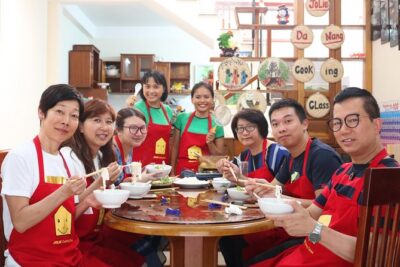
Da Nang Cooking Class with Coffee Tasting and Market Visit
Read our review →
Nishiki Market Tea Ceremony with Koto Performance
Read our review →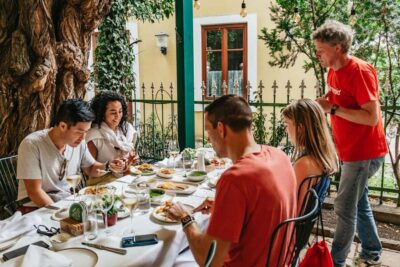
Hungry in Vienna? A Food Lover’s Coffee & Market Walk
Read our review →
Delicious Doughnuts & Tea: Small-Group Borough Market Experience
Read our review →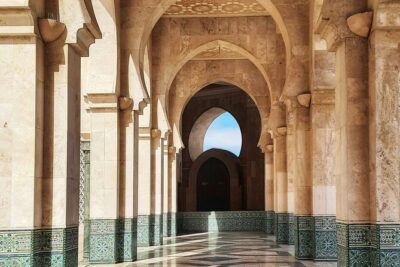
From rick’s coffee to local markets authentic casablanca
Read our review →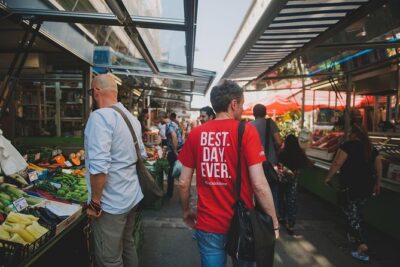
Vienna Eats: Private Foodie Walk with Coffee & Markets
Read our review →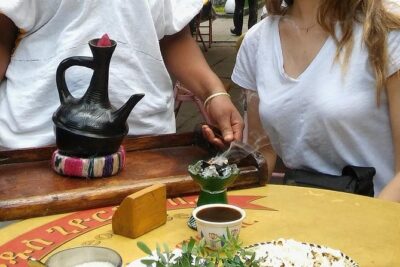
Ethiopian Culinary Tour – Market, Food, Coffee Ceremony & more
Read our review →Browse the lists this tour appears in