
Review · COFFEE & TEA MARKET TOURS
Kyoto: Nishiki Market Tea Ceremony with Koto Performance
The unusual pleasure here is the pairing of hands-on matcha making with live koto music. At KOTOLILY KYOTO, Yurika guides you through the tea process, then plays the Japanese harp before and after the ceremony. It feels more personal than a quick demonstration.
I like the small eight-person limit, which gives you room to ask questions. I also like the location near Nishiki Market, since you can step into one of Kyoto’s best shopping and food areas immediately afterward. The main drawback is that the one-hour session is fairly compact, and kimono photos or a koto lesson cost extra.
Key points
- You make your own matcha: Learn to add the water and whisk the tea instead of simply watching a host prepare it.
- Yurika provides the musical heart: Her live koto performances add several calm musical interludes to the ceremony.
- The studio is near Nishiki Market: The central location works well in rainy weather and fits neatly into a shopping day.
- The group is limited to eight: The small format makes it easier to follow the instructions and ask about Japanese customs.
- Kimono and koto add-ons are available: You can arrange photos in a kimono or try the instrument after the main experience for an additional fee.
A quiet hour beside Nishiki Market
Kyoto can be noisy, crowded, and full of decisions. This experience gives you one hour to sit down, slow your hands, and pay attention to a simple ritual. You are not just served a bowl of matcha. You prepare it yourself, taste it with Japanese sweets, and learn why the movements matter.
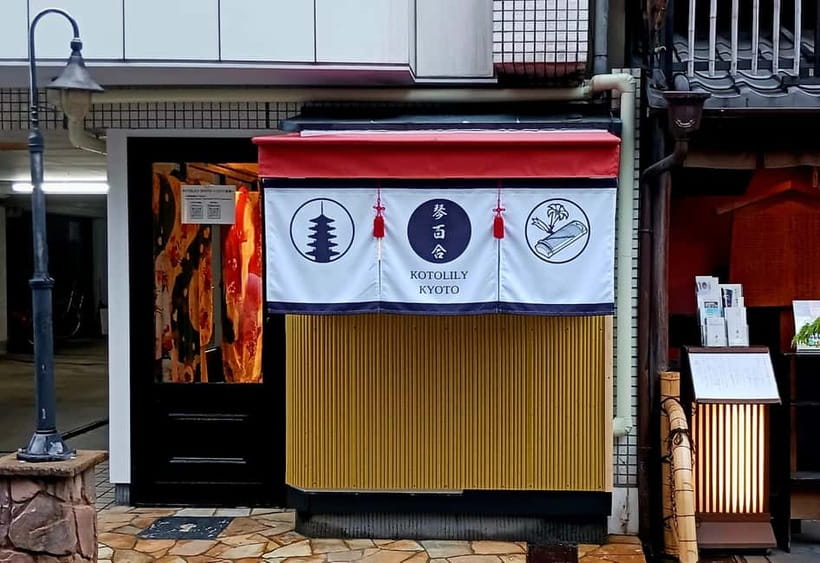
The setting is KOTOLILY KYOTO, a small shop next to KINMATA Restaurant and across the street from Hotel GOCO stay. That last detail matters because the hotel is only a landmark. You should enter the KOTOLILY shop rather than wait outside the hotel.
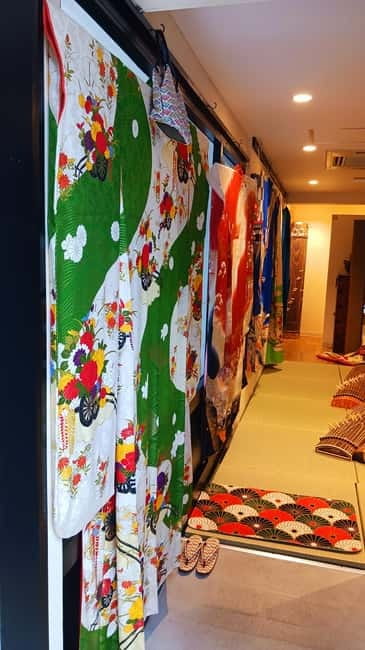
The location is in central Kyoto, close to Nishiki Market and other shopping streets. It is also indoors, which makes this a useful choice on a wet afternoon or during a break from sightseeing. The room is compact, with beautiful kimonos displayed along the walls. You will remove your shoes at the door, so comfortable clothes and clean socks are sensible.
More Coffee and Tea Market Tours in Kyoto:
- Active Volcano, Rice Field, Hot Spring, Fruit market, Tea Plantation with Lunch
★ 5.0 · 513 reviews - Da Nang Cooking Class with Coffee Tasting and Market Visit
★ 5.0 · 310 reviews - Hungry in Vienna? A Food Lover’s Coffee & Market Walk
★ 4.9 · 276 reviews
What happens during the one-hour session
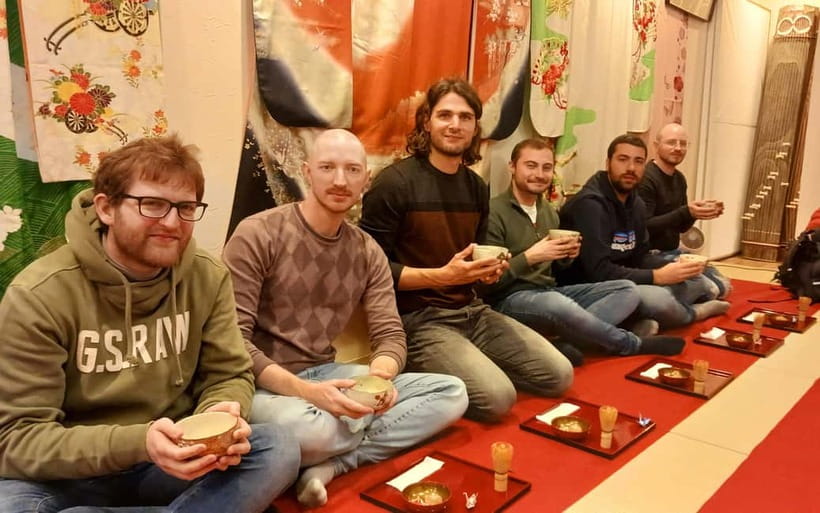
The exact order can vary slightly, but the experience combines a tea lesson with koto performances. You can expect music before and after the tea ceremony, with explanations woven into the session.
Yurika begins by introducing the setting and the traditions behind Japanese tea. The lesson is designed for first-time visitors, so you do not need prior knowledge of matcha etiquette. Instructions are given in English or Japanese, and the many positive comments about Yurika’s clear English are important if you are concerned about following the steps.
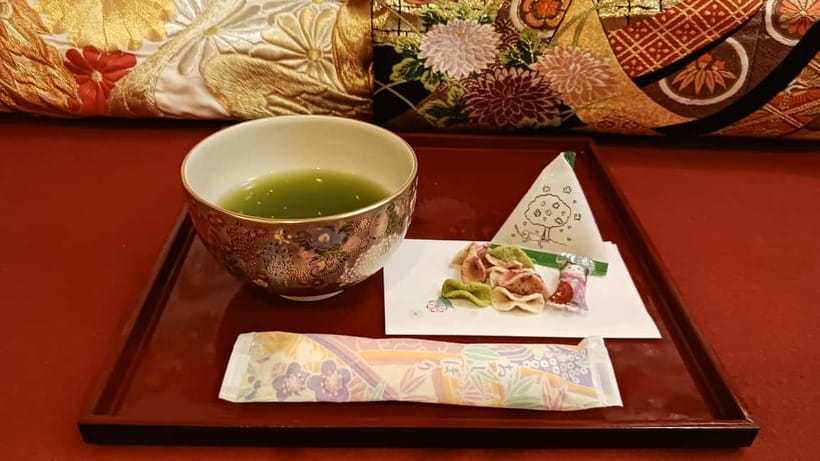
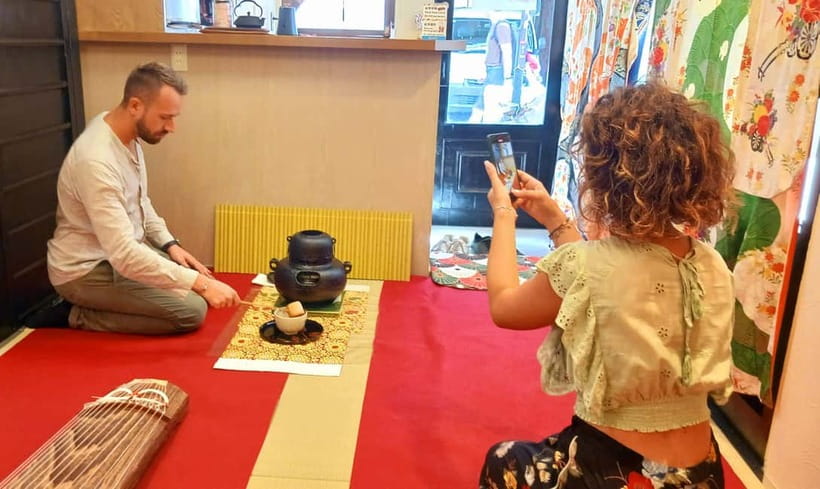
The ceremony is not presented as a silent test of perfect manners. You receive careful guidance as you prepare the tea. You learn how to make a smoother, creamier matcha with less bitterness, then whisk your own cup. Some sessions include two different green teas, according to detailed feedback from people who attended.
That hands-on element is the reason I would choose this over a basic tea tasting. You leave knowing what goes into the bowl and how the texture changes with preparation. The accompanying sweets provide the traditional contrast to the slightly grassy tea.
The tea itself may not win over everyone. Matcha has a distinctive flavor, and the experience is not designed for people with food allergies. Still, the preparation lesson can help someone who normally avoids matcha understand why it is enjoyed.
The koto performance changes the mood
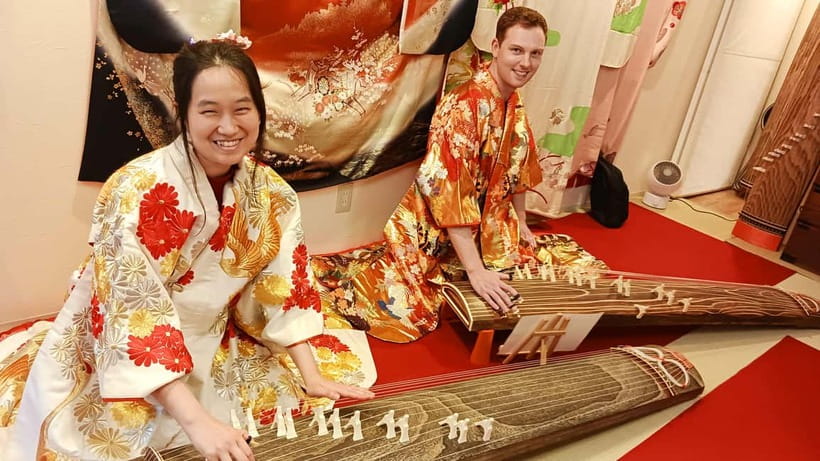
The koto is a traditional Japanese string instrument often described in English as a Japanese harp. Here, it is not background music piped through a speaker. Yurika performs live, often at several points during the hour, and explains something about the instrument and its place in Japanese music.
This is the feature that gives the session its own character. Many Kyoto tea ceremonies focus entirely on procedure. Here, the music creates pauses between the practical steps and lets you simply listen. Some performances include familiar-style pieces such as Childhood and Summer, while the exact program can vary.
The koto is also a personal part of the host’s presentation. Yurika’s years of study and affection for the instrument come through in the way she talks about it and plays it. If you have an interest in Japanese music, this combination gives you more substance than a short cultural demonstration.
You can also request a koto-playing lesson for an additional fee at the shop. That option is arranged on-site, not included in the $56 price. Ask about it after the tea ceremony if you want to try the instrument rather than only listen.
Why the small group matters
The maximum group size is eight people. That is small enough for you to see the preparation clearly and ask questions without turning the session into a lecture. It also suits the intimate scale of the shop.
A private session is possible when bookings line up that way, but it should not be assumed. The standard format is a small group, and the compact room means large luggage or bulky shopping bags may be awkward. A large backpack may fit, but a suitcase would not be a good match for the space.
The small setting also means the experience feels more like a hosted cultural visit than a stage show. You will be close to the tea tools and the koto, but you should remember that flash photography is not allowed. Bring a camera for ordinary photos and videos, provided you follow the staff’s directions.
A few more market tours around Kyoto worth a look
- Nishiki Market Brunch Walking Tour (7 Tastings + Brunch)
★ 5.0 · 1,355 reviews - Kyoto Nishiki Market Food and Culture Walking Tour
★ 5.0 · 412 reviews - Kyoto: Local Food Tasting Tour at the Nishiki Market
★ 4.7 · 135 reviews - Kyoto: Nishiki Market and Depachika Food Tour with a Local
★ 4.7 · 76 reviews
Kimono photos are an optional extra
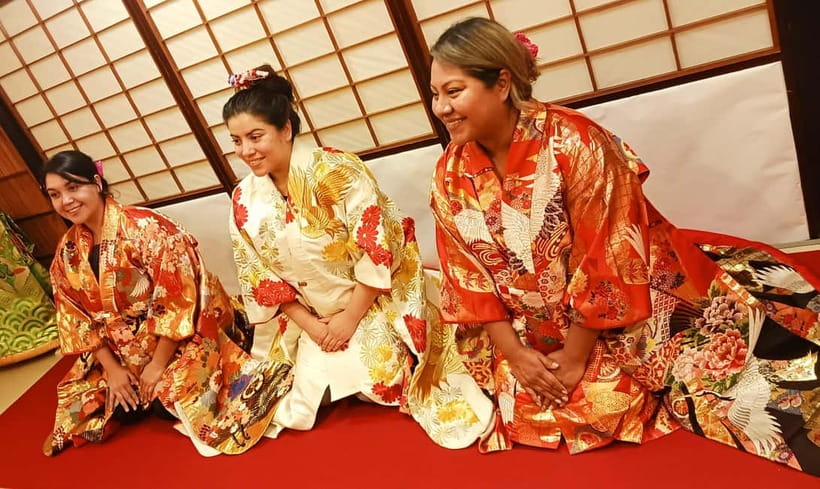
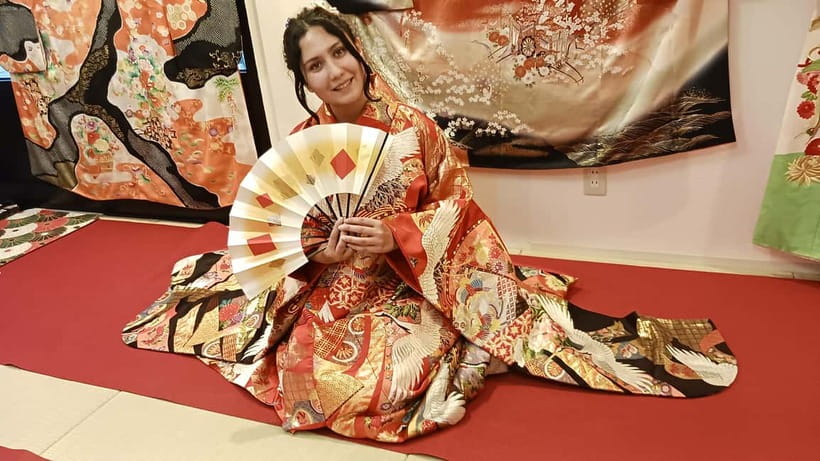
Kimonos line the walls of the studio, and you can pay extra for a kimono session with photos and video. Traditional hair accessories may also be available as part of that add-on. This can be a nice keepsake, especially if you are looking for a portrait that feels tied to Kyoto rather than a standard city snapshot.
The main tea experience does not include kimono wear. You should also clarify the timing if wearing a kimono is important to you. Some people have used the kimono mainly for photos at the end, rather than wearing it throughout the tea preparation.
That distinction matters. If your priority is a tea ceremony while dressed in formal Japanese clothing, this may not match your ideal format. If you mainly want a short cultural activity plus attractive photos, the on-site option is convenient. Ask the staff for the current price and what is included before agreeing.
Is $56 a fair price?

At $56 per person, this is not the cheapest way to drink matcha in Kyoto. You could buy tea and sweets for much less. The value comes from the instruction, the live performance, and the limited group size.
You are paying for two connected cultural activities in one hour: making matcha and hearing a professional koto performance. The host also explains tea customs and aspects of Japanese music, which gives the session more educational value than a simple photo stop.
I consider the price reasonable for someone with limited time in Kyoto who wants a structured introduction to both traditions. It is especially fair if you would otherwise book a tea ceremony and a separate music performance. The optional kimono and koto activities change the total cost, so treat those as extras rather than part of the advertised price.
The value is weaker if you want a long, formal tea ceremony with extensive etiquette training. This is a short introduction, built for visitors who want to participate without giving up half a day.
Planning the visit around Nishiki Market
The central location makes this easy to combine with Nishiki Market, nearby shops, and food stops. You can schedule the tea experience before browsing the market, or use it as a calm pause after exploring.
Because transportation is not included, you need to make your own way to KOTOLILY KYOTO. Use the shop name as your main guide. It is next to KINMATA Restaurant and opposite Hotel GOCO stay, but do not wait at the hotel.
Allow a little extra time to find the entrance. Once inside, follow the staff’s instructions about shoes and seating. Comfortable clothing is best, especially if you plan to add a kimono session afterward.
The activity lasts one hour, with starting times dependent on availability. That makes it easy to fit between sightseeing plans, but do not assume the music and tea portions can be extended. If you want a koto lesson or kimono photography, ask at the venue after the included session.
Who will enjoy this most?
I would recommend this for first-time visitors to Kyoto who want a clear, friendly introduction to matcha. You do not need to know tea etiquette in advance, and the teaching style is designed to help you take part rather than sit quietly at the edge.
It also suits couples, families with children aged eight and older, and solo visitors who enjoy music and craft. The calm pace can be a welcome change from temples, markets, and crowded streets. Families should note that children under eight are not accepted.
The experience is less suitable for wheelchair users because the venue is not listed as wheelchair accessible. People with food allergies should also avoid booking, since tea sweets are included and the activity is specifically marked as unsuitable for those with food allergies.
If your main interest is Japanese music, the koto performance may be the strongest reason to book. If you mainly want to wear a kimono, check the extra arrangement first, since the clothing is not part of the basic session.
Practical tips before you arrive
A few small preparations will make the hour more comfortable:
- Wear clean socks because shoes come off at the entrance.
- Leave large bags and luggage elsewhere if possible.
- Bring a camera, but do not use flash.
- Wear comfortable clothes for sitting and handling the tea tools.
- Ask about the kimono photo session or koto lesson after the included activity.
- Arrive at the shop, not at the nearby hotel.
- Keep the food allergy restriction in mind before booking.
The host’s English is widely praised in the supplied feedback, and the activity is offered in English and Japanese. That makes it a practical choice for visitors who want explanations of both the ceremony and the instrument without relying on guesswork.
Should you book KOTOLILY KYOTO?
Book it if you want a compact, personal Kyoto activity that combines making matcha with live traditional music. The central location, small group, friendly instruction, and several koto performances give the $56 price a solid case.
Skip it if you want a full formal tea-school ceremony, a wheelchair-accessible venue, or a session where kimono wear is included from start to finish. For most visitors, though, this is a thoughtful one-hour break near Nishiki Market, with enough participation to feel meaningful and enough music to make it memorable.
FAQ
Where is the tea ceremony held?
It is held at KOTOLILY KYOTO in central Kyoto. The shop is next to KINMATA Restaurant and opposite Hotel GOCO stay, near Nishiki Market.
Should I wait at Hotel GOCO stay?
No. Hotel GOCO stay is only a landmark across the street. Enter the KOTOLILY KYOTO shop.
How long does the activity last?
The tea ceremony and koto experience last one hour.
How much does the experience cost?
The listed price is $56 per person.
What is included in the price?
The price includes the tea ceremony experience, matcha green tea making, tea sweets, and a live koto performance.
Is transportation included?
No. You need to arrange your own transportation to and from KOTOLILY KYOTO.
Is the experience offered in English?
Yes. The instructor can conduct the activity in English or Japanese.
How many people are in each group?
The experience is limited to eight participants.
Can I wear a kimono?
Yes, kimono wear with photos and video is available on-site for an additional fee. Ask the staff for details after the tea ceremony.
Can I try playing the koto?
Yes. A koto-playing lesson is available for an additional fee at the location. Ask the staff after the main experience.
Are children allowed?
Children under eight are not suitable for this activity.
Is photography allowed?
You may bring a camera, but flash photography is not allowed.
Is the activity wheelchair accessible?
The experience is not suitable for wheelchair users.
What should I wear?
Comfortable clothes are recommended. You will remove your shoes at the door, so clean socks are a practical choice.
Just added around Kyoto
- Taste of Nishiki Market Walking Food Tour with Local guide★ 5.0 · 17 reviews
- Kyoto: Nishiki Market Tour with a Local Foodie & Tastings★ 4.5 · 67 reviews
- Golden Pavilion, Nijo Castle, & Nishiki Market Half day tour★ 5.0 · 29 reviews
- Kyoto: Nishiki Market and Depachika Food Tour with a Local★ 4.7 · 76 reviews
- Kyoto: Nishiki Market Food Tour with Local Guide★ 4.6 · 5 reviews
- Kyoto: Wholesale Fish Market Walking Tour★ 5.0 · 2 reviews
- Kyoto: Enjoy Sushi & Market Tour! Best for Family & Couple!★ 4.8 · 20 reviews
- Kyoto: Nishiki Market Food Tour★ 4.9 · 21 reviews
Coffee & Tea Market Tours, compared.

Active Volcano, Rice Field, Hot Spring, Fruit market, Tea Plantation with Lunch
Read our review →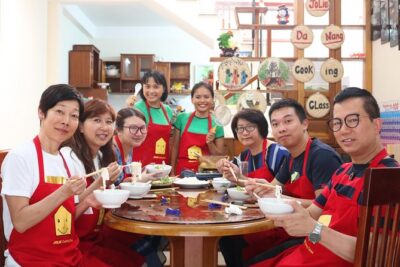
Da Nang Cooking Class with Coffee Tasting and Market Visit
Read our review →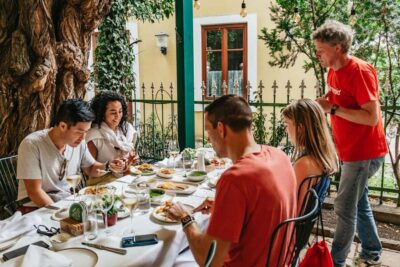
Hungry in Vienna? A Food Lover’s Coffee & Market Walk
Read our review →
Delicious Doughnuts & Tea: Small-Group Borough Market Experience
Read our review →
From rick’s coffee to local markets authentic casablanca
Read our review →
Vienna Eats: Private Foodie Walk with Coffee & Markets
Read our review →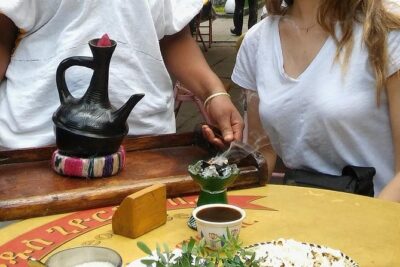
Ethiopian Culinary Tour – Market, Food, Coffee Ceremony & more
Read our review →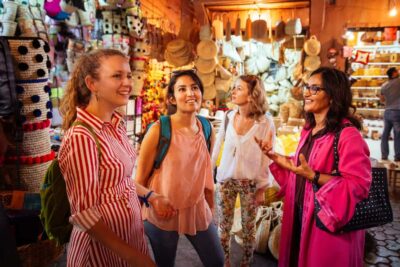
Private Souks Tour with Tea and Traditional Snack
Read our review →Browse the lists this tour appears in