
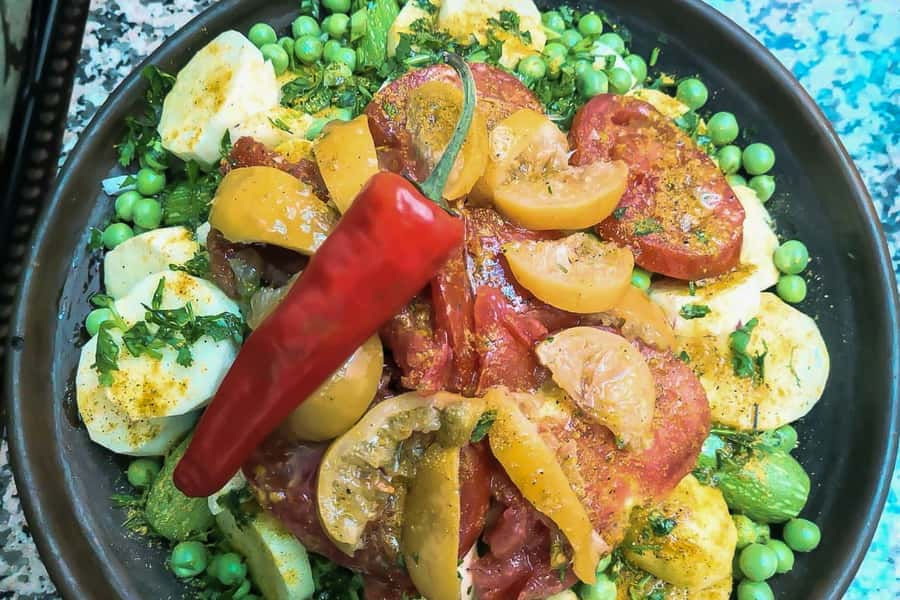
Review · MARKET AND COOKING CLASS TOURS
Marrakesh: Private Cooking Class & Local Market Shopping
The best part of this Marrakesh experience is that the meal starts in the market. You walk through a local souk, choose produce and spices, then carry those ingredients into a private cooking session at a riad. It gives you a useful look at Moroccan food beyond the restaurant table.
I like the hands-on tagine lesson and the chance to learn the Arabic names of everyday ingredients. I also like the personal scale: this is a private group, and the meal is cooked and served in a home-style setting rather than a large school.
The main caution is timing. The stated duration is four hours, but one participant found the actual experience closer to three to three and a half hours, and another booking had confusion over whether the class focused on tagine or couscous. Confirm the dish and schedule before you go.
Key points at a glance
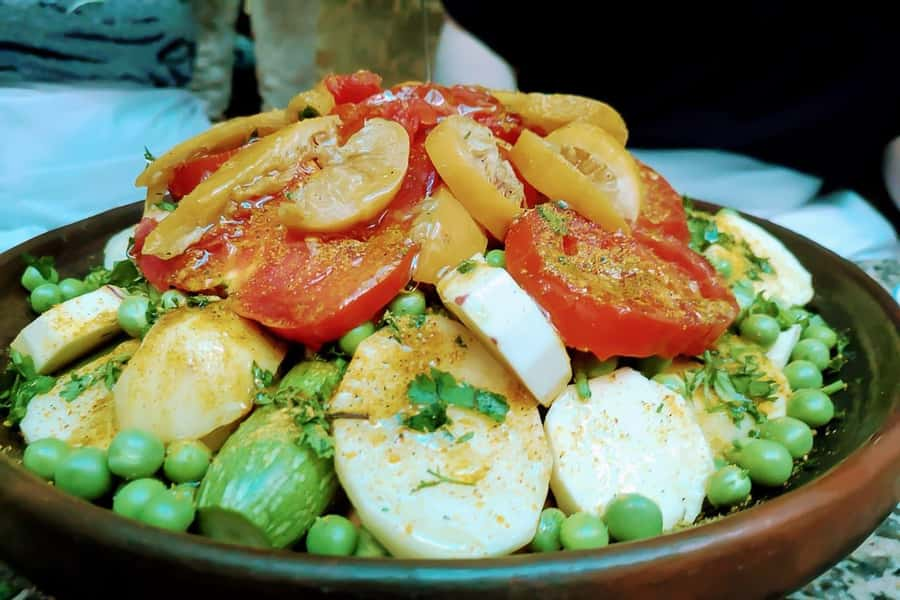
- Market-first cooking: Shop for meat, vegetables, herbs, and spices before you cook, so the lesson connects ingredients with the finished dish.
- Private group format: You cook in a smaller setting rather than joining a large public class.
- Tagine is the main lesson: You learn how to season and cook a traditional Moroccan tagine, then eat it for lunch or dinner.
- Local food vocabulary: The guide introduces Arabic names for common ingredients and spices used in Marrakesh kitchens.
- Home-style welcome: The class takes place at a riad, with a warm family atmosphere reported by several participants.
- Recipes and photos included: You receive recipes after the workshop, and photography is part of the package.
Starting at Café France in Djemaa El-Fna
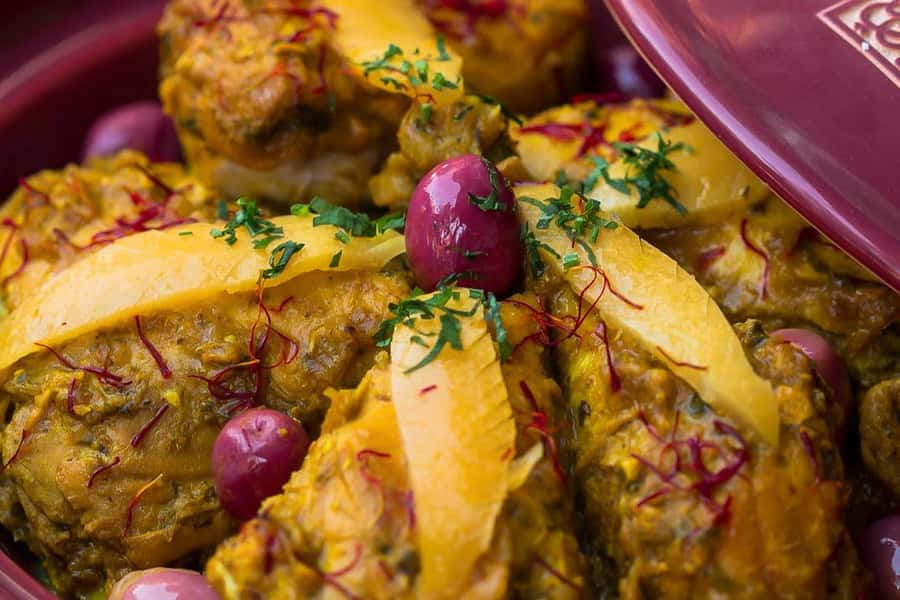
Your meeting point is outside Café France, a three-story café on the right side of Djemaa El-Fna as you enter through the square’s main entrance. This is a useful landmark, but Djemaa El-Fna can be confusing, especially if you are arriving after dark or during a crowded period.
Give yourself a little extra time to find the café. The activity includes a local English or French-speaking guide, and the guide also speaks Arabic. You should expect the guide to lead you from the square toward the market and later to the cooking location.
The private-group format matters here. Instead of being folded into a large class, you have a guide and cooking hosts focused on your party. That does not guarantee that every person will chop, season, and stir at every stage, but it gives you a better chance to ask questions and request a vegetarian meal if needed. One participant specifically had a vegetarian choice accommodated.
The experience is listed at four hours. That makes it a half-day activity, but do not plan a tightly timed museum visit immediately afterward. A participant found the total experience lasted about three to three and a half hours, while another comment raised confusion about a five-hour class and the number of hours needed for tagine or couscous. The safest approach is to confirm the start time, expected finish, and exact dish before booking.
More Market and Cooking Class Tours in Marrakech
- Marrakech: Traditional Moroccan Cooking Class & Market Visit
★ 4.8 · 1,861 reviews - Marrakech: Moroccan Cooking Class with Market Visit and Meal
★ 4.9 · 347 reviews - Edgy 8 Dish Private, Fusion Cooking Class, Menu Plan, Market
★ 4.9 · 31 reviews
Choosing ingredients in a Marrakesh souk
The market visit is more than a shopping errand. You see the raw materials of Moroccan cooking before a chef turns them into lunch or dinner. The group looks for meat, vegetables, herbs, and spices, with the guide explaining their names and uses.
This is where the experience can be most useful for a first visit to Marrakesh. You begin to connect food with place. Taliouine saffron, Meknes mint and olives, and Fez oranges and lemons are among the local products discussed. You also hear how spices have reached Morocco through long-established trade routes.
I like this part because it gives you a way to read a Moroccan menu later. Instead of seeing tagine as one mysterious dish, you start to recognize the parts: the herbs that bring freshness, the spices that build warmth, and the produce that provides sweetness or acidity.
The market portion may not be as detailed as a dedicated food tour. One participant found the shopping disappointing because an interpreter handled much of the communication, leaving less direct explanation from the cooking instructor about ingredient quality, price, and selection. If you want a serious lesson in bargaining or produce grading, this may feel light.
You can make the most of it by asking direct questions. Ask what makes a good herb bundle, why one spice costs more than another, and which ingredients are essential to the dish. If the conversation passes through an interpreter, keep your questions short and specific. That usually works better than expecting a long explanation while the group is moving through the souk.
Learning the Arabic names for spices and produce
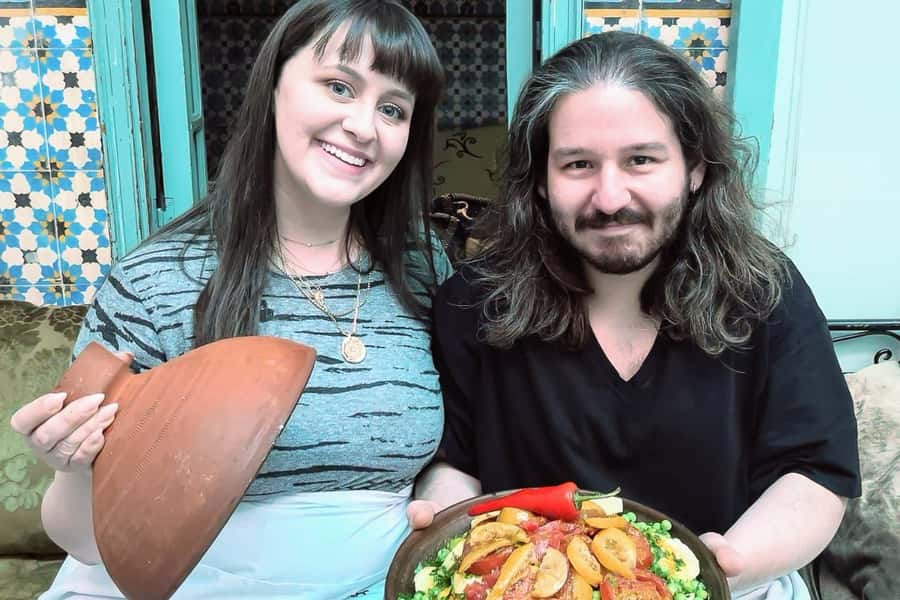
The class includes Arabic words for common ingredients and spices. This is a small feature, but it can be one of the most practical. Food vocabulary helps you recognize what you are buying, ask for something in a market, and understand the language used around a Moroccan kitchen.
You will also hear about the place of herbs and spices in Moroccan cooking. The aim is not simply to list seasonings. It is to show how cooks use them to shape a dish. A tagine can be fragrant without being fiery, and the lesson helps separate Moroccan seasoning from the idea that every North African dish must be hot.
I would bring a small notebook or use your phone after the shopping stop. Write down the Arabic names, especially if you plan to visit more markets or buy spices to take home. The recipes sent after the workshop will help, but your own notes can preserve the connection between the market ingredient and the finished meal.
The languages offered are Arabic, English, and French. If you speak English or French, you should be able to follow the main instruction. Still, the quality of interpretation can affect how much you learn during the market section, so ask early if you want translations of specific cooking terms.
Cooking tagine in a private Marrakesh riad
After shopping, you move to the riad for the hands-on cooking workshop. The central lesson is traditional Moroccan tagine. A professional chef and local cooking hosts guide you through the preparation, seasoning, and cooking process.
The class is not just a demonstration followed by a plate placed in front of you. The activity is designed for participation. You handle ingredients and learn how the dish is put together, although the amount of work each person gets may vary. One participant found the session very hands-on but noted that not everyone could take part fully in every activity.
If you are traveling with a family or a group of friends, decide beforehand how you want to share the work. One person might prepare vegetables while another handles spices or bread. Asking the guide to rotate tasks can help everyone feel involved.
The riad setting adds character. Several participants appreciated cooking in a private home with a welcoming family, and one person described learning to bake bread, prepare Moroccan salad, and season and cook a tagine. Those extra skills are not guaranteed as a fixed part of every session, but they show how the class can go beyond the headline dish.
The atmosphere may also depend on who is present. One participant enjoyed several hours with the cooking women and guide, then felt the mood changed when the owner joined during the meal. That is a useful reminder that this is a real home-style setting, not a polished stage show. You may get warmth and personal contact, but the rhythm can be less controlled than in a formal cooking school.
More Market and Cooking Class Tours in Morocco
- Marrakech: Cooking Class and Market Visit
★ 4.4 · 5 reviews - Moroccan Cooking Class & Marrakech Market Visit with Chef Khmisa
★ 5.0 · 1,504 reviews - Moroccan Cooking Class with Market Visit and Meal
★ 5.0 · 196 reviews - Fez: Souk Tour and Traditional Home Cooking Class
★ 4.9 · 186 reviews
Eating what you prepared
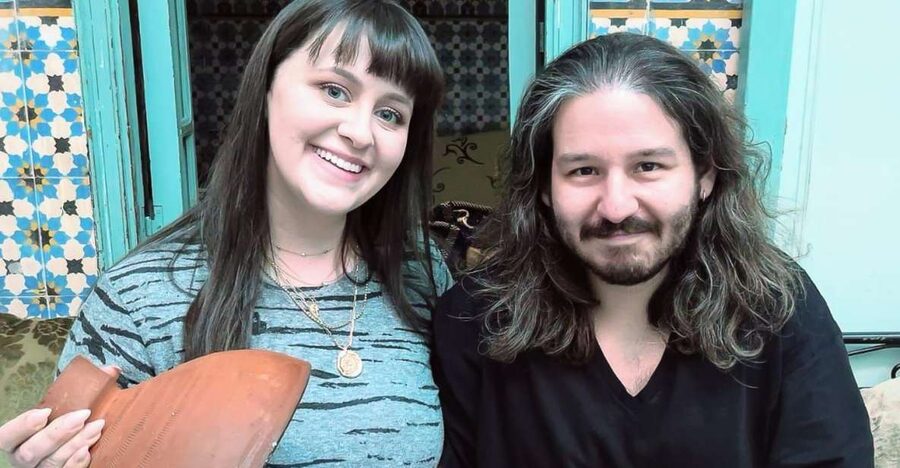
At the end, you sit down to eat the tagine. This is the payoff, but it is also part of the lesson. You taste the balance of the spices after seeing the ingredients at the market and working through the preparation.
For many people, this will be the most memorable meal in the activity because you know how it came together. One participant who did not expect to enjoy tagine was surprised by how much they liked it. The class can change the way you judge a dish when you understand its seasoning and cooking method.
Lunch or dinner is included, depending on the start time. The food is prepared for your group, and the experience has accommodated vegetarian requests in at least one case. If you have dietary restrictions beyond that, ask before booking. The available information confirms vegetarian accommodation, but it does not promise a full range of special diets.
The social side of the meal can be a strength or a small weakness. You may share food and conversation with the hosts, but the level of interaction can change during the meal. If you want the cooking team to eat with you, ask politely during the session rather than assuming it is part of the format.
Photography is included. That means you can focus on cooking instead of trying to document every step yourself. You should still ask before photographing people inside a private home, particularly during the more personal parts of the visit.
What the $81 price really buys
At $81 per person, this is not the cheapest way to eat in Marrakesh. You can find a restaurant meal for much less. The value comes from combining a private guide, market shopping, a cooking lesson, a prepared meal, photography, and recipes sent after the workshop.
I think the price is reasonable if you care about learning a skill and meeting local hosts. The market visit gives context, while the cooking session gives you something to repeat at home. You are paying for access and instruction, not just food.
The value is weaker if you mainly want a long, technical cooking class. The schedule may run shorter than expected, and the market explanations may be limited by interpretation. You should also confirm if the class is focused on tagine or includes couscous, since one booking raised that exact question.
This experience makes the most sense early in your Marrakesh stay. You can use the market knowledge during later shopping, and you have time to try the recipe again at home after the recipes arrive. It is also a good rainy-day or hot-afternoon choice because the activity shifts from outdoor streets to an indoor riad.
The flexible booking terms help with planning. You can cancel up to 24 hours before the activity for a full refund, and you can reserve now while paying later. Check the available start times before committing, since the activity lasts four hours on paper and includes a meal at the end.
Who should book this cooking class
I would recommend it to couples, families, and small private groups who want an activity with food at its center. It suits you if you like meeting local people, asking questions, and doing some of the work yourself.
It is also a good choice if you want more than a standard restaurant meal. The market walk and Arabic food vocabulary give the experience a local frame, while the riad provides a personal setting.
You may want to choose another class if you need exact professional instruction for every participant, a fixed five-hour schedule, or a detailed lesson on bargaining and ingredient prices. The format appears friendly and practical, but not every part is equally formal.
The experience can work for vegetarians, based on one accommodated request, but you should state your needs in advance. The available information does not confirm how other dietary requirements are handled.
My verdict on this Marrakesh food experience
I like the idea of this activity because it joins three things that belong together: the souk, the kitchen, and the table. You see the ingredients, learn how they are used, and eat the finished dish. The strongest points are the private setting, the warm home-style contact, the tagine lesson, and the recipes you can use later.
The weaknesses are practical rather than dramatic. The shopping explanations may be uneven, not every participant may get equal kitchen time, and the actual duration may fall short of the expected schedule. Ask about the exact dish, the finish time, and how the cooking tasks will be shared.
Book it if you want a friendly introduction to Moroccan food and value personal contact more than a tightly timed culinary course. Skip it if your main goal is intensive chef training or a detailed souk-shopping lesson. At $81, it earns its price when you treat it as a half-day cultural meal and cooking experience, not simply a tagine dinner.
FAQ
Where does the activity meet?
It meets outside Café France in Djemaa El-Fna. Enter the square through the main entrance, and the three-story café is on the right.
How long does the cooking experience last?
The stated duration is four hours. One participant reported a total experience of about three to three and a half hours, so you should confirm the expected finish time.
What dish will I learn to cook?
The main advertised dish is a traditional Moroccan tagine. One participant noted uncertainty about whether the class would involve tagine or couscous, so confirm the exact dish before booking.
Is the activity private?
Yes. It is offered as a private group experience.
What languages are available?
The guide and activity support Arabic, English, and French.
Is a meal included?
Yes. Lunch or dinner is included, depending on the activity time, and you eat the food prepared during the class.
Can I request vegetarian food?
Vegetarian food has been accommodated during the experience. You should make your request before the class.
What is included after the class?
Recipes are sent after the workshop. Photography is also included, along with the local guide and the meal.
More Market Shopping Tours in Morocco
- Marrakech: Exclusive Shopping Tour Through the Souks
★ 5.0 · 5 reviews - Marrakech Private Souks Shopping Tour
★ 4.4 · 4 reviews - Marrakesh: Guided Souk Shopping Tour with a Local Guide
★ 4.9 · 651 reviews - Shopping in the Souks of Marrakech Private Tour
★ 5.0 · 620 reviews
More Market Shopping Tours in Marrakech
- Marrakech: Exclusive Private Shopping Adventure in The souks
★ 4.9 · 77 reviews - Marrakech & Souk Shopping Tour.
★ 4.8 · 62 reviews - Marrakech: Hidden Souks Shopping Tour with Private Guide
★ 4.1 · 53 reviews - Marrakech: Medina Souks, Hidden Markets and Shopping Tour
★ 4.8 · 33 reviews
Just added around Marrakesh
- Souks tour of Marrakech ( 3 hours )★ 5.0 · 5 reviews
- Marrakech: Hidden Souks Shopping Tour with Private Guide★ 4.1 · 53 reviews
- Edgy 8 Dish Private, Fusion Cooking Class, Menu Plan, Market★ 4.9 · 31 reviews
- Marrakech: Half-Day Medina Markets Tour★ 4.5 · 11 reviews
- Marrakech: Private Souks Tour with Tea and Traditional Snack★ 4.6 · 33 reviews
- Marrakech: Vibrant Souks, Local Artisans & Medina Experience★ 4.5 · 66 reviews
- Marrakech Private Souks Shopping Tour★ 4.4 · 4 reviews
- Marrakech: Bahia Palace, Madrassa & Souks Guided Tour★ 4.8 · 47 reviews
Market and Cooking Class Tours, compared.

Hanoi Cooking Class: Culture, Local Market & Meaning CSR Impact
Read our review →
5 Traditional Dishes Hanoi Cooking Class with Market Trip
Read our review →
Cooking Class and Lunch at a Tuscan Farmhouse with Local Market Tour from Florence
Read our review →
Cooking Class, Market & Thai Herbs Garden Tour
Read our review →
Authentic Cooking Class with Market & Farm Visit
Read our review →
Paella Cooking Experience & Boqueria Market Tour
Read our review →
Cooking Class Hoi An:Local Market, Basket Boat, Fishing & Cooking
Read our review →
Hoi An Cooking Class(Market,BasketBoat Crabfishing&Cooking Class)
Read our review →Browse the lists this tour appears in