
Review · MARKET AND COOKING CLASS TOURS
Ubud: Cooking Class with Transfers and Optional Market Visit
Ubud’s cooking classes are at their best when food opens the door to daily life. Here, you may visit a local market, learn why certain spices and offerings matter, then cook in a family home or outdoor kitchen surrounded by tropical greenery. Some sessions prepare close to 10 dishes, including satay, curry, soup, sambal, tempeh, and pancakes.
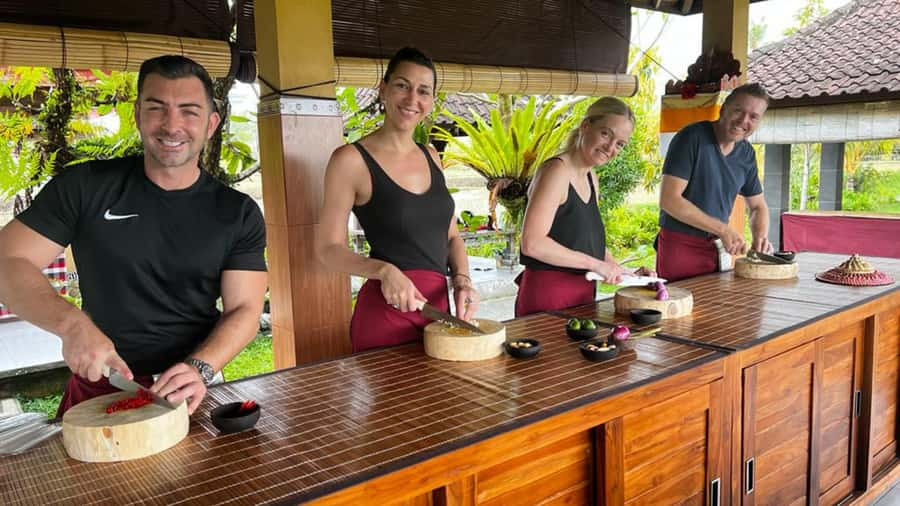
I like the small groups of up to 10, since the chef can give you a real task instead of leaving you to watch from the back. I also like the cultural side: guides such as Eri, Made, and Madi explain Balinese family life, religion, architecture, rice, and food traditions as you work.
The main thing to consider is timing. The market visit is available only with the morning class, while the afternoon and evening options go straight to cooking. Pickup covers Ubud Center, but Sebali and Keliki require an added 50,000 Indonesian rupiah per person.
Key points to know before booking
- Morning market visit: Shop for fruit, vegetables, herbs, and spices with your guide before cooking.
- Hands-on class: You chop, grind, mix, season, and cook rather than simply watch a demonstration.
- Cultural setting: Classes may take place in a family compound or outdoor kitchen, with lessons about Balinese customs and home life.
- Generous meal: You sit down to eat the dishes you prepared, often as a shared or buffet-style meal.
- Good value at $21: The price includes the class, guide, meal, and Ubud Center transfers when that option is selected.
- Flexible for diets: Vegetarian alternatives and substitutions for some allergies or intolerances have been provided.
Why this Ubud cooking class feels more personal
Many food classes teach recipes. This one aims to show you the world around the recipes.
You begin with a local chef and, on the morning option, a market visit. That matters because Balinese cooking depends on fresh produce, spice pastes, coconut, rice, herbs, and careful preparation. Seeing the ingredients before they reach the kitchen gives you a clearer sense of what you are handling later.
The class is also tied to culture. Guides have explained Balinese offerings, family compounds, Hindu customs, rice growing, and local architecture. In one session, participants learned to make a small canang offering, the palm-leaf arrangement used in daily religious practice. This is a useful addition because it connects food with the same household traditions you see across Bali.
You should not expect a formal culinary school with restaurant-style instruction. The appeal is more direct and local: roll up your sleeves, work as a team, and learn how Balinese families use ingredients and cooking methods. The tone is relaxed, friendly, and practical.
More Market and Cooking Class Tours in Indonesia
- Balinese Ubud cooking school (9 Dish Cooking and Market Tour)
★ 5.0 · 540 reviews - Ubud: Balinese Cooking Class and Market Tour
★ 4.8 · 531 reviews - Balinese Cooking class with traditional morning market visit
★ 5.0 · 161 reviews
The morning market visit in Ubud
Choose the morning class if the market is important to you. After pickup from your Ubud Center hotel, you meet your guide and visit a local market, where you can examine the produce used in the class.
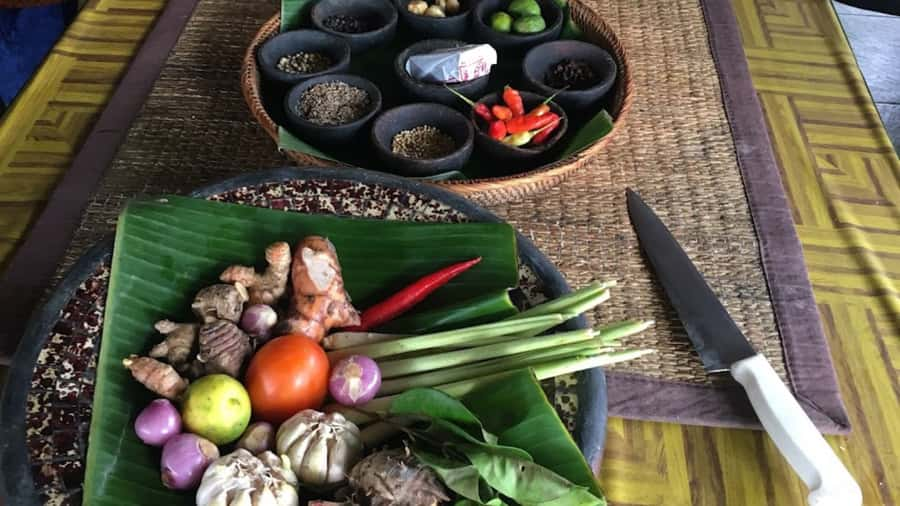
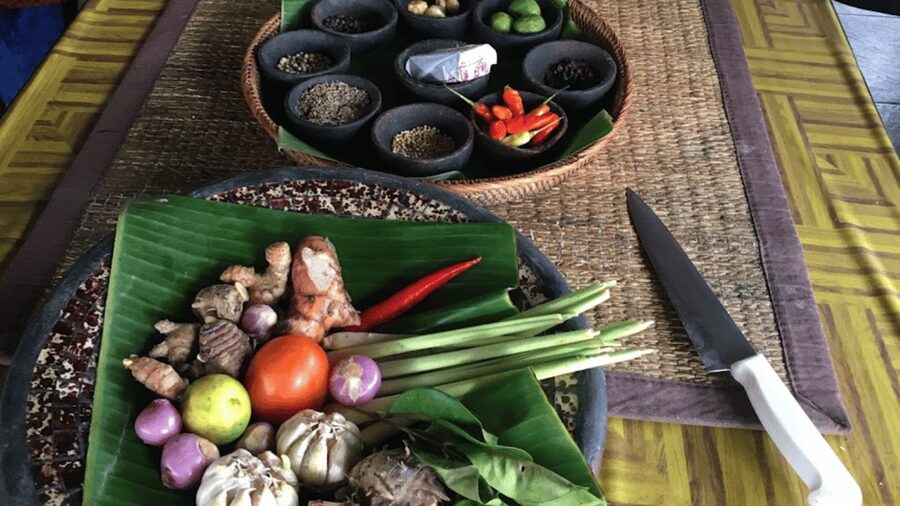
The guide points out local fruits, vegetables, herbs, and spices, then explains how they fit into Balinese cooking. You may also learn about the connection between food, Hindu practice, and everyday household life. This is more useful than wandering through market stalls without context, especially if you cannot identify galangal, turmeric, chilies, or other ingredients on your own.
The market is also a good place to ask questions. You can learn what is seasonal, how ingredients are prepared, and why spice combinations taste so different from the curries and sauces served outside Indonesia. The guide helps turn a visual stop into a short lesson.
There is one practical limitation. The market visit is offered with the morning option only. The afternoon and evening classes skip this part, so compare the starting time with your priorities before paying. If you want the market, local produce, and the full cultural introduction, choose morning.
Cooking in a family compound or outdoor kitchen
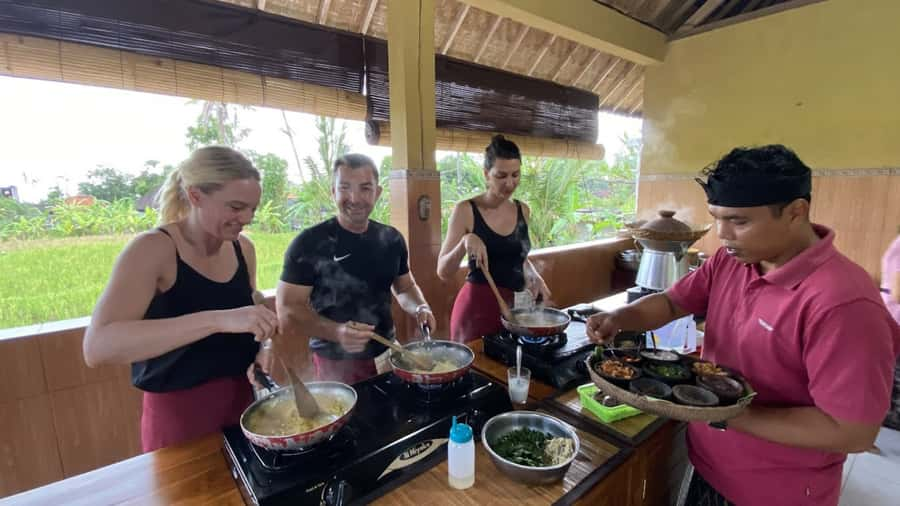
After the market, you travel to the cooking location. Descriptions of the setting vary by session, but the class takes place in a welcoming local environment, often described as a family compound or outdoor kitchen among greenery and rice-field views.
That setting gives the experience much of its character. You are not just standing at a counter in a downtown studio. You may see traditional architectural details, hear about family life, and get a sense of how food fits into the home. Some sessions have also included friendly family members and even dogs nearby.
The cooking area is set up for group work, and participants share tasks. The chef usually explains each step before the group moves on. You may chop vegetables, grind spices, mix ingredients, prepare satay, or help with a sauce. Even though the class cooks together, the instruction is structured so you can follow the recipes from start to finish.
This team approach works well for couples, families, and solo visitors. You do not need advanced cooking skills. Beginners can take part without feeling rushed, while confident cooks can ask about spice balance, preparation methods, and substitutions.
One tradeoff is that you may not prepare every dish entirely by yourself. In a group class, the work is divided. That means you get a wider range of dishes and a smooth meal, but less individual control than in a private lesson.
What you may cook, from satay to sweet tempeh
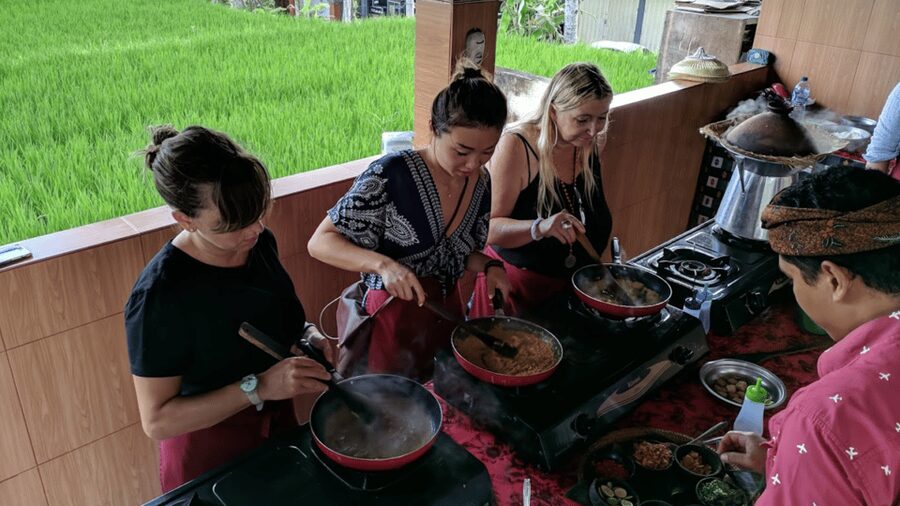
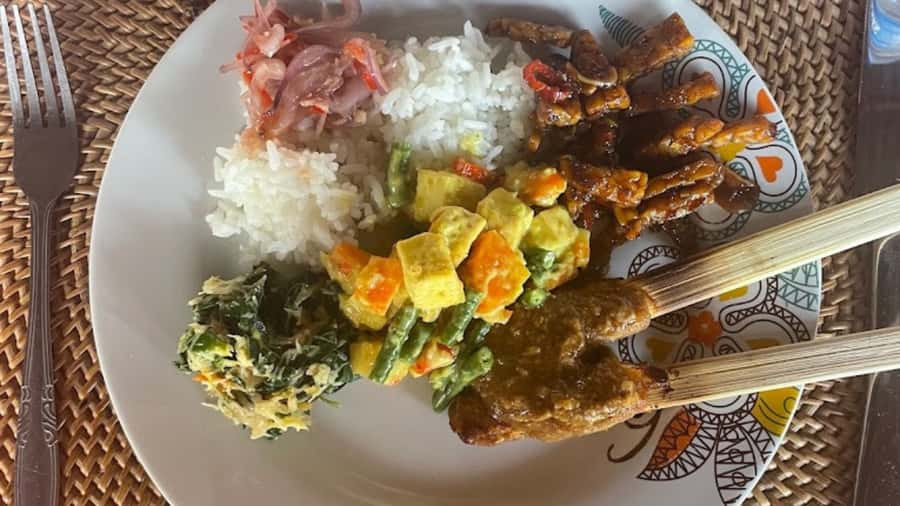
The exact menu can vary, but the class focuses on traditional Balinese dishes and may include fragrant curries, savory satays, soup, sambal, tempeh, vegetables, rice, and dessert. Several sessions have prepared around 10 dishes, creating a large shared meal at the end.
The variety is one of the strongest parts of the experience. You are not learning one curry and calling it a day. You get to see how different textures and flavors work together: spicy sambal, grilled or skewered foods, coconut-based dishes, fresh vegetables, and something sweet to finish.
Tempeh has been a favorite for some participants, especially sweet tempeh. Pancakes have also been popular with children and families. If you are curious about recreating the meal at home, the kitchen team may provide a small recipe book, and the activity includes a certificate of completion.
The cooking process also teaches technique. You learn how to blend spices, chop ingredients, and build flavor rather than simply follow a printed list. Some classes include older methods such as grinding ingredients by hand or discussing rice preparation.
Do not expect every dish to match restaurant food in heat or sweetness. You are working with local seasonings and group preferences, so the experience is partly about learning how the flavor is built. Ask questions as you go, especially if you want to make the recipes at home.
More Market and Cooking Class Tours in Ubud
- PRIVATE Ubud Market Tour & Balinese Cooking Class with Putu
★ 5.0 · 125 reviews - Jambangan bali cooking class with morning market tour
★ 5.0 · 35 reviews - Balinese cooking class/Go shopping at the market, cook, eat
★ 5.0 · 12 reviews
The cultural lessons are more than decoration
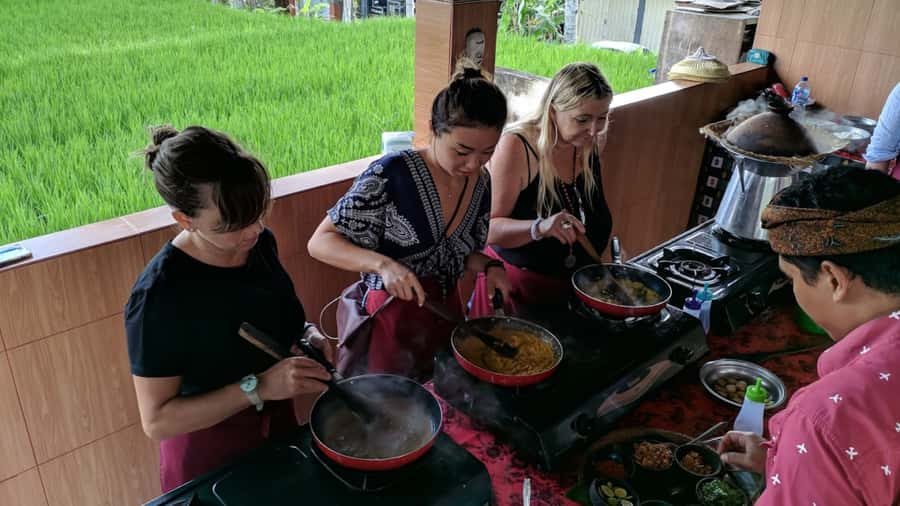
The strongest classes add cultural meaning without turning the cooking into a lecture. Guides have discussed Balinese religion, the role of offerings, local architecture, rice cultivation, family structure, and the way food is prepared at home.
This makes the class useful even if you have cooked Indonesian food before. You begin to understand why a dish belongs in a certain setting, how ingredients relate to local agriculture, and why offerings appear beside homes and temples.
Eri has been praised for combining cooking instruction with stories about Balinese history and family life. Made has been described as calm, clear, and easy to follow. Madi has led market tours and explained the finer points of Balinese ingredients. The guide assigned to your session may differ, but the experience is built around local instruction rather than a generic cooking demonstration.
You may also hear about rice fields and the process of growing rice. That short agricultural context helps explain why rice is more than a side dish in Bali. It is part of the island’s work, meals, rituals, and community life.
The shared meal at the end
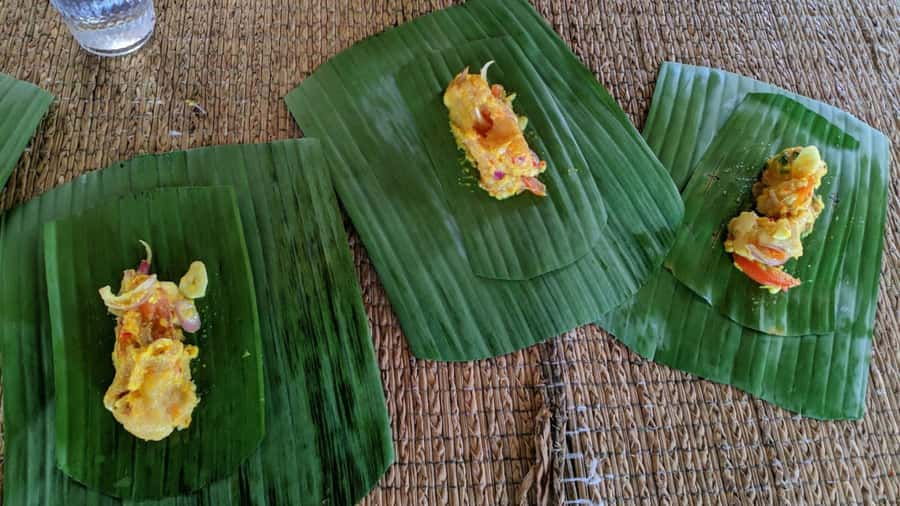
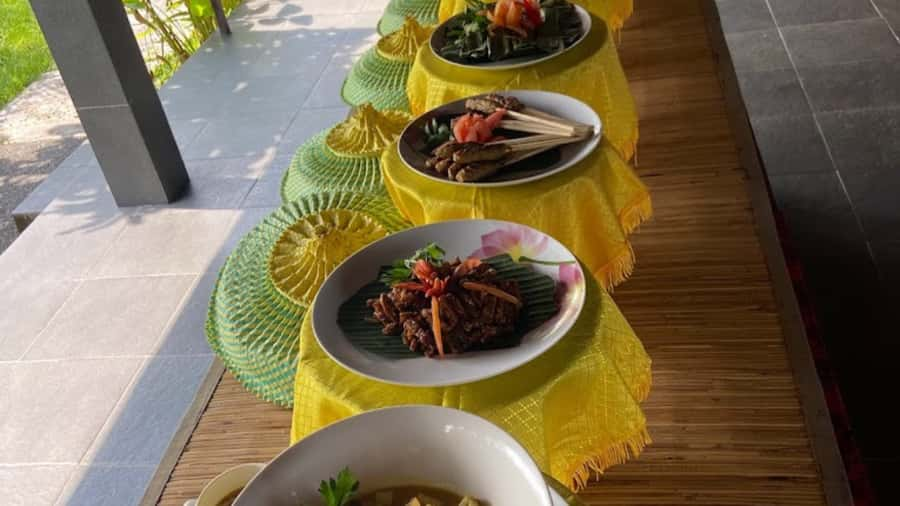
Once the food is ready, everyone sits down to eat. The meal is often served buffet style, with the group sampling the dishes prepared during the class.
This is where the work pays off. You taste the sambal after learning how it was made, try the satay you helped prepare, and compare the different spice pastes and sauces. The meal is not an extra snack added to the schedule. It is the central reward and a chance to see how all the separate tasks fit together.
The shared table also makes the class social without forcing you into awkward games. Groups often include couples, families, and solo visitors. Since everyone has cooked together, conversation tends to come naturally.
The class is suitable for families with teenagers, and dietary needs can be discussed. Vegetarian alternatives have been offered, along with substitutions such as rice flour for pancake preparation and options for people avoiding fish. Still, you should state your needs when booking or before the cooking begins, since the available alternatives may depend on the menu.
Timing, transfers, and the $21 price
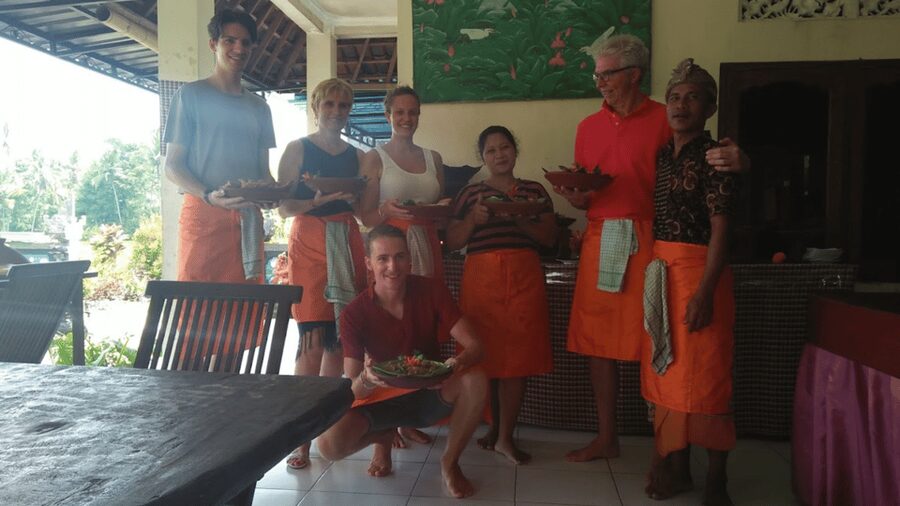
The experience lasts about two to three hours. That is long enough for market shopping, preparation, cooking, and a full meal, but short enough to fit into a busy Ubud stay.
At $21 per person, the value is strong if you use the included elements. The price covers the cooking class, guide, meal, and hotel pickup and drop-off within Ubud Center when that option is selected. The morning option adds the market tour. You are also getting a cultural introduction and, in some sessions, a recipe book and certificate.
Transfers matter in Ubud because roads can be slow, especially at night. For evening arrangements, the meeting point is a parking field because of traffic. Read the pickup details carefully and wait in your hotel lobby if pickup is selected. Sebali and Keliki are outside the standard area and carry an additional 50,000 rupiah per person.
You can also make your own way to the cooking location. One participant reached it by scooter, with parking available. The exact meeting instructions depend on the option you choose, so do not assume every booking includes door-to-door transport.
The reservation terms are flexible: you can reserve now and pay later, and cancellation is free up to 24 hours before the activity for a full refund. The tour is conducted in English, with a live English guide and an English audio guide included.
Who will enjoy this class most
I would choose this experience if you want more than a restaurant meal but do not want a full-day food tour. The two to three hour format fits well between temple visits, walks through Ubud, and evening plans.
It is especially suited to:
- First-time visitors who want an introduction to Balinese food
- Couples looking for a shared activity
- Families with teenagers
- Solo visitors who enjoy meeting a small group
- Home cooks who want recipes and preparation ideas
- People interested in Hindu customs, offerings, and family life
- Vegetarians or people with some dietary restrictions, provided they explain their needs early
You may want something else if you dislike group cooking, need a private class, or want a highly technical lesson focused on knife skills and restaurant methods. This is a cultural food activity first, not professional chef training.
My practical advice before you go
Choose the morning session if the market and ingredient lesson appeal to you. Choose afternoon or evening if you prefer a simpler schedule and want to focus on the cooking and meal.
Wear clothes suitable for food preparation and bring an appetite. You will be handling ingredients, sharing kitchen tasks, and eating several dishes, so comfortable clothing is more useful than anything dressy.
Ask who your guide is when you arrive, then use the cultural portion well. If Eri, Made, or Madi leads your class, ask about the ingredients, the offering ceremony, or how the dishes are adapted at home. The more questions you ask, the more you get from the session.
Do not judge the class only by the number of dishes. Ten dishes sounds impressive, but the real value is learning how the spice mixtures, cooking methods, and cultural customs connect. The recipe booklet, when provided, is a helpful reminder, but the explanations are what make the meal easier to recreate.
Should you book this Ubud cooking class?
At $21, this is an easy recommendation for most people who want a hands-on introduction to Balinese food and culture. The market visit, local setting, generous meal, small group, and Ubud Center transfers make it good value.
Book the morning option if you want the fullest experience, including the market. Pick afternoon or evening if you mainly want to cook and eat. I would skip it only if you want a private culinary lesson or have no interest in group activities.
For everyone else, this is a practical way to spend three hours in Ubud, with food on the table and a better understanding of the island behind it.
FAQ
How much does the Ubud cooking class cost?
The listed price is $21 per person.
How long does the cooking class last?
The activity lasts approximately two to three hours.
Is the market visit included with every class?
No. The market visit is available with the morning option only.
Are hotel transfers included?
Hotel pickup and drop-off are included for the morning or afternoon option when staying in Ubud Center. Pickup is optional.
Is there an extra charge for Sebali or Keliki?
Yes. The additional charge is 50,000 Indonesian rupiah per person.
How many people are in the group?
The class is limited to 10 participants.
What language is the class conducted in?
The live guide speaks English, and an English audio guide is included.
Is a meal included?
Yes. You eat the meal prepared during the cooking class.
Can people with dietary requirements join?
Vegetarian alternatives and some substitutions for allergies or intolerances have been provided. Tell the provider about your requirements in advance.
What happens if I need to cancel?
You can cancel up to 24 hours before the activity for a full refund. You can also reserve now and pay later.
Just added around Ubud
- Jambangan bali cooking class with morning market tour★ 5.0 · 35 reviews
- Bali: Safari Zoo and Ubud Palace and Market Day Tour★ 4.7 · 6 reviews
- Bali: Ubud Monkey Forest, Coffee Plantation, and Market Tour★ 5.0 · 5 reviews
- Balinese cooking class/Go shopping at the market, cook, eat★ 5.0 · 12 reviews
- Bali – Ubud Night Market Food Tour★ 3.8 · 14 reviews
- Ubud Day Tour : Waterfall, Temple and Local Night Market Tour★ 5.0 · 17 reviews
- Bali Night Market Experience and Ubud Highlights tour★ 5.0 · 16 reviews
- Bali Food Tour: Savor Street Food and Night Market Adventures★ 5.0 · 46 reviews
Market and Cooking Class Tours, compared.

Hanoi Cooking Class: Culture, Local Market & Meaning CSR Impact
Read our review →
5 Traditional Dishes Hanoi Cooking Class with Market Trip
Read our review →
Cooking Class and Lunch at a Tuscan Farmhouse with Local Market Tour from Florence
Read our review →
Cooking Class, Market & Thai Herbs Garden Tour
Read our review →
Authentic Cooking Class with Market & Farm Visit
Read our review →
Paella Cooking Experience & Boqueria Market Tour
Read our review →
Cooking Class Hoi An:Local Market, Basket Boat, Fishing & Cooking
Read our review →
Hoi An Cooking Class(Market,BasketBoat Crabfishing&Cooking Class)
Read our review →Browse the lists this tour appears in