
Review · MARKET AND COOKING CLASS TOURS
Ubud: Balinese Cooking Class and Market Tour
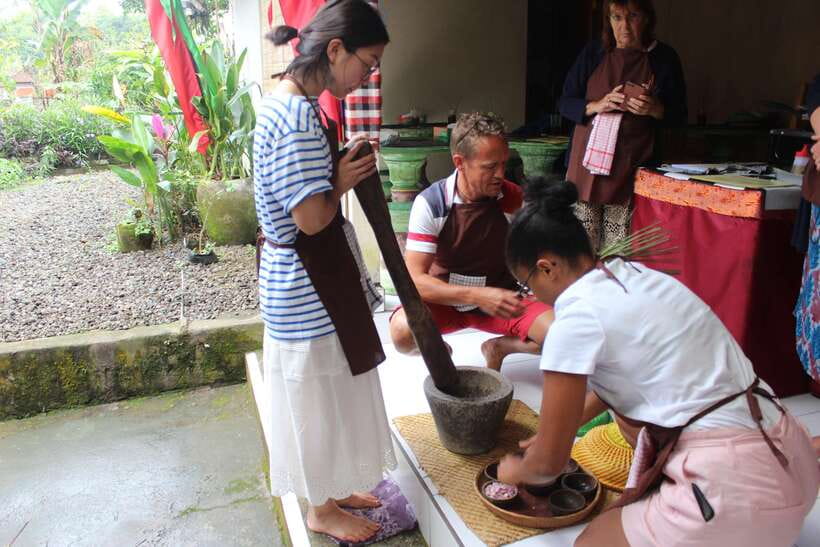
Ubud’s best cooking classes do more than hand you a recipe card. This one begins with a real local market on the morning schedule, then moves into a family compound where you prepare nine Balinese dishes by hand and eat them together. You get a useful look at how food is bought, prepared, and shared in Bali.
I like the generous menu and the patient, hands-on teaching. I also like the small-group limit of 14, though some sessions are much smaller, which gives you more time with the chef. The main catch is simple: the market and rice-paddy visits are morning-only, so an afternoon booking offers a different program.
Key points to know
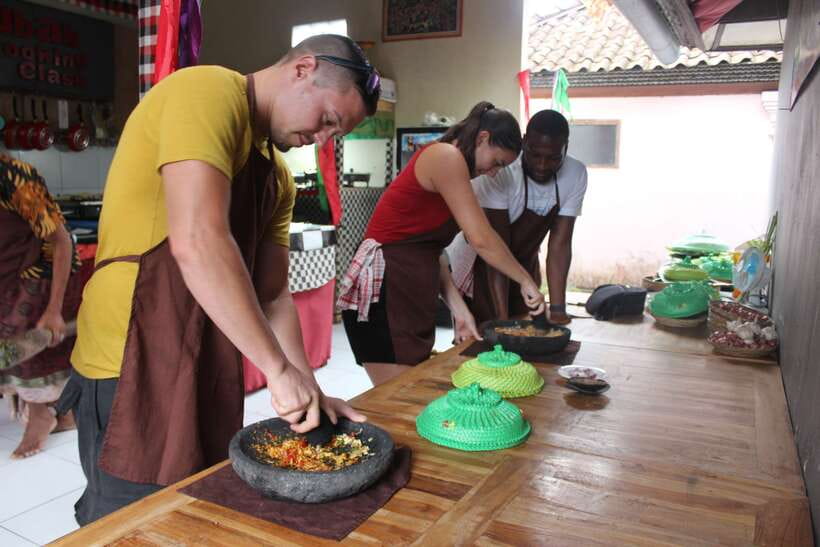
- Nine dishes in one class: You prepare sauces, main dishes, side dishes, and dessert, then eat the full spread together.
- Morning means more than cooking: The market visit and rice-paddy stop add useful context about Balinese ingredients and daily life.
- Afternoon has its own focus: You make a traditional canang offering before cooking and dinner.
- Family-run atmosphere: The class takes place in a local family compound, with guides and cooks such as Putu, Wayan, Tata, and Butu.
- Good value at $23: Pickup in Ubud, instruction, food, a welcome drink, and a PDF recipe copy are included.
- Plan transport carefully: Free pickup and drop-off apply only within the Ubud area, though you can meet the shuttle at Ubud Palace if you stay elsewhere.
Why this Ubud cooking class works
At $23 per person, this is a strong-value half-day outing. You are not paying only for a cooking lesson. The price covers a guide, transport within Ubud, a welcome drink, nine dishes, and a recipe PDF so you can try the food again at home.
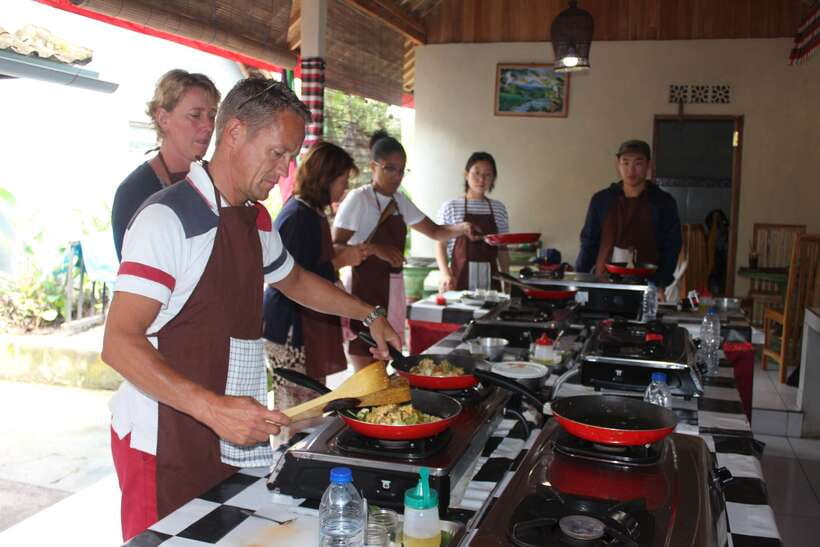
The class also gives you a meal large enough to replace lunch on a morning schedule or dinner on an afternoon schedule. You cook the food yourself, but the staff keeps the process moving and helps when a task gets tricky. That balance matters. You get real participation without being left alone with a pile of unfamiliar ingredients.
The experience has earned a 4.8 rating from 531 reviews, and the strongest praise centers on the same things: friendly staff, smooth organization, tasty food, and the sheer amount of cooking packed into four hours. That consistency is useful when choosing among Ubud’s many food classes.
You should still know what this is not. It is not a private lesson, and the maximum group size is 14. It is not a polished restaurant kitchen built only for tourists, either. The setting is tied to a local family compound, which gives it a more personal feel but may also mean a simpler, less formal setup.
More Market and Cooking Class Tours in Indonesia
- Ubud: Cooking Class with Transfers and Optional Market Visit
★ 4.9 · 824 reviews - Balinese Ubud cooking school (9 Dish Cooking and Market Tour)
★ 5.0 · 540 reviews - Balinese Cooking class with traditional morning market visit
★ 5.0 · 161 reviews
The morning begins at a real local market
Choose the morning class if you want the fuller cultural outing. A guide takes you to a local market where you can see how people buy produce, cooking ingredients, fruit, and items for Hindu offerings.
This is a working market, not a carefully arranged food hall. Expect narrow spaces, dirt floors, flies, tight quarters, and the ordinary mess that comes with selling fresh food. That may be too much for some people, but I see it as part of the point. You get a clearer idea of how food looks before it is washed, chopped, and presented on a plate.
Guides including Putu and Tata have helped guests understand the less familiar fruit and vegetables. Some participants are offered tastes of local fruit and snacks, with comparisons to more familiar foods. This makes the stop useful even if you know little about Balinese cooking.
The market also gives you a practical preview of the class. You see the raw ingredients in their everyday setting before learning how they are combined. If you want a quieter market visit with time to browse, this may feel rushed. The purpose here is orientation and explanation, not shopping.
Wear shoes you do not mind taking through a damp or dirty market. Bring cash if you want to buy something, and keep your camera ready, but be considerate when photographing people and stalls.
Rice paddies add meaning to the meal
The morning program includes a visit to local rice paddies. This is more than a scenic stop. Rice is central to Balinese food and daily life, so seeing the fields helps connect the cooking class to the ingredient that appears again and again on the table.
A guide such as Putu can explain the role of rice from personal experience, including the work involved in maintaining a field. The visit also gives you a short break between the market and the kitchen.
Do not book this as a countryside sightseeing tour. The rice-paddy stop is one part of a four-hour activity, not a long walk or a major rural excursion. Its value comes from context. Afterward, a bowl of rice feels less like a neutral side dish and more like an important part of Balinese life.
The paddies are included only with the morning class. If rice fields matter to you, check the starting time carefully before paying.
Cooking nine dishes by hand
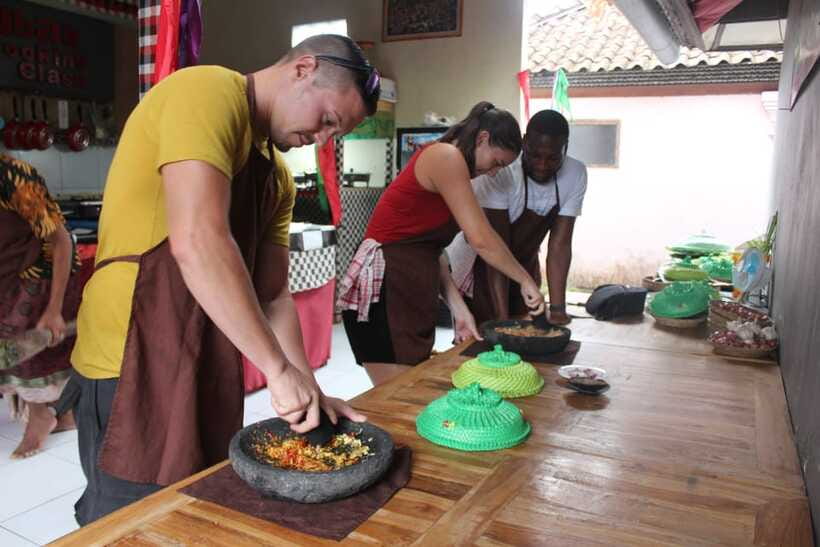
The heart of the activity is the kitchen session. A Balinese chef explains the ingredients and takes you through the preparation of nine signature dishes. The exact menu is not provided in the tour details, so you should not book expecting a particular named dish.
You can expect a mix of sauces, main dishes, side dishes, and a dessert based on the descriptions. The class is designed to keep everyone involved. You chop, mix, season, and prepare the food yourself, with the staff stepping in to assist and prevent small mistakes from slowing the group.
That teaching style receives especially strong praise. You are not simply watching a chef perform while standing at the back of the room. At the same time, you are not expected to have professional cooking skills. This is a good fit if you want hands-on work without pressure.
The class also appears flexible for different diets and preferences. Vegetarian and vegan options are available, and one participant with allergies was given a non-spicy menu. You should still explain allergies and dietary needs when booking or before the class begins. The available information does not promise that every allergy can be accommodated.
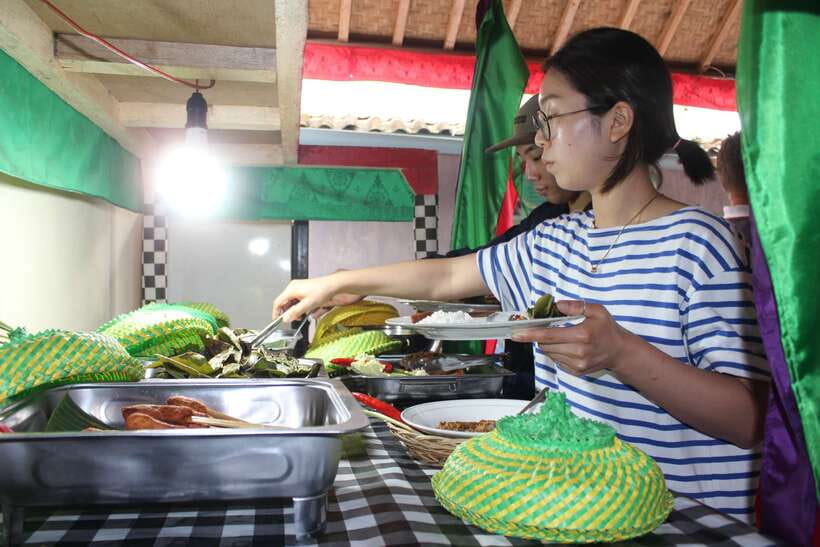
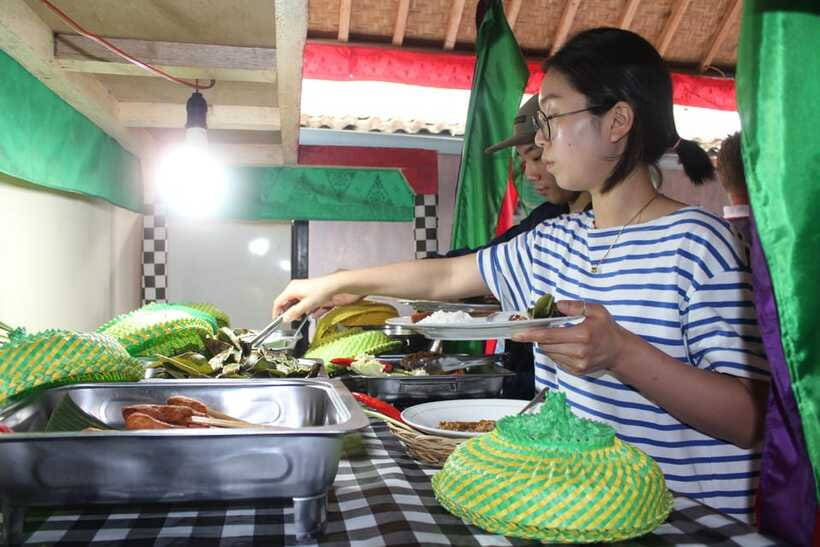
The food quantity is another major advantage. Nine dishes create a substantial shared meal, and the group eats together at the end. If you prefer to sample many flavors rather than spend an hour perfecting one recipe, this format makes sense.
More Market and Cooking Class Tours in Ubud
- PRIVATE Ubud Market Tour & Balinese Cooking Class with Putu
★ 5.0 · 125 reviews - Jambangan bali cooking class with morning market tour
★ 5.0 · 35 reviews - Balinese cooking class/Go shopping at the market, cook, eat
★ 5.0 · 12 reviews
The family compound changes the feel
The cooking takes place inside a family compound rather than a hotel or restaurant. That setting helps the class feel tied to daily Balinese life. You get a glimpse of the kind of home environment where food and ceremonial activities are part of the same household rhythm.
The family-run character is also reflected in the staff. Guides and cooks named in the feedback include Putu, Puta, Wayan, Tata, and Butu. Names and assignments can change, but the teaching team is described as friendly, funny, patient, and willing to involve everyone.
A smaller-than-maximum group can make a big difference. The official limit is 14 people, but some sessions have had only four participants. With fewer people, you get more direct help and more room to ask questions. With a full group, the class should still be manageable, but you may share tasks more often.
This is a social activity. You cook beside other people, then sit down for the meal together. Solo participants can fit in easily, while couples and families also have a natural place in the group. Children under six are not permitted, and the activity is not suitable for wheelchair users.
Choosing between morning and afternoon
The two schedules are not interchangeable.
The morning class includes the local market and rice-paddy visit before the cooking session. Choose it if you want food, farming, and local shopping woven into one outing. It is the better choice for first-time visitors who want more context around Balinese ingredients.
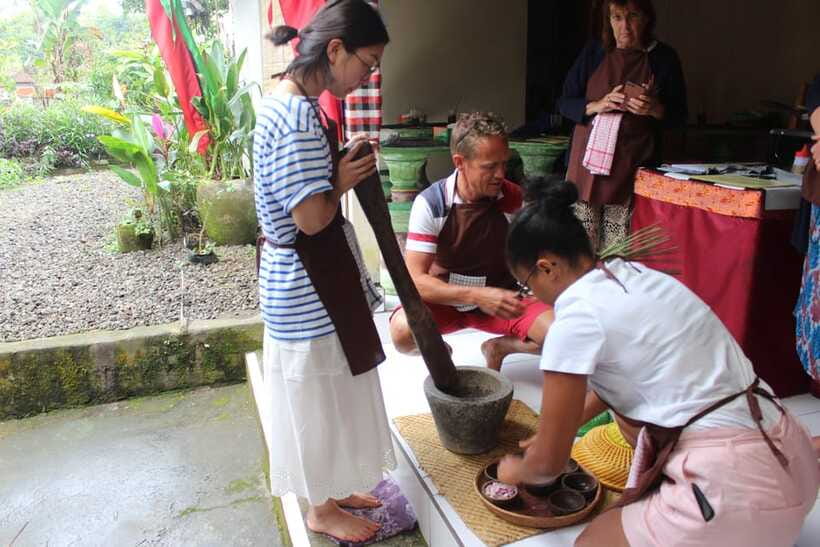
The afternoon class skips the market and paddies. Instead, you learn to make a canang offering, the small Hindu offering used in Balinese daily religious practice, before cooking and sharing dinner. This gives the afternoon option a stronger focus on household ritual and the cultural side of the compound.
If your priority is food alone, either schedule should work. If you want the market and rice fields, do not assume they are included in every booking. The morning-only rule is the most important detail to check.
The four-hour length leaves enough time for instruction, preparation, and eating without turning the activity into a full-day commitment. Starting times vary, so confirm the available slot when you book.
Pickup, meeting points, and practical details
Free pickup and drop-off are offered within the Ubud area. If you stay outside that zone, you may be able to meet the shuttle in front of Ubud Palace or go directly to the class. Do not assume an out-of-area hotel pickup is included.
Communication before pickup is generally clear, and drivers have been described as punctual and helpful. Still, Bali traffic and hotel access can affect timing, so keep a little space around the four-hour schedule if you have another appointment afterward.
The class operates in English, and the guide is live rather than audio-based. Bring a camera, cash, and headphones if useful to you. Cash is handy for personal purchases at the market or drinks, but food, the welcome drink, and the listed class services are included.
Wear comfortable clothes for cooking and shoes suited to a market visit. The details do not specify an official dress code, but a practical outfit is smarter than anything delicate or difficult to clean.
You can cancel up to 24 hours in advance for a full refund, and the reserve-now, pay-later option lets you hold a place without paying immediately. That is useful if your Ubud plans are still shifting.
Who will get the most from it
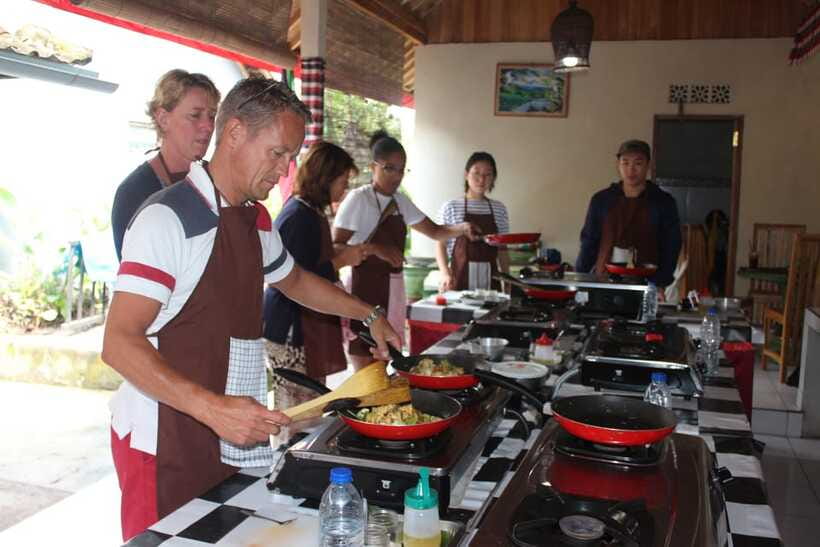
I would recommend this class to anyone who wants more than a restaurant meal. It suits first-time visitors to Bali, curious home cooks, couples, families with older children, and solo participants who enjoy meeting people around a shared table.
It is particularly good for people who value local food in context. The market shows where ingredients begin, the rice fields explain one part of Balinese agriculture, and the compound shows how cooking fits into a family setting.
You may want another activity if you dislike group cooking, working markets, or shared meals. The market can be dirty and crowded, and the class moves through many dishes quickly. It is also not suitable for children under six or wheelchair users.
For serious food students, the class may be broad rather than highly technical. You learn nine dishes in one session, so the emphasis is on participation, flavor, and cultural connection instead of professional knife skills or detailed culinary theory.
Is this Ubud cooking class worth booking?
Yes, if you choose the schedule that matches your interests. At $23, the combination of transport, a guide, nine dishes, a full meal, and a recipe PDF is hard to fault. The strongest reason to book is the balance: you see a working market, visit rice fields, cook with local staff, and eat what you prepare.
Choose the morning option for the most complete experience. Choose the afternoon option if making a canang offering and eating dinner suit your plans better.
I would skip it only if you want a private, highly polished cooking lesson or if the market setting sounds unpleasant. For a friendly, hands-on introduction to Balinese food with a generous meal at the end, this is one of the better-value activities in Ubud.
FAQ
How long does the Ubud cooking class and market tour last?
The activity lasts four hours. Starting times vary, so check availability for the date you want.
What is included in the price?
The $23 price includes Ubud-area hotel pickup and drop-off, a guide, a welcome drink, nine Balinese signature dishes, the applicable market or cultural activity, and a PDF copy of the recipes.
Does every class include the local market visit?
No. The traditional market visit is available only with the morning class.
Are rice paddies included?
Yes, a rice-paddy visit is included with the morning class. It is not part of the afternoon program.
What happens during the afternoon class?
The afternoon class includes cooking, making a canang offering, and dinner together. It does not include the traditional market or rice-paddy visits.
How many dishes will I prepare?
You will prepare nine Balinese dishes. The class is hands-on, and you eat the food together afterward.
Is hotel pickup available outside Ubud?
No. Free shuttle service is limited to the Ubud area. If you stay outside Ubud, you can meet the shuttle at the front of Ubud Palace or go directly to the class.
Is the activity suitable for young children or wheelchair users?
Children under six are not permitted, and the activity is not suitable for wheelchair users.
Can I cancel the booking?
Yes. You can cancel up to 24 hours in advance for a full refund. The reserve-now, pay-later option is also available.
Just added around Ubud
- Jambangan bali cooking class with morning market tour★ 5.0 · 35 reviews
- Bali: Safari Zoo and Ubud Palace and Market Day Tour★ 4.7 · 6 reviews
- Bali: Ubud Monkey Forest, Coffee Plantation, and Market Tour★ 5.0 · 5 reviews
- Balinese cooking class/Go shopping at the market, cook, eat★ 5.0 · 12 reviews
- Bali – Ubud Night Market Food Tour★ 3.8 · 14 reviews
- Ubud Day Tour : Waterfall, Temple and Local Night Market Tour★ 5.0 · 17 reviews
- Bali Night Market Experience and Ubud Highlights tour★ 5.0 · 16 reviews
- Bali Food Tour: Savor Street Food and Night Market Adventures★ 5.0 · 46 reviews
Market and Cooking Class Tours, compared.

Hanoi Cooking Class: Culture, Local Market & Meaning CSR Impact
Read our review →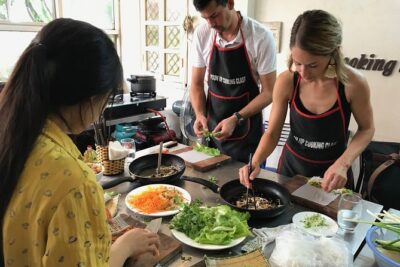
5 Traditional Dishes Hanoi Cooking Class with Market Trip
Read our review →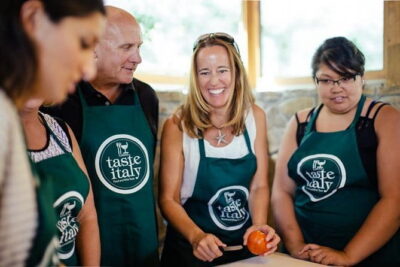
Cooking Class and Lunch at a Tuscan Farmhouse with Local Market Tour from Florence
Read our review →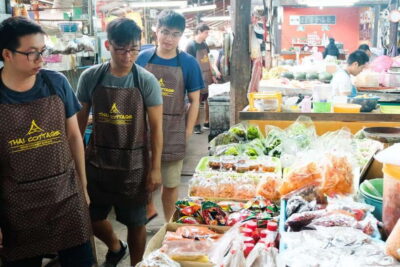
Cooking Class, Market & Thai Herbs Garden Tour
Read our review →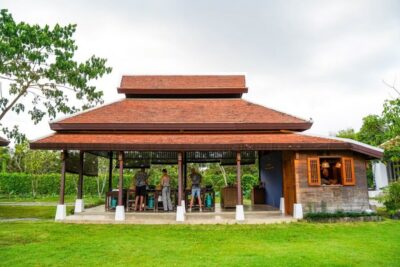
Authentic Cooking Class with Market & Farm Visit
Read our review →
Paella Cooking Experience & Boqueria Market Tour
Read our review →
Cooking Class Hoi An:Local Market, Basket Boat, Fishing & Cooking
Read our review →
Hoi An Cooking Class(Market,BasketBoat Crabfishing&Cooking Class)
Read our review →Browse the lists this tour appears in