
Review · MARKET AND COOKING CLASS TOURS
Balinese Ubud cooking school (9 Dish Cooking and Market Tour)
The best part of this Ubud experience is that it connects the food to its source. You start with a local market visit on the morning option, see rice fields, and then cook nine dishes in a Balinese home-style kitchen. You are not just stirring one curry and calling it lunch.
I like the large menu and the warm teaching style reported from instructors such as Yogi, Putu, and Gus. I also like that the class keeps the useful parts of cooking in your hands, while the kitchen staff handle much of the advance preparation. The main drawback is the drive: the cooking school can be about 50 minutes from central Ubud, and pickup is only included within the Ubud area.
Key points
- Nine recipes in one class: Prepare soup, satay, vegetable dishes, sambal, a spice paste, dessert, and a main course with rice.
- Morning means more than cooking: Add a traditional market, local fruit tasting, and a rice-paddy stop.
- Choose your menu carefully: Regular and vegetarian versions are available, but you need to select one when booking.
- Small enough to stay hands-on: The group limit is 14, with individual cooking stations reported at the school.
- A full meal at the end: Eat what you prepare for lunch or dinner, and pack leftovers if you cannot finish.
- Ubud pickup has limits: Pickup and return are included in Ubud, while trips from outside the area cost extra.
Nine Balinese Dishes, Not Just a Single Curry
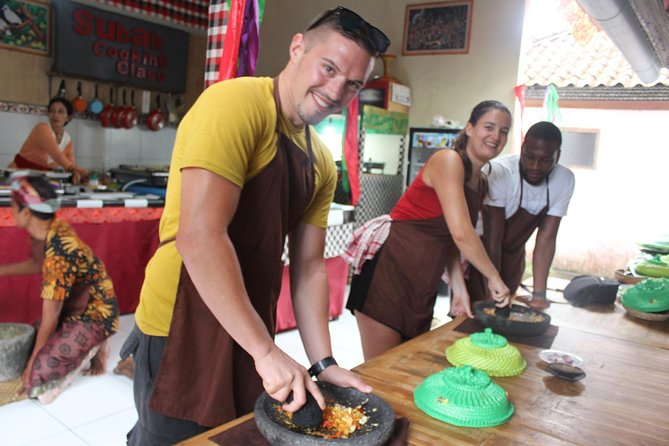
Many cooking classes give you one curry, one salad, and a recipe card. This one aims higher. In roughly five hours, you work through nine Balinese preparations, then sit down to eat the results with the rest of the group.
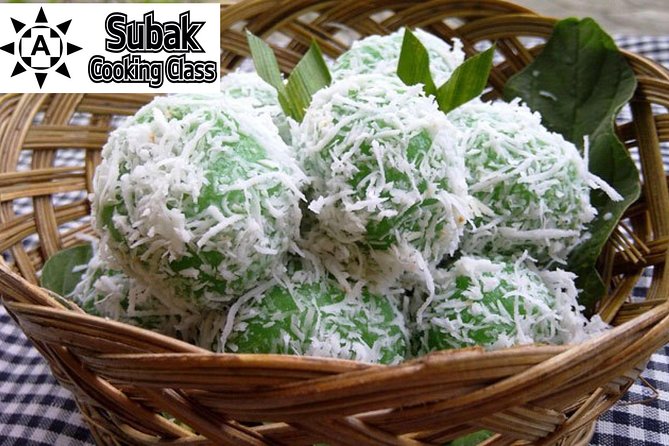
The regular menu includes Balinese vegetable soup, chicken cooked with coconut milk and Balinese spices, sweet fried tempe, chicken sate lilit, chicken pepes wrapped in banana leaf, lawar, sambal matah, base gede spice paste, and klepon cake. White rice accompanies the main dishes.
That list gives you a useful cross-section of Balinese cooking. You handle fresh herbs and spices, coconut, banana leaf, tempe, vegetables, chicken, palm sugar, and sticky rice flour. The lesson is not only about following a recipe. It shows how one meal moves between soup, grilled food, raw relish, vegetable mixture, spice base, and sweet finish.
You should expect some preparation to be done before you arrive. This is normal for a class with nine dishes. One negative account felt that too much had been prepared in advance, while several positive accounts found the arrangement helpful because it left time to cook and taste a broad menu. The practical truth is that you will not spend the whole morning chopping every onion from scratch. You will spend more time learning the key steps without being buried in kitchen chores.
More Market and Cooking Class Tours in Indonesia
- Ubud: Cooking Class with Transfers and Optional Market Visit
★ 4.9 · 824 reviews - Ubud: Balinese Cooking Class and Market Tour
★ 4.8 · 531 reviews - Balinese Cooking class with traditional morning market visit
★ 5.0 · 161 reviews
Choosing the Regular or Vegetarian Menu
The regular menu uses chicken in the coconut milk dish, sate lilit, and pepes. Sate lilit is a Balinese-style mixture shaped around a skewer, while pepes is cooked in banana leaf. These are useful dishes to learn because they show techniques you may not use at home every day.
The vegetarian menu swaps in tofu bumbu Bali, sweet tempe, tempe sate with peanut sauce, and pepes tofu. The soup, lawar, sambal matah, base gede, klepon, and rice remain part of the meal.
Choose your menu when you book, and do not assume you can decide at the stove. If your group has mixed preferences, ask ahead about how the cooking is organized. The supplied details specifically request that you select regular or vegetarian.
Spice is another point to discuss early. One cooking session included a guest who preferred mild food while others wanted more heat. The dishes could be adjusted, so tell the instructor what you can handle before the cooking begins. Balinese food can be spicy, but a class should be able to guide you toward a level you will actually enjoy eating.
The Morning Market Adds the Cultural Context
The morning option begins with a market visit, and this is the stronger choice if you want more than a kitchen lesson. A local host explains how people buy and sell food, then points out fruits, vegetables, spices, sweets, and other ingredients used in Balinese cooking.
You may get to taste unfamiliar tropical fruit and local cakes. The value here is practical: ingredients on a recipe sheet become real foods with names, textures, and uses. Seeing how food is sold also gives you a better sense of daily life than a quick stop at a tourist-oriented food display.
The market is not a polished food tour. It is a working local market, and that means the experience can be busy, noisy, and less tidy than a supermarket. One account praised the fruit tasting and explanations, while another particularly enjoyed seeing flower temple offerings being assembled. If you want a quiet, carefully staged activity, this may feel rough around the edges. If you want to see where a Balinese kitchen begins, it earns its place in the schedule.
The morning market is not included with the afternoon option. That is an important booking choice. The afternoon program includes making a Balinese offering instead, which gives you a different cultural activity but not the market visit.
Rice Fields and a Balinese Home
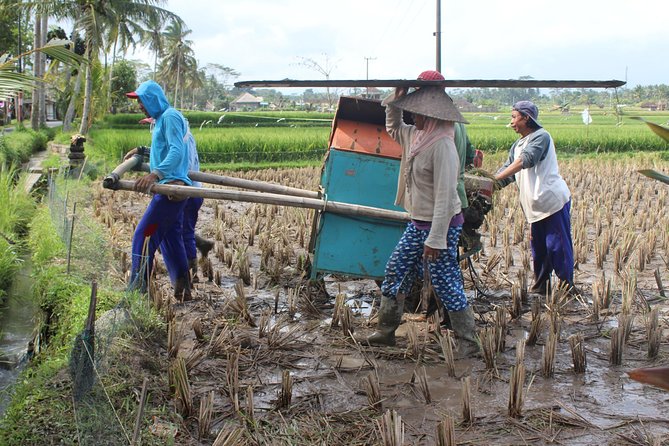
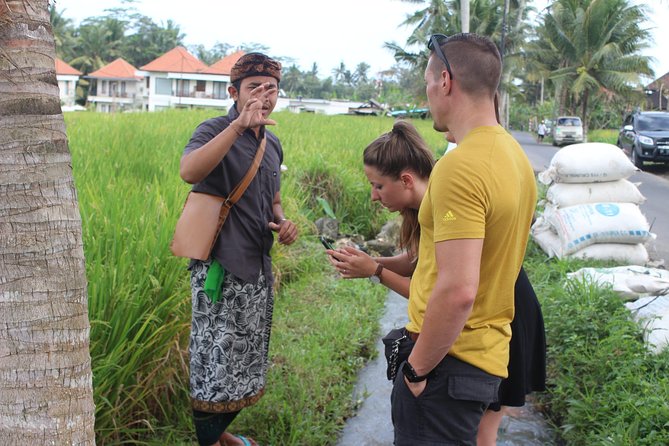
The morning program also includes a visit to rice paddies. You will learn about growing rice in Bali, the different kinds of rice, and how long the crop takes to reach harvest. This stop helps explain why rice is treated as more than a side dish in Balinese meals.
The rice-field visit is also a chance to pause before the kitchen work begins. Accounts of the outing describe photo stops, including views toward a volcano. The exact view depends on weather and timing, so treat it as a pleasant bonus rather than a guaranteed panorama.
The class takes place in a Balinese home setting arranged for cooking instruction. The home and rice-field stops help place the food in its setting. You are not cooking in a glossy demonstration studio detached from local life.
The tradeoff is distance. From the Ubud Palace meeting point, the drive to the market and school may take about 50 minutes, according to one detailed account. That is a significant part of a five-hour experience. The ride can feel worthwhile once you reach the market and school, but you should not book this expecting everything to happen within central Ubud.
More Market and Cooking Class Tours in Ubud
- PRIVATE Ubud Market Tour & Balinese Cooking Class with Putu
★ 5.0 · 125 reviews - Jambangan bali cooking class with morning market tour
★ 5.0 · 35 reviews - Balinese cooking class/Go shopping at the market, cook, eat
★ 5.0 · 12 reviews
What Happens at the Cooking School
At the school, a Balinese chef guides you through the dishes step by step. Instructors named in accounts include Yogi, Putu, and Gus, while guides and drivers such as Wayan, Tata, and Harry have also helped with different sessions. The staff setup may vary, but the pattern is clear: a chef teaches, kitchen staff assist, and a driver or host handles the visits and transport.
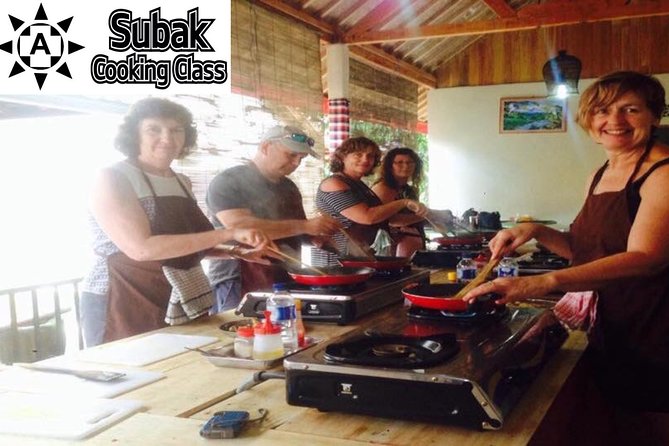
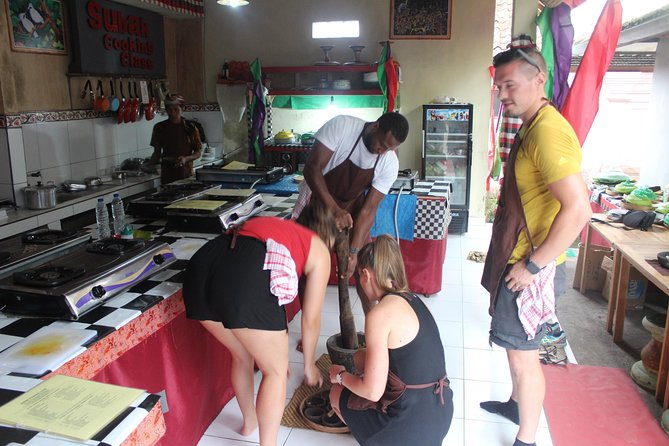
The group limit is 14 people. That is not a private class, but it is small enough to keep the session workable. Several accounts describe pairs cooking together at one table, with individual stoves or stations. If you want complete one-to-one instruction, pay for a private class elsewhere. If you like meeting other people while still handling the cooking, this size should suit you.
You will make a basic spice paste called base gede. This is one of the most useful parts of the class because it forms a foundation for many Balinese dishes. You will also prepare sambal matah, a raw mixture finished with coconut oil, and lawar, a mixed vegetable dish with Balinese spices.
The class then moves through the cooked dishes and dessert. Banana leaf preparation gives you a technique that may be hard to pick up from a cookbook. Klepon, the sweet finish, uses sticky rice flour and palm sugar, and it offers a simple way to end a long cooking session.
The cooking itself is hands-on, but the setup is designed for efficiency. Ingredients are provided, equipment is supplied, and the staff help with organization and cleanup. That means you can focus on texture, seasoning, shaping, and cooking times rather than washing a mountain of pans.
One account raised a real concern about instruction being hard to hear because of side conversations in the kitchen. This is worth keeping in mind. The atmosphere is friendly and informal, not a silent demonstration theater. Stay close to the instructor and ask for a repeat if you miss a step.
The Meal Is the Payoff
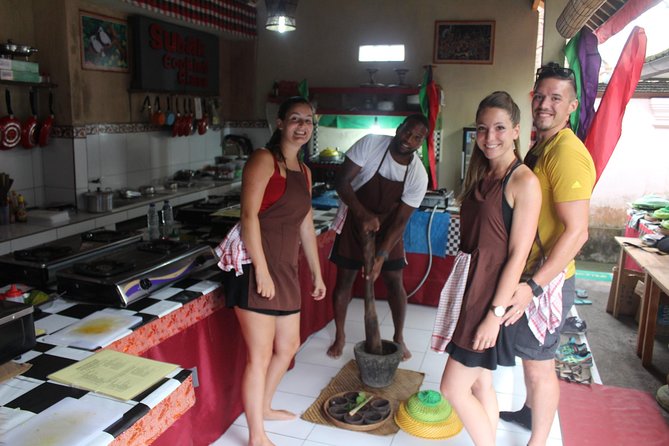
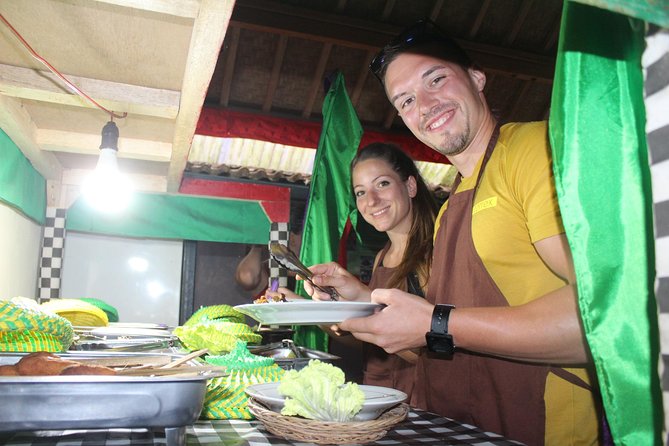
After cooking, you eat lunch or dinner made from the dishes prepared during the class. With nine recipes, this is a generous meal, so arrive hungry. Several accounts describe having more food than they could finish, and leftovers could be packed for the hotel.
The meal also lets you compare the results of different stations. You may notice how spice levels vary or how a dish changes depending on cooking time. That shared table gives the class a social finish without requiring a separate restaurant visit.
The food is prepared with fresh ingredients supplied for the class, and the menu gives you far more variety than a short demonstration. The strongest praise centers on taste, with repeated approval for the chicken, satay, vegetable dishes, and overall spread.
Still, not every dish will suit every palate. One account found the food disappointing and objected to how fried noodles were handled, although that dish does not appear on the regular menu supplied here. This is a useful reminder to judge the class by its stated menu and to speak up if a technique or seasoning seems unclear.
Price and Practical Value at $58
At $58, this is not the cheapest cooking lesson in Bali. The price makes more sense when you count the included parts: a roughly five-hour program, Ubud-area pickup and return, a market visit on the morning option, a rice-paddy visit, ingredients, equipment, water, recipes, instruction, and a full meal.
You are effectively combining a short cultural outing, a food market visit, transport, and a cooking class. For someone who would otherwise pay separately for a market tour and a meal, the package offers fair value.
The value drops if you are staying outside Ubud and must pay an extra transport charge. Confirm that cost before booking. Pickup details also need attention: the stated meeting point is Ubud Palace, but pickup from accommodation is offered within the Ubud area. Do not assume a hotel outside town is included.
The listed price is $58, while one account refers to paying $25. Prices can vary by booking channel or date, so use the price shown when you reserve and check what transport is included. The important point is not to compare this only with a two-hour class. Its longer schedule and added stops explain much of the cost.
Who Will Get the Most From This Class
I would choose this for food lovers who want to take practical skills home. The recipe copy is included, and the menu uses recognizable ingredients alongside items you may not have in your own kitchen. You can adapt what you learn later, especially the spice paste, sambal, vegetable dishes, and tempe preparations.
Families can also do well here. Accounts describe adults and children or mixed-age groups enjoying the humor, shared work, and large meal. The format gives everyone a role, though young children may need close help around stoves and knives.
This is a good pick if you want local contact without giving up structure. You get a guide, organized ingredients, a clear menu, and transport, but the setting still includes markets, rice fields, a home, and local hosts.
I would hesitate if you dislike long drives, want a private lesson, or expect to prepare every ingredient entirely from the beginning. I would also avoid the afternoon option if the market is your main reason for booking. Pick morning for the market and rice fields, afternoon for offering-making and a later cooking session.
What to Bring and What to Confirm
Bring a camera, cash for any extra transport, and your booking reservation. Wear normal, comfortable clothing suitable for a kitchen. Bottled water is included, but alcohol is not.
Confirm the following before you pay:
- Select regular or vegetarian.
- Check whether your accommodation is inside the included Ubud pickup area.
- Choose morning if you want the traditional market and rice paddies.
- Ask about the extra transport charge if staying outside Ubud.
- Tell the chef about your spice preference.
- Keep the recipe copy so you can repeat the dishes at home.
Free cancellation is available when you cancel at least 24 hours before the start time. Changes or cancellations inside that window are not accepted for a refund.
FAQ
How long does the Balinese cooking class last?
The experience lasts approximately five hours, including the cultural visits and cooking session.
Where does the tour start and finish?
The listed meeting point is Ubud Palace at F7V7+72R, Jl. Raya Ubud No. 8. The activity ends back at the meeting point.
Is pickup included?
Pickup and drop-off are included within the Ubud area. Transport from outside Ubud costs extra and should be requested in advance.
Does every tour include the traditional market?
No. The traditional market visit is provided only with the morning class.
What does the afternoon option include instead?
The afternoon option includes making a Balinese offering. The supplied details list the rice-paddy visit with the morning option.
Can I choose vegetarian food?
Yes. A vegetarian menu is available, including tofu, tempe, vegetable dishes, sambal matah, base gede, klepon, and rice. Select the vegetarian option when booking.
How many dishes will I prepare?
The class teaches nine Balinese recipes. White rice is served with the main dishes.
Is food included after the cooking lesson?
Yes. Lunch or dinner made from the food you prepare is included. Bottled water, food tasting, equipment, and recipe copies are also included.
Should You Book It?
Book this class if you want a full half-day built around food, local ingredients, and practical instruction. The morning option is the best choice for most people because the market and rice-field visits give the cooking a clear sense of place.
The main caution is transport. You may spend close to an hour each way on the road, and outside-Ubud pickup costs extra. Accept that time, choose your menu carefully, and arrive ready to eat. For the right visitor, the combination of nine dishes, friendly local teaching, a market visit, and a generous meal makes this a strong-value introduction to Balinese cooking.
Just added around Ubud
- Jambangan bali cooking class with morning market tour★ 5.0 · 35 reviews
- Bali: Safari Zoo and Ubud Palace and Market Day Tour★ 4.7 · 6 reviews
- Bali: Ubud Monkey Forest, Coffee Plantation, and Market Tour★ 5.0 · 5 reviews
- Balinese cooking class/Go shopping at the market, cook, eat★ 5.0 · 12 reviews
- Bali – Ubud Night Market Food Tour★ 3.8 · 14 reviews
- Ubud Traditional Night Market Food Tour-All Inclusive★ 4.4 · 95 reviews
- Ubud Day Tour : Waterfall, Temple and Local Night Market Tour★ 5.0 · 17 reviews
- Bali Night Market Experience and Ubud Highlights tour★ 5.0 · 16 reviews
Market and Cooking Class Tours, compared.

Hanoi Cooking Class: Culture, Local Market & Meaning CSR Impact
Read our review →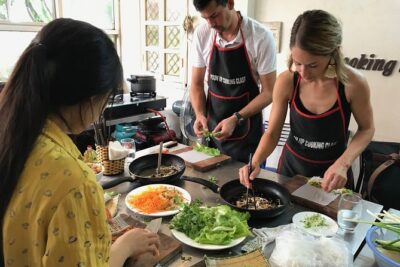
5 Traditional Dishes Hanoi Cooking Class with Market Trip
Read our review →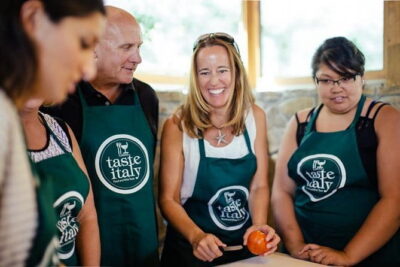
Cooking Class and Lunch at a Tuscan Farmhouse with Local Market Tour from Florence
Read our review →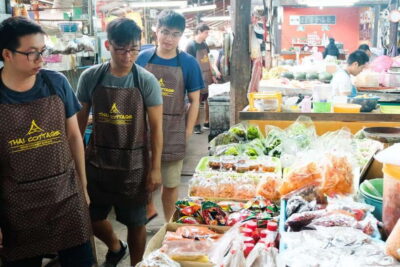
Cooking Class, Market & Thai Herbs Garden Tour
Read our review →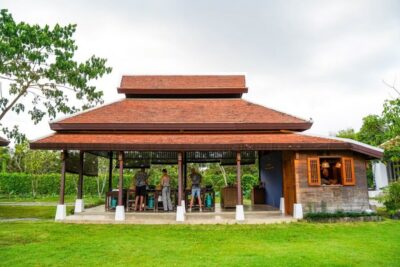
Authentic Cooking Class with Market & Farm Visit
Read our review →
Paella Cooking Experience & Boqueria Market Tour
Read our review →
Cooking Class Hoi An:Local Market, Basket Boat, Fishing & Cooking
Read our review →
Hoi An Cooking Class(Market,BasketBoat Crabfishing&Cooking Class)
Read our review →Browse the lists this tour appears in