
Review · MARKET AND COOKING CLASS TOURS
Balinese Cooking class with traditional morning market visit
The most interesting part of this Ubud experience happens before the cooking begins. You visit a local morning market, examine unfamiliar herbs and fruit, and help choose the ingredients that later become your meal. In Laplapan village, the class also introduces you to canang, the small daily offering baskets seen across Bali.
I like the hands-on format and the personal feel of a group capped at eight. I also like that air-conditioned pickup, market transport, cooking equipment, and the meal are included in the $35 price.
The main consideration is the six-hour length. The market visit is a working part of the morning, not just a quick photo stop, and the class covers many dishes, so this suits you best if you want a full food-and-culture outing rather than a short demonstration.
Key points to know before booking
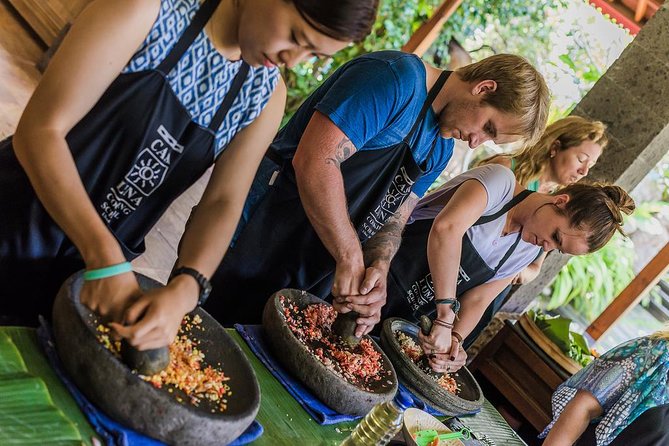
- The market comes first: You choose or examine vegetables, herbs, meat, fruit, and spices before cooking with them.
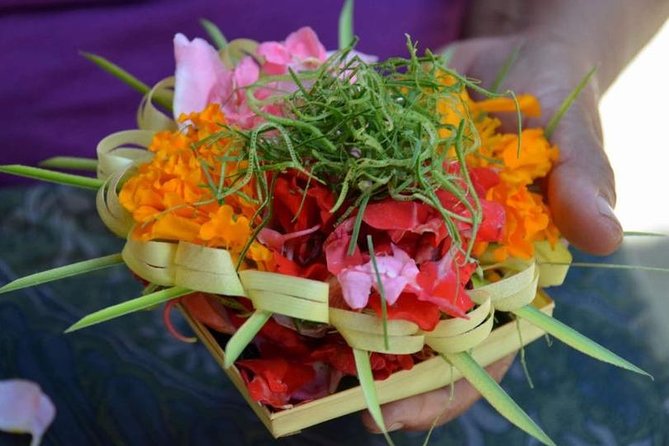
- Laplapan adds cultural context: The village setting includes a lesson on making canang and other offering materials.
- Small groups matter: With no more than eight people, you get a better chance to chop, mix, cook, and ask questions.
- Expect a generous menu: The class covers starters, main dishes, and dessert, with some sessions preparing as many as nine dishes.
- Pickup keeps the morning simple: Air-conditioned transport to the market and workshop is included.
- Dietary needs can be discussed: Vegetarian adaptations have been provided, though you should state your needs when booking.
A market morning that gives the food a reason
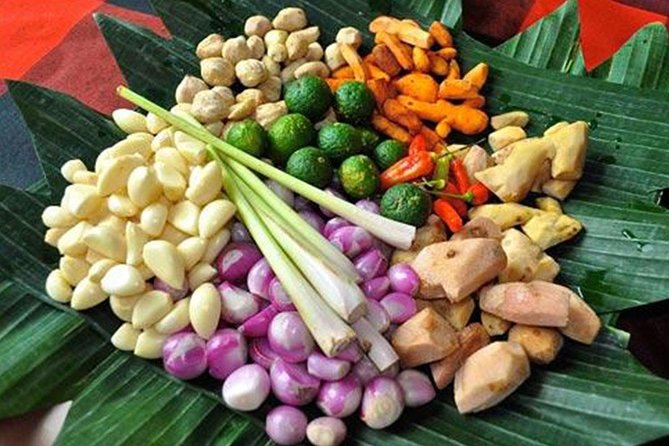
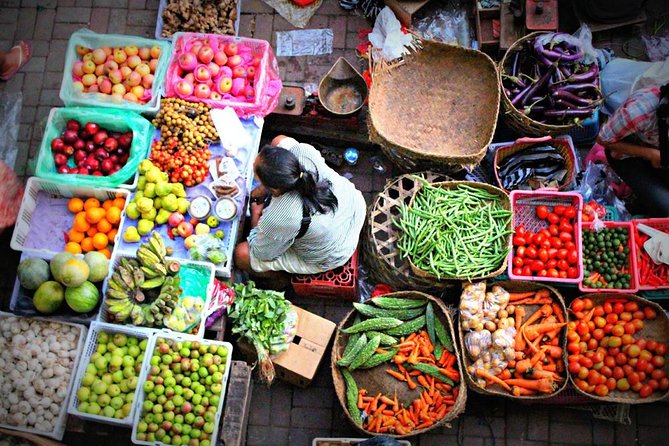
Many cooking classes begin with ingredients already measured and waiting on the counter. This one starts closer to the source. After hotel pickup, you head to a local fresh-food market and look at the produce, spices, herbs, meat, and fruit used in Balinese kitchens.
That first stop gives you useful context. You are not just told that a certain herb matters. You can see it among other local ingredients, ask what it is used for, and in some cases smell or taste unfamiliar foods. Several people also enjoyed trying fruit and local sweets during the visit.
The market portion is not described as a long market tour, so keep your expectations sensible. It is designed to prepare you for the class, not to replace a full morning spent shopping. I see that as a strength for most people: you get a taste of local daily life without losing the main part of the day to wandering among stalls.
You also get a better sense of what is local and what may come from outside Bali. That distinction is useful when you later try to recreate the dishes at home. A recipe can tell you quantities, but it cannot always explain why one herb or spice is used in the first place.
The morning timing matters. Fresh food markets are part of the early rhythm of local life, so this is a more grounded start than meeting at a restaurant kitchen later in the day. Ask for the exact pickup time when you book, since the experience is built around a morning market visit.
More Market and Cooking Class Tours in Indonesia
- Ubud: Cooking Class with Transfers and Optional Market Visit
★ 4.9 · 824 reviews - Balinese Ubud cooking school (9 Dish Cooking and Market Tour)
★ 5.0 · 540 reviews - Ubud: Balinese Cooking Class and Market Tour
★ 4.8 · 531 reviews
Laplapan village and the meaning of canang
From the market, the air-conditioned vehicle continues to the traditional village of Laplapan. The class takes place in a local setting with jungle surroundings, rather than in a city restaurant or a polished hotel kitchen.
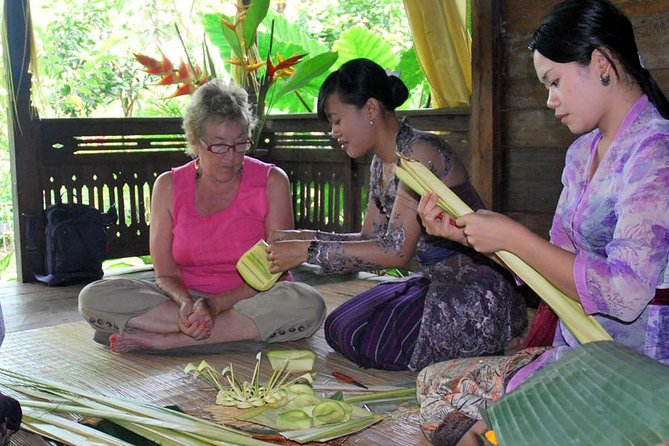
Before the cooking starts, you learn about Balinese offerings and make a canang. These small woven baskets, filled with flowers and other materials, are part of everyday Hindu Balinese practice. Making one gives you a direct connection to a tradition you will see around homes, temples, shops, and streets throughout Bali.
This section is especially valuable if you want more than a list of recipes. Food in Bali sits within a wider pattern of family, ceremony, agriculture, and daily ritual. The offering activity is simple and practical, but it helps explain the cultural setting around the meal.
The activity can also work well for families. Children aged six, eight, and nine have taken part successfully, with the instructor helping them understand the ingredients and methods. The task gives younger participants something concrete to do before the cooking becomes more detailed.
Do not expect a formal museum-style lesson. The appeal is that you learn by making something with your hands, guided by local hosts. That informal approach fits the rest of the morning.
Cooking with Wayan, Dewa, Putu, and the local team
The cooking class is led by local instructors, with Wayan, Dewa, and Putu named among the hosts and teachers. The exact person leading your session may vary, but the teaching style described for the class is warm, practical, and active.
You are guided through the preparation of several Balinese dishes, rather than watching a chef do all the work. The menu includes starters, main courses, and an authentic dessert. Some sessions have covered five courses, while others have produced up to nine dishes, so the exact menu may change.
That variation is normal for a small cooking school. Ingredients available at the market, dietary needs, and the size of the group can all affect the final selection. If you have a particular restriction or preference, mention it before the class begins. Vegetarian options have been provided, and the kitchen has adapted dishes for dietary requirements.
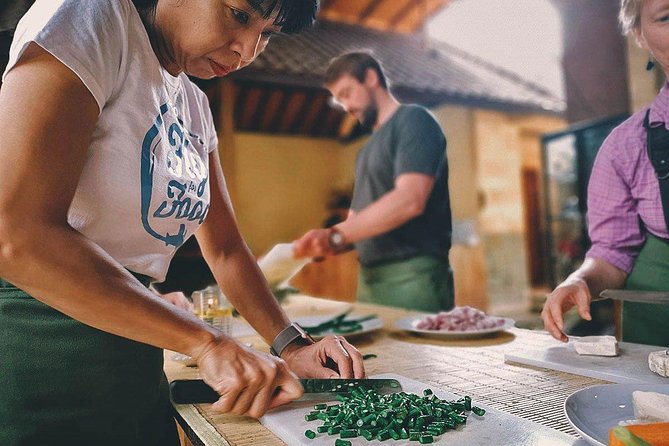
You will likely find that some preparation is done in advance. That is not a shortcut that ruins the lesson. It keeps the pace manageable and lets you focus on the parts that teach the most, such as seasoning, grinding, shaping, and cooking. One session included plenty of hands-on work while still preparing some items ahead of time so the group could finish in a reasonable period.
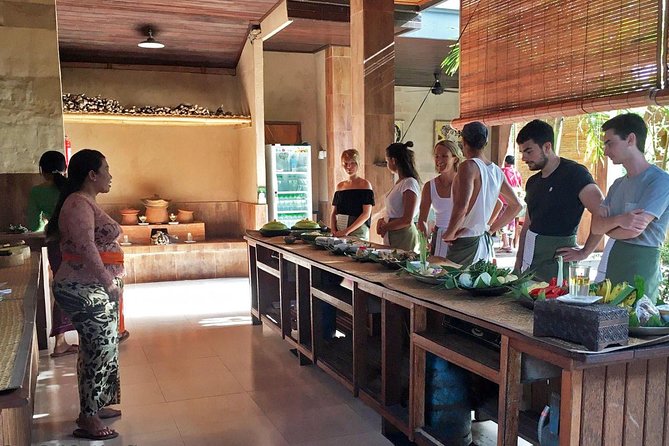
Small group size makes a clear difference here. With a maximum of eight people, you are less likely to spend the whole class standing behind someone else. Solo participants can also meet other people without being swallowed by a large tour group, while families can work together at the same table.
The instructors answer questions as you go. You can ask about ingredients, cooking methods, and ways to recreate the dishes at home. The atmosphere is social, with humor and conversation mixed into the instruction, but the class still gives you enough direction to produce a proper meal.
What you actually learn at the stove
This is not simply a Balinese lunch with a cooking demonstration attached. You take part in preparing the food, and that means you learn how the separate elements come together.
The class teaches traditional techniques and the use of local spices and ingredients. You might work with vegetables, herbs, meat, and seasonings selected during the market visit. The exact recipes are not specified in advance, so I would book this for the chance to learn Balinese methods rather than for one guaranteed signature dish.
A useful feature is the chance to eat what you make. After the cooking, the group sits down for a shared meal and tries the finished dishes. This gives you an immediate test of the balance of flavors and shows how several small preparations form a complete Balinese table.
The amount of food can be substantial. People have prepared several dishes in a single class, and some have described the meal as generous enough to make the experience feel like both a lesson and lunch. If you are planning another food-focused activity immediately afterward, leave some room.
Recipes are available to take home in at least some sessions. That adds real value, since the class does not end when you leave the village. You can try the dishes again later, though ingredients outside Bali may not taste exactly the same.
More Market and Cooking Class Tours in Ubud
- PRIVATE Ubud Market Tour & Balinese Cooking Class with Putu
★ 5.0 · 125 reviews - Jambangan bali cooking class with morning market tour
★ 5.0 · 35 reviews - Balinese cooking class/Go shopping at the market, cook, eat
★ 5.0 · 12 reviews
The setting, transport, and six-hour pace
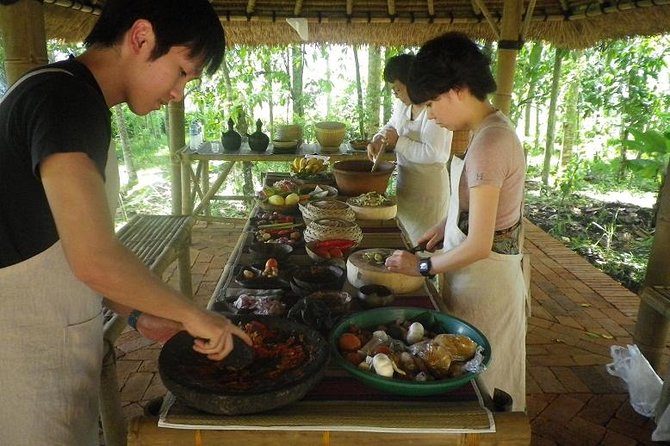
Hotel pickup is included, along with air-conditioned transport to the market and workshop. That is useful in Ubud, where roads can be slow and the heat can build quickly. You do not have to arrange separate transport between the market and Laplapan.
Pickup has also been available from places outside central Ubud, including Sanur in one session. Coverage can depend on the booking, so confirm your hotel location rather than assuming every Bali address is included.
The total duration is about six hours. That includes pickup, the market visit, the trip to Laplapan, the offering activity, the cooking lesson, and the sit-down meal. It is a substantial morning and early afternoon commitment, not a quick two-hour class.
I would plan to wear comfortable clothes that can handle cooking, though the supplied information does not list a formal dress code. Also check the pickup time and meeting details in advance. The experience depends on reaching the market at the right part of the day.
The workshop setting is described as clean and attractive, with cooking taking place in pleasant local surroundings. It is not presented as a luxury culinary school, and that is part of its appeal. You get a connection to the village and the hosts instead of a highly staged restaurant lesson.
Is $35 good value?
At $35 per person, the price covers a lot: hotel pickup, air-conditioned transport, the market visit, cooking equipment, cooking class fees, taxes, and the meal you prepare. Personal expenses are not included, so carry money if you want to buy anything separately at the market or elsewhere.
The strongest value comes from the combination of activities. You are not paying only for a recipe lesson. You also receive transport, a guided food market visit, a cultural activity, a local meal, and several hours of instruction.
The group limit helps the price feel fair. A class for eight or fewer allows more direct attention than a large demonstration, while still giving you the social energy of cooking with other people. If you end up as the only person booked, the lesson may feel even more personal, as happened for one participant.
The price is less compelling if you only want to learn one dish quickly. In that case, a shorter class may fit better. But if you want a full morning with food, village life, and Balinese tradition, this package offers strong value.
Who will enjoy this class most?
I would recommend it to food-focused visitors who want to understand how Balinese cooking works rather than simply eat it. You do not need professional kitchen skills. The instruction is structured for ordinary home cooks, and the teachers offer help as you prepare each dish.
It also suits first-time visitors who want an easy cultural introduction. The market shows you everyday ingredients, the canang lesson explains a visible part of Balinese life, and the meal brings the morning together.
Families can consider it too. The hands-on tasks give children a role, and the instructors have worked well with children in the six-to-nine age range. Still, six hours is a long outing for a young child, so think about your family’s energy level.
Solo visitors can also fit in nicely. The small group gives you a chance to meet other cooks, and the shared meal avoids the awkwardness of eating alone after a private activity.
I would be more cautious if you dislike early starts, group activities, or unfamiliar ingredients. The market and cooking class both ask you to participate. This is not the right pick if you prefer to sit back and watch.
Practical booking advice
The experience is offered with free cancellation if you cancel at least 24 hours before the start time. Changes or cancellations inside that window are not accepted for a refund, and the cut-off uses local time.
Confirmation is provided when you book. Since the activity has a maximum of eight people, reserve ahead if you want a particular date, especially if you are traveling as a family or small group.
Group discounts are available. Ask about them if you are booking several places, and state any dietary requirements before the cooking begins. Vegetarian adaptations have been offered, but the menu and substitutions should be confirmed in advance.
The experience has a 99 percent recommendation rate and a five-star score based on 161 ratings. Those figures point to a consistently well-received activity, but I would focus most on the practical fit: a six-hour morning, a market visit, shared cooking, and a menu that can change.
Should you book this Ubud cooking class?
Book it if you want a full, sociable morning that links Bali’s market food, home cooking, village life, and daily offerings. The strongest reasons are the small group, the local instructors, the market visit, and the chance to eat a meal you helped prepare.
The class is particularly good value for $35 because transport, equipment, taxes, and food are included. It also leaves you with recipes and techniques you can try at home.
Skip it if you want a short demonstration, a fixed menu, or a quiet private meal. Otherwise, this is a practical way to spend part of your Ubud stay, with enough culture around the cooking to make the experience feel like more than lunch.
FAQ
Where does the cooking class take place?
The experience begins with a visit to a local morning market and continues to the traditional village of Laplapan, where the cooking workshop takes place in local surroundings near Ubud.
How long does the experience last?
The tour lasts approximately six hours, including hotel pickup, the market visit, transport to Laplapan, the offering activity, cooking class, and meal.
Is hotel pickup included?
Yes. Pickup is offered from your hotel, and air-conditioned transport to the market and workshop is included.
How many people can join the class?
The activity has a maximum group size of eight people.
Do I get to visit a market before cooking?
Yes. You visit a local fresh-food market and look at vegetables, herbs, meat, fruit, and spices used in Balinese cooking. You may also have the chance to taste some local foods.
Will I learn to make a Balinese offering?
Yes. Before the cooking class, you learn about the process of making canang and other offering materials.
Are vegetarian options available?
Vegetarian options have been provided, and dietary requirements have been accommodated in some sessions. Tell the provider about your needs when booking so the menu can be confirmed.
Just added around Ubud
- Jambangan bali cooking class with morning market tour★ 5.0 · 35 reviews
- Bali: Safari Zoo and Ubud Palace and Market Day Tour★ 4.7 · 6 reviews
- Bali: Ubud Monkey Forest, Coffee Plantation, and Market Tour★ 5.0 · 5 reviews
- Balinese cooking class/Go shopping at the market, cook, eat★ 5.0 · 12 reviews
- Bali – Ubud Night Market Food Tour★ 3.8 · 14 reviews
- Ubud Day Tour : Waterfall, Temple and Local Night Market Tour★ 5.0 · 17 reviews
- Bali Night Market Experience and Ubud Highlights tour★ 5.0 · 16 reviews
- Bali Food Tour: Savor Street Food and Night Market Adventures★ 5.0 · 46 reviews
Market and Cooking Class Tours, compared.

Hanoi Cooking Class: Culture, Local Market & Meaning CSR Impact
Read our review →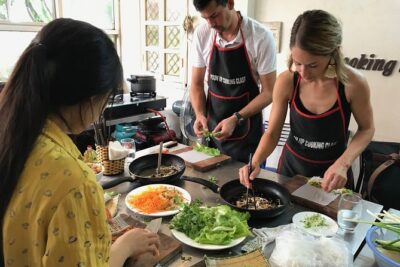
5 Traditional Dishes Hanoi Cooking Class with Market Trip
Read our review →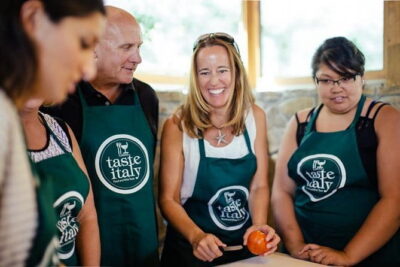
Cooking Class and Lunch at a Tuscan Farmhouse with Local Market Tour from Florence
Read our review →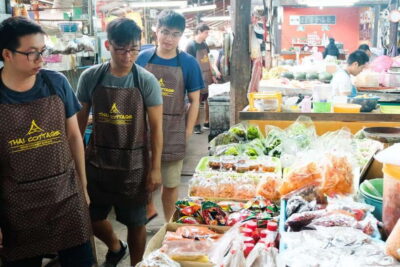
Cooking Class, Market & Thai Herbs Garden Tour
Read our review →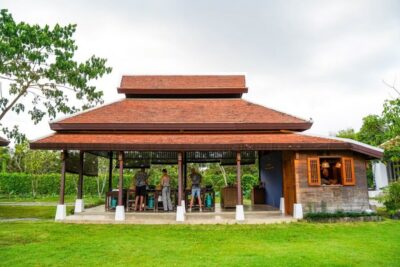
Authentic Cooking Class with Market & Farm Visit
Read our review →
Paella Cooking Experience & Boqueria Market Tour
Read our review →
Cooking Class Hoi An:Local Market, Basket Boat, Fishing & Cooking
Read our review →
Hoi An Cooking Class(Market,BasketBoat Crabfishing&Cooking Class)
Read our review →Browse the lists this tour appears in