Review · STREET FOOD MARKET TOURS
Rome: Street Food, Local Market and Hidden Gems Tour
Rome’s best food lesson may happen away from the famous sights. This tour takes you from Stazione Trastevere into Testaccio, where market stalls, old working-class traditions, ancient pottery fragments, and a proper Roman meal all fit into one walk. You will eat well, but you will also learn why this part of Rome matters.
I like the small maximum of 10 people, which gives Giulia, the local guide named in the tour details, room to explain things and answer questions. I also like the full arc of the food: maritozzo in the morning, market snacks and wine, then pasta in a century-old trattoria. The main consideration is pace. Three and a half hours with several food stops and a good deal of walking may feel long if you prefer a quick tasting.
What makes this Rome food walk worth considering
- Testaccio is the star: You explore a neighborhood tied closely to Roman food, markets, working life, and urban change.
- The meal is more than finger food: Tastings lead to a sit-down pasta lunch, followed by a seasonal dessert.
- Three wines are included: Wine accompanies the food, giving you a better sense of how Roman meals are enjoyed.
- The market visit has substance: Your guide explains the stalls and local cooking instead of simply handing you samples.
- The group stays small: With no more than 10 people, it is easier to hear, ask questions, and keep the walk personal.
- The finish is practical: The tour ends a few steps from Piramide Metro Station, useful for continuing your day.
Starting near Trastevere at 10:30 a.m.
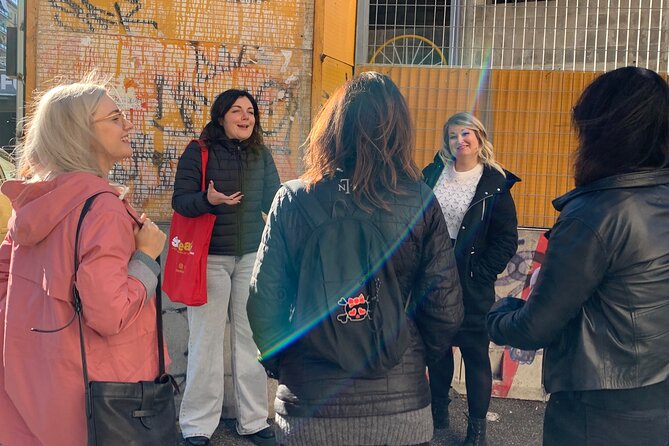
Meet at Piazza Flavio Biondo, 7, beside Stazione Trastevere, at 10:30 a.m. The first 15 minutes are set aside for meeting your guide and the other people in the group. This is a sensible start point for a food walk because you begin near Trastevere, then move toward Testaccio rather than spending the entire morning inside one market.
The route does not include hotel pickup or transport. You need to reach the meeting point yourself, and the end point is near Piramide Metro Station. Check the location carefully before leaving your accommodation, especially if you are relying on public transport.
The opening section is brief, but it helps set the tone. You are not being rushed straight to a food counter. The guide introduces the group, then uses the walk to connect Rome’s streets with the food you will soon taste.
More Farmers Market Tours in Italy
- Farmers’ Market Shopping with Cooking Class and Pasta Making
★ 5.0 · 91 reviews - Tasty Trionfale Farmers Market Food Tour and Local Wines Tasting
★ 5.0 · 43 reviews - Rome: Vatican Street Food and Wine Tour with Farmers Market
★ 5.0 · 37 reviews
Crossing Ponte Testaccio and reading modern Rome
The group crosses Ponte Testaccio, with about five minutes devoted to Roman urban development. That may sound like a small stop, but it gives useful context. Testaccio is not presented as an isolated food district. You see it as part of a changing city, linked to transport, commerce, housing, and the movement of people across Rome.
This is one of the tour’s strengths. Food makes more sense when you know who bought it, prepared it, and ate it. The bridge section is short, so do not expect a long architectural lecture. Think of it as a quick orientation before the neighborhood walk.
Mattatoio and Testaccio’s working past
The next stop is Mattatoio, once Rome’s main slaughterhouse and now a cultural center used for exhibitions and academic study. You spend roughly 15 minutes here. It is an important stop because it explains why Testaccio became so closely tied to meat, markets, working families, and practical cooking.
The old slaughterhouse also helps explain the local food tradition. Roman cooking has long made use of ingredients that other kitchens might overlook. The tour does not simply list dishes. It places the food within the neighborhood that helped shape it.
From Mattatoio, you spend about 70 minutes exploring Testaccio itself. The guide points out ancient and modern sights while discussing the district’s story. This is likely the most flexible part of the walk, since the emphasis can shift between streets, buildings, food customs, and local details.
Guide Giulia is especially useful here. She grew up in the area, so her connection to Testaccio is personal rather than purely academic. You can expect her to explain the neighborhood as someone who knows its character from close range. One caution: the tour is offered in English, but the exact amount of walking and time spent at each point may vary with the group.
Mercato di Testaccio, where the tour earns its keep
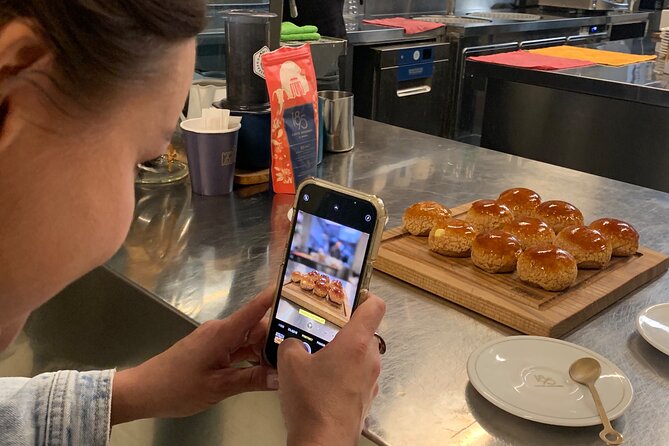
The market visit lasts about an hour and is the food center of the experience. Your guide walks you around the food stalls, explains local cuisine, and offers several traditional tastings. The included foods list covers supplì, country cheese, and old-school dishes, with wine served along the way.
Supplì is an especially good market bite for understanding Roman comfort food. It is a fried rice croquette, usually associated with tomato and cheese, though the exact preparation can vary. The key point for you is texture and contrast: crisp outside, soft and savory inside.
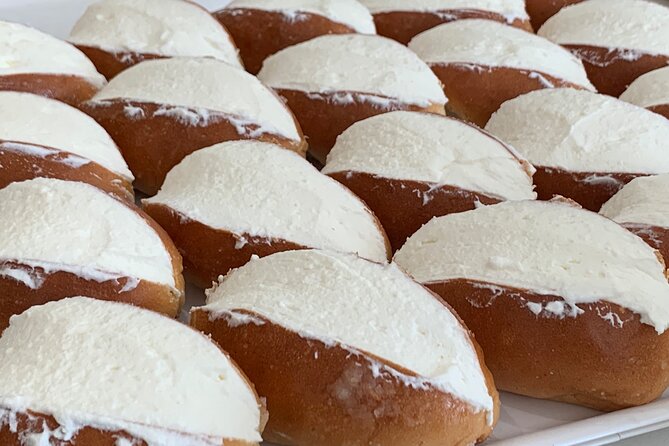
The tastings also include polpette, or meatballs, according to the food selections described by the tour. Maritozzo is served as the traditional Roman breakfast. This soft sweet bun filled with cream is a substantial opening bite, not just a decorative sample, so arrive hungry but not empty.
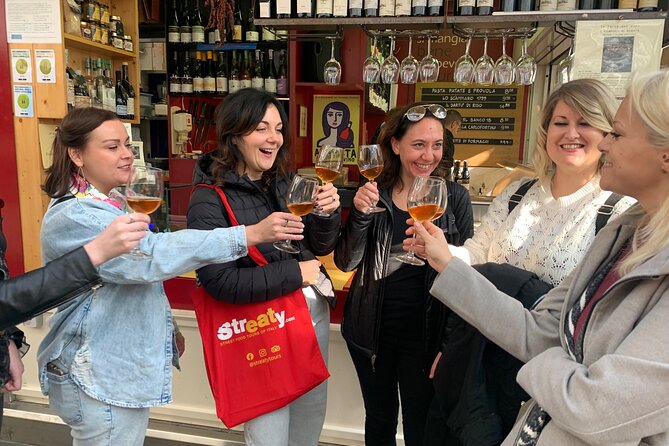
Cheese and wine add a slower note to the market stop. Three wines are included across the tour, giving you a chance to compare food with different pours without having to order each glass separately. The exact wines are seasonal or selected by the guide, so you should not expect a fixed wine list.
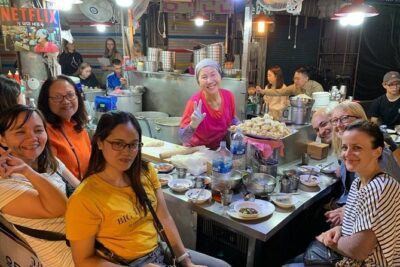
The market is where the small group matters most. Ten people can gather around a stall without turning the stop into a crowd. You can hear the explanation, watch the food being handled, and ask about ingredients or local habits.
There is also a practical limit. The tour includes the food selected by the guide, but not extra portions or drinks you order on your own. If you want seconds, another dish, or more wine, you pay separately. That is normal for a food walk, but it is worth knowing before you arrive.
More Farmers Market Tours in Rome
- Farmers Market Shopping and Roman Full Course Class – SHARED
★ 5.0 · 12 reviews - Eat Like a Roman – Traditional Food, Local Market & History
★ 5.0 · 3 reviews
Monte Testaccio and an unusual Roman food clue
After the market, the walk continues to Monte Testaccio for about 40 minutes. This is not a natural mountain. It is an ancient mound made largely from discarded Roman amphora fragments, especially the pottery containers once used to transport oil.
That detail gives the food tour a memorable archaeological twist. The hill is tied to the storage and movement of food across the ancient city. You are not only tasting Roman dishes, you are seeing evidence of how food was handled centuries ago.
The tour describes this section as a chance to discover the area’s lesser-known features. Expect a guided look at the site rather than a long museum visit. Wear shoes suitable for city walking, since the experience moves between streets and outdoor stops.
Monte Testaccio also prevents the tour from becoming a simple market crawl. You get a change of subject and setting before lunch, with the guide linking Roman food customs to the physical remains of the city.
A short stop at the Rome War Cemetery
The final historical stop is the Rome War Cemetery, where the guide discusses the Allied disembarkation during World War II. The visit lasts about five minutes, so it is a brief pause rather than a full cemetery tour.
This may appeal to you if you like tours that connect food and neighborhood life with the wider story of Rome. It also changes the mood near the end of the route. The stop is respectful and concise, but it may feel less connected to the food theme than the market, Mattatoio, or Monte Testaccio.
Pasta lunch in a century-old trattoria
The strongest value comes from the fact that the tour does not end with a few small samples. A sit-down pasta lunch at a century-old trattoria is included, along with a seasonal dessert.
Cacio e pepe is among the foods associated with this experience. This Roman classic uses pasta, pecorino cheese, and black pepper. It sounds simple, but the sauce depends on careful handling of heat and pasta water. Eating it in a traditional trattoria gives you a better sense of how Roman food works when it is served as a proper meal.
The lunch also changes the rhythm. After standing at market counters and tasting small portions, you get time to sit down and eat. One useful expectation: this is a group meal selected by the guide, not a restaurant visit where you choose anything from the full menu.
Vegetarians and pescatarians can participate, which makes the tour more flexible than many Roman food walks. Still, you should communicate your needs when booking or at the start. The supplied information confirms suitability for vegetarians and pescatarians, but it does not provide a full allergen or substitution list.
By the end, you should expect to be comfortably full. The food includes breakfast, market tastings, wine, pasta, and dessert. I would not schedule a large dinner immediately afterward.
The value of $119.48 for three and a half hours
At $119.48 per person, this is not a cheap snack tour. The price makes more sense when you count what is included: a local guide, a 3.5-hour walking experience, a Roman breakfast, several market tastings, three wines, a sit-down pasta lunch, and dessert.
You are also paying for access and interpretation. A market can be confusing if you do not know which stalls matter or what to order. The guide turns separate bites into a story about Testaccio, Roman cooking, and the city’s past.
The value is strongest if you want lunch included and prefer a small group. If you only want to sample one or two foods, you can spend less by visiting a market independently. If you want a structured morning with food, local context, and a full meal, the price is easier to justify.
The tour is usually booked well ahead, with an average booking lead time of about 63 days. That suggests you should not leave it until the last minute if your Rome dates are fixed.
Who should book this Testaccio experience?
I would recommend it to anyone who wants Rome beyond the main monuments and prefers food with context. It suits people who enjoy walking, local markets, traditional dishes, and a guide who can connect a meal with the streets around it.
It is also a good first food tour for Rome because the range is broad. You get a sweet breakfast, fried food, cheese, wine, pasta, dessert, neighborhood history, archaeology, and a short World War II stop.
You may want to skip it if you dislike group meals, cannot walk for several hours, or prefer to choose every dish yourself. The route has several stops, and the food comes in a set sequence. This is not a flexible restaurant-hopping afternoon.
The small group limit of 10 helps, but it does not make the walk private. If you want a fully customized food day, a private guide would offer more control, usually at a higher price.
Booking details that matter
The tour is offered in English and uses a mobile ticket. Confirmation is provided at booking. It is near public transportation at the start and finishes close to Piramide Metro Station, making it easy to connect with the rest of Rome afterward.
Free cancellation is available if you cancel at least 24 hours before the local start time. Changes or cancellations inside that window are not accepted for a refund. The tour can also be canceled for poor weather or if the minimum group size is not reached. In either case, you are offered another date or experience, or a full refund.
The current rating is 5 out of 5 from 57 ratings, with 100 percent recommending it. The most consistent praise centers on the market, the food variety, and Giulia’s friendly local guidance. Those are the elements I would prioritize when deciding if the experience matches your style.
Should you book it?
Book this tour if you want a full Roman food morning rather than a quick tasting. The market, trattoria lunch, three wines, and Testaccio setting give you more substance than a walk based only on samples.
I would book it for a first or second day in Rome if you want an early introduction to local eating habits. I would also choose it for a visit where the major sights are already covered and you want a neighborhood-focused experience.
Skip it if you need strict dietary control, dislike a fixed menu, or want to spend the morning at famous monuments. For everyone else, the combination of Giulia’s personal connection to Testaccio, the market stop, and the included pasta lunch makes the $119.48 price reasonable.
FAQ
How long does the Rome food tour last?
The experience lasts approximately 3 hours and 30 minutes.
What time does the tour start?
The tour starts at 10:30 a.m.
Where does the tour meet?
The meeting point is Piazza Flavio Biondo, 7, 00152 Roma RM, Italy, near Stazione Trastevere.
Where does the tour end?
The tour ends at Piramide, a few steps from Piramide Metro Station.
How many people can join the tour?
The maximum group size is 10 people.
Is food included in the price?
Yes. The tour includes a traditional Roman breakfast with maritozzo, market tastings such as supplì and country cheese, a sit-down pasta lunch, a seasonal dessert, and three wines.
Can vegetarians and pescatarians join?
Yes. The experience is listed as suitable for vegetarians and pescatarians.
Can I cancel for a full refund?
Yes, if you cancel at least 24 hours before the local start time. Cancellations made less than 24 hours before the start are not refunded.
More Street Food Market Tours in Rome
- Rome: Testaccio Market Food Tour with Street Food & Wine
★ 5.0 · 8 reviews - Testaccio Experience: Street Food, Market and Traditions
★ 5.0 · 4 reviews - Rome: Guided Testaccio Market Food Tour with Tastings
★ 5.0 · 3 reviews
More Street Food Market Tours in Italy
- Roman Food Tour with Visit to the Trionfale Food Market
★ 5.0 · 471 reviews - Rome: Food Tour with Market Visit
★ 4.9 · 200 reviews - Devour Rome Testaccio Market Food Tour
★ 5.0 · 180 reviews - Rome E-Bike Tour: Ultimate Street Food and Market Feast
★ 4.9 · 50 reviews
Just added around Rome
- Testaccio Experience: Street Food, Market and Traditions★ 5.0 · 4 reviews
- Rome: Testaccio Food & Market Tour with Pasta & Wine★ 5.0 · 38 reviews
- Rome: Temples, Squares & Markets Guided Walking Tour★ 4.8 · 26 reviews
- Rome: Taste of Testaccio Food & Market Tour★ 4.9 · 38 reviews
- Rome: The Vatican Market Experience Tasting and Class★ 4.7 · 10 reviews
- Rome: Trajan Markets Experience with Multimedia Video★ 4.0 · 66 reviews
- Rome: Prati Food & Wine Market Tour with St. Peter Square★ 5.0 · 7 reviews
- Rome: Trajan’s Markets & Museum of The Imperial Fora Tour★ 4.8 · 4 reviews
Street Food Market Tours, compared.
Old Town, Creek, Museums, Souks, & Street Food Tour
Read our review →
Old Town, Souks, Street Food, Guided Tour & Abra Ride
Read our review →
Old Town, Souks, Street Food, Guided Tour & Abra Ride
Read our review →
Small Group Cooking Class & Market Food Tour in Florence
Read our review →
Old Town, Street Food, Creek, Souks, & Emirati House
Read our review →