
Review · PRIVATE MARKET TOURS
Private Tour – Museum of the Imperial Forums in the Trajan Markets
Rome’s ancient center is far larger than the Colosseum, Palatine Hill, and Roman Forum. This private visit takes you into the Museum of the Imperial Forums at Trajan Markets, a quieter part of the city’s archaeological story, where excavated remains and objects explain how Rome’s monumental center developed.
I like the private format, which lets you ask questions and set the pace with your own guide. I also like the two-hour length and 4 p.m. start, a useful way to add a focused museum visit after seeing Rome’s better-known ruins. The main consideration is that this tour concentrates on one archaeological complex, so it will suit you best if you want detail rather than a broad first introduction to ancient Rome.
Key points to know before booking
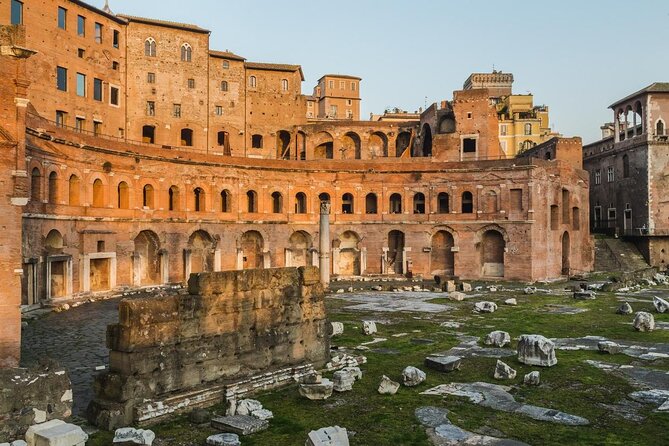
- Trajan Markets reveals a less familiar side of ancient Rome, beyond the Colosseum and Roman Forum.
- A private guide keeps the visit personal, with only your group taking part.
- Vincenzo and Martina are named guides associated with especially warm, engaging visits, though guide assignment can vary.
- The two-hour visit is focused and manageable, rather than an exhausting full-day archaeological tour.
- Tickets and a professional local guide are included, while transport and hotel pickup are not.
- Bags and backpacks must go into the checkroom, so arrive prepared to carry only what you need.
Why Trajan Markets changes your view of ancient Rome
Most first visits to Rome follow a familiar path: the Colosseum, the Roman Forum, and Palatine Hill. Those places deserve their fame, but they can make ancient Rome seem smaller and simpler than it was. The Imperial Forums form another major part of the city’s central area, and the Museum of the Imperial Forums helps you understand how that wider complex worked.
The site was reorganized in the 20th century, separating the Imperial Forums from the Roman Forum. That modern division can hide the fact that these areas once belonged to one connected urban center. Here, your guide helps join the pieces together.
I find that especially useful because archaeological ruins rarely explain themselves. A broken wall may look impressive, but you still need help understanding its purpose, its place in the city, and the changes it went through over time. The museum’s findings give your guide material to work with, while the excavation site provides the physical setting.
This is not simply a walk through old stone. It is a chance to discuss how the Imperial Forums functioned and how the area developed across the centuries. If you have already seen Rome’s famous landmarks, this visit can add a new layer to places you thought you understood.
More Private Market Tours in Italy
- Rome: Private Cooking Class with Market Shopping Tour
★ 5.0 · 3 reviews - Trajan’s Markets & Imperial Forums Private Tour with Special Pass & PhD Guide
★ 5.0 · 2 reviews - Market tour and Private Cooking Class in Rome with roman chef
★ 5.0 · 2 reviews
Entering the Museum of the Imperial Forums
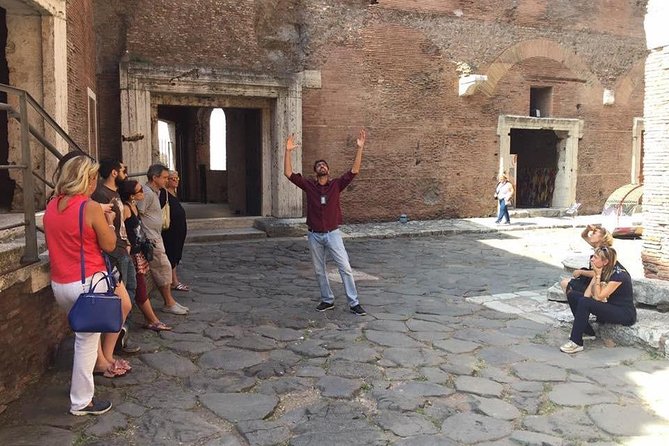
The tour begins at Via Quattro Novembre, 94, in Rome’s 00187 postal area. You meet at 4 p.m., and the activity ends back at the same meeting point. The location is near public transportation, but hotel pickup and private transport are not included, so you need to make your own way there and back.
Inside the museum, your guide leads you through findings from the Imperial Forums. The key benefit of having a guide here is context. You can look closely at the displays, then ask how an object or architectural fragment fits into the larger site.
A private visit also gives you room to ask the questions that often get lost in a large group. You might want to know how a particular section was used, why the area changed, or how the Imperial Forums differed from the Roman Forum. The format is well suited to that kind of conversation.
The museum is also useful for building a picture of ancient Rome through more than its most dramatic monuments. The Colosseum is easy to understand as an arena. The Imperial Forums require more explanation because they were part of a broader civic and architectural complex. A good guide makes that difference clear.
The names Vincenzo and Martina are associated with especially strong guide experiences. Vincenzo is described as bringing the visit alive, while Martina is noted for her passion and clear command of the subject. You cannot assume either guide will lead your particular booking, but those comments point to the quality of guide-led interpretation this experience aims to provide.
Seeing the excavation site with a guide
The museum visit is tied to the archaeological site itself. That matters because ancient objects make more sense when you can connect them to the place where they were found. Rather than viewing isolated pieces in a case, you are discussing the remains as part of the central area of ancient Rome.
You will consider the function of the Imperial Forums and how they developed through time. The supplied information does not promise a fixed list of individual rooms, objects, or monuments, so you should not expect a rigid, highly itemized route. The strength is the guide’s explanation of the area as a whole.
I like this approach for travelers who enjoy archaeology but do not want to spend hours trying to decode a site alone. Ruins often reward patience, yet Rome gives you so many layers at once that it is easy to miss the larger pattern. A professional local guide can point out what deserves attention and explain why it matters.
The visit also offers a quieter alternative to Rome’s most heavily visited sights. The area is described as not busy despite its importance. That can make a real difference. You are more likely to hear the guide clearly, stop to examine details, and ask questions without feeling swept along by a large crowd.
Still, quieter does not mean visually spectacular at every moment. If your main goal is a grand, instantly recognizable view, this may feel less dramatic than the Colosseum. The payoff comes through understanding the site, not through a nonstop series of postcard scenes.
What a private two-hour tour gives you
Two hours is enough time for a focused visit without turning the afternoon into a marathon. Rome’s archaeological sites can be tiring, especially when you combine walking, uneven surfaces, heat, and dense information. A shorter private tour lets you concentrate on one subject and still leave room in your day.
The private setup means only your group takes part. That gives you personal attention and makes it easier to shape the conversation around your interests. If you are fascinated by construction, urban planning, archaeology, or the way Rome changed across the centuries, you can ask questions in that direction.
This format can also work well for families or mixed-interest groups. Someone who already knows the basics can ask more advanced questions, while someone new to Roman archaeology can request a clearer explanation. A large group often forces everyone into the same pace. Here, the guide can respond to your group.
The downside is the price. At $137.80 per person, this is not a budget museum visit, especially if you are paying for several people. You are paying for a private professional guide as well as admission, not just entry to the site. The value depends on how much you care about interpretation and personal attention.
For one person or a small group with a strong interest in ancient Rome, the price may make sense. Group discounts are available, which can improve the cost for a larger party. If you prefer to browse quietly on your own and read at your own speed, the private guide may feel like an unnecessary extra.
Same place, a different set of stalls:
- Rome: Colosseum, Roman Forum & Trajan’s Market Exterior Tour
★ 4.3 · 2,038 reviews - Taste of Testaccio: Special 15 Year Anniversary Edition
★ 5.0 · 1,658 reviews - Roman Food Tour with Visit to the Trionfale Food Market
★ 5.0 · 471 reviews - Authentic Roman Cooking Class & Market Experience
★ 5.0 · 363 reviews
Why the 4 p.m. start can work well
The 4 p.m. start gives you a practical way to place the museum into a full Rome day. You can visit another part of the city earlier, take a break, and then meet for a concentrated archaeological experience. The exact flow of your day will depend on your plans, but the late afternoon timing avoids forcing this visit into your busiest morning hours.
A two-hour activity ending around 6 p.m. also leaves you near the city center for the evening. The tour itself returns to the meeting point, so you are not left at a distant final stop. Since transport is not included, plan your route before the start time and allow enough time to arrive at Via Quattro Novembre.
The timing may be less useful if your schedule already includes a late dinner reservation or another timed attraction. Rome’s traffic and walking distances can also make tight connections unwise. Treat the meeting time as firm, and avoid booking another activity immediately afterward.
Practical details that affect your visit
Admission tickets are included, along with a local guide and professional guide service. You do not need to buy a separate museum ticket for this activity. Hotel pickup, drop-off, and private transportation are not included, so you handle all transport yourself.
You should have a moderate level of physical fitness. The information provided does not give a precise count of stairs, walking distance, or surface conditions, so ask the operator if those details matter to you. Archaeological sites can require more effort than a standard indoor museum, and it is wise to wear comfortable shoes.
Bags and backpacks must be left in the checkroom. This is an important detail, not a minor footnote. Arrive with only the items you need and allow time to follow the museum’s storage procedure. Do not plan to carry a large daypack through the visit.
The tour is offered in English. Confirmation is provided at booking, and free cancellation is available if you cancel at least 24 hours before the local start time. Cancellations or changes made later are not accepted for a refund.
Who will get the most from this experience
I would recommend this tour to anyone who has already seen Rome’s headline attractions and wants a more focused archaeological visit. It is also a good fit for people who prefer conversation and explanation over wandering alone.
History and archaeology enthusiasts will find the subject especially appealing. The museum connects excavated material with the Imperial Forums and gives you a chance to consider how the area functioned and changed. That focus makes the tour more rewarding for someone willing to look closely and ask questions.
The private format is useful for couples, families, and small groups with different levels of interest. You can ask for more detail without worrying about holding up strangers. Group discounts may also help reduce the per-person cost for a larger party.
This is less suitable if you want a broad survey of all ancient Rome in one outing. It does not replace a visit to the Colosseum, Palatine Hill, or Roman Forum. It adds another part of the story. You should also think twice if you dislike guided visits or prefer to spend museum time entirely at your own pace.
Should you book the Museum of the Imperial Forums tour?
Book it if you want to move beyond Rome’s greatest hits and understand the Imperial Forums as part of the city’s wider ancient center. The private format, included admission, English-speaking guide, and modest two-hour length make it easy to fit into a longer Rome itinerary.
The strongest reason to choose it is the guide. A lively guide such as Vincenzo or Martina can turn an archaeological site from a collection of fragments into a readable account of Roman life and urban change. The quieter setting is another advantage, especially after crowded visits elsewhere.
Skip it if your time in Rome is very short and you have not yet seen the Colosseum or Roman Forum. At $137.80 per person, it is a specialist experience, not the cheapest way to see ancient ruins. For returning visitors, history fans, and anyone who values personal explanation, it offers a worthwhile look at a less familiar part of Rome.
FAQ
How long does the tour last?
The tour lasts approximately two hours.
What time does the tour start?
The tour starts at 4 p.m.
Where does the tour begin?
The meeting point is Via Quattro Novembre, 94, 00187 Roma RM, Italy.
Where does the tour end?
The activity ends back at the meeting point.
Is transportation included?
No. Hotel pickup, hotel drop-off, and private transportation are not included. The meeting point is near public transportation.
Do I need to leave my bag somewhere?
Yes. Bags and backpacks must be left in the museum’s checkroom.
Is this a private activity?
Yes. Only your group participates in the private tour.
What language is offered?
The tour is offered in English.
Can I cancel for a refund?
Yes, you can receive a full refund if you cancel at least 24 hours before the experience start time. Changes or cancellations made less than 24 hours before the start are not accepted for a refund.
More Museum Visits in Rome
- Rome: Trajan’s Markets & Museum of The Imperial Fora Tour
★ 4.8 · 4 reviews - Dubai: Old Town, Creek, Museums, Souks, & Street Food Tour
★ 4.8 · 10,816 reviews - Frida Kahlo VIP [Museum Tickets Included] Bike, Markets & Churros
★ 5.0 · 1,072 reviews - Frida Kahlo VIP [Museum Tickets Included] Walk, Markets & Churros
★ 5.0 · 982 reviews
More Private Market Tours in Rome
- Cairo 8 Hour Private Tour of Pyramids, Egyptian Museum and Bazaar
★ 5.0 · 2,931 reviews - Private Excursion to Maeklong Railway and Floating Markets
★ 5.0 · 850 reviews - Floating and Railway Market (Optional Waterfall): Private Tour
★ 5.0 · 827 reviews - Cairo: Private Pyramids, Museum & Bazaar Tour with Lunch
★ 4.6 · 744 reviews
Just added around Rome
- Testaccio Experience: Street Food, Market and Traditions★ 5.0 · 4 reviews
- Rome: Testaccio Food & Market Tour with Pasta & Wine★ 5.0 · 38 reviews
- Rome: Temples, Squares & Markets Guided Walking Tour★ 4.8 · 26 reviews
- Rome: Taste of Testaccio Food & Market Tour★ 4.9 · 38 reviews
- Rome: The Vatican Market Experience Tasting and Class★ 4.7 · 10 reviews
- Rome: Trajan’s Markets & Museum of The Imperial Fora Tour★ 4.8 · 4 reviews
- Rome: Trajan Markets Experience with Multimedia Video★ 4.0 · 66 reviews
- Rome: Prati Food & Wine Market Tour with St. Peter Square★ 5.0 · 7 reviews
Private Market Tours, compared.
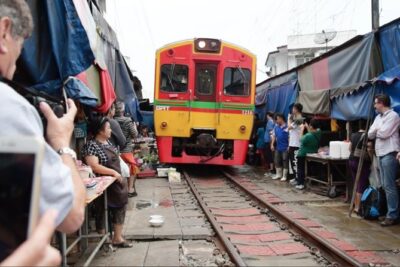
Private Excursion to Maeklong Railway and Floating Markets
Read our review →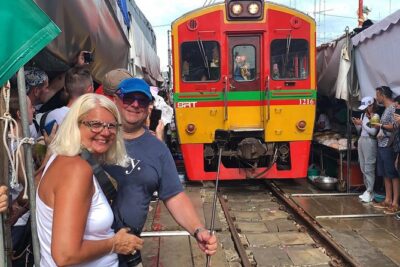
Floating and Railway Market (Optional Waterfall): Private Tour
Read our review →
Private Pyramids, Museum & Bazaar Tour with Lunch
Read our review →
Shopping in the Souks of Marrakech Private Tour
Read our review →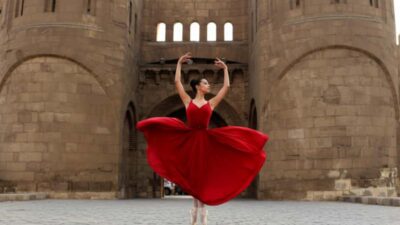
Local Markets & Khan el Khalili Private Shopping Tour
Read our review →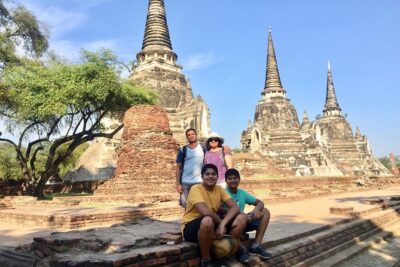
Private Excursion to Floating Market and Ayutthaya World Heritage
Read our review →
Private Heritage Walking Tour in Jaisalmer Fort and Old Bazaar
Read our review →Browse the lists this tour appears in