Review · FOOD & DRINK
Taste Bucharest: A Food Lover’s Tour of Markets & Neighbourhoods
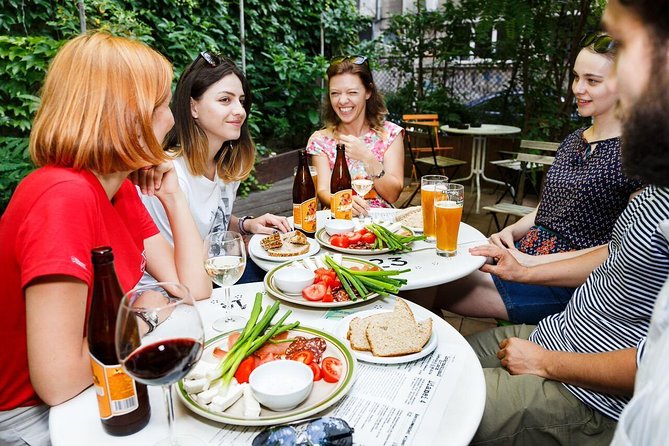
Bucharest reveals itself best over a plate of local food, and this tour pairs its lesser-known streets with the city’s famous Obor Market. You’ll walk from the National Theatre through old neighborhoods, ride a tram, and finish with Romanian cheeses, cured meats, dips, mici, beer, tuica, and a doughnut.
I like the small maximum of 12 people, which gives guides such as Angelica, Julian, Mihaela, and Bogdan room to answer questions and adjust the pace. I also like the mix of food and city life: this is not simply a series of restaurant stops, but a look at churches, old houses, Communist-era Bucharest, and a market locals actually use.
The main consideration is the food style. Expect generous platters, cold cuts, cheeses, spreads, vegetables, grilled mici, and seasonal produce rather than a parade of hot Romanian dishes such as soup or cabbage rolls. You’ll also walk about 6 kilometers, so comfortable shoes are essential.
Key points to know before booking
- Obor Market is the culinary centerpiece: You’ll see produce, prepared food, traditional goods, and local shopping before sitting down to eat.
- The tour covers about 6 kilometers: Walking is combined with a short ride on Bucharest public transport, including a tram.
- Food and drinks are included: Tastings usually include Romanian cheeses, sausages, spreads, mici, seasonal produce, tuica, beer, and coffee or tea.
- The history begins at the National Theatre: The opening stop connects the city to the Romanian Revolution and the street fighting around the theatre.
- A small group makes a difference: The maximum is 12 people, with private tour options also available.
- The experience ends near Saint George Square: The finish at Piata Sf. Gheorghe is close to the Unirea area, useful for continuing your afternoon in central Bucharest.
Why this Bucharest food tour feels different
Many food tours stay within the center and move from one café to the next. This one uses food as a reason to cross several parts of Bucharest. You begin near the National Theatre, pass through the Armenian Quarter, ride toward Obor, and finish with market food and local drinks.
That route gives you a wider picture of the city. You see grand public buildings, old religious sites, houses from earlier eras, Communist-era streets, public transport, and a major market. The food is important, but so is the setting in which you eat it.
The tour costs $102.79 per person and lasts about five hours. That is not a bargain basement price for a walking tour, but the value improves because all listed tastings and drinks are included. You are paying for a full half-day with a guide, several food stops, public transport, and cultural interpretation.
The small group also matters. A maximum of 12 people is manageable on narrow sidewalks and inside a market. Guides can explain unfamiliar foods, help with questions, and keep the group together without making the experience feel like a large procession.
More Food and Drink Trips in the world:
- Dubai: Old Town, Creek, Museums, Souks, & Street Food Tour
★ 4.8 · 10,816 reviews - Dubai: Old Town, Souks, Street Food, Guided Tour & Abra Ride
★ 4.9 · 7,170 reviews - Bangkok by Night: Temples, Markets and Food Tuk-Tuk Tour
★ 5.0 · 3,752 reviews
Starting at the National Theatre and the Romanian Revolution
Meet at the Ion Luca Caragiale National Theatre on Bulevardul Nicolae Balcescu. The tour starts with about 15 minutes around the theatre, focusing on its role in the Romanian Revolution and the street battles that shaped Bucharest.
This is a smart opening because it gives the meal ahead some context. Food in Romania is tied closely to family life, shortages, rural traditions, and the country’s political past. Beginning with a major public site helps you see Bucharest as more than a collection of picturesque streets.
You will not spend hours inside the theatre. The stop is brief and outdoors, so it works well for a food-focused day. Arrive ready to walk, since the tour moves on foot almost immediately.
Strada Batistei and the city’s older architecture
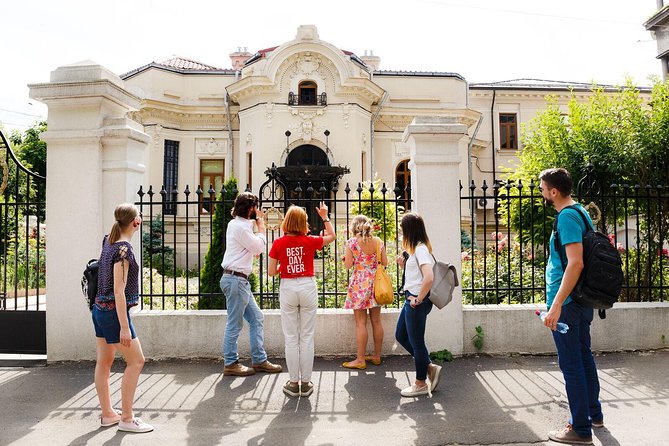
From the theatre, you walk to Strada Batistei, a quieter area with a different feel from the main boulevards. The stop takes about 20 minutes and includes discussion of the old American embassy and the area’s 19th-century Neo-Romanian architecture.
This section gives the tour a useful pause before the first substantial food tasting. You get a look at the kinds of buildings that are easy to miss when you rush between major sights. The architectural details also help explain how Bucharest developed before the Communist period changed large sections of the city.
The nearby Batistei Church receives its own short stop of about 15 minutes. You’ll hear about its history and its place in Romanian Orthodox tradition. It is not a long church visit, so do not book this expecting an extended religious-art tour. Think of it as one piece of a broader walk through the city.
The Armenian Quarter and Bucharest’s oldest documented house
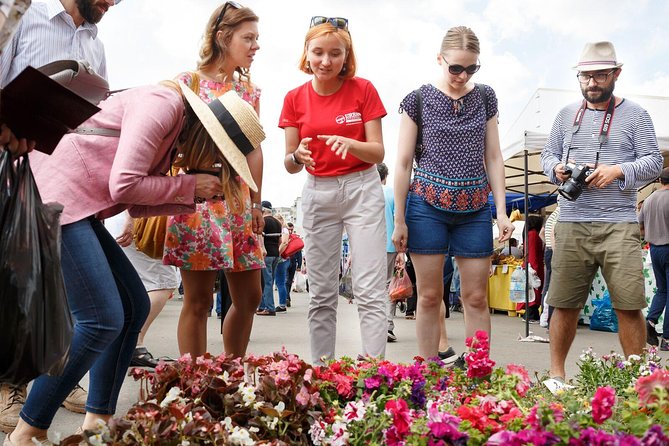
The Armenian Church and surrounding Armenian Quarter receive the longest early sightseeing stop, about one hour. Here, the focus shifts to Bucharest’s mixed architectural character and the presence of the Armenian community.
The area is especially useful for showing you a side of Bucharest that can disappear behind the better-known central sights. You’ll see varied buildings and learn about the city’s older neighborhoods rather than only its grand avenues. The tour also visits Bucharest’s oldest documented house, adding a concrete detail to the architectural story.
This part may appeal most to you if you enjoy local history as much as eating. One past guest found the historical portion a little long, especially compared with the amount of hot food served later. That is a fair warning: this is a culture and food tour, not a rapid tasting crawl.
Guides have different styles. Angelica has been praised for explaining dishes as well as city history, while Julian is known for mixing facts with humor. Mihaela and Bogdan have also led tours that balance local stories with food stops. Your guide will shape the rhythm, but the route itself clearly gives history a serious role.
A few more market tours around the world worth a look
- Bangkok: Damnoen Saduak Market and Maeklong Railway Market
★ 4.5 · 26,723 reviews - The Old Siam: Damnoen Saduak and Maeklong Railway Market
★ 4.5 · 10,992 reviews - Bangkok: Train Market & Floating Market with Boat Ride
★ 4.7 · 9,547 reviews - From Bangkok: Ayutthaya & Ayothaya Floating Market Day Trip
★ 4.7 · 6,084 reviews
Taking the tram toward Communist-era Bucharest
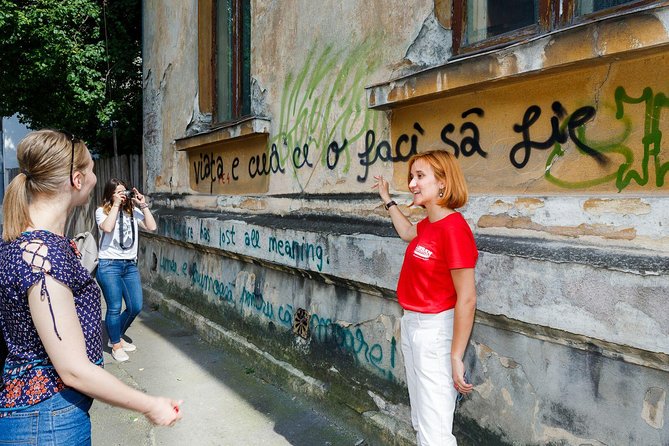
After the Armenian Quarter, you take a tram along Calea Mosilor toward the Obor area. The ride lasts about 20 minutes and introduces another chapter of the city, including Communist-era Bucharest.
This is one of the tour’s best ideas. Public transport turns the movement between neighborhoods into part of the experience. Instead of treating Bucharest as a museum of isolated sights, you see how the parts connect by tram and how ordinary city life unfolds between them.
The tram segment also gives your feet a break before the main market visit. Still, this is an active day. The full route covers approximately 6 kilometers on foot, with the tram used as a supplement rather than a substitute for walking.
Obor Market, where the food really takes over
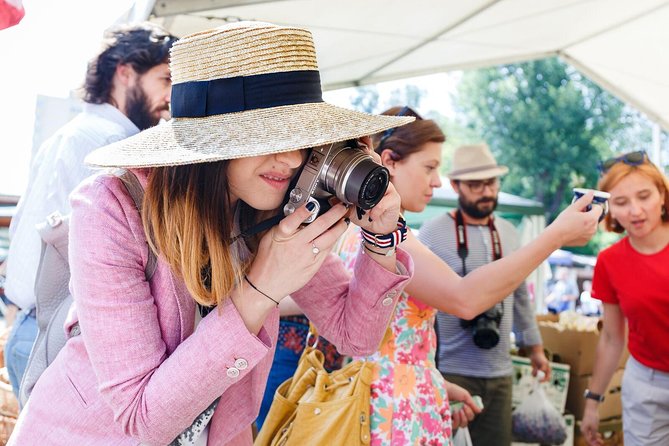
You spend about one hour and 40 minutes around Piata Obor, Bucharest’s major market area. This is the heart of the tour, and it is where the food list becomes more varied and substantial.
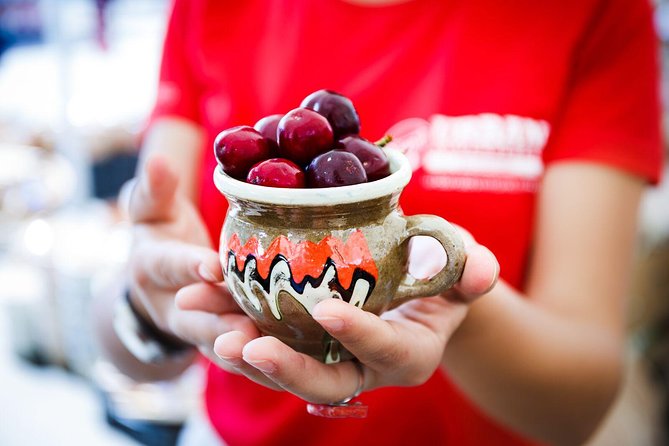
Expect to browse produce, traditional goods, deli items, and street food. Seasonal availability shapes what you taste, so the exact menu can change. At different times of year, the produce may include wild strawberries, wild garlic, spicy pickles, watermelon, or grapes.
The market tasting generally includes a peasant platter with aubergine dip, zacusca, whipped beans, fish roe, telemea and burduf cheeses, sausages, smoked bacon, cracklings, red onions, tomatoes, and toast. That is a broad spread, but it is mostly served cold or at room temperature.
You can also expect a selection of cow, sheep, and goat cheeses. This is useful if you want to understand the range of Romanian dairy products without buying several large portions yourself. The guide can explain what you are eating and how the flavors differ.
One of the strongest food moments is usually mici, Romania’s grilled skinless sausage, served with mustard. Mici are simple, savory, and best eaten hot. The tour may take you to a busy local food stop where these sausages are a specialty, rather than presenting them as a polished restaurant course.
The day usually ends with a sweet Wallachian doughnut. It is a small but welcome finish after the salty meats and cheeses. Several guides have made this last stop memorable, and one guide even offered warm pretzels at the beginning of a tour. Small touches like that can make the food feel connected to daily Romanian life rather than arranged only for visitors.
What you will drink during the tasting
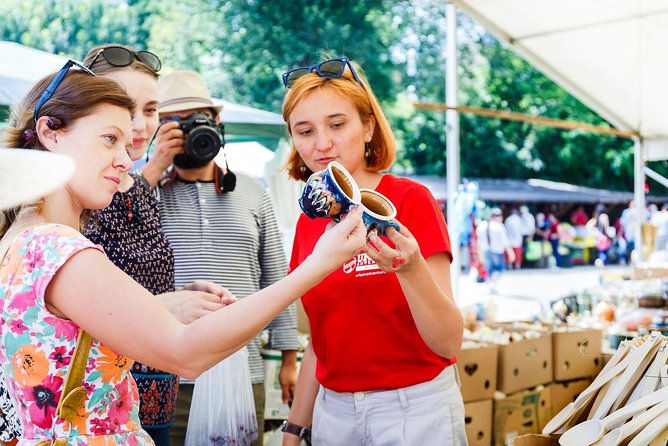
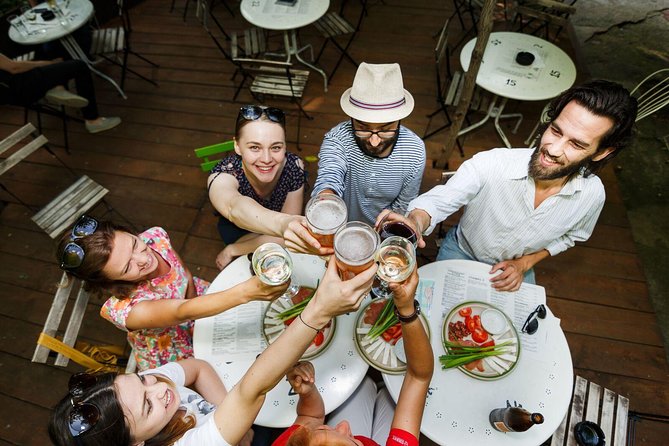
The drink program adds useful local flavor. You can expect a shot of tuica, the Romanian fruit brandy, though the exact type may vary. It is strong, so take it slowly, especially if you are also drinking beer.
Up to three beers may be included. The tour information describes Romanian beer and craft beer, but exact brands depend on availability. Nonalcoholic alternatives include soft drinks, coffee, or tea.
This flexibility is helpful for mixed groups. If you do not drink alcohol, you can still take part in the food stops and receive alternatives. If you enjoy local spirits, tuica offers a quick introduction to a drink that is closely tied to Romanian home hospitality.
Additional food and drinks are not included, and tips for the guide are separate. You may also want extra money if something at Obor catches your eye. The tour includes tastings, but it is not intended to cover personal market shopping.
How much food should you expect?
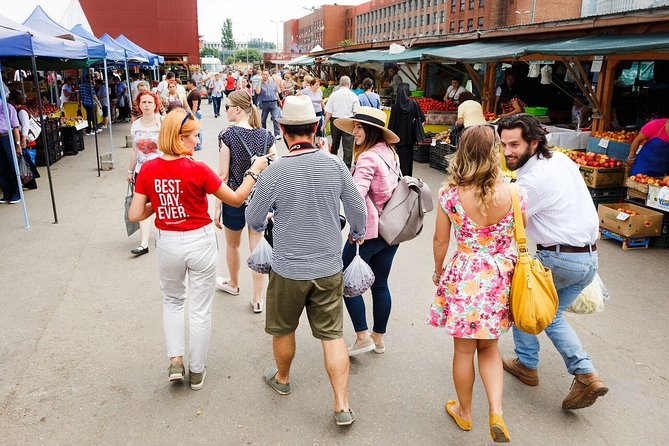
You should arrive hungry. The stated tastings are generous, and the food is spread across several stops rather than served all at once.
Still, set the right expectation. This tour usually emphasizes:
- Romanian cheeses
- Cured meats and smoked bacon
- Sausages and cracklings
- Aubergine dip, zacusca, and bean spreads
- Seasonal fruit and vegetables
- Mici with mustard
- Bread and toast
- A Wallachian doughnut
- Tuica, beer, coffee, tea, or soft drinks
If you are hoping for sarmale, cabbage rolls, ciorba, or several cooked main dishes, this may not be the right match. One food-focused participant found the cold platters less satisfying than expected, despite enjoying the sausage and guide. That criticism points to the tour’s main limitation: it offers a generous sample of market food, but not a full survey of Romania’s best-known hot dishes.
The guide can make or break the day
The route is fixed enough to give the day shape, but the guide controls the mood. The strongest descriptions of the experience center on guides who explain each dish, connect architecture to history, and keep conversation moving during the walk.
Angelica has been praised for her warmth and for taking time to explain both Bucharest and the food. Julian’s style leans funny and energetic, with plenty of jokes alongside historical facts. Andrea has been valued for treating the group like friends while offering practical suggestions for onward travel, including advice for a trip to Brasov.
Alex has also led a particularly market-focused version of the tour, helping with produce, palinca, and market shopping before the group ate mici at Obor. These details show why a small group is useful. A good guide can respond to curiosity, stop for questions, and help you understand foods you might otherwise pass by.
The tour is offered in English. Confirmation is provided at booking, and the meeting point is near public transportation. Most people can participate, but the walking distance is the important practical issue.
Dietary needs and seasonal changes
You must notify the operator at least 24 hours before the tour if you have allergies, food sensitivities, or dietary needs such as vegetarian, vegan, or gluten-free requirements.
The operator will try to accommodate you, but options may be limited. That matters here because meat, dairy, bread, and alcohol appear throughout the standard tasting. Do not wait until the morning of the tour to mention a serious allergy.
The route and food stops can change. Market produce depends on the season, and daily availability affects what is fresh and accessible. This is part of the appeal of a market-based tour, but it also means you should not treat every listed item as guaranteed.
Who will enjoy this tour most?
I would choose this experience if you want a first look at Bucharest that combines eating with movement. It suits you especially well if you enjoy markets, public transport, local neighborhoods, architecture, and food that is served in a casual setting.
It is also a strong choice if you have only a short stay in the city. In five hours, you cover several districts, sample a range of Romanian staples, and finish in a useful central area near Saint George Square and Unirea Square.
You may want another type of food tour if you are mainly seeking sit-down meals, elaborate cooking, or a long list of hot regional dishes. This tour is more about everyday flavors, market culture, and the city between the landmarks.
The walking also rules out a completely easygoing afternoon. Six kilometers is not extreme, but cobbled or uneven streets, market crowds, and standing during tastings can add up. Wear comfortable shoes and avoid scheduling another demanding activity immediately afterward.
Should you book Taste Bucharest?
Book it if you want Romanian food in context. The combination of Strada Batistei, the Armenian Quarter, the tram ride, and Obor Market gives you a better sense of Bucharest than a simple restaurant crawl. The included samples are varied, the group stays small, and the guides bring personality to a route that could otherwise feel like a long city walk.
At $102.79, the price makes the most sense when you value the guide, the transportation, the cultural stops, and the included drinks as well as the food. I would skip it only if your main goal is a hot-food feast or if 6 kilometers of walking sounds tiring.
For most first-time visitors who want to eat, understand, and move through Bucharest rather than simply photograph it, this is a well-rounded half-day choice. You finish with a fuller stomach, a better map of the city, and a clearer idea of what to order when you return to Romania on your own.
FAQ
How long does the Bucharest food tour last?
The tour lasts approximately five hours.
How much walking is involved?
You will walk about 6 kilometers during the experience. Comfortable walking shoes are recommended.
Does the tour use public transportation?
Yes. The experience includes Bucharest public transportation, including a tram ride along Calea Mosilor toward Obor Market.
What food is included?
Typical tastings include Romanian cheeses, cured meats, sausages, smoked bacon, cracklings, aubergine dip, zacusca, whipped beans, fish roe, seasonal produce, mici with mustard, bread, and a Wallachian doughnut. Exact items depend on the season and daily availability.
What drinks are included?
You can usually expect a shot of tuica, up to three beers, and nonalcoholic choices such as soft drinks, coffee, or tea. The exact selection can vary.
Can dietary restrictions be accommodated?
You should notify the operator at least 24 hours in advance about allergies, sensitivities, vegetarian, vegan, or gluten-free needs. Accommodation is attempted, but options may be limited.
Where does the tour start and finish?
The tour starts at the Ion Luca Caragiale National Theatre, Bulevardul Nicolae Balcescu 2. It ends at Piata Sf. Gheorghe, near Saint George Square and Unirea Square.
How large is the group?
The maximum group size is 12 people. Private tour options are also available.
What happens if I need to cancel?
You can cancel for a full refund if you do so at least 24 hours before the local start time. Cancellations or changes made less than 24 hours before the start are not accepted for a refund.
Just added around the world
- 3-Hour Herbal Wholesale TCM Market and a Local Wet Market Tour★ 5.0 · 4 reviews
- Half-day Dandan Noodles Cooking Class with a Local Market Visit★ 5.0 · 8 reviews
- Chania Old Town, Public Market and Chrisopigi Monastery Tour★ 4.5 · 6 reviews
- Charleston International Sweet Treats & Historic City Market Tour★ 5.0 · 22 reviews
- Chania: Old Town, Public Market, Hill of Prophet Elias, Agia Triada★ 5.0 · 35 reviews
- Moroccan Cooking Class with a Local Family & Market Visit★ 5.0 · 16 reviews
- Food Tasting & Market Shopping: Private Guided Tour in PORT LOUIS★ 4.5 · 9 reviews
- Private Market Tour & Cooking Class in Casablanca with Transfers★ 5.0 · 20 reviews
Food & Drink, compared.
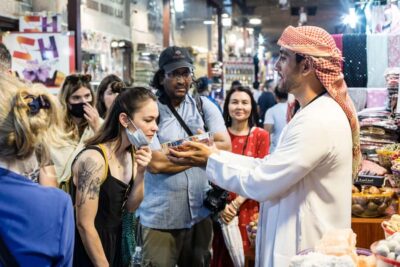
Old Town, Creek, Museums, Souks, & Street Food Tour
Read our review →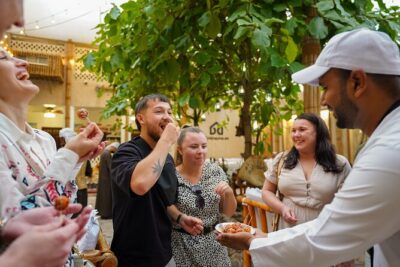
Old Town, Souks, Street Food, Guided Tour & Abra Ride
Read our review →
Bangkok by Night: Temples, Markets and Food Tuk-Tuk Tour
Read our review →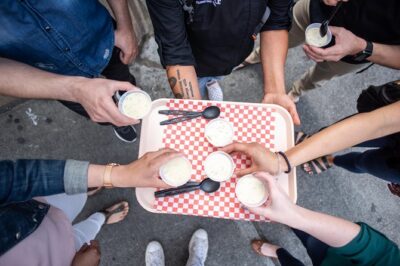
Tokyo Tsukiji Fish Market Food and Culture Walking Tour
Read our review →
Markets, Temples and Food Night Tour by Tuk Tuk
Read our review →