
Review · HISTORICAL TOURS
Bangalore: Walk in Historic Ulsoor – Landmarks, Bazaar & Culture
Ulsoor gives you a quick lesson in Bangalore’s many pasts. In about two hours, you move from a quiet heritage building to a nearly 1,000-year-old Hindu temple, a crowded market, a Sikh place of worship, and a British-era church. That mix is the real attraction, not a checklist of grand monuments.
I like the small group size, capped at eight, and the easy walking pace. I also like the way guides such as Praveen and Ramesh connect buildings to daily life, markets, religion, and old neighborhoods. The main thing to consider is the short duration: you will see a lot, but you will not have time for long visits or much unplanned wandering.
Key points to know before you go
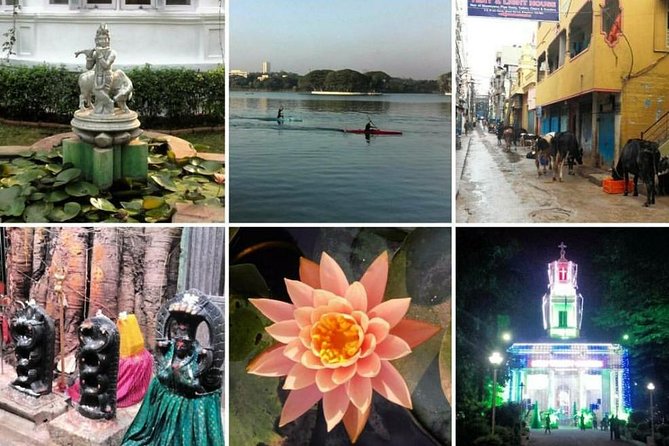
- Four faiths and eras in one walk: See a Hindu temple, Sikh gurdwara, Christian church, and heritage building within the Ulsoor area.
- Praveen is a noted guide: He is named in several comments as friendly, engaging, and especially good at explaining Bangalore’s past.
- The bazaar is the most local stop: Expect produce, textiles, jewelry, spices, and possibly a lively flower market.
- The group stays small: No more than eight people can join a booking, which suits anyone who prefers questions and conversation.
- Dress matters: Cover your shoulders and legs, and bring a scarf if you are a woman visiting the gurdwara.
- Budget for comfort: Wear walking shoes, carry water, and consider spare socks since footwear comes off at several places.
Why Ulsoor makes a good introduction to Bangalore
Bangalore can feel spread out and modern, with traffic and new construction often dominating a first impression. This walk takes you into Ulsoor, one of the city’s older quarters, where religious sites, markets, colonial buildings, and ordinary residential streets sit close together.
I like the way the route gives you contrasts instead of presenting Bangalore as one neat story. A Chola-era temple points to an older South Indian past. A Sikh gurdwara reflects a different religious community. Holy Trinity Church brings in the city’s colonial and military history. The bazaar adds the daily business of buying, selling, eating, and getting on with life.
The walk starts at 5:00 pm, a useful time in a warm city. You avoid the strongest afternoon heat, and the market should have plenty of activity as the day moves toward evening. The trade-off is that light and opening conditions can vary, especially if the walk runs later than planned. The activity also requires good weather, so rain can lead to a new date or a full refund.
The route is described as easy, with regular stops. Most people should manage it, but this is still a walking tour on city streets. Comfortable shoes matter more than speed.
More History Tours in Bangalore:
- Experience Bangalore – City Tour, Authentic Food & market (Food/Culture/History)
★ 5.0 · 156 reviews - Old Bangalore Historical Walk thro Palace, Temples, Fort & Market
★ 5.0 · 60 reviews - Private Excursion to Floating Market and Ayutthaya World Heritage
★ 5.0 · 515 reviews
Starting at Sri Aurobindo Bhavan by Ulsoor Lake
Your guide meets you at Sri Aurobindo Society, at 110 Sri Aurobindo Society, Lake, Annaswamy Mudaliar Road. The building overlooks Ulsoor Lake and provides a calmer opening than a meeting point in the middle of a busy market.
The first stop lasts about 30 minutes, and admission is included. The heritage building combines local vernacular features with colonial influence, including a Madras roof. That architectural blend gives your guide a useful starting point for explaining how Bangalore developed through several periods rather than under one single style.
This is also where the guide sets the tone. Praveen is the name most closely associated with the experience, while Ramesh has also led the walk. The strongest praise centers on guides who explain clearly, answer questions, and adjust to the group. One account describes a guide extending the outing when monsoon weather interrupted the route, although you should not assume every tour will run beyond its planned two hours.
The meeting point is near public transport, and Ulsoor Metro station is nearby. Hotel pickup and drop-off are not included, so plan your own way to the start. The route ends at Someshwara Swamy Temple rather than returning to the starting point, which is helpful if you plan to continue exploring the area afterward.
Someshwara Swamy Temple and Bangalore’s early layers
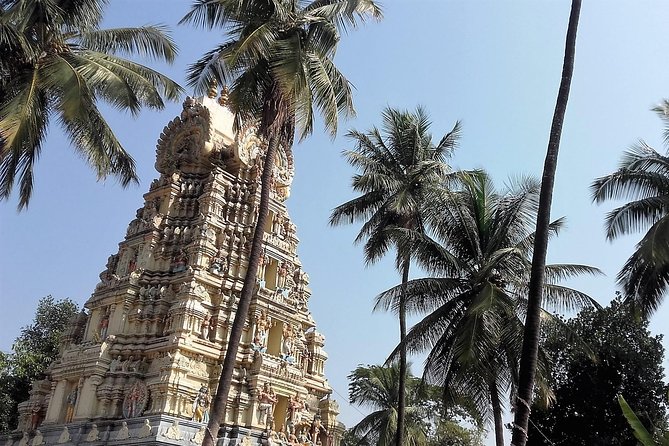
The Sri Someshwara Swamy Temple is one of the oldest major temples in Bangalore. Its origins reach back nearly 1,000 years to the Chola dynasty, while later additions from the Vijayanagara period, especially in the 16th century, give the complex much of its grander form.
You spend about 20 minutes here, with entry included. That is enough for an introduction to the temple’s age, design, and religious role, but not for a slow architectural study. Your guide’s explanation matters because the temple can be easy to treat as just another photogenic stop. The historical layers make it more meaningful.
You should expect to remove your shoes at some places on the walk. Bring an extra pair of socks if bare feet on warm or dusty surfaces bother you. Dress modestly from the beginning, since exposed shoulders and legs are not suitable for the religious sites on this route. Men are asked to cover their legs and shoulders, and women should avoid spaghetti tops, halter-necks, miniskirts, and hot pants.
The temple is also the final meeting point listed for the tour. If you are using a map or arranging a ride afterward, note that the official end is Someshwara Swamy Temple, Halasuru, not Sri Aurobindo Society.
Ulsoor Bazaar, where the city gets practical
The bazaar is the walk’s best chance to see Ulsoor as a working neighborhood rather than a collection of historic buildings. The route passes shops with textiles, jewelry, spices, and fresh produce. A flower market is also part of the experience described by past participants, and it can be a wonderfully noisy, colorful section of the walk.
This is where I would pay closest attention to the guide’s commentary. A market tells you how a place functions. You see what people buy, how shopkeepers arrange goods, and how older trading streets fit beside homes and religious buildings. The point is not simply to take photographs. It is to notice the ordinary details that a vehicle tour would pass too quickly to catch.
The bazaar can also be the least controlled part of the route. Streets may be crowded, stalls may change, and the pace may depend on local conditions. Keep your belongings secure and stay close enough to hear the guide. The walk is capped at eight people, which helps, but this is still an active market rather than a quiet museum.
Light snacks are provided during the experience, while other food and drinks are not included. The supplied information does not specify the snack, so do not plan on it as a full meal. If you need dinner soon after the 5:00 pm start, eat beforehand or make separate plans.
A few more market tours around Bangalore worth a look
- Bengaluru Pete City Market Half-Day Walking Tour
★ 5.0 · 163 reviews - Tipu Palace + Koté Vishnu + Fort + KR Market + Jain Temple = Bengaluru Pété Walk
★ 5.0 · 150 reviews - Bangalore: Palace, Temples, Fort & Markets Walking Tour
★ 4.9 · 97 reviews - Bangalore: Walking Tour of Fort, Palaces, and Market
★ 5.0 · 58 reviews
The Sikh gurdwara and a lesson in respect
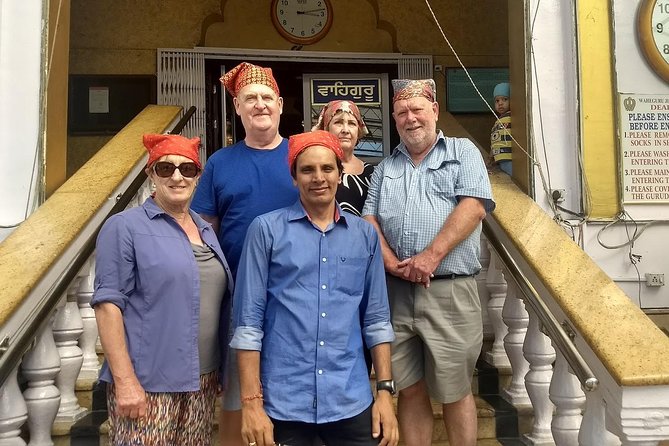
The gurdwara is one of Bangalore’s largest and most prominent Sikh places of worship. Built in the 1940s, it uses traditional Sikh design and a white-marble exterior with a golden feature.
You spend about 20 minutes here. That short visit works well as part of a city overview because it adds another religious tradition to the route without turning the walk into a single-faith tour. Your guide can place the building within Bangalore’s wider social story and explain what you are seeing.
A scarf is required for women visiting the gurdwara. Footwear is removed at some sites, so the spare-socks tip is useful here as well. Modest clothing is expected for everyone. These rules are simple, but they matter. Follow them without fuss, and treat the gurdwara as a place of worship first and a sightseeing stop second.
The gurdwara may be especially valuable if your time in Bangalore is limited. You get a glimpse of a community and architectural tradition that might not appear on a standard city drive. Just remember that a 20-minute stop offers an introduction, not a full account of Sikh faith or local Sikh life.
Holy Trinity Church and the colonial record
The final major stop is CSI Holy Trinity Church, built in 1851. Its interior and grounds contain plaques, inscriptions, and statues linked to British officers, soldiers, and missionaries who lived in Bangalore.
This is an important counterpoint to Someshwara Swamy Temple. The temple reaches back to the Chola and Vijayanagara periods, while Holy Trinity Church reflects the British colonial presence. The guide’s job is not only to name dates, but to help you understand how these different histories occupy the same city.
The church visit lasts about 20 minutes. If colonial military history is not your main interest, the memorials may feel formal compared with the market or temple. Still, the stop gives the route balance. You see how power and memory were recorded by the colonial community, then compare that with the religious and commercial life around Ulsoor.
The route’s range is one of its strongest features. In a short span, you encounter an ashram or heritage society setting, a Hindu temple, a market, a Sikh gurdwara, and a British church. The experience works best when you want context and contrast rather than a single famous landmark.
What the two-hour format does well
Two hours is a sensible length for an introduction. You can fit the walk into a busy Bangalore schedule, perhaps on your first evening, without giving up half a day. The 5:00 pm start also leaves the morning and early afternoon open for other plans.
The pace is described as relaxed, with plenty of stops. That makes the walk suitable for a range of fitness levels and for people who prefer listening to long, hard walks. The guides’ strength is their storytelling. Praveen, in particular, is described as warm and engaging, with a strong grasp of local history and culture.
Still, short tours require choices. You will not spend a long time in each building. You may not be able to browse every bazaar lane, stop for a full meal, or pause whenever you see an interesting doorway. If you want a detailed architectural tour or an entire day devoted to Ulsoor, this will feel brief.
I see the tour as a first look, not a final word. It helps you decide which parts of Ulsoor deserve a second visit. That is a good use of limited time, especially if you are new to Bangalore.
Price, group size, and practical value
At $34.04 per person, the price is reasonable if you value a local guide and want several entry-ticket sites covered in one outing. Entry fees at the monuments are included, as are light snacks and an English-speaking heritage expert. You are paying mainly for the interpretation and the route, not just for access to buildings.
The small group improves the value. A maximum of eight people gives the guide a realistic chance to answer questions and keep everyone together in the market. It is also a better fit for a solo visitor or couple who want conversation rather than a large crowd.
The price does not include hotel transfers, meals, or drinks. You need to reach the Sri Aurobindo Society yourself and arrange your onward transport from the temple. Since Ulsoor Metro station is nearby, the starting point is practical, but check your route before setting out.
Free cancellation is available up to 24 hours before the 5:00 pm start for a full refund. Changes or cancellations inside that window are not accepted, and the experience can be moved or refunded if poor weather causes cancellation.
Who should book this Ulsoor walk?
I would recommend it to a first-time Bangalore visitor who has one evening available and wants more than a drive past major sights. It suits people who care about local history, religious architecture, markets, and the way old neighborhoods function today.
It is also a good match for solo visitors. The group is small, the route has a clear structure, and a guide such as Praveen can make the city easier to read quickly. Families and older participants may appreciate the easy pace, though everyone should be comfortable walking on urban streets and removing shoes at several stops.
I would think twice if you want a food tour, extensive shopping time, or a private vehicle. Food is limited to light snacks, the tour is on foot, and hotel transfers are not supplied. I would also avoid booking it as your only plan if rain looks likely, since the activity depends on good weather.
FAQ
How long is the Bangalore Ulsoor walking tour?
The walk lasts approximately two hours.
What time and where does the tour start?
It starts at 5:00 pm at Sri Aurobindo Society, 110 Sri Aurobindo Society, Lake, Annaswamy Mudaliar Road, Halasuru, Bengaluru. Ulsoor Metro station is nearby.
Where does the tour finish?
The listed end point is Someshwara Swamy Temple in Halasuru.
Are entrance fees included?
Yes. Entry fees at all the monuments visited on the route are included.
What should I wear?
Men should cover their legs and shoulders. Women should dress modestly and avoid spaghetti tops, halter-necks, miniskirts, and hot pants. Women also need a scarf when visiting the Sikh gurdwara.
What is the cancellation policy?
You can cancel up to 24 hours before the start time for a full refund. If poor weather causes the tour to be canceled, you will be offered another date or a full refund.
Should you book it?
Book this walk if you want a compact, well-guided introduction to Bangalore’s Ulsoor district. The strongest reasons are the unusual mix of sites, the lively bazaar, the small group, and the personal guidance associated with Praveen and Ramesh.
Skip it if you want a long market visit, a full meal, private transport, or detailed time inside every monument. For most first visits, though, the $34.04 price buys a useful slice of the city: old faiths, colonial memories, everyday trade, and the streets that connect them.
Just added around Bangalore
- Experience Bangalore Evening City Walk Tour and Market Visit★ 5.0 · 9 reviews
- Shopping and Bazaar Trail in Bangalore★ 4.5 · 5 reviews
- Old Bangalore Historical Walk thro Palace, Temples, Fort & Market★ 5.0 · 60 reviews
- KR Market Photo Walk★ 5.0 · 12 reviews
- Lalbagh+Bull Temple+Tipu Palace+Market+Lunch=Bangalore City Tour★ 5.0 · 9 reviews
- Bangalore Evening Food Street Walk and Market Visit★ 5.0 · 32 reviews
- Private Walking Tour into the Oldest Local Market in Bengaluru★ 5.0 · 5 reviews
- Bangalore Walking Tours – Flower Market, PETE and more★ 5.0 · 5 reviews
Historical Tours, compared.
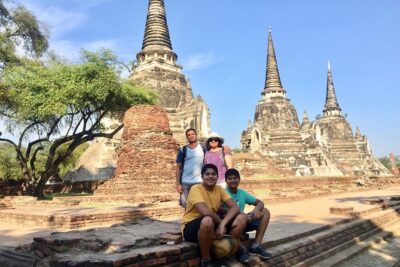
Private Excursion to Floating Market and Ayutthaya World Heritage
Read our review →
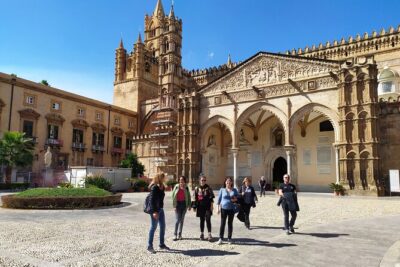
Discover Palermo in 3 hours. Art, history, markets and street food
Read our review →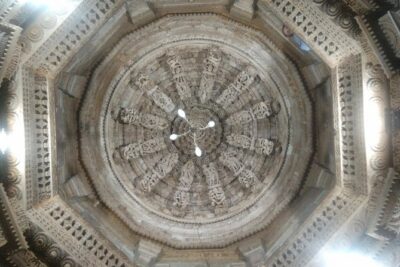
Private Heritage Walking Tour in Jaisalmer Fort and Old Bazaar
Read our review →
2 Hour Historic Market Food Tour and Hands-On Biscuit Class
Read our review →
Abu Dhabi Sightseeing Tour: Sheikh Zayed Mosque, Heritage Village & Dates Market
Read our review →
Historic Center Street Food, Market, and Eateries Tour
Read our review →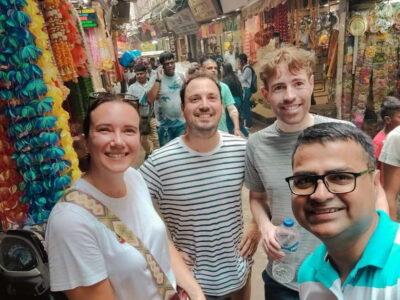
Old Delhi: Spices, Heritage and Bazaars Walking Tour
Read our review →Browse the lists this tour appears in