
Review · STREET FOOD MARKET TOURS
Lima: Historic Center Street Food, Market, and Eateries Tour
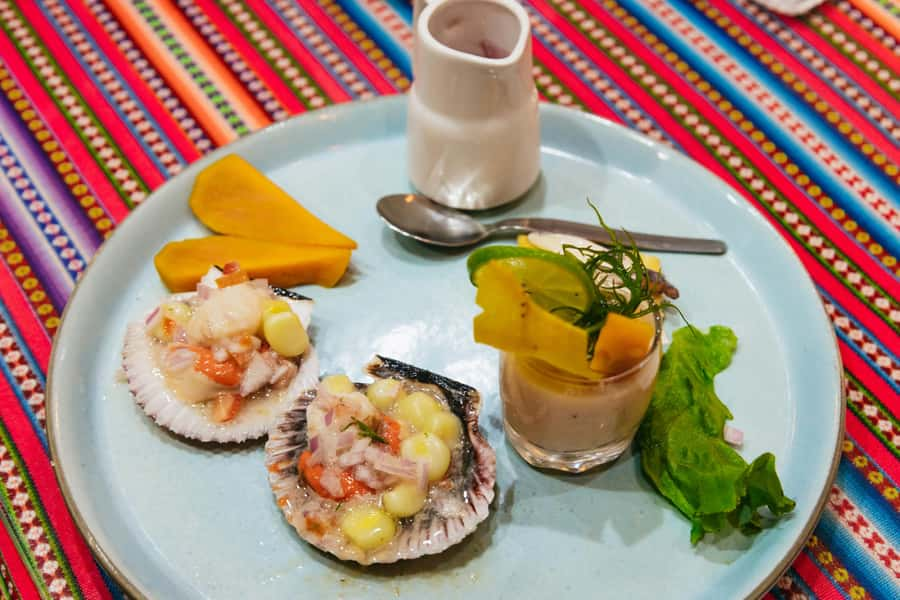
Lima’s Historic Center is best understood with something hot, sweet, smoky, or citrusy in your hand. This four-hour walk pairs street food with colonial landmarks, taking you from Plaza San Martín and the Gran Hotel Bolivar to Mercado Central, Chinatown, San Francisco, and the Cathedral.
I like the way the tour uses small local eateries, food carts, and market stalls rather than keeping you inside one polished restaurant. I also like the mix of food and city stories, with guides such as Marcos, Aura, Valeria, and Sheyla bringing in everyday Peruvian eating habits. The main drawback is that the menu can lean heavily toward sweets, and vegetarians, vegans, pescatarians, and people with severe gluten or nut allergies should not book it.
Quick points before you book
- Start at the Gran Hotel Bolivar: Meet at the main entrance on Jirón de la Unión 958, beside Plaza San Martín.
- Expect a full four hours: The route includes repeated walking, standing, food stops, photo stops, and seated breaks.
- Taste more than one side of Peru: Anticuchos, chilcanos, chicharrón sandwiches, churros, picarones, fruit, and other local specialties may appear.
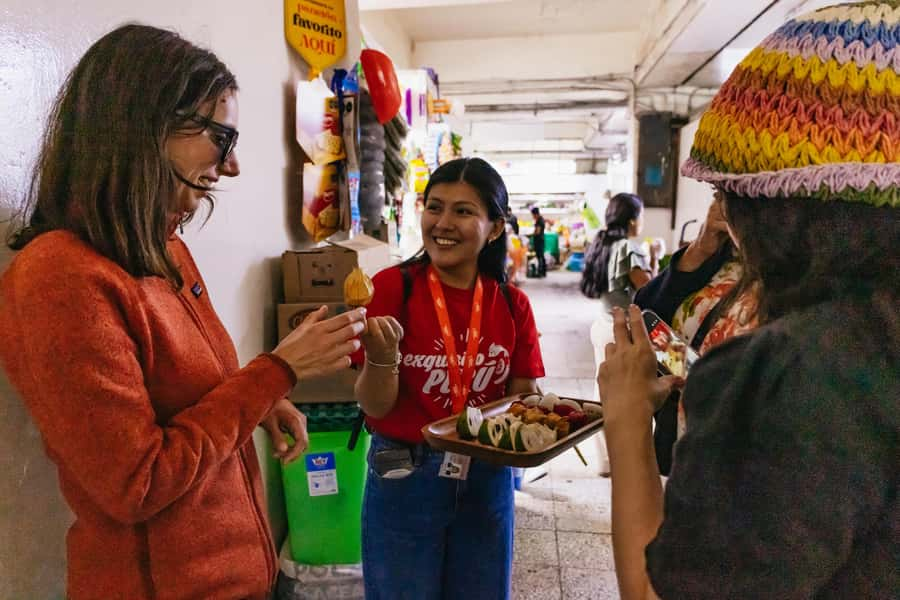
- Mercado Central adds local texture: You will see produce, spices, and everyday market foods before reaching Chinatown.
- The sightseeing is mostly outside: You see the Cathedral, Government Palace, San Francisco, La Merced, and Plaza Mayor from the street.
- English is the only shared-tour language: Ask for a private tour if you need another language.
Why this Lima food walk works so well
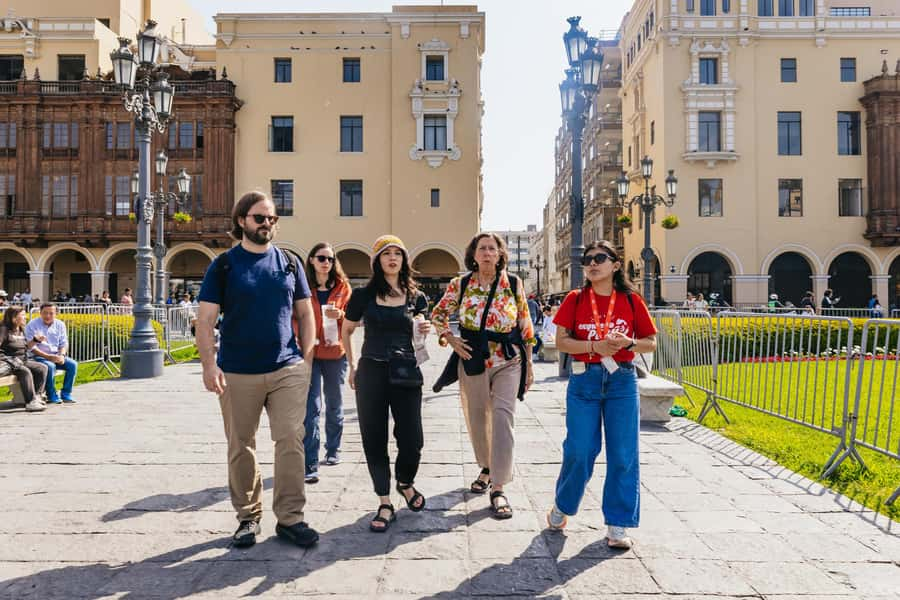
I like food tours that give you a reason to walk through a city rather than simply shuttle you between restaurants. This one puts Lima’s food culture in the middle of the Historic Center, where grand plazas, old churches, working markets, and small snack stops sit close together.
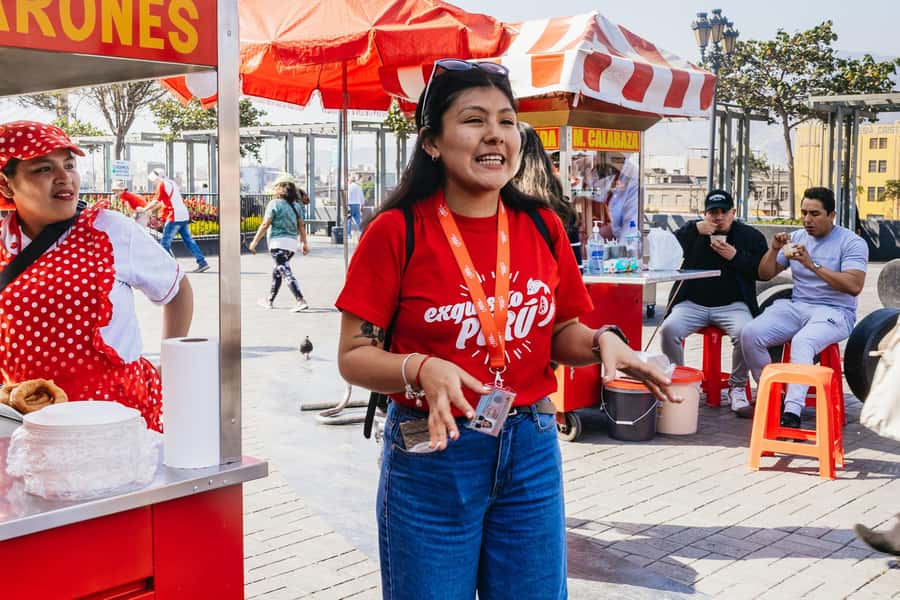
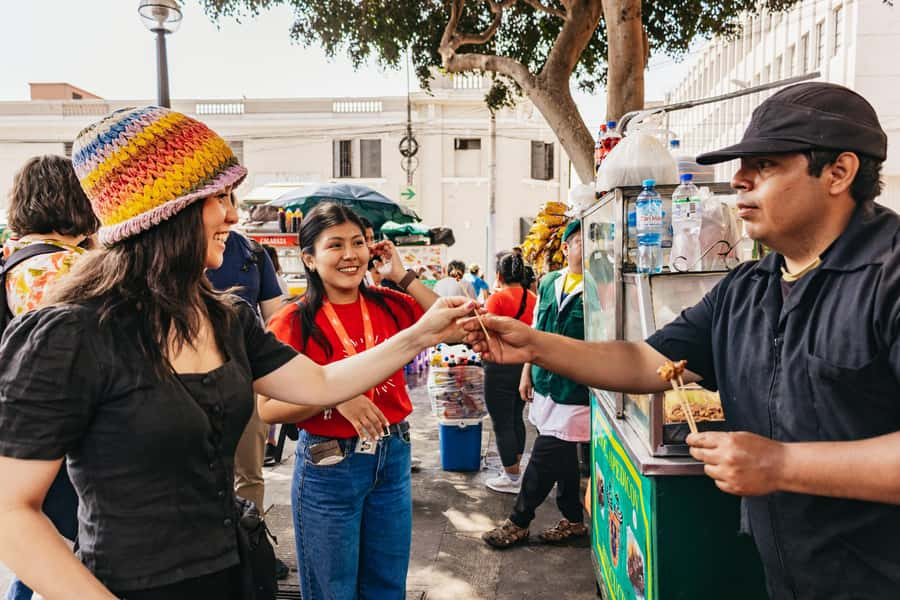
The food is not treated as a separate show. Your guide explains how comida al paso, or food eaten on the go, fits into daily life. You may stop at a cart for an anticucho, enter a modest eatery for a regional dish, then pause for a drink or dessert. That variety is the point.
The guides receive especially strong praise for keeping the walk organized while explaining food, architecture, and Peruvian customs. Marcos is repeatedly singled out for his humor and clear explanations. Aura is praised for adjusting the discussion to a group’s interests, while Valeria is noted for good pacing and personal attention. The guide you receive will vary, but the pattern is clear: this is not simply a procession from one plate to the next.
At $69 per person, the price is fair if you want a concentrated introduction to Lima. You receive a local guide, food tastings, and drinks over four hours, with no need to plan the stops yourself. It is less attractive if you mainly want a formal meal, a private guide, or a deep interior tour of Lima’s churches and palaces.
More Street Food Market Tours in Peru:
- Lima Street Food Tour Beyond Netflix
★ 5.0 · 117 reviews - Lima: Food Tour on Local Market
★ 5.0 · 8 reviews - Dubai: Old Town, Creek, Museums, Souks, & Street Food Tour
★ 4.8 · 10,816 reviews
From Plaza San Martín to Lima’s old streets
The meeting point is the main entrance of the Gran Hotel Bolivar, at Jirón de la Unión 958 in Plaza San Martín. This is a practical place to begin because the plaza gives you an immediate sense of Lima’s grand civic scale.
The first photo stop lasts about five minutes. That sounds brief, but the tour is designed to keep moving. Your guide can set the historical and architectural scene here before leading you toward the first food stop.
The route then passes through central Lima, with short walks and outside views of places such as La Merced. The Iglesia de La Merced is one of the city’s recognizable colonial landmarks, and the stop gives you time to look closely before the food takes over again.
Do not expect a long guided visit inside every building. The attraction here is the combination of street-level context and local eating. You see the facades, plazas, and public spaces while your guide connects them to the city’s past and present.
The first food stops: local portions and familiar flavors
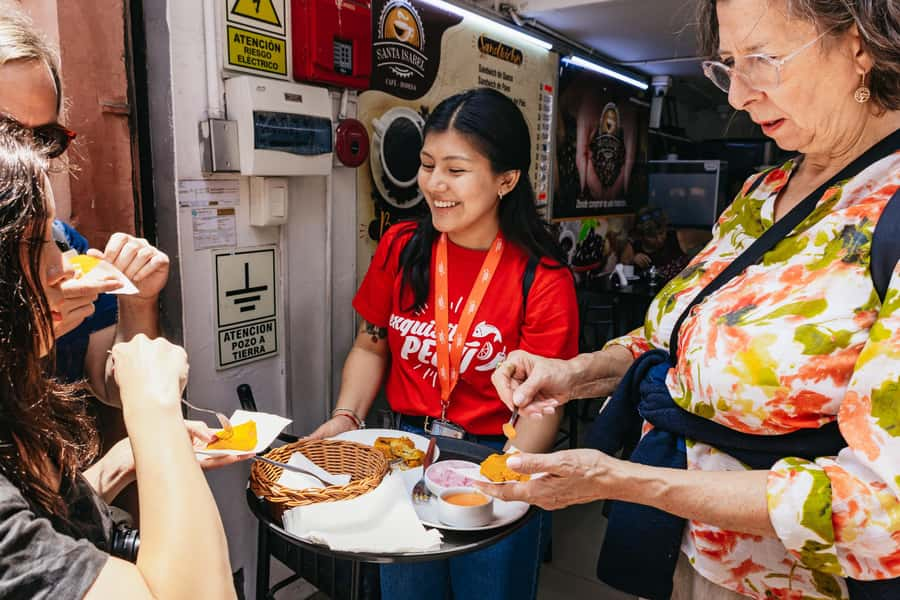
The early restaurant stops help you settle into the format. One lasts about 30 minutes and includes a drink or spirit and a regional tasting. Another lasts around 20 minutes and focuses on local food.
Portions are generally made for sampling, not for a full restaurant meal at each stop. That is useful because the tour includes many tastings, but you should not assume every dish arrives as a large entrée. One practical detail comes through clearly: the total amount of food can still be substantial.
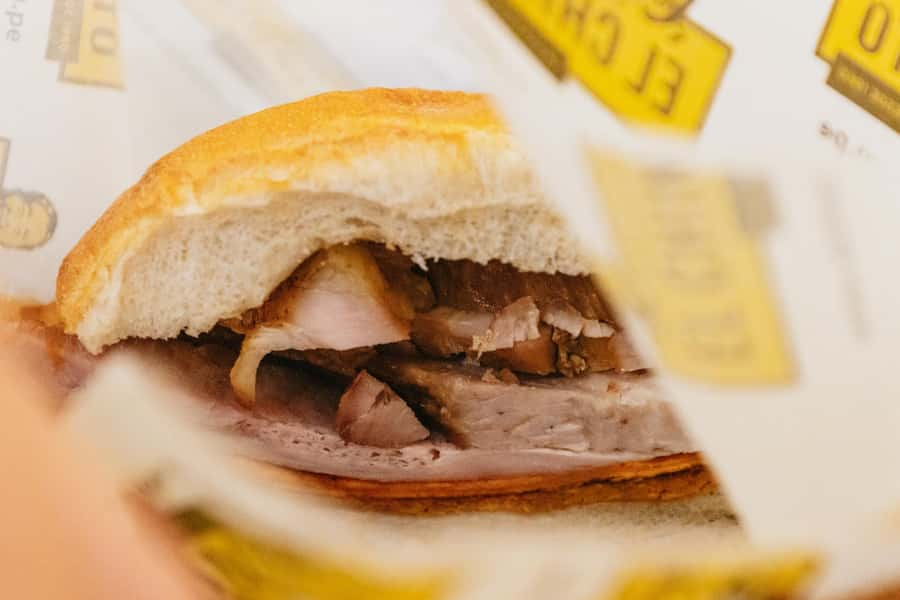
Possible highlights include anticuchos, grilled skewers with a strong savory flavor, and a chicharrón sandwich from El Chinito. The anticuchos have become a favorite for many people who want something distinctly Peruvian and hearty. If you are curious about local food but cautious about ordering from an unfamiliar cart on your own, this guided introduction removes much of the guesswork.
The tour may also include a tamal, fruit, and other small regional foods. Exact dishes can change, so book this for variety rather than for one guaranteed plate.
Plaza Mayor, the Cathedral, and the Government Palace
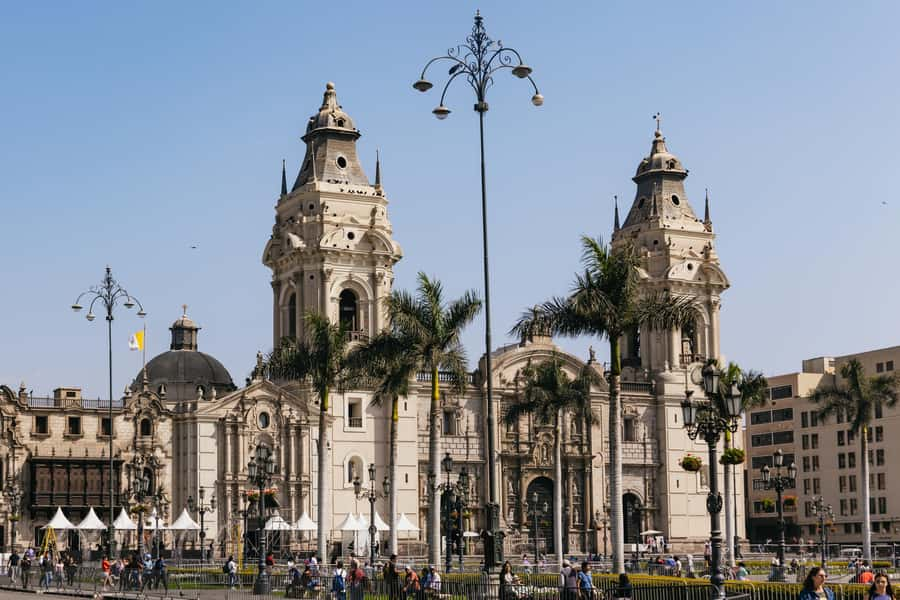
The walk continues to Plaza Mayor de Lima, the city’s main historic square. You get a short photo stop here, followed by more walking through the center.
From the public spaces around the plaza, you can see important architectural landmarks including the Government Palace and Lima Cathedral. The Cathedral stop is also brief, about five minutes, so think of it as an outside introduction rather than a full art or architecture tour.
That format suits me because it keeps the food and sightseeing in balance. If you want a detailed lecture on colonial design, this is not the right tour by itself. If you want to understand where you are while moving between places to eat, the short explanations are more useful.
The route also includes the Basilica and Convent of San Francisco. Again, the planned stop is mainly for a photo. You should not book this expecting a long interior visit or a catacombs tour.
More Food and Drink Trips in Peru:
- Market Tour, Tasting of 35 Fruits, and 4-Course Peruvian Cooking Class in Lima
★ 5.0 · 86 reviews - Lima: Market Tour, 35 Fruits Tasting & Cooking Class
★ 5.0 · 3 reviews - Lima Food Experience with local Markets & Barranco Tour
★ 5.0 · 2 reviews - Dubai: Old Town, Souks, Street Food, Guided Tour & Abra Ride
★ 4.9 · 7,170 reviews
Mercado Central: the most useful stop for everyday Lima
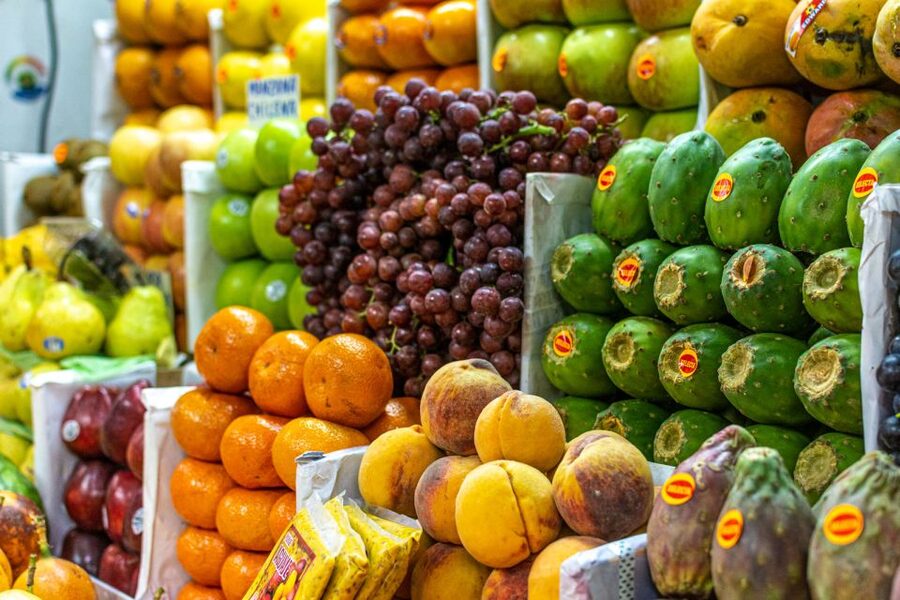
Mercado Central receives about 25 minutes, making it one of the longer sightseeing stops. This is where the tour feels most connected to ordinary shopping and cooking.
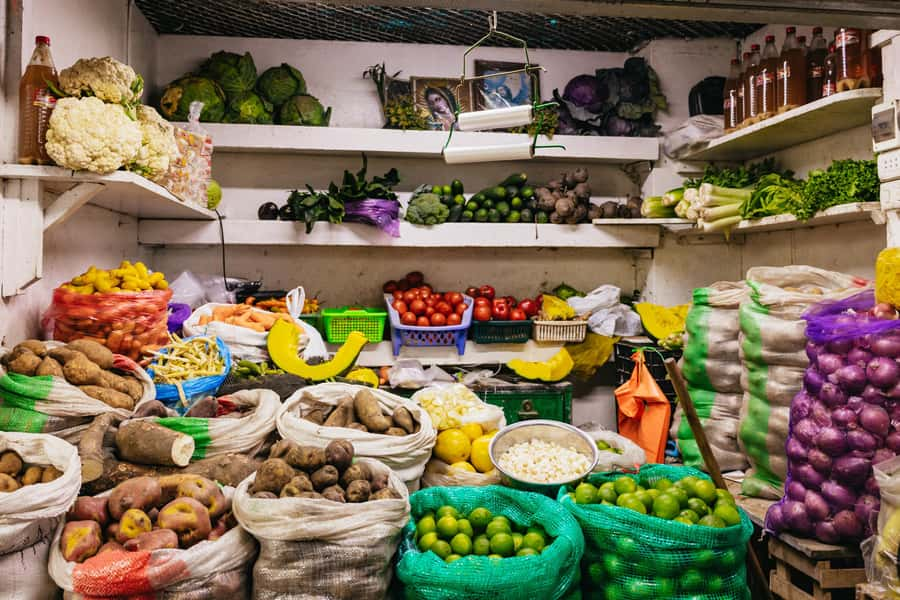
You will see fresh produce, spices, and local specialties, and you may sample fruit or other market foods. A market is valuable on a food tour because it shows ingredients before they reach the plate. It also gives you a clearer idea of what local shoppers see as normal, useful, and affordable.
I would pay close attention to your guide here. The market is easy to experience as a blur of colors and stalls, but explanations about products and eating habits turn it into a lesson in daily life. You may also find this the best place to ask what to buy later, although the supplied tour details do not promise a dedicated shopping period.
The stop is short enough that you will not spend half the tour inside the market. It is also long enough to make the visit more than a quick photograph.
Chinatown and the Peruvian-Chinese connection
From Mercado Central, the route reaches Lima’s Chinatown, known locally for its chifa cooking. The stop lasts about 15 minutes and combines walking, sightseeing, street food, and a tasting.
Chifa is one of the clearest examples of how Lima’s food culture has grown through different communities. Here, Chinese cooking traditions meet Peruvian ingredients and local tastes. Your guide can explain the connection while you try a flavor that differs from the earlier criollo foods.
This part is especially useful if you think Peruvian food means only ceviche, potatoes, or grilled meats. The tour keeps widening the picture. You move from market produce to street snacks, then into a neighborhood shaped by another culinary tradition.
The Chinatown visit is short, so do not expect a full meal or a long neighborhood history. Its value is in showing how several food traditions sit within a compact part of central Lima.
Chilcanos in an old Lima casona
One of the more distinctive stops is a local bar in one of Lima’s oldest casonas, where chilcanos are included. The bar stop lasts about 30 minutes and gives you a proper pause after the walking and food samples.
A chilcano is a Peruvian cocktail made with pisco, ginger ale, lime, and bitters. The drink adds a different side of the country’s food culture, and the old casona setting gives the tasting more character than a drink served anywhere.
The tour includes drinks, but this is not designed as a cocktail crawl. The alcohol matters because it helps complete the picture of local eating and social habits, not because the tour is built around drinking.
If you do not drink alcohol, take note of this part before booking. The provided information confirms that spirits and chilcanos are included, but it does not promise nonalcoholic replacements.
Desserts arrive often, so plan your appetite
The sweet course is a major part of the experience. You may try creole churros, picarones, and other desserts, with a final dessert or street-food stop near the end of the route.
The churros receive some of the strongest praise, while picarones give you a more specifically Peruvian treat. Picarones are ring-shaped fritters, often made with squash and sweet potato, and served with syrup. The tour gives you a chance to compare them with the more familiar churro.
Here is the main food warning: the balance can lean toward dessert. Savory tastings may be smaller, while a churro or full picarón can feel like a substantial serving. If you have a sweet tooth, this is a benefit. If you prefer a savory food tour, you may wish the menu included a larger tamal or another shared savory plate.
Still, the full route can leave you very full. Several people have found the tastings substantial enough to skip dinner afterward. I would avoid scheduling a major evening meal immediately after the tour.
Pace, walking, and group comfort
The tour lasts four hours and includes many short walks, photo stops, and food breaks. It is not a nonstop march. The itinerary allows time at local restaurants and the bar, and one account describes sitting down several times during the route.
You should still wear comfortable shoes and arrive ready to walk around central Lima. Large bags and luggage are not allowed, so leave suitcases at your accommodation. Hotel pickup and drop-off are not included, and you need to reach the Gran Hotel Bolivar on your own.
The shared tour is in English only. This matters more than it might seem because the food explanations and cultural context are central to the experience. If you do not speak English comfortably, book a private tour in the language you need instead of hoping the guide can explain everything in several languages at once.
The tour can work well early in a Lima stay. It helps you get your bearings, introduces foods you can seek out later, and gives you a basic sense of how the Historic Center fits together. It also works on an arrival evening, provided you are not too tired for four hours of walking and tasting.
Who should book this experience
I would choose this tour if you want three things at once: a first look at central Lima, a broad sample of Peruvian snacks, and a guide who can explain the connection between food and local life.
It suits adventurous eaters who want to try street food without choosing every stall alone. It also suits people who prefer a small tasting at several places over one long restaurant meal.
Families with older children may appreciate the variety, though the tour includes alcohol and the supplied details do not specify child pricing. Couples, solo visitors, and small groups can all benefit, especially when a guide such as Marcos, Aura, or Valeria adds personal explanations along the way.
I would skip it if you are vegetarian, vegan, or pescatarian, since alternative dishes cannot be provided. I would also skip it with a severe gluten or nut allergy because some foods may contain traces. Dietary restrictions must be shared at least 24 hours before the start, but the operator still cannot promise an adapted menu for the diets specifically excluded above.
Final call: a strong first taste of Lima
I would book this tour for a first or second day in Lima, especially if you want the Historic Center to feel like a real part of the city rather than a series of monuments. The combination of market food, street stalls, Chinatown, colonial facades, chilcanos, and sweets gives you plenty of context for $69.
Book it knowing that the landmarks are viewed mainly from outside, the tour is English-only, and dessert may take up more room than expected. If those points fit your style, this is a generous and well-paced introduction to Lima’s central streets and everyday food.
FAQ
Where does the tour start?
It starts at the main door of the Gran Hotel Bolivar at Jirón de la Unión 958, Cercado de Lima, in Plaza San Martín.
Where does the tour finish?
The tour finishes at Alameda Chabuca Granda.
How long does the experience last?
The tour lasts four hours.
What language is the shared tour conducted in?
The shared tour is conducted in English only. For other languages, you should book a private tour.
Is hotel pickup included?
No. Hotel pickup and drop-off are not included.
What food and drinks are included?
Food tastings and drinks are included. Examples provided for the tour include chilcanos, anticuchos, creole churros, picarones, market fruit, and local regional foods.
Will the tour include vegetarian or vegan alternatives?
No. The operator states that vegetarians, vegans, and pescatarians should not book because alternatives cannot be provided.
Can I join if I have a severe gluten or nut allergy?
No. Certain foods may contain small traces of gluten or nuts, so people with severe allergies should not book this tour.
Can I cancel and receive a refund?
You can cancel up to 24 hours before the tour starts for a full refund. You can also reserve now and pay later.
More History Tours in Peru
- Private Excursion to Floating Market and Ayutthaya World Heritage
★ 5.0 · 515 reviews - Palermo: Walking Tour of Historic Markets and Monuments
★ 4.9 · 478 reviews - Discover Palermo in 3 hours. Art, history, markets and street food
★ 5.0 · 352 reviews - Private Heritage Walking Tour in Jaisalmer Fort and Old Bazaar
★ 5.0 · 306 reviews
Just added around Peru
- Lima: Market Tour, 35 Fruits Tasting & Cooking Class★ 5.0 · 3 reviews
- Lima: Market Tour and Cooking Class with Pisco Sour★ 5.0 · 3 reviews
- Lima: Peruvian cooking class and tour of Surquillo market★ 5.0 · 2 reviews
- Lima: Food Tour on Local Market★ 5.0 · 8 reviews
- Lima Food Experience with local Markets & Barranco Tour★ 5.0 · 2 reviews
- Full Day Lima: Local Market+ CityTour+ Barranco & Miraflores★ 5.0 · 3 reviews
- Cusco: Coricancha, Cathedral & San Pedro Market Walking Tour★ 5.0 · 2 reviews
- Cusco: Peruvian Cooking Class & Market Tour★ 4.9 · 19 reviews
Street Food Market Tours, compared.
Old Town, Creek, Museums, Souks, & Street Food Tour
Read our review →
Old Town, Souks, Street Food, Guided Tour & Abra Ride
Read our review →
Old Town, Souks, Street Food, Guided Tour & Abra Ride
Read our review →
Small Group Cooking Class & Market Food Tour in Florence
Read our review →
Old Town, Street Food, Creek, Souks, & Emirati House
Read our review →
Browse the lists this tour appears in