

Review · HISTORICAL TOURS
Old Bangalore Historical Walk thro Palace, Temples, Fort & Market
Old Bangalore comes at you in layers: a 230-year-old teak palace, a Hindu shrine beside it, a remnant of a 16th-century fort, and KR Market’s full-force parade of flowers, fruit, workers, cows, and traffic. This is the city in close-up, not the polished version seen from a car window.
I like the mix of history and ordinary life. I also like the small-group limit of 10, which makes it easier to hear the guide and ask questions. The main consideration is the setting: Old Bangalore can be noisy, crowded, and hard on anyone who prefers wide paths and quiet sightseeing.
Key points
- Tipu Sultan’s Summer Palace: See a 230-year-old wooden palace built in teak with Islamic architectural details.
- Two very different temples: Visit Kote Venkataramana Temple and Shri Adinath Jain Shwetamber Mandir, with time for prayer, carvings, and religious context.
- KR Market at full volume: Spend about an hour among flower, fruit, and vegetable sellers, buyers, workers, vehicles, cows, and dogs.
- A compact slice of Bangalore history: Follow the city from Kempegowda’s mud fort to Hyder Ali’s stone rebuilding and today’s crowded market streets.
- Useful local guidance: Guides such as Vasuki, Raghavendra, and Vanaja have helped guests understand the sites, take better pictures, and plan what to do next.
- Convenient finish: The walk ends near Chickpet Metro station, useful for continuing your day without arranging a return ride.
Why Old Bangalore Makes a Better Walking Lesson
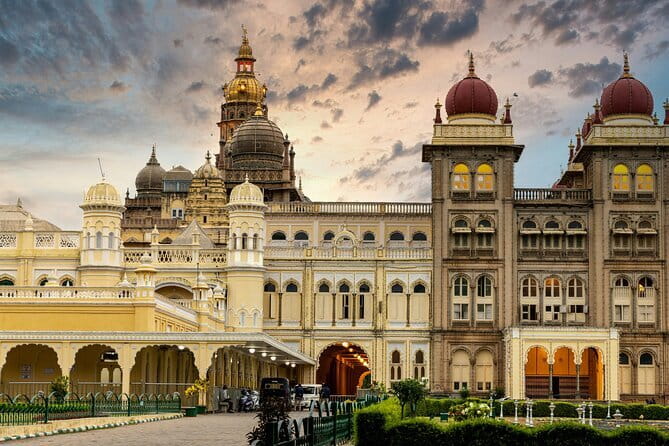
Modern Bangalore is known for technology companies and broad new districts, but the older center tells a different story. This walk links royal buildings, Hindu and Jain worship, military history, and a working market in roughly three to four hours.
That sequence matters. You do not see isolated monuments and then rush back to a hotel. You move through streets where old buildings, shrines, shops, delivery work, and daily commerce sit close together. The guide can explain how each place fits into the city’s past while you watch the present happening around you.
The route is also practical for a short visit. If you have only part of a day, this experience gives you several sides of Bangalore without requiring separate transport between each stop. The group can include no more than 10 people, a useful limit in narrow streets and busy public places.
You begin at Tipu Sultan’s Summer Palace in the Chamrajpet area and finish at the Jain temple in Chickpet. The end point is close to Chickpet Metro station, so you can continue independently after the walk. Hotel pickup and return transport are available for an extra fee, but they are not part of the tour price.
More History Tours in Bangalore:
- Experience Bangalore – City Tour, Authentic Food & market (Food/Culture/History)
★ 5.0 · 156 reviews - Bangalore: Walk in Historic Ulsoor – Landmarks, Bazaar & Culture
★ 5.0 · 9 reviews - Private Excursion to Floating Market and Ayutthaya World Heritage
★ 5.0 · 515 reviews
Tipu Sultan’s Teak Palace Sets the Tone
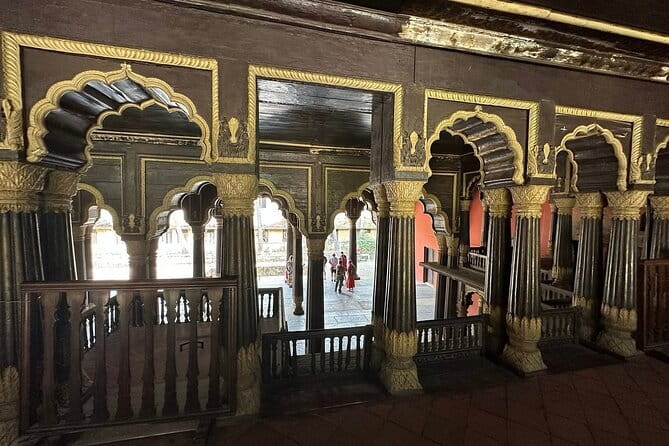
The first stop is Tipu Sultan’s Fort and Palace, also called Tipu Sultan’s Summer Palace. Allow about 45 minutes here. The palace is around 230 years old and built from teak wood, with an Islamic design that feels quite different from the stone temples later on the route.
This is the kind of site where a guide adds real value. A quick look at wooden pillars and decorative work will not tell you much about the building’s place in Bangalore’s history. Your licensed guide can point out details in the structure and explain the setting around Tipu Sultan and the old fort complex.
The palace is not enormous, so do not expect a long palace visit with many rooms. Its appeal comes from the material and age of the building, plus the contrast with the surrounding city. You are seeing a surviving royal structure in an area that is also a working transport and market district.
Admission to the palace is included. Since opening hours and access can vary with working hours and seasons, keep some flexibility in your expectations. The stated time is about 45 minutes, enough for a focused visit rather than a slow museum morning.
Kote Venkataramana Temple and Living Worship
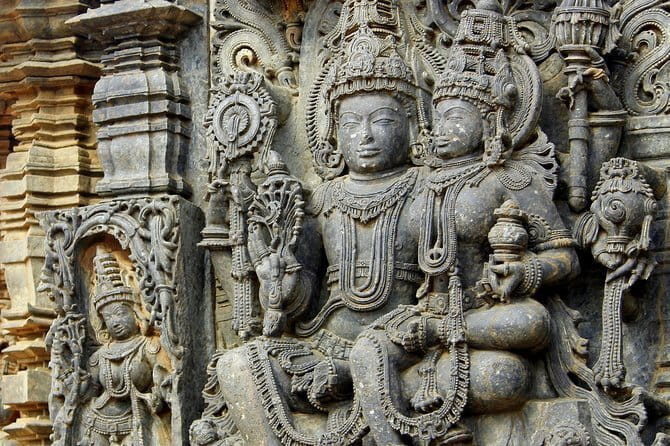
The next stop is Kote Venkataramana Temple, directly beside the palace. The temple dates to 1690 and was built by Chikkadevaraja Wodeyar. You have about 30 minutes to look at the stone sculptures and the carved work connected with Indian mythology.
This stop changes the mood quickly. The palace presents royal power through timber and Islamic design. The temple brings you into a Hindu religious setting, where prayers may be offered by devout worshippers. You are not simply looking at a historic building, you are entering a place that still serves its religious purpose.
Dress matters here. Your legs and shoulders must be covered, and women should carry a scarf. This is not a minor suggestion, since temple entry depends on suitable clothing. Plan your outfit before you leave rather than trying to solve the problem at the gate.
Admission is free, but access can be affected by temple working hours and seasonal changes. The temple visit is relatively short, so it suits you if you want cultural context without spending half a day at one shrine. It may feel less comfortable if you dislike entering active places of worship, where visitors need to behave quietly and follow local customs.
Bangalore Fort: A Small Remnant With a Long Story
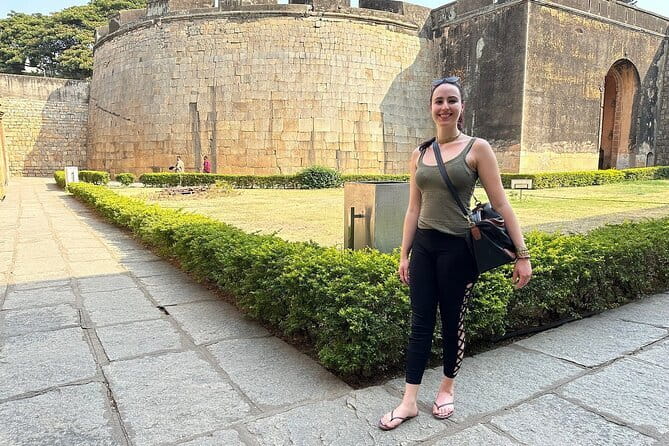
Bangalore Fort is the third stop, with about 30 minutes set aside. Kempegowda, regarded as the founder of Bangalore, built a mud fort here in the 16th century. Hyder Ali rebuilt it in stone during the 1760s.
Only about 5 percent of the original fort remains. That fact shapes the visit. You are not walking around a huge intact defensive complex. Instead, you are seeing a small surviving piece and using it to picture the much larger structure that once protected the early city.
The site is described as neatly maintained and open to visitors. The short stop works well in a packed walking route because the guide can explain the fort’s changes without asking you to spend hours among ruins. I would keep your expectations focused on historical context, not scale.
This part also gives the tour a useful timeline. You have seen a 230-year-old palace and a temple from 1690. Now you can connect those places with the earlier fort built by Bangalore’s founder and the later work ordered by Hyder Ali. The old center becomes easier to understand as a city shaped by several rulers and building traditions.
A few more market tours around Bangalore worth a look
- Bengaluru Pete City Market Half-Day Walking Tour
★ 5.0 · 163 reviews - Tipu Palace + Koté Vishnu + Fort + KR Market + Jain Temple = Bengaluru Pété Walk
★ 5.0 · 150 reviews - Bangalore: Palace, Temples, Fort & Markets Walking Tour
★ 4.9 · 97 reviews - Bangalore: Walking Tour of Fort, Palaces, and Market
★ 5.0 · 58 reviews
KR Market Is the Tour’s Loudest Hour
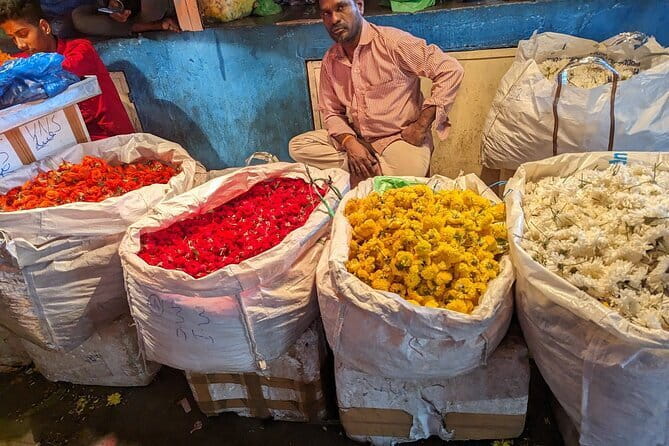
Sri Krishnarajendra Market, usually called KR Market, receives about an hour. This is likely to be the most intense section of the walk, and for many people it will be the most memorable.
The market is built around activity rather than display. You can expect sellers, workers, coolies, hawkers, buyers, cycles, vehicles, cows, and dogs sharing the same general space. Fruits, flowers, and vegetables fill the area with color and scent, while voices, engines, footsteps, and bargaining create a constant wall of sound.
I like this stop because it explains more about everyday Bangalore than another polished monument would. The market is not arranged for sightseeing. You are seeing a working place where people buy, sell, carry, sort, and move goods. Keep your attention on the whole scene, not just on getting the perfect photograph.
The crowds are also the main drawback. Streets may be tight, traffic can pass close by, and the noise is part of the experience. You will want comfortable shoes and a bit of patience. Stay close to the guide and pay attention when the group changes direction.
The market is a good reason to take this walk instead of trying to visit the historic sites alone. A guide can help you read the scene, find the right paths, and give meaning to the work happening around you. The tour does not promise a market shopping session or lunch, so think of this hour as a close look at commerce and city life.
Food is not included. If you need a meal afterward, plan to arrange it separately rather than assuming the market stop includes lunch.
A Quieter Finish at the Jain Temple
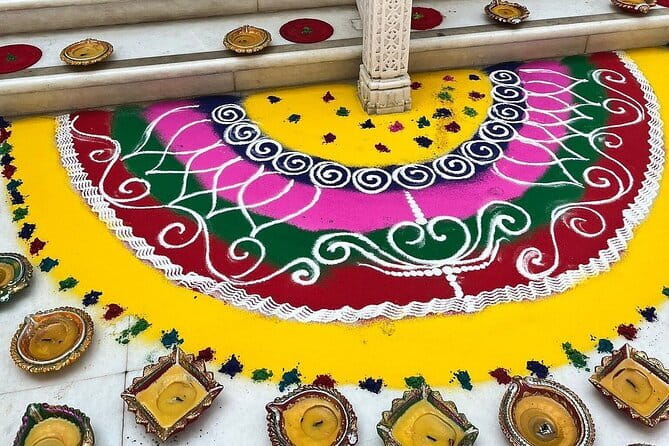
The final stop is Shri Adinath Jain Shwetamber Mandir in Chickpet, with about an hour allotted. Jainism is one of India’s oldest religions, with a history of at least 2,500 years, and its principles include non-violence and vegetarianism.
After the noise and movement of KR Market, the Jain temple offers a clear change of pace. You can focus on quiet, carved details, and inlay work. This contrast is one of the route’s best design choices: the same walk that puts you inside a loud market also gives you time to observe a more restrained religious space.
You should cover your legs and shoulders here as well. Women need to carry a scarf. As with the Hindu temple, entry can depend on working hours and seasonal conditions, so the exact experience may vary.
The temple is in the Chickpet area, and the walk ends near Chickpet Metro station. That is handy if you want to continue exploring, return by public transport, or arrange your own onward plans. The guide may also offer practical suggestions for what to do next, as Raghavendra did for one group after the walk.
The Guides Make the Route Easier to Understand

The listed guide is a Government of India approved and licensed guide, and the experience is designed around explanation rather than simply escorting you from door to door. Names associated with the guiding team include Vasuki, Raghavendra, and Vanaja.
The guide’s role matters most in three places. At the palace and fort, you need historical background to understand what survives. At the temples, you need respectful guidance about religious spaces and visual details. At KR Market, you need help making sense of the activity without treating people’s work as a staged show.
The guidance also appears practical. Vasuki has provided advance communication and photography tips. Raghavendra has answered questions about history and temples, then helped with onward plans. Vanaja has been especially attentive to making the walk feel safe and manageable for a solo participant.
Those details are useful if you are comparing this with a self-guided walk. You can certainly reach the palace, fort, market, and temples independently, but you would need to research the timeline, find the entrances, manage the crowded streets, and work out what you are seeing. The guide brings those pieces together.
What the $22.38 Price Really Buys You
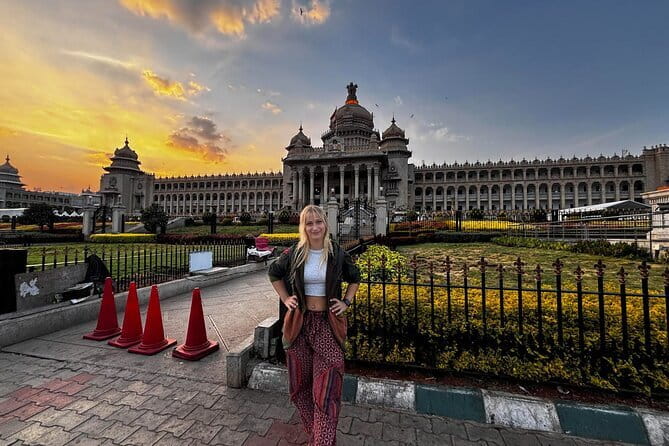
At $22.38 per person, the tour is reasonably priced for a three to four hour guided walk, especially since monument entry fees are included. The temples, fort, market, and Jain temple have no separate admission charge listed, while the palace admission is included in the experience.
The value is less about expensive access and more about time saved and context gained. You are paying for a licensed guide, a planned route, help moving through Old Bangalore, and explanations at five very different stops. If you are short on time or uneasy navigating the old center alone, that can make the price worthwhile.
The cost does not include lunch, tips, or hotel transport. A pickup and return service can be arranged for an additional fee, based on your hotel. Ask about that fee before booking if door-to-door transport is important to you.
Group discounts are available, so the price may work especially well for families or friends booking together. The maximum group size is 10, though the exact number in your departure can vary.
Who Should Book This Walk
I would choose this experience if you want a concentrated introduction to old Bangalore and prefer seeing working streets along with historic buildings. It is a good fit for a first visit, a short business trip, or a spare morning or afternoon between other plans.
It also suits you if you like learning through contrasts. You will move from palace architecture to Hindu worship, from a fort remnant to market chaos, then into a Jain temple with quieter decorative work. That range gives the walk a stronger shape than a simple list of monuments.
Solo visitors may appreciate the structure and the company of a guide, particularly in the market area. Couples and families can benefit from having someone explain the temples and help with practical details. The small maximum group should also make questions easier.
I would think twice if you want a relaxed stroll with open space, silence, or plenty of time at each site. KR Market can be crowded and noisy, and three to four hours is a brisk schedule for five stops. This is an active city walk, not a slow architectural tour.
Wear clothing that covers your shoulders and legs from the start. Women should carry a scarf. Comfortable walking shoes will help, and a small bag is easier to manage than bulky luggage in crowded streets.
Free cancellation is available when you cancel at least 24 hours before the start time. Changes or cancellations made later are not accepted for a refund.
Should You Book the Old Bangalore Walk?
Book it if you want history tied to daily life, not just a string of grand buildings. The route gives you a teak palace, a fort remnant, two temples, and one of Bangalore’s busiest markets in a manageable half day.
The strongest reason to go is the balance of stops. The palace and fort supply the historical frame. The temples show living religious traditions. KR Market brings you into the city’s workday, with all the sound and disorder that implies.
Skip it if crowded streets make you uncomfortable or if you need guaranteed access at every stop. Temple and monument entry can change with hours and seasons, and the market is not a calm place. For most visitors who want a direct, well-guided look at Old Bangalore, though, $22.38 is a fair price for the route and the local explanation that holds it together.
FAQ
How long does the Old Bangalore Historical Walk take?
The walk lasts approximately three to four hours.
Where does the walk start?
It starts at Tipu Sultan’s Summer Palace, 42 Tippu Sultan Palace Road, Kamalanagar, Chamrajpet, Bengaluru.
Where does the walk end?
It ends at Shri Adinath Jain Shwetamber Mandir on Chickpet Road. The temple is close to Chickpet Metro station.
What should I wear for the temples?
Your clothing should cover your legs and shoulders. Women should also carry a scarf because the route includes a Hindu temple and a Jain temple.
Is hotel transportation included?
No. Hotel pickup and return transport are not included, but transport can be arranged for an additional fee based on your hotel location.
What is the cancellation policy?
You can cancel for a full refund if you cancel at least 24 hours before the experience start time. Cancellations or changes made less than 24 hours before the start time are not accepted for a refund.
Just added around Bangalore
- Bangalore: Walk in Historic Ulsoor – Landmarks, Bazaar & Culture★ 5.0 · 9 reviews
- Experience Bangalore Evening City Walk Tour and Market Visit★ 5.0 · 9 reviews
- Shopping and Bazaar Trail in Bangalore★ 4.5 · 5 reviews
- KR Market Photo Walk★ 5.0 · 12 reviews
- Lalbagh+Bull Temple+Tipu Palace+Market+Lunch=Bangalore City Tour★ 5.0 · 9 reviews
- Bangalore Evening Food Street Walk and Market Visit★ 5.0 · 32 reviews
- Private Walking Tour into the Oldest Local Market in Bengaluru★ 5.0 · 5 reviews
- Bangalore Walking Tours – Flower Market, PETE and more★ 5.0 · 5 reviews
Historical Tours, compared.
Private Excursion to Floating Market and Ayutthaya World Heritage
Read our review →
Discover Palermo in 3 hours. Art, history, markets and street food
Read our review →
Private Heritage Walking Tour in Jaisalmer Fort and Old Bazaar
Read our review →
2 Hour Historic Market Food Tour and Hands-On Biscuit Class
Read our review →
Abu Dhabi Sightseeing Tour: Sheikh Zayed Mosque, Heritage Village & Dates Market
Read our review →
Historic Center Street Food, Market, and Eateries Tour
Read our review →
Old Delhi: Spices, Heritage and Bazaars Walking Tour
Read our review →Browse the lists this tour appears in