
Review · MARKET AND COOKING CLASS TOURS
Rome: Pasta Cooking Class with Market Visit and Wine
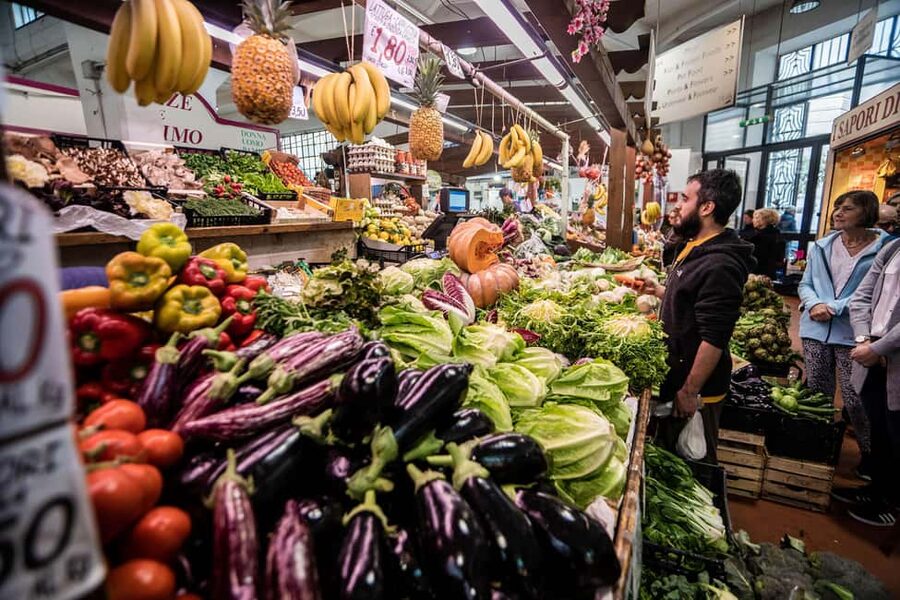
The best part of this Rome cooking class happens before you touch the flour. You walk with Chef Marco to Nomentano Market, where he points out the ingredients that give Roman food its character. Then you return to the Kitchen of Mamma and turn those ingredients into several kinds of pasta, including ravioli, tortellini, and linguine.
I like two things here. First, you work at your own station, so this is not just a demonstration from across the room. Second, the meal includes the pasta you helped prepare, Italian wine, coffee, and limoncello. The main consideration is that the class is built around wheat pasta, so it is not suitable for people with gluten intolerance.
- A real neighborhood market visit: See where fresh vegetables and other ingredients are bought before heading to the kitchen.
- Several pasta shapes: Learn more than basic spaghetti, with practice making filled pasta and different cuts.
- Marco’s hands-on teaching: He checks each person’s dough and helps you fix mistakes without making the class feel stiff.
- A full Italian meal: Eat the pasta with sauces, then finish with coffee and limoncello.
- Useful take-home material: You receive recipes and a participation certificate.
- Four hours well spent: The pace leaves room for cooking, eating, conversation, and a little Roman storytelling.
From Via Palestro to Nomentano Market
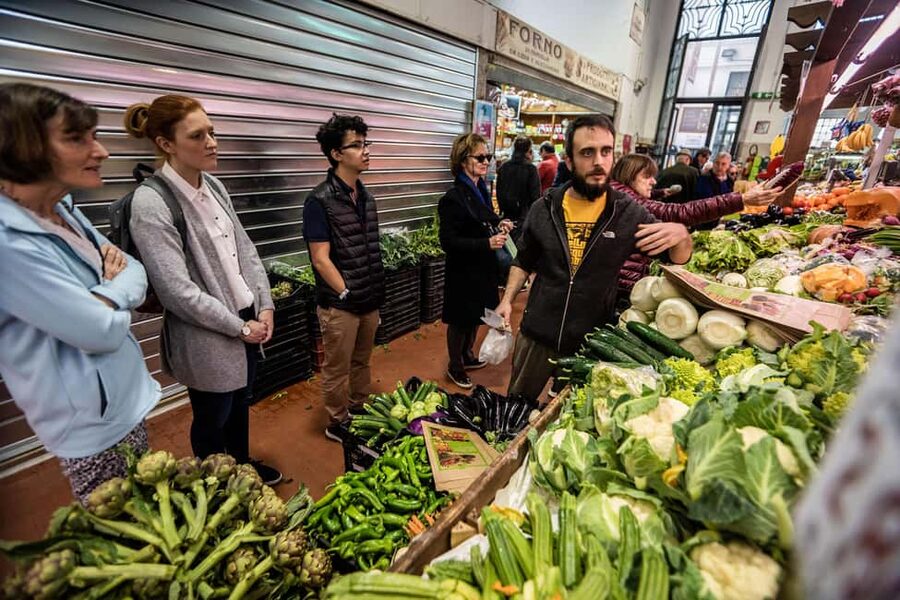
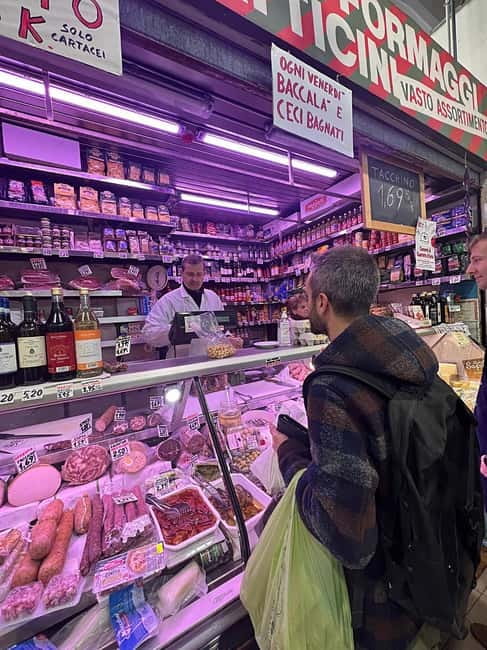
Meet at Via Palestro 51, near Rome’s Termini area, at least 10 minutes before the scheduled start. The first part is a short walk to Nomentano Market, described in the experience details as a local market where you can see fresh, seasonal products and meet the vendors.
This walk is more than a shopping errand. Marco uses the route to talk about Rome and Italian food, then explains why certain ingredients work together in the dishes you will prepare. You get a look at the food through an Italian cook’s eyes, not just as a list of items in a recipe.
The market portion is also a useful counterpoint to Rome’s famous restaurants. You are not being taken to a grand food hall designed for sightseeing. You are seeing the everyday source of ingredients used in a home-style kitchen. The exact market routine can vary with the day and the available produce, but the purpose is clear: understand the raw materials before you cook them.
Allow for walking and standing here. This is not a quick photo stop. You are looking, listening, and learning how a chef chooses vegetables and other products for the meal.
Inside the Kitchen of Mamma
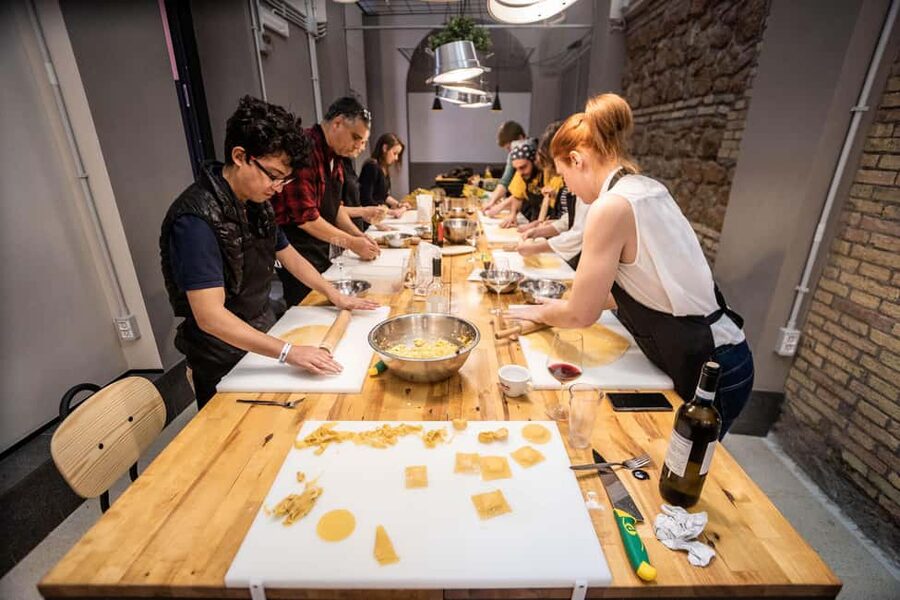
After the market, the group returns to the Kitchen of Mamma. The setting is designed for participation, with individual workstations around a shared table. That arrangement matters. You get your own dough, tools, and space, while Marco moves around the room to check your technique.
You begin with the basics of pasta dough. Marco explains how to combine the ingredients, work the dough, and judge its texture. This is the part that gives you something useful to take home. A recipe can tell you quantities, but it cannot easily tell you when dough feels too dry, too wet, or ready to roll. Direct correction helps.
No previous cooking experience is required. The teaching is aimed at beginners, and the class is paced so you can follow each step. Marco is known for using humor and patience to keep people relaxed, which is helpful when your first tortellino looks more like a folded postage stamp than a neat little parcel.
The format also works well for families and mixed groups. You can take part at your own level, ask questions in English or Italian, and receive individual help. Several people can work together without one confident cook taking over the whole table.
More Market and Cooking Class Tours in Italy
- Authentic Roman Cooking Class & Market Experience
★ 5.0 · 363 reviews - Kitchen of Mamma: Pasta Cooking Class with market visit in Rome
★ 5.0 · 140 reviews - Farmers’ Market Shopping with Cooking Class and Pasta Making
★ 5.0 · 91 reviews
Making Ravioli, Tortellini, and Linguine
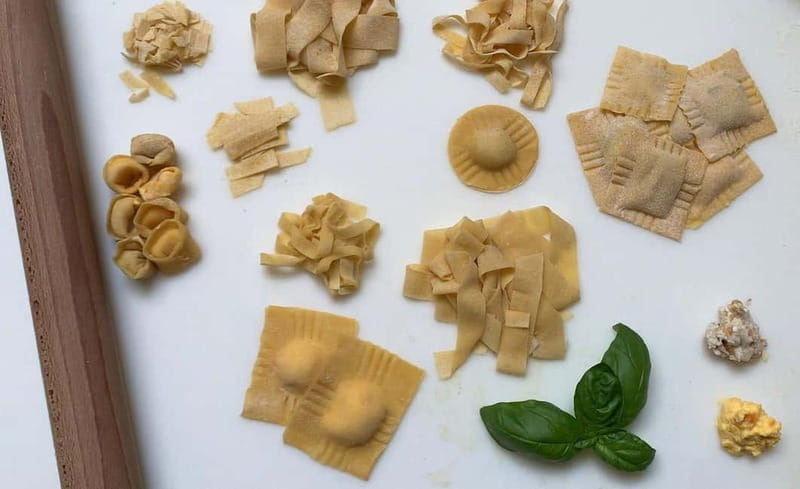
This is not a class limited to one bowl of spaghetti. The detailed instruction can include several shapes and styles, such as ravioli, tortellini, and linguine, along with multiple cuts of pasta. One session included practice with seven different pasta sizes and filled ravioli.
You may not personally prepare every single component from start to finish. Marco can prepare certain fillings and sauces while the group focuses on shaping and cutting the pasta. That is worth understanding before booking. The class is hands-on, but it is also a guided meal preparation session, not a professional chef’s examination.
The filled pasta is one of the most appealing parts. You learn how dough is rolled, filled, sealed, and shaped. Fillings mentioned in the class experience include combinations such as ricotta with pumpkin, sage, and mushrooms. The exact menu may change with seasonal ingredients, which is one reason the market visit matters.
Sauces can include bolognese and other preparations made by Marco. Some participants have particularly enjoyed pumpkin and ricotta ravioli, while others appreciated learning several sauces rather than eating one pasta dish in three forms. The recipes give you a starting point for repeating the meal at home, although your first attempt may need practice.
Lunch With Wine, Coffee, and Limoncello
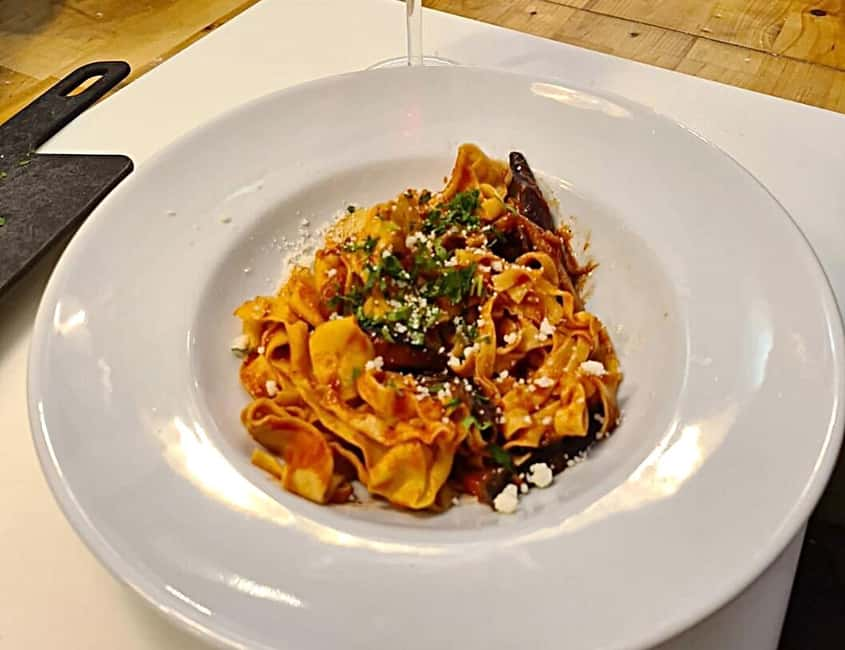
Once the pasta is ready, you sit down to eat. Lunch is included, along with a glass of Italian wine. The food is the payoff, but it also lets you taste the difference between fresh pasta and the dried pasta most people cook at home.
The meal is social and deliberately unhurried. Marco talks about Italian food and personal stories while the group eats. This makes the class feel closer to a long lunch with a friendly cook than a formal school lesson.
Wine is included, but you do not need to drink it to take part in the class. One useful detail is that the instructor has accommodated different needs during the experience, including a pregnant participant who needed nonalcoholic drinks. Still, tell the provider about dietary concerns before the class rather than relying on a last-minute adjustment.
Coffee and limoncello finish the meal. They are small details, but they complete the rhythm of an Italian lunch: cook, sit down, eat slowly, drink something warm, and linger over conversation. The participation certificate and recipes come afterward as practical souvenirs rather than clutter.
Why Marco Makes a Difference
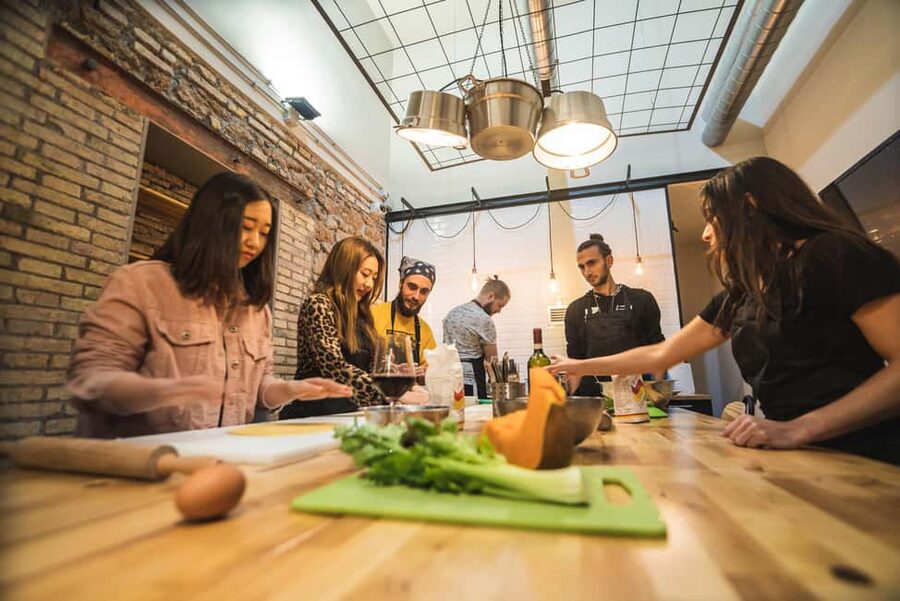
The strongest thread running through this activity is Marco’s teaching style. He is not simply there to demonstrate pasta and disappear behind the counter. He moves between stations, answers questions, checks dough, and helps people shape the pasta.
That personal attention is especially important for beginners. Pasta making looks simple until the dough resists, the filling leaks, or the tortellini refuses to close. A good instructor catches those problems early. Marco’s humor also keeps mistakes from becoming embarrassing.
He brings more than cooking instruction. During the walk, he shares Roman and Italian history. In the kitchen, he explains food customs and the reasons behind certain ingredient combinations. You get useful cooking guidance without sitting through a long lecture.
The class has been led by other instructors at times, including Lucas, but Marco is the chef most closely associated with the experience details and the recent sessions provided here. If having Marco specifically is important to you, check the instructor information for your chosen date.
More Market and Cooking Class Tours in Rome
- Rome: Market and Cooking Class at a Local’s Home
★ 4.0 · 3 reviews - Rome: Private Cooking Class with Market Shopping Tour
★ 5.0 · 3 reviews - Market tour and Private Cooking Class in Rome with roman chef
★ 5.0 · 2 reviews
Is Four Hours the Right Length?
The stated duration is four hours, which is enough time to include the market, dough preparation, shaping, cooking, lunch, and the final drinks without turning the day into an endurance test. One participant noted that a description had suggested six hours, while the actual class lasted closer to four. If you see conflicting timing when booking, confirm the schedule before paying.
A four-hour block also affects your Rome itinerary. Do not place this between two tightly timed sightseeing reservations. The market walk, hands-on cooking, and meal are meant to unfold at a relaxed pace, and the class may be less enjoyable if you are watching the clock.
An afternoon booking can work well after a morning of sightseeing, but your best choice depends on the start time offered for your date. Check availability for the actual session rather than assuming a fixed departure hour.
What the $103 Price Includes
At $103 per person, this is not the cheapest way to eat pasta in Rome. You could order a plate of pasta for far less. The comparison changes once you count the market visit, instruction, ingredients, full lunch, wine, coffee, limoncello, recipes, and certificate.
You are paying for a meal plus a skill. If you want to reproduce fresh pasta at home, the lesson may offer better value than a standard restaurant meal. You also get a local market experience and several hours of conversation, which makes the class a stronger choice for people who want food culture rather than only a finished dish.
The value is strongest for couples, families, and small groups who enjoy cooking together. It is also a good use of time for anyone who has already seen the Colosseum, Trevi Fountain, and Vatican and wants a more ordinary side of Roman life.
The price is less compelling if you dislike group activities, do not want to cook, or only want a quick meal. This is not a restaurant with a short cooking show attached. You need to take part.
Who Should Book This Class?
I would recommend it to first-time pasta makers, families with older children, couples, and food-focused visitors who want a social afternoon. You do not need technical skill, and the individual stations make it easier to follow along.
It also suits people who want something beyond spaghetti carbonara. The mix of filled pasta, cut pasta, sauces, and market ingredients gives you a wider introduction to Italian cooking. You leave with methods you can try again, not just a memory of a single plate.
The class is less suitable for people with gluten intolerance, since wheat pasta is central to the activity. It may also be a poor match for anyone seeking a highly structured, quiet lesson. Marco’s approach is warm, funny, and conversational, with plenty of interaction around the table.
Language should not be a major barrier if you speak English or Italian. Those are the listed teaching languages, and the class is designed for clear, step-by-step instruction.
Practical Details Before You Go
Arrive at least 10 minutes early at Via Palestro 51. The meeting point is in the Termini area, so give yourself time to find the entrance without rushing.
Wear clothes you can cook in. You will be handling flour, dough, fillings, and sauces, and the class is practical rather than purely observational. The market visit adds a short walk, so comfortable shoes make sense.
Tell the provider ahead of time about food restrictions. The stated restriction is gluten intolerance, but past sessions have also taken vegetarian preferences and other personal needs into account. Do not assume every change can be made on the day.
The activity offers free cancellation up to 24 hours before the start for a full refund. You can also reserve and pay later, which helps if your Rome plans are still shifting.
Final Verdict: Book It If You Want to Cook, Not Just Eat
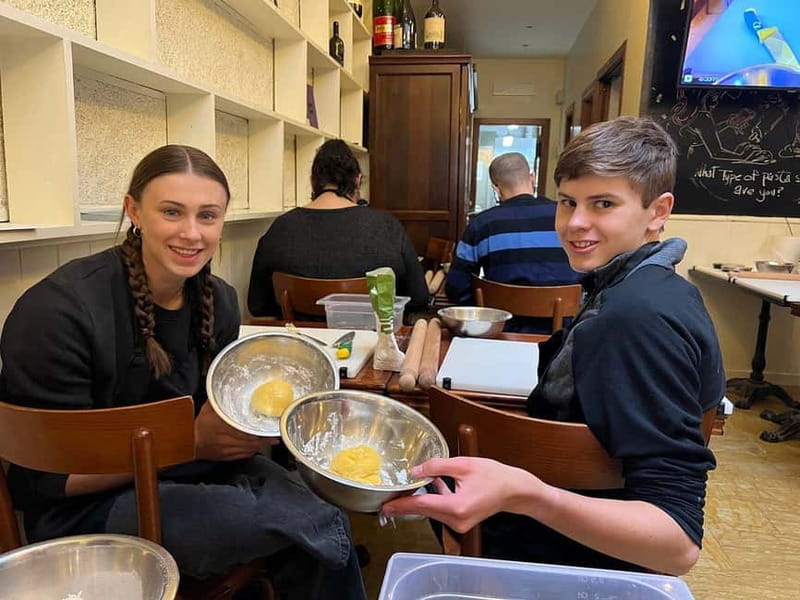
Book this class if you want a friendly, hands-on introduction to Italian pasta, with a market visit and a proper meal attached. Marco’s patient teaching, individual workstations, range of pasta shapes, and relaxed lunch make the experience more useful than a basic pasta demonstration.
Skip it if you have gluten intolerance, dislike group cooking, or want a short and inexpensive food stop. For everyone else, $103 buys four hours of cooking, eating, Roman conversation, and recipes you can try once you are home. That is a fair price for a practical food experience, especially if making pasta becomes one of the stories you carry out of Rome.
FAQ
How long does the pasta cooking class last?
The stated duration is four hours. Check the available start times when booking, since one description encountered by a participant listed a longer duration.
Where is the meeting point?
Meet at Via Palestro 51, 00185 Rome. You should arrive at least 10 minutes before the activity begins.
Does the experience include a market visit?
Yes. The class includes a walking visit to Nomentano Market, where you see fresh seasonal ingredients and learn how products are selected for the recipes.
What food and drinks are included?
The experience includes lunch with the pasta prepared during the class, a glass of Italian wine, coffee, and limoncello.
Do I need previous cooking experience?
No. Previous skills are not required. The instructor teaches the pasta-making steps and provides help during the practical work.
Is the class suitable for people with gluten intolerance?
No. People with gluten intolerance are listed as unsuitable for this activity because traditional wheat pasta is central to the class.
More Pasta Experiences in Rome
- Bologna Food & Market Tour with 6 Tastings, Pasta, Wines & More
★ 5.0 · 1,328 reviews - Pasta and Tiramisu Cooking Class with optional Local Market Tour
★ 5.0 · 515 reviews - Discover the old market and make fresh pasta
★ 4.0 · 4 reviews - Florence:Dolce Vita by Day Market Tour & Pasta Making Class
★ 5.0 · 2 reviews
More Wine Tours in Rome
- Trevi Fountain, Pantheon, and Campo Dei Fiori Market Food and Wine Tour
★ 5.0 · 320 reviews - Tasty Trionfale Farmers Market Food Tour and Local Wines Tasting
★ 5.0 · 43 reviews - Rome: Testaccio Food & Market Tour with Pasta & Wine
★ 5.0 · 38 reviews - Rome: Vatican Street Food and Wine Tour with Farmers Market
★ 5.0 · 37 reviews
Just added around Rome
- Testaccio Experience: Street Food, Market and Traditions★ 5.0 · 4 reviews
- Rome: Testaccio Food & Market Tour with Pasta & Wine★ 5.0 · 38 reviews
- Rome: Temples, Squares & Markets Guided Walking Tour★ 4.8 · 26 reviews
- Rome: Taste of Testaccio Food & Market Tour★ 4.9 · 38 reviews
- Rome: The Vatican Market Experience Tasting and Class★ 4.7 · 10 reviews
- Rome: Trajan Markets Experience with Multimedia Video★ 4.0 · 66 reviews
- Rome: Prati Food & Wine Market Tour with St. Peter Square★ 5.0 · 7 reviews
- Rome: Trajan’s Markets & Museum of The Imperial Fora Tour★ 4.8 · 4 reviews
Market and Cooking Class Tours, compared.
Hanoi Cooking Class: Culture, Local Market & Meaning CSR Impact
Read our review →
5 Traditional Dishes Hanoi Cooking Class with Market Trip
Read our review →
Cooking Class and Lunch at a Tuscan Farmhouse with Local Market Tour from Florence
Read our review →
Cooking Class, Market & Thai Herbs Garden Tour
Read our review →
Authentic Cooking Class with Market & Farm Visit
Read our review →
Paella Cooking Experience & Boqueria Market Tour
Read our review →
Cooking Class Hoi An:Local Market, Basket Boat, Fishing & Cooking
Read our review →
Hoi An Cooking Class(Market,BasketBoat Crabfishing&Cooking Class)
Read our review →Browse the lists this tour appears in